Atlas
Health Warn
- No license — Repository has no license file
- Description — Repository has a description
- Active repo — Last push 0 days ago
- Community trust — 24 GitHub stars
Code Warn
- process.env — Environment variable access in src/config.ts
- network request — Outbound network request in src/helius.ts
- process.env — Environment variable access in src/logger.ts
Permissions Pass
- Permissions — No dangerous permissions requested
This tool is a Solana blockchain analytics agent that tracks "smart money" wallets, venture capital activity, and capital flow. It monitors whale wallets for significant moves and alerts users about origin, propagation, and sector rotation.
Security Assessment
The tool makes outbound network requests (specifically to the Helius Solana RPC API) and relies on environment variables to manage secrets securely, such as API keys. There is no evidence of hardcoded secrets, and it does not request dangerous system permissions or execute shell commands. Because it requires the use of external API keys (including Anthropic's Claude Agent SDK) to function, users must ensure they manage their `.env` files responsibly. Overall risk: Low.
Quality Assessment
The project is highly active, with its most recent code push happening today. It claims community trust via a small but present following of 24 GitHub stars. However, the repository currently lacks an actual license file in its directory, despite displaying an MIT badge in the README. Until this is formally added to the repository, users have no explicit legal permission to use, modify, or distribute the code.
Verdict
Use with caution — the tool's source code is actively maintained and appears secure, but you should verify the license status before integrating it into any commercial projects.
Smart money tracker for Solana. Watches whale and VC wallets and alerts when they make significant moves.
Atlas
Solana capital-flow mapper.
Tracks origin wallets, follower propagation, and sector rotation across the on-chain graph.




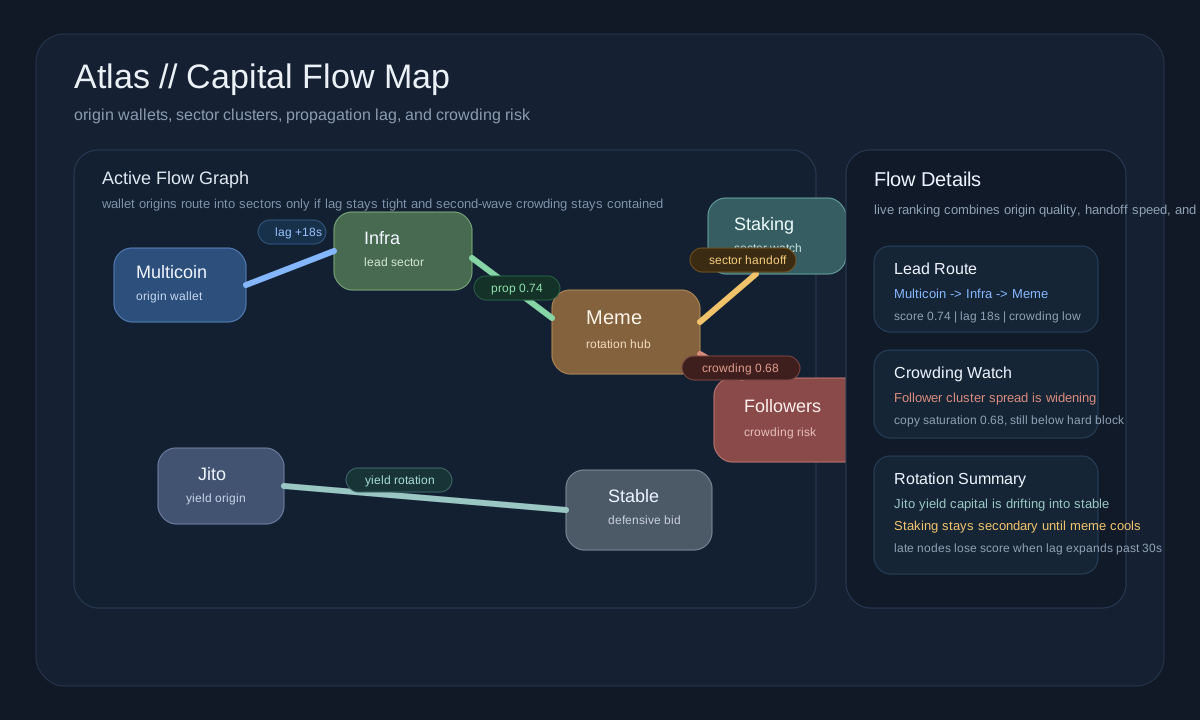
The edge in wallet intelligence is not seeing that a large wallet moved. It is knowing whether that wallet was first, whether others are copying it, and whether capital is rotating across sectors or simply shuffling inside the same bucket.
Atlas tracks a curated wallet set, fetches recent Helius activity, infers sector exposure from token movement, and asks a Claude agent to emit capital-flow alerts framed around origin, propagation, and distribution.
The emphasis is on who led the flow and whether the rest of the graph is still early or already crowded.
SCAN -> MAP MOVES -> INFER SECTOR -> SCORE PROPAGATION -> ALERT
Flow Map • Flow Alert • At a Glance • Operating Surfaces • How It Works • Example Output • Technical Spec • Risk Controls • Quick Start
At a Glance
Use case: track who moved first and whether the rest of the wallet graph is followingPrimary input: origin wallets, propagation lag, size similarity, sector overlap, crowdingPrimary failure mode: confusing copied flow with fresh leadershipBest for: operators who care about whether on-chain capital movement is still early
Flow Map
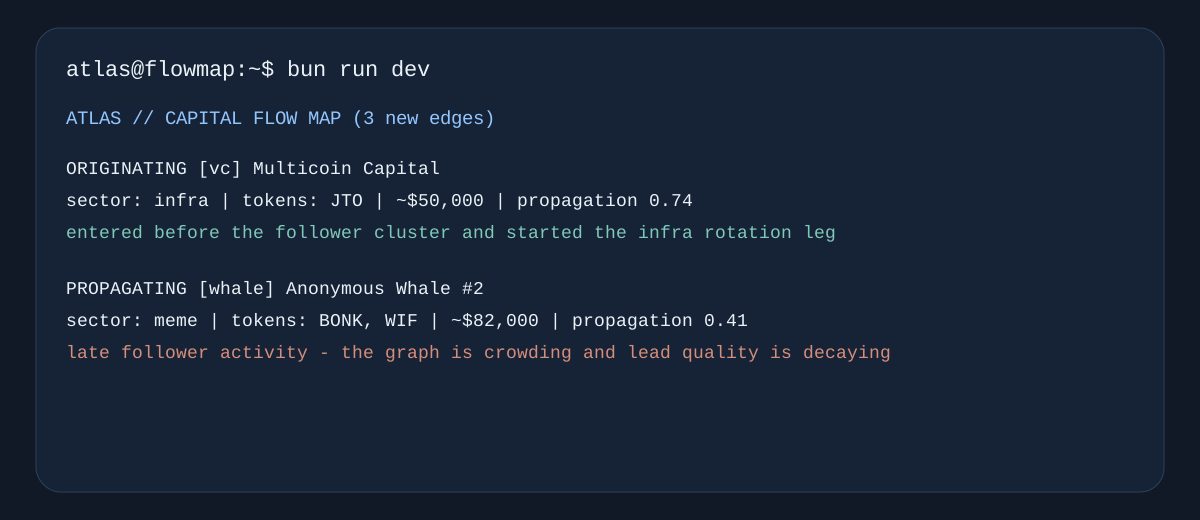
Flow Alert
Operating Surfaces
Flow Map: shows the current shape of the wallet graph and sector movementFlow Alert: prints whether a move is originating, propagating, rotating, or distributingPropagation Model: separates leaders from the second waveCrowding Lens: downgrades signals once too many followers pile into the same path
Why Atlas Exists
Raw wallet tracking is too flat. It tells you that a wallet moved, but not whether that move mattered, whether anyone followed it, or whether the graph is still early enough to act on.
Atlas exists to restore sequence and context to wallet flow. The useful question is not "who bought." The useful question is "who bought first, who copied after that, and is the signal getting stronger or more crowded?"
How It Works
Atlas processes wallet flow in five steps:
- ingest recent wallet actions from the tracked address set
- infer the sector context around each move
- compare later wallet actions to earlier ones for lag and size similarity
- score whether the move is leading, propagating, rotating, or distributing
- emit alerts only when the graph still looks early enough to matter
That is what turns wallet tracking into something interpretive instead of just observational.
What A Strong Atlas Alert Looks Like
- a clear origin wallet moves first
- the second wave arrives inside the usable lag window
- sector overlap confirms the move is coherent
- follower saturation is still low enough that the graph is not crowded
Once those conditions break, the board should downgrade the alert.
Example Output
ATLAS // FLOW ALERT

origin wallet      multicoin
sector             infra
state              propagating
lag window         18s
propagation score  0.74
crowding           low

operator note: second wave is real, but the graph still looks early
Technical Spec
Atlas treats a wallet move as a network event, not an isolated transfer.
Core propagation logic:
PropagationScore = lagAdjustedFollowRate * sizeSimilarity * sectorOverlap
Operationally:
- origin wallets matter more than follower wallets
- sector overlap matters because meme rotations behave differently from staking or infra rotations
- follower saturation decays the value of a copied signal once too many second-wave wallets pile in
- late propagation should be demoted if lag exceeds the configured window
The alert payload explicitly includes:
action: originating, propagating, rotating, distributingsector: meme, infra, staking, stable-yield, or unknownpropagationScore: bounded confidence about whether the move is leading or following the graph
Risk Controls
lag window: downgrades copied moves that arrive too late to matterfollower saturation filter: penalizes crowded second-wave behaviorsector consistency check: prevents unrelated token movement from looking like propagationorigin bias: keeps the system focused on leadership instead of noisy copying
Atlas should miss some copied moves on purpose. Once the graph is crowded, the informational edge is already decaying.
Quick Start
git clone https://github.com/AtlasOnchain/Atlas
cd Atlas && bun install
cp .env.example .env
bun run dev
Configuration
ANTHROPIC_API_KEY=sk-ant-...
HELIUS_API_KEY=...
ALERT_MIN_CONFIDENCE=0.70
MIN_PROPAGATION_LAG_SECONDS=15
MAX_PROPAGATION_LAG_SECONDS=300
COPY_SATURATION_THRESHOLD=0.55
Legitimacy Notes
- Planned commit sequence:
docs/commit-sequence.md - Draft engineering issues:
docs/issue-drafts.md
Support Docs
License
MIT
map who moved first, not just who moved big.
Reviews (0)
Sign in to leave a review.
Leave a reviewNo results found