Hexis
Health Pass
- License — License: Apache-2.0
- Description — Repository has a description
- Active repo — Last push 0 days ago
- Community trust — 34 GitHub stars
Code Warn
- process.env — Environment variable access in apps/server/src/main.ts
Permissions Pass
- Permissions — No dangerous permissions requested
No AI report is available for this listing yet.
Git-backed skills, tools & context for AI agents
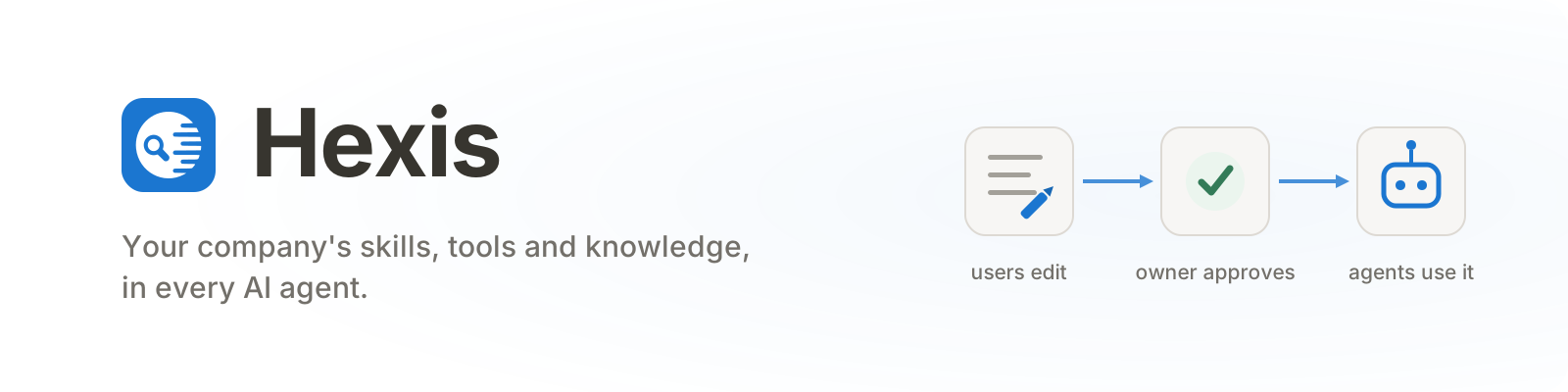




One place where your company's AI skills, tools and knowledge live:
centrally managed, reviewed and access-controlled, and usable from any AI
agent. The open-source core of the Bevel platform.
- Every employee connects once, in minutes. They add the workspace to
Claude Code, ChatGPT, Cursor or any MCP-capable agent with a single
connection key, and their agent can use exactly the skills, tools and
knowledge their role allows. No per-tool credentials handed around, no
per-agent setup projects. - The company stays in control. Skills, tool access and knowledge are
managed and reviewed in one place: every change has an author and a way
back, and anything proposed through a change request reaches its owners
for review before it lands. The rules apply to agents exactly as they
apply to people. - Independent of any agent vendor. Because the workspace speaks open
protocols, you can switch agent vendors on price and performance, or mix
them by task and role, without rebuilding what your agents know and can do.
The investment lives with you, not inside one vendor's walls. That is what
makes enterprise agent rollouts fast: onboard the next team, or the next
agent, instead of starting over.
Under the hood, everything lives in a git repository you own, on any git
host: skills (SKILL.md folders), tool manuals (UTCP) with an encrypted
secrets vault, and knowledge. You get branches, change requests with owner
approval, role-based access, and a built-in remote MCP server (OAuth 2.1)
that agents connect to.
Contents
- See Hexis in action
- Try the live demo
- Managed hosting
- Deploy with Docker
- Local development
- Environment reference
- Troubleshooting
- Repository layout

Watch the full walkthrough: connect an agent, use company context, review
proposed changes, and manage team access.
See Hexis in action
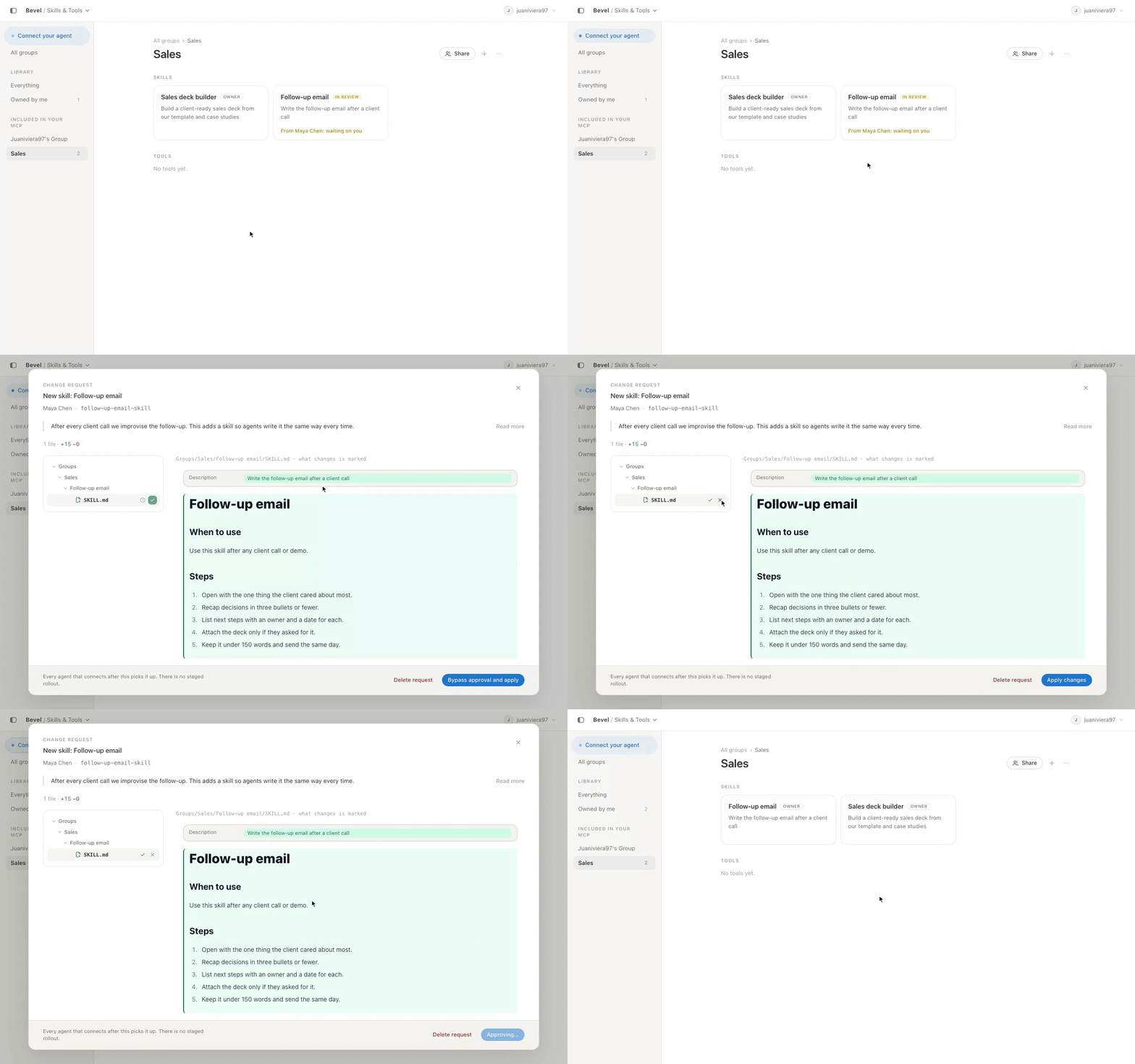
Propose and approve skill changes
Anyone can propose a new skill or improve an existing one. On protected
branches, owners review the exact change and approve it before it becomes
available to the team's agents.
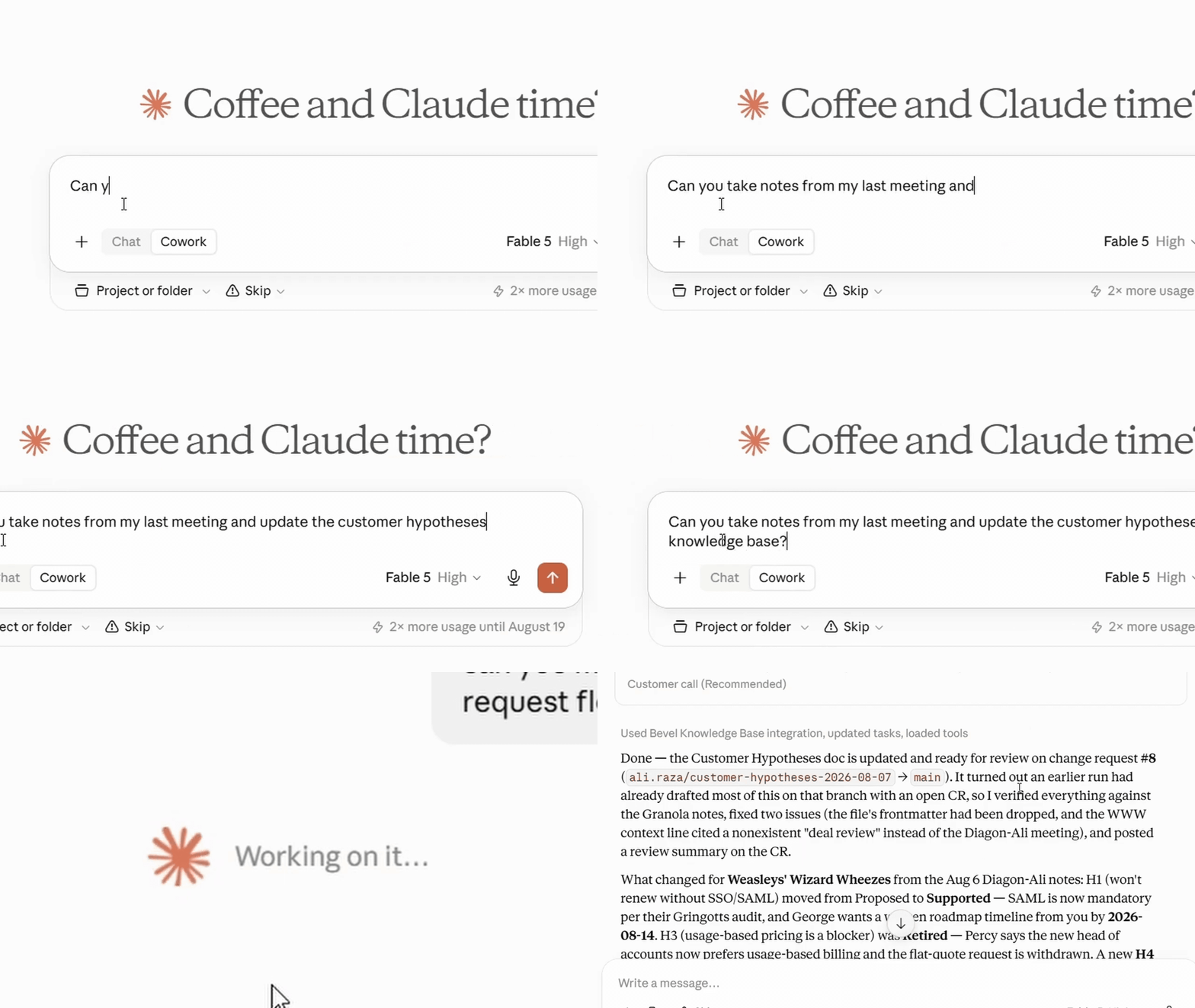
Use your team's skills in Claude
Connect Claude to Hexis over MCP, then ask normally. Claude can discover and
load the approved skill instructions and company context your role can access,
without copying prompts between tools.
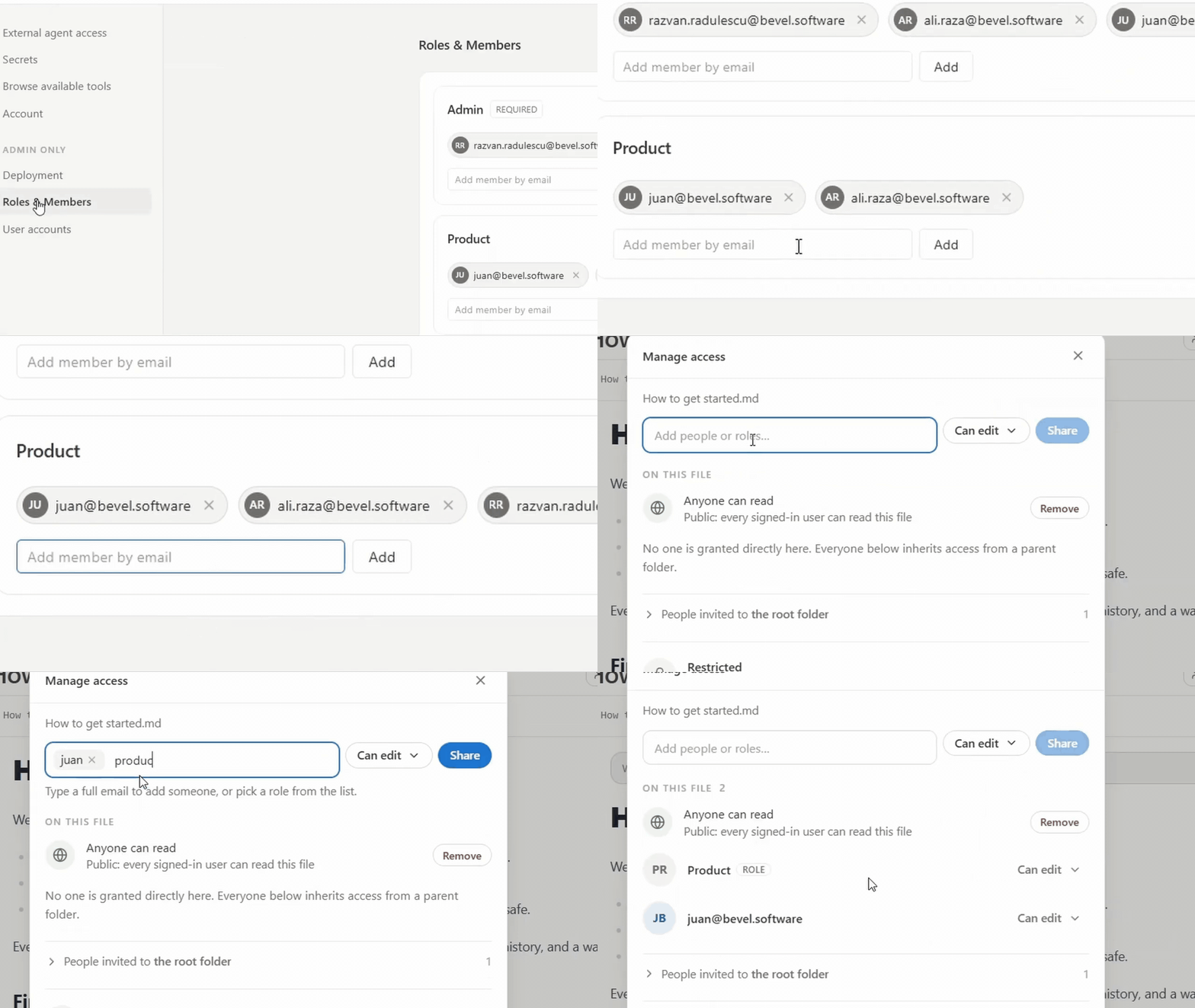
Share skills with the right people
Add teammates to roles or grant access directly when needed. Everyone connects
to the same workspace, while each person and their agent only sees what they
are allowed to read.
Try it first: the live demo
demo.bevel.software
is a public instance you can sign into with your Google account, populated
with a fictional company's knowledge, skills and tools. The Start here page
walks you through the whole loop: connect your own agent over MCP, have it
build a sales deck from a skill, watch its proposed improvement arrive as a
change request. The demo is shared and read-mostly (visitors propose, owners
approve); everything below gets you the same thing with none of the limits.
Want a managed instance?
We run it for you (hosting, upgrades, backups, SSO) and your team just signs
in. Write to [email protected].
Deploy it in 5 minutes (Docker)
You need: Docker with Compose on a
server (or your laptop; one line below differs), and an
empty git repository on any host (GitHub, GitLab, Bitbucket, Azure DevOps,
self-hosted) to hold your knowledge base. The app seeds it with a starter
template on first run.
git clone https://github.com/Bevel-Software/Hexis.git
cd Hexis
cp .env.example .env
Open .env and fill in the four required values (everything else can wait):
[email protected]     # the deployment owner, always an admin
ADMIN_PASSWORD=pick-something   # sign-in password; only with password login (SSO-only deployments drop it, see below)
JWT_SECRET=…                    # generate with the command below
SECRETS_ENC_KEY=…               # generate with the command below
Generate the two secrets (run twice, paste one result into each):
node -e "console.log(require('crypto').randomBytes(32).toString('base64'))"
# no Node installed? docker run --rm node:22-slim node -e "console.log(require('crypto').randomBytes(32).toString('base64'))"
For a public deployment, also set the origin values:
PUBLIC_BACKEND_URL=https://bevel.your-domain.com   # public origin; OAuth redirects are built from it
PUBLIC_FRONTEND_URL=https://bevel.your-domain.com  # same origin: the backend serves the SPA
Then start everything (Postgres + the app). Behind a reverse proxy
(Coolify, Traefik, nginx; recommended):
docker compose -f docker-compose.yml up -d
Also set TRUST_PROXY to your proxy hop count (1 for a single proxy), so
rate limits see real client IPs instead of the proxy's.
The explicit -f skips docker-compose.override.yml, so the app publishes
no host port: your proxy reaches it on port 3001 over the compose
network. This is deliberate: a fixed published port makes every redeploy fail
with port is already allocated, because the replacement container starts
while the outgoing one still holds it.
Directly exposed (no proxy): plain docker compose up -d publishes:3001; use APP_PORT=8080 docker compose up -d for a different host port.
Leave TRUST_PROXY unset here. With no proxy in front, trusting forwarded
headers would let clients spoof their own address.
Open your domain and sign in with ADMIN_EMAIL / ADMIN_PASSWORD.
Just trying it on your laptop? Same steps, minus the origin values: plaindocker compose up -d, then open http://localhost:3001.
First sign-in: the setup screen
The app asks for the things it could not guess, and tests them against the
real host before saving:
- Knowledge-base repo: the https clone URL of that empty repository.
- Git credential: a token with read/write access to it (for GitHub: a
fine-grained personal access token with Contents: read & write on that one
repo is enough). - Branch model: which branch is the default and which are protected
(changes to protected branches only land through approved change requests).
The repository's real branches are offered as suggestions; for an empty repo
the default (main) is fine.
Since the repo is empty, the app initialises it from the bundled template and
writes a roles.yaml whose first Admin is you. That's it: you're in the
workspace. Head to Skills & Tools to make your first group and skill, and to
Connect (in the app menu) to hook up an agent over MCP.
Prefer configuring by environment instead of the setup screen? Every one of
those values has an env var (KB_REPO_URL, GIT_TOKEN, DEFAULT_BRANCH, …);
anything set in the environment wins over the setup screen. See.env.example.
Worth knowing in production:
- State that survives redeploys: Postgres data plus three app volumes
(workspace clones, diff-review backups, tool-chain spill files) are named
volumes, so a redeploy or image rebuild loses nothing. Back up thepgdata
volume and your knowledge-base git repo; everything else is derivable. - Health:
GET /api/health. First boot can take a minute or two while it
runs migrations and seeds the knowledge-base repo. - Single sign-on: set
OIDC_ISSUER_URL/OIDC_CLIENT_ID/OIDC_CLIENT_SECRET(any spec-compliant provider) or configure it on the
setup screen, which shows you the redirect URI to register. For SSO-only
deployments setLOGIN_PASSWORD=falseand dropADMIN_PASSWORD. If your
issuer is multi-tenant (Google, Entracommon), setALLOWED_EMAIL_DOMAINS. SSO auto-provisions accounts, and that list is the
only signup boundary.
Local development (run from source)
You need: Node 22 (.nvmrc; the engine range is >=22 <23),
pnpm 10, git ≥ 2.41, and a Postgres 17 (the bundled one is fine):
docker compose up -d db        # just the database
pnpm install
pnpm build                     # builds the packages the apps import
cp .env.example .env           # fill the same four required values;
                               # the default DATABASE_URL already points at the bundled db
pnpm dev                       # backend on :3001, Vite dev server on :5173
Open http://localhost:5173 (the dev server proxies to the backend). Useful
commands: pnpm test, pnpm typecheck, pnpm lint.
Migrations run automatically on boot; there is no separate migrate step, in
dev or in production.
Environment reference
The four required values, then the rest. Everything marked setup screen
can be left unset and configured in the app at first sign-in (env always wins)..env.example documents every variable in full.
| Variable | Required | Purpose |
|---|---|---|
ADMIN_EMAIL |
yes | Deployment owner: always an admin, and the initial Admin of a freshly seeded KB |
ADMIN_PASSWORD |
with password login | Bootstrap sign-in password, checked against the env and never stored. Not needed when LOGIN_PASSWORD=false |
JWT_SECRET |
yes | Signs login sessions + OAuth state |
SECRETS_ENC_KEY |
yes | 32-byte key (base64/hex) encrypting vault secrets + MCP OAuth tokens |
DATABASE_URL |
see note | Postgres connection string. Unset under compose, the app builds it from the POSTGRES_* values the bundled db was created with |
POSTGRES_USER / POSTGRES_PASSWORD / POSTGRES_DB |
no | Credentials for the bundled database (applied only when its volume is first created) |
KB_REPO_URL |
setup screen | https clone/push URL of the knowledge-base repo, on any git host |
GIT_TOKEN / GIT_USERNAME |
setup screen | Git credential (HTTP Basic password / host-specific username; see .env.example for per-host usernames) |
DEFAULT_BRANCH / PROTECTED_BRANCHES |
setup screen | Branch model. Runtime-only: served to the frontend over /api/config, so one build runs anywhere |
PUBLIC_BACKEND_URL / PUBLIC_FRONTEND_URL |
production | Public origins for OAuth redirects + post-login bounces |
TRUST_PROXY |
behind a proxy | Reverse-proxy hop count, so req.ip and the login rate limit see the real client |
OIDC_ISSUER_URL / OIDC_CLIENT_ID / OIDC_CLIENT_SECRET |
no | Generic OIDC SSO; the login method appears once all three are set |
ALLOWED_EMAIL_DOMAINS |
with multi-tenant SSO | Signup allow-list for SSO auto-provisioning |
LOGIN_PASSWORD |
no | false hides password login and rejects the endpoint |
PORT |
no | Backend port (default 3001) |
KB_DIR_NAME |
no | Directory name of the KB clone inside each workspace |
TENANT_ID |
no | Slug branding credential prefixes (default bevel) |
KB_TEMPLATE_DIR |
no | Overrides the packaged KB seed template |
ONTOLOGY_SESSION_BLOCK |
no | Ontology-session touch tracking toggle (default on) |
Troubleshooting
port is already allocatedon redeploy: you're behind a proxy but ran
compose without-f docker-compose.yml, so the override published a host
port. Deploy with the explicit-f(see above).- Changed
POSTGRES_PASSWORDbut can't connect: Postgres applies those
values only when its data volume is first created. In dev,docker compose down -vresets it; in production, change the password in
the database itself. pnpm installfails on Node version: the engine range is strict
(>=22 <23) because of a native dependency's ABI.nvm usepicks up.nvmrc.- Setup screen rejects the git token: the token needs read and write
(push) access to the KB repository; the setup screen's test tells you which
half failed. On GitHub, fine-grained tokens also need the repo explicitly
selected. - Changed
ADMIN_PASSWORDand nothing happened: it's read once at
startup; restart the app container. - App unhealthy right after first start: give it the
start_period
(~90s); first boot runs migrations and seeds the KB repo before answering.
Repository layout
| Path | What it is |
|---|---|
packages/shared |
@bevel-software/platform-shared: shared types + pure domain utilities |
packages/core-backend |
@bevel-software/platform-core-backend: the core backend (ships migrations/ + kb-template/) |
packages/core-frontend |
@bevel-software/platform-core-frontend: the core UI, published as raw TS/TSX source |
apps/server |
standalone core backend shell |
apps/web |
standalone core SPA shell (Vite) |
License: Apache-2.0
Reviews (0)
Sign in to leave a review.
Leave a reviewNo results found