diffo
Health Pass
- License — License: Apache-2.0
- Description — Repository has a description
- Active repo — Last push 0 days ago
- Community trust — 22 GitHub stars
Code Pass
- Code scan — Scanned 12 files during light audit, no dangerous patterns found
Permissions Pass
- Permissions — No dangerous permissions requested
No AI report is available for this listing yet.
Local, live code review for the AI age - read what the agent wrote and send feedback straight back

Diffo
The human way to review agent-written code.
A live review on your machine, wired to the agent that wrote the code, so your comments
come back as fixes.
Quick start · Why Diffo · Docs · Status · Contributing





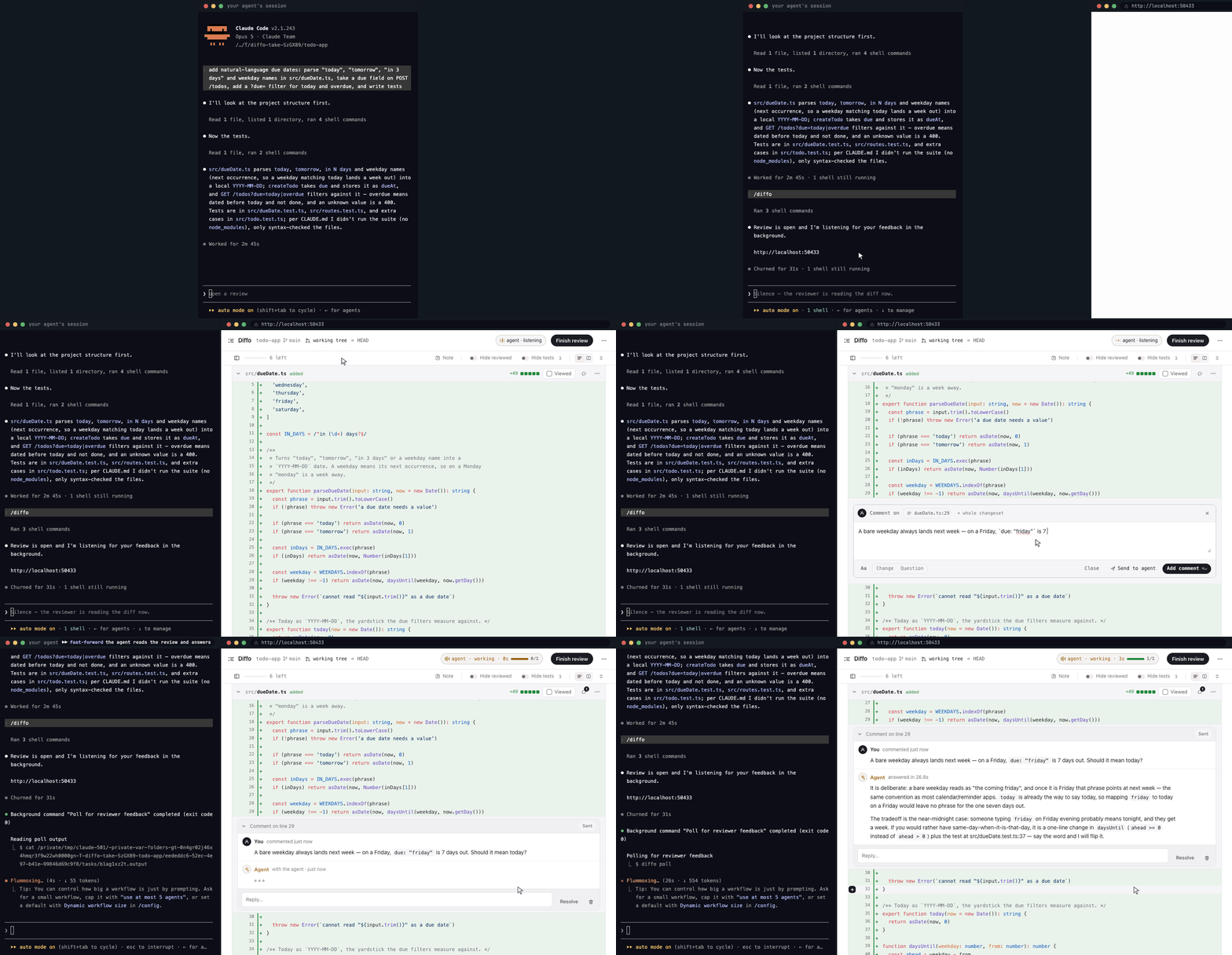
The whole loop in one take: type /diffo, read the diff, ask on the line — and the answer comes back in the thread. Left is a real Claude Code session, right is the real review it opened. Nothing here is a mock-up; the only edit is that waiting on the agent runs fast.
Quick start
Requires Node >= 24 and git.
Have your agent set it up. Paste this into Claude Code, Cursor, Codex, or whichever
agent you already use:
Run `npx skills add DiffoHQ/diffo --skill diffo -g` and open the diffo review
Or install the skill yourself:
npx skills add DiffoHQ/diffo --skill diffo -g
Either way, that's the whole install. Then, in any session, say:
"let's review that", or just
/diffo
The agent opens a live review of its own work and hands you the URL. Your comments arrive
in its context, its replies land inline in your threads, and its fixes update the diff
while you read. That is the clip above, with no URL to ask for.
You can also run the CLI straight out of a checkout, which is what contributors do:
git clone https://github.com/DiffoHQ/diffo.git && cd diffo
pnpm install && pnpm build
node dist/cli.mjs setup   # or `node dist/cli.mjs` from any repo to review it
New here? Your first review, end to end takes about five minutes.
Why Diffo
We write code with an LLM. We review it alone.
Writing became a conversation: you and the model in the same window, trading context until
the thing is right. Reviewing never did. The code lands, the conversation ends, and you go
read four hundred lines by yourself, in a viewer built for a world where whoever wrote it
had already moved on.
Diffo keeps the conversation open through the review. Ask what a hunk does and the agent
that wrote it answers in the thread. Ask why, and it explains, with a diagram when the
shape needs one. Ask for a change and it makes it, and the diff updates while you read.
The judgement stays yours. You just stop reading alone.
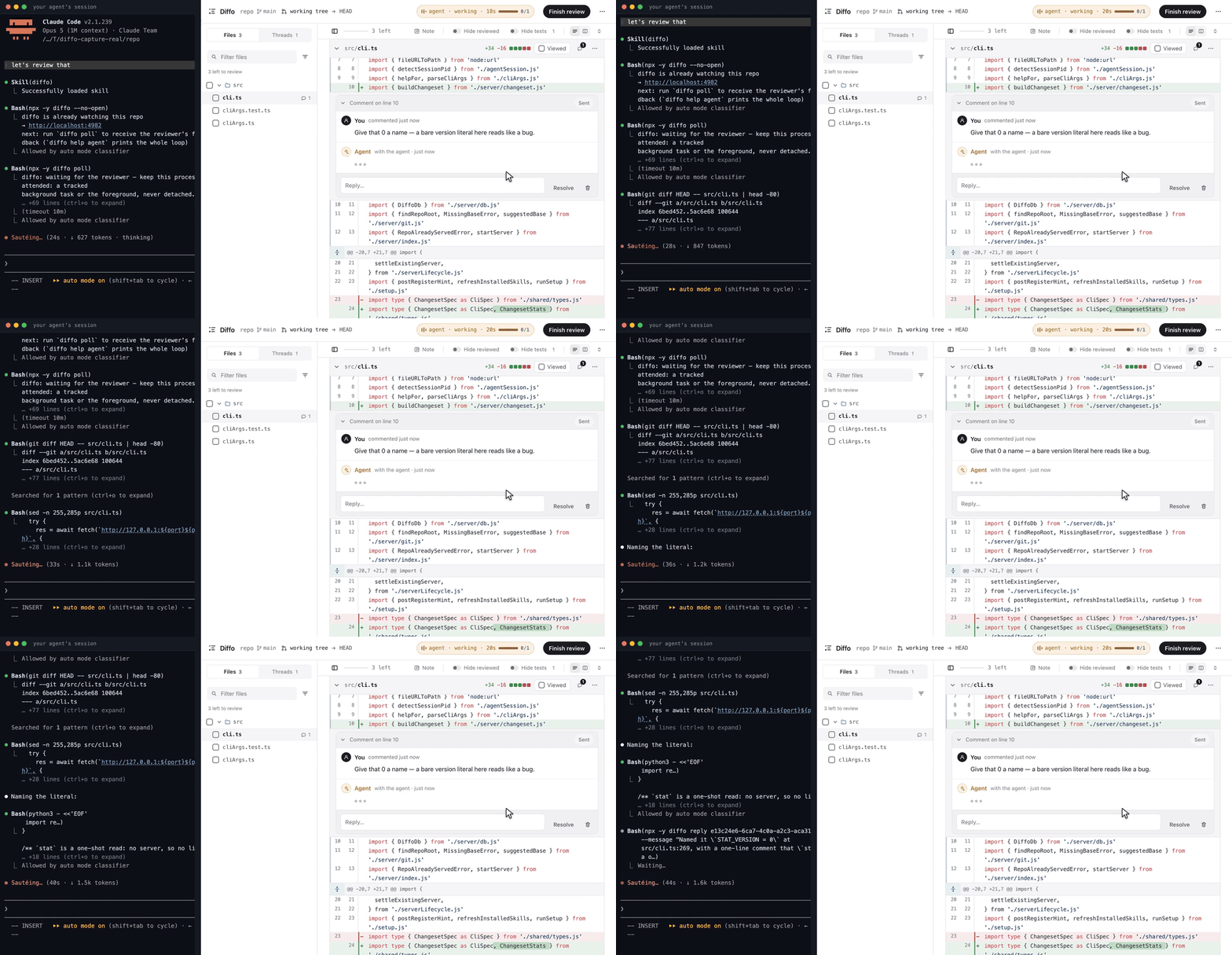
Ask for a change and the agent makes it. The diff updates under you, and the file count falls as those files stop differing.
What you get
|
A thread is a decision Each comment is one small call: change this, explain that, leave it alone. Drop it on a |
Reading, not scrolling Syntax-highlighted unified and split diffs, word-level marks, keyboard-first movement, |
|
Live while you iterate Fixes land in the diff you are already reading. A hunk you had marked read says changed |
Local One process on your machine, bound to loopback. No account, no telemetry, no cloud, and |
|
It explains itself On a change that's multi-file, structural, or just subtle, the agent opens the review with |
Where it fits
Diffo doesn't replace pull request review, and it isn't trying to. A pull request is how you
hand finished work to someone else. Diffo is the step before that: the loop where you and the
agent turn a first draft into something worth another person's time.
| Diffo | Pull request review | AI reviewer bot | |
|---|---|---|---|
| When | before the PR exists | after you push | after you push |
| What it's for | getting the code right | getting it approved | catching the obvious |
| Who you work with | the agent that wrote it | your teammates | nobody |
| Where the code is | uncommitted, on your disk | pushed to a branch | pushed to a branch |
| What comes out | code worth pushing | an approval and a record | a list of comments |
So they stack rather than compete: iterate here until the diff reads clean, then open the
pull request you actually want reviewed. Your judgement is the scarce resource, and this is
the stage where spending it changes the outcome.
How it works
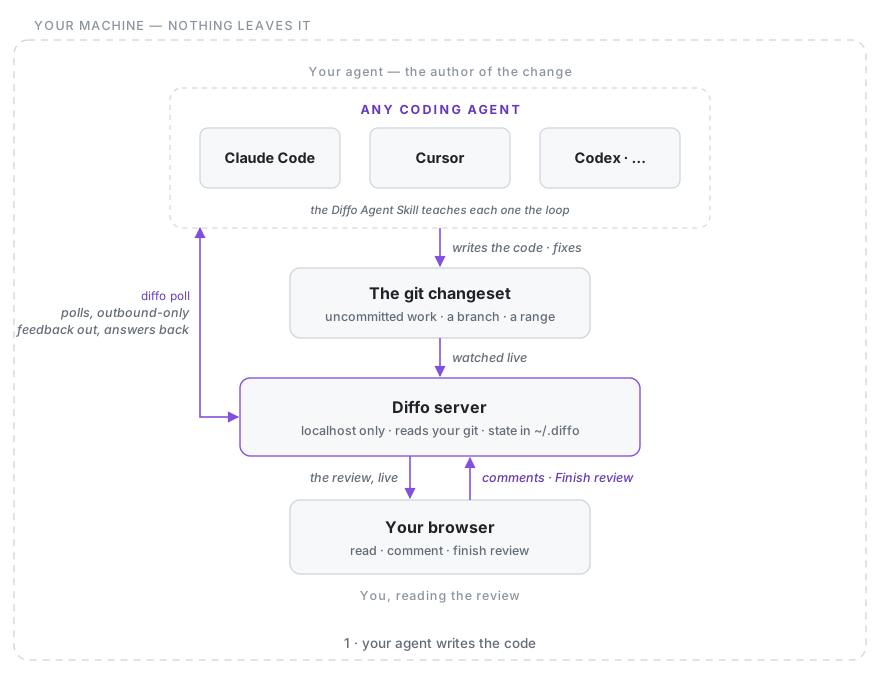
The left half is a diff viewer. The right half is what Diffo is for: your comment doesn't
land in a queue for later, it lands in the conversation that wrote the code, while that
conversation still remembers why. Nothing needs to be committed, pushed, or opened as a PR
first, so agent output is reviewable the moment it hits the disk, which is the moment it's
cheapest to change.
| You want to review | Command |
|---|---|
| Uncommitted work in progress (the default) | diffo |
Everything since you branched off main |
diffo --base main |
| A pull request | not supported yet |
Docs
| Your first review | The whole loop end to end, about five minutes |
| Getting started | Install, and where each agent gets wired |
| The review loop | Reading, commenting, and what the agent receives |
| How it works | The components and the server lifecycle |
| The agent side | The agent protocol: every command, every payload |
| Architecture | Diff pipeline, delivery queue, SQLite state |
| CLI and Keyboard shortcuts | Reference |
| FAQ | The short answers |
Under the hood
TypeScript on Node >= 24: a Hono server over loopback serving a React 19
UI, live updates over server-sent events from one recursive filesystem watch, and state in a
single SQLite file at ~/.diffo/diffo.db through the runtime's built-in node:sqlite, so
there is no database to install. Zero network calls. 1,000 tests across 57 files.
Reviews are scoped per repo and branch, and the server is loopback-only, rejecting
non-loopback Host and Origin headers so a web page can't reach into your repo through
it. The full walkthrough is in Architecture.
Every hunk carries a content-addressed id: a hash of its path and changed lines, and
deliberately not its line numbers. That one decision is what makes the live review honest.
- Read marks survive a refresh, because an untouched hunk keeps its id.
- An edited hunk mints a new id, loses its mark, and says changed since you read it. You
can't accidentally sign off on code you never saw. - The ids from your last Finish are a complete record of what existed then, so "what moved
since I last looked" is a set subtraction, needing no timestamps.
Open core
Everything in this repository is the core, and the core stays Apache-2.0: local review, the
agent loop, the CLI, the Agent Skill. It works offline, for one reviewer, forever, for free.
A hosted team tier is planned: shared changesets, review history across a team, SSO. None of
it exists yet, and none of it will take an existing core feature behind a paywall. The line
we commit to: anything that runs on your machine for one reviewer is core.
Status
Diffo is pre-1.0: the loop below works end to end — this repo is reviewed with it
daily — and the edges are still moving. What works today:
- Live review of any changeset: the working tree, or anything since
--base. - The comment loop: threads that reach the session that wrote the code.
- One setup, every agent: Claude Code, Codex, Cursor, VS Code, Copilot CLI, Gemini CLI, Amp, Goose, OpenCode.
- Reading tools: unified and split diffs, word-level marks, coverage tracking.
Contributing
Five gates, all of which CI runs, or pnpm check for all five:
pnpm typecheck && pnpm test && pnpm build && pnpm lint && pnpm docs:build
Local development is pnpm dev (server and client together). One hard rule:skills/diffo/SKILL.md is generated. Edit src/skill.ts and runpnpm build:skill; a test fails if the committed file drifts. That rewrites the repo
file, not the skill your own agent runs — pnpm dev:skill --global installs a separate/diffo-dev that drives your checkout, alongside the shipped /diffo.
Details in CONTRIBUTING.md, plus a Code of Conduct
and the CHANGELOG. First-time contributors sign a CLA: a bot asks
on your first pull request, and signing is one reply.
Found a security problem? Please don't open a public issue. The
Security Policy says where to send it and what's in scope.
License & trademark
Diffo is open source under the Apache License 2.0, the whole of it, today. A
Diffo Enterprise License exists but currently covers no files at
all; it is written down so the open-core boundary is settled before it is needed, and it
carries the commitment that nothing Apache-2.0 in a released version moves out of it later.
The Diffo name and logo are trademarks of Diffo:
the license covers the code, not the name. Forks are welcome; ship them
under your own name.
Reviews (0)
Sign in to leave a review.
Leave a reviewNo results found