one-man-startup
Health Warn
- License — License: MIT
- Description — Repository has a description
- Active repo — Last push 0 days ago
- Low visibility — Only 6 GitHub stars
Code Fail
- rm -rf — Recursive force deletion command in .claude/settings.json
Permissions Pass
- Permissions — No dangerous permissions requested
No AI report is available for this listing yet.
Build a software startup without writing code. Not vibe coding: a proven team workflow (requirements, design, test-first build, QA, release approval) run by AI agents.
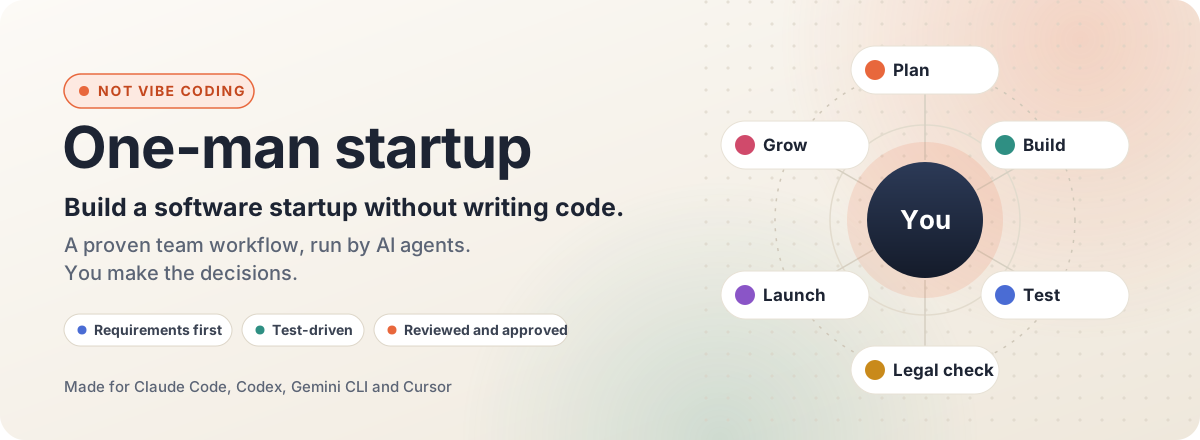
One-man startup
Build a software startup without writing code.
You have an idea for an app or an online business, and no one to build it. This template gives
you a small team of AI agents that plan, build, test and launch it with you. You never write
code, and you don't need to read it. You need to know your customers and be willing to make
decisions.
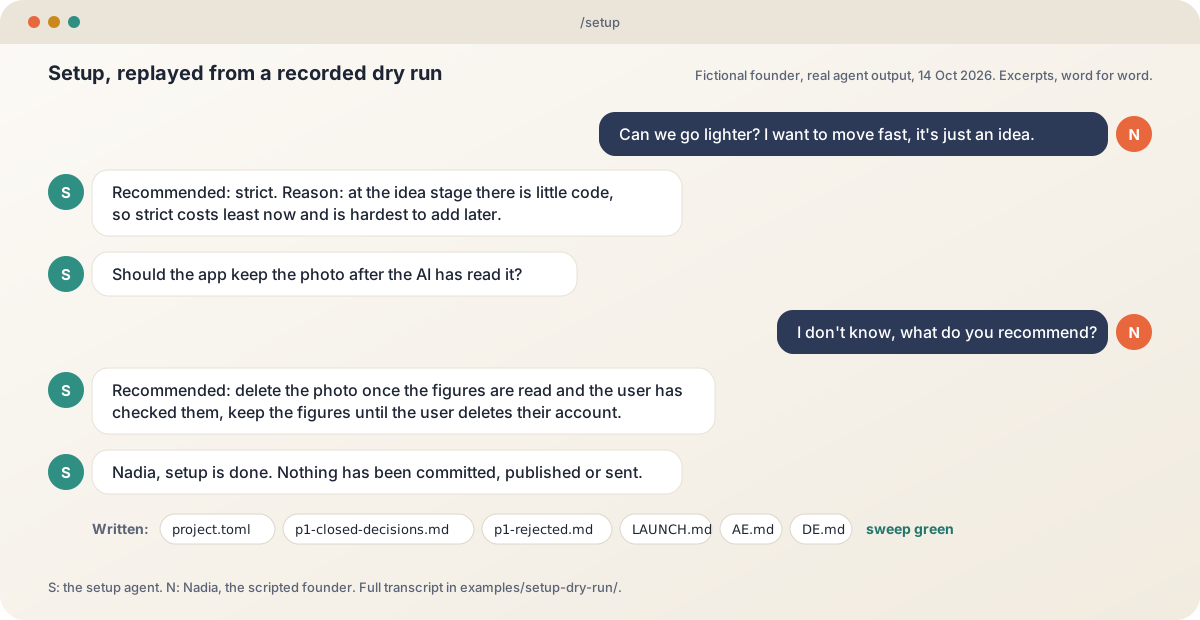
This is setup at work, replayed word for word from a recorded dry run
with a fictional founder. The full transcript and every file it wrote are there.
Website: fadi88.github.io/one-man-startup.
This is not vibe coding
Vibe coding means describing what you want to an AI, accepting whatever it writes, and asking
again when something breaks. It is fast for a demo. It tends to end in an app that half works,
that nobody understands, and that gets more fragile with every fix.
This template works the other way. It follows the structure that established software teams
use: the work is written down before it is built, designed before it is coded, tested by
someone other than whoever built it, and released only when the person in charge approves. The
AI agents fill the roles; the workflow is the traditional one. Every step has a standard name
you can look up:
| What happens here | The established practice |
|---|---|
| Before you are interviewed, a researcher looks at what similar products already do, with sources. | Competitive analysis |
| Before anything is built, you are interviewed about who needs it, the smallest useful version and what happens when it goes wrong. | Requirements elicitation and product discovery |
| Everything the product must do is written as a numbered requirement, and every change names the requirement it serves. | Requirements traceability |
| After the interview, a feasibility check confirms it can be built and run on your stack and budget. | Feasibility study |
| Building can't start until the spec is confirmed and no question on it is still open. | Definition of Ready |
| An architect designs the system and records each hard-to-reverse choice with its reason. | Architecture Decision Records |
| Developers write the test before the code. | Test-driven development |
| A reviewer reads every spec, design and code change before it moves on. | Code review |
| A separate tester checks the work against the requirements and can stop a release. | Independent QA and a release gate |
| A security reviewer looks for ways data could leak or be misused. | Security review and threat modelling |
| Every change re-runs every check, and a round of work ends only when they all pass. | Continuous integration |
| Nothing goes live, costs money or deletes data without your approval, one step at a time. | Change approval and release management |
| Decisions, and the ideas you turned down, are written down with the reason. | Decision log |
What changes is who does the work, not how it is done. You play the founder and the final
approver; the agents play the team.
Who it's for
- You have a business idea and no technical co-founder.
- You've tried vibe coding, "just ask the AI to build it", and ended up with something that half
works and that nobody can maintain. - You want to understand what is being built and why, without learning to program first.
Developers who work alone can use it too, for the discipline of a team without hiring one.
How it goes
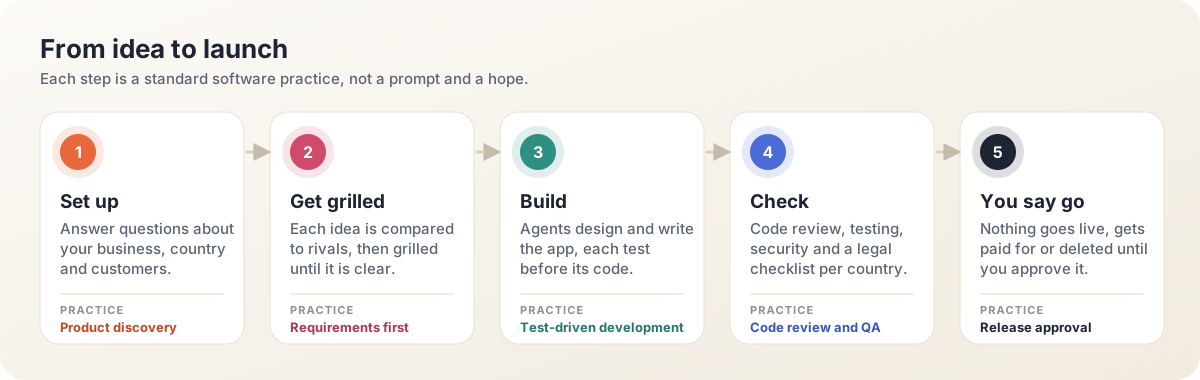
1. Set up. The setup agent interviews you: what you're building, for
whom, in which countries, whether customers are people or companies, what data you'll hold, and
your monthly budget for AI. Every question comes with a suggested answer, so you can just say yes
where you have no opinion. It then tailors the team, the rules and a legal checklist to your
answers.
2. Get grilled. Every new feature starts with questions, the kind a sharp product manager
would ask. Who needs this? What's the smallest useful version? What happens when something goes
wrong? A researcher first looks at what similar products do, so the questions come with real
examples, and afterwards a feasibility check confirms it can be built and run within your
budget. It can feel like a lot. It's also how you avoid paying the AI to build the wrong thing.
You can ask for a grilling on any idea by typing /grill-me.
3. Build. The agents design the screens, write the code and test it as they go. The project
manager decides who works on what, so you don't have to.
4. Check. A reviewer reads every plan and every code change as a second pair of eyes. A
tester tries to break it. A security reviewer looks for ways data could leak.
The legal agent goes through a checklist for each country you sell in.
5. You say go. Nothing goes live until you've seen what changed and approved it.
Your team
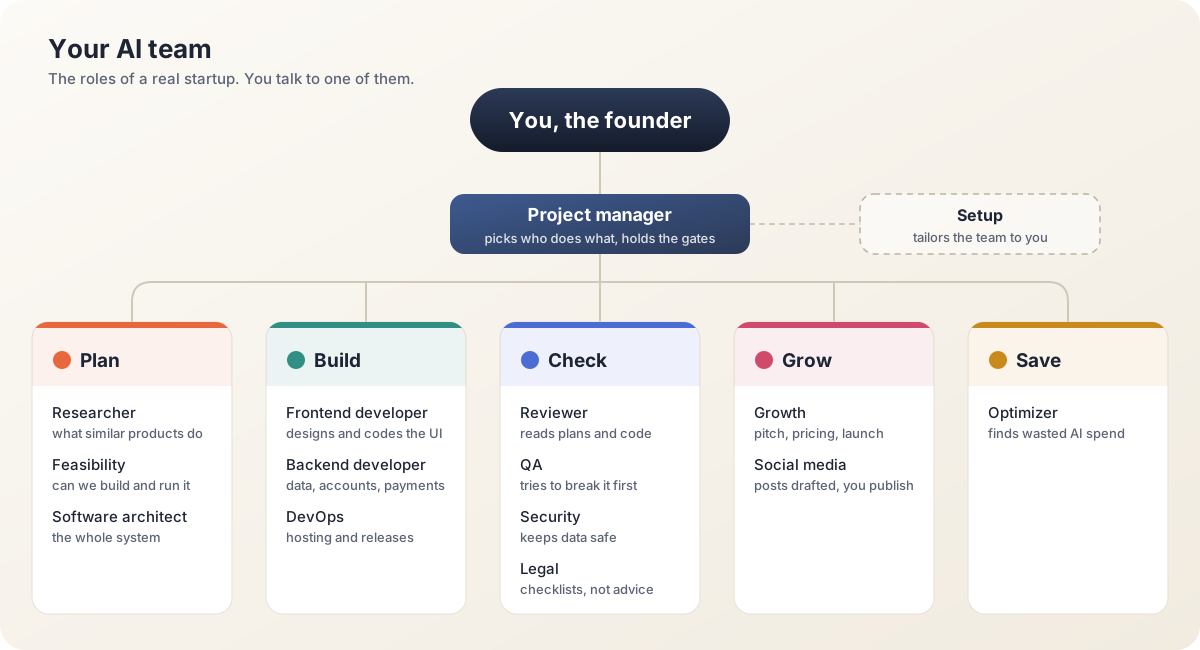
You talk to one agent, the project manager. It brings in the others when they're needed. Setup
switches on only the ones your project needs now, and you can add more later.
What stays in your hands
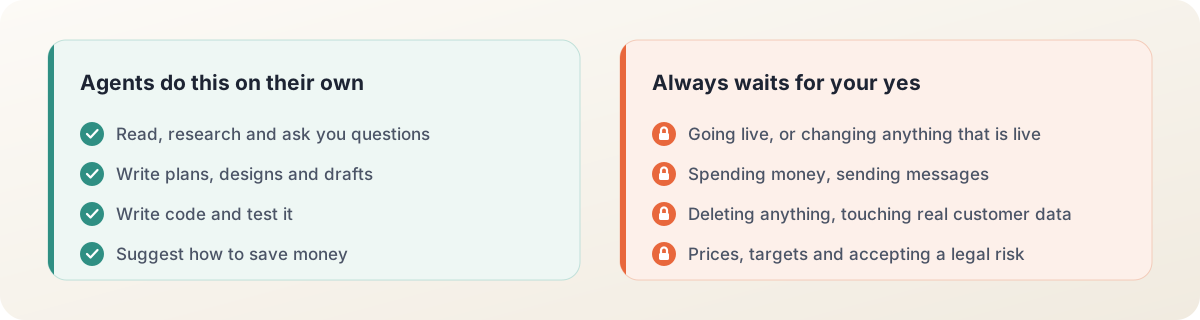
The agents can be wrong, and sometimes confidently wrong. That is why the workflow above has a
check at every step. The ones you'll notice most:
- Write it down first. Every feature is described in plain words before any code is written,
so you can check it's what you meant. - Prove it works. Every change is tested, and the agents report what they tested and what
they couldn't. A change that breaks a test doesn't get handed back to you. - Nothing irreversible without you. Going live, payments, messages to customers and deleting
data all wait for your approval, one step at a time. - Decisions are recorded. When you decide something, it's written down with the reason, so
the agents don't argue it again next week.
What you need
| What it is | Cost | |
|---|---|---|
| An AI coding tool | Claude Code, Codex, Gemini CLI or Cursor. The template is written for all four; see what has been tested. | A paid subscription. Check the tool's own pricing page. |
| A GitHub account | Where your project's files are kept, with every change recorded. | Free |
| Git and Python | Two free programs your AI tool uses behind the scenes. | Free |
Hosting your app once it's live has its own costs. The agents are instructed to tell you what
each option costs before you choose.
Getting started
If any step is unfamiliar, ask your AI tool to walk you through it.
- Install the tools. Install your AI coding tool by following its website's instructions,
then ask it: "Check that Git and Python 3.11 or newer are installed on this computer, and
help me install them if not." - Make your copy. On this page on GitHub, click Use this template, then Create a new
repository, and give it your product's name. - Open it. Ask your AI tool: "Download my repository
<your-name>/<your-product>from
GitHub and open it." - Run setup. Type
/setup(in Claude Code) or ask: "Run the setup interview fromskills/setup." Answer the questions. - Ask for your first thing. For example: "I want a landing page where people can join a
waiting list." The project manager takes it from there.
To see what setup produces before you run it, read the
worked example: a fictional founder's interview, word for word, and
every file it wrote.
How it's built
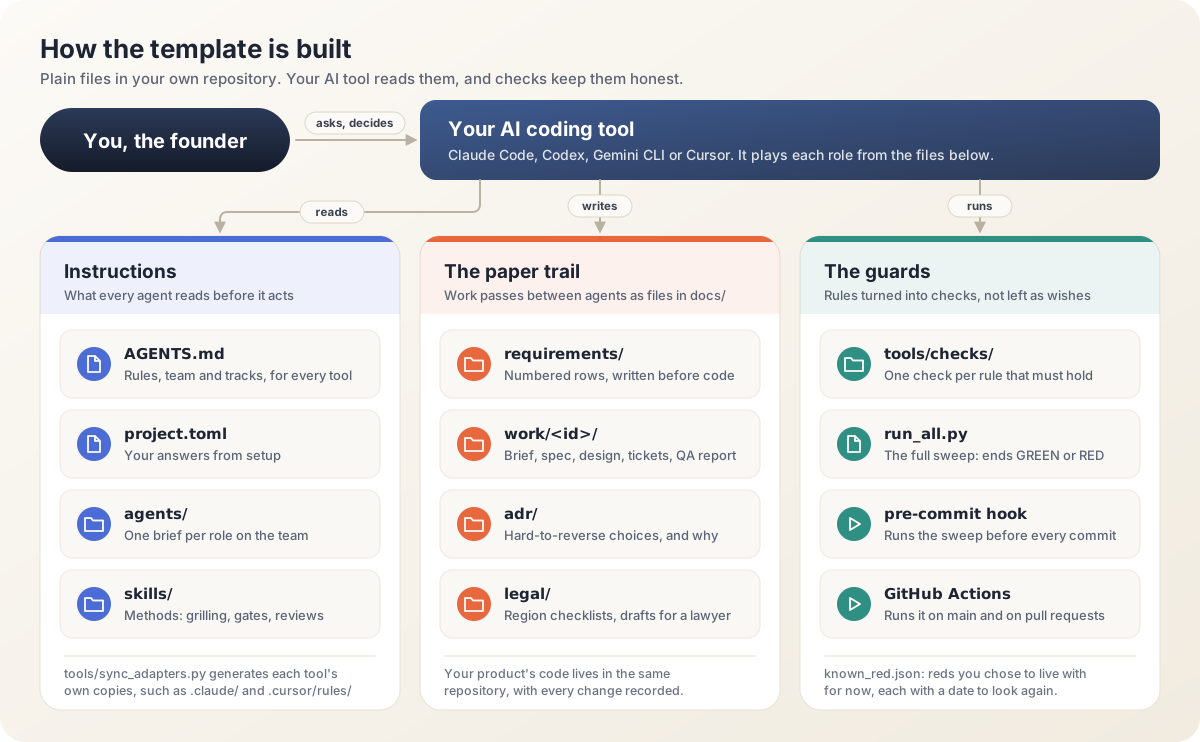
Everything is plain files in your own repository. Your AI tool reads the instructions, leaves a
written record of every step in docs/, and runs the checks that keep the rules from being
skipped.
Good to know
It isn't magic. The agents are good at a lot of work and still make mistakes. The built-in
tests and approvals are there to catch mistakes before they reach you, and they won't catch them
all. They won't catch a bad business idea either; the grilling is there for that.
It isn't legal advice. The legal agent writes checklists and first drafts of your privacy
policy and terms, marked for a lawyer to review. Before launching, especially with payments,
health data, children or financial data, have a lawyer review them. You'll arrive with a list
of specific questions instead of a blank page.
Free tiers are strict. If your product has a free plan or a trial, the agents build hard
limits into it from the first version: a cap per user, a tighter one for people who haven't
signed up, and a daily ceiling on what the free plan can spend in total. You choose the numbers.
Without limits, anyone who finds the free plan, including bots, can run up your bill.
Costs can add up. Every agent run uses your AI subscription. The optimizer agent looks for
waste, such as an agent using a stronger model than its job needs, and suggests savings. You
approve each one.
You can stop any time. Everything the agents make is ordinary code and documents in your own
GitHub repository. Nothing is locked into this template or any one AI tool.
Words you'll see
| Word | Meaning |
|---|---|
| Repository | Your project's folder, kept on GitHub with a full history of changes. |
| Commit | A saved change, with a note about what changed and why. |
| Requirement | One sentence describing something the product must do, written before it's built. |
| Test | A small automatic check that something works. It's run again after every change. |
| Deploy | Putting a new version live for your users. Always waits for you. |
| Agent | An AI with one job, like a team member with a role. |
For developers
How the agents, skills, checks and tool adapters fit together is in
docs/HOW-IT-WORKS.md. The operating manual the agents follow is
AGENTS.md.
Credits
This template borrows ideas, with thanks, from:
- Matt Pocock's grilling skill
- Andrej Karpathy's observations on LLM coding pitfalls, as turned into guidelines in
forrestchang/andrej-karpathy-skills,
included unchanged under its MIT licence - GitHub's spec-kit
- Anthropic's frontend-design skill, included unchanged under the Apache License 2.0
- the five specification layers of Hamidreza Saghir, as adapted in Florian Bruniaux's
Claude Code guide, rewritten
here as the spec audit - the BMAD Method
- Garry Tan's gstack
- Anthropic's writing on multi-agent systems
and its legal plugin
MIT licence. Use it, change it, build your company on it.
Reviews (0)
Sign in to leave a review.
Leave a reviewNo results found