muxflow
Health Pass
- License — License: MIT
- Description — Repository has a description
- Active repo — Last push 0 days ago
- Community trust — 74 GitHub stars
Code Fail
- rm -rf — Recursive force deletion command in .github/workflows/release.yml
Permissions Pass
- Permissions — No dangerous permissions requested
No AI report is available for this listing yet.
Remote-first tmux IDE for coding agents. Agent notifications on desk and phone, voice replies, screenshot paste over SSH, multi-host, ports, files, and Git.

Muxflow
Remote-first tmux IDE for coding agents.




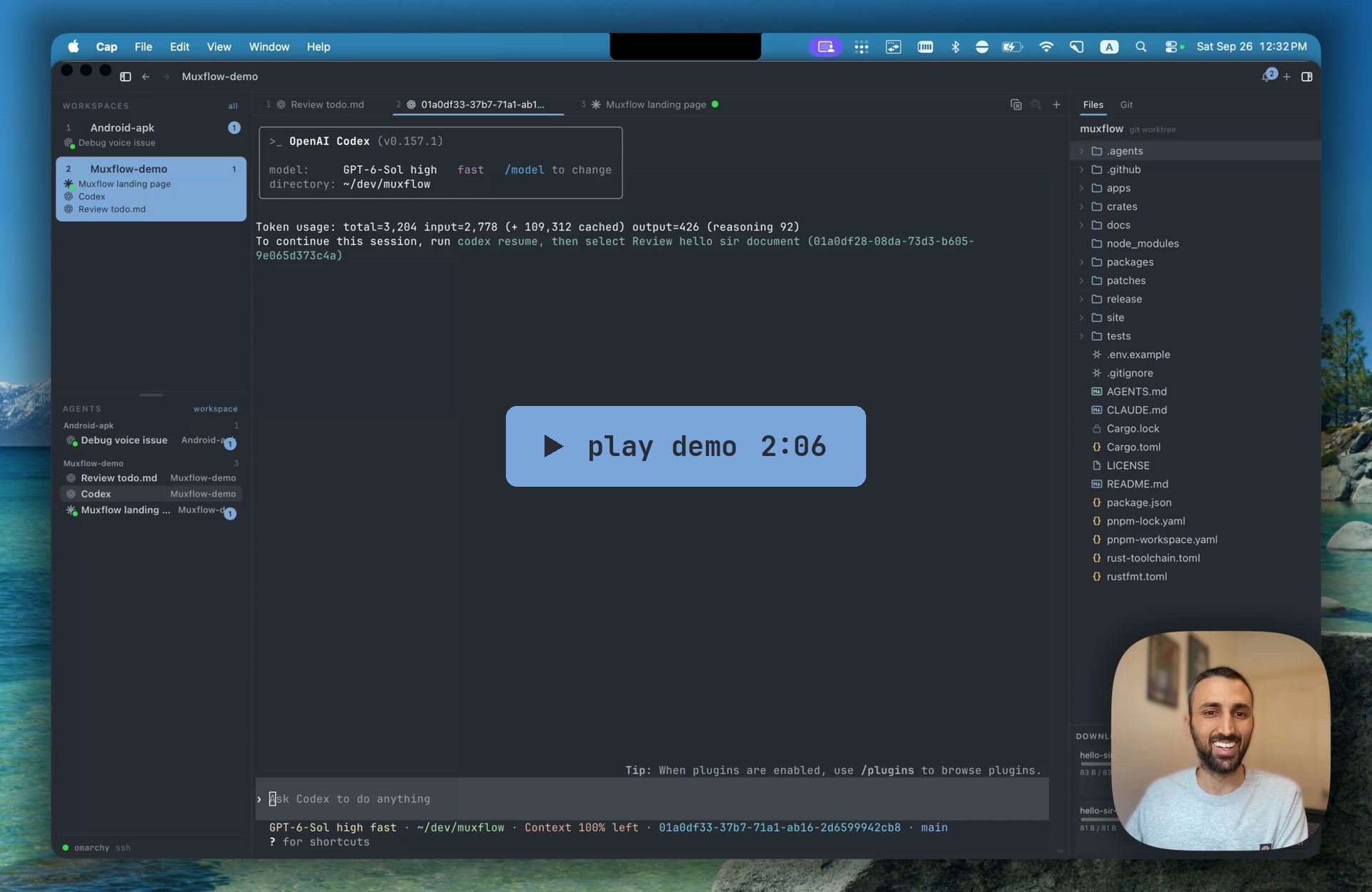
Agent notifications on desk and phone, voice replies, screenshot paste over
SSH, multi-host, ports, files, and Git.
Features
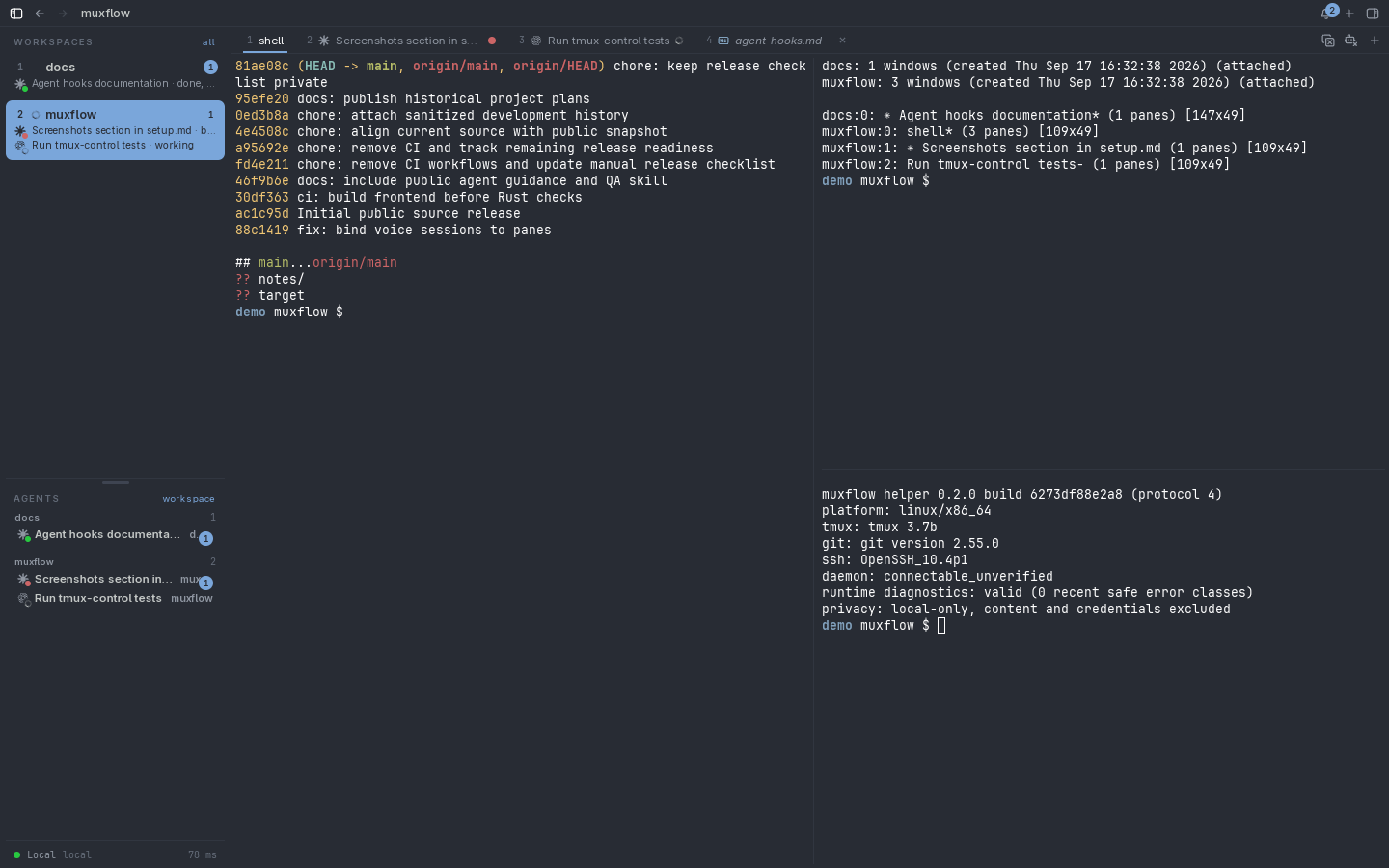
tmux basedSessions stay on the host. Close the app, reboot your laptop, or switch machines and every window, pane, and process is still there when you come back. Sessions are workspaces, windows are tabs, and renames flow both ways. |
 |
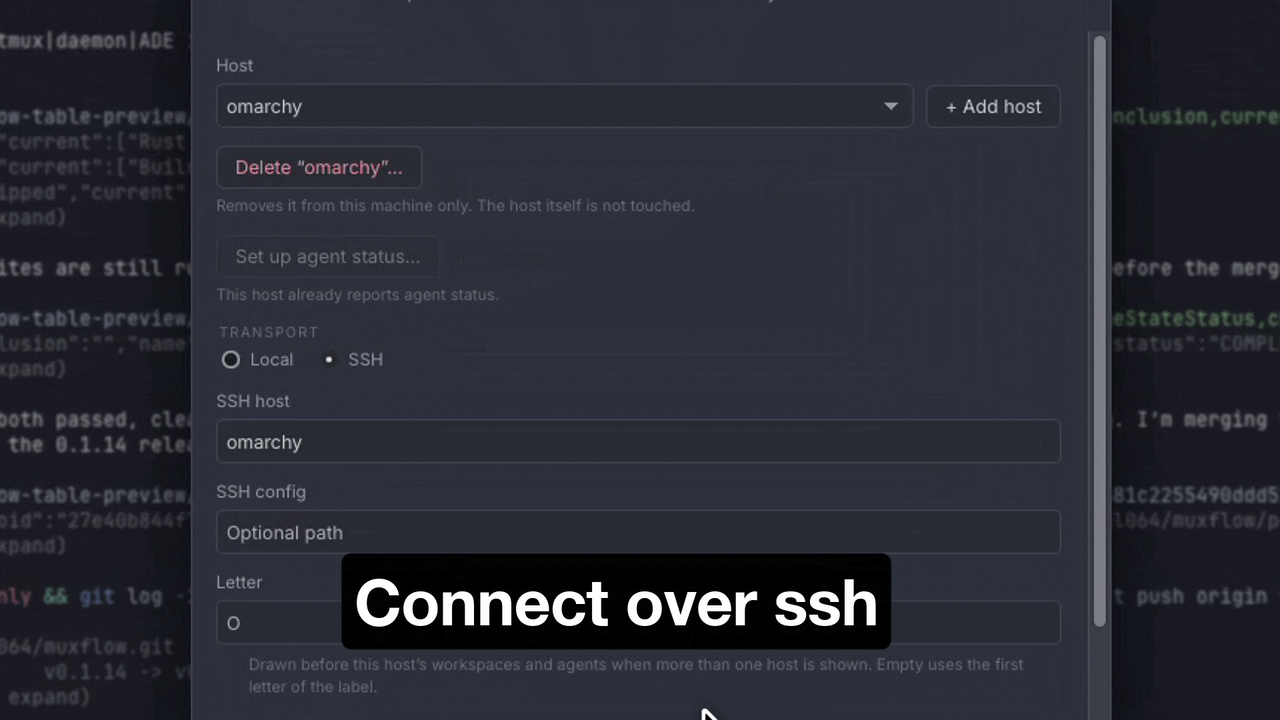
Works across SSHAttach to a remote host, Linux or macOS, through your existing OpenSSH config. The helper talks over SSH and a private Unix socket, never a TCP port, and several hosts can be shown side by side. The Ports tab lists what is listening on the host and forwards a port to your machine with one click. |
 |
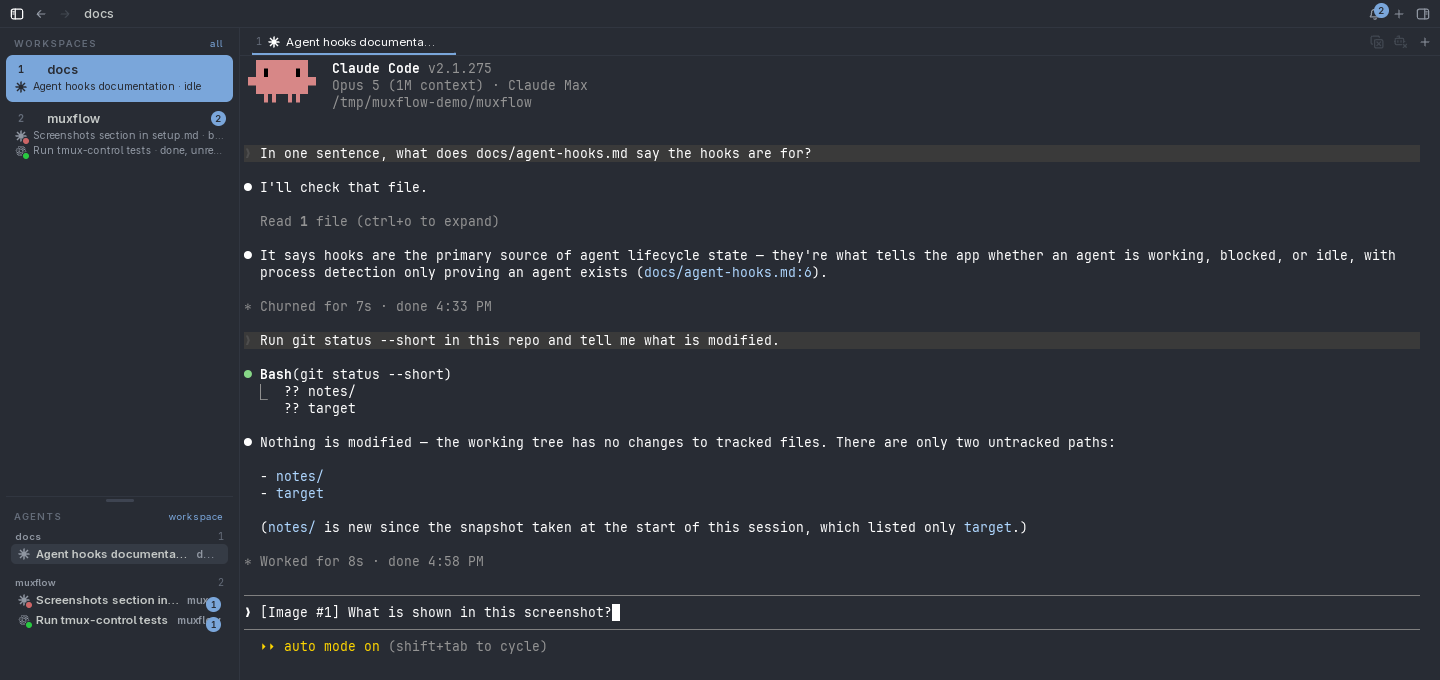
Native paste across SSHCopy a screenshot or a file on your laptop and paste it into a pane on a remote host. Muxflow uploads it over the same SSH connection and drops the path into the terminal, so Codex or Claude Code sees the image as if it were local. |
 |
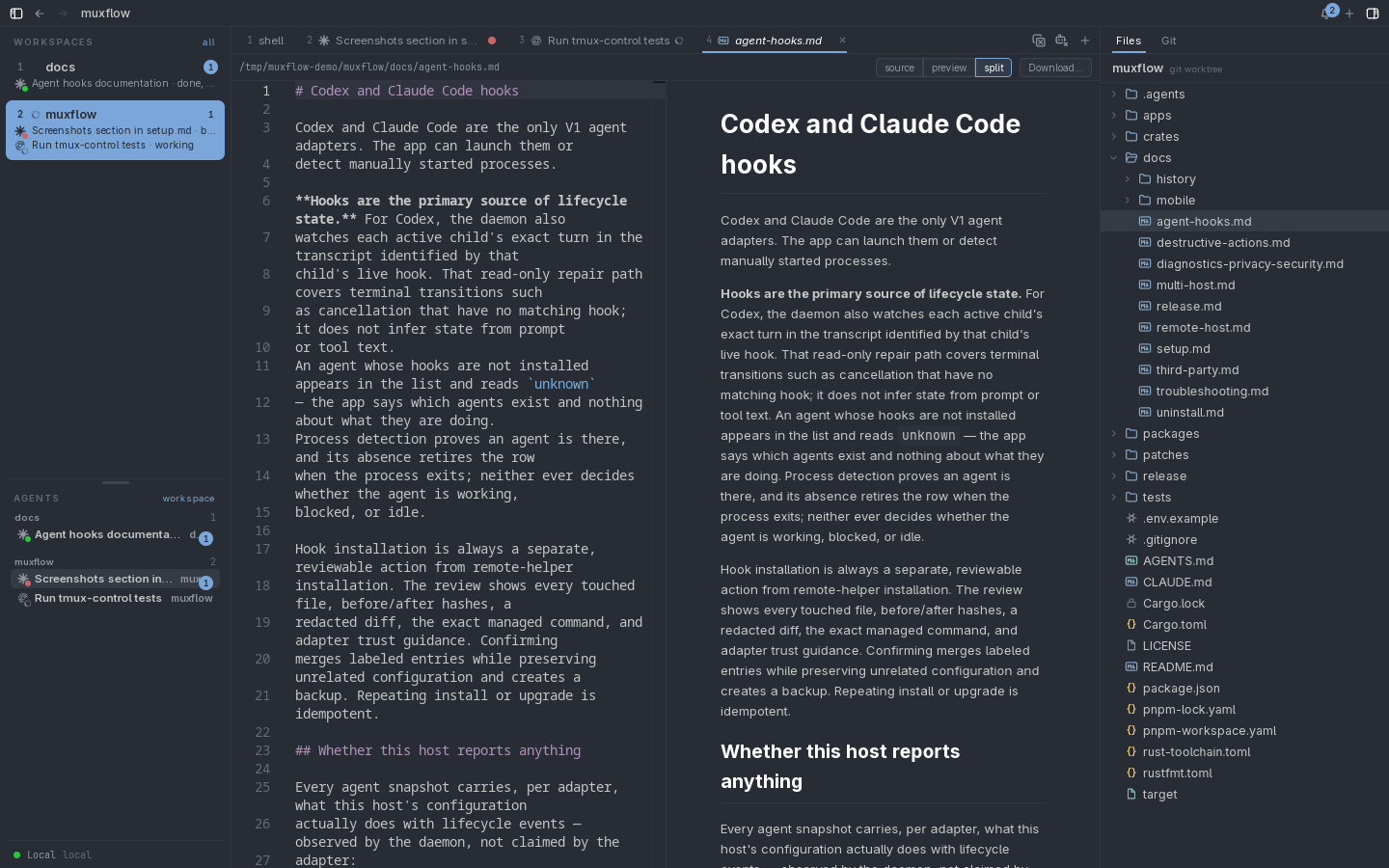
File explorer and transfersBrowse and edit files next to the terminal with a Markdown preview, paste screenshots and files straight into a pane, and download files from the host. |
 |
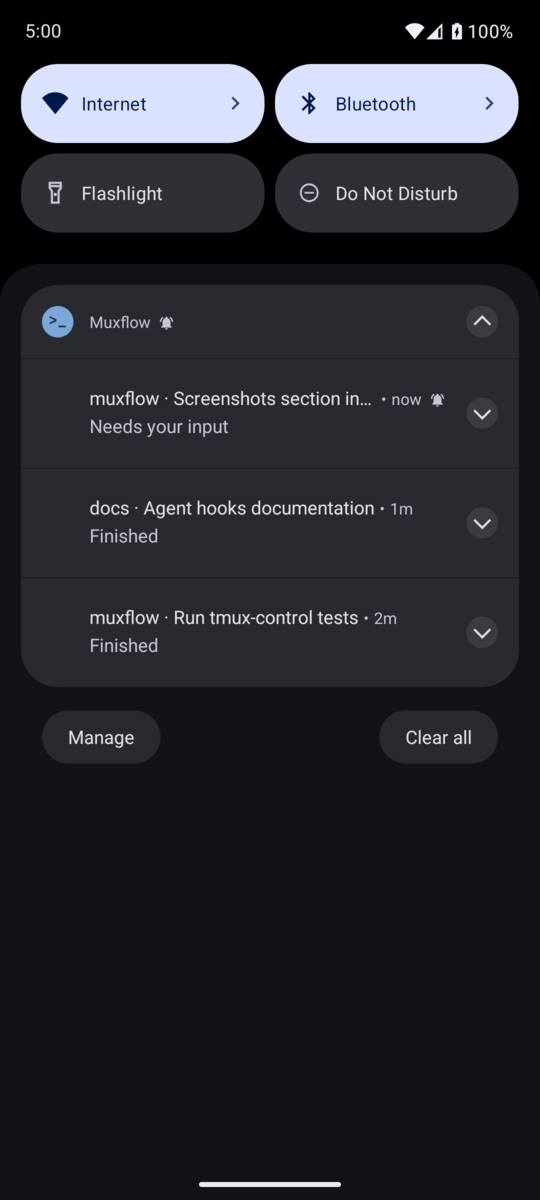
Notifications on desktop and mobileGet told when a Codex or Claude Code agent blocks on a question or finishes, whether you are at the desk or on your phone. Lifecycle comes from reviewable agent hooks. |
 |
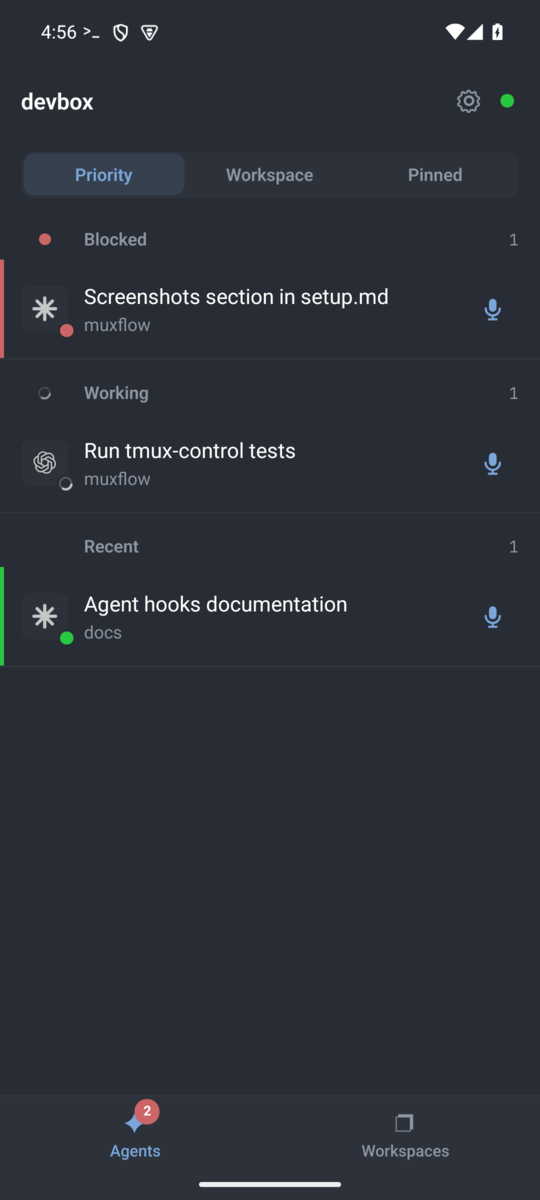
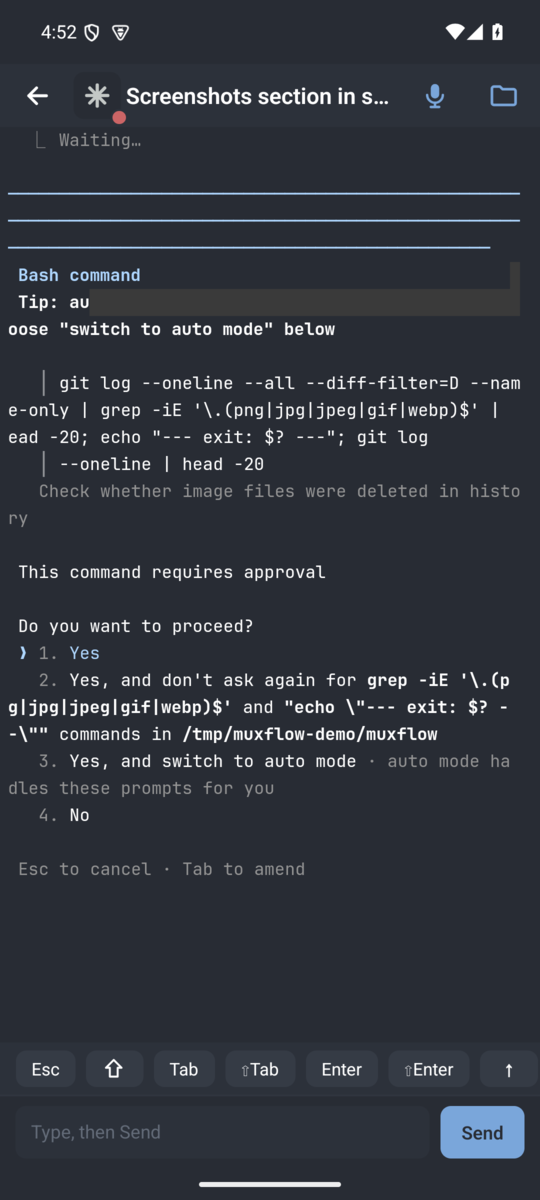
MobileThe Android app shows your agents and their state, lets you read an agent's terminal and type a reply, browse files, and start new agents in any workspace. |
  |
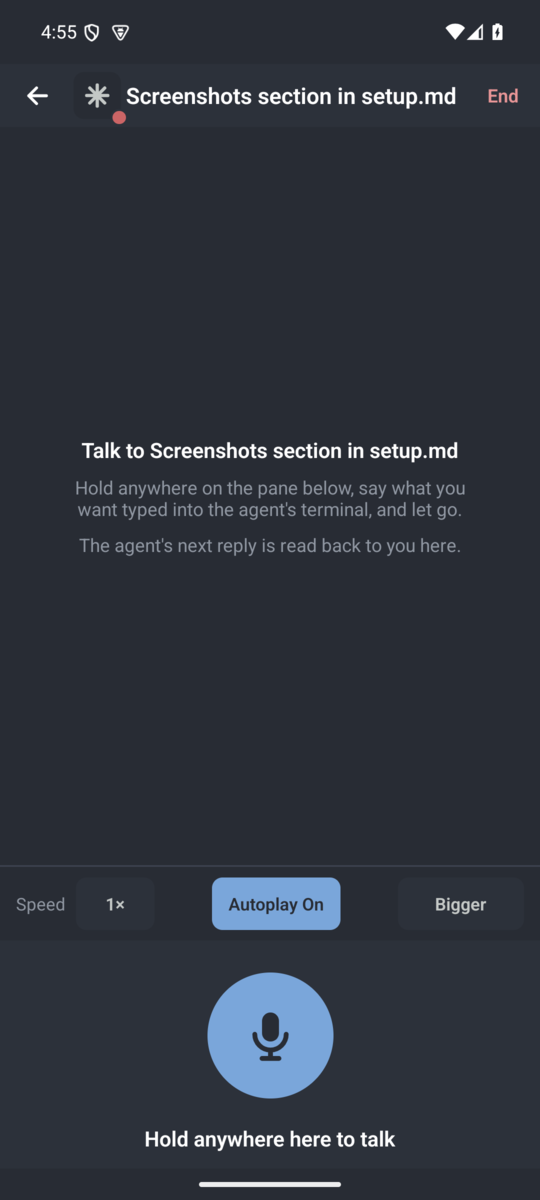
Voice modeHold to talk to an agent from your phone. Replies come back as voice messages, walkie-talkie style. |
 |
Cross platformmacOS, Linux, and Android. iOS is coming soon. |
 |
Supported agents
Codex and Claude Code have lifecycle adapters. Any other CLI agent runs as an
ordinary tmux window without attention tracking; add your own with
agent hooks.
Install
curl -fsSL https://github.com/gal064/muxflow/releases/latest/download/install.sh | bash
Make sure tmux is installed on
your machine and on every machine you connect to.
For Android, install the APK from the
releases page.
Connect to a remote machine
- Make sure tmux 3.3 or newer is installed on the remote machine.
- Make sure you can run
ssh <host>from your terminal without extra flags.
Muxflow uses your OpenSSH config, keys, and agent, so an alias in~/.ssh/configworks too. - In Muxflow, click the host name at the bottom left, choose
Connection settings…, and click + Add host. - Select SSH and enter the host or config alias in SSH host.
- Click Check helper, then Install helper… to put the helper in
~/.local/binon the remote machine. No root needed. - Click Connect.
Optionally, click Set up agent status… to get Codex and Claude Code
notifications from that machine. More in SSH hosts.
Troubleshooting
Muxflow can't connect to tmux
Make sure the latest tmux is installed on your machine and on the machine
you're connecting to (3.3 or newer is required).
Notifications don't appear
Open Settings and click Send test notification under System
notifications. If nothing appears, check System Settings → Notifications →
Muxflow.
The connection drops or lags
- Open Settings, select the host, and click Check helper. If it offers
Install helper… or Upgrade helper…, click it to get the latest
helper. - Make sure you have a good internet connection and that SSH is available on
both your machine and the remote machine. - Check CPU usage on the remote machine. High CPU there often causes lag, and
it's easy to miss because it happens on the other machine.
Codex agents show "unknown"
Codex 0.157 and newer run a shared background server that hides which pane an
event came from. Muxflow starts new tmux panes without it.
- Start Codex again in a new pane or tab. Codex windows opened before Muxflow
connected still use the background server. - If you set
CODEX_EXEC_SERVER_URLyourself, Muxflow leaves it alone and
Codex status won't work.
More in the troubleshooting guide.
Build from source
Requirements: Rust 1.97.1, Node.js 24, pnpm 11, tmux 3.3+, and the
Tauri 2 platform prerequisites.
pnpm install --frozen-lockfile
pnpm test:transport:local
tmux new-session -s work
pnpm tauri dev
Package builds: pnpm release:linux -- x86_64, pnpm release:macos, andpnpm mobile:apk:release. Details are in the
release guide.
Documentation
- Setup and SSH hosts
- Key bindings
- Agent hooks
- Diagnostics, privacy, and security
- Privacy policy
- Troubleshooting
- Release guide and test suite
- Historical plans
License
Muxflow source is licensed under MIT. The bundled JetBrains Mono
and Inter fonts retain their own licenses in the desktop and mobile font
directories. The optional speech model is downloaded separately; its upstream and conversion
model cards are linked in third-party notices.
Reviews (0)
Sign in to leave a review.
Leave a reviewNo results found