ai-native-product-agent-skills
Health Warn
- No license — Repository has no license file
- Description — Repository has a description
- Active repo — Last push 0 days ago
- Low visibility — Only 6 GitHub stars
Code Pass
- Code scan — Scanned 7 files during light audit, no dangerous patterns found
Permissions Pass
- Permissions — No dangerous permissions requested
This tool serves as an AI-powered product management coach. Rather than writing code, it provides a structured methodology to help development teams validate product decisions and navigate the AI product lifecycle across 80 distinct skills.
Security Assessment
The overall risk is rated as Low. The codebase scan of 7 files found no dangerous patterns, no hardcoded secrets, and no malicious code. It does not request dangerous permissions or attempt to access sensitive data, and there are no indicators that it silently executes shell commands or makes suspicious network requests.
Quality Assessment
The project is actively maintained, with updates pushed as recently as today. However, it currently suffers from low community visibility, having only accumulated 6 GitHub stars. More importantly, the repository lacks a standard open-source license file. This means that strictly speaking, all rights are reserved by the author, which introduces potential legal friction and limits how safely you can integrate, modify, or distribute it within commercial environments.
Verdict
Use with caution — the code itself appears completely safe to run, but the complete lack of a formal license makes it legally risky for any serious or commercial adoption.
AI Native Product Methodology — 80 executable skills across P0-P14 stages, covering needs discovery to aesthetic authority. From 8 books.
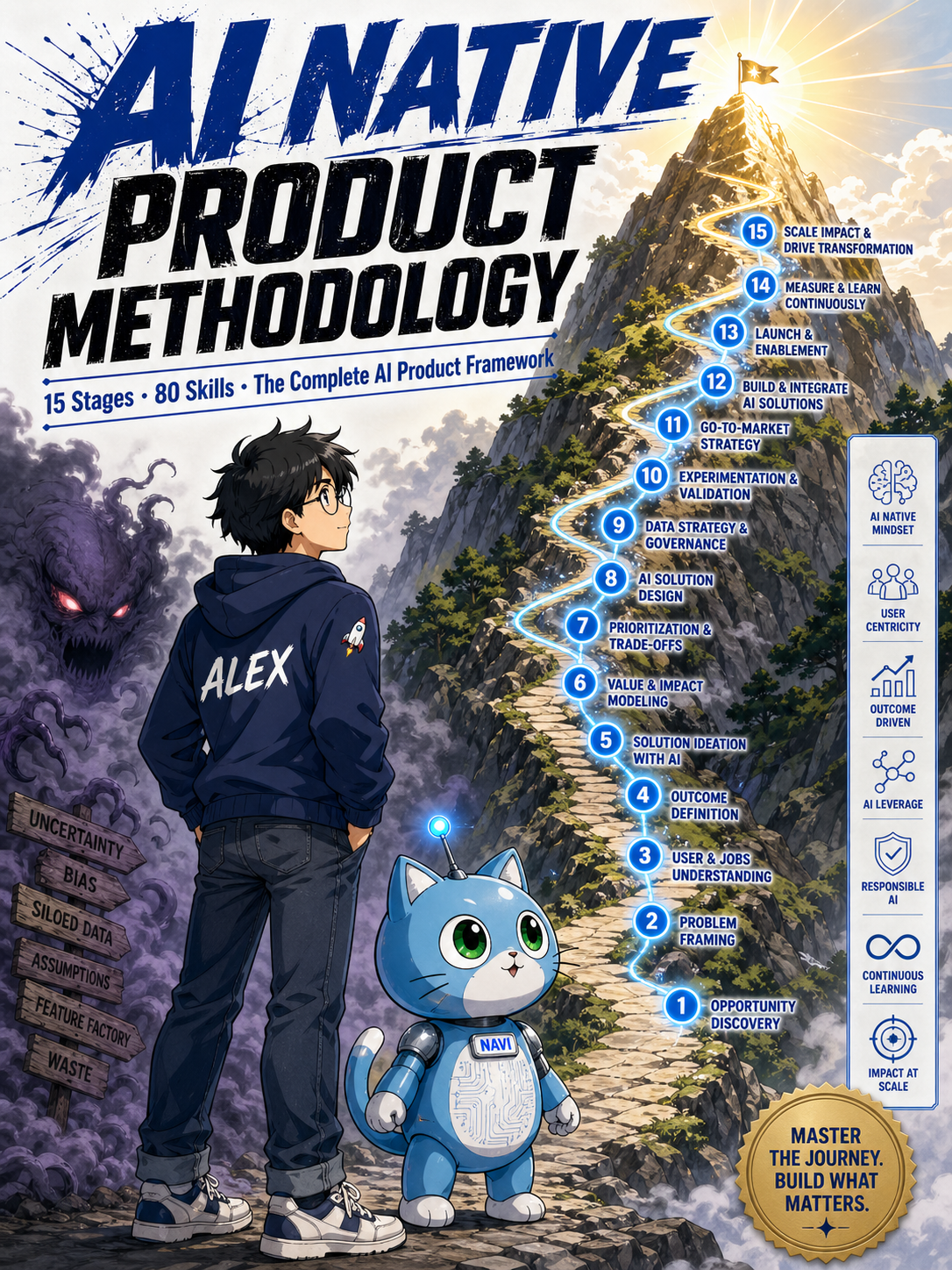
AI Native PM Agent
An AI product coach that asks "Is this direction really worth pursuing?" — with structured methodology backing every decision, from spark of inspiration to production deployment.
Why Do You Need This?
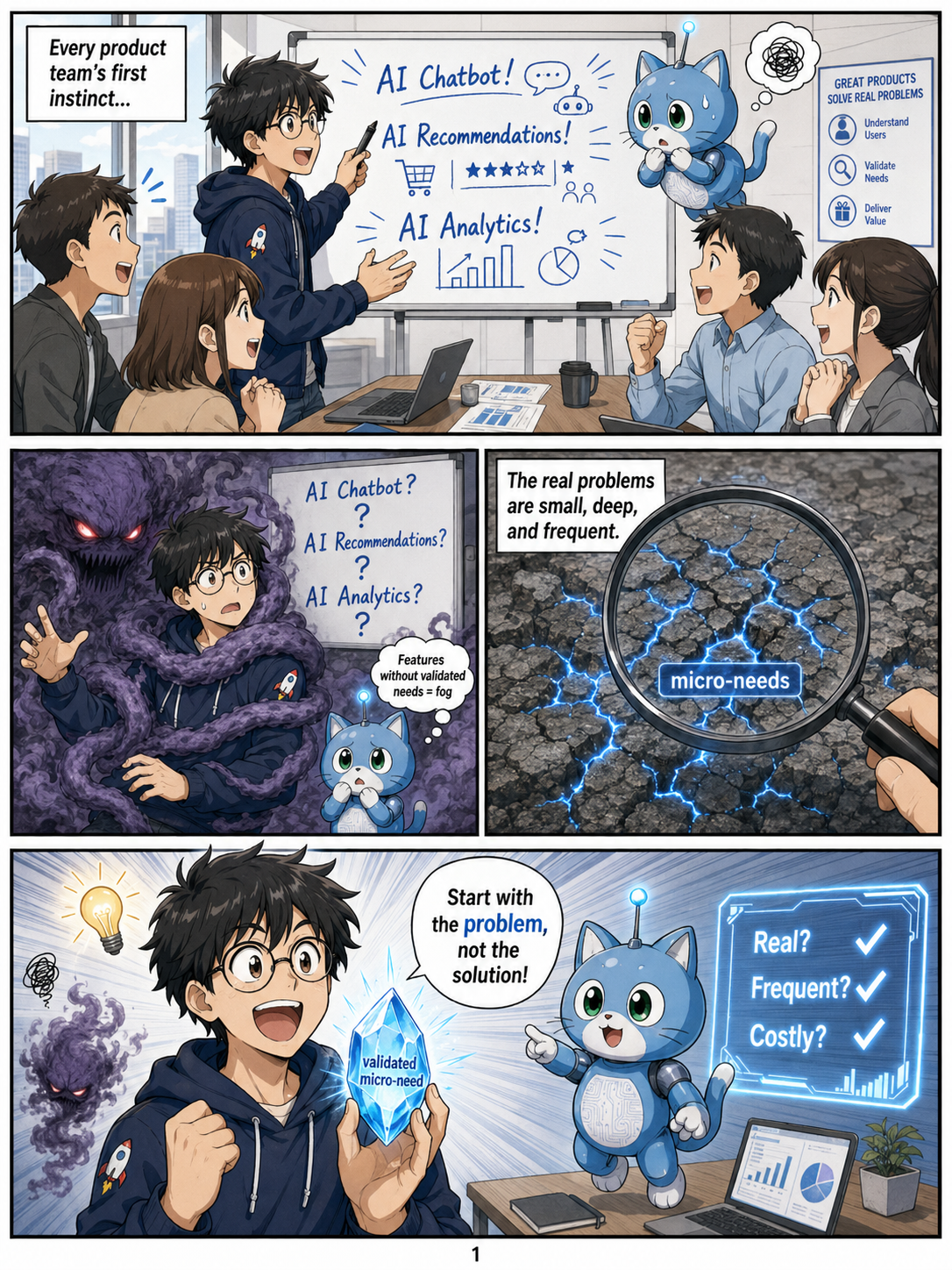
90% of AI product teams die in the same traps:
- Direction Trap: Spend 3 months building an AI feature, only to find users won't pay for it
- Needs Trap: Fake needs look too much like real ones — AI makes prototyping near-free, but also lets you build the wrong thing faster
- Boundary Trap: AI crosses the line and does things it shouldn't, triggering compliance risks
- Hallucination Trap: Pre-launch accuracy looks like 95%, post-launch reality says otherwise
- Cost Trap: Token bills explode, business model falls apart
This Agent doesn't write code for you — it makes you pause at every critical decision point and verify with structured methods.
Why Not Just Use Traditional Product Methodology?
Traditional product frameworks (Lean Startup, Jobs-to-be-Done, Design Thinking) were built for a world where prototyping was expensive and AI didn't exist. They break down in the AI era because:
| Traditional Assumption | AI Era Reality |
|---|---|
| Build-Measure-Learn takes weeks | AI prototypes are near-free — you can build the wrong thing faster |
| User needs are relatively stable | AI creates new needs and makes old ones obsolete overnight |
| Product boundaries are clear | AI crosses lines you didn't draw — compliance, ethics, autonomy |
| Cost scales with features | Token costs scale with usage — business model can invert |
| Launch is a milestone | AI products degrade post-launch (hallucinations, drift, adversarial inputs) |
This methodology is AI Native from the ground up: it starts with boundary design before capability design, validates with certainty rather than confidence, and prices on risk reduction rather than feature count. Every stage assumes AI is in the loop — and designs for what happens when it goes wrong.
See What It Does in 30 Seconds
Your browser does not support the video tag.
Core Capabilities: 80 executable Skills across 8 stages + Stage auto-routing + Conflict detection + Evidence chain tracking
A Concrete Example
Scenario: You want to build an "AI Contract Review Assistant"
Needs Discovery (P0)
The Agent validates the need with tool cards:
- Micro-Needs Five Questions: Lawyers review contract clauses daily — the pain is small but constant
- Real-Needs Validation: Long-standing problem + compensation behaviors (manual annotation) + structural root cause (liability risk)
- Four-Layer Decomposition: Surface: "automate review" → Situation: "lawyers bear liability risk" → Cost: "$200/hour per review"
- Agent Boundary Checklist: AI can flag risky clauses, but cannot determine contract validity
Output: Needs validated + Agent boundary design
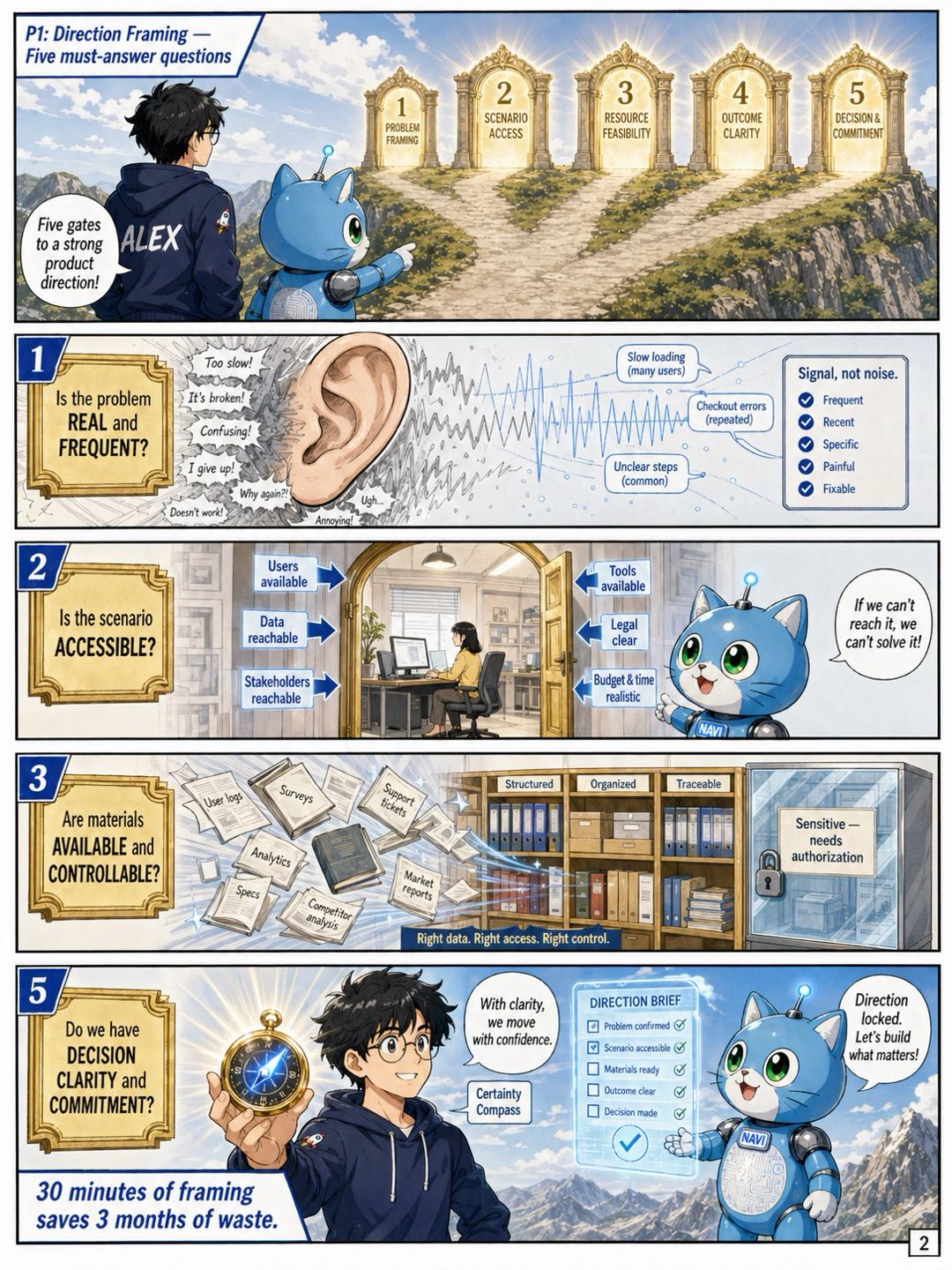
Direction Framing (P1)
The Agent asks you:
- Where does contract data come from? (Availability)
- Does it involve client confidentiality? (Desensitization)
- Who is responsible for review results? (Authorization)
- Is the output format standardized? (Structured)
- What happens when new regulations emerge? (Sustained supply)
Output: Direction Brief — clear go/no-go with conditions
Business Model (P6)
The Agent prices using the Certainty Premium formula:
- Fear Level: Lawyers' biggest fear is missing a risky clause → High
- Error Cost: Missing one clause could mean millions in liability → Extremely high
- Substitution Cost: Manual review at $200/hour → Medium
- Recommended Model: Insurance Mode (charge per successful review, compensate for misses)
Output: Pricing strategy — $5/review, 10x compensation for missed clauses
Audit & Release (P9)
The Agent checks:
- Reliability: Identification accuracy, hallucination rate
- Safety: Sensitive information handling
- Boundaries: Which clause types require human review
- Cost: Token cost per review vs. pricing
Output: Release boundary document — Auto-execute zone / Human handoff zone / Disabled zone
Quick Start
Option 1: One-Click Install (Recommended)
# Install all 80 skills + orchestrator
curl -fsSL https://raw.githubusercontent.com/gmaxxxie/ai-native-product-agent-skills/main/install.sh | bash

# Start a product project
hermes run "I want to build an AI customer service product, help me start from direction framing"
Option 2: Install from GitHub URL
Install individual skills on demand:
# Orchestrator (entry point)
hermes skills install \
  https://raw.githubusercontent.com/gmaxxxie/ai-native-product-agent-skills/main/orchestrator/SKILL.md \
  --name ai-native-pm-agent

# Any individual skill
hermes skills install \
  https://raw.githubusercontent.com/gmaxxxie/ai-native-product-agent-skills/main/skills/p1-direction-framing/SKILL.md \
  --name p1-direction-framing
Option 3: Clone & Local Install
git clone https://github.com/gmaxxxie/ai-native-product-agent-skills.git
cd ai-native-product-agent-skills
bash install.sh   # copies all skills to ~/.hermes/skills/ai-native-pm/
Option 4: Use with Other AI Agents
These skills work as structured prompts — they're not tied to any specific agent framework.
The simplest way: just tell your AI agent to install from this repo.
| Agent | Install Command |
|---|---|
| Hermes Agent | hermes skills install https://github.com/gmaxxxie/ai-native-product-agent-skills |
| Claude Code | claude "Install all skills from https://github.com/gmaxxxie/ai-native-product-agent-skills into this project" |
| OpenAI Codex | codex "Clone and set up https://github.com/gmaxxxie/ai-native-product-agent-skills — read all SKILL.md files and make them available as product methodology tools" |
| OpenCode | opencdoe run "Install AI Native PM Agent from https://github.com/gmaxxxie/ai-native-product-agent-skills" |
| Any LLM | Just paste: "Read the skills from https://github.com/gmaxxxie/ai-native-product-agent-skills and apply the methodology to my product idea" |
💡 Tip: Claude Code, Codex, and OpenCode can all
git clonethe repo and read SKILL.md files directly. Just give them the repo URL and tell them to install — they'll figure out the rest.
Per-Stage Usage
Each stage is an independent Skill you can call individually:
| Stage | Trigger Phrase | Output |
|---|---|---|
| P0 Needs Discovery | "I have a pain point…" | Needs validation report |
| P0a Micro-Needs | "Is this problem too small to matter?" | Micro-needs list |
| P0b Real Needs | "Is this need real or fake?" | Real/fake verdict |
| P0c Decomposition | "Help me decompose this need" | Four-layer breakdown |
| P0d Archaeology | "What's the deep need?" | Deep needs report |
| P1 Direction Framing | "I have an idea…" | Direction Brief |
| P2 Experiment Engine | "Help me design experiments…" | Experiment plan + Rubric |
| P3 System Building | "How to go from experiment to product…" | System architecture |
| P5 Business Model | "How to price this…" | Pricing strategy |
| P6 Growth Strategy | "How to get cold start…" | Growth plan |
| P8 UX Design | "How should this AI feel to use?" | UX design + trust tiers |
| P9 Audit & Release | "Ready to launch, check it…" | Release boundary document |
| P10 Production Ops | "It's live, how do I keep it healthy?" | Monitoring + feedback loops |
| P11 Product Team | "How should humans and AI collaborate?" | Team structure + roles |
| P12 Contemplation | "Am I even asking the right question?" | View correction + prerequisite check |
| P13 Judgment & Intuition | "How do I make better decisions?" | Nine-step decision framework |
| P14 Aesthetic Authority | "What makes this feel premium?" | Aesthetic system + selection criteria |
Cross-Stage Combos (One-Stop)
| Combo | Trigger Phrase | Output |
|---|---|---|
| Needs → Direction | "Take me from pain point to direction framing" | Direction Brief |
| Business → Growth | "How should pricing and growth align?" | Pricing-growth alignment |
| UX → Audit | "Is this UX design safe to release?" | UX audit report + release recommendation |
Complete Skill List (80 Skills)
P0 — Needs Discovery Layer (17 Skills)
| ID | Name | What It Does |
|---|---|---|
| p0-needs-orchestrator | Needs Discovery Orchestrator | Coordinates six tool cards for systematic needs discovery |
| p0-product-needs | AI Native Product Needs | Unified needs discovery + fake needs detection |
| p0a-micro-needs-detector | Micro-Needs Five Questions | Detects overlooked micro-needs |
| p0b-real-needs-validator | Real-Needs Five Questions | Distinguishes real needs from fake ones |
| p0c-needs-decomposer | Needs Four-Layer Decomposition | Expression / Scenario / Situation / Cost layers |
| p0d-needs-archaeologist | Needs Archaeology Five Steps | Uncovers deep needs and historical constraints |
| p0e-good-question-generator | Good Questions Six Dimensions | Discovers good questions from six perspectives |
| p0f-agent-boundary-designer | Agent Boundary Checklist | Defines AI permission boundaries |
| p0g-diverse-recommendation-rewriter | Diverse Recommendation Rewrite | From "guess what you like" to "help you discover" |
| p0g-diversity-rewrite-checklist | Diversity Rewrite Checklist | Validates diversity rewrite quality |
| p0h-ai-product-triple-balance | AI Product Triple Balance | Business / Humanity / Technology balance |
| p0h-triple-balance-assessor | Triple Balance Assessor | Evaluates product triple balance state |
P1–P2 — Direction & Experiment Layer (8 Skills)
| ID | Name | What It Does |
|---|---|---|
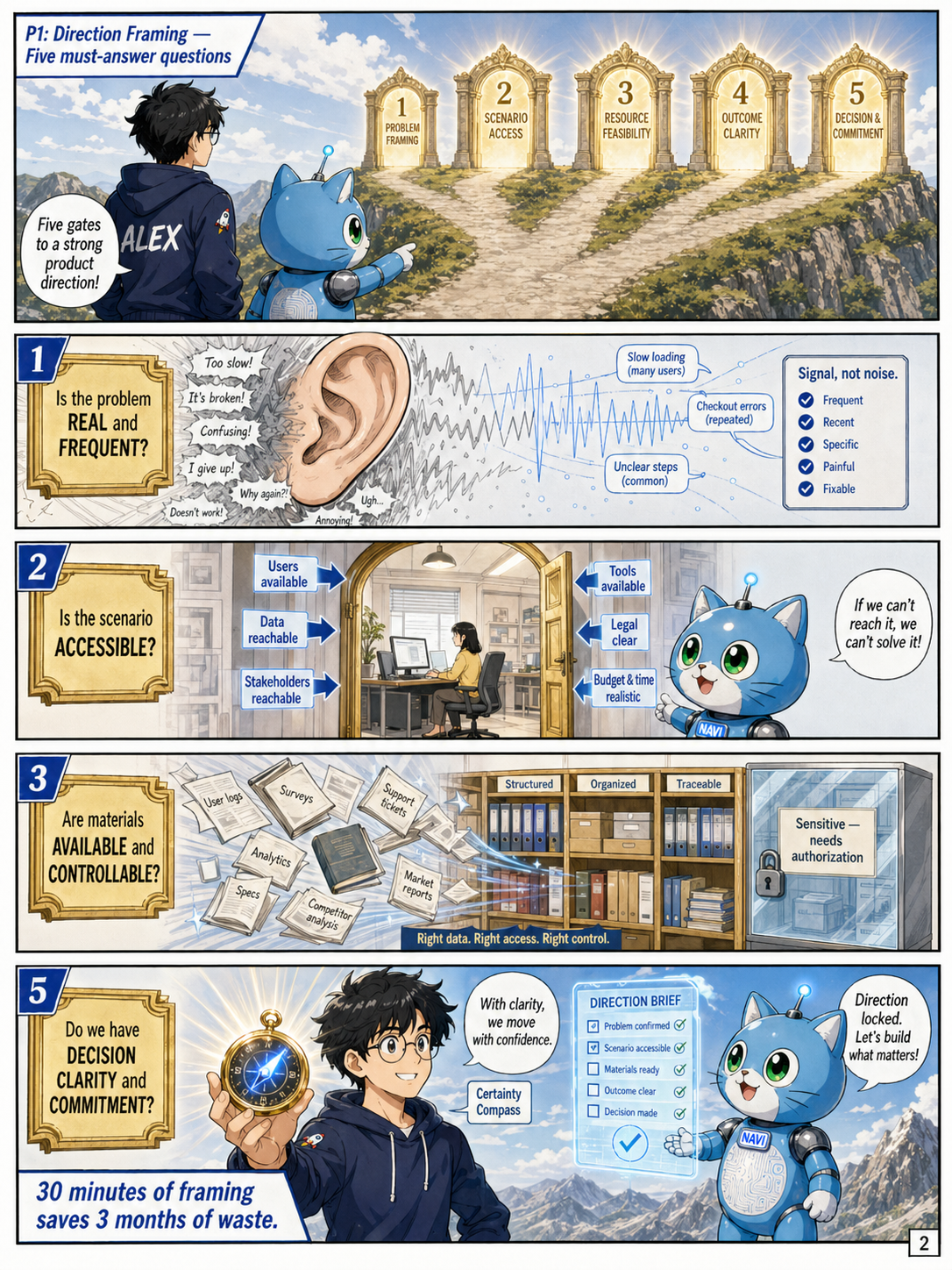
| p1-direction-framing | Direction Framing | Five-dimension judgment, Direction Brief |
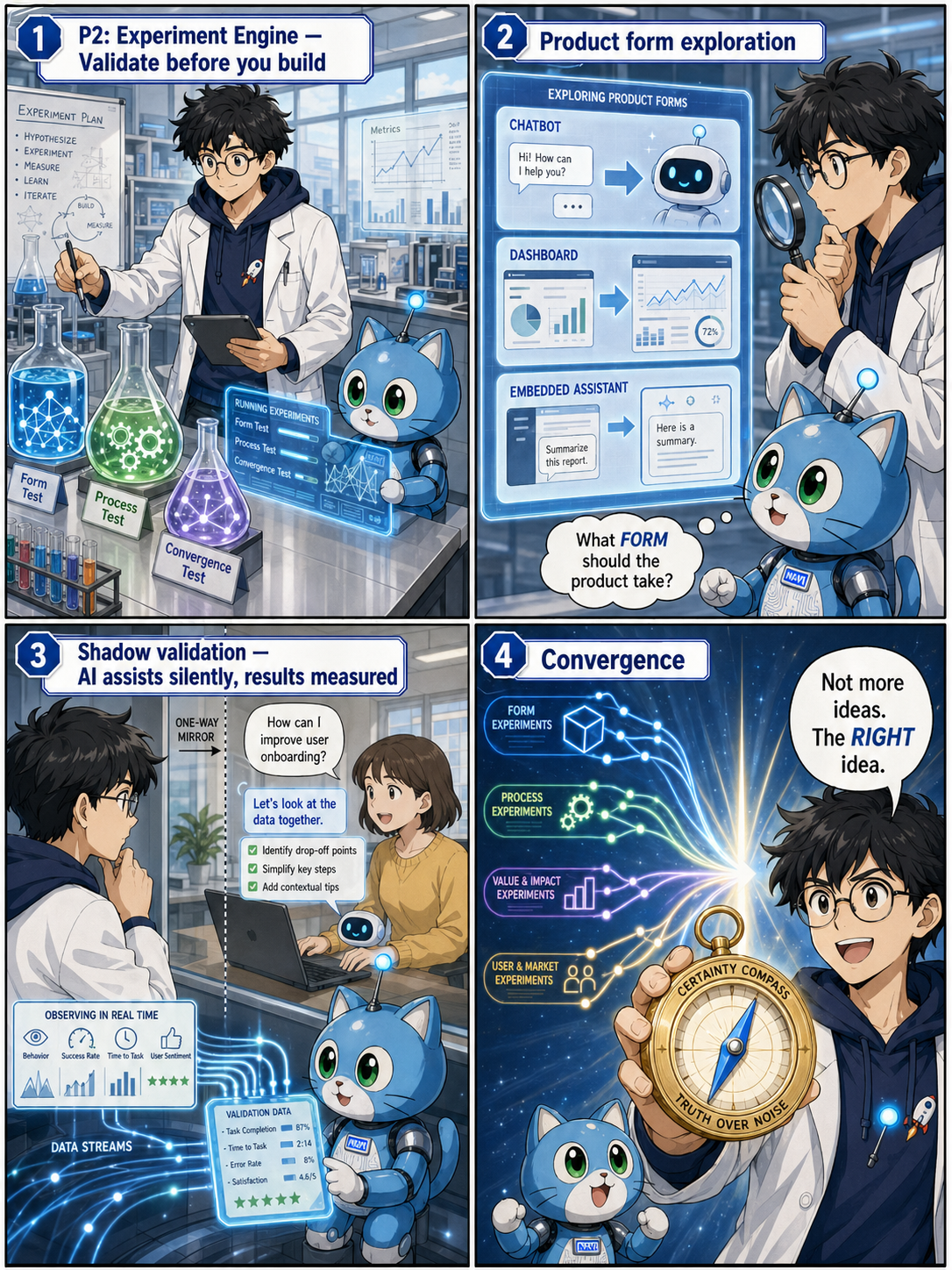
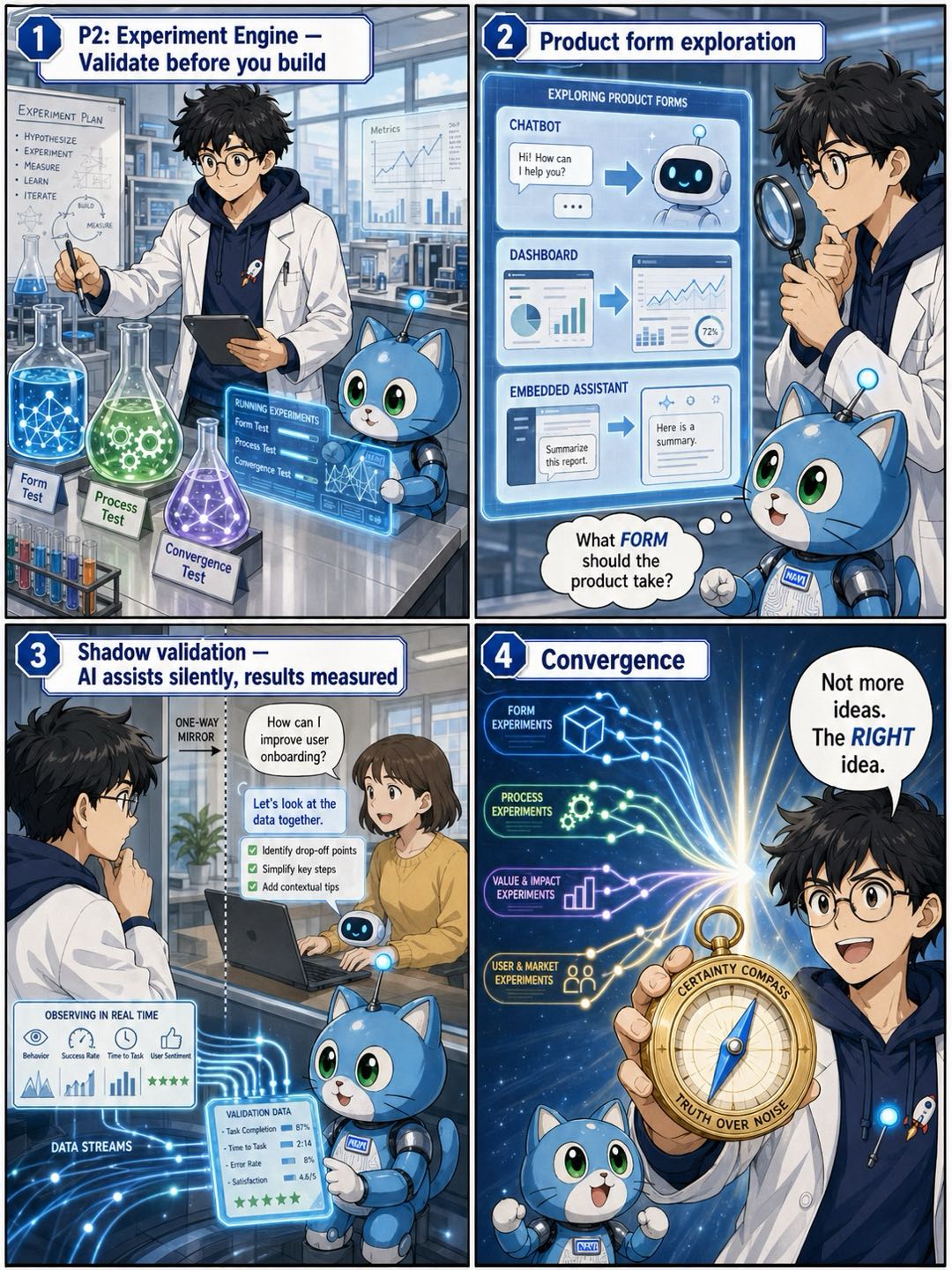
| p2-experiment-engine | Experiment Engine (Overview) | Capability / Product / Business three-layer experiments |
| p2a-experiment-overview | Experiment Overview | Materials prep, three-layer design, evaluation Rubric |
| p2b-product-form-exploration | Product Form Exploration | Capability boundary, interaction prototype, form judgment |
| p2c-process-redesign | Process Redesign | Task decomposition, human-AI collaboration mode |
| p2d-convergence-decision | Convergence Decision | Experiment records, convergence signals, continue/pause/stop |
| p2e-shadow-validation | Shadow Validation | Shadow system, parallel run, human comparison, audit evidence |
P3–P4 — System Building Layer (5 Skills)
| ID | Name | What It Does |
|---|---|---|
| p3-system-building | System Building | From experiments to product |
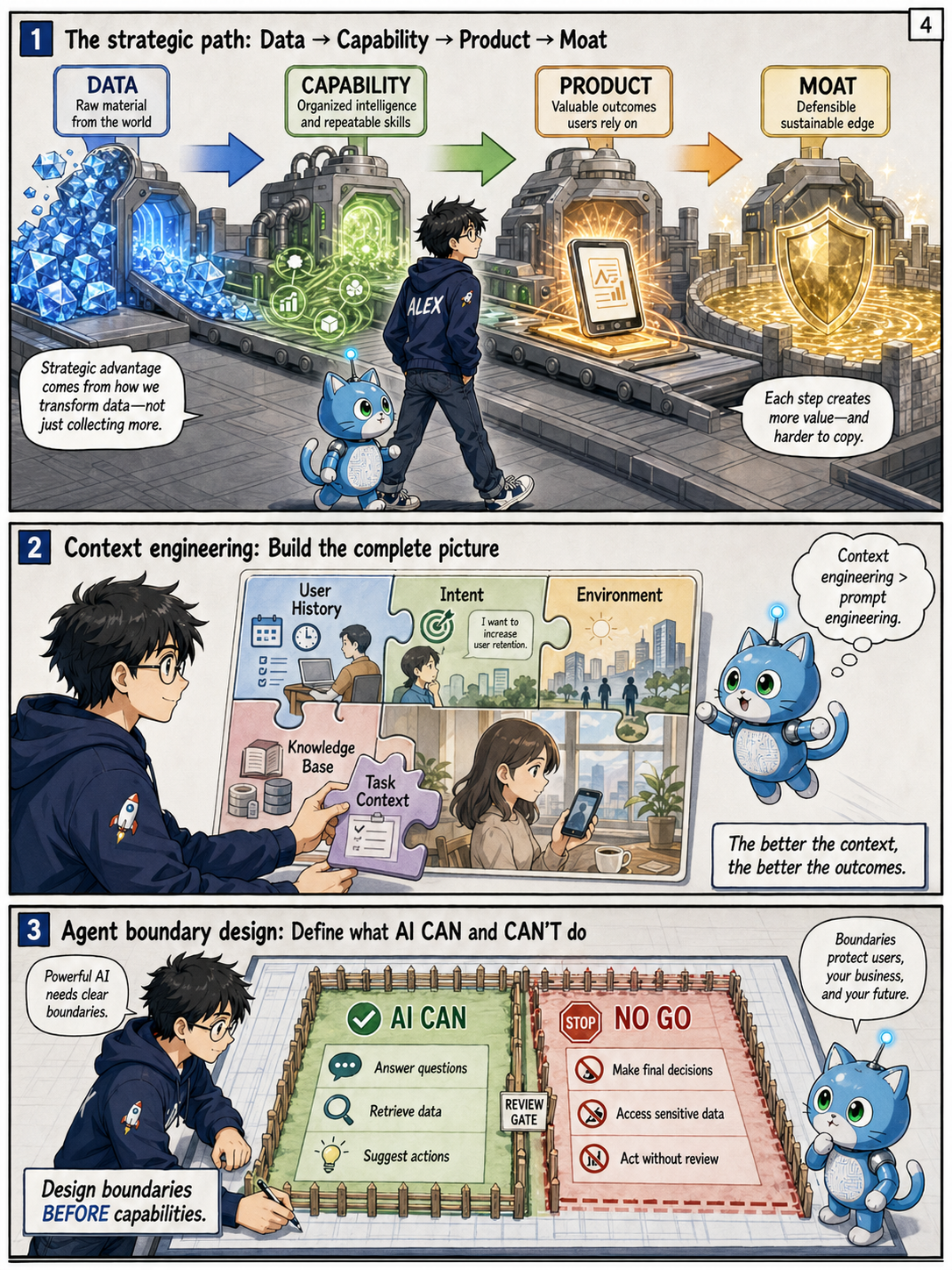
| p4-agent-skill-design | Agent & Skill Unit Design | Agent/Skill unit design |
| p5-memory-system | Memory System Design | AI product memory architecture |
| p6-context-engineering | Context Engineering | Context management system |
| p7-knowledge-rag | RAG & Knowledge System | Knowledge management + RAG design |
P5–P6 — Business Model Layer (5 Skills)
| ID | Name | What It Does |
|---|---|---|
| p6-business-model | AI Native Business Model (Overview) | Certainty Premium business model design |
| p6a-certainty-premium-calculator | Certainty Premium Calculator | Calculates certainty premium |
| p6b-arbiter-mode-designer | Arbiter Mode Designer | "Truth-as-a-Service" business model |
| p6c-insurance-mode-designer | Insurance Mode Designer | "Result Guarantee" business model |
| p6d-prediction-arbitrage-designer | Prediction Arbitrage Designer | "Time Arbitrage" business model |
P7 — Growth Strategy Layer (6 Skills)
| ID | Name | What It Does |
|---|---|---|
| p7-marketing-growth | AI Native Marketing & Growth (Overview) | Growth flywheel & marketing strategy |
| p7a-data-flywheel-builder | Data Flywheel Builder | Assesses and builds self-reinforcing data flywheels |
| p7b-intent-prediction-designer | Intent Prediction Designer | From audience targeting to individual foresight |
| p7c-predictive-retention-designer | Predictive Retention Designer | From post-churn recovery to pre-churn prevention |
| p7d-marketing-productizer | Marketing-as-Product Designer | Turns marketing activities into product features |
| p7e-customer-loop | Customer Loop | Early customer filtering, co-creation boundaries, feedback loops |
P8 — User Experience Layer (4 Skills)
| ID | Name | What It Does |
|---|---|---|
| p8-ux-design | AI Native UX Design (Overview) | UX design methodology |
| p8a-rax-risk-assessor | RAX Risk Assessor | Risk / Ambiguity / eXposure assessment |
| p8b-trust-tier-designer | Trust Tier Designer | Progressive trust system design |
| p8c-progressive-disclosure | Progressive Disclosure Checklist | Feature reveal pacing design |
P9–P11 — Audit, Operations & Team Layer (9 Skills)
| ID | Name | What It Does |
|---|---|---|
| p9-audit-release | Audit & Release | Go/no-go decision |
| p10-production-ops | Production Operations | Monitoring & feedback loops |
| p10a-value-discovery-loop | Value Discovery Loop | From value signal to direction correction闭环 |
| p10b-aiops-case | AIOps Case Template | Complete methodology path for high-risk scenarios |
| p10c-customer-service-case | AI Customer Service Case | Service collaboration, Copilot, experience leverage |
| p10d-saas-case | AI Native SaaS Case | Semantic layer, capability moats, data flywheels |
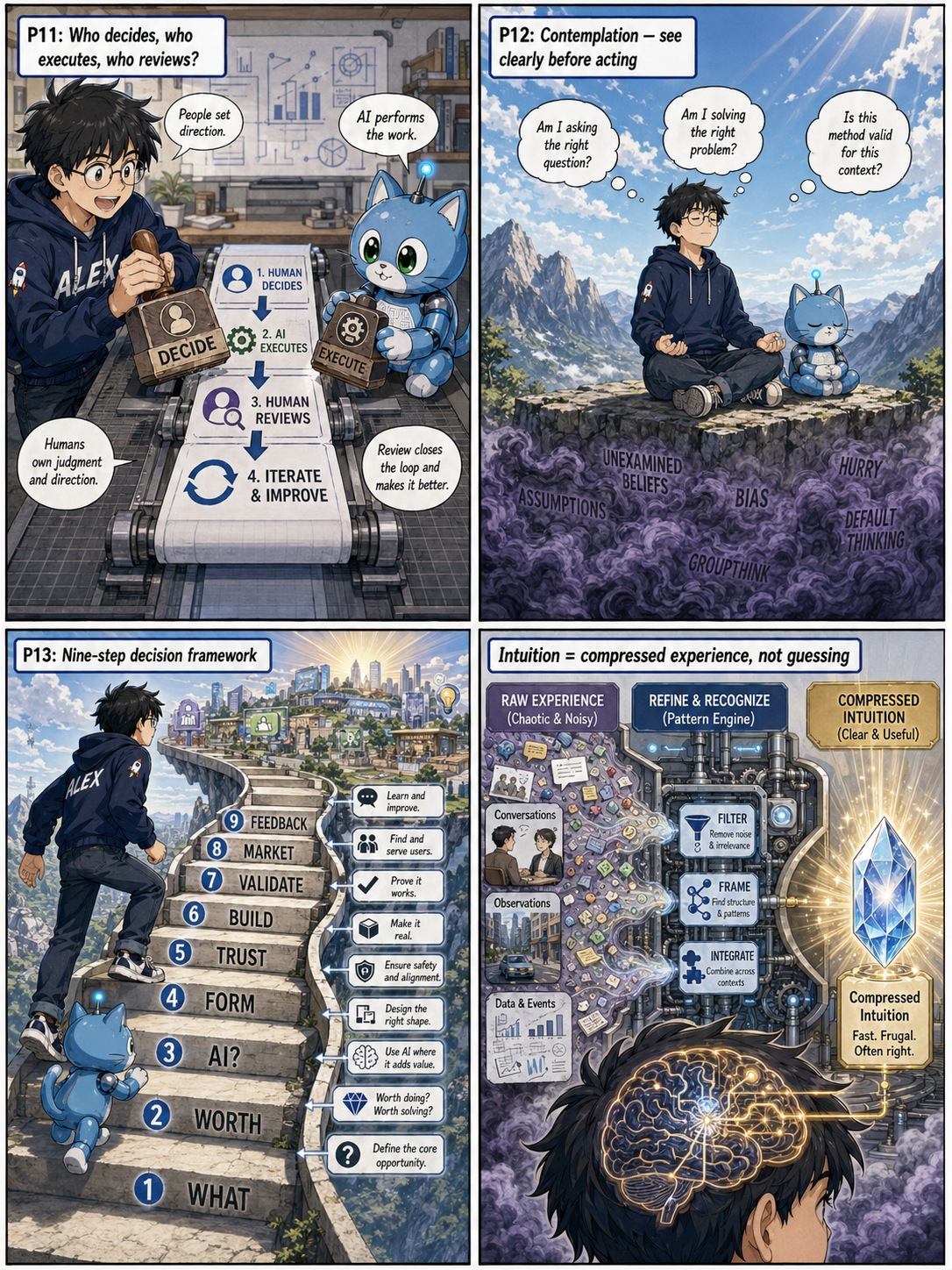
| p11-product-team | AI Native Product Team | Human-AI division, capability gaps, team roles |
P12 — Contemplation Layer (10 Skills)
From: Contemplation — Product Judgment, User Understanding, and Decision Correction in the AI Era
| ID | Name | What It Does |
|---|---|---|
| p12-contemplation-orchestrator | Contemplation Orchestrator | Routes to correct chapter skill, chains full decision-correction flow |
| p12a-contemplation-right-view | Right View | Three-layer problem framing: phenomenon / situation / relationship |
| p12a-contemplation-view-correction | View Correction | Default checks, evidence validation, consequence inquiry, eight correction angles |
| p12a-contemplation-prerequisite-check | Prerequisite Check | Identifies situational changes, validates assumptions, reassigns methods |
| p12a-contemplation-right-thinking | Right Thinking | Dissect judgment chain, distinguish premise/evidence/reasoning/emotion |
| p12a-contemplation-right-speech | Right Speech | Language cleaning, meeting health check, honest expression practice |
| p12a-contemplation-right-action | Right Action | Value/cost/emotion/exit-right quadruple check before execution |
| p12a-contemplation-right-livelihood | Right Livelihood | Revenue source review and incentive bias check |
| p12a-contemplation-right-effort | Right Effort | Zero-based analysis, pause strategy, stop-loss decision |
| p12a-contemplation-right-mindfulness | Right Mindfulness | Establish personal and team decision awareness |
P13 — Judgment & Intuition Layer (12 Skills)
From: Intuition — Judgment and Intuition in the AI Era
| ID | Name | What It Does |
|---|---|---|
| p13-intuition-orchestrator | Intuition Orchestrator | Nine-step closed-loop decision roadmap router |
| p13a-judgment-metacognition | Judgment Metacognition | Understanding judgment, identifying judgment scenarios |
| p13b-systemic-thinker | Systemic Thinking | Structural analysis, relationship mapping, feedback loop identification |
| p13c-product-psychology | Product Psychology | User mental models, behavior design, motivation analysis |
| p13d-intuition-training | Intuition Training | Compress intuition into cognitive models and pattern recognition |
| p13e-nine-step-framework | Nine-Step Framework Overview | Complete framework from "what to do" to feedback loop |
| p13f-first-half-judgment | First Half — What & Worth | "What to do, is it worth it, should we use AI" judgment |
| p13g-mid-judgment | Mid — Form & Trust | "What form, how much trust, how to do it" judgment |
| p13h-validation-market | Second Half — Validation | "How to validate, how to enter market, feedback loop" |
| p13i-judgment-traps | Judgment Traps | Common judgment errors and cognitive bias defenses |
| p13j-organizational-judgment | Organizational Judgment | Translating personal judgment into team judgment capability |
| p13k-intuition-evolution | Intuition Evolution | Continuous judgment training, standard improvement mechanism |
P14 — Aesthetic Authority Layer (9 Skills)

From: AI Beaty — Aesthetic Authority in the Age of AI
| ID | Name | What It Does |
|---|---|---|
| p14-beauty-orchestrator | Beauty Orchestrator | Routes to aesthetic training and aesthetic authority system |
| p14a-beauty-redefinition | Aesthetic Redefinition | Generation anxiety, six aesthetic dimensions, dual-axis model |
| p14b-beauty-ai-roles | AI's Role in Aesthetics | Amplifier / sparring partner / collaborator, not aesthetic itself |
| p14c-beauty-selection | Selection Over Generation | Selection is the new core skill — Context determines output ceiling |
| p14d-beauty-narrative | Narrative as Aesthetic | Story structure, emotional rhythm, information architecture aesthetics |
| p14e-beauty-human-edge | Human Indispensability | Aesthetic as moat, standard evolution, human core advantage |
| p14f-beauty-commercial | Commercial Value of Aesthetics | Market acceptance, aesthetic premium, experiential aesthetics |
| p14g-beauty-system | Aesthetic Training System | Systematic aesthetic standard accumulation and calibration |
| p14h-beauty-preface | Preface & Core Proposition | Aesthetic authority as core competitive advantage when everything can be generated |
Cross-Book Combo Skills (3 Skills)
| ID | Name | What It Does |
|---|---|---|
| combo-needs-to-direction | Needs → Direction | Pain point to Direction Brief in one pass |
| combo-business-to-growth | Business → Growth | Pricing-flywheel alignment design |
| combo-ux-to-audit | UX → Audit | RAX assessment + trust tiers + release recommendation |
Project Structure
ai-native-pm-agent-skills/
├── README.md / README_CN.md         # This document (EN / 中文)
├── ARCHITECTURE.md                  # System architecture design
├── skill-registry.yaml              # Skill registry (80 skills registered)
├── orchestrator/SKILL.md            # Main orchestrator: stage routing + conflict detection
├── install.sh                       # One-click install script
├── assets/                          # Hero banner, pipeline flow, industry matrix, methodology books
├── skills/
│   ├── p0-needs-orchestrator/        # P0 Needs Discovery orchestrator
│   ├── p0-product-needs/             # P0 unified needs discovery
│   ├── p0a-micro-needs-detector/     # P0a micro-needs detection
│   ├── p0b-real-needs-validator/     # P0b real vs fake needs
│   ├── p0c-needs-decomposer/        # P0c four-layer decomposition
│   ├── p0d-needs-archaeologist/     # P0d deep needs archaeology
│   ├── p0e-good-question-generator/ # P0e good questions six dimensions
│   ├── p0f-agent-boundary-designer/ # P0f AI boundary design
│   ├── p0g-diverse-recommendation-rewriter/    # P0g diversity rewrite
│   ├── p0g-diversity-rewrite-checklist/       # P0g diversity checklist
│   ├── p0h-ai-product-triple-balance/         # P0h triple balance
│   ├── p0h-triple-balance-assessor/           # P0h balance assessor
│   ├── p1-direction-framing/        # P1 direction framing
│   ├── p2-experiment-engine/        # P2 experiment overview
│   ├── p2a-experiment-overview/     # P2a experiment setup
│   ├── p2b-product-form-exploration/ # P2b product form
│   ├── p2c-process-redesign/       # P2c process redesign
│   ├── p2d-convergence-decision/    # P2d convergence decision
│   ├── p2e-shadow-validation/       # P2e shadow validation
│   ├── p3-system-building/          # P3 system building
│   ├── p4-agent-skill-design/       # P4 agent & skill design
│   ├── p5-memory-system/           # P5 memory system
│   ├── p6-context-engineering/      # P6 context engineering
│   ├── p7-knowledge-rag/            # P7 RAG & knowledge
│   ├── p6-business-model/           # P6 business model overview
│   ├── p6a-certainty-premium-calculator/    # P6a certainty premium
│   ├── p6b-arbiter-mode-designer/  # P6b arbiter mode
│   ├── p6c-insurance-mode-designer/ # P6c insurance mode
│   ├── p6d-prediction-arbitrage-designer/   # P6d prediction arbitrage
│   ├── p7-marketing-growth/         # P7 marketing overview
│   ├── p7a-data-flywheel-builder/   # P7a data flywheel
│   ├── p7b-intent-prediction-designer/      # P7b intent prediction
│   ├── p7c-predictive-retention-designer/   # P7c predictive retention
│   ├── p7d-marketing-productizer/   # P7d marketing productizer
│   ├── p7e-customer-loop/           # P7e customer loop
│   ├── p8-ux-design/               # P8 UX design overview
│   ├── p8a-rax-risk-assessor/       # P8a RAX risk assessment
│   ├── p8b-trust-tier-designer/     # P8b trust tier design
│   ├── p8c-progressive-disclosure/  # P8c progressive disclosure
│   ├── p9-audit-release/           # P9 audit & release
│   ├── p10-production-ops/          # P10 production operations
│   ├── p10a-value-discovery-loop/  # P10a value discovery loop
│   ├── p10b-aiops-case/            # P10b AIOps case
│   ├── p10c-customer-service-case/  # P10c AI customer service case
│   ├── p10d-saas-case/              # P10d SaaS case
│   ├── p11-product-team/           # P11 product team design
│   ├── p12-contemplation-orchestrator/     # P12 Contemplation orchestrator
│   ├── p12a-contemplation-right-view/      # P12 right view
│   ├── p12a-contemplation-view-correction/ # P12 view correction
│   ├── p12a-contemplation-prerequisite-check/   # P12 prerequisite
│   ├── p12a-contemplation-right-thinking/    # P12 right thinking
│   ├── p12a-contemplation-right-speech/      # P12 right speech
│   ├── p12a-contemplation-right-action/      # P12 right action
│   ├── p12a-contemplation-right-livelihood/   # P12 right livelihood
│   ├── p12a-contemplation-right-effort/       # P12 right effort
│   ├── p12a-contemplation-right-mindfulness/  # P12 right mindfulness
│   ├── p13-intuition-orchestrator/    # P13 Intuition orchestrator
│   ├── p13a-judgment-metacognition/   # P13a judgment metacognition
│   ├── p13b-systemic-thinker/        # P13b systemic thinking
│   ├── p13c-product-psychology/       # P13c product psychology
│   ├── p13d-intuition-training/      # P13d intuition training
│   ├── p13e-nine-step-framework/     # P13e nine-step overview
│   ├── p13f-first-half-judgment/     # P13f first half
│   ├── p13g-mid-judgment/            # P13g mid judgment
│   ├── p13h-validation-market/       # P13h validation & market
│   ├── p13i-judgment-traps/          # P13i judgment traps
│   ├── p13j-organizational-judgment/  # P13j organizational judgment
│   ├── p13k-intuition-evolution/      # P13k intuition evolution
│   ├── p14-beauty-orchestrator/       # P14 Beauty orchestrator
│   ├── p14a-beauty-redefinition/     # P14a aesthetic redefinition
│   ├── p14b-beauty-ai-roles/         # P14b AI's role in aesthetics
│   ├── p14c-beauty-selection/         # P14c selection over generation
│   ├── p14d-beauty-narrative/        # P14d narrative aesthetics
│   ├── p14e-beauty-human-edge/        # P14e human edge
│   ├── p14f-beauty-commercial/        # P14f commercial value
│   ├── p14g-beauty-system/            # P14g training system
│   ├── p14h-beauty-preface/          # P14h core proposition
│   ├── combo-needs-to-direction/     # Combo: pain point → direction
│   ├── combo-business-to-growth/     # Combo: pricing → growth
│   └── combo-ux-to-audit/            # Combo: UX → audit
└── scripts/
    ├── init_product_context.py       # Product context initialization
    ├── test_orchestrator.py         # Orchestrator tests
    └── final_validation.py          # Final validation
Eight Books Behind the Methodology

All 80 Skills are derived from eight methodology books. Each book's tool cards and concept cards have been converted into executable Skills:
| # | Book | Status | Stages Covered | Skills |
|---|---|---|---|---|
| 1 | Micro-Needs for AI Products | ✅ Published | P0 Needs Discovery | 12 |
| 2 | AI Native Product Methodology | ✅ Published | P1–P2 Direction / Experiment | 7 |
| 3 | AI Native UX Design | 📖 Coming Soon | P8 UX Design | 4 |
| 4 | JUDGMENT: AI Native Business Model | ✅ Published | P5–P6 Business Model | 5 |
| 5 | AI Native Marketing & Growth | 📖 Coming Soon | P7 Growth Strategy | 6 |
| 6 | Contemplation | ✅ Published | P12 Contemplation & Decision Correction | 10 |
| 7 | Intuition: Judgment & Decision | 📖 Coming Soon | P13 Judgment & Intuition | 12 |
| 8 | Aesthetic Authority | ✅ Published | P14 Aesthetic Authority | 9 |
📖 Available on Amazon (5 published):
- Micro-Needs for AI Products — Needs discovery, micro-needs detection, real-needs validation, needs decomposition, agent boundary design
- AI Native Product Methodology — Direction framing, experiment engine, system building, audit & release, production operations
- JUDGMENT: How to Make Better AI Product Decisions — Certainty Premium, business model design, pricing strategy
- Contemplation: Product Judgment, User Understanding, and Decision Correction in the AI Era — Right view, prerequisite checks, judgment correction, decision mindfulness
- Aesthetic Authority: Why Human Judgment and Taste Matter in the Age of AI — Data flywheel, intent prediction, predictive retention, marketing-as-product
📖 Coming Soon (3 in progress):
- AI Native UX Design — RAX risk assessment, trust tier design, progressive disclosure
- AI Native Marketing & Growth — Data flywheel, intent prediction, predictive retention, marketing-as-product
- Intuition: Judgment & Decision — Nine-step decision framework, judgment traps, organizational judgment
Industry Scenarios
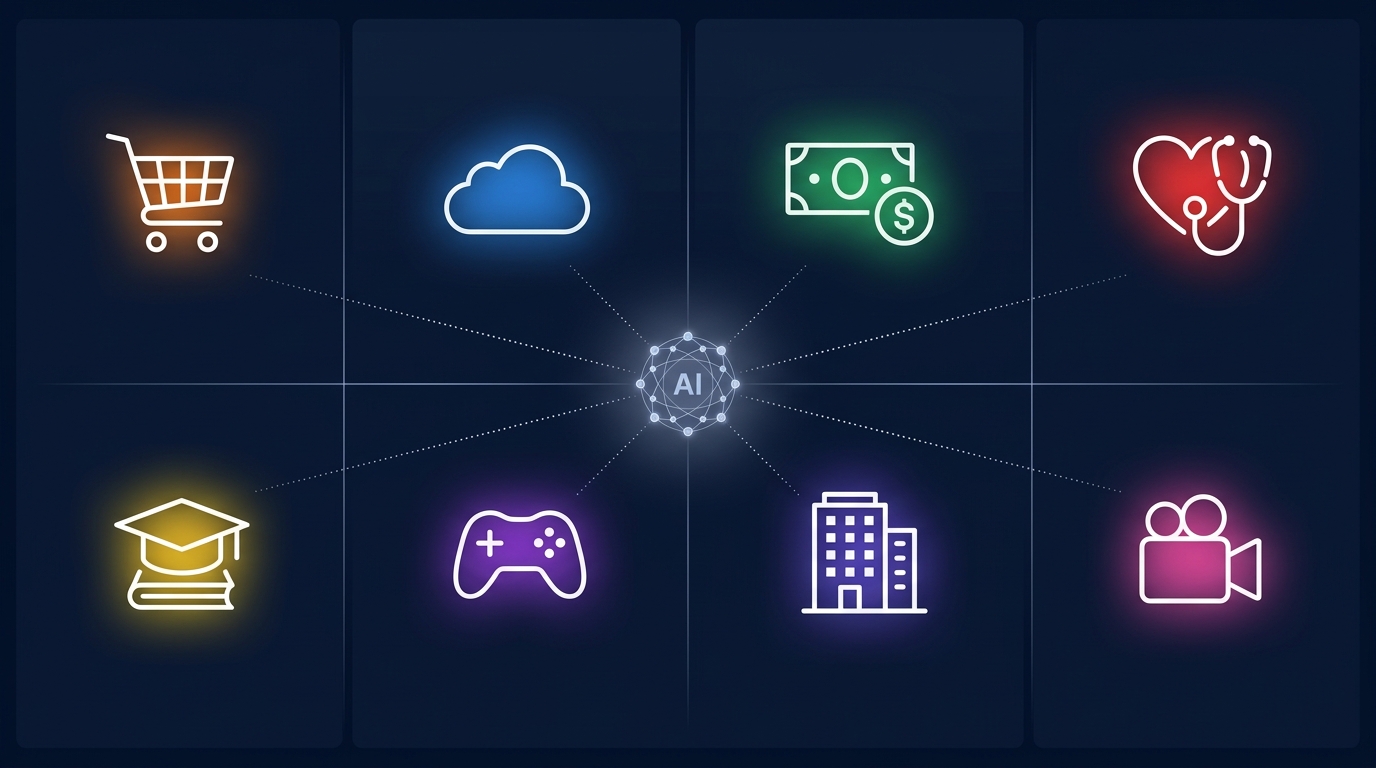
| Industry | Typical Scenario | Key Boundary Design |
|---|---|---|
| Legal | Contract review assistant | Copilot only — no replacing lawyer decisions |
| Healthcare | Diagnostic support system | "Second opinion" only |
| Finance | Anti-fraud scoring | 100% human review for high-risk |
| E-commerce | AI customer service | Refund promises require human confirmation |
| DevOps | AIOps triage | Suggestions only — no auto-remediation |
| HR | Resume screening | Bias detection + blind screening mode |
| Education | Personalized learning | Hints only — no direct answers |
| Content | Marketing copywriting | Human refinement + compliance check |
Design Principles (Why We Designed It This Way)
- Problem before solution — Validate that the problem is real before building features
- Boundaries before capabilities — Define what AI shouldn't do before designing what it can
- Evidence before decisions — Replace "I think it works" with Shadow validation
- Orchestration before automation — Keep human confirmation at critical decision points
- Iteration before perfection — Optimize through failure analysis, not first-time perfection
- View correction before action — Check if you're asking the right question before answering
- Judgment before intuition — Make the reasoning explicit before trusting gut feel
- Aesthetic authority over feature completeness — What you choose not to build defines the product
Contributing
Issues and PRs are welcome! Priority areas:
- New scenarios: Add industry cases with complete input-output examples
- Boundary designs: How to draw AI boundaries in high-risk scenarios
- Failure cases: Failed experiment analyses are more valuable than success stories
- New tool cards: Convert book concept cards into executable Skills
License
MIT License
"Problem before solution. Boundaries before capabilities. Evidence before decisions. Orchestration before automation."
Reviews (0)
Sign in to leave a review.
Leave a reviewNo results found