hanzi-browse
Health Pass
- License — License: NOASSERTION
- Description — Repository has a description
- Active repo — Last push 0 days ago
- Community trust — 125 GitHub stars
Code Fail
- network request — Outbound network request in dist/providers.js
- process.env — Environment variable access in examples/partner-quickstart/server.js
- network request — Outbound network request in examples/partner-quickstart/server.js
- process.env — Environment variable access in examples/x-marketing/server.js
- network request — Outbound network request in examples/x-marketing/server.js
- rm -rf — Recursive force deletion command in install.sh
Permissions Pass
- Permissions — No dangerous permissions requested
No AI report is available for this listing yet.
let any ai agent use the local browser

Hanzi Browse
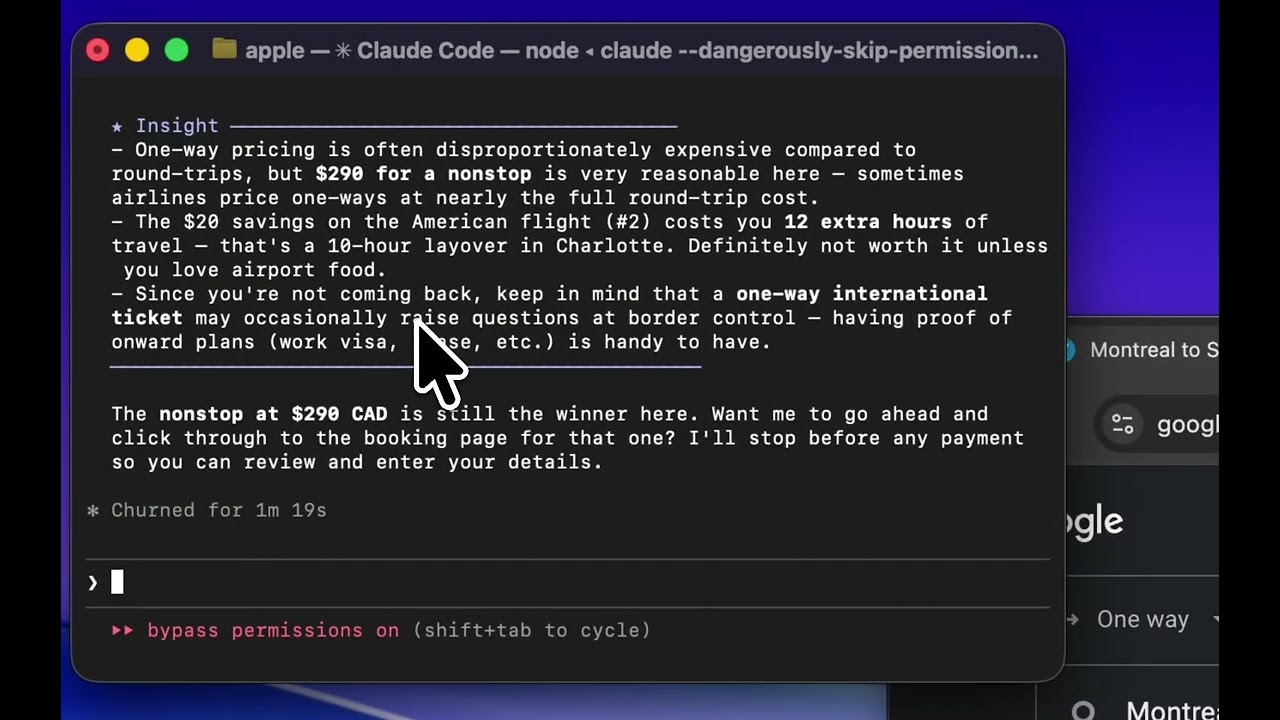
Give your AI agent a real browser.
One tool call. Entire task delegated. Your agent clicks, types, fills forms,
reads authenticated pages — in your real signed-in browser.




Works with


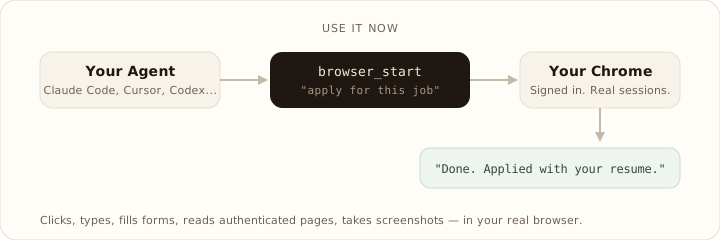
Two ways to use Hanzi
Use it now — give your agent a browser
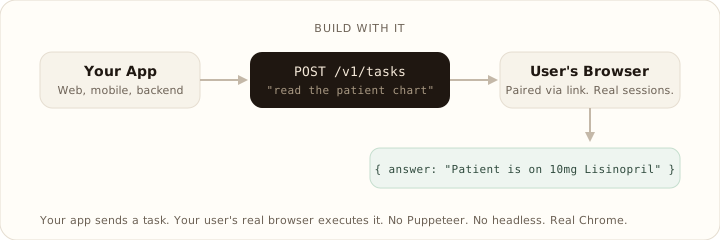
Build with it — embed browser automation in your product
Get Started
npx hanzi-browse setup
One command does everything:
npx hanzi-browse setup
│
├── 1. Detect browsers ──── Chrome, Brave, Edge, Arc, Chromium
│
├── 2. Install extension ── Opens Chrome Web Store, waits for install
│
├── 3. Detect AI agents ─── Claude Code, Cursor, Codex, Windsurf,
│                           VS Code, Gemini CLI, Amp, Cline, Roo Code
│
├── 4. Configure MCP ────── Merges hanzi-browse into each agent's config
│
├── 5. Install skills ───── Copies browser skills into each agent
│
└── 6. Choose AI mode ───── Managed ($0.05/task) or BYOM (free forever)
- Managed — we handle the AI. 20 free tasks/month, then $0.05/task. No API key needed.
- BYOM — use your Claude Pro/Max subscription, GPT Plus, or any API key. Free forever, runs locally.
Examples
"Go to Gmail and unsubscribe from all marketing emails from the last week"
"Apply for the senior engineer position on careers.acme.com"
"Log into my bank and download last month's statement"
"Find AI engineer jobs on LinkedIn in San Francisco"
Skills
The setup wizard installs browser skills into your agent automatically. Skills teach your agent when and how to use the browser for specific workflows:
| Skill | Description |
|---|---|
hanzi-browse |
Core skill — when and how to use browser automation |
e2e-tester |
Test your app in a real browser, report bugs with screenshots |
social-poster |
Draft per-platform posts, publish from your signed-in accounts |
linkedin-prospector |
Find prospects, send personalized connection requests |
a11y-auditor |
Run accessibility audits in a real browser |
x-marketer |
Twitter/X marketing workflows |
Open source — add your own.
Build with Hanzi Browse
Embed browser automation in your product. Your app calls the Hanzi API, a real browser executes the task, you get the result back.
- Get an API key — sign in to your developer console, then create a key
- Pair a browser — create a pairing token, send your user a pairing link (
/pair/{token}) — they click it and auto-pair - Run a task —
POST /v1/taskswith a task and browser session ID - Get the result — poll
GET /v1/tasks/:iduntil complete, or userunTask()which blocks
import { HanziClient } from '@hanzi/browser-agent';

const client = new HanziClient({ apiKey: process.env.HANZI_API_KEY });

const { pairingToken } = await client.createPairingToken();
const sessions = await client.listSessions();

const result = await client.runTask({
  browserSessionId: sessions[0].id,
  task: 'Read the patient chart on the current page',
});
console.log(result.answer);
API reference · Dashboard · Sample integration
Tools
| Tool | Description |
|---|---|
browser_start |
Run a task. Blocks until complete. |
browser_message |
Send follow-up to an existing session. |
browser_status |
Check progress. |
browser_stop |
Stop a task. |
browser_screenshot |
Capture current page as PNG. |
Pricing
| Managed | BYOM | |
|---|---|---|
| Price | $0.05/task (20 free/month) | Free forever |
| AI model | We handle it (Gemini) | Your own key |
| Data | Processed on Hanzi servers | Never leaves your machine |
| Billing | Only completed tasks. Errors are free. | N/A |
Building a product? Contact us for volume pricing.
Development
Prerequisites: Node.js 18+, Docker Desktop (must be running before make fresh).
First time (local setup)
git clone https://github.com/hanzili/hanzi-browse
cd hanzi-browse
make fresh
Performs full setup: installs deps, builds server/dashboard/extension, starts Postgres, runs migrations, and launches the dev server (~90s).
Run the project
make dev
Starts the backend services (Postgres + migrations + API server) and serves the dashboard UI.
- API: http://localhost:3456
- Dashboard (requires Google OAuth): http://localhost:3456/dashboard
Configuration
The defaults in .env.example are enough to run the server.
Optional services:
- Google OAuth (dashboard sign-in) -- add
GOOGLE_CLIENT_ID/GOOGLE_CLIENT_SECRETto.env - Stripe (credit purchases) -- add test keys to
.env - Vertex AI (managed task execution) -- see
.env.examplefor setup steps
Load the extension
Open chrome://extensions, enable Developer Mode, click "Load unpacked", select the dist/ folder.
Notes
- Local vs CLI usage --
npx hanzi-browse setupis for packaged usage and may not work in a local clone - Port conflicts -- if you see
EADDRINUSEon3456, stop existing processes or runmake stop
Commands
| Command | What it does |
|---|---|
make fresh |
Full first-time setup (deps + build + DB + start) |
make dev |
Start everything (DB + migrate + server) |
make build |
Rebuild server + dashboard + extension |
make stop |
Stop Postgres |
make clean |
Stop + delete database volume |
make check-prereqs |
Verify Node 18+ and Docker are available |
make help |
Show all commands |
Contributing
We welcome contributions! See CONTRIBUTING.md for setup instructions.
Good first contributions: new skills, landing pages, site-pattern files, platform testing, translations. Check the open issues.
Community
Discord · Documentation · Twitter
Privacy
Hanzi operates in different modes with different data handling. Read the privacy policy.
- BYOM: No data sent to Hanzi servers. Screenshots go to your chosen AI provider only.
- Managed / API: Task data processed on Hanzi servers via Google Vertex AI.
License
Reviews (0)
Sign in to leave a review.
Leave a reviewNo results found