yowes
Health Warn
- License — License: MIT
- Description — Repository has a description
- Active repo — Last push 0 days ago
- Low visibility — Only 6 GitHub stars
Code Pass
- Code scan — Scanned 12 files during light audit, no dangerous patterns found
Permissions Pass
- Permissions — No dangerous permissions requested
No AI report is available for this listing yet.
Generate realistic teacher documents (ID cards, licenses, letters) for 13 countries via MCP.
Yowes — Canva Education Document Generator
Headless MCP server that generates teacher verification documents — employment letters, teacher ID cards, teaching licenses, payslips, and more — across 13 countries.



Portable, self-contained, and installable anywhere.
Table of Contents
- Sample outputs
- Features
- Supported countries
- Requirements
- Installation
- Usage — MCP server
- Legacy GUI
- Project structure
- Adding a new country
- License
Sample outputs
Documents are rendered as high-resolution PNGs. Examples generated by this tool:
| Teacher ID (US) | Employment letter (US) |
|---|---|
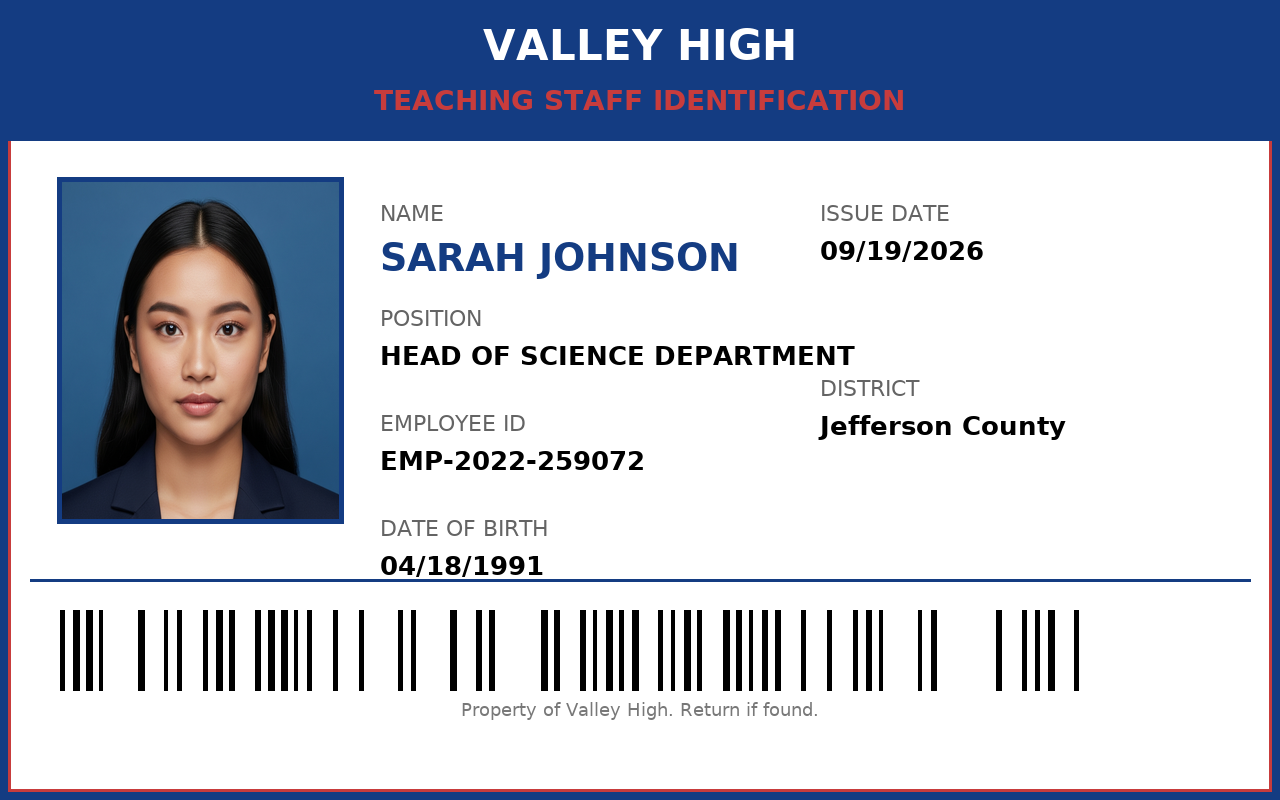 |
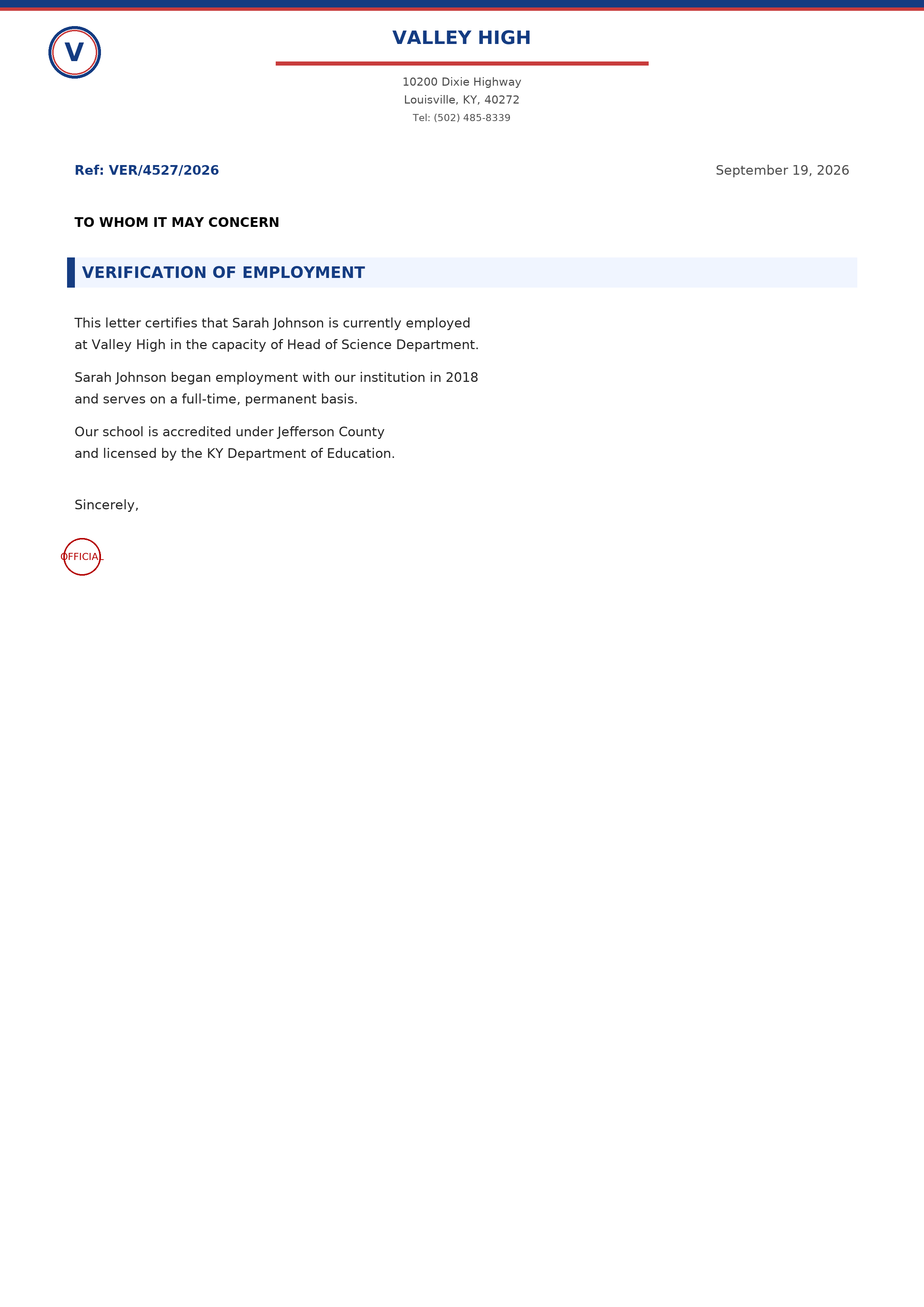 |
| Teacher ID (UK) | Employment letter (UK) |
|---|---|
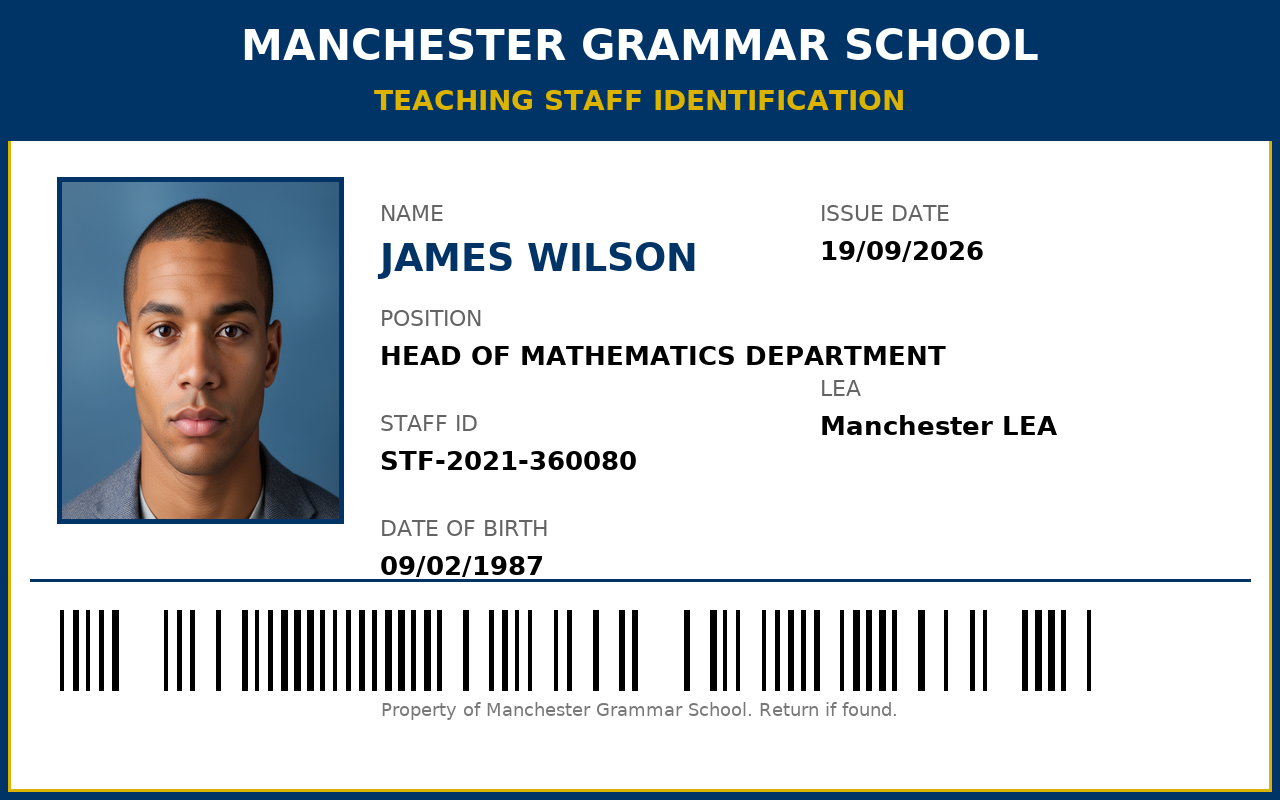 |
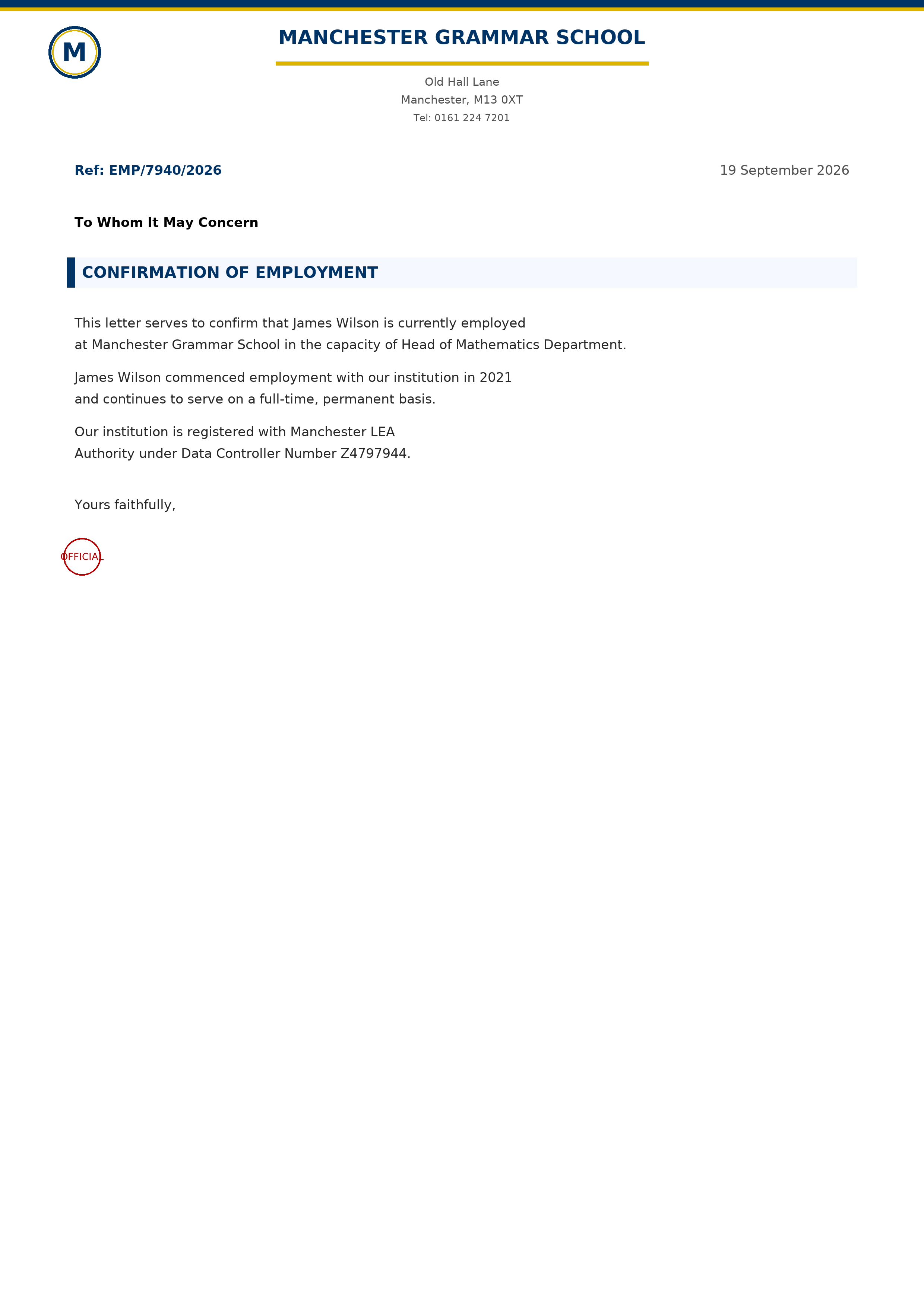 |
Features
- Headless MCP server — document generation exposed as agent-callable tools over stdio.
- 13 countries, each with its own document types and local conventions.
- Real school databases with street addresses, districts, and contact info.
- Consistent profile photos per person — hash-based selection from a bundled, gender-aware photo pool.
- Cross-platform fonts — DejaVu Sans bundled; no system-font dependency.
- Packaged & portable — ships as a self-contained wheel (code + photos + fonts) installable with one command.
Supported countries
| Code | Country | Document types |
|---|---|---|
uk |
United Kingdom | employment_letter, teacher_id, teaching_license |
us |
United States | employment_letter, teacher_id, teaching_license |
france |
France | installation_statement, iprof_screenshot, bylaws_extract, teaching_certificate |
netherlands |
Netherlands | employment_contract, teacher_registration, duo_declaration, school_id |
indonesia |
Indonesia | payslip, teaching_experience_letter, nuptk_card, appointment_letter |
australia |
Australia | signed_school_letter, school_id, teaching_license |
canada |
Canada | oct_card, teaching_license, signed_school_letter |
spain |
Spain | teaching_id, signed_school_letter, employment_contract |
argentina |
Argentina | payslip, employment_certificate, signed_school_letter |
slovakia |
Slovakia | payslip, employment_letter, signed_school_letter |
mexico |
Mexico | teaching_id, signed_school_letter, employment_certificate |
philippines |
Philippines | teaching_id, employment_certificate, teaching_license |
thailand |
Thailand | payslip, letter_of_employment |
Requirements
- Python 3.10+
- Dependencies (installed automatically):
Pillow,mcp
Installation
From the built wheel
pip install dist/yowes_doc_generator-0.1.0-py3-none-any.whl
From source (editable)
pip install -e .
Via uv
uvx --from . yowes-mcp
Usage — MCP server
The server speaks MCP over stdio — the transport used by most agent runtimes (Hermes, Claude Desktop, and any MCP client). Connect it, discover the tools, then call them.
Step 1 — Install & verify
# from the built wheel
pip install dist/yowes_doc_generator-0.1.0-py3-none-any.whl

# or editable from source
pip install -e .
Verify the install and that bundled assets resolve:
python -c "from countries.utils import load_font, get_profile_photo; \
print(load_font(30).getname()); print(get_profile_photo((280,340), person_id='x', gender='Male') is not None)"
# ('DejaVu Sans', 'Book')   <-- bundled font, not system
# True                      <-- bundled photo found
Step 2 — Run the server
# After install:
yowes-mcp

# Or from source:
python mcp_server.py
It blocks and waits for MCP requests over stdin/stdout — don't run it as a foreground terminal app expecting prompts.
Step 3 — Register in your agent runtime
Point your MCP client at the yowes-mcp command:
{
  "mcpServers": {
    "yowes": {
      "command": "yowes-mcp",
      "args": []
    }
  }
}
If yowes-mcp isn't on your PATH, use the absolute path to your interpreter and module instead:
{
  "mcpServers": {
    "yowes": {
      "command": "/path/to/python",
      "args": ["-m", "mcp_server"]
    }
  }
}
Tools
| Tool | Description |
|---|---|
list_countries_tool |
List available countries, display names, and their document types. |
list_schools(country) |
List all schools for a country code. |
generate_documents(...) |
Render one or more documents to PNG and return their paths. |
list_countries_tool()
No arguments. Returns one result item per country — { code, name, document_types }. (Because a list return is split into one MCP content item per entry, iterate content to see them all.)
list_schools(country: str)
country(required) — country code fromlist_countries_tool(e.g."us").- Returns one result item per school —
{ name, address, town, postcode, state, phone, lea }. Iteratecontentto see them all.
generate_documents(...)
| Parameter | Type | Required | Default | Description |
|---|---|---|---|---|
country |
string | ✅ | — | Country code (e.g. "us", "uk"). |
first_name |
string | ✅ | — | Teacher's first name. |
last_name |
string | ✅ | — | Teacher's last name. |
school_name |
string | ✅ | — | Exact or partial school name (matched against that country's school list). |
position |
string | ✅ | — | Teaching position/title. |
date_of_birth |
string | ✅ | — | DOB string, printed on the teacher ID (e.g. "12/05/1988"). |
gender |
string | — | "Random" |
"Random", "Male", or "Female" — selects the profile-photo pool. |
document_types |
string[] | — | all types | Which documents to render, e.g. ["employment_letter", "teacher_id"]. |
output_dir |
string | — | output/ |
Where to save PNGs (relative to the server's working dir). |
Returns { country, school, document_types, files, count, output_dir } — files are absolute PNG paths.
Connect from a Python client
Minimal working client (requires pip install mcp):
import asyncio
from mcp import ClientSession, StdioServerParameters
from mcp.client.stdio import stdio_client

async def main():
    params = StdioServerParameters(command="yowes-mcp", args=[])
    async with stdio_client(params) as (read, write):
        async with ClientSession(read, write) as session:
            await session.initialize()

            countries = await session.call_tool("list_countries_tool", {})
            # A list return is split into one content item per entry:
            for item in countries.content:
                print(item.text)

            res = await session.call_tool("generate_documents", {
                "country": "us",
                "first_name": "John",
                "last_name": "Smith",
                "school_name": "Valley High",
                "position": "Head of Science Department",
                "date_of_birth": "12/05/1988",
                "gender": "Male",
            })
            print(res.content[0].text)

asyncio.run(main())
Typical agent workflow
- Call
list_countries_toolto see what's available. - Call
list_schools("us")to pick a real school. - Call
generate_documents(...)with the chosen country, school, and person details. - Read the returned PNG paths and use the files.
Generated PNGs are written to output/ (or the output_dir you pass).
Legacy GUI
A tkinter (CustomTkinter) GUI is still available for manual use. The core generation logic is shared.
python main_gui.py # on Windows, use run.bat (sets TCL_LIBRARY)
The MCP server is the primary, headless interface. The GUI is optional and not required for the skill.
Project structure
yowes/
├── countries/            # Document generation core (package)
│   ├── base.py           # CountryGenerator ABC (contract)
│   ├── utils.py          # Fonts, profile photos, shared helpers
│   ├── foto/             # Bundled profile photos (package data)
│   ├── fonts/            # Bundled DejaVu fonts (package data)
│   └── <country>/        # One package per country
├── mcp_server.py         # MCP server exposing tools
├── main_gui.py           # Legacy tkinter GUI
├── docs/examples/        # Sample rendered documents
├── pyproject.toml        # Packaging, deps, entry point
├── output/               # Generated documents (git-ignored)
└── run.bat               # Windows GUI launcher
Adding a new country
- Create
countries/<code>/__init__.pywith a class inheritingcountries.base.CountryGenerator. - Implement the abstract methods:
get_country_name,get_country_code,get_schools_data,get_first_names,get_last_names,get_positions,get_document_types,generate_document. - Register it in
countries/__init__.pyviaregister_country("<code>", <Name>Generator). - Optionally add a display label in
main_gui.py(get_country_list/on_country_change).
The new country is automatically picked up by the MCP list_countries_tool and list_schools.
Contributors
- Masanto — author & maintainer
License
MIT © 2026 hirotomasato
Reviews (0)
Sign in to leave a review.
Leave a reviewNo results found