design-os
Health Pass
- License — License: MIT
- Description — Repository has a description
- Active repo — Last push 0 days ago
- Community trust — 13 GitHub stars
Code Pass
- Code scan — Scanned 12 files during light audit, no dangerous patterns found
Permissions Pass
- Permissions — No dangerous permissions requested
No AI report is available for this listing yet.
Design CLI for Claude Code, Codex and Antigravity: describe the UI in plain words, get production-grade web, Figma and SwiftUI output through deterministic taste gates.

DESIGN:OS
Design CLI for Claude Code, Codex and Antigravity: describe the UI in plain words, get production-grade web, Figma and SwiftUI output through deterministic taste gates.
One design system. Web, Figma, and Apple-native execution. Live: jangtrinh.github.io/design-os
[Quick start] · [Agents] · [Generated examples] · [Living proof] · [Motion] · [Studio gallery] · [Workflow map] · [The machine floor] · [The plugin] · [The Figma hand] · [Changelog]
Node ≥ 20 · MIT · deterministic ui kernel · 47 commands · 3,955 kernel tests green ·
a 1,675-test Figma plugin ·
26 personas · a 27-component kit · deterministic static + rendered gates · a 1:1 Figma mirror
npm install -g ease-design
DESIGN:OS is a multi-runtime design CLI. You drive it through the agent CLI you
already use (Claude Code, Codex CLI, or Antigravity) with plain-language /ui:* commands.
Describe the interface; DESIGN:OS routes the work to the right execution arm, loads the
surface-specific craft and design-system context, and keeps delivery claims honest.
| Surface | Start with | What you get |
|---|---|---|
| Web marketing | /ui:generate <intent> |
A qualified route to production HTML, bounded by typed delivery contracts. |
| Figma | /ui:to-figma <intent> |
Idiomatic canvas authoring through the opt-in Figma hand. |
| Native macOS | /ui:native-macos <intent> |
A first-class, SwiftUI-first workflow — available now with provisional assurance. |
| Native iOS | /ui:native-ios <intent> |
Compact-first SwiftUI craft for iPhone — available with provisional assurance. |
| Native iPadOS | /ui:native-ipados <intent> |
Resizable SwiftUI craft for iPad workspaces and mixed input — available with provisional assurance. |
Your host agent writes the implementation. The deterministic ui kernel handles routing,
contract validation, and fail-closed claim boundaries; it does not call a model or generate
Swift. No API keys, no design tokens to hand-edit, no taste vocabulary to learn.
Compared with the alternatives
What DESIGN:OS does that a DESIGN.md file, an IDE design agent or a hosted builder does not, or does differently:
- The floor is code. Deterministic linters run on every delivery and a blocking breach cannot receive a
QUALIFIEDverdict. A prose design file cannot refuse output; this can. (The machine floor) - One system, three runtimes. The same design system compiles to production HTML, idiomatic Figma through the Figma hand, and SwiftUI-first native routes. (The surfaces)
- Model-free kernel, no API keys. Routing, contract validation and claim boundaries are deterministic and network-free; your agent CLI writes the implementation.
- Brownfield first.
/ui:learncompiles the design system from your own code, URL or Figma file;/ui:whyanswers with provenance from the design memory. - Measured, with the misses published. A controlled three-way study and a nine-run repeatability study, including the two mobile overflow failures they found. (Evidence)
- A designer and an agent in one Figma file. The separate plugin gives a free write path on Figma Free with one undo step per mutation and a verified 1:1 mirror. (The plugin)
Where the alternatives win, stated plainly: a DESIGN.md corpus or Claude Design scaffolds a first screen faster with no install; an IDE canvas agent gives a visual editing surface this CLI does not; hosted builders deploy for you. What is still open here is listed under Status & honest boundaries.
Apple-native arms are available, not overclaimed. macOS, iOS, and iPadOS have separate
routes, artifacts, evidence, and assurance. They share SwiftUI fundamentals without flattening
platform behavior. PROVISIONAL means an arm can route and produce work today while live
accessibility, hardware/device evidence, and owner acceptance remain separate qualification gates.
Native mobile proof, retained
The content-addressed proof board
retains the current evidence boundary. TocChien is the iOS proof: its three image-first
screens — champion catalogue, champion detail, and game dictionary — carry
16 controller-replayed simulator tests, paired light/dark captures, independent visual review,
and owner acceptance bound to exact source and capture hashes. iPadOS retains 12 simulator
tests, for 28 simulator tests across the board, but its visual review and owner acceptance
remain pending.
This proof remains PROVISIONAL. iOS Tier 2 provenance is unqualified: the final paths have
mixed Terra/Sol authorship without an immutable intermediate checkpoint. It does not authorize
physical-device, live assistive-technology, iPad visual, release-qualification, assurance-upgrade,
or qualified-delivery claims.
| iOS — TocChien three-screen proof | iPadOS — resizable project workspace |
|---|---|
 |
 |
| Champion catalogue, champion detail, and game dictionary retain paired light/dark captures, independent visual review, and exact-hash owner acceptance. | Simulator behavior evidence is retained; independent visual review and owner acceptance remain pending. |
Generated by DESIGN:OS
Public sites shipped end to end with this toolchain. Every repo documents how to
reproduce it with DESIGN:OS — OPAH ONE walks it command by command. The grid grows as
new demos ship.
| OPAH ONE — scroll-scrub drone product page | AURA — cinematic scroll-film product page |
|---|---|
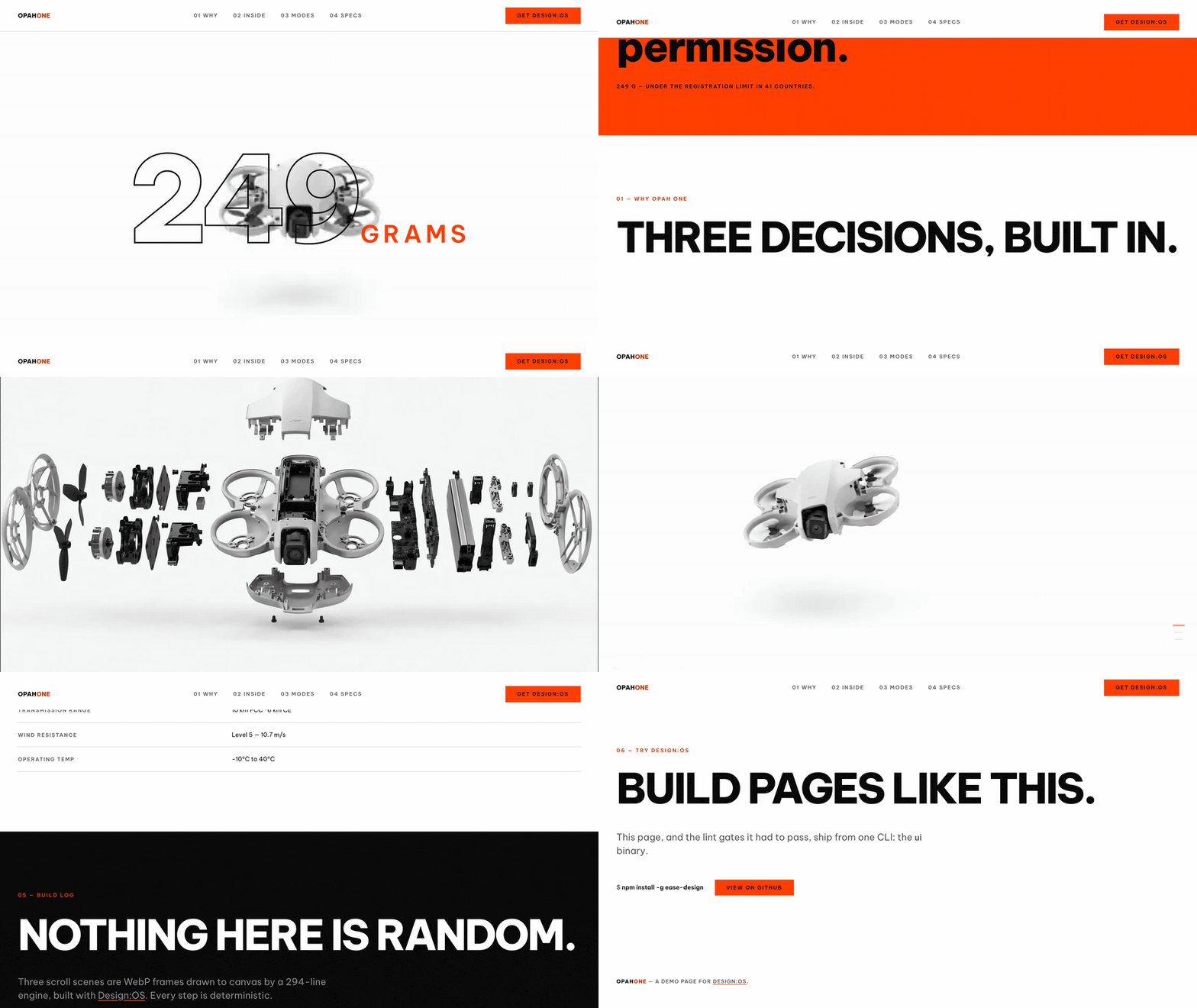 |
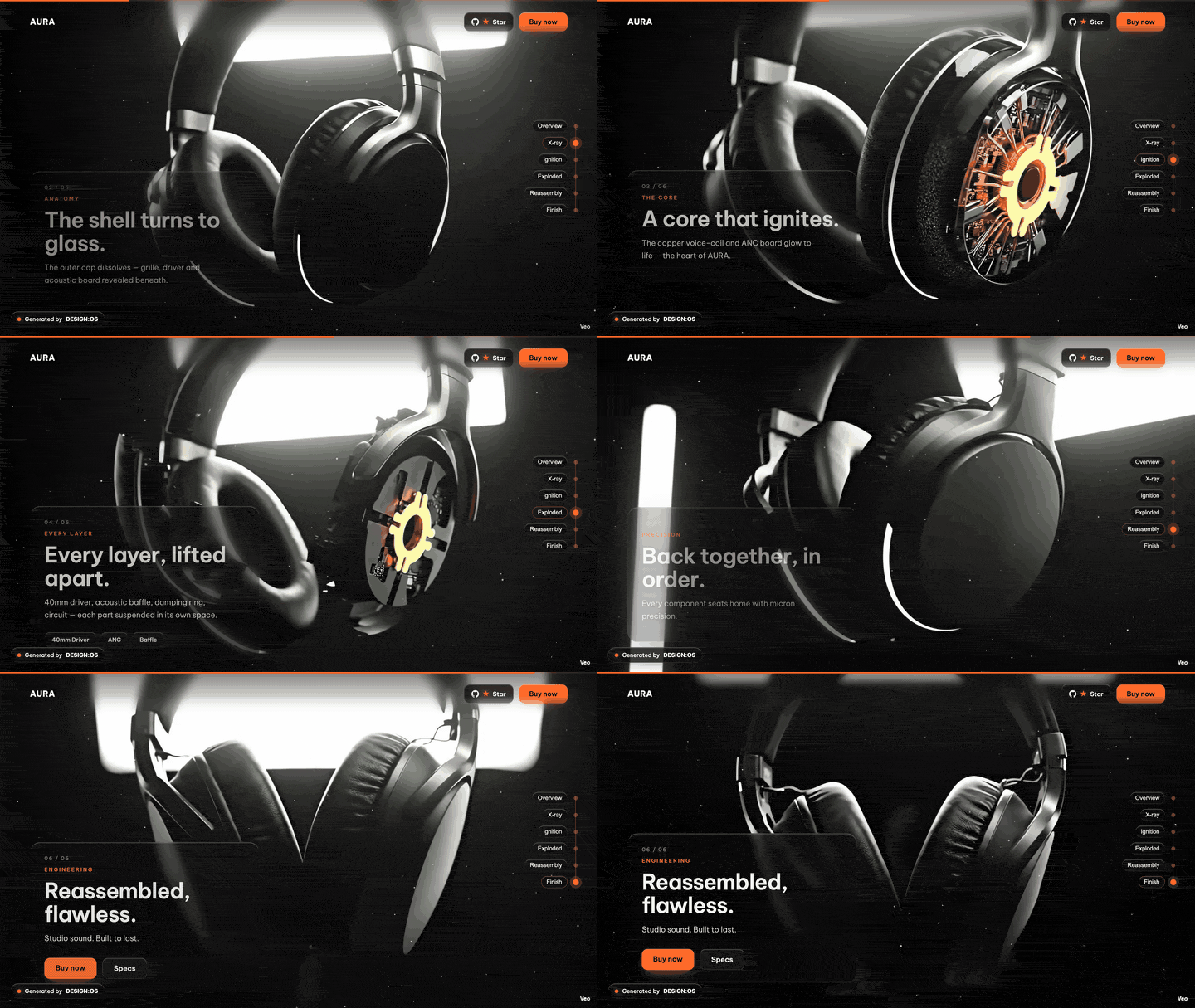 |
343 WebP frames in two tiers, accent derived from the footage by ui color, DTCG tokens, the tenant scroll engine, its five declared lint gates green.Live · video · reproduce it |
One scroll value scrubs a 289-frame exploded-view film while the Liquid Glass persona carries the copy over the footage. Live · video · reproduce it |
| Robotic Arm — anime.js-style 3D scrollytelling | Rill Architecture — premium service page |
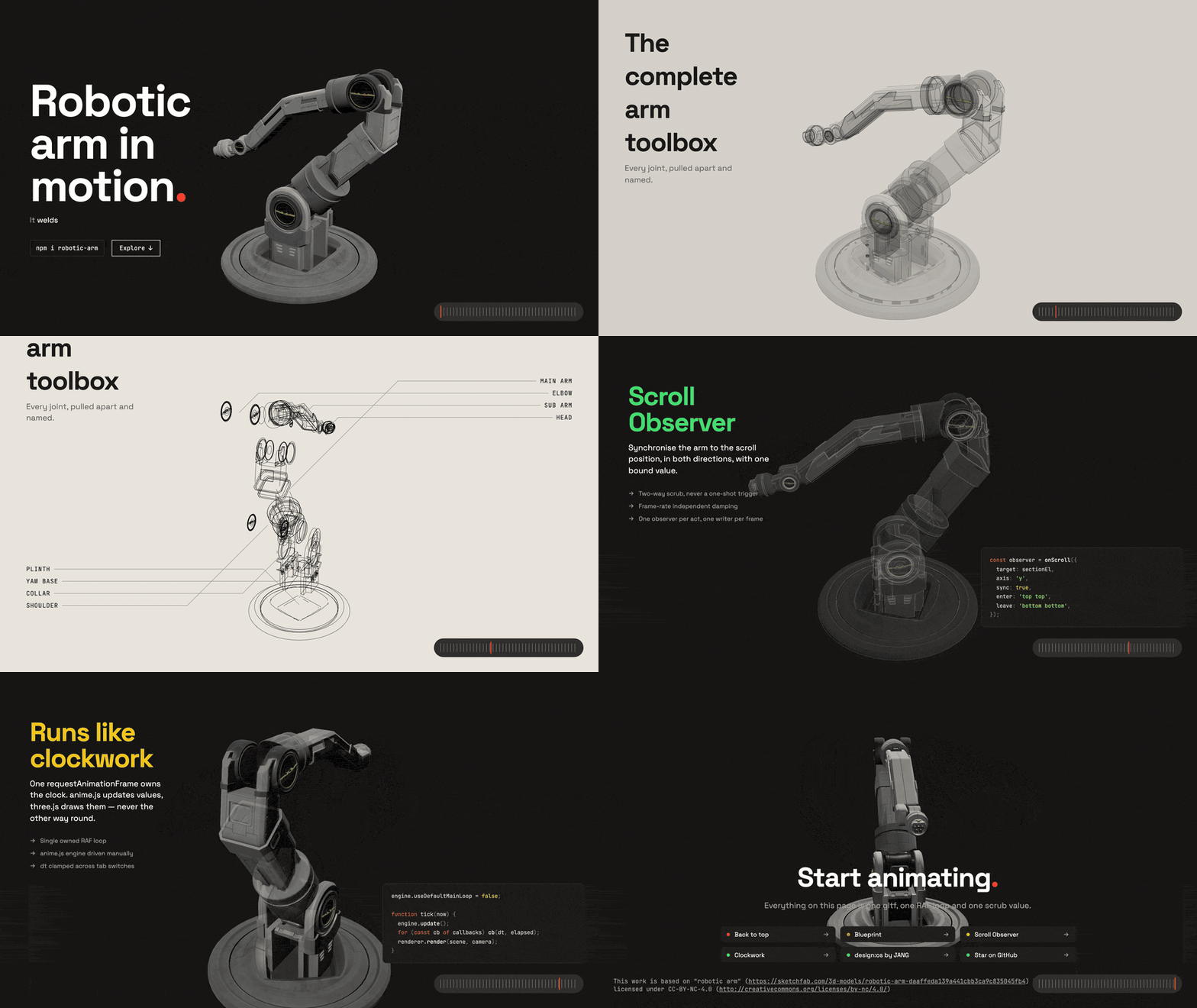 |
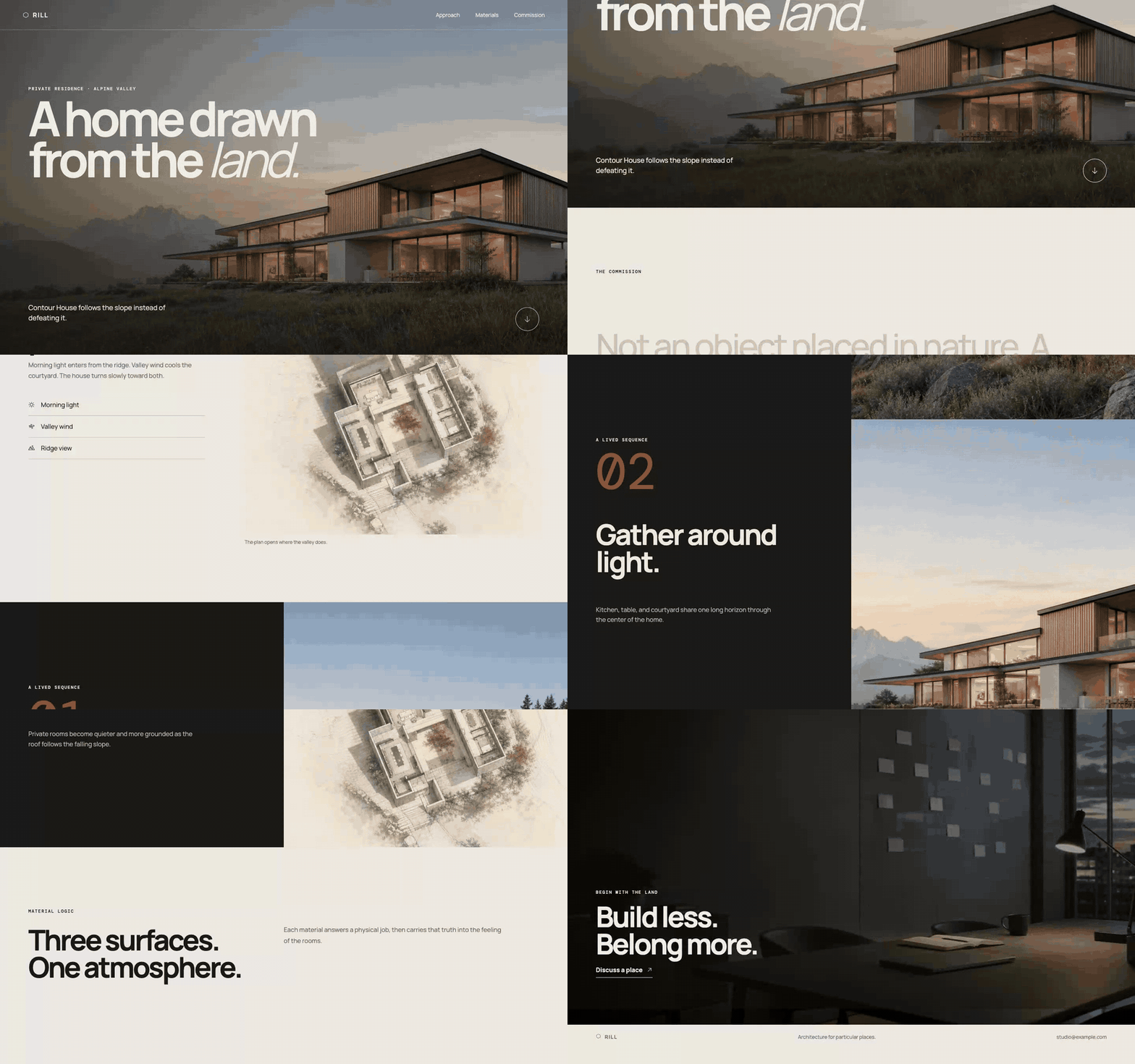 |
| A Three.js arm assembles from wireframe, explodes into a labeled blueprint, and plays color-coded feature acts — one scroll value, one RAF loop. Live · video · reproduce it |
Image-led spatial narrative under GSAP parallax: mountain-home hero, site analysis, a sticky lived sequence, and material studies. Live · video · reproduce it |
In the controlled three-way study, orchestration beat raw prompting and prompt enhancement in
all three categories — a 1.77-point mean lift in independent blind review — and the
follow-up repeatability study scored nine fresh orchestrated runs at 8.96 / 10 with 0.25
population standard deviation.
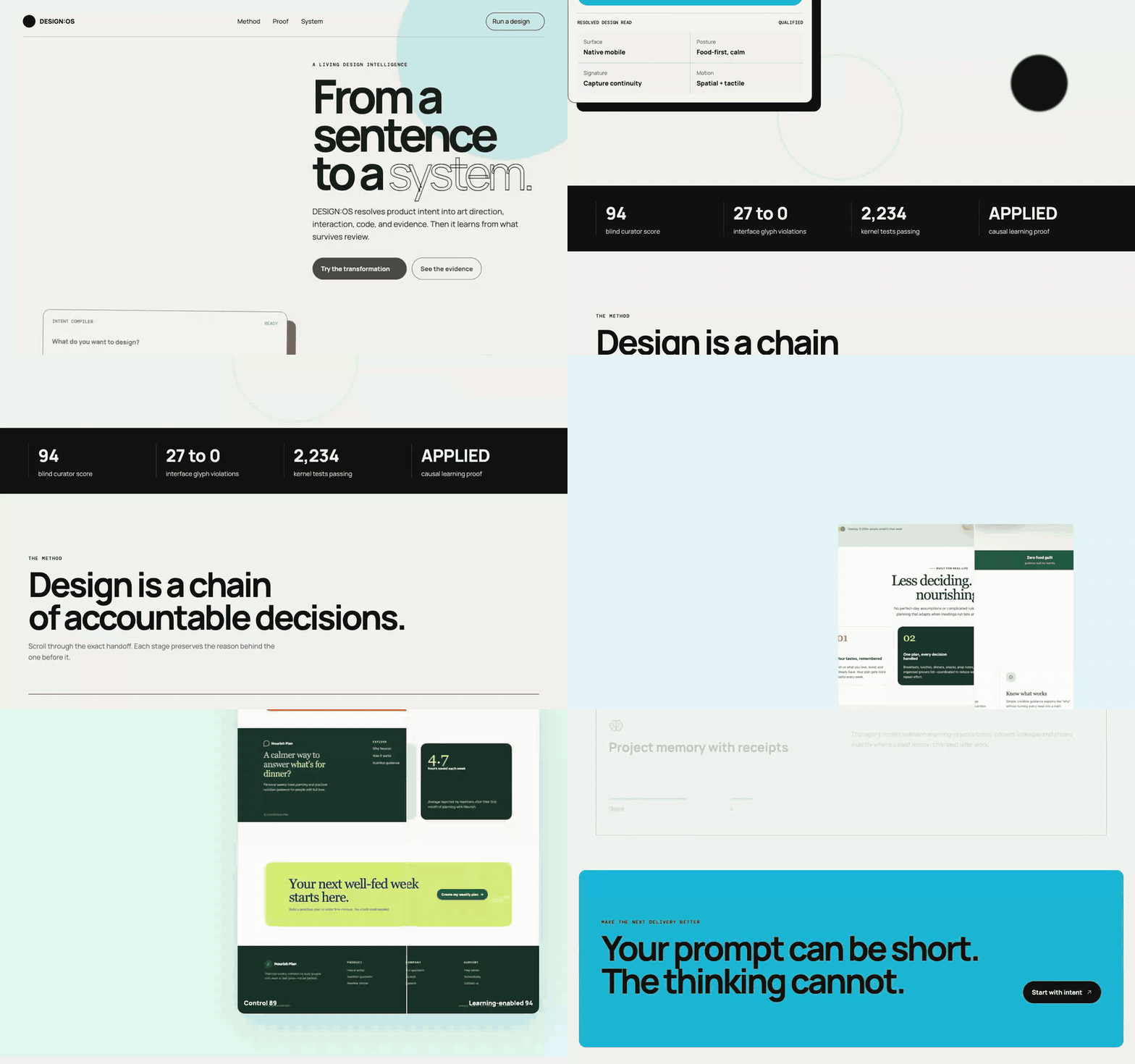
Interaction boundary benchmark
Three treatments test different surfaces with the GSAP motion-direction layer active:
| DESIGN:OS product | Nutrition native mobile | Architecture service |
|---|---|---|
 |
 |
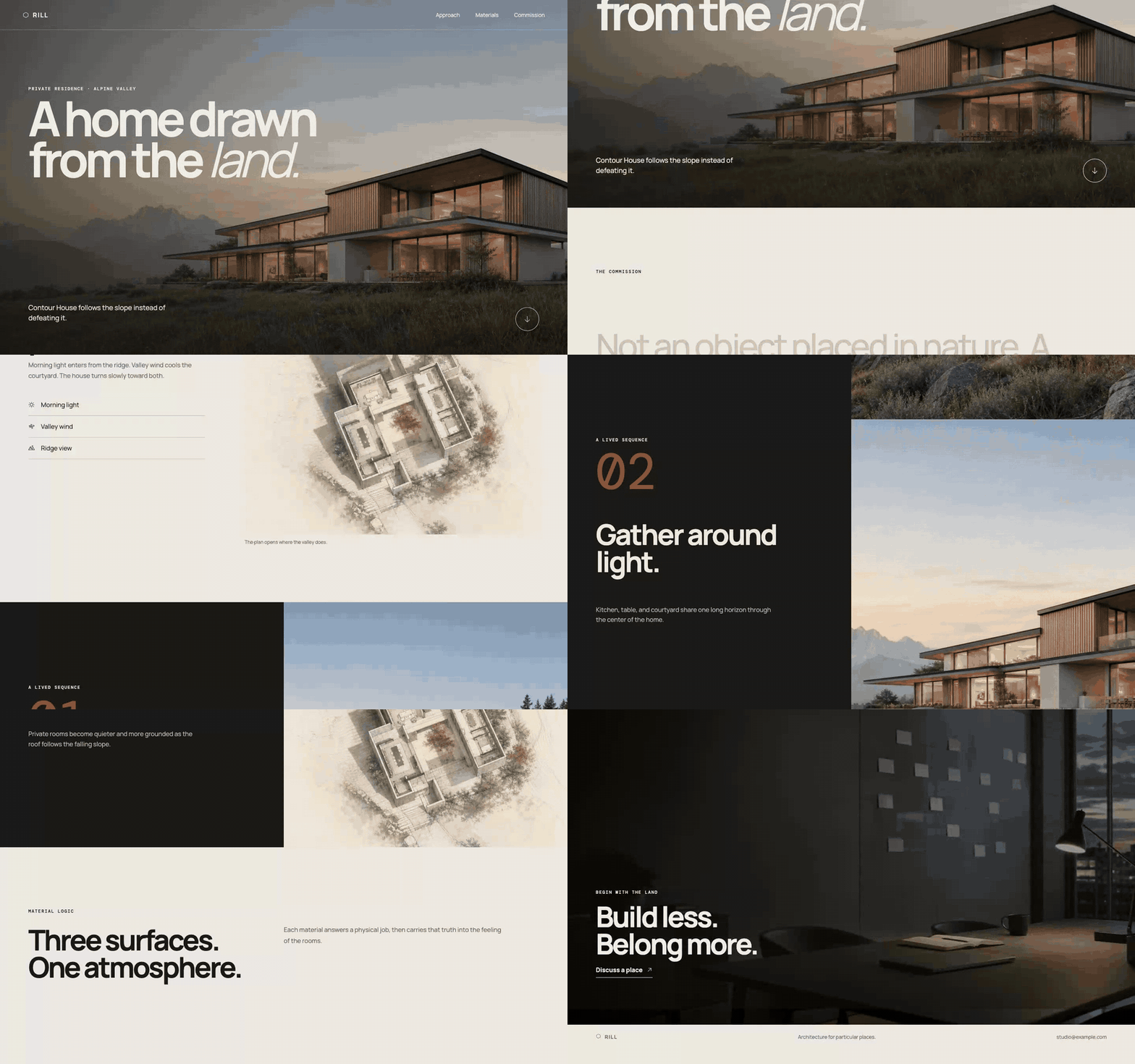 |
The architecture treatment has since shipped as its own public repo —
design-os-rill-architecture —
and leads the showcase grid above. These are runnable treatments, not static mockups: clone
the repo and open them from showcase/018-improving-proof-benchmark/runs/, or watch the
recordings — DESIGN:OS,
Nouri,
Rill Architecture —
and the rendered critique. The
benchmark proves differentiated delivery across product marketing, native-mobile direction
(a browser prototype, deliberately not counted as native implementation evidence), and premium
service; it does not claim world-class superiority until matched controls receive blind scores.
The prompts behind the evidence
The user prompts were intentionally short. DESIGN:OS did not receive a polished creative brief:
Architecture: Build a premium site-specific residential architecture landing page.
Nutrition: Build an AI nutrition experience that helps someone understand a meal.
Planning: Build a planning SaaS landing page for connected decision context.
Before implementation, DESIGN:OS compiled each sentence into the generation packet the host model
actually received. The product-specific audience, outcome, and action changed per case; the
orchestration contract below stayed fixed:
directions: 3
selectBy: topic fit, evidence strength, execution risk, convergence risk
regions: [hero, proof, context, process-or-connection, conclusion]
eachRegionMustDeclare:
  - purpose and narrative role
  - distinct layout family
  - composition anchor and hierarchy event
  - visual type and rationale
  - responsive transformation
  - craft investment
imagery:
  - plan section-specific image prompts before implementation
  - use purposeful evidence where CSS would become a placeholder
  - keep labels, controls, data, and product state as live HTML
hero:
  - fit message, action, and primary demonstration in the initial desktop viewport
  - show hierarchy, state, and consequence
depth: preserve topic specificity and design investment through the conclusion
composition: test content-led and golden-ratio candidates; release the ratio when content fails
preflight:
  - no placeholder primary visual
  - no generated fake product screenshot
  - no repeated section shell without rationale
  - no quality decline toward the footer
Nothing is hidden behind a marketing paraphrase. Read the exact historical packets for
Architecture,
Nutrition,
and Planning.
The current interaction-boundary benchmark deliberately changed two surfaces. Its raw requests
were:
DESIGN:OS: Build a promotional page for DESIGN:OS and push interaction and animation craft.
Nutrition: Build a native mobile nutrition interface, not a responsive website.
Architecture: Build a premium site-specific residential architecture service page.
The resulting benchmark contract
keeps the web and native claims separate: the Nouri browser prototype communicates native-mobile
direction but does not count as native implementation evidence.
Why this is our best-performing method
A longer prompt is not the advantage. The advantage is converting vague intent into decisions the
builder and curator can verify:
- Product truth before styling. Audience, outcome, action, and prohibited claims constrain
what the page must communicate. - Divergence before convergence. Three structural directions are compared before one visual
language becomes expensive to change. - Every section has a job. Region contracts prevent the familiar strong-hero, weak-footer
quality collapse. - Visual evidence is planned. Image prompts, aspect ratios, crop behavior, and narrative jobs
are decided before imagery is generated or sourced. - Product truth stays editable. Controls, labels, data, and states remain live HTML rather
than being flattened into a convincing but unusable generated screenshot. - Qualification requires evidence. Desktop/mobile renders and deterministic gates can reject
work the model would otherwise describe as finished.
That makes orchestration the best-performing method in the workflows tested here, not a claim
that DESIGN:OS is universally best. The same study exposed binary-rule misses and two mobile
overflow failures. Those failures are public because the next product improvement is a
deterministic repair gate, not a stronger adjective.
The nine repeatability runs live in-repo undershowcase/world-class-benchmark/evidence/repeatability-study/ (clone to open the HTML). Full
evidence: controlled comparison,
repeatability result,
and blind curator report.
The agent learns in the work
DESIGN:OS now separates four claims that are often blurred together:
- ALIVE — the project has a learning loop.
- LEARNING — evidence became a bounded lesson.
- APPLIED — later work cites and uses that lesson.
- IMPROVING — a preregistered suite of at least three holdouts across at least two
categories clears the declared mean-quality, aggregate-repair, recurrence, and safety
thresholds — the deterministic engine computes the suite verdict itself.
The proof is causal rather than volumetric. A thousand memory events do not prove learning. An
APPLIED claim needs the original evidence, a later retrieval/application receipt, the affected
decision, the artifact, and its outcome. Escaped defects need a gate, a failing negative fixture,
and a later run.
The first dogfood study used three real project histories:
| Project | Supported level | What it proves |
|---|---|---|
| ease-design | APPLIED | User feedback changed orchestration and a later Nutrition Planning delivery |
| client-portal (confidential) | LEARNING | Persistent project identity and harvested project lessons |
| platform-design-system | APPLIED | Escaped defects became executable gates with negative fixtures and later detections |
The controlled Nutrition Planning run compared a
memory-disabled control at 89/100
against a learning-enabled treatment
at 94/100. Static comparison images are intentionally omitted from this README.
The treatment eliminated prohibited text/Unicode interface glyphs 27 → 0, added motivated
scroll reveals, preserved reduced-motion handling, and won the independent blind review by five
points. After the first blind findings were reapplied, it improved 89 → 94 without the user
repeating the feedback.
The deterministic verdict is still APPLIED, not IMPROVING. The study did not clear the
predeclared +10 comparison delta, used one treatment repair round, and has not completed
contradiction or cross-project isolation runs. That boundary is intentional: the final design
crossed the world-class visual threshold, but one successful case is not proof of an everyday
trend — the engine now enforces a suite-level gate, so no single comparison can graduate on
its own.
Run the evidence report:
design-os evolution \
  --dir . \
  --proof showcase/017-living-agent-proof/evidence/ease-design-proof.json
Read the controlled result,
forensic project comparison, and
machine-readable proof.
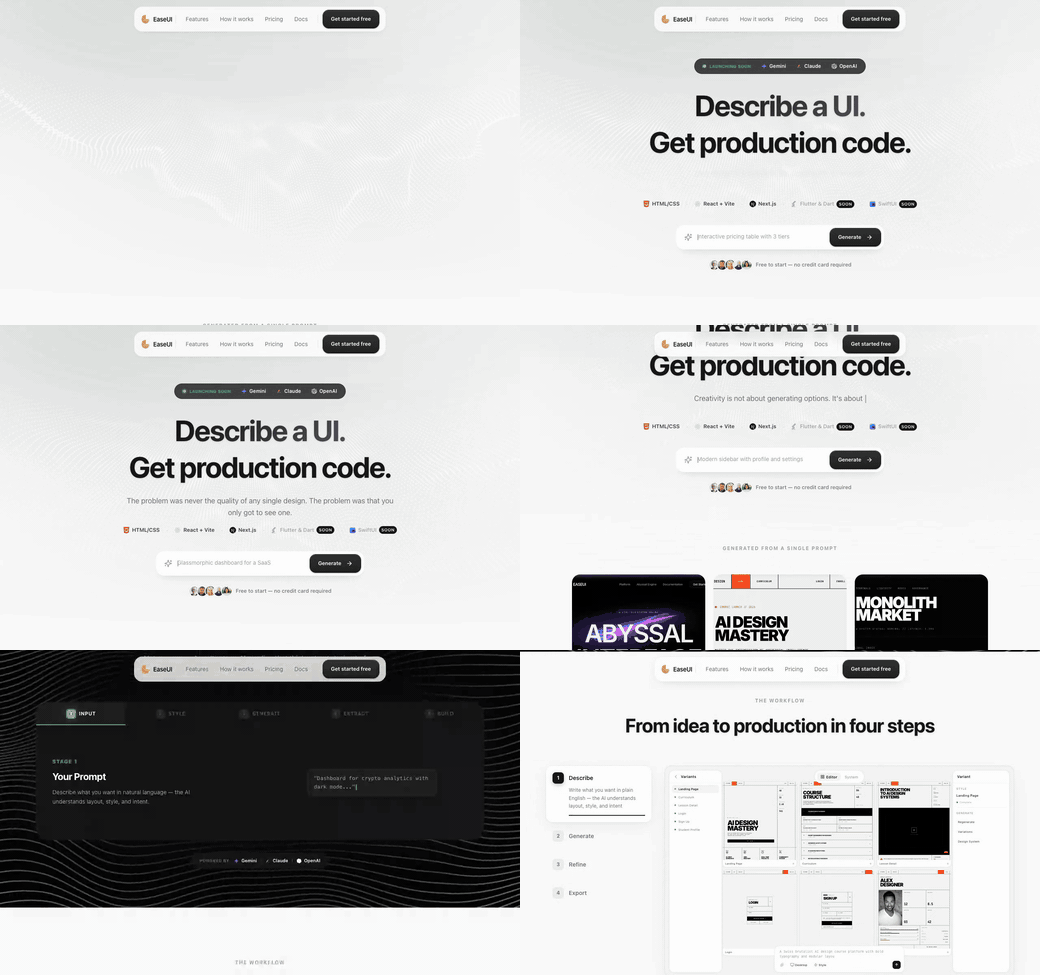
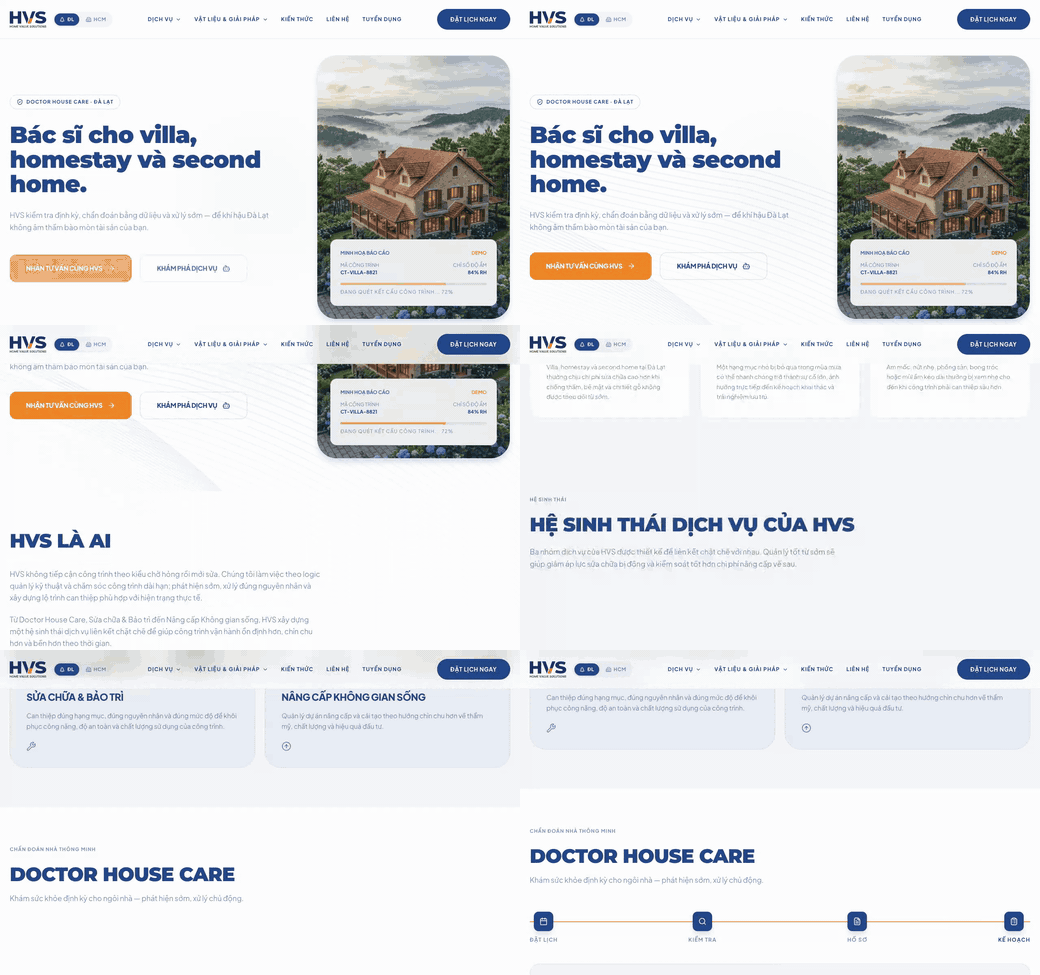
Built by the studio behind DESIGN:OS
Five live products, five different worlds — an AI dev-tool, a farm's direct-to-Hanoi
fruit brand, a plugin marketplace, a villa-care service, a deal CRM for real-estate
brokers. Same studio, same design discipline this toolchain distills. Real scrolling
recordings of the live sites — every demo links through.
 |
 |
| EaseUI · easeui.design AI UI generation · SaaS landing |
Trái Cây Bến Tre · traicaybentre.com D2C farm brand · editorial e-commerce |
 |
 |
| GravityHive · gravityhive.com plugin marketplace · brutalist type |
HVS · hvs.care villa & homestay care · bilingual services |
 |
|
| SổDeal · sodeal.vn deal CRM for real-estate brokers · SaaS |
Under the hood the same mechanism scales from one screen to a whole product: 26 personas
compile the same 27-component, paired-token starter kit into any system (ui ds init), and every
qualified surface must provide evidence for the declared machine gates before it ships. The toolchain is also
dogfooded on a production internal developer platform — a 129-component Figma library
scanned, hygiene-audited, contrast-proven, and VR-baselined end to end.
Six daily verbs
These are the six common moves. The full adapter exposes additional workflows (plus the internal critique gate) when the task needs more.
| Verb | What it does |
|---|---|
/ui:generate <intent> |
Weak intent compiled into a typed brief and generation contract; one candidate is rendered, repaired, and delivered by qualification status. |
/ui:learn |
Brownfield onboarding — compile the DS from your project's own evidence (code, a URL, or Figma) instead of a persona default. |
/ui:iterate · /ui:refine |
Tweak in plain words; surgical line-diffs, re-scored; the DS hash-seal stays intact. |
/ui:from-url <url> |
Extract a live site's design system into a portable folder (spec + tokens + audit). |
/ui:to-figma <intent> |
Author idiomatic Figma on the canvas — auto-layout, real instances, token-bound variables. |
/ui:why <question> |
Ask why a past design decision was made — answers with provenance from the project's design memory. |
| Command | What it does |
|---|---|
/ui:generate <intent> |
Start a fresh design from a plain-language description. Token-bound variants across diverse personas. |
/ui:native-macos <intent> |
Build a SwiftUI-first native macOS surface through an available, provisional arm; it never claims qualified platform delivery. |
/ui:native-ios <intent> |
Build a compact-first SwiftUI iPhone app with native navigation, touch, keyboard-safe layout, and provisional evidence. |
/ui:native-ipados <intent> |
Build a resizable SwiftUI iPad workspace with split navigation, scene state, mixed input, and provisional evidence. |
/ui:iterate <change> |
Tweak the current design in plain words; applied as a surgical line-diff, re-scored by the gate. |
/ui:refine |
Run the full critique→refine polish loop on the current design. |
/ui:redesign <intent> |
Reimagine an existing page in a different persona/direction. |
/ui:from-url <url> |
Extract a live site's design system into a self-contained ./<slug>/ folder (spec + tokens + audit). |
/ui:from-ref <path> |
Generate from a reference (image/markup), matching its look on your design system. |
/ui:figma |
Reproduce a Figma source 1:1 as HTML (keeps source colors intentionally). |
/ui:to-figma <intent> |
Author idiomatic Figma on the canvas from intent — needs the figma-agent hand. |
/ui:extract |
Pull a design system out of existing HTML. |
/ui:slides <intent> |
Generate a token-bound slide deck. |
/ui:learn |
Compile the DS from the project's own evidence (code, URL, or Figma). |
/ui:design <brief> |
The AI-designer flow — scope-aware facet planning + curator scoring on a full brief. |
/ui:diagram <intent> |
Author an accessible offline diagram as inspectable SVG across 19 grammars; product-flow views preserve source IDs and disclose every fidelity trade-off. |
/ui:chart <intent> |
Author a standalone chart of quantities across 9 grammars — zero baselines, declared truncation, no fabricated data. |
/ui:audit <target> |
Run the deterministic audit families against a produced design. |
/ui:evidence |
Intake user evidence (interviews, tickets, analytics) into the anti-fabrication ledger. |
/ui:why <question> |
Trace picks, edits, verdicts, and token changes from the design memory, with provenance. |
(internal) /ui:critique |
The gate — runs inside every HTML-emitting flow. |
Native diagrams and charts without a DSL
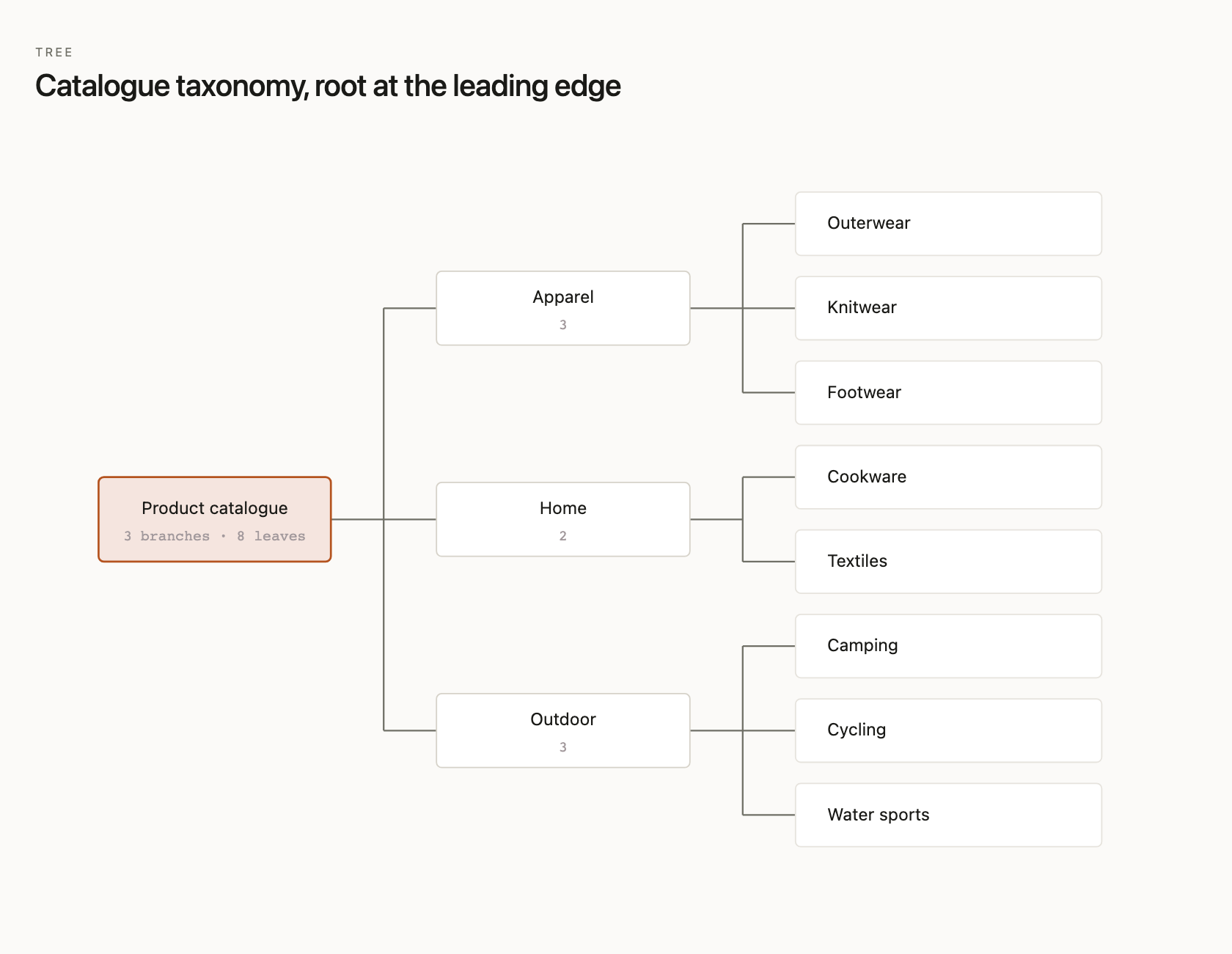
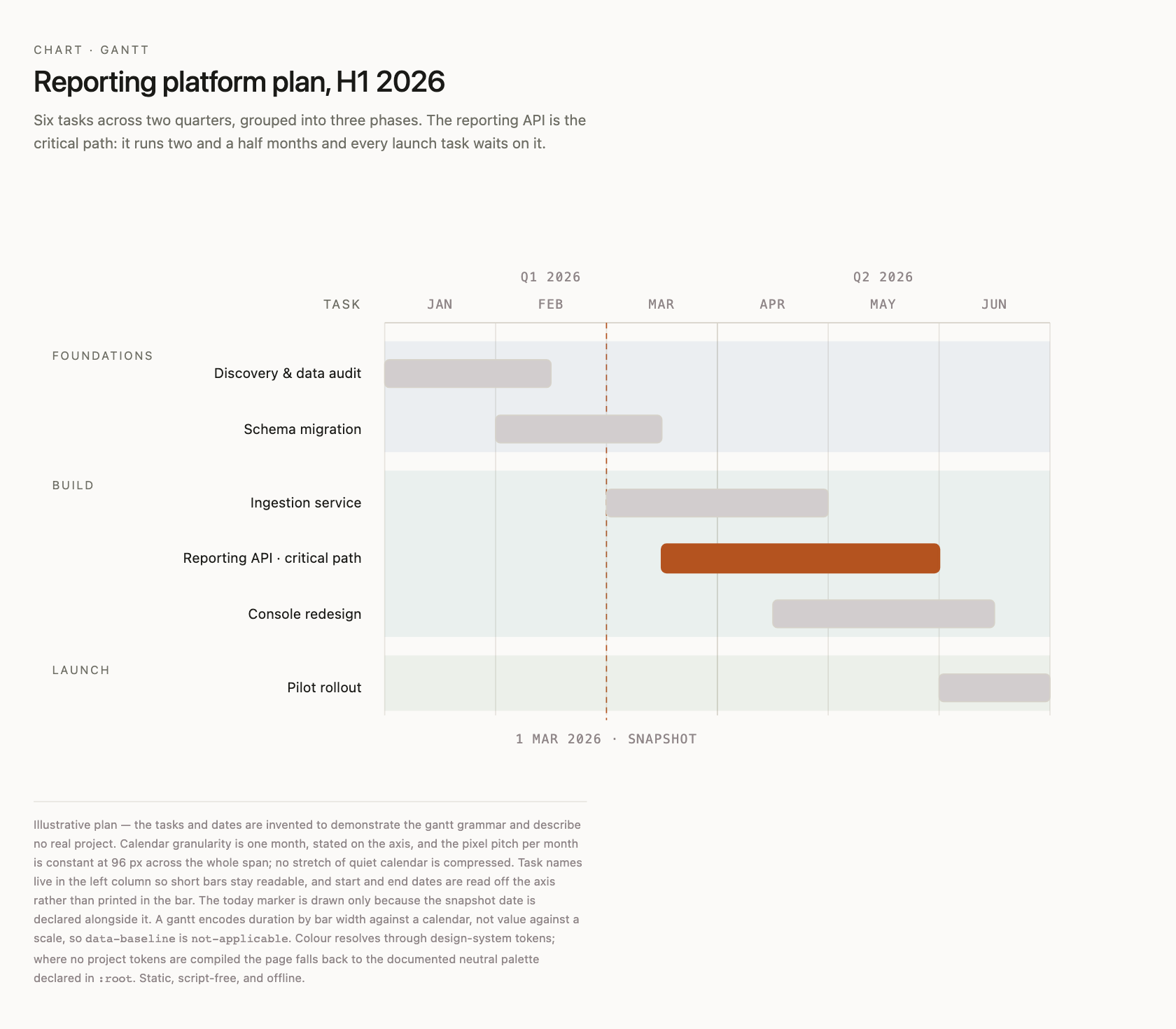
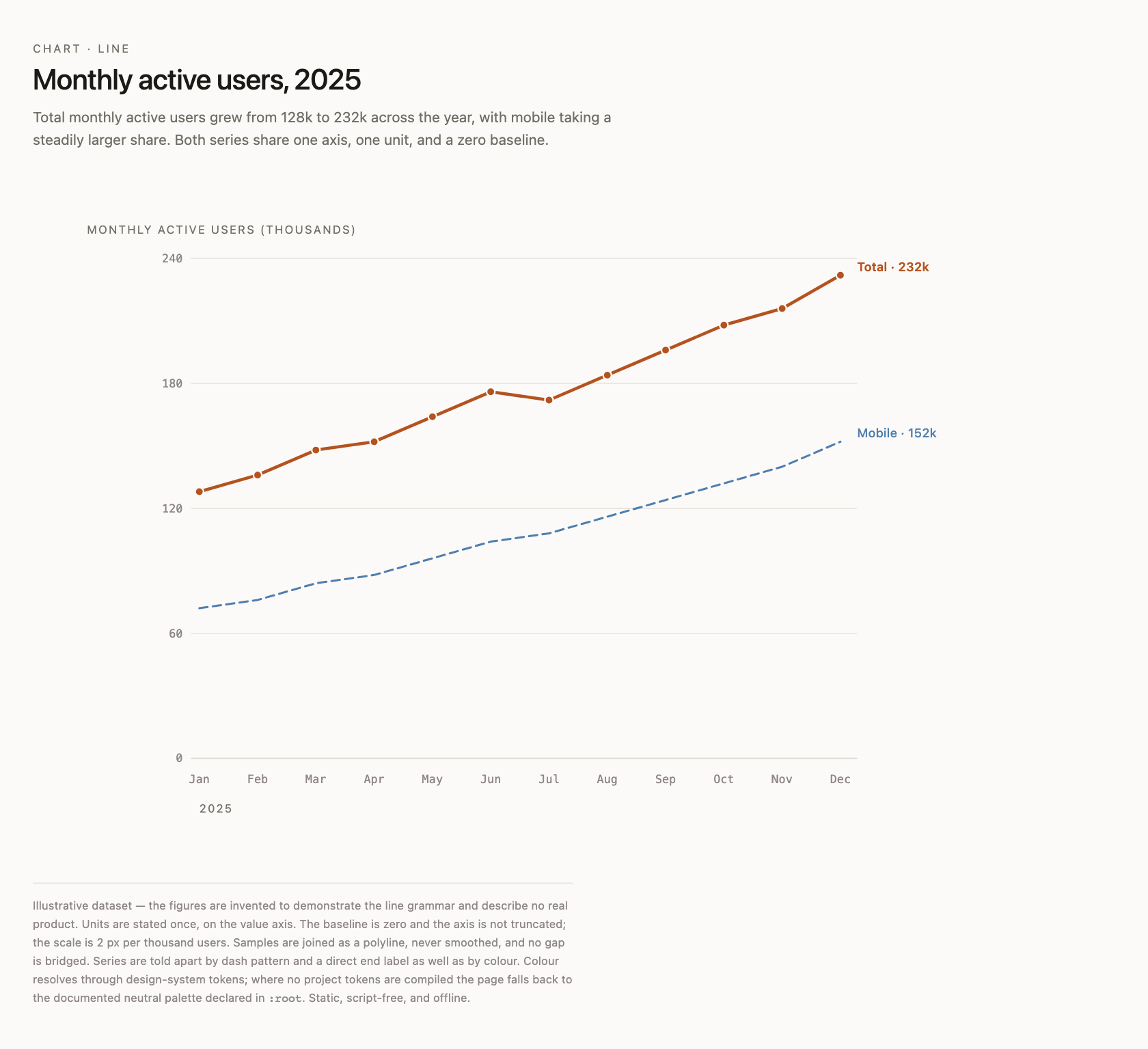
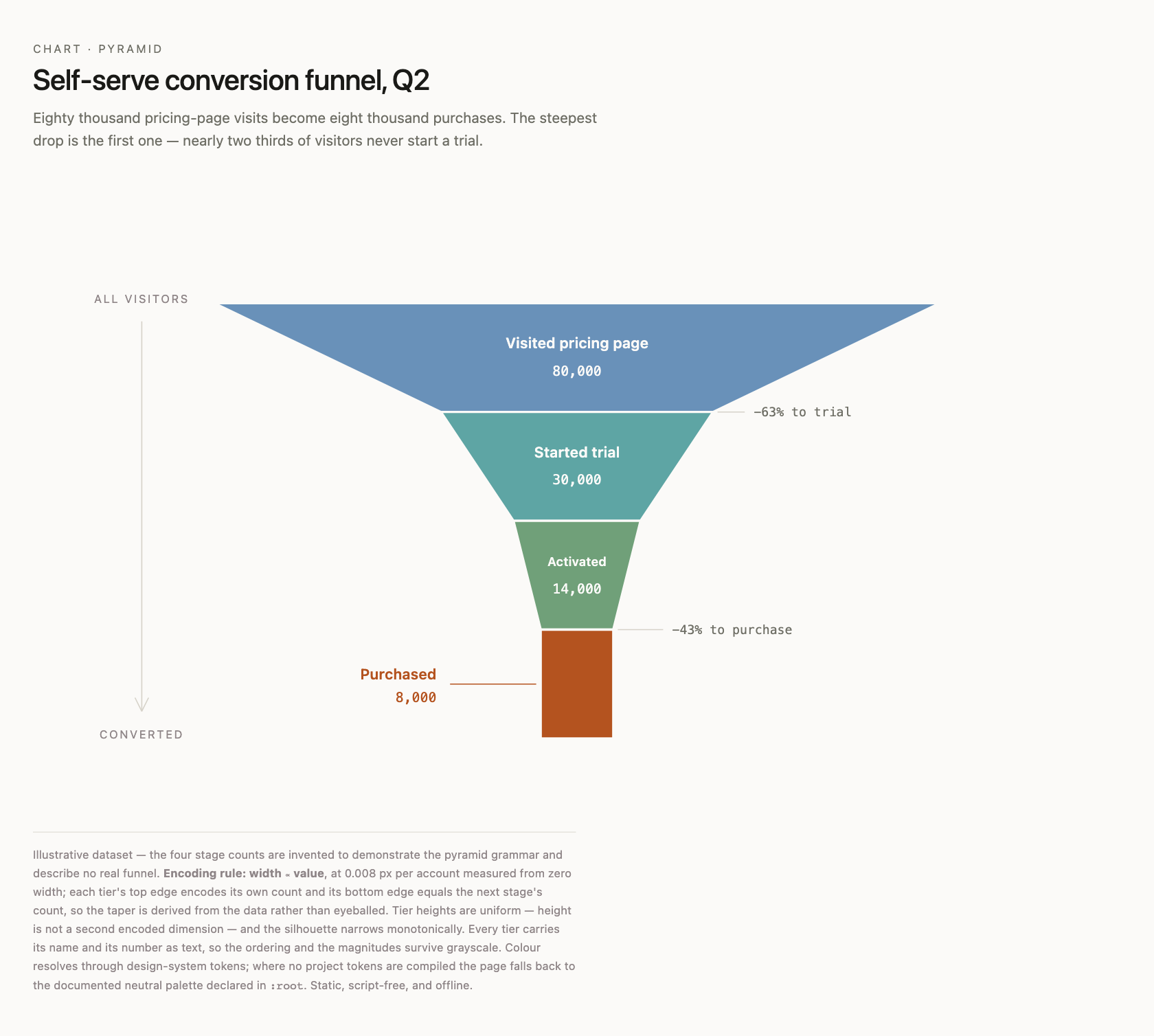
/ui:diagram covers 19 grammars — architecture, sequence, product-flow, swimlane,
data-flow, process, ER, state, flowchart, tree, org-chart, layers, nested, loop, and the
platform family. /ui:chart is a sibling capability covering 9 — bar, line, scatter,
radar, gantt, timeline, quadrant, venn, pyramid.
Each invocation produces one self-contained HTML file with hand-authored inline SVG.
No Mermaid, no PlantUML, no charting library, no headless browser, no network request at
view time. Colours resolve to your project's design tokens and fall back to a documented
neutral palette when there is no design system yet.
See all 28 → design:os example gallery
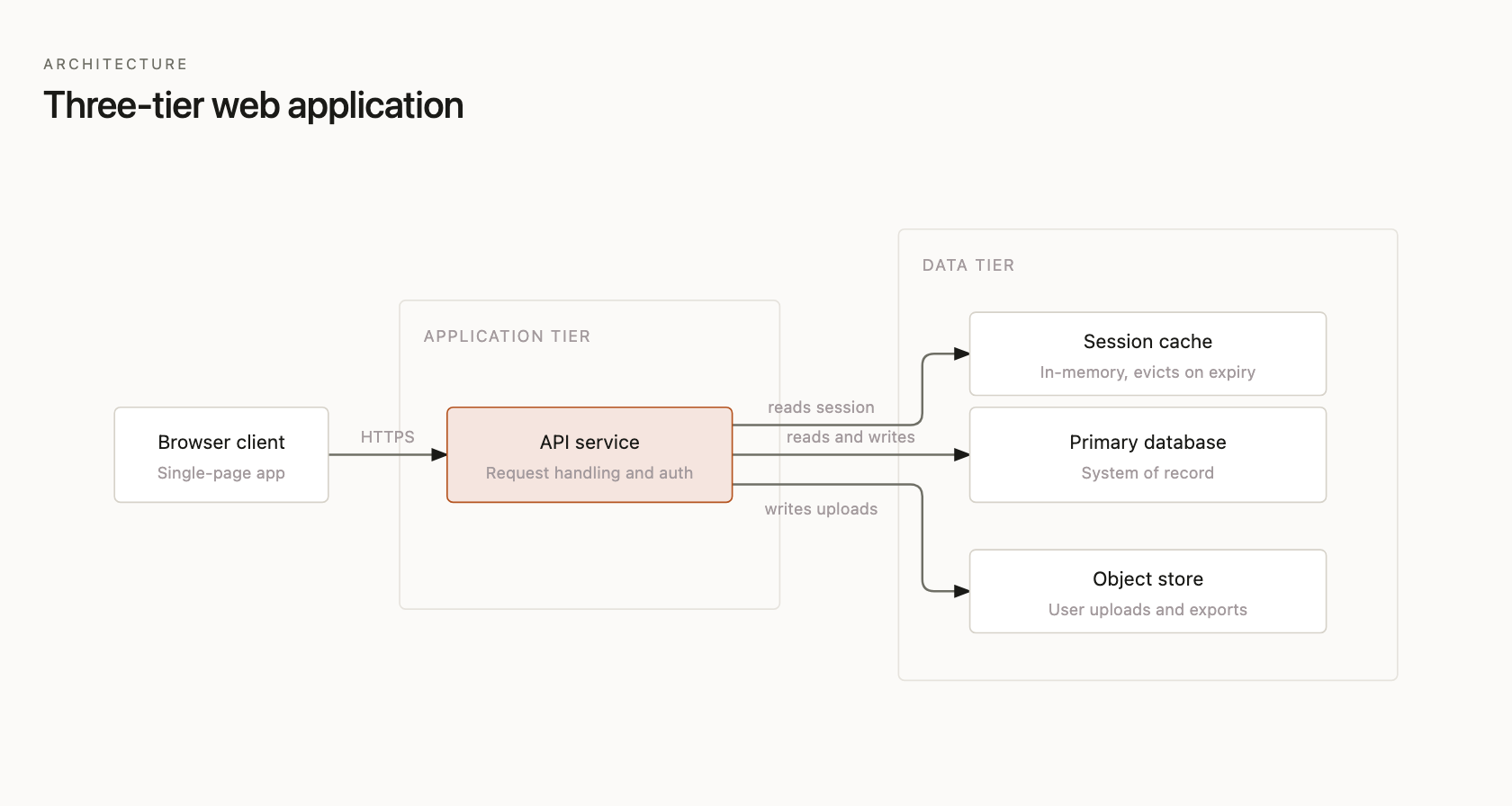 architecture — Three-tier web application |
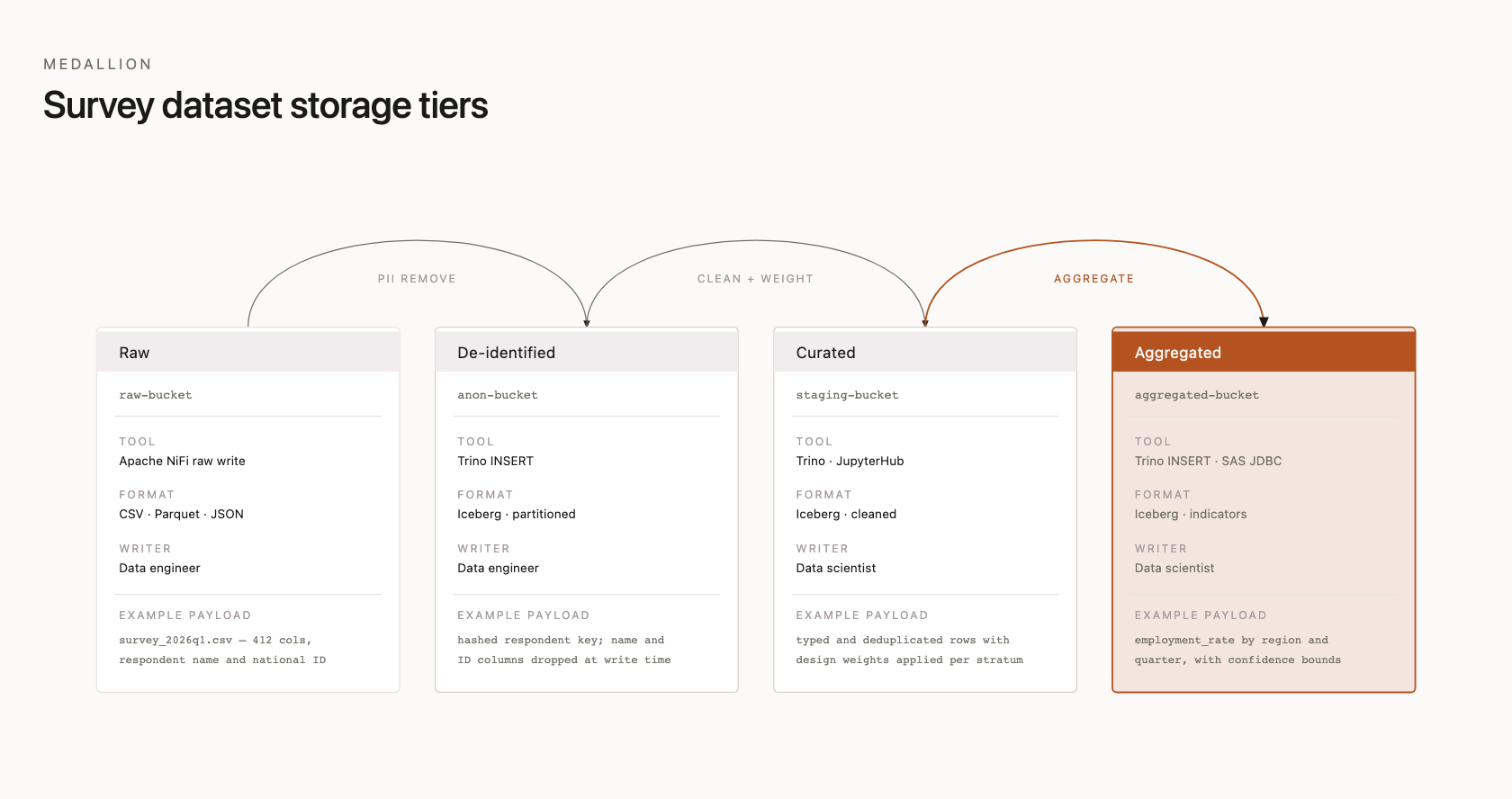 medallion — Survey dataset storage tiers |
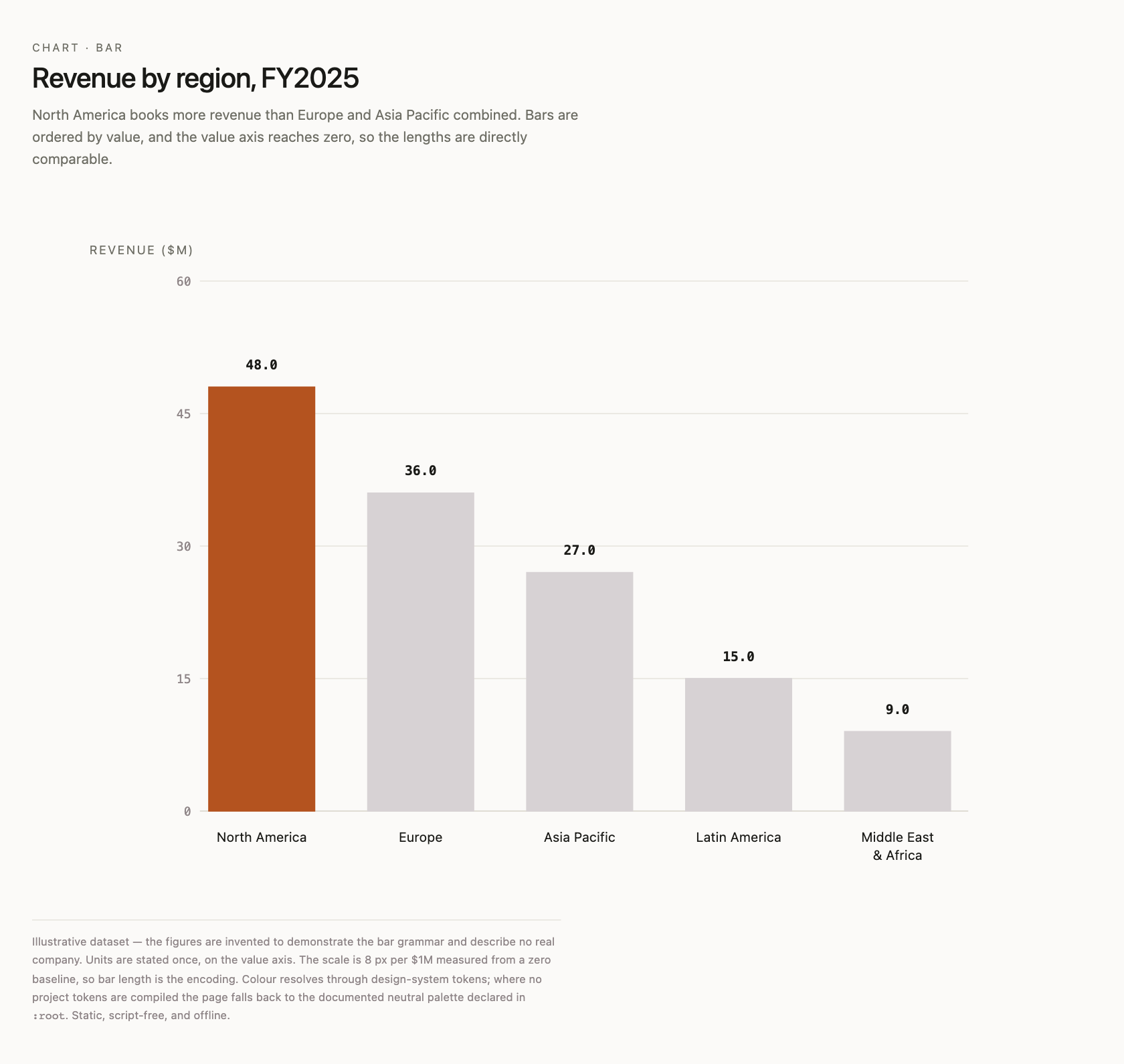 bar — Revenue by region, FY2025 |
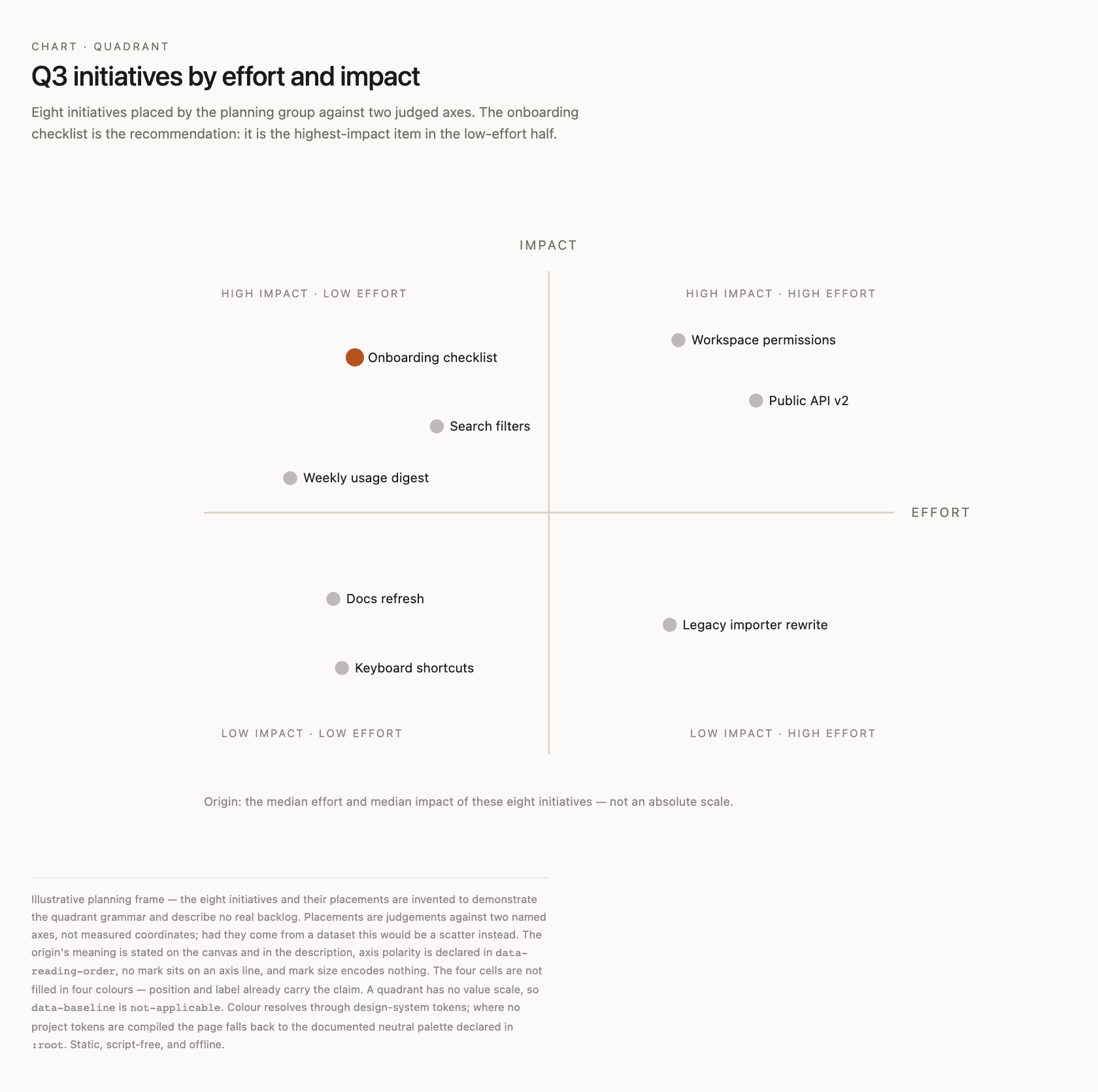 quadrant — Q3 initiatives by effort and impact |
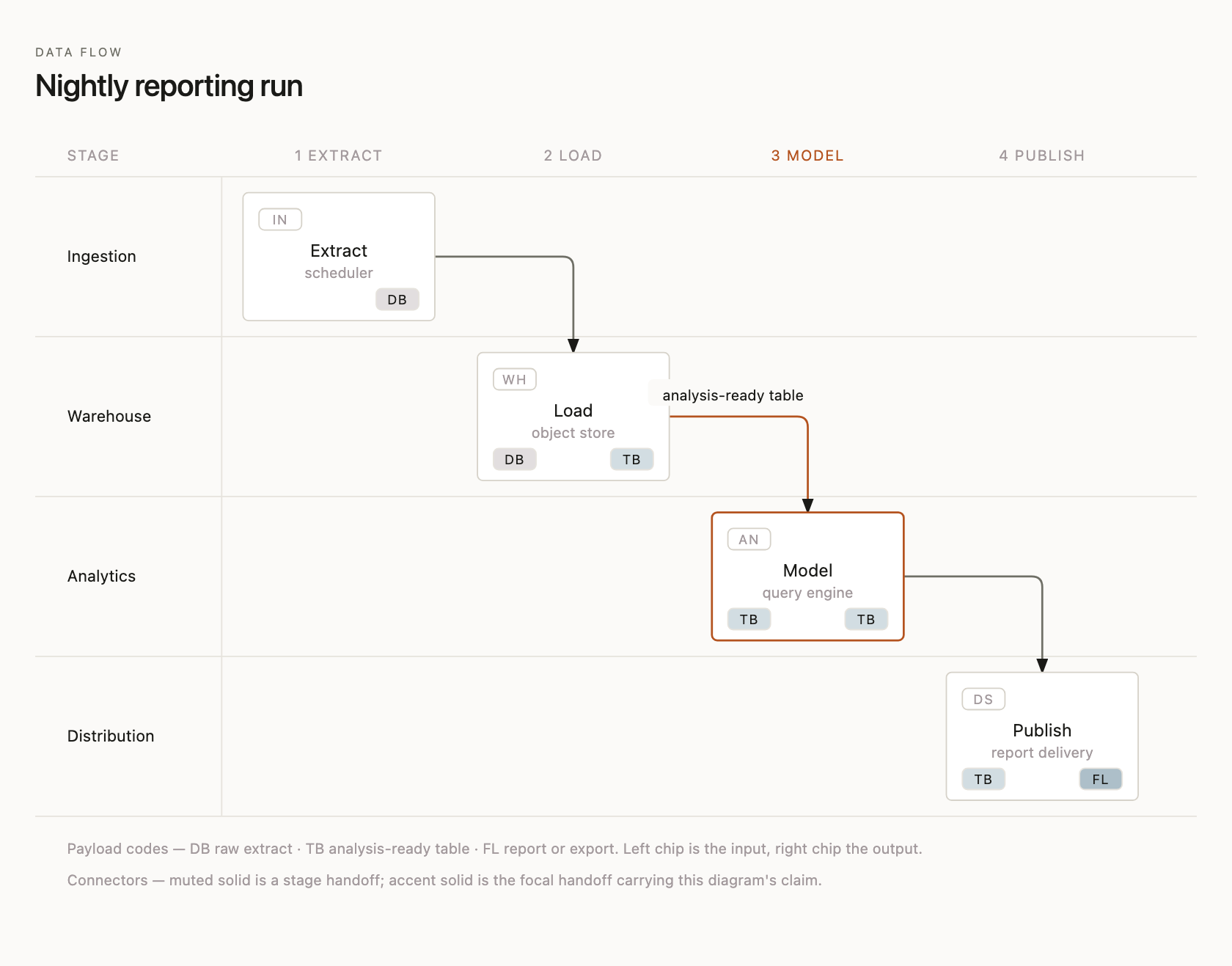 data-flow |
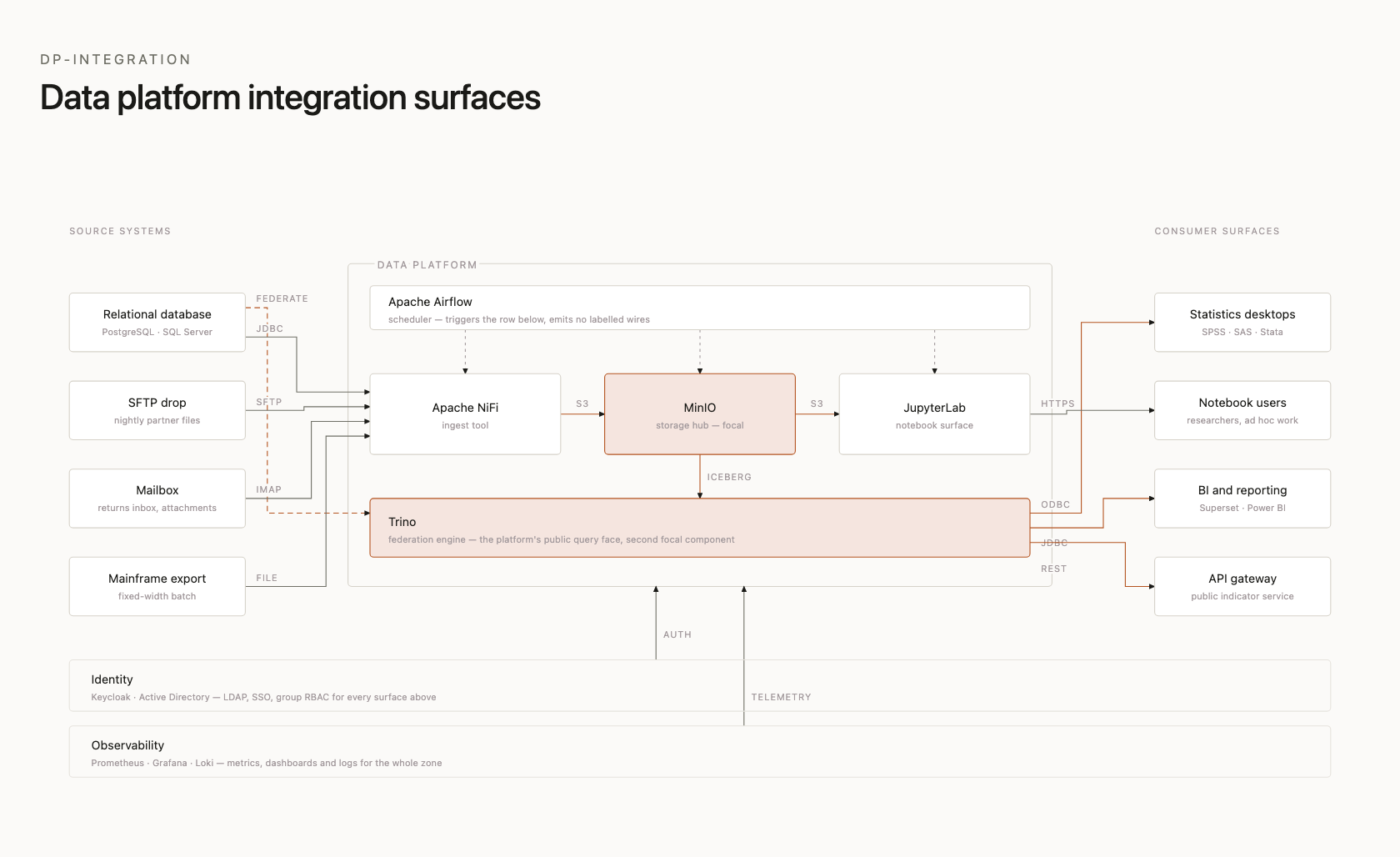 dp-integration |
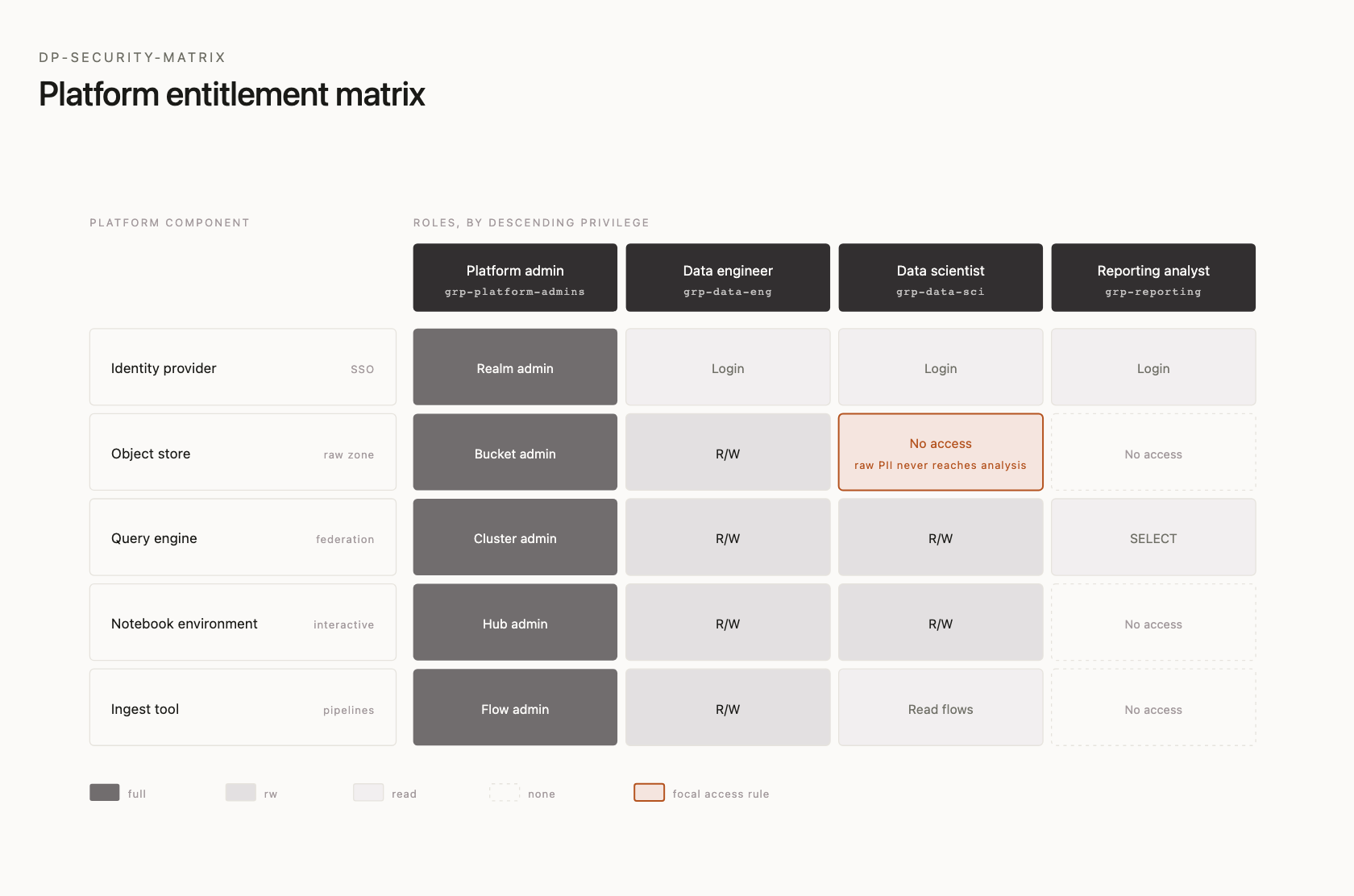 dp-security-matrix |
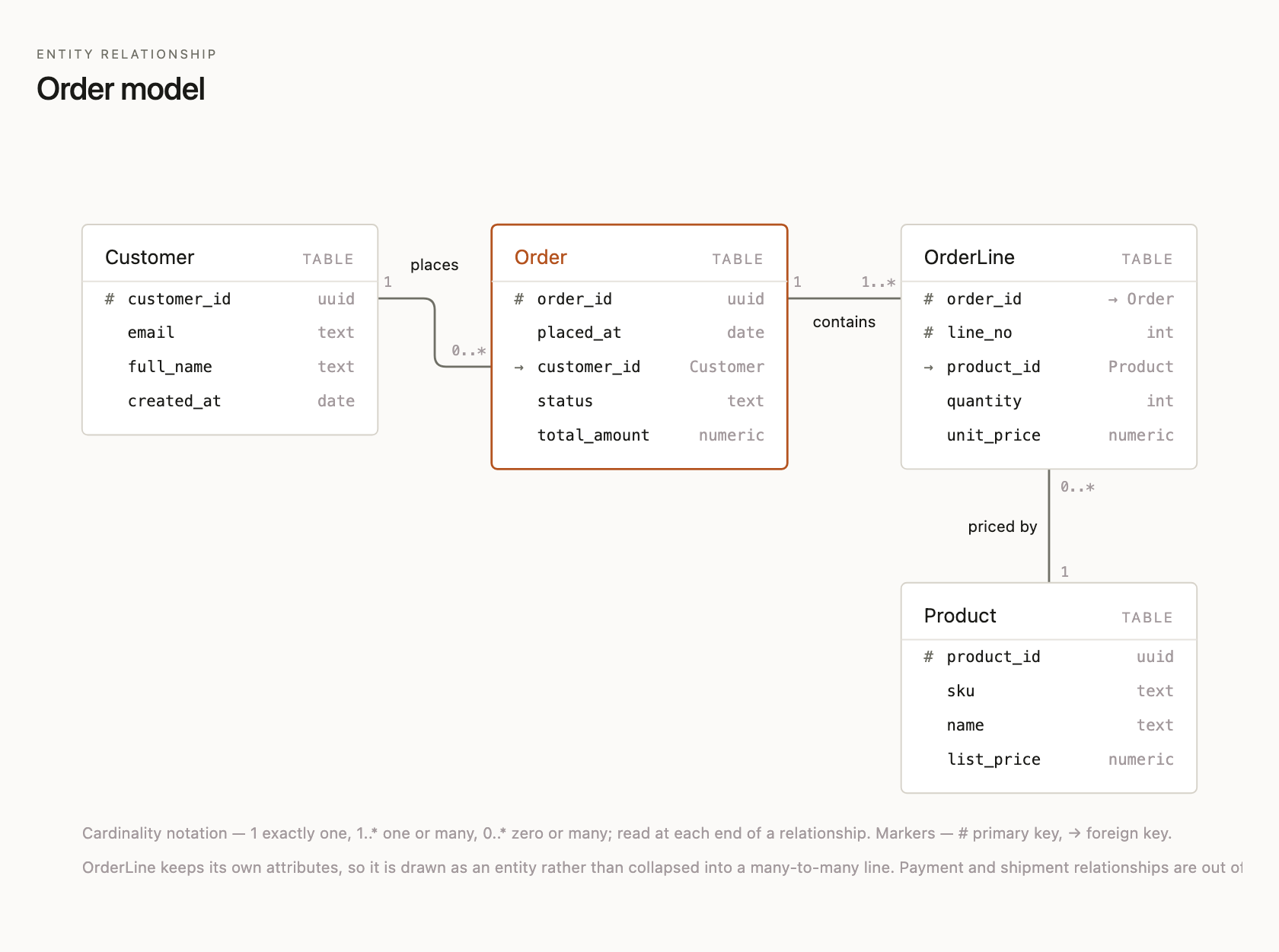 er |
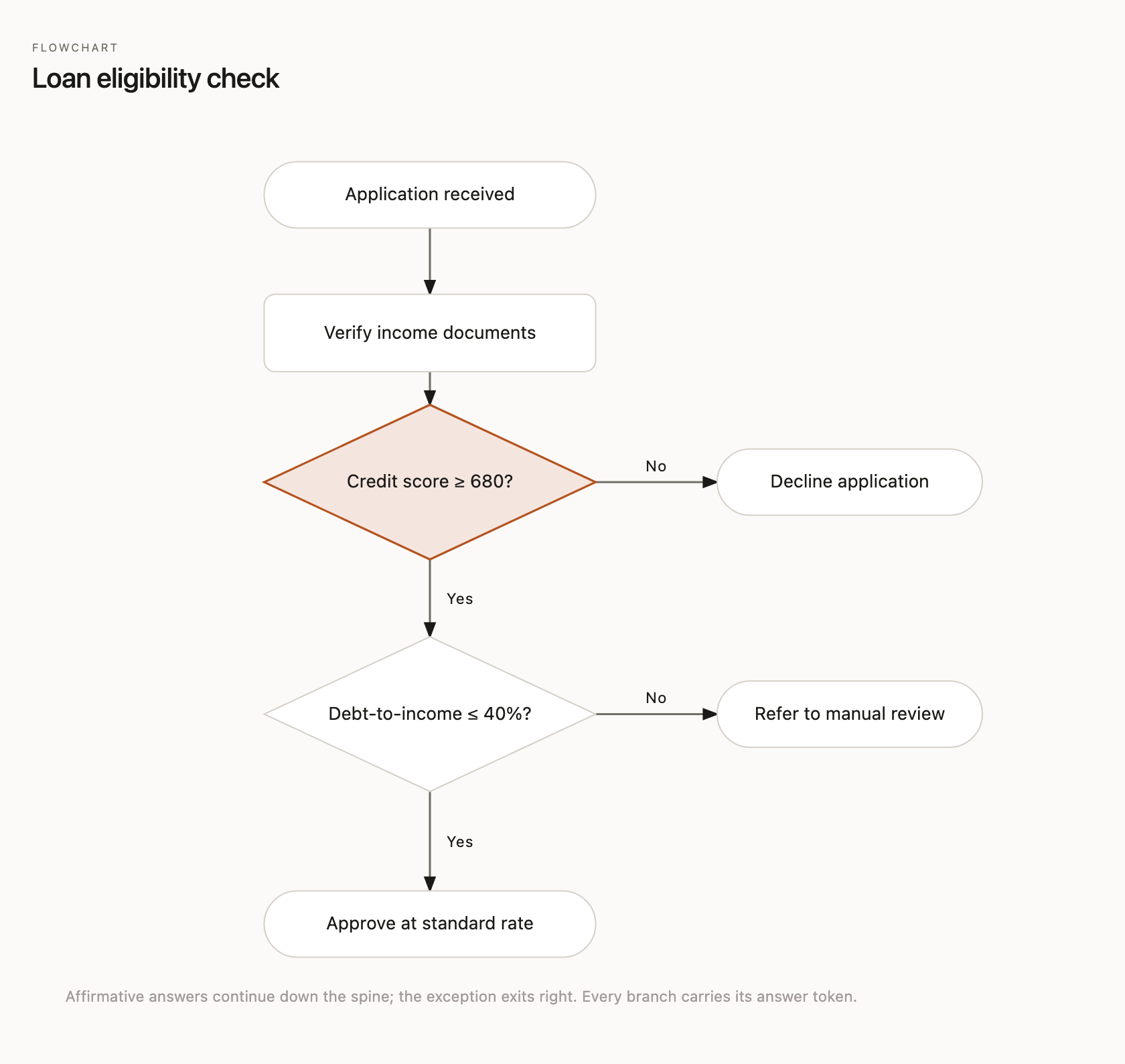 flowchart |
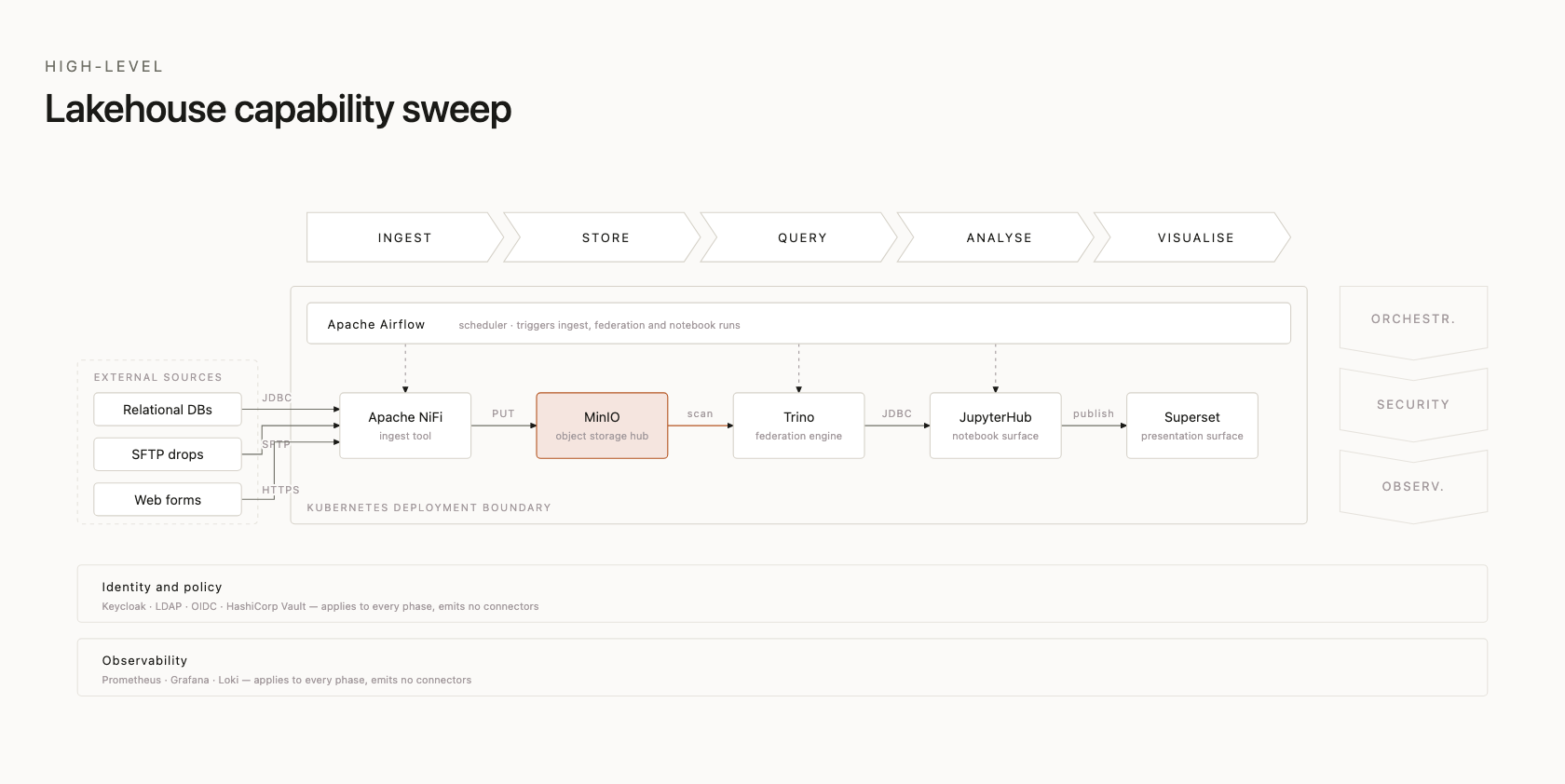 high-level |
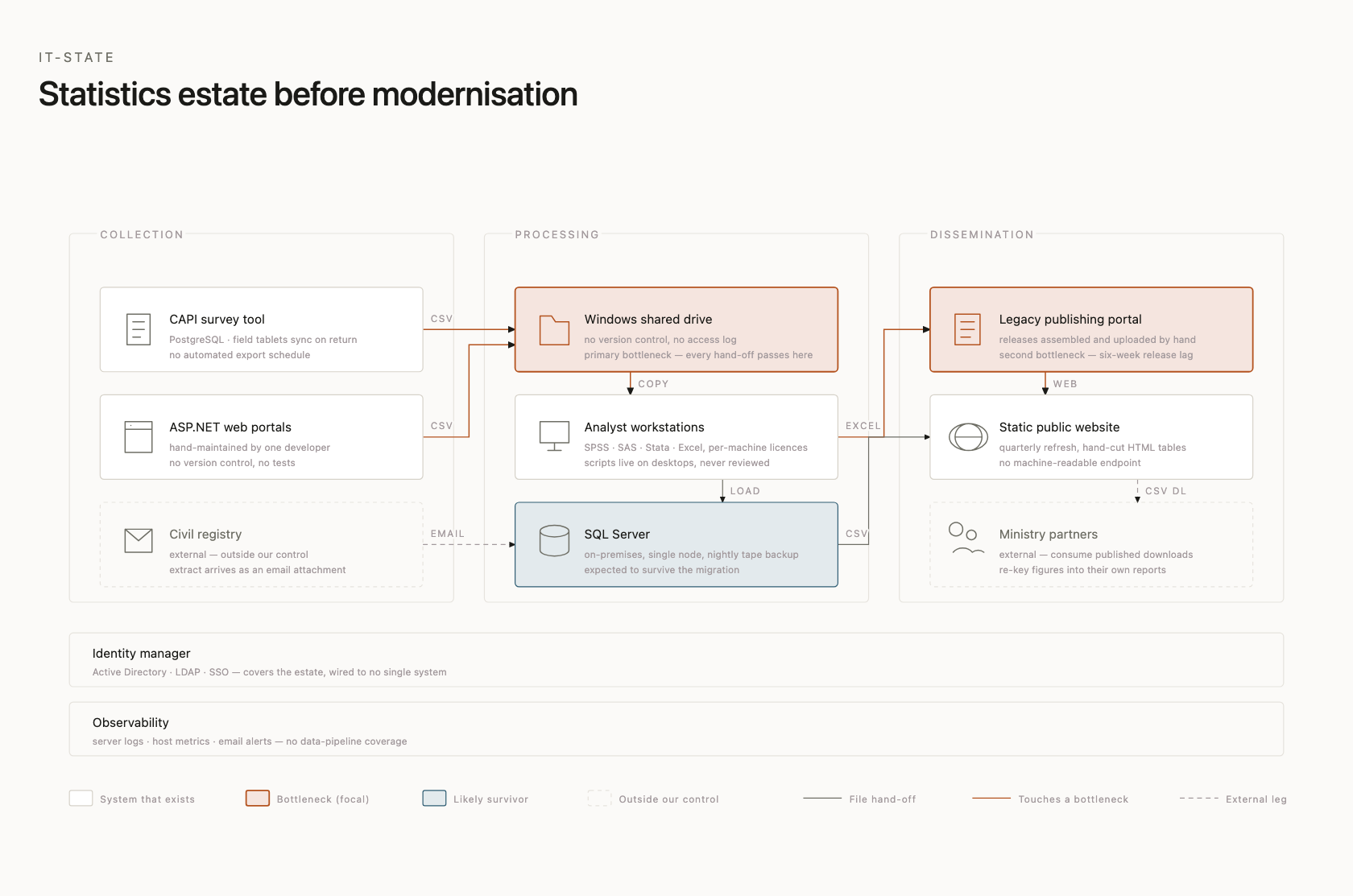 it-state |
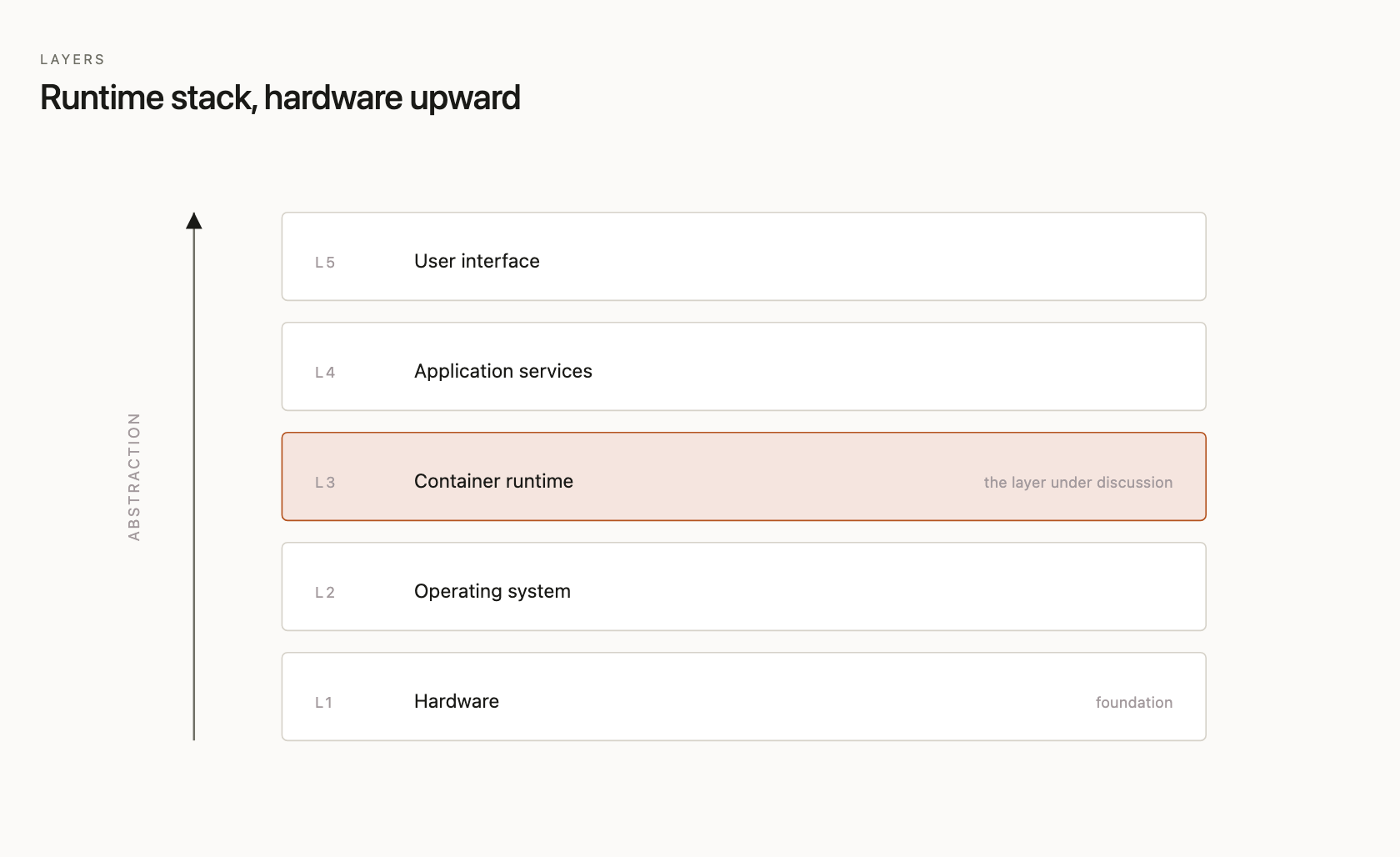 layers |
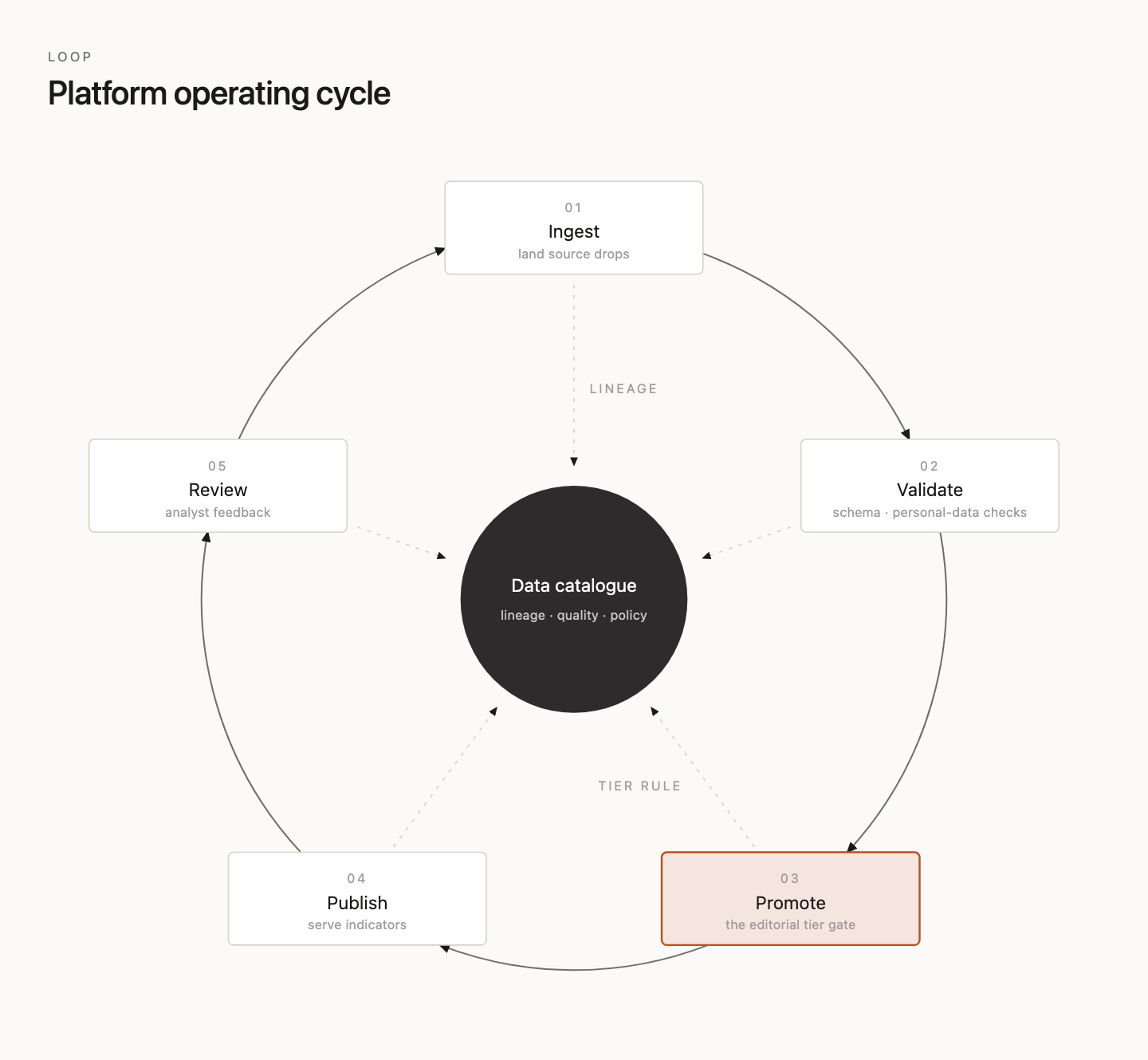 loop |
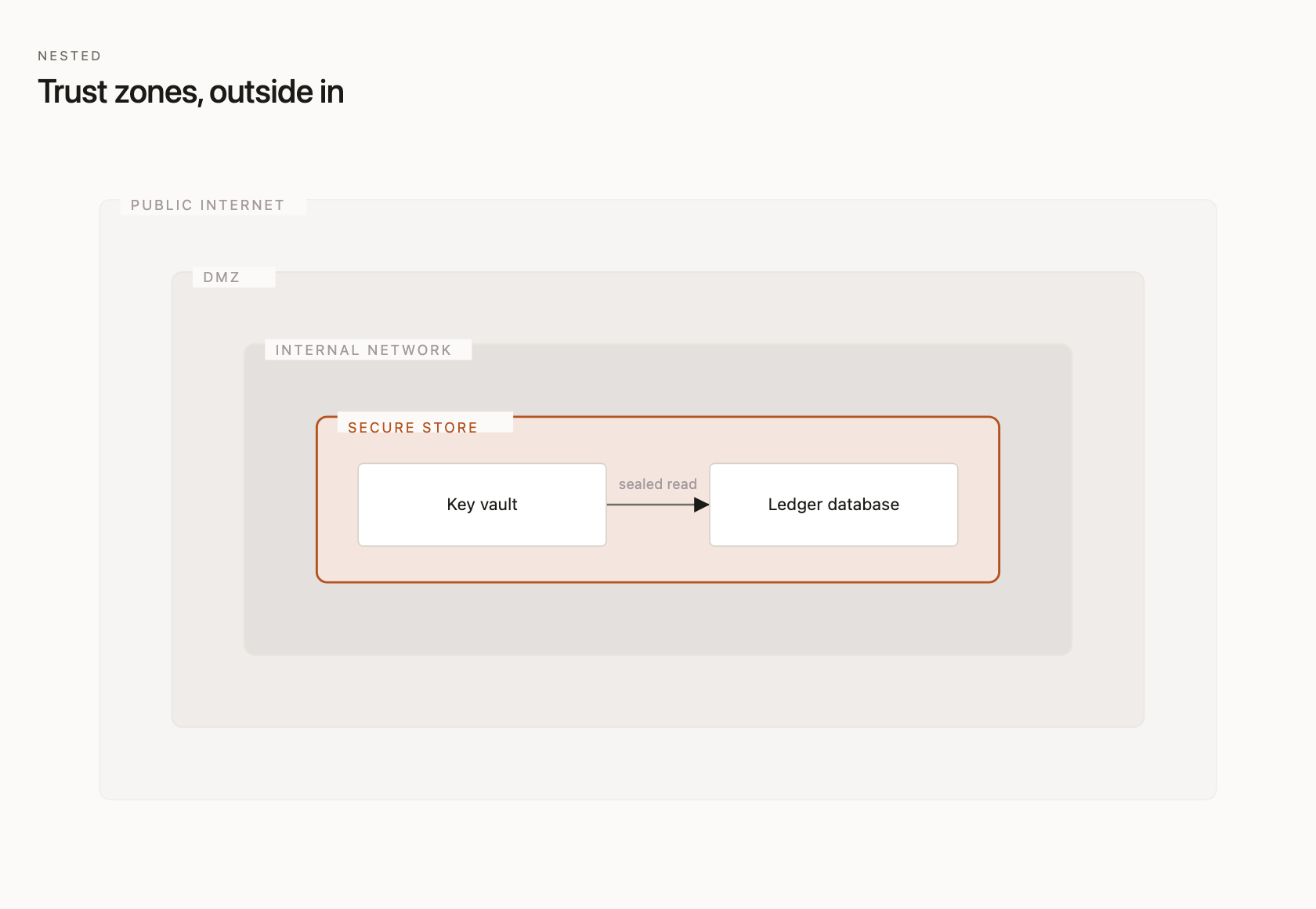 nested |
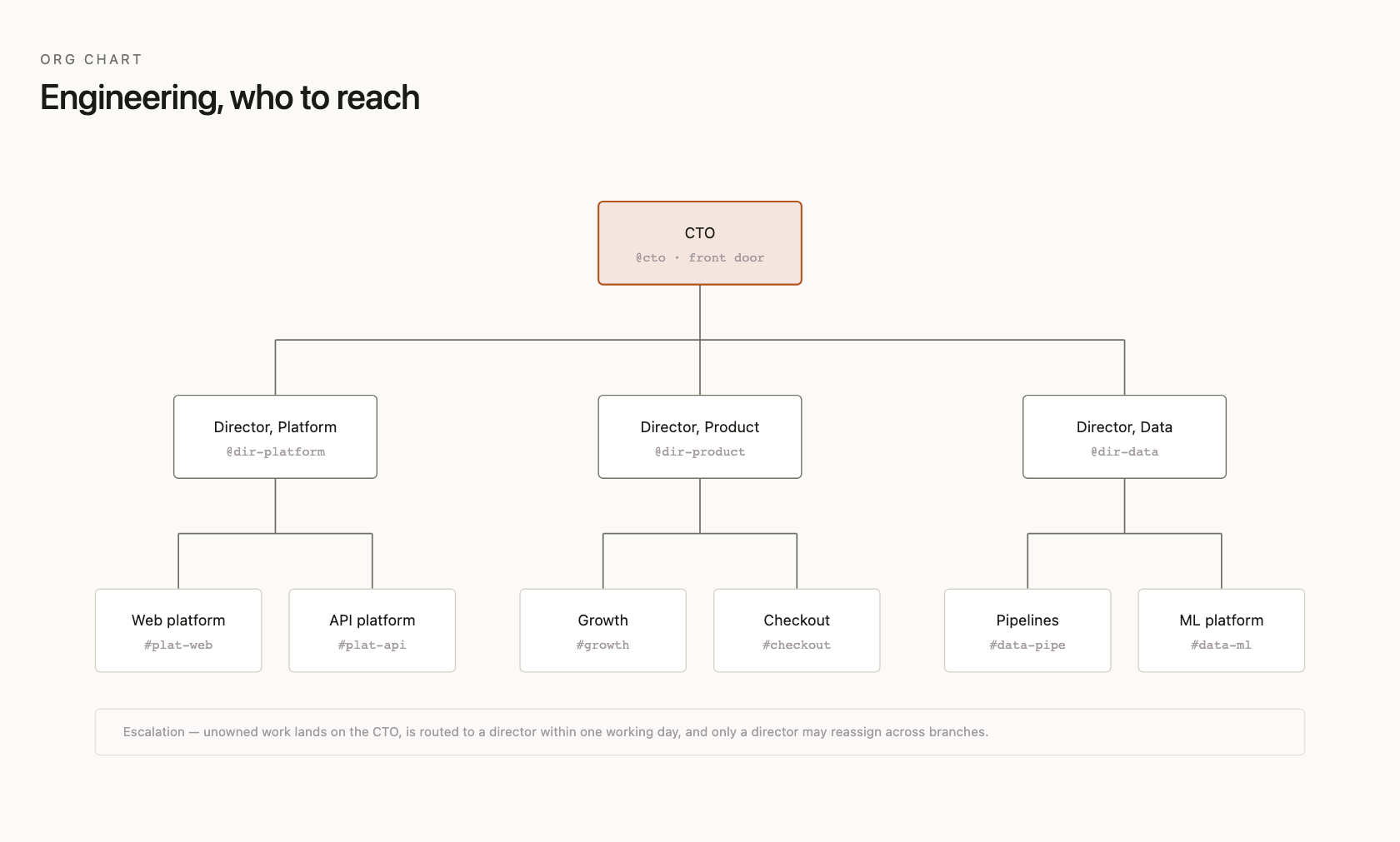 org-chart |
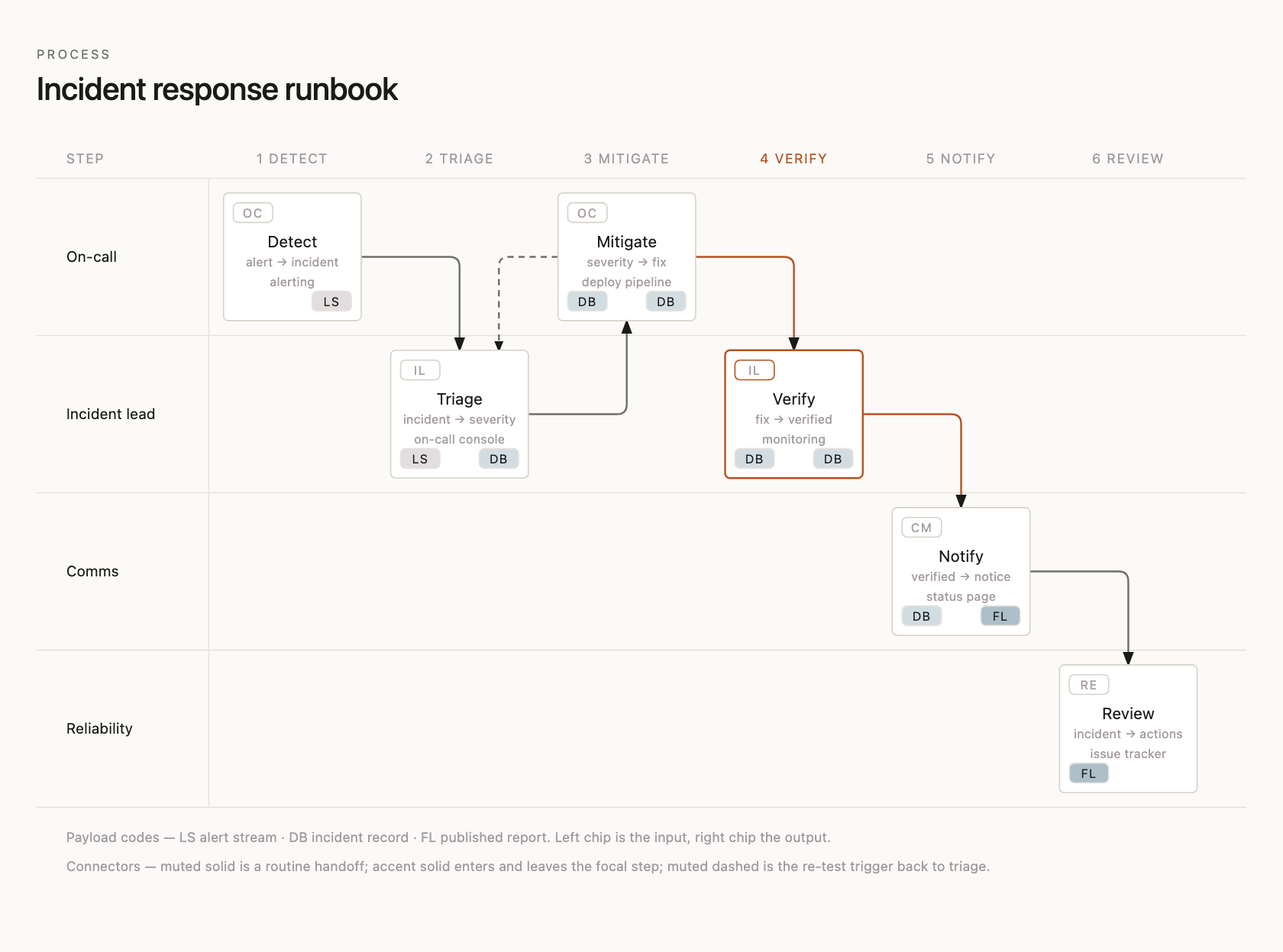 process |
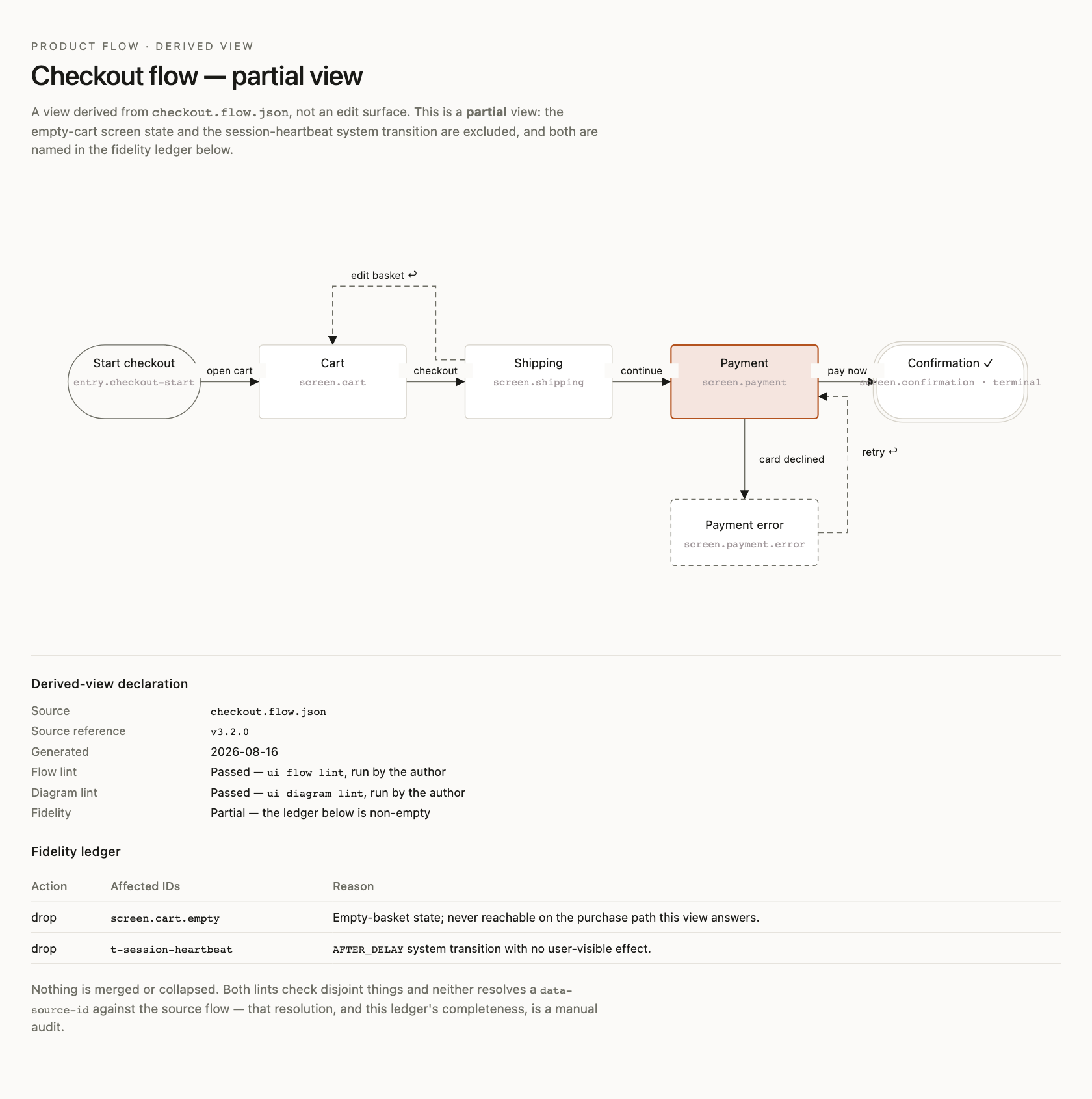 product-flow |
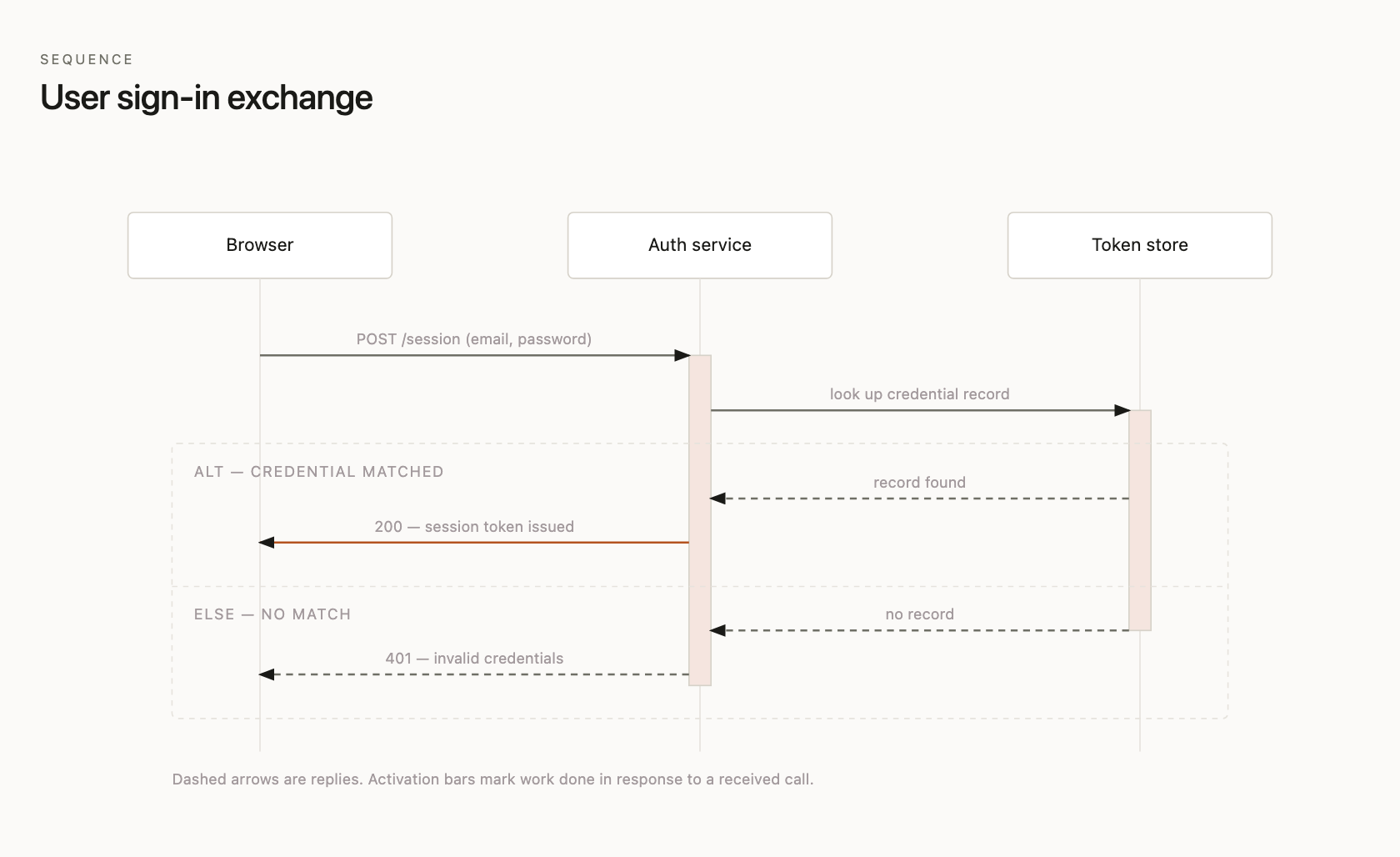 sequence |
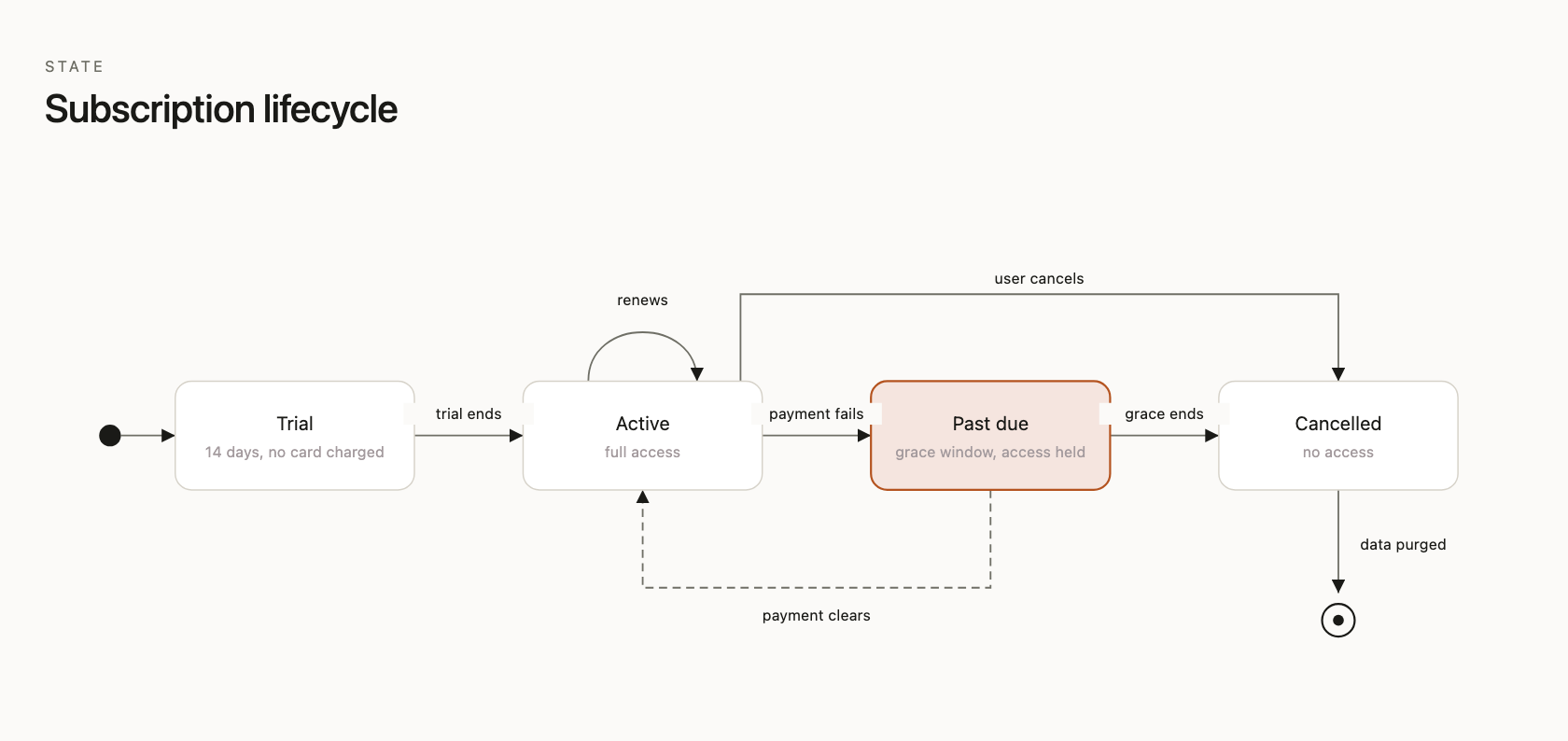 state |
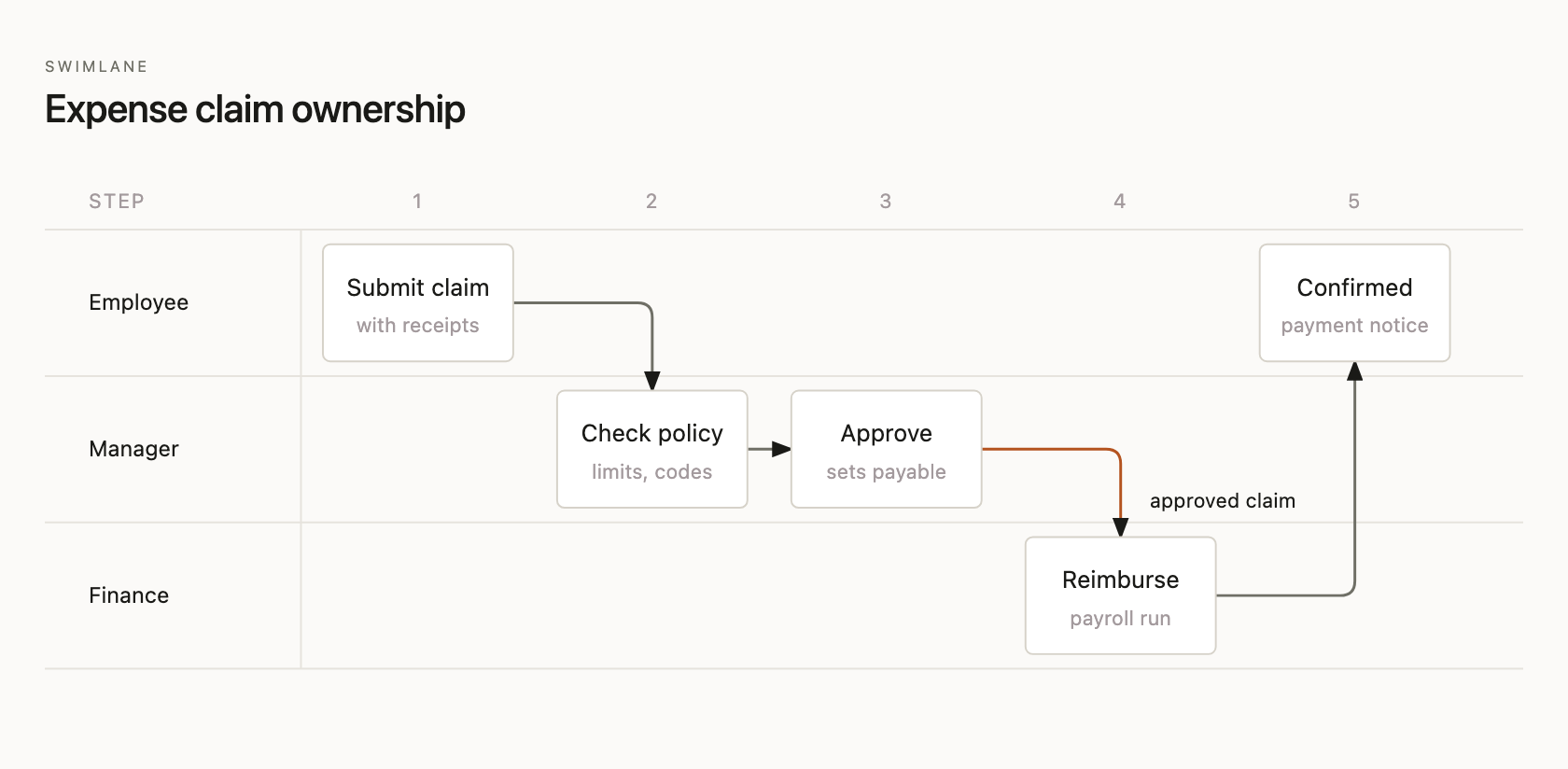 swimlane |
 tree |
 gantt |
 line |
 pyramid |
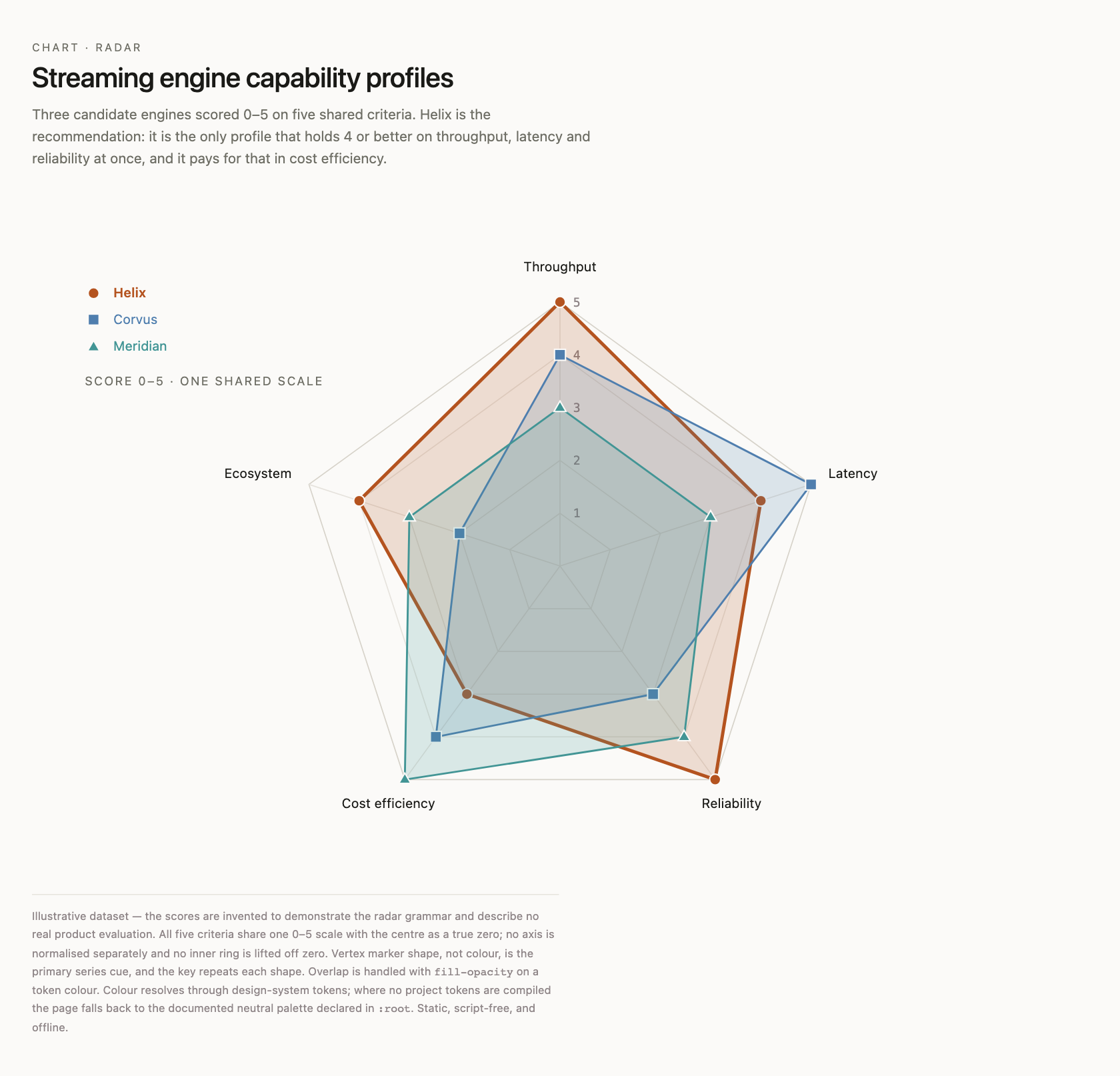 radar |
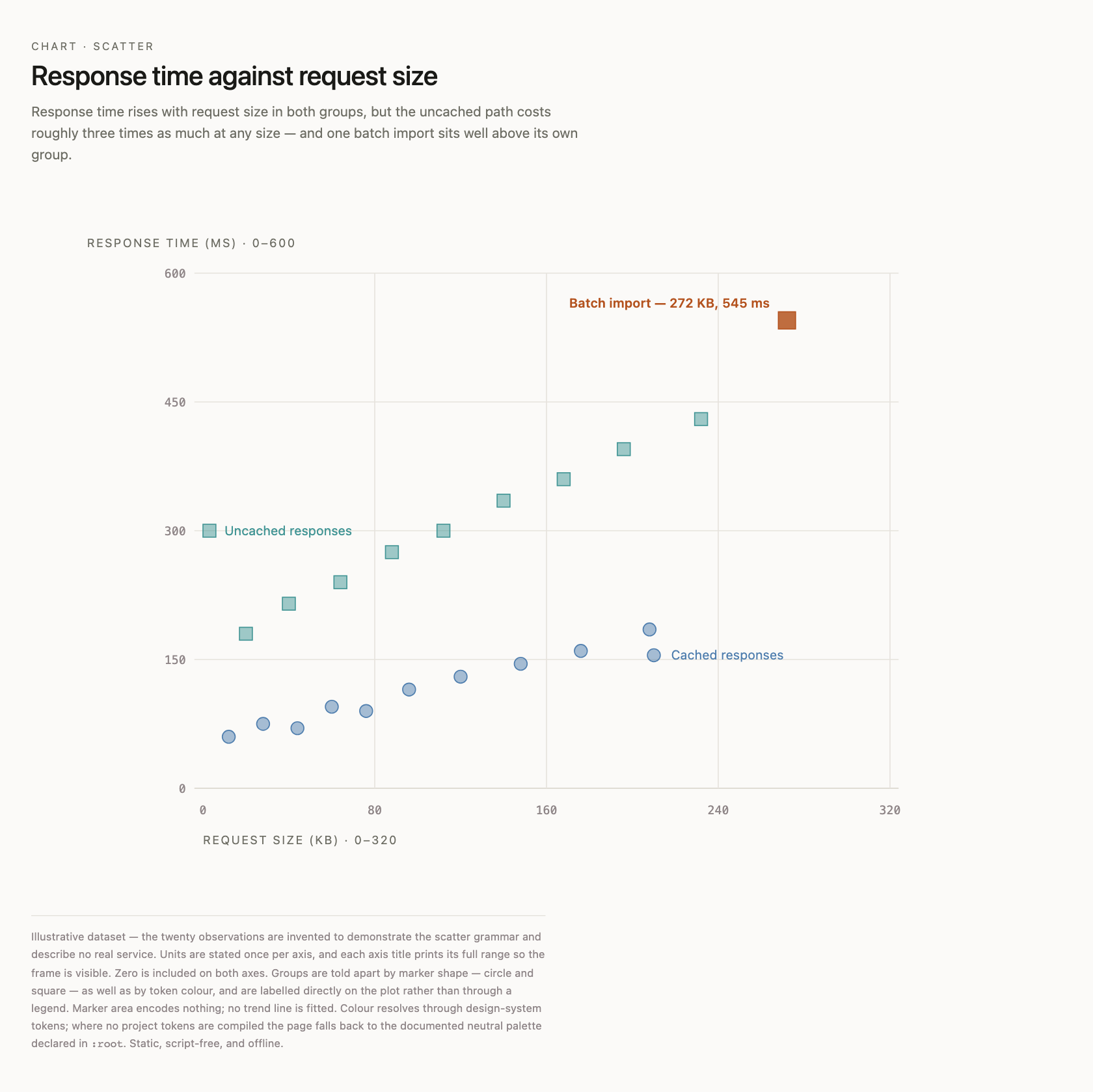 scatter |
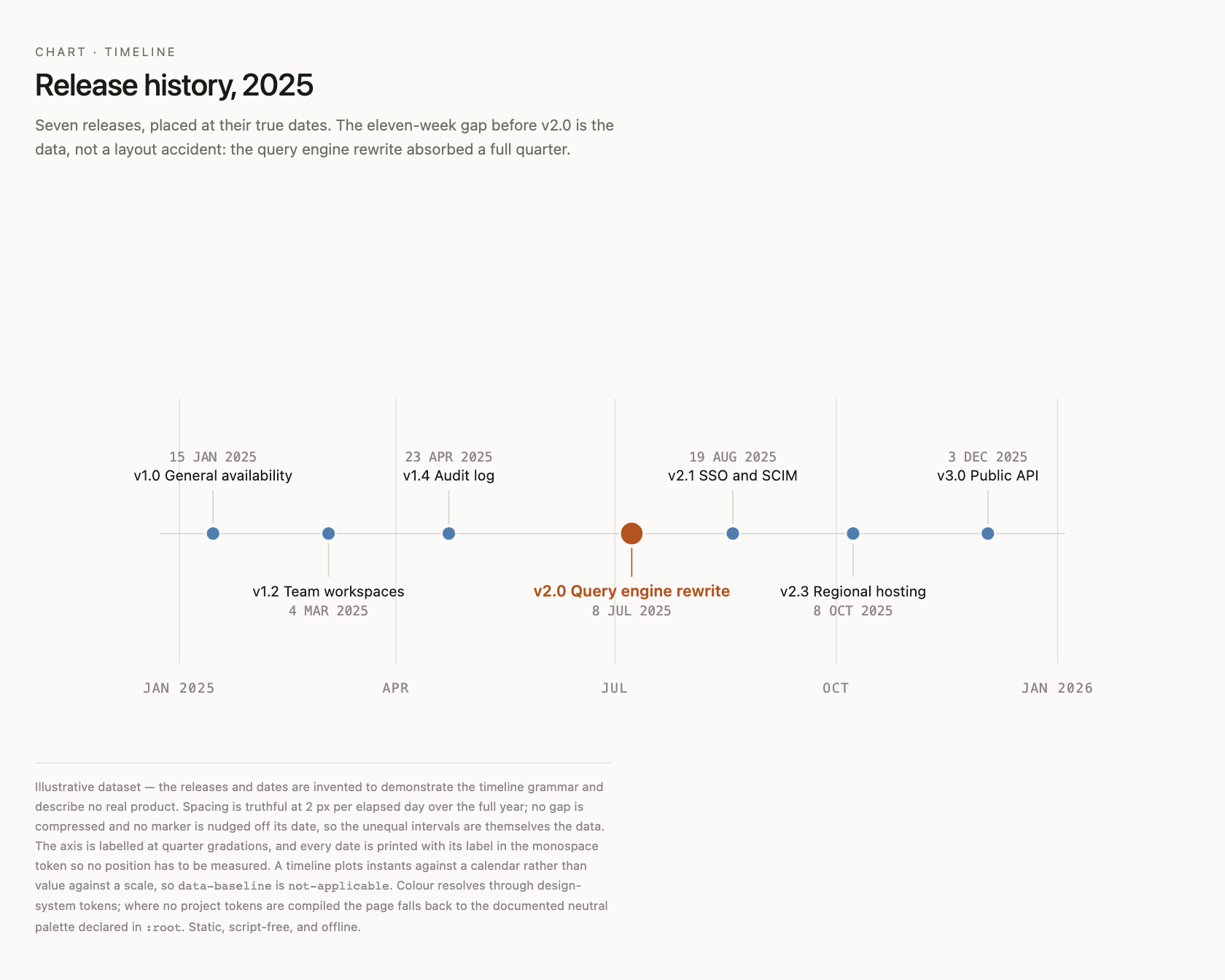 timeline |
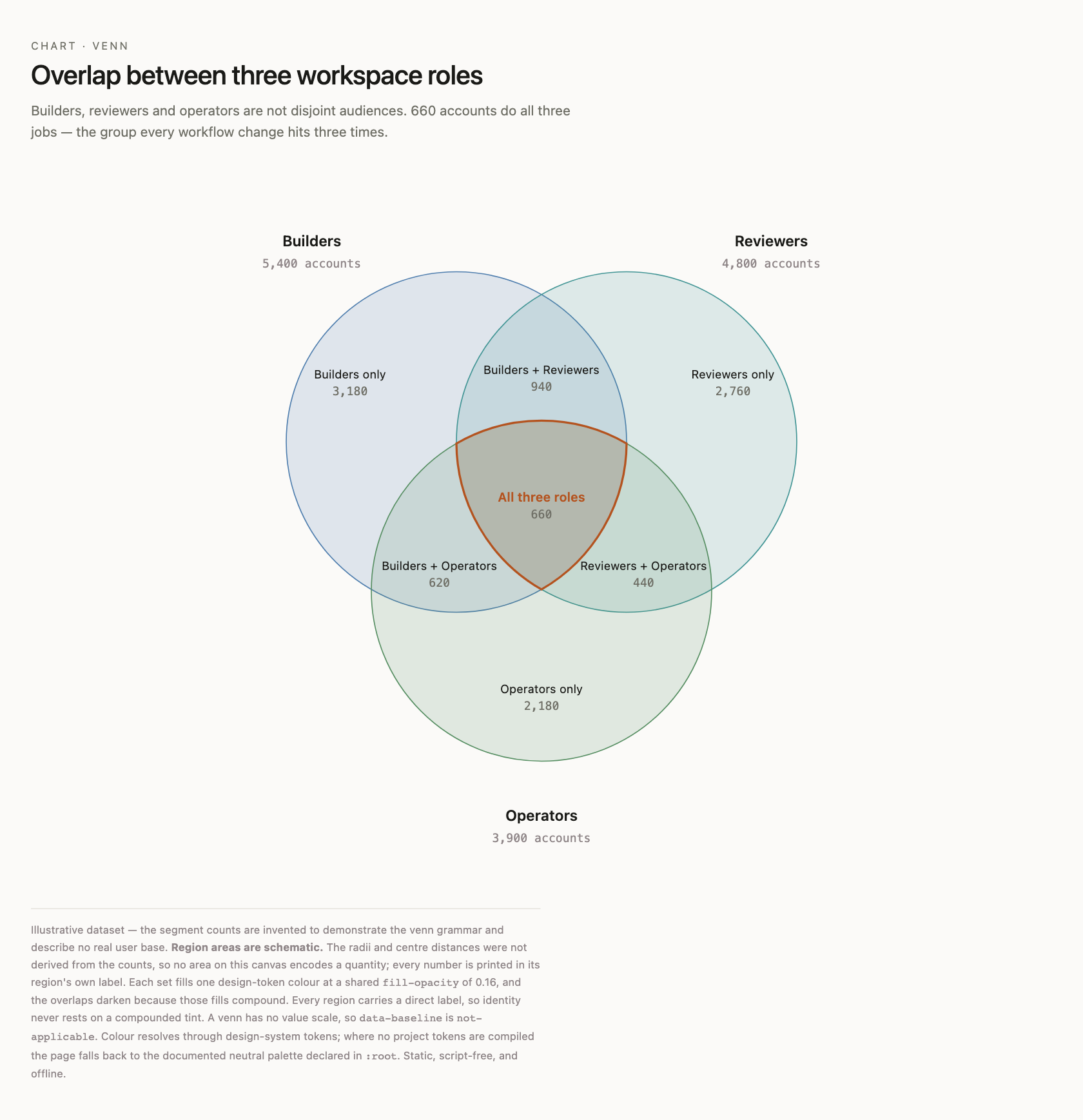 venn |
What the gate actually proves
ui diagram lint and ui chart lint are deterministic, and deliberately narrow — they
check the facts a static reader can prove, never whether the picture is any good:
| Check | Catches |
|---|---|
hardcoded-svg-color |
A colour in an SVG presentation attribute. ds-usage-lint reads CSS declarations only, so fill="#eb6c36" would otherwise bypass the design system while showing green. |
diagonal-line |
A connector running off-axis in a grammar whose layout reads by alignment. Grammar-gated — radial and hierarchical shapes are exempt by construction, not by exception. |
svg-labelledby · no-script · no-external-ref |
An artifact that is unreadable to a screen reader, or that reaches outside itself. |
zero-baseline-required · baseline-declared |
A bar or pyramid whose length encoding starts anywhere but zero, and any chart that lets a reader assume zero without saying so. |
series-label · no-dual-axis |
Series separated by colour alone, and two scales overlaid on one frame. |
A clean lint means the contract holds. Whether the diagram is right is the taste rubric's
job, and it runs afterwards at the same ≥ 7/10 gate every other surface meets.
Routing across 28 grammars stays decidable
Nineteen diagram grammars include deliberate near-neighbours — a swimlane, a data-flow, and
a process diagram are the same grid at three levels of detail. Three mechanisms keep
selection from collapsing into a coin flip: trigger tokens are pairwise disjoint across
both capabilities, diagram-craft.md states precedence once per collision family, and
a golden corpus of briefs asserts each resolves to exactly one grammar. The third is the
only one that tests behaviour rather than shape.
Diagrams can also be redrawn from an existing source: the drawio and Mermaid extractors
emit a node/edge digest that a grammar is authored from, never converted into. Imported
geometry never reaches the artifact, and the redraw carries a ledger of what it simplified.
Quick start
npm install -g ease-design     # installs the `ui` kernel (zero runtime deps)
ui doctor                      # verify the install is healthy
Wire it into the project you want to design for:
cd ~/code/your-app
ui init --runtime claude       # or: --runtime codex | --runtime antigravity
Then open your agent CLI in that project and type:
/ui:generate a pricing page for a developer-tools SaaS — 3 tiers, dark theme
That's the whole loop: describe → activate → compile → qualify. Unsupported surfaces stop
before compilation instead of silently falling back to HTML. Have an existing app? Run/ui:learn first so the DS is compiled from your product's own evidence.
ease-design is DESIGN:OS's npm name — the package ships the ui kernel. v0.3.0
(published from CI with sigstore provenance) carried all 42 commands, including the tenant
scroll engine and the asset gates behind the showcase grid.
Full studio (clone)
git clone https://github.com/jangtrinh/design-os.git && cd design-os && ./setup.sh
One idempotent script builds and links the whole studio, not just the kernel: semantic
recall, the living-agent evolution/heartbeat/harvest loop, rendered accessibility audits,
and the tenant + gflow scroll-cinema toolchain — repo-only hands the npm kernel doesn't
ship. The Figma plugin (and its 1:1 mirror) installs from
its own repo. Needs
Node ≥ 22 (the recall hand) and uv for the design-os
umbrella; ./setup.sh --check verifies prerequisites without changing anything.
One hand is opt-in, never silent: gflow (Google Flow — the scroll-cinema asset
generator). An interactive run explains what it is, that it needs a paid AI Ultra/Pro
subscription, and that it automates a real browser session on your Google account — then
asks. A non-interactive run skips it. --with-gflow / --no-gflow answer ahead of time.
Skipping costs nothing but the ability to generate new footage, and design-os doctor
reports the gap up front instead of failing mid-generation.
| Get it | How | What you get | Update |
|---|---|---|---|
| Kernel | npm i -g ease-design |
the 46-command ui binary + /ui:* adapters — generate, gates, tokens, DS, tenant scroll engine |
npm i -g ease-design@latest |
| Full studio | git clone + ./setup.sh |
everything above at HEAD + recall, rendered a11y, heartbeat/evolution, and the opt-in gflow browser hand | git pull + design-os update |
| Figma plugin | design-os-figma-plugin | the plugin + figma-agent CLI + the 1:1 mirror — versioned in its own repo |
its own repo's releases |
The ui kernel never phones home — it is deterministic and network-free by design, so it
will not nag about new versions; updating is always your move, with the one-liner above.
Qualified Delivery
A better prompt improves the first draft. It does not prove the draft is ready./ui:generate now treats generation as a typed, evidence-bearing release process:
raw request
  → capability-activation request
  → ui knowledge activate
      ↳ unavailable surface → CAPABILITY_UNQUALIFIED (route: null)
      ↳ qualified web marketing → capability-activation.json
      ↳ provisional native macOS/iOS/iPadOS → exact native route with qualified-delivery claim forbidden
  → design-brief.json v2 (activationRef)
  → generation-contract.json
  → candidate + 1440/768/390 renders
  → qualification-record.json
  → QUALIFIED | DRAFT_WITH_CONCERNS | BLOCKED_BY_EVIDENCE
The host model owns design reasoning. The zero-dependency ui kernel only validates
contracts and rejects false-green verdicts:
ui knowledge activate capability-request.json --json > capability-activation.json
ui delivery validate design-brief.json
ui delivery validate generation-contract.json
ui delivery validate qualification-record.json
ui delivery validate learning-record.json
QUALIFIED is deliberately difficult to emit. It requires:
- all six declared static gates passing;
- rendered evidence at desktop, tablet, and mobile widths;
- every Must acceptance criterion covered;
- zero unsupported claims;
- zero unresolved findings.
The repair loop is capped at three attempts. Missing rendered evidence never silently
passes; the result remains DRAFT_WITH_CONCERNS. Automated checks narrow known failure
classes—they do not claim WCAG conformance, desirability, or business performance.
Qualified Delivery v2 adds an implementation-grade craft contract:
- Phosphor icons by default for greenfield UI, with evidenced brownfield exceptions;
- third-party logos resolved from SVGL and cached with provenance;
- purpose-fit original imagery through Codex image generation backed by GPT Image 2;
- intentional
390/768/1440responsive transformations; - hero, scroll, loading, interaction, reduced-motion, and JavaScript-failure evidence;
- custom-styled semantic controls with keyboard and pointer proof for custom behavior;
- a named composition thesis, signature spatial move, and whitespace strategy.
Version 1 artifacts remain valid historical records. Only version 2 proves the current craft
contract. A v2 design brief binds activationRef to a ROUTED + QUALIFIED + QUALIFIED_DELIVERY_ALLOWED web-marketing → generate → html receipt; ui delivery validate
recomputes its request and installed-catalog digests. A native receipt can route with PROVISIONAL
assurance but has QUALIFIED_DELIVERY_FORBIDDEN, so it cannot satisfy a marketing brief. The validator
also resolves a v2 qualification record's contractRef relative to the record and rejects missing
or contradictory evidence.
The design prompt orchestrator compiles weak intent before generation: provenance-bound facets,
product truth, three structurally divergent directions, complete region briefs, actionable visual
DNA, and controlled content-led versus golden-ratio candidates. ui prompt-plan validate andui prompt-plan preflight block incomplete, generic, forced-ratio, or over-budget builder plans.
Product truth can also arrive as evidence instead of one inline object. ui product-context
compiles lifecycle-aware capture receipts into a canonical Product Atlas: one derived,
byte-reproducible artifact that embeds every normalized receipt and resolves each field without
picking an order winner — equal active values coalesce, distinct ones conflict with a null
value, and a field with no candidate stays unresolved rather than being inferred missing.
ui product-context compile capture-receipt.json more-receipts.json > atlas.json
ui product-context lint atlas.json
ui product-context project-flow atlas.json
lint recompiles the receipts the Atlas embeds and byte-compares the whole derived artifact, so
an isolated mutation fails. It proves internal self-consistency, not unchanged history: a
coordinated rewrite is a new valid Atlas with a different external atlasDigest, and only
comparing that digest against a trusted one detects substitution. project-flow returns a
separate Flow projection that never enters the Atlas and always reportstruthStatus: "not-evaluated". The Atlas is rebuildable derived context — never a third source
of truth, routing authority, readiness verdict, or qualification proof. Prompt plans still carry
their inline productTruth; that contract is unchanged.
The world-class learning loop adds controlled orchestrated and art-directed variants after
qualification. It keeps critical floor failures separate from ceiling judgments, compares raw /
enhanced / qualified / orchestrated content-led / orchestrated golden / selected / art-directed
artifacts under blinded evaluation, and stores lessons as hypotheses,
candidates, promoted knowledge, or rejected counterevidence. Promotion requires explicit expert
approval or repeated winning evidence across at least three cases and two categories.
The schemas are public contracts:
capability profiles ·
capability activation ·
design brief ·
prompt plan ·
generation contract ·
qualification record ·
product context receipt ·
product atlas.
Advanced motion direction
ui init now installs design-os-gsap-motion, a runtime-neutral skill adapted from the
official GreenSock GSAP Skills. It teaches the host
agent to direct one story-bearing interaction, choose the smallest capable motion layer, and
implement GSAP timelines, ScrollTrigger, responsive branches, framework cleanup, and plugin
effects without sacrificing accessibility or runtime stability.
The skill is contextual. CSS remains the default for simple transitions; GSAP activates for
coordinated web choreography, pinned or scrubbed scenes, spatial continuity, SVG transformation,
or gesture physics. Native mobile interfaces keep native animation and haptic APIs.
trigger -> changed property -> user meaning -> reduced-motion equivalent
Every advanced scene must declare that contract and provide normal-motion, reduced-motion,
cleanup, INP, CLS, and frame-stability evidence. Read the
motion direction and
runtime skill.
Gradient fields
ui init installs design-os-shader-gradient, a T6 capability for animated 3D gradient
fields built on ShaderGradient (MIT). Ten named
presets, plus twelve hand-configurable shader-by-mesh surfaces no preset reaches.
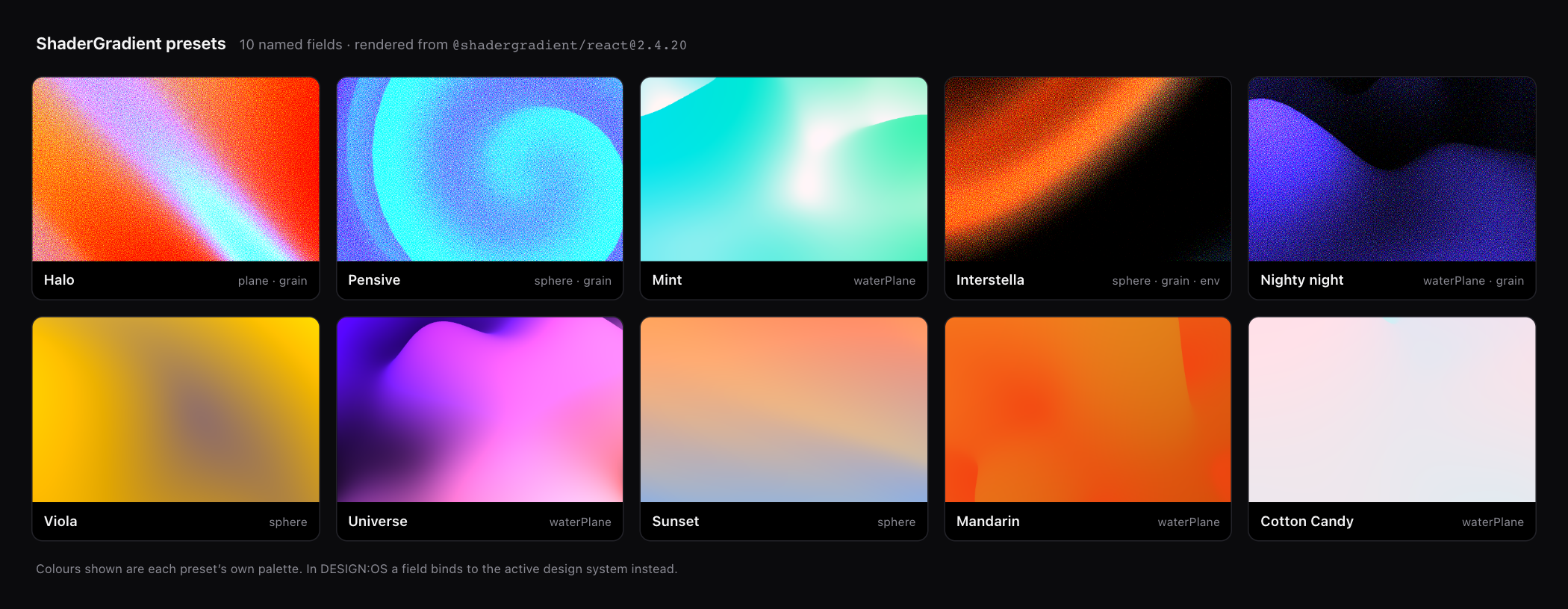
Rendered from the published renderer at the pinned version, each preset in its own
palette. In a real page a field's colours come from the active design system instead.
It is gated, not offered. A field is reachable only after
the motion ladder selects T6 and the persona's motion cap
allows it — and it shares one per-viewport budget with the Canvas UI effect capability,
so a page gets one T6 surface, never one of each.

A field fails two independent ways, so it carries two fallbacks and shipping one as
though it were both is a reject:
| Trigger | Fallback | Why this one |
|---|---|---|
prefers-reduced-motion: reduce |
the same field, frozen | WebGL still works; the visitor asked for less motion, not a different design |
| no WebGL, or context loss | a token-derived CSS gradient | there is no canvas to freeze, and something must still light the surface |
No preset ships a static default, so the frozen state does not exist until it is wired —ui knowledge check fails any matrix row whose fallback never names it.
The field's three colours are derived from design-system tokens, never carried over from the
preset. A canvas is invisible to ui ds-usage-lint, so nothing would catch a field that
quietly became the page's colour authority — which is exactly why it is a rule and not a
lint. Read the gradient direction and
runtime skill.
Your project gets a staff — the agents
One command turns the design system into a small team of Claude Code
subagents, each bound to the project's declared identity and scoped to exactly
one job:
| Agent | Name pattern | Does | Never does |
|---|---|---|---|
| Designer | designer-<studio>-<project> |
generation & iteration on the project DS | scores its own work |
| Curator | curator-<studio>-<project> |
critique, audits, verdicts with evidence | edits an artifact |
| Figma hand | figma-<studio>-<project> |
canvas operations via figma-agent, drift-asserted |
simulates when the plugin is down |
The prefix is generic on purpose — every DESIGN:OS project has a designer, a
curator, a figma hand — while the suffix carries the identity: a studio soul
named MERIDIAN on the project meridian-store yields designer-meridian-meridian-store.
Set it up
ui ds soul init --studio    # once per MACHINE — your studio's stance; its name: names the agents
ui ds soul init             # once per PROJECT — the project's stance (or let /ui:learn draft it from evidence)
ui agents init              # writes .claude/agents/<role>-<studio>-<project>.md
Both souls start as status: draft scaffolds — fill Never / Always / Voice,
then set status: ratified. ui ds soul check (and --studio) lints the
structure. No studio soul yet? Agents still generate as designer-<project> and
the command tells you what you're missing.
Use them
In Claude Code, delegate in plain words — "ask the designer agent to build
the empty state for API Reviews" — or just describe the task and let Claude
Code auto-route: each agent's description declares its scope, so build requests
find the designer and review requests find the curator.
Identity is live, not baked. Every agent's first action is ui ds context,
which carries the project soul (and the studio soul beneath it). Edit a soul —
the whole staff changes its taste at the next task, no regeneration needed. Only
the names are stamped at generate time.
The roster is yours — one agent or all three: ui agents init --roster designer,curator. ui agents list shows what exists; ui agents check fails
(agent-stale, exit 1) on hand-edited or outdated files — heal withui agents init --force. Claude Code runtime only for now.
The machine floor
Most design guidance is prose the model can talk itself past. The DESIGN:OS floor is
code: deterministic linters run on every delivery, specialist gates cover design-system
usage and flow structure, and the rendered tier checks what static analysis cannot see. A
detected blocking breach cannot receive a QUALIFIED verdict.
The floor is no longer only for the HTML the model just wrote. Point it at a directory and it
reads the app you already have — HTML, React, Vue, Svelte, plain CSS, SwiftUI, Flutter —
because the rules are written against design facts, not against CSS syntax. One rule, every
language. Adding a platform is one extractor, and no rule is edited.
| Layer | What it proves |
|---|---|
ui taste-lint — 34 absolute checks |
The generated-UI tells: transition: all, layout-property keyframes, missing reduced-motion, overshoot easing, italic display headings, uppercase line-height < 1, focus rings that fade in, z-index inflation, off-grid spacing, mixed icon sets… |
ui validate-layout — 20 checks |
Structural + overflow safety: unclosed tags, fixed-width overflow, 100vw traps, root overflow-x: hidden breaking sticky. |
ui content-lint — 12 checks |
Honest copy: lorem-ipsum, placeholder copy, placeholder names (Jane Doe / Acme), click-here links, all-caps shouting. |
ui a11y-lint + ui ds a11y |
Tier-1 static WCAG checks + token-pair contrast (every {role}/{role}-foreground pair ≥ AA, hover/active states included). Never claims "compliant" — says exactly what it checked. |
ui tell-lint — 43 checks, any language |
The design tells: the side-tab accent, the stock purple palette, nested cards, a kicker above every heading, a pulsing dot that reports nothing, an overused face (including Flutter's default Roboto — SF is not a tell). Mostly advisory: a tell prints, it never fails a build. |
ui a11y-lint — computed contrast |
The real WCAG ratio against the nearest opaque ancestor, from a resolved cascade. It refuses where the answer would be a fiction — a gradient background, a translucent veil — and says the run was partial. |
a11y-audit + page-shot + ui vr |
The rendered tier: axe-core over live Chrome, deterministic PNG renders, pixel-level visual-regression gates per component (design-os vr-matrix). |
The pairing is structural: every standard ships an emitter and a linter in the same
commit — prose-only rules drift; enforced rules hold.
So is the honesty. Every run reports what it could not do as loudly as what it found: an
UNDERCOUNT tier, an unresolvable cn() call, a rule NOT-EVALUATED for want of facts, a
contrast pair that could not be computed, a walk that hit its budget. A low finding count is
never allowed to read as a clean page.
Workflow map — current generation and learning loop
The host agent performs the design reasoning. The ui kernel validates artifacts and gates; it
never generates assets, calls a model, or accesses the network.
flowchart TD
    U["1 · User intent or reference"] --> CA{"2 · ui knowledge activate<br/>typed surface + visible evidence"}
    CA -- unavailable --> STOP["Stop · CAPABILITY_UNQUALIFIED<br/>route: null"]
    CA -- web-marketing qualified --> B["3 · Preserve activation receipt<br/>compile design-brief.json v2"]
    CA -- native-macos provisional --> N["Route native-macos<br/>PROVISIONAL · qualified delivery forbidden"]
    CA -- native-ios provisional --> NI["Route native-ios<br/>PROVISIONAL · qualified delivery forbidden"]
    CA -- native-ipados provisional --> NP["Route native-ipados<br/>PROVISIONAL · qualified delivery forbidden"]
    B --> PP["4 · Compile prompt-plan.json<br/>3 structural directions · region jobs · visual DNA"]
    PP --> PF{"ui prompt-plan<br/>validate + preflight"}
    PF -- fail --> B
    PF -- pass --> G["5 · Ground the project<br/>scan · DS context · soul · memory prior"]
    G --> S["6 · Select direction<br/>content-led vs golden candidate"]
    S --> C["7 · generation-contract.json v2<br/>sections · assets · states · viewports · motion"]
    C --> A["8 · Resolve assets<br/>project → approved source → image generation → no image"]
    A --> I["9 · Implement one candidate<br/>semantic responsive UI · Phosphor · GSAP only when justified"]
    I --> SG{"10 · Six static gates"}
    SG -- fail --> R["Targeted repair<br/>worst evidence-backed finding only"]
    SG -- pass --> RE["11 · Render evidence<br/>1440 · 768 · 390 · states · reduced motion · no-JS"]
    RE --> Q["12 · Independent curator<br/>qualification-record.json"]
    Q -- DRAFT_WITH_CONCERNS --> R
    R --> SG
    Q -- BLOCKED_BY_EVIDENCE --> ASK["Ask for missing product truth"]
    Q -- QUALIFIED --> D["13 · Deliver with evidence<br/>then integrate through code-surface intake"]
    D --> EXP{"Quality-learning task?"}
    EXP -- no --> RCPT["14 · Record evidence receipt"]
    EXP -- yes --> AD["Art-direct qualified control<br/>section reference boards · max 3 ceiling revisions"]
    AD --> LR["Blinded comparison + learning-record.json"]
    LR --> PR{"Expert approval or<br/>3 wins across 2 categories?"}
    PR -- no --> HYP["Keep as hypothesis or counterevidence"]
    PR -- yes --> PROM["Promote bounded lesson with causal receipt"]
    RCPT -. "relevant weak prior on a later job" .-> G
    PROM -. "relevant weak prior on a later job" .-> G
The repair loop is capped at three attempts. Missing rendered evidence cannot becomeQUALIFIED. Memory can influence a decision only as a cited weak prior; project truth, current
evidence, and the ratified soul outrank it.
Entry surfaces and outputs
flowchart LR
    subgraph IN["Entry surfaces"]
      E1["Plain intent"]
      E2["Existing codebase"]
      E3["Live URL"]
      E4["Figma file"]
      E5["Tokens / existing DS"]
      E6["Image reference"]
    end
    E1 --> W["DESIGN:OS workflows"]
    E2 --> W
    E3 --> W
    E4 --> W
    E5 --> W
    E6 --> W
    W --> H["Host model + DESIGN:OS knowledge and installed skills"]
    H --> K["47-command deterministic ui kernel"]
    H --> O1["Responsive production UI"]
    H --> O2["Idiomatic Figma canvas"]
    H --> O3["Design-system artifacts"]
    H --> O4["Evidence, audit, and learning records"]
    K --> DS[("design/ store<br/>tokens · registry · manifest · memory")]
Brownfield work routes through /ui:learn before generation unless the user explicitly chooses a
fresh direction. Figma, rendered accessibility, screenshots, image generation, SVGL, GSAP, and
semantic recall remain optional hands used by the host workflow, not hidden dependencies of ui.
The plugin — an agent and a designer in the same Figma file
1,675 tests green in its own repo · four adversarial review rounds · a 200-target apply into a 10,000-record registry in ~1 ms
Every AI-on-Figma setup hits the same three walls. The agent's work collapses into one
giant undo step — press ⌘Z after twenty minutes of automated work and twenty minutes
disappear. The designer's own edits are invisible to the codebase — a human moves a
component, and the registry the agent builds from quietly goes stale. And when both act at
once, they trample each other — half-applied scripts, overwritten changes, no way to tell
what happened. This plugin exists to remove exactly those three walls.
Your edits reach the codebase — the right codebase
Every change a designer makes is captured live and, after the file goes quiet, offered back as
one prompt: "N changes ready — Sync now." A click runs the deterministic kernel over the
ledger — no model sits in that path, so a sync is reproducible and auditable. And a sync cannot
guess where it goes: each Figma file is bound to its project once —
figma-agent bind --file "Design System v4" --dir ~/code/your-app
— and from then on that file's changes land in that project's registry, never in whatever
directory a process happened to start from. Unbound files stage safely and migrate on bind.
The confirmation never flatters itself: "Synced — 3 added, 1 updated" only when records were
actually written, "Nothing synced" when the run landed nothing, and a failure keeps the
prompt alive so the retry is still there.
The agent cannot wreck your file
Every mutating operation seals its own undo step — ⌘Z rolls back one thing, not the whole
session. Arbitrary scripts run inside a bracket that undoes itself on error, and reportsrolledBack: true only when the rollback actually completed. Mutations are jobs: one runs
per file at a time, the rest queue in order, reads bypass the queue. A timeout tells you the
work was not cancelled and hands you a job id to poll; cancel actually cancels; a reply that
arrives after a job was killed is discarded, never served. Nothing is ever lost silently —
every eviction, prune, and rotation leaves a counter, an archive, or an audit record, and if
your project already owns a file the plugin wants (its own component-registry.json), the
kernel yields rather than co-opts. Every error lands in design/figma-errors.jsonl with its
full untruncated reason — a log written for the agent that caused it, so it can read and fix.
Why this beats a write-only bridge
Most integrations write into Figma and stop. This one closes the loop in both directions — the
designer's hand edits flow back into the same registry the agent generates from, so drift is
detected and reconciled instead of accumulating — and it holds under load: per-file cursors and log rotation keep sync fast on
files with thousands of components (a 200-target apply into a 10,000-record registry measures
about a millisecond), and the panel reports only what actually happened — a name appears in
the activity feed only when the reply carried one, a count only when one parsed. The whole
thing shipped through four adversarial review rounds in which every blocker was reproduced
before it was believed, and each fix carries a test that fails against the previous code.
This plugin now ships as its own repo — design-os-figma-plugin
— so it can version, release, and take contributions independently of this kernel. Install,
build, and bind instructions live there; this section stays as the introduction to why
it exists.
The Figma hand
figma-agent drives a Figma plugin over a local self-healing broker: reconnect back-off,
heartbeats, a park queue that holds commands through a broker respawn, and a multi-file
registry — full detail in the plugin repo's own README.
Four moves, both directions:
- Read —
design-os figma scanexports components/variables/styles;ui ingest-figma-dsturns them into tokens + registry + DESIGN.md. - Audit —
design-os figma auditruns ten deterministic DS-hygiene detectors over
the open file's component library — a raw one-pass scan that survives 160k-instance
files, judged entirely in fixture-tested CLI code. - Write —
/ui:to-figmaauthors idiomatic canvas: auto-layout, real instances,
token-bound variables, drift-asserted geometry. - Mirror —
design-os figma reconcile --applykeeps each component's registry record
a 1:1, rebuildable reflection of its Figma node — the same buildable representation
the write path draws from.figma-agent mirror-verify <nodeId>proves the round-trip
is a fixed point (equal: true); what Figma's API genuinely won't let a rebuild carry
is recorded and reported, never silently dropped. Verified live on a production 27-screen
design system: 9/9 diverse components round-trip toequal: true.
That last move makes the whole thing a verification loop for authoring: any draw can be
checked by round-trip — draw → scan → diff against intent — so "what I drew == what I meant"
stops being a matter of eyeballing.
Kept deliberately out of the ui binary (it needs a network and a live plugin, and now a
separate install). Fall back to /ui:generate (HTML) any time the hand is unavailable.
Why a CLI hand, not (just) the Figma MCP, in one line: the official MCP is built to pull
a design into the conversation; the hand is built to operate on the file — deterministic
and scriptable (one command → one JSON envelope → stable exit codes), engineered for heavy
files (chunked transport, warm retry), multi-file and pinnable (FIGMA_AGENT_FILE), no seat
or OAuth. The MCP is still the right tool for implementing a selected frame as code or a
quick zero-setup read; full reasoning lives in the plugin repo's README.
The review loop — a comment becomes work, and the owner closes it
A design review is instructions scattered across pins. ui figma comments turns that into a
worklist and then reads back whether the work was accepted — the two ends the hand above does
not cover. It is a pure transform over REST payloads the host captured (Figma's Plugin API
cannot read comments at all), so it stays inside the deterministic kernel.
- Triage — replies fold into threads, resolution is judged per thread, and every pin
resolves to a page/frame/ancestor chain with an honest confidence label
(element·region·frame·orphaned·unanchored). It refuses rather than
guesses: the anchor never returns the deepest containing node, because in real
auto-layout that is routinely a full-bleed background rect or a spacer, and a confidently
wrong element name is worse than none. A fixture provokes that exact case; a test pins the
refusal. - Sync —
--sincereports the delta over a prior pull across four states, one of which
exists becauseresolved_atis ambiguous: it means "my request is satisfied" from a
reviewer but only "I have read this" from someone answering in their own thread. A reply
inside an already-resolved thread is still a live instruction — it measured 6 on a real
file where the default view reported 0. - Verdict — completion is read off the owner's own reply as
accepted·conditional·reversed·silent, not derived from the implementer.
Silence is its own verdict and never acceptance; ambiguity biases toconditional, because
a wrong conditional costs one question and a wrongacceptedships a defect.
Measured on a live 1,819-message product file: 45/45 comments reached element confidence
with zero orphaned and every count reconciling against the total pulled; of 42 verdicts
20 were not a clean yes, and four were recorded nowhere — including 7 threads resolved in
silence that a boolean "done" flag had been reading as yes.
--delivery-target is required rather than defaulted, because the most expensive error
measured was a batch aimed at the wrong artifact that then passed every gate defined for the
wrong one. The doctrine behind all of this is written down once, inknowledge/verification-honesty.md: a checker must be
able to refuse, totals must reconcile against what entered the pipeline, a status flag
carries its setter's meaning rather than the reader's, and silence must be its own state
instead of falling into the accepting branch.
The surfaces
| Surface | Path | What it is | Tests |
|---|---|---|---|
ui kernel |
src/ |
47 deterministic commands — prompt-plan and delivery validation, DS compile/mutate/preview, tokens, OKLCH color math, static gates, VR, memory, evidence. Zero runtime dependencies, no network, no model calls. | 3,699 |
design-os conductor |
design-os/ |
Python/Typer umbrella that composes everything: doctor · audit · heartbeat (deterministic design-health rhythm — due/compare/notify, zero model calls) · reference · vr-matrix · figma status/scan/audit · update (one-command toolchain refresh on any machine) · entry-point plugins. Re-emits every underlying envelope verbatim — one source of truth per verdict. |
312 |
figma-agent hand |
external repo | CLI + WS broker + Figma plugin: canvas authoring, DS scan, the 10-detector hygiene audit, exec-js, capture. Split out so it can version independently of this kernel. | 1,675 (own repo) |
| rendered-tier hands | a11y/ |
a11y-audit (axe-core over installed Chrome — wording never claims "compliant") + page-shot (deterministic full-page PNG). |
— |
recall mind |
recall/ |
Optional semantic memory: local embeddings (MiniLM/ONNX, nothing leaves the machine), hybrid RRF ranking, query → …work… → reflect loop. The kernel never imports it — a test fails the build if it does. |
— |
knowledge/ core |
knowledge/ |
The model-facing brain: 6+1-axis taste rubric, 26 personas / 7 families, page-structures (21 shapes + diversification + honest copy), two-tier a11y model, color science, token taxonomy, figma-craft/ construction tree. |
— |
ui commands
| Command | Summary |
|---|---|
ui guide |
Plain-language map of the /ui:* workflow (start here) |
ui schema |
Machine-readable signatures for every (sub)command |
ui doctor |
Verify an install (and, with --cwd, a project) is healthy |
ui onboard |
First-run readiness checklist — adapters, git, DS, soul, learning loop |
ui scan |
Detect existing design signals — routes brownfield projects to /ui:learn |
ui init |
Write the manifest + per-runtime adapter tree |
ui ds |
Compile/inspect/mutate the DS (init/import/context/change-token/status/diff/docs/a11y/specimen/preview [--split]) — init compiles the 27-component paired-token kit |
ui tokens |
Compile a DTCG token file to CSS / Tailwind / Figma variables |
ui color |
OKLCH color math: convert, scale, contrast, semantic palette |
ui taste-lint |
14 absolute taste checks across 6 axes |
ui tell-lint |
Absolute design-tell checks over produced HTML |
ui validate-layout |
12 structural/overflow checks |
ui gate |
Composed floor judge — every linter family plus autofix dry-run, one verdict |
ui tenant-lint |
Enforce the Tenant Law on embeddable motion sections (scroll-scrub, parallax, exploded view) |
ui tenant-scaffold |
Emit the canonical scroll-scrub tenant engine verbatim |
ui content-lint |
10 honest-copy checks |
ui a11y-lint |
Tier-1 static WCAG checks (not a conformance claim) |
ui ds-usage-lint |
Enforce use of the project's own tokens and components |
ui audit |
Deterministic DS-violation audit of a structured node export (5 families) |
ui critique-coverage |
Acceptance-criteria coverage of a produced design |
ui flow |
Lint a multi-screen flow's IA graph |
ui chart |
Lint self-contained chart artifacts deterministically |
ui diagram |
Lint self-contained diagram artifacts deterministically |
ui vr |
Visual-regression diff/gate (zero-dep PNG codec + pixelmatch) |
ui evidence |
User-evidence ledger with an anti-fabrication gate |
ui memory |
Design-decision ledger → compiled graph → cross-project taste profile |
ui changelog |
Fold DS history into a readable changelog |
ui ingest-figma-ds |
Onboard a scanned Figma DS (ds.json → tokens + registry + DESIGN.md) |
ui ingest-css-ds |
Compile CSS custom properties into portable design tokens |
ui figma |
Reconcile Figma change logs into the component registry; comments triages a captured comment payload into anchored threads and reads the owner's verdict |
ui synthesize-conventions |
Learn applied conventions from real screens |
ui taste |
Ingest pairwise taste evidence and compute study verdicts |
ui agents |
Generate and verify project-scoped designer, curator, and Figma agents |
ui knowledge |
Check knowledge-core indexing, provenance, and cross-reference drift |
ui delivery |
Validate briefs, generation contracts, qualification records, and learning records |
ui prompt-plan |
Validate and preflight prompt-plan orchestration contracts |
ui product-context |
Compile capture receipts into a replayable Product Atlas, replay-lint it, project Flow |
ui designmd |
Extract tokens, snapshot, audit DESIGN.md folders |
ui registry |
Component registry store: register, lookup, list |
ui edit-strategy |
Select edit strategy, number lines, apply ln-diff patch |
ui autofix |
5 deterministic HTML fix rules |
ui export |
Export HTML as a standalone self-contained file |
ui strip-fences |
Remove fences + stray prose around LLM HTML |
ui parse-json-stream |
Extract concatenated JSON objects from a stream |
ui gflow |
Drive the gflow scroll-cinema asset pipeline (footage → frame tiers) |
ui scrub-lint |
The scrub-encode floor checked on an encoded clip (faststart / no audio / GOP length) |
ui scrub-scaffold |
Emit the build script that encodes a clip chain to the scrub-encode floor |
How the loop works, mechanically
- You describe intent →
/ui:generate landing page for a new gym. - Capability activates first — the host records the requested surface with visible evidence;
ui knowledge activateeither routes an available arm with explicit assurance or stops withroute: null. - Intent compiles only after an authorized route — the receipt's claim policy bounds what may be delivered;
the raw request then becomes the route-specific provenance-tagged artifact contract. - The project grounds the decision — current DS, soul, evidence, and memory context load;
current product truth outranks recalled preference. - Direction and assets resolve before code — content-led and golden candidates are compared;
icons, logos, imagery, states, responsive transformations, and motion receive explicit roles. - One candidate earns delivery — six static gates run first; desktop/tablet/mobile and
behavioral renders feed an independent curator. - Repair stays bounded — only the worst evidence-backed finding is repaired per round, for
at most three attempts, with affected gates and renders rerun. - Status stays honest — only clean evidence emits
QUALIFIED; unresolved work remainsDRAFT_WITH_CONCERNSorBLOCKED_BY_EVIDENCE. - Learning needs causality — evidence, application, artifact, and outcome form a receipt.
Quality-learning tasks preserve controls, use blinded comparison, and promote a lesson only
after expert approval or repeated wins across categories.
Changelog
The recent wave, newest first — full history in CHANGELOG.md.
| Date | Change | Commit |
|---|---|---|
| 2026-09-05 | A failure that names the file — every product-context error message was byte-identical to its own code, so one malformed receipt among twelve reported BAD_PRODUCT_CONTEXT and nothing else. Messages now name the file, the ceiling and which of the causes fired; the text channel escapes them so a newline in a path cannot forge a line, while JSON keeps the raw string. The other half was the suite: all twelve error assertions were expect.any(String), green whether the message was useful or leaking |
#283 |
| 2026-09-04 | Product truth as evidence — ui product-context compiles lifecycle-aware capture receipts into a canonical, byte-reproducible Product Atlas, replay-lints it against its own embedded receipts, and projects Flow as a separate artifact. No order winner: equal values coalesce, distinct ones conflict with a null value, an absent candidate stays unresolved rather than being inferred missing. Replay proves internal self-consistency, not unchanged history — substitution is caught only by comparing the external atlasDigest against a trusted one |
#279 |
| 2026-09-01 | The gate emits what its coverage report claims — low-contrast was the last of six catalog rows gate coverage called active that ui gate could never emit; measured across 747 real pages, wiring it changes exactly one verdict, and that page is white on a brand pink at 3.52:1. A PARTIAL channel now separates a family nobody ran from one that ran half-blind (342 pages have an unresolvable background), and a new probe guards reachability, which the catalog pairing could never see |
#276 |
| 2026-08-31 | prompt-leak-metadata, and the half of a family the gate never ran — a generation brief shipped in a page's <title> is scaffolding, so it is an error in the content family, on a threshold measured rather than chosen (699 real titles: median 43, longest legitimate 120, nothing between 120 and 1000). Fixing it surfaced that ui gate composed the content family from the regex checks alone — six catalog rows reported active that it could never emit — and that content findings were dropped silently for every non-HTML reader |
#273 |
| 2026-08-31 | The tell family stops lying in seven specific ways — a <title> is metadata and not prose, marquee fires only when something readable moves, Tailwind uppercase finally reaches the rule that exempts it (one typography fact per element, as the HTML reader always emitted), a two-file --render run blames the right page, identical facts collapse before rules see them, and the unresolved-stylesheet caveat says what the sheet could actually have hidden. Two of the seven issues were misdiagnosed in their own text; every predicate change was measured across 747 real pages before it shipped, and the mutation audit now prints what the field corpus adds: 60.74% → 74.16% |
#256–#268 |
| 2026-08-30 | [email protected] — the polyglot release: ui tell-lint reads HTML, JSX/TSX, Vue, Svelte, CSS, SwiftUI and Flutter with 43 rules written once; tell joins ui gate; native macOS/iOS/iPadOS arms; and the instruments that keep the verdicts honest — an adjudicated field corpus, a fact census, thresholds pinned by executable boundary pairs, and a nightly mutation audit |
v0.6.0 |
| 2026-08-29 | TocChien becomes the retained iOS proof — three image-first SwiftUI screens, 16 controller-replayed simulator tests, paired light/dark evidence, independent visual review, and exact-hash owner acceptance; Tier 2 provenance and physical/live-accessibility limits remain explicit | #242 |
| 2026-08-29 | Native iOS and iPadOS proof becomes inspectable — two held-out SwiftUI apps, 26 passing simulator tests, retained render evidence, independent fail-then-pass curation, and a content-addressed board; hardware and owner gates remain explicitly open | #240 |
| 2026-08-28 | The tell rules are kept honest by measurement — a field corpus of real pages with adjudicated verdicts (a fix that silences a true positive goes red, naming it and quoting the reason), a printed live false-positive rate, a fact census so a zero can be read, every threshold in one table pinned by an executable boundary pair, three metamorphic laws, and a nightly mutation audit | feat/design-facts-ir |
| 2026-08-27 | Native macOS becomes an official DESIGN:OS arm — /ui:native-macos now routes to its own SwiftUI-first workflow with provisional assurance, pinned activation evidence, and a fail-closed ban on qualified platform-delivery claims |
#231 |
| 2026-08-26 | ui tell-lint — design:os reads your app, whatever it is written in: one DesignFacts IR + N language extractors (HTML, JSX/TSX, Vue, Svelte, CSS, SwiftUI, Flutter), 43 tell checks written once, computed WCAG contrast, and a zero-dependency rendered tier that drives a browser already on the machine |
feat/design-facts-ir |
| 2026-08-20 | [email protected] — the native-expert release: need→verb routing knowledge + the untaught-feature parity gate, pointing agents with the knowledge anchor, ui init --with-agents, and an 84-prompt blind benchmark that measured the doctrine to a fully clean board |
v0.5.0 |
| 2026-08-20 | Routing board clean — the three canvas-cell misses adjudicated at their sources (design.md frontmatter regains the canvas condition; G2 gains the decision-vs-construction tie-break): one moved by doctrine and measured, two corrected labels; re-measured with no collateral flips |
#207 |
| 2026-08-20 | ui init --with-agents — opt-in roster generation in the same init run (claude runtime + existing project DS required; pre-flights to DS_NOT_FOUND before any write) |
#205 |
| 2026-08-20 | Routing doctrine, measured — an 83-prompt blind benchmark (authored from frontmatter only, routed by context-clean agents) caught two doctrine bugs at must-ask 58%; after the fixes a 16-prompt reference-path re-run graded 16/16, putting the merged figures at verb 96% / must-ask 100% / composite 100% / 0 taste interrogations | #206 |
| 2026-08-20 | Native-expert agents — knowledge/need-routing.md turns a stated need into the right design:os application (19-verb decision gates, three sanctioned asks, the composition rule); two-way parity checks make an untaught new capability a red build, and a per-role allowlist keeps agent templates pointing instead of enumerating (born-red on the real designer drift) |
#203 |
| 2026-08-19 | [email protected] — the tractability release: 14 floors, 4 floor repairs, ui gate + coverage registry, FloorFinding schema v1, telemetry events, and a measured −65% error-at-birth from born-passing knowledge |
v0.4.0 |
| 2026-08-19 | font-display gets its repair — the one floor the born-passing A/B showed teaching cannot move (6→6 across arms) becomes an autofix: @font-face gains font-display: swap, Google-Fonts hrefs gain display=swap; 12→0 on the A/B corpus in one pass |
#200 |
| 2026-08-19 | Tractability telemetry events — the ledger learns route_decided, attempt_completed, outcome_recorded (accept REQUIRES the final gate verdict with provenance refs) and taste_veto (file + mandatory reason; the stream the FP gauge and librarian recurrence will read) — the labeled-loop data the moat thesis lives on |
#199 |
| 2026-08-19 | FloorFinding schema v1 + ui gate coverage — findings gain declared repair fields (expected/actual/fixHint/repairScope) and the gate grows a coverage registry (88 checks, per-project activity, paired against the sources AND against runtime emission) — the evidence base for tractability routing and strict patch validation |
#198 |
| 2026-08-19 | One composed judge: ui gate — every HTML-emitting workflow (and the critique funnel itself, which was silently missing a11y+content) now judges through one command composing all four linter families plus an autofix dry-run; skips must carry declared reasons, a coverage test keeps future workflows honest, and wiring the goldens exposed and fixed a fixDuplicateIds false positive on data-*-id attributes |
#197 |
| 2026-08-19 | The floors repair themselves — ui autofix wraps unguarded :hover in @media (hover: hover), injects tabular-nums on numeric tables, and restores killed focus rings, each repair gated by its own linter check and confirmed silent after; generation-craft-defaults now teaches the floors up front so variants are born passing |
#195 |
| 2026-08-19 | Three more floors: labels, focus rings, concentric corners — input-unlabeled + focus-outline-removed (a11y errors, WCAG 3.3.2/2.4.7), equal-nested-radii (taste warning; the concentric rule finally gets its linter), and the critique workflow walks every state, slows motion to 10%, and reports considered-but-rejected fixes instead of padding suggestions |
#193 |
| 2026-08-19 | Kit typography polish — kit titles set text-wrap: balance, bodies text-wrap: pretty, the Avatar photo carries a token-driven 1px hairline outline, breadcrumb underlines clear descenders (from-font + skip-ink); a kit floor test pins every declaration so a reverted emitter goes red |
#192 |
| 2026-08-19 | The repo's own surfaces meet the punctuation floor — the site and guide slides pass content-lint clean (typographic apostrophes, curly quotes, the CSS snippet marked up as <code>); data-numbers-not-tabular validated on 1,071 real files (3 genuine designed-UI positives) and its date-column behavior recorded as a decision |
#191 |
| 2026-08-19 | Five interface-craft floors from the interfaces.dev cheat sheet — smart punctuation and verb-first button labels in content-lint, blocked-paste detection in a11y-lint (error, WCAG 3.3.8), unguarded :hover on mobile-intent documents in validate-layout, and missing tabular figures on numeric tables in taste-lint; the kit's Button/Breadcrumb hover rules now sit behind @media (hover: hover) so the kit passes its own new floor |
#189 |
| 2026-08-17 | Onboarding points at the plugin repo when the Figma agent is absent — the Figma next step said figma-agent status on every machine, which is a command not found unless the separately-shipped Design Agent is installed; a PATH probe now picks the right sentence |
#187 |
| 2026-08-16 | Root rules are decided by the selector's subject — root-overflow-x-hidden matched the root name anywhere in the selector, so body.dark .card { overflow: hidden } was false-flagged as a root rule; the colour-mode scan behind mode-invisible-surface shared the defect. Both now read one selectorSubjectIsRoot helper, so repairing one cannot leave the other broken |
#183 |
| 2026-08-16 | The scrub-encode floor gets its emitter — ui scrub-scaffold writes the build-assets.sh that produces a clip meeting the floor ui scrub-lint enforces; both halves read one definition, so a knob cannot change on one side only. The portrait profile encodes narrower and with a tighter GOP, and refuses to centre-crop a landscape source instead of cropping silently |
#179 |
| 2026-08-16 | [email protected] on npm — the kernel release catches up with the showcase: all 42 commands including tenant-scaffold/tenant-lint (the scroll engine behind the demo grid), gflow, chart, diagram, onboard; published from CI with sigstore provenance |
v0.3.0 |
| 2026-08-16 | A design review becomes work, and the owner says when it is done — ui figma comments folds a captured REST payload into threads and resolves each pin to a page/frame/ancestor chain with an honest confidence label, refusing to name an element rather than guessing a background rect; --since reports replies inside already-resolved threads (6 on a real file where the default view showed 0); and completion is read off the owner's own reply as accepted / conditional / reversed / silent instead of derived from the implementer — on a live 1,819-message file, 20 of 42 verdicts were not a clean yes and four were recorded nowhere |
#164 |
| 2026-08-16 | Gradient fields, rendered — the ten ShaderGradient presets now appear in the README as a labelled grid plus an animated field, rendered from the published renderer with this repo's own preset values; the ledger's package version is corrected to one that was actually released | #157 |
| 2026-08-16 | ShaderGradient as a T6 gradient-field capability — /ui:generate//ui:refine//ui:redesign can direct one animated 3D gradient field behind the existing T6 gate, sharing canvas-effect's single-effect budget; a source-free ledger pins the preset roster and surface set, ui knowledge gradient-matrix emits the matrix's machine columns, and ui knowledge check fails a fallback cell that never names the frozen state |
#156 |
| 2026-08-15 | Native diagram craft — /ui:diagram routes architecture, sequence, and product-flow intent into accessible offline SVG; ui diagram lint enforces owned-artifact structure and product-flow source metadata; a pinned real-flow proof verifies every source ID and an empty fidelity ledger before release |
#132 |
| 2026-08-13 | Four shipped sites lead the showcase as a grid — OPAH ONE, AURA, Robotic Arm, and Rill Architecture (now its own public repo + Pages) open the README as a two-column grid of scroll-throughs; each repo documents how to reproduce it with DESIGN:OS and carries its own demo recording (gif + mp4) | 5e2e499 |
| 2026-07-31 | figma-agent split into its own public repo — the Figma plugin + CLI now lives at design-os-figma-plugin, versioned and released independently of this kernel; setup.sh/design-os update/CI no longer build or link it as an in-repo workspace, and this README's Figma-hand section collapses to an introduction + pointer |
ed33a22 |
| 2026-07-31 | The designer's edits become readable history — figma-agent changes narrates the owner-edit feed per file in human sentences and figma-agent errors reads the error log without ever crashing on a bad line; reconnect gap-fill reports edits made while the plugin was closed (deleted pages get one honest notice; over-cap pages suppress their diff rather than emit false facts); the edit feed now routes through the file↔project binding so a file's history can never land in another project |
8902584 |
| 2026-07-31 | Concurrency & Jobs — one mutation per Figma file at a time (broker-side per-file FIFO; read-only traffic bypasses), every mutation is a job with an id: a CLI timeout names the job and figma-agent job <id> polls the real outcome instead of blind re-dispatch; cancel actually cancels and a disconnect-failed job can never be resurrected; panel Activity now narrates sync runs in full sentences and stuck rows time out honestly. Proven by an in-process daemon harness over the seams unit tests could not see |
5f79672 |
| 2026-07-30 | Registry Integrity wave — a Figma file's changes land in ITS bound project (figma-agent bind), never the broker's spawn directory; per-file {line,byte} cursors with streaming reconcile + 8 MiB log rotation (truncation is never a silent advance); sharded registry storage with a byte-identical contract file; map-based apply (~1 ms for a 200-target apply into 10k records); a project's own component-registry.json is never touched (kernel yields to figma-component-registry.json); every eviction/prune/rotation leaves a counter, archive, or audit record. Two empirical stage-4 review rounds, 86+ new tests |
c9ab3ff |
| 2026-07-25 | Scroll-cinema toolchain is now visible at bootstrap — design-os doctor checks gflow/ffmpeg/cwebp as optional hands (absence reported up front, not discovered mid-generation after credits are spent), and setup.sh gained an opt-in gflow step that explains the account risk and asks (--with-gflow/--no-gflow; non-interactive runs skip). _probe_version keeps the first line only, so ffmpeg's multi-line build banner can't flood the envelope. Spec 021's SPEC.md reconciled: Architecture A confirmed as the owner's order, LOCKED DIRECTION marked superseded, status split (tenant half shipped / asset half pre-integration) |
0039975 |
| 2026-07-25 | Tenant contract — embeddable motion sections — ui tenant-lint <page> enforces the Tenant Law (a scroll-scrub/parallax/exploded-view section READS the host only via its own bounding box, WRITES only its own subtree; fails global writes + sticky-killer ancestors, follows linked src/href files); ui tenant-scaffold <dir> emits the canonical scrub engine verbatim. knowledge/motion-craft.md gains the contract, generation-craft-defaults.md a canvas-aspect floor |
a394230 |
| 2026-07-22 | Full-studio one-command setup (Spec 020) — ./setup.sh: prereqs → npm install → build (ui + figma-agent/recall/a11y, a11y last) → link all 5 bins → uv tool install the design-os umbrella → verify (ui doctor + design-os doctor) → style-A report; idempotent, --check/--skip-python flags. README swaps the old dev note for a "Full studio (clone)" subsection |
7132637 |
| 2026-07-22 | Published to npm — npm i -g ease-design (v0.1.0, MIT, zero deps); first public release from CI with sigstore provenance. Kernel-only; Figma/recall/a11y hands ship separately later |
281fc55 |
| 2026-07-21 | Report renderer + preview links (Spec 019 P2) — style-A (ruleHeader/checkItem/kv) adopted in ui doctor, ui ds preview, ui designmd audit, design-os doctor, design-os evolution; new OSC-8-safe previewLink/figmaNote convention (bare file:// paths, never markdown links); Python mirror report_style.py. --json/exit codes unchanged |
7ea1429 |
| 2026-07-21 | Onboarding first-run (Spec 019 P1) — ui onboard readiness checklist (adapters, git, DS, soul, learning loop + optional agents/Figma), a shared style-A report renderer, ui init chaining to onboard/guide, and host-approval-before-install discipline wired into the /ui:init wrapper + onboard journey |
61f35a7 |
| 2026-07-21 | Suite-level IMPROVING gate — the living-agent proof graduates only from a preregistered suite (≥3 holdouts across ≥2 categories, mean +10, aggregate repair/recurrence reductions, every case wins); a single comparison can no longer graduate and a 0→0 metric no longer reads as 100%. Verdict stays APPLIED |
591016c |
| 2026-07-21 | Interaction boundary benchmark — animated DESIGN:OS, native-mobile Nutrition, and premium Architecture treatments with desktop/mobile renders and honest claim boundaries | b706b8e…f1ee62f |
| 2026-07-21 | Official GSAP motion skill — advanced web choreography, ScrollTrigger, lifecycle cleanup, plugin restraint, reduced-motion and performance evidence; adapted from GreenSock's MIT skill suite | 982c30b |
| 2026-07-19 | Qualified Delivery (Spec 014 P0) — weak prompt → provenance-tagged brief → generation contract → canonical renders → bounded repair → honest delivery status; ui delivery validate blocks false QUALIFIED verdicts |
59686cd |
| 2026-07-16 | Figma mirror (1:1) — each component's registry record is a rebuildable reflection of its Figma node; mirror-verify proves the scan→rebuild→scan fixed point live (bindings by publish key, instances, variant swaps, inner overrides), equal:true across a real 27-screen DS. Plus a per-operation activity feed in the plugin panel |
b9b7255…7959464 |
| 2026-07-16 | Figma live-sync — documentchange → append-only ledger → 5-min idle → 1-click panel Sync → reconcile --apply; the registry follows the canvas near-real-time |
#34…#38 |
| 2026-07-15 | Journey skills — design-os-{onboard,daily,deliver}: the full user journey as three installable skills (entry router, audit disambiguation, delivery playbook), all skills renamed design-os-*, command-consistency + drift linters |
fc4adee |
| 2026-07-15 | Souls speak English — character-over-cosmetics doctrine; scaffolds EN; factory→studio→project chain live on a real project | cc1a56c |
| 2026-07-15 | Factory soul — the world-class baseline stance design:os ships day-0; user souls override clause-by-clause | 6183662 |
| 2026-07-14 | Agents: role-first naming (designer-<studio>-<project>) — generic prefix to delegate by, genealogy suffix for identity |
f41dfb2 |
| 2026-07-14 | ui agents — soul-bound, task-scoped project agents (designer · curator · figma-hand) with template-hash drift check |
fe1eda3 |
| 2026-07-14 | ui taste — vote-driven taste corpus: ingest (sha256+dHash dedup), pairwise Elo ranking, study ledger |
8cf2bfd |
| 2026-07-14 | brand/ — the studio's own DS store + the first evidence-cited design soul |
cf7c46b |
| 2026-07-14 | ui ds soul --studio — the studio identity layer above every project soul; names the agents |
8ef3a28 |
| 2026-07-14 | design-os heartbeat — deterministic design-health rhythm: due-scheduled checks, DESIGN_OK contract, delta gating |
57224b3 |
| 2026-07-14 | ui ds soul — declared design stance (design/soul.md): scaffold, 6-check structure floor, context injection, 9 workflow gates |
daa6c82 |
| 2026-07-14 | design-os figma audit / figma-agent audit-ds — automated DS-hygiene audit (v2: ds/icon/screen segmentation, variant-aware detectors, offline replay) |
c1e676b…7a3a20d |
| 2026-07-14 | DESIGN:OS — rebrand + repo rename; live-product demo gallery; README workflow map | 2f28e80 |
| 2026-07-14 | Slop gates — 8 deterministic anti-generated-UI checks across taste/layout/content linters + knowledge/page-structures.md |
28f027e |
| 2026-07-13 | Figma plugin — self-healing multi-file broker, brand panel (compact-first), connection stability | 55ec6f3…a6c90e3 |
| 2026-07-13 | 27-component kit — ds init compiles a full paired-token component library out of the box |
30fd579…7e24258 |
Status & honest boundaries
Dogfooded on real work, not fixtures: a production Figma project (129-component
library scanned, audited, reconciled), a full brand pipeline (reference intake → DNA →
compiled brand DS → the plugin panel you see above, contrast machine-corrected), the
toolchain's own preview/specimen surfaces, and the 1:1 mirror verified live on a
production 27-screen design system (9/9 diverse components round-trip to equal: true;
every remaining gap was a real bug caught on the live canvas, not a fixture).
Still open, stated plainly:
Qualified Delivery calibration — the deterministic contract, prompt-plan orchestrator,
D01-D03 development contracts, art-direction learning record, and known-bad false-green fixtures
ship across marketing and product surfaces. The first orchestrated-only repeatability study
reached 8.96/10 across nine untouched runs, but deterministic audit still found two mobile
overflow failures and repeated binary-rule misses. A post-generation repair gate, human reviewer
agreement, and broader dashboard/app/flow corpora remain before any repeatable “world-class”
claim.figma-agent audit-dslive acceptance — unit-tested + fixture-proven; the
ground-truth comparison against a hand-classified 129-component audit runs on the next
plugin reload./ui:to-figmacanvas E2E — the write path is now live-verified by the mirror
round-trip (mirror-verifyreturnsequal: trueon real components); a full
intent→canvas run authored from a plain-language prompt on a fresh file is the last
piece still being filmed for the docs.Taste-rubric threshold calibration — the ≥7 per-axis cutoff is a reasoned default;
tuning against a labeled corpus is future work. The deterministic floor already removes
the worst failure mode.
Contributing
Four gates stay green (typecheck · lint · build · test), the ui kernel stays
zero-runtime-dependency and deterministic, and every new standard ships its emitter and
its linter in the same commit. See CONTRIBUTING.md and
CHANGELOG.md.
License
MIT — see LICENSE. The gate is the product; the taste is yours.
Reviews (0)
Sign in to leave a review.
Leave a reviewNo results found