KoragraphMCP
Health Warn
- License — License: NOASSERTION
- Description — Repository has a description
- Active repo — Last push 0 days ago
- Low visibility — Only 5 GitHub stars
Code Warn
- process.env — Environment variable access in .claude/hooks/context.mjs
- process.env — Environment variable access in .claude/hooks/nudge.mjs
- process.env — Environment variable access in .claude/hooks/preflight.mjs
- process.env — Environment variable access in .claude/hooks/record.mjs
- process.env — Environment variable access in .claude/hooks/session-end.mjs
- process.env — Environment variable access in scripts/postinstall.js
- fs module — File system access in scripts/postinstall.js
Permissions Pass
- Permissions — No dangerous permissions requested
No AI report is available for this listing yet.
The memory layer that gets better as you use it. What broke, why, what depended on what, even the "push this to Wednesday" kind of thing that never makes it into any doc. No one has to write it down. Anchor your context to your code. when the code moves, so does the memory. works on claude code, cursor, codex. Completely local.
koragraph
A local, multi-repo code graph for your coding agent.





Point it at the repos you work on. koragraph reads them with tree-sitter, resolves calls, imports,
inheritance, and cross-service edges, mines git history for what changes together, and remembers
what you teach it. All local. No LLM, no cloud, no tokens.
See it
Two planes, drawn together. Run koragraph serve for the whole repository's backbone,
or koragraph serve --focus <symbol> for one symbol's neighbourhood, and open the local page it prints:
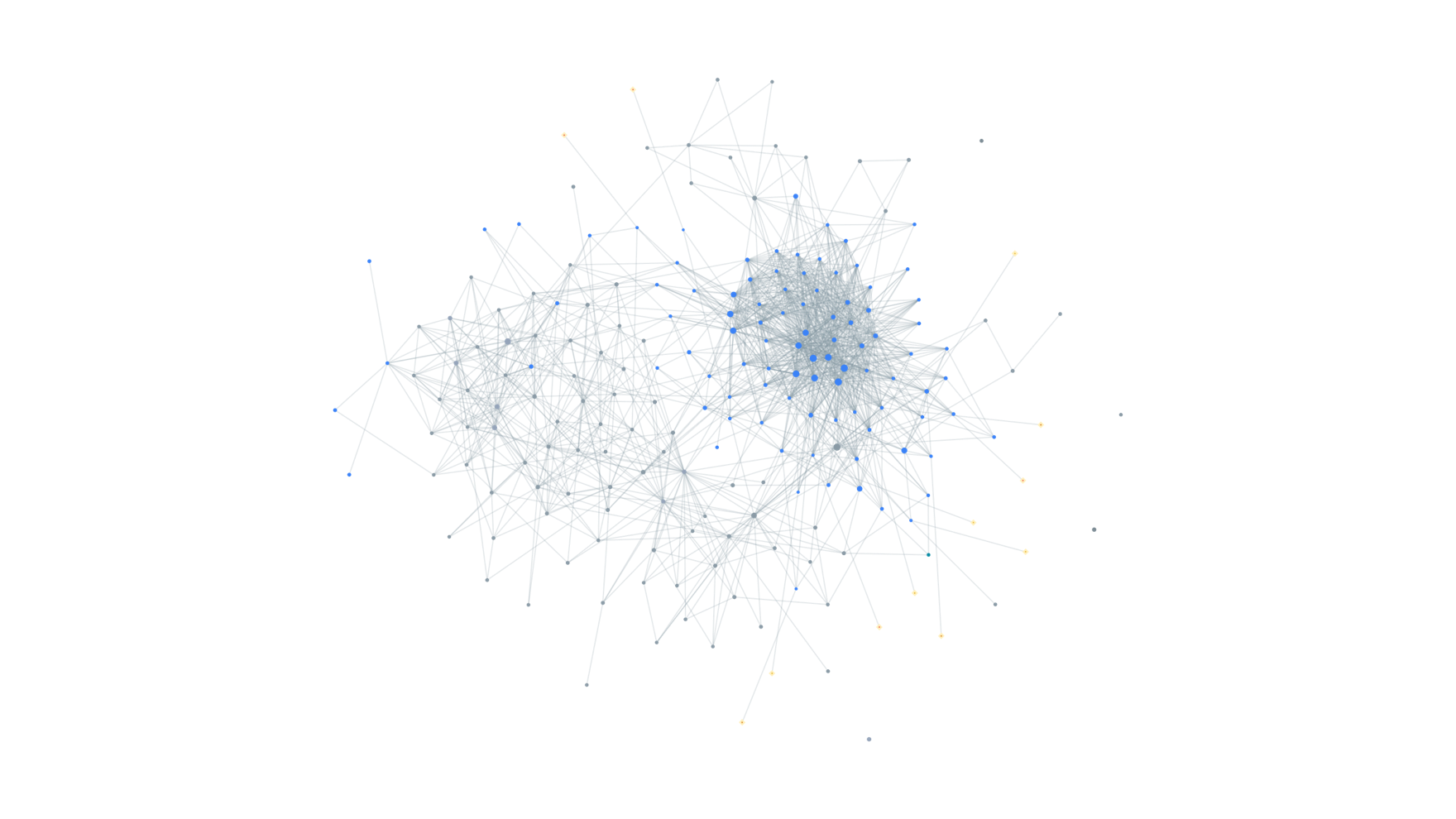
The cool nodes are your code — declarations, and the calls, imports and cross-repo edges between
them. The gold diamonds are koragraph's memory — the hazards, rules and corrections it has
learned, each linked to the exact declaration it is about. One self-contained page, rendered
locally; no network, no external assets.
Memory
koragraph anchors facts to the declaration they're about, in a durable SQLite store
(~/.koragraph/practice.db). Rename the code, the fact follows. Delete it, the fact orphans. NoCLAUDE.md to maintain by hand.
Already have a CLAUDE.md or AGENTS.md? Tell any coding agent:
Read
KORAINIT.mdand follow it.
It imports your instructions into memory, flags rules that reference code that's already gone, and
supersedes rather than duplicates on a re-run.
Tools
Nine MCP tools. Every one returns file:line, not pasted source. detail: concise | full on
every call, concise by default. One tool writes.
| Tool | What it's for |
|---|---|
explore |
Symbol or plain English. Ranked declarations plus source, callers, callees. |
blast_radius |
Run before editing. What depends on this, and what has no test coverage. |
search_code |
Locate a name in the graph, not raw text. |
neighbours |
Callers and callees of one symbol. |
changes_with |
What has historically changed together with a symbol. |
file_symbols |
Declarations in one file. |
overview |
Orient on the first turn. Store level index across repos. |
recall |
A failed attempt and its fix, a hazard, a revert. |
remember |
Save a durable, code anchored fact. The only writer. |
Graph
Your services aren't one repo. koragraph resolves the edges between them, structurally, no LLM:
- HTTP calls. A client call with a literal URL —
fetch,axios,requests,net/http,HttpClient,reqwest,Guzzle, and the rest, across all supported languages — resolves to theENDPOINTit targets in another repo, as a realCALLSedge. - gRPC and
.proto. A service to the stubs that call it, across repos. - Published packages. An import resolves to the exporting repo's symbol. Solid for ES imports;
CommonJS resolves file level for now. - Message topics. Producer to consumer, including topic names bound to env vars.
- Infra wiring.
docker-compose.ymland.envbecomeSERVICE,DEPENDS_ON,USES_CONFIG.
Framework routes becomeENDPOINTandHANDLED_BY.
Co-change. Git history mined at the function level: this function changes with that function.
Surfaces in blast_radius and changes_with.
Runtime tracing. koragraph trace <path> -- <cmd> runs your tests under sys.setprofile and
folds real calls into the graph, tagged [runtime-confirmed]. Python today.
Local. No model in the loop. Ingest the same repo twice, get the same graph.
Quickstart
Node ≥ 22.
npm install -g koragraphmcp
koragraph ingest /path/to/repo
koragraph doctor          # prints the exact line to wire into your editor
Connect it to Claude Code — -s user makes it available in every project:
claude mcp add koragraph -s user -- koragraph mcp
The store creates itself on first open: one SQLite file at ~/.koragraph/graph.db. No server, no config.
Or hand it to your agent
Paste this into any coding agent (Claude Code, Cursor, Copilot), from the repo you want indexed:
Install koragraph and set it up for this repo, then report back:
1. npm install -g koragraphmcp
2. koragraph ingest .
3. koragraph doctor — then run the `claude mcp add …` line it prints (or, if I'm not on Claude
   Code, wire `koragraph mcp` into my editor's MCP config).
4. Find KORAINIT.md in the installed package (`npm root -g`, then koragraphmcp/KORAINIT.md) and
   follow it — it imports my existing CLAUDE.md / AGENTS.md into memory, verified against the code.
Report: nodes/edges indexed, whether the MCP connected, and KORAINIT's summary.
Languages
12 main languages, tree-sitter throughout, more in progress:
c · c++ · c# · go · java · javascript · php · python · ruby · rust · swift ·typescript / tsx
The CLI
Every command is koragraph <command>:
| Command | Does |
|---|---|
ingest <path...> |
Index one or more repos (--watch supported) |
status |
What's in the graph, and when |
report |
Markdown snapshot (also mermaid, graphml, dot, json, cypher) |
serve |
Open an interactive picture of the graph in your browser (local, no network) |
doctor |
End to end install check with a named remedy |
cochange <symbol> |
What has historically changed with a symbol |
diff |
What appeared or disappeared in the last re-index |
trace <path> -- <cmd> |
Fold real calls into the graph (Python) |
hooks |
Auto re-index on commit and checkout |
practice <verb> |
Inspect, correct, maintain memory |
mcp |
Serve the graph over MCP on stdio |
How it works
- Walk the repos, honouring
.gitignore. - Extract declarations with tree-sitter.
- Resolve calls, imports, inheritance, cross-service edges.
- Mine git history, optionally fold in runtime calls.
- Serve it all over MCP, locally.
Re-indexing after a commit is incremental — only the files that changed since the last indexed
commit are re-extracted and re-resolved, and a changed file's calls still resolve against the whole
graph. Already-correct edges are left untouched. Two planes settle a little after the graph is
queryable: co-change is mined in a background process, and a call that was previously ambiguous
between several declarations is only reconsidered once its own file changes. koragraph ingest --full re-resolves everything from scratch and sweeps both up — worth running after a large
refactor, or on a schedule.
Requirements & status
- Node ≥ 22.
- Pure local tooling: better-sqlite3, tree-sitter. No LLM, no embedding dependency — no code on the
shipping path imports a model-provider SDK, calls a model, or touches the network. (A few columns
and code seams exist for an optional summarizer you could wire yourself; this distribution never
runs one, and summaries are derived structurally.) - On npm.
npm install -g koragraphmcp.
License
BUSL-1.1, free to use including at work. No commercial hosted or managed offering of
koragraph itself. Converts to Apache-2.0 on the change date.
Reviews (0)
Sign in to leave a review.
Leave a reviewNo results found