OpenNotch
Health Warn
- License — License: MIT
- Description — Repository has a description
- Active repo — Last push 0 days ago
- Low visibility — Only 5 GitHub stars
Code Fail
- rm -rf — Recursive force deletion command in Checks/run.sh
Permissions Pass
- Permissions — No dangerous permissions requested
No AI report is available for this listing yet.
Open-source AI assistant that lives in your MacBook notch, with Ledge, a 3D desktop companion. Native Swift agent, private by design.
OpenNotch
That little black notch on your MacBook? It works for you now.
An open-source AI assistant that lives in the notch — it does real work, asks before anything risky,
listens hands-free, and brings a few friends. Free, local-first, and your data stays on your Mac.
⬇ Download for macOS ·
Website ·
Watch the film





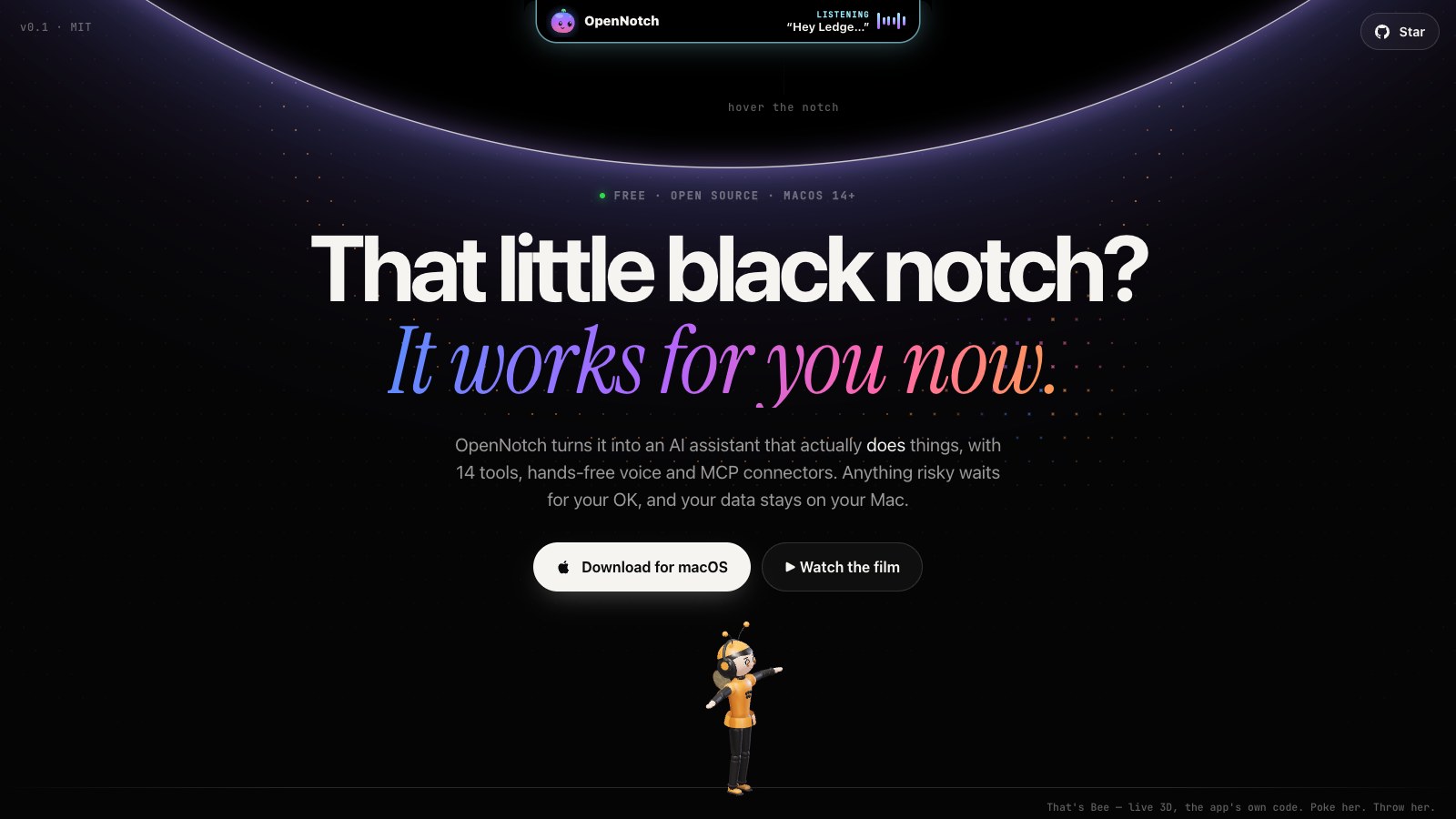
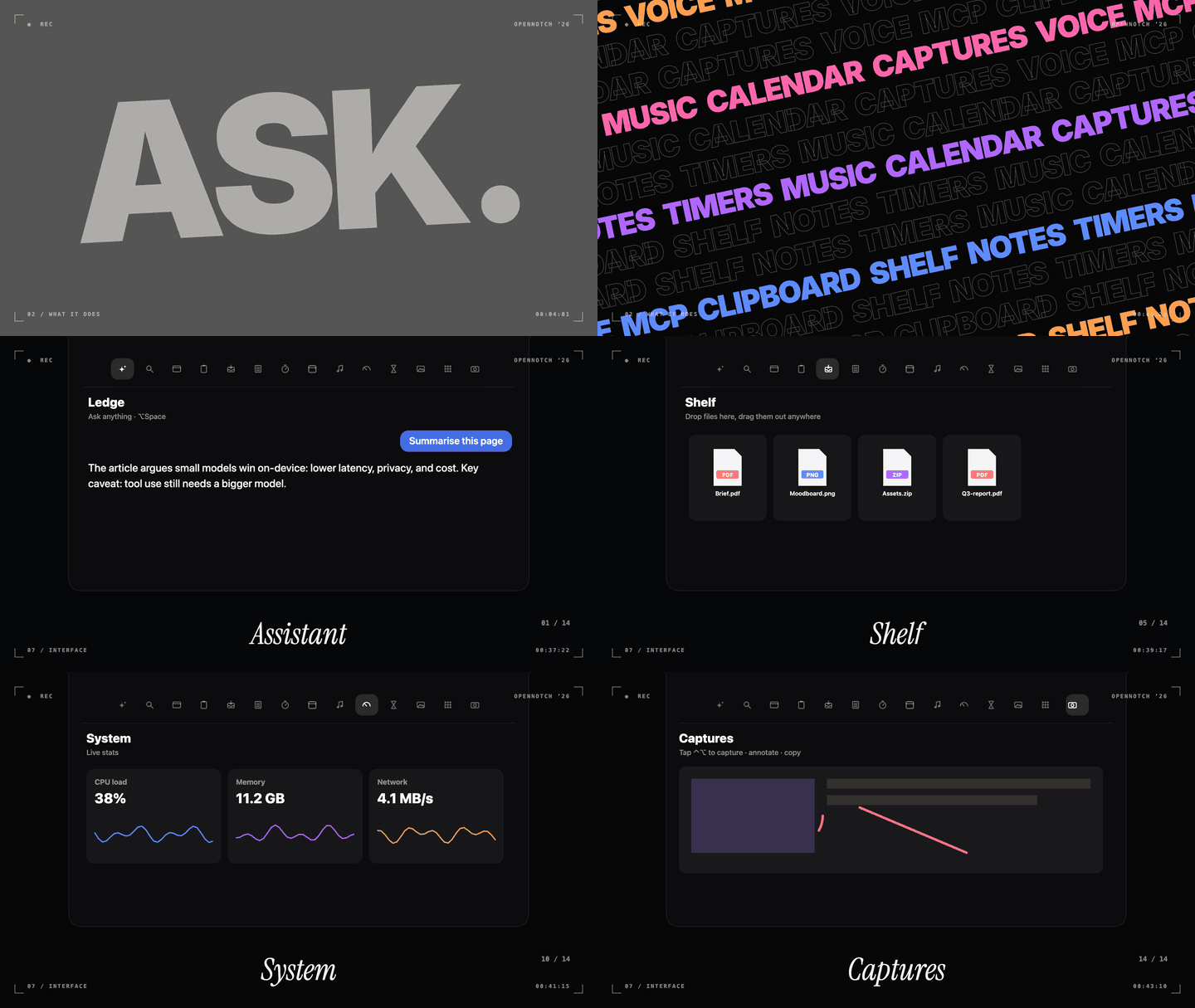
Hover the notch (or press ⌥Space) and ask anything. Music, timers, clipboard, notes, calendar,
captures and a dozen more tools live there too, Dynamic-Island style. Everything runs on your Mac:
chats are stored locally, and network traffic goes only to the AI you choose (plus web searches, weather
and pages it fetches when asked).
Status: early (0.1). Works today: the notch, modules, pop-ups, the desktop companion, and the
AI agent with tools. See docs/ROADMAP.md for what's next.
It does the work
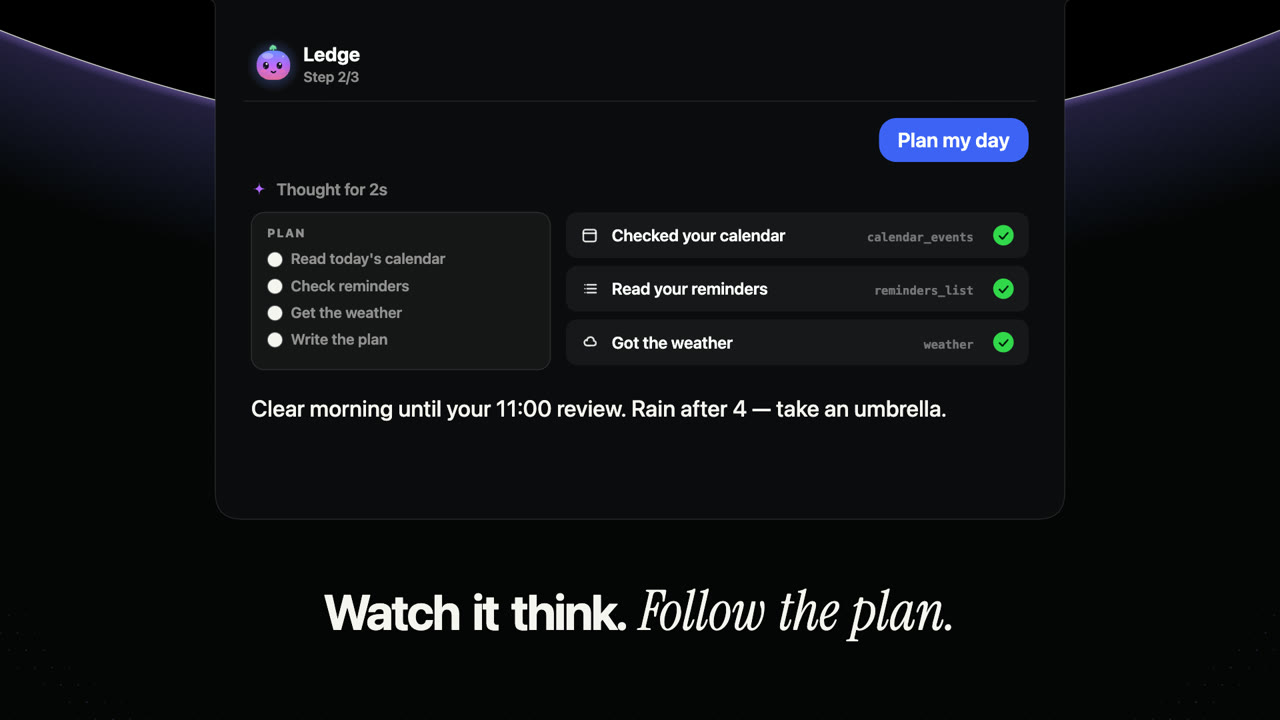
It summarises the page you're reading, catches up on your Mail inbox and drafts replies (it sends
only an email you approve), searches and creates Apple Notes, looks up contacts, plans your day from your calendar,
reminders and the weather, and schedules prompts ("every weekday at 9, brief me"). It also reads
and edits files, runs shell commands, searches the web, controls music, looks at your screen, sets
timers and remembers your preferences. You can watch it think and follow its plan live, and
every chat is kept in history (⌘Y).
It gets to know you without snooping: after a chat it may suggest a fact to remember ("Lives in
Lisbon"), which is saved only when you click Save (see and delete them in Settings › AI › Memory). It can
search your earlier chats ("what did we decide about the logo?"), keeps long chats coherent by
summarising what scrolled out of its context, runs independent lookups in parallel, and ends
answers with one-tap follow-ups. Ask it something and close the notch: the ears say Ready when it's done.
Everyday superpowers: hold ⌥⇧D and talk — your words are typed (and tidied) into any app. When a Zoom,
Teams, Meet or FaceTime call starts, Ledge offers to take notes — transcribed on your Mac, then a summary with
decisions and action items, no bot joining the call. Around 6 pm it wraps up your day, and on Fridays it shows
your week with Ledge (time saved) as a card you can share. It stays quiet while you watch a video, present,
are on a call or deep in typing, and saves anything useful for your next break.
Works inside your Mac: it runs your Shortcuts (so it can act in any app that offers Shortcuts actions — Focus,
Home, messages…), reads the window you're looking at when you say "summarise this" or "reply to this", and finds
your files by what's in them, who sent them and when ("the PDF Sarah sent last week"). Teach it routines — "every
time I say start work, open Linear and Slack, turn on Focus and brief me" — then just say "start work", put it on a
schedule, or add it to Apple Shortcuts with one click so Siri and your keyboard shortcuts can start it too.
Keeps an eye on things: "let me know when Priya replies" or "tell me when it's back in stock" starts a watcher
that checks in the background (read-only, it never acts) and drops a notice from the notch when it happens. When a choice
is yours ("which Sam?"), it asks with buttons instead of guessing; when it edits files, the answer ends with a
card of what changed (open it, drag it out, park it on the Shelf); and it can do many lookups in one step
(weather for ten cities, the first lines of every file in a folder) with a small sandboxed script. With Apple
Intelligence on, Apple's on-device model also helps it pick the right tools for oddly worded requests — free and private.
Free to start: Apple's on-device AI works out of the box where available, and Sign in with OpenRouter gives
free models in two clicks — no card.
Nothing risky without your OK
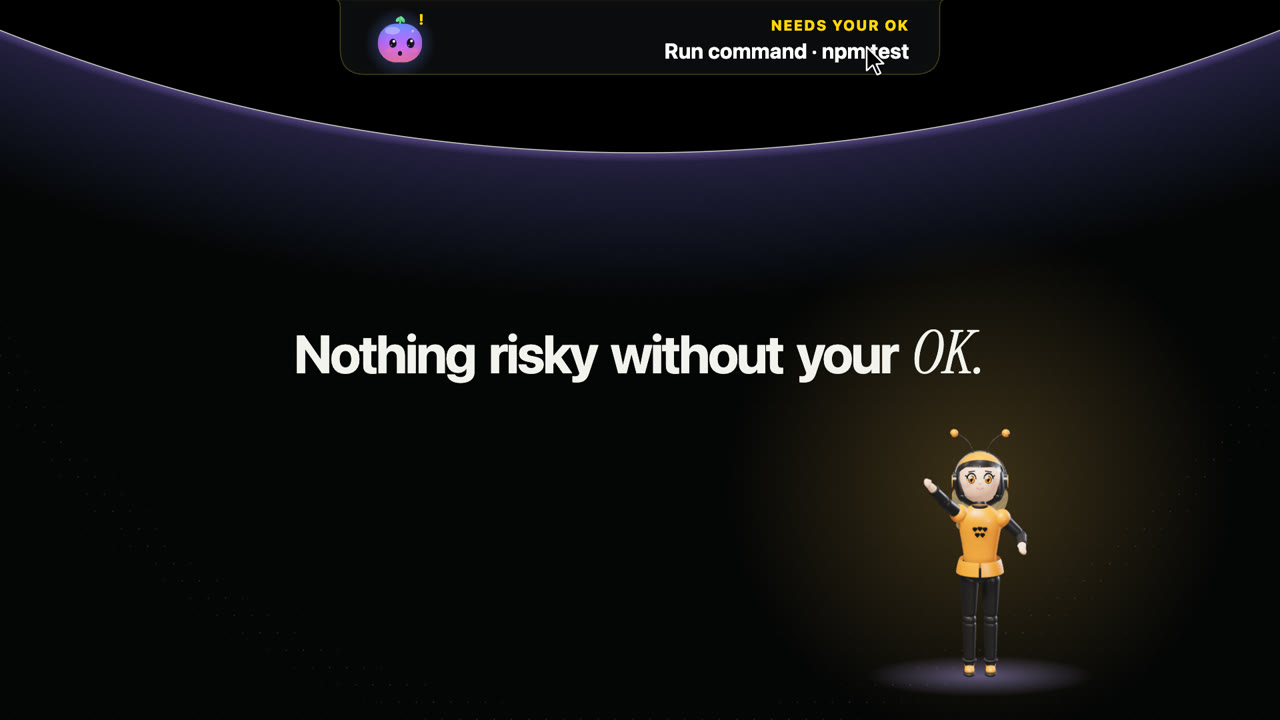 |
Commands, file changes, calendar edits, drafts and connector tools wait for you. The notch glows yellow and chimes; in hands-free mode it asks out loud — say "yes" or "no". No answer in five minutes means no. For repeated steps, Allow for this chat covers one program (say, git) or one project folder until you switch chats. It drafts email, and sends only after you approve that exact email. Text from web pages and emails is handed to the AI as information, never as instructions. |
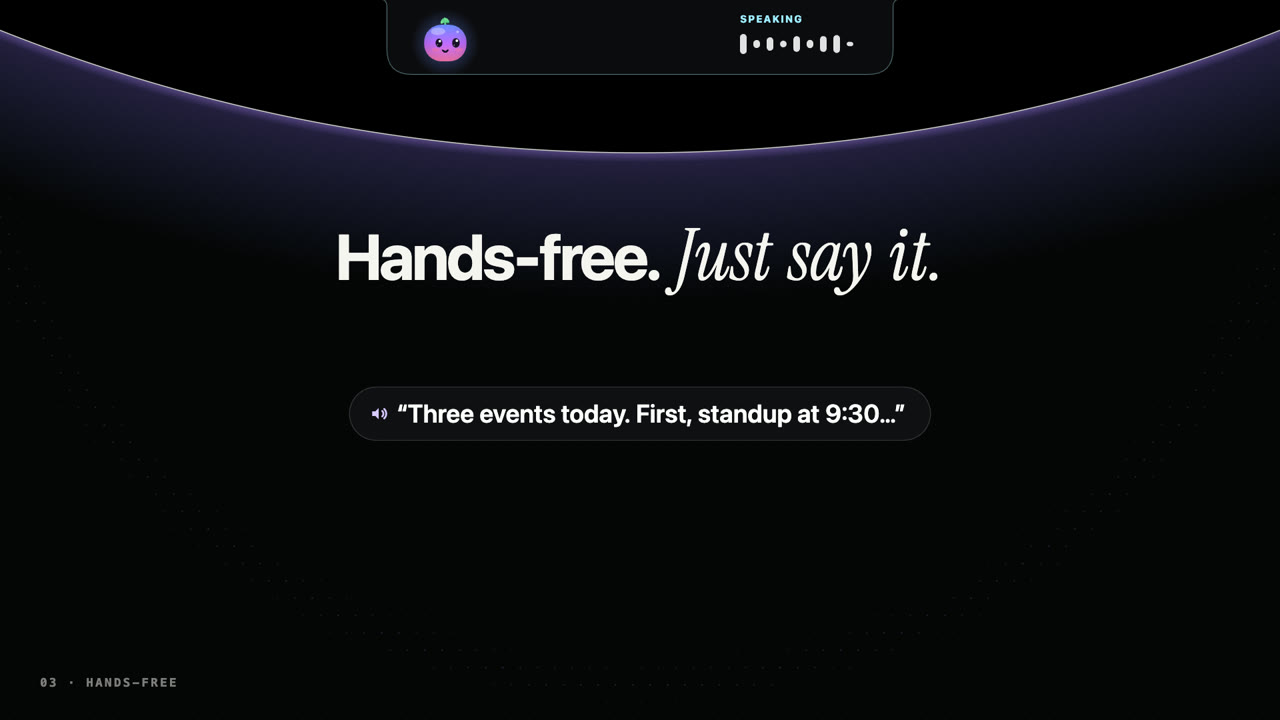 |
Hands-free voice. Say "Hey Ledge…", hear the answer, interrupt any time. Speech recognition runs on your Mac. |
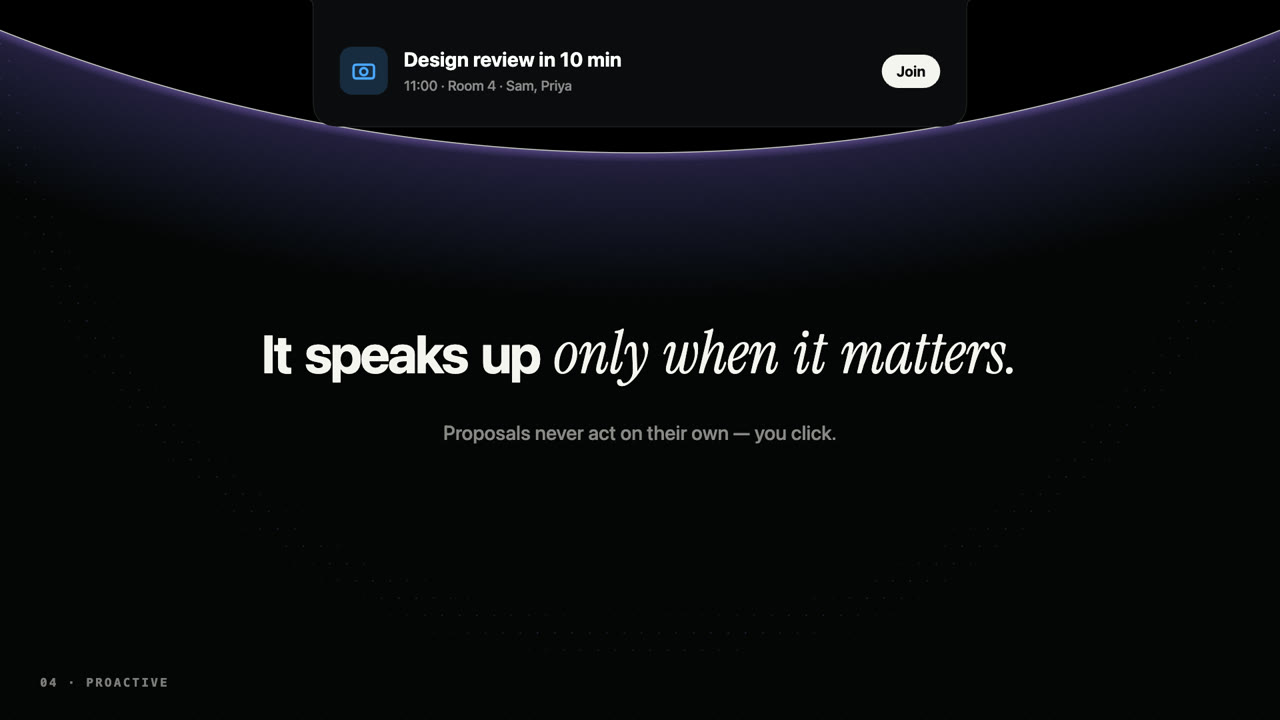 |
Proactive, never pushy. A morning brief, "meeting in 10 minutes — Join", "3 emails may need a reply — Draft replies". Proposals never act on their own. |
14 tools, one hover away
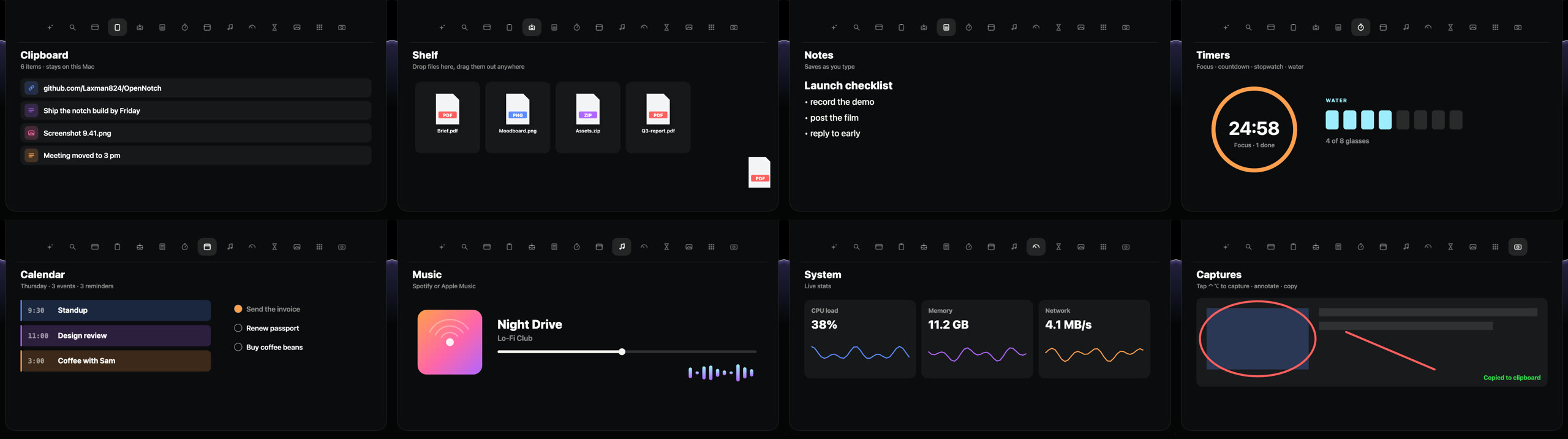
Assistant · Find files · Menu bar (including the icons the notch hides) · Clipboard history · Shelf
(drag & drop) · Notes · Timers & water breaks · Calendar & reminders · Music (with scrubbing) ·
System · Screen time · Image converter · AI-usage heatmap · Captures with annotation — plus a ⌘K
command palette, quick capture ("remind me to call Sam at 5", no AI needed) and live activities in
the closed notch.
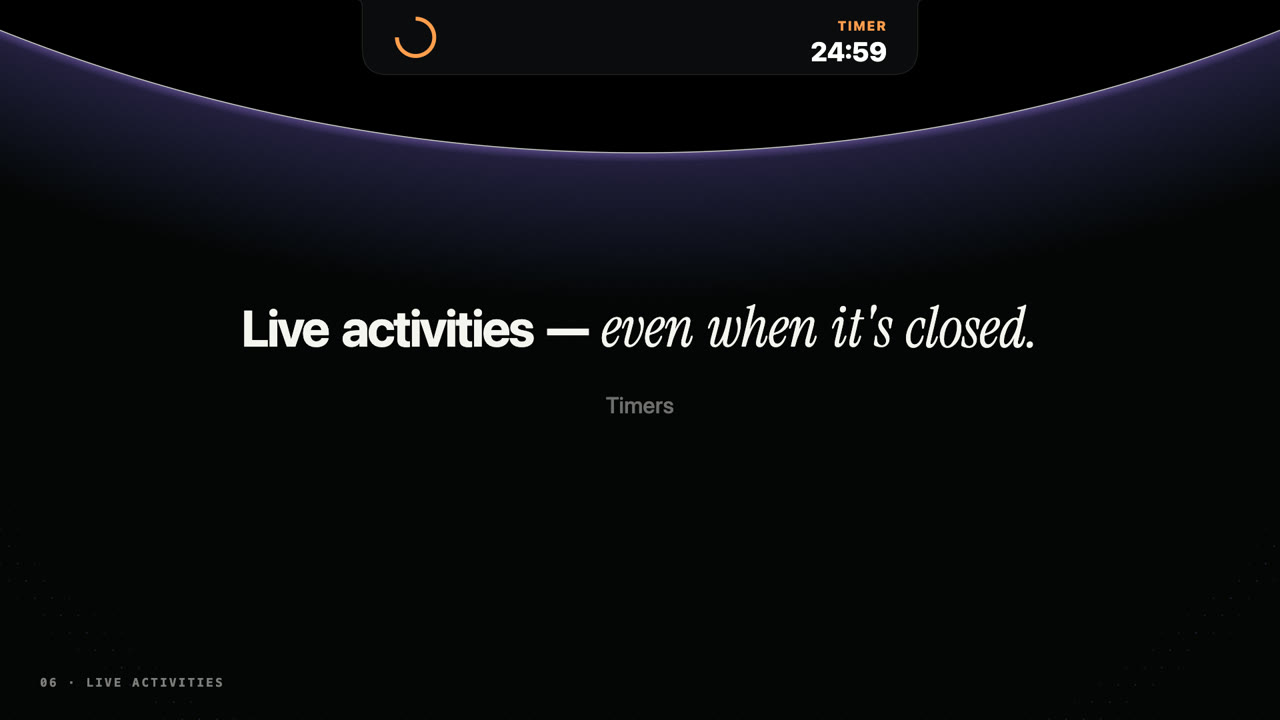
Live activities: album art and a wave for music, timer rings, volume, AirPods, charging, system
health — and a mic & camera indicator that names the app using your microphone.
Any AI. Any tool.
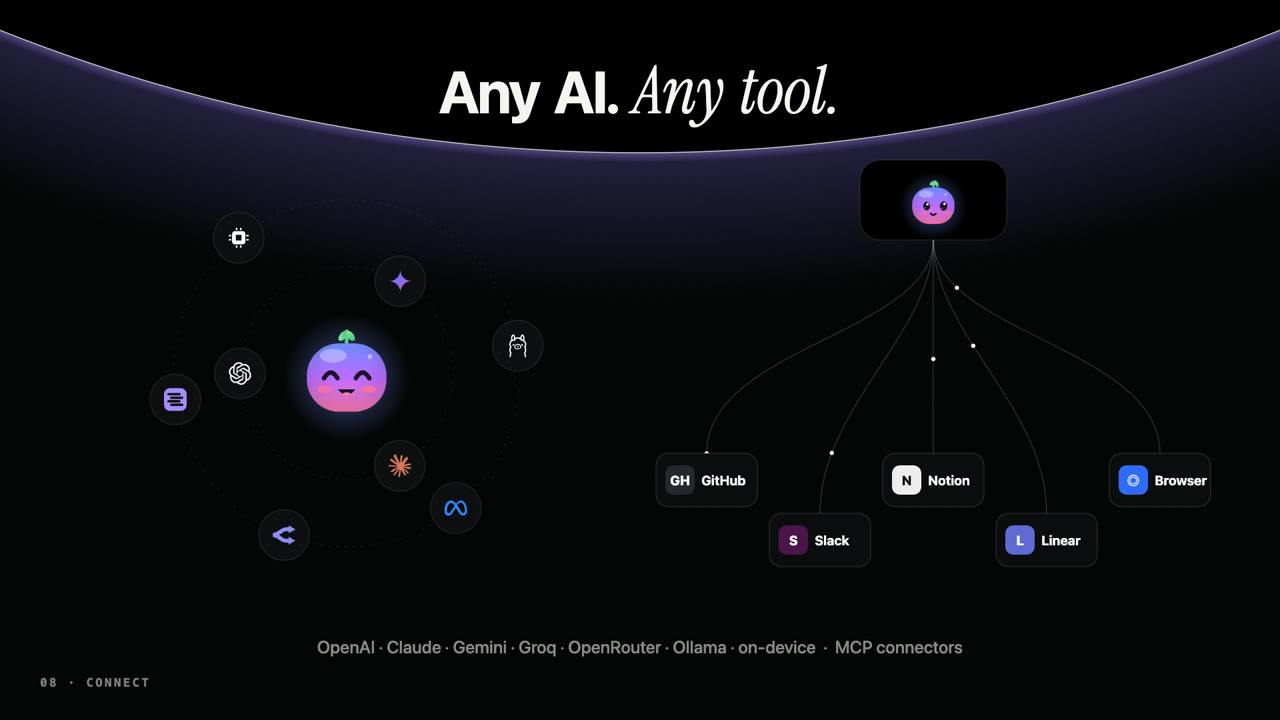
Open Settings › AI (notch menu › Settings…) and pick one:
| Option | What you need |
|---|---|
| Sign in with OpenRouter | An OpenRouter account — one login gives you Claude, GPT, Gemini and free models, with your own spending limit |
| Paste an API key | A key from OpenAI, Anthropic, Google Gemini (free tier available) or Groq — stored in your Keychain |
| Ollama / LM Studio | Either app running with a model downloaded — fully local and free |
| Apple on-device | macOS 26 with Apple Intelligence turned on — no setup, offline, with read-only tools (weather, calendar, reminders, memory) |
| Sign in with ChatGPT | Coming once OpenAI issues OpenNotch its client ID |
Web search works with no key: it uses Parallel, which is free for light use and
returns excerpts focused on what you asked. Only the search itself goes to Parallel, never your chats or
memories (privacy policy). You can paste a Parallel key for higher limits,
pick Brave Search or Tavily with a key, or switch to DuckDuckGo if you'd rather searches never go
to Parallel. All of this is in Settings › AI › Web search. If one engine fails, the next one is tried.
Connectors (MCP)
One click: Settings › AI › Connectors has Notion, Linear, Todoist, Zapier (Gmail, Sheets, Slack and
8,000 more apps), Atlassian (Jira, Confluence), Airtable, Dropbox, Granola, ClickUp, monday.com and Canva.
Click Connect, sign in on the service's own page in your browser and click Allow: OpenNotch never sees
your password, keeps the sign-in in your Keychain, and renews it by itself. Add by URL does the same
for any other web MCP server that supports sign-in.
By hand: add more tools (GitHub, a browser, local programs…) with any MCP
server: Settings › AI › Edit mcp.json, using the common mcpServers format. A server can be a program
to run ("command") or a web address ("url", https, with optional "headers" for a key). Connector tools
ask for approval unless you list them under "autoApprove".
Meet Puff — and pick a desktop buddy
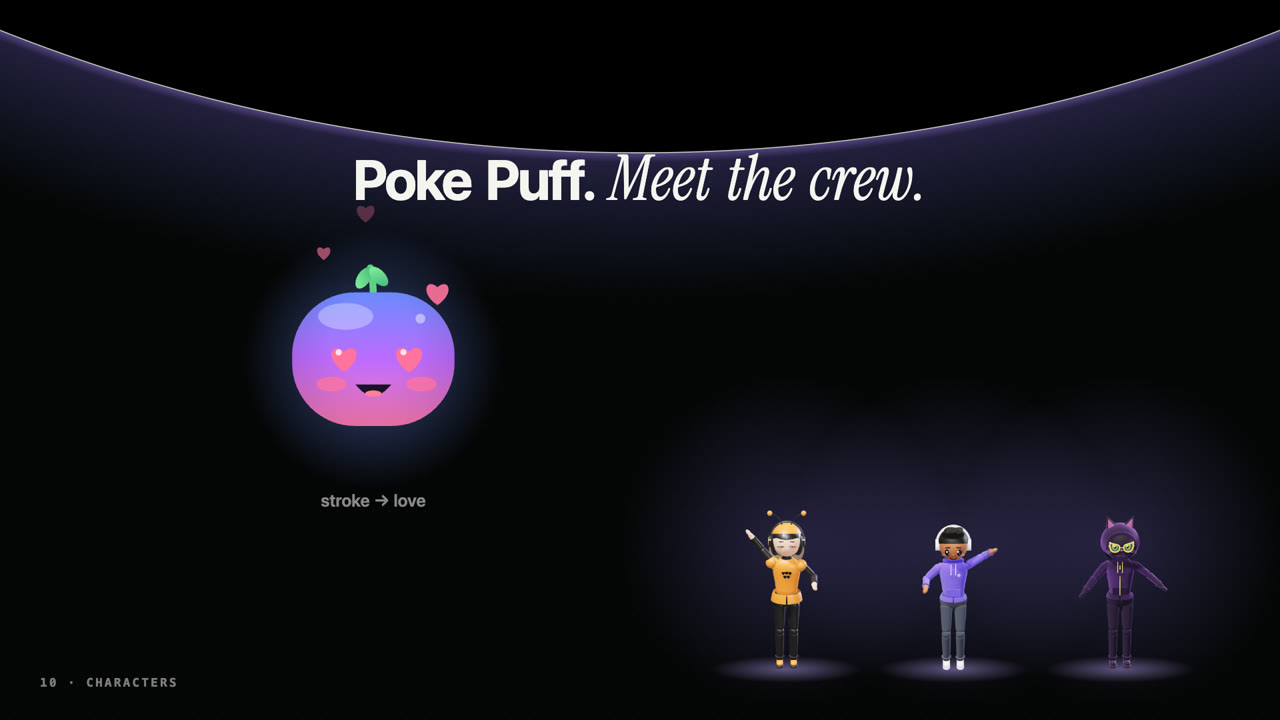
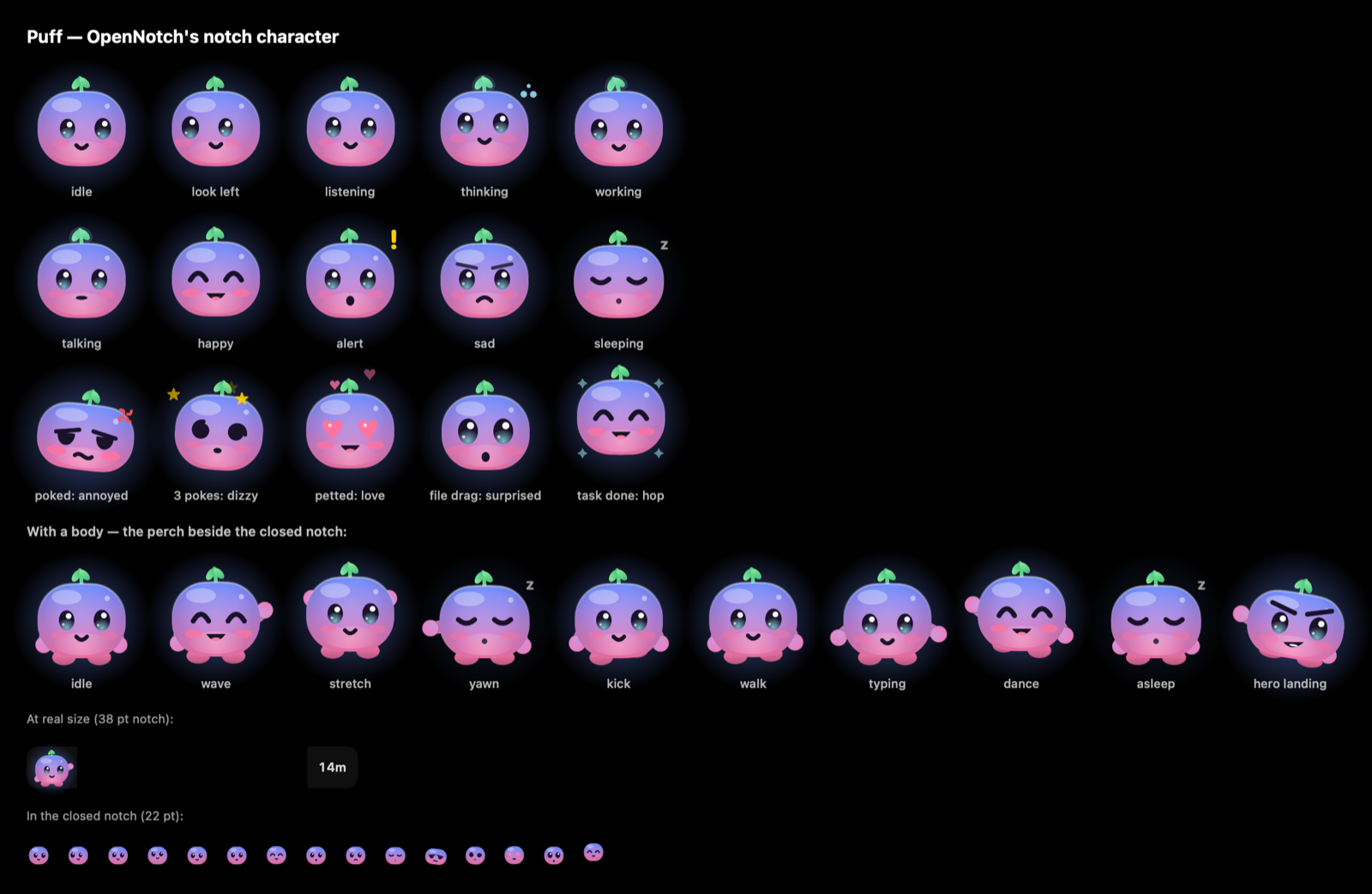
Puff is a soft jelly blob that lives in the notch. Its eyes follow your cursor; poke it and it gets
grumpy, poke it three times and it goes dizzy, stroke it and hearts float up. It hops for joy when a task
finishes and now and then peeks out to say hi. When the notch is closed, Puff sits beside it with little arms
and feet — waving, stretching, typing along with you, dancing to your music, napping when you're away, and
sometimes walking behind the camera to the other side. Ledge also checks in: copy an error and it offers to
explain it, work an hour straight and it suggests a break, come back and it catches you up (Settings › General ›
Liveliness: Calm, Friendly or Lively). Ledge, Bee or Cat jumps out of the notch on first launch
and walks on your windows, dances to your music and points at the notch when the assistant needs your OK.
More companions are on the way.
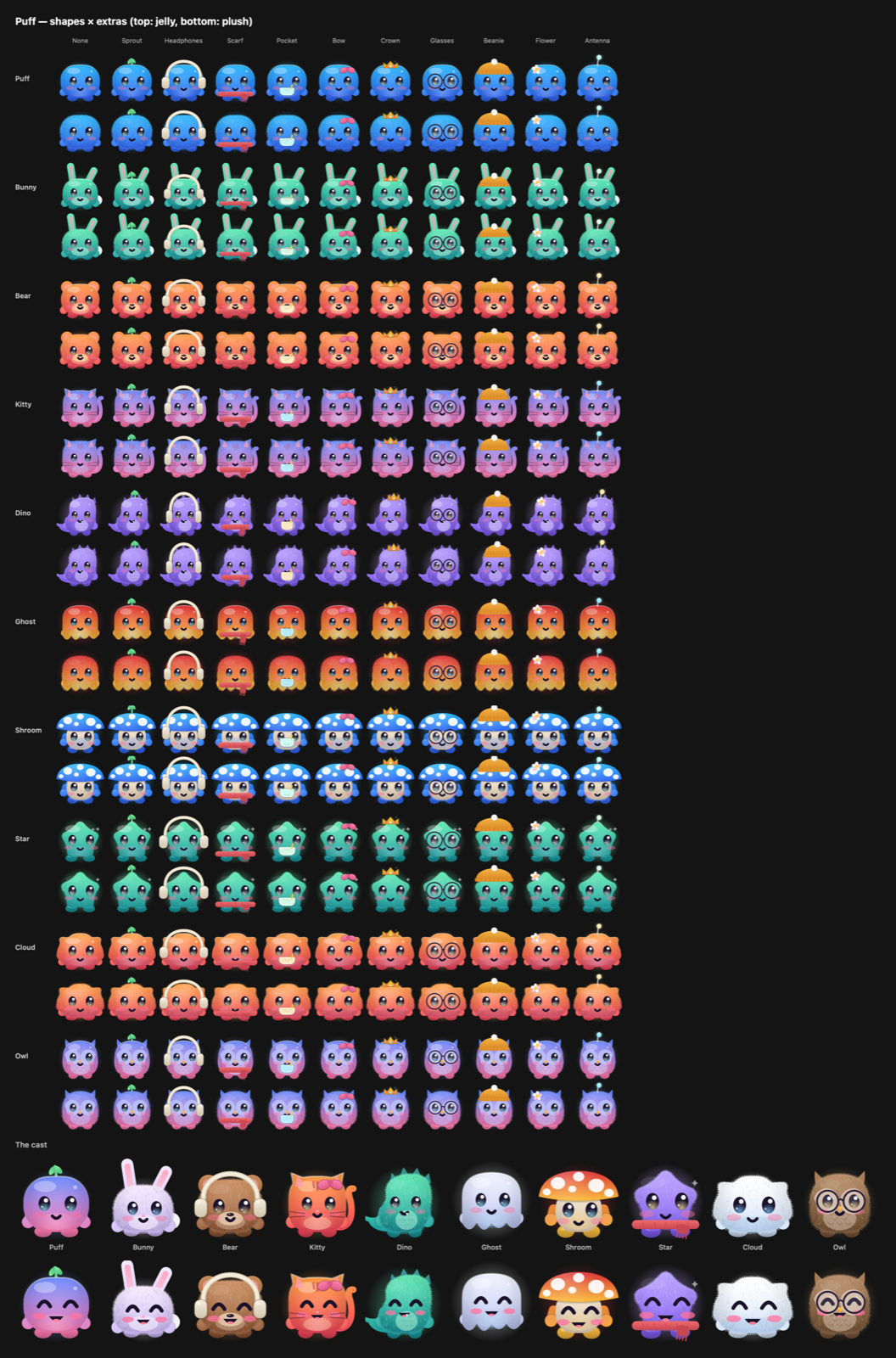
Make it yours: in the first-run setup (or Settings › General) pick Puff's body — Puff, Bunny, Bear, Kitty, Dino,
Ghost, Shroom, Star, Cloud or Owl — an extra (headphones, scarf, crown, glasses, beanie, bow, pocket, flower,
antenna, sprout), a Jelly or Plush finish and your own colours. Every new chat starts with an entrance —
a superhero slam, a meteor, a lightning strike, a jetpack, a teleport or a spin-dash — and you can pick Puff up and
toss it around.
Private by design
No account, no telemetry, no OpenNotch servers. Chats, memory and settings live in~/Library/Application Support/OpenNotch; API keys live in your Keychain. Weather uses Open-Meteo, and
web fetches happen only when you ask for them.
Install
- Download OpenNotch.dmg, open it, and drag OpenNotch to Applications.
- First launch: builds are not yet notarised by Apple, so macOS will say it can't verify the app.
Open System Settings › Privacy & Security, scroll down and click Open Anyway. You only do this once. - Connect an AI in Settings › AI.
Requires macOS 14 Sonoma or later on Apple silicon (Macs without a notch get a virtual one).
Build from source
git clone https://github.com/Laxman824/OpenNotch && cd OpenNotch
scripts/signing.sh          # once: a free local signing identity so permissions survive rebuilds
scripts/build.sh --install --open
Needs the Xcode Command Line Tools (xcode-select --install). Tests:
Checks/run.sh               # Swift logic checks + agent checks (no network)
node Desktop/test/sim.mjs   # desktop companion simulation

# One real agent turn against a provider (key from the environment, never stored):
OPENNOTCH_KEY=… App/.build/debug/OpenNotch --selftest groq        # or openai, anthropic, gemini, openrouter, ollama …

# The eval set: 24 everyday prompts, scored by the tools the model picks (nothing real is changed):
App/.build/debug/OpenNotch --eval openrouter                       # key from $OPENNOTCH_KEY or the one saved in Settings
Command line
cli/opennotch "what's on my calendar?"     # ask
git diff | cli/opennotch "review this"     # pipe context in
cli/opennotch -t 25   ·   cli/opennotch --awake 60   ·   cli/opennotch -m mirror   ·   cli/opennotch -m peek
Contributing
Issues and pull requests are welcome — see CONTRIBUTING.md.
License
MIT. Bundles three.js (MIT). Provider logos on the website are from
Simple Icons (CC0) and belong to their owners.
Reviews (0)
Sign in to leave a review.
Leave a reviewNo results found