sheal
Health Warn
- License — License: MIT
- Description — Repository has a description
- Active repo — Last push 0 days ago
- Low visibility — Only 5 GitHub stars
Code Pass
- Code scan — Scanned 12 files during light audit, no dangerous patterns found
Permissions Pass
- Permissions — No dangerous permissions requested
This is a CLI toolkit that analyzes your AI coding sessions to identify recurring mistakes, extract learnings, and write rules back to your agent's configuration. It is designed to help AI coding assistants learn from past errors and avoid repeating them in future sessions.
Security Assessment
Overall Risk: Low. The code scan evaluated 12 files and found no dangerous patterns, hardcoded secrets, or malicious code. Furthermore, the tool does not request any inherently dangerous permissions. However, because it reads session logs, agent settings, and environment configurations to function, it inherently handles local development context and potentially sensitive workspace data. It also provides features like token cost tracking that require reading local CLI data. No active network exfiltration risks were identified in the scan.
Quality Assessment
The project is actively maintained, with its most recent code push happening today. It uses the standard and highly permissive MIT license, making it safe for commercial and personal use. However, the tool currently has very low community visibility with only 5 GitHub stars. While the documentation is well-structured and clearly explains the available commands, the lack of widespread community adoption means it has not been extensively battle-tested by a large audience.
Verdict
Safe to use, though administrators should be aware it requires read access to local AI session logs and configurations to function properly.
your ai agent keeps making the same mistakes. sheal fixes that.

sheal
your ai agent keeps making the same mistakes. sheal fixes that.



Install • Quick Start • Commands • How It Works • Agents
A CLI toolkit that analyzes AI coding sessions to extract learnings, detect failure patterns, and continuously improve agent behavior.
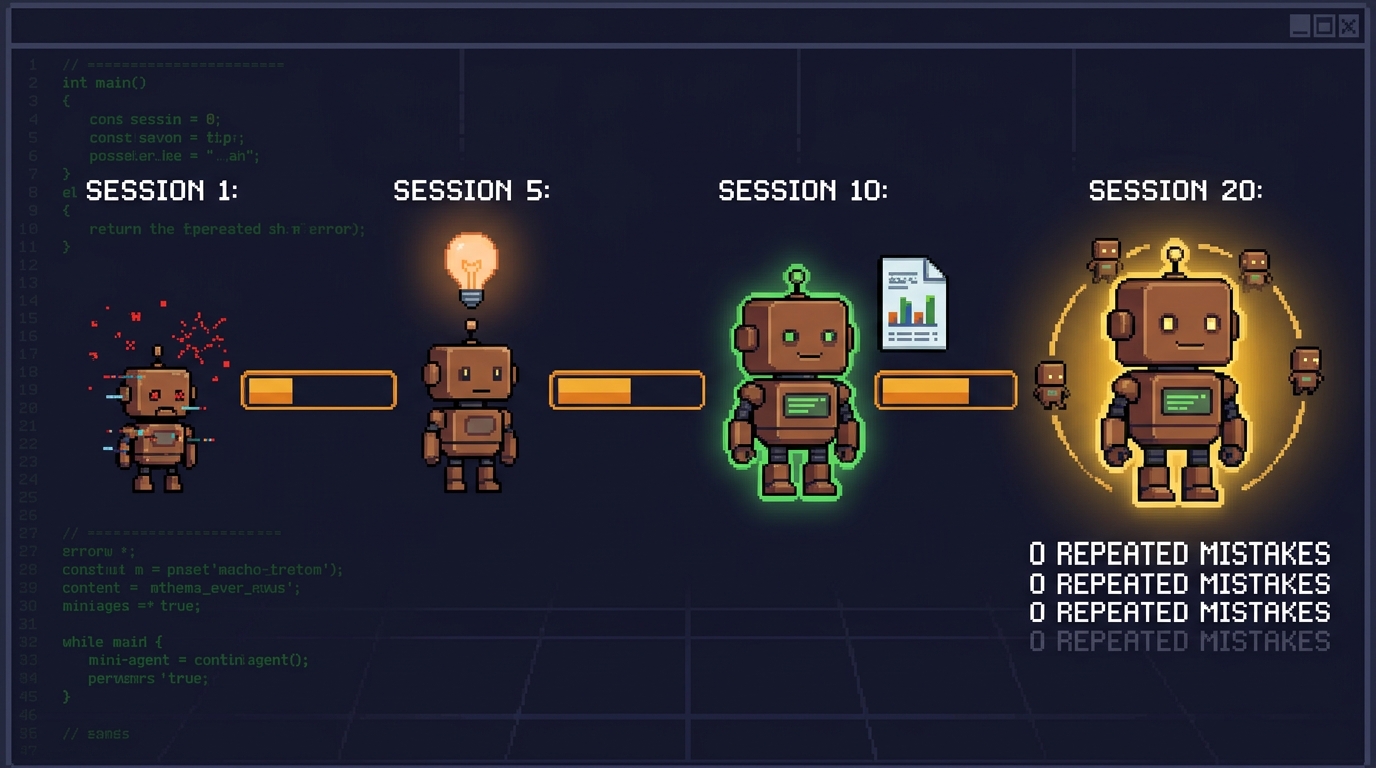
Your AI agent has amnesia. Every session it repeats the same mistakes, burns the same tokens, forgets the same rules. sheal closes the loop — it reads your sessions, extracts the patterns, writes rules back to your agent config, and makes the next session smarter. It compounds.
Install
npm install -g @liwala/sheal
Or from source:
git clone https://github.com/liwala/sheal
cd sheal
npm install
npx tsc
npm link
Quick Start
# Health check your project setup
sheal check

# Audit your Claude Code settings (permissions, hooks, MCPs)
sheal audit

# Run a retrospective on your latest session
sheal retro

# See your token spend per project
sheal cost

# Get a categorized digest of what you worked on
sheal digest --since "7 days"

# Ask a question across all your sessions
sheal ask "what went wrong with beads?" --agent claude

# Add a learning from experience
sheal learn add "Always inspect real data before writing parsers" --tags=parsing
Commands
sheal check
Pre-session health check. Detects environment issues before you start coding.
sheal check                    # Pretty output
sheal check --format json      # JSON output
sheal check --skip performance # Skip specific checkers
Checkers: git status, dependencies, tests, environment, session learnings, performance & efficiency, Claude Code settings.
The performance checker detects your AI agent (Claude Code, Cursor, Gemini, Copilot, Amp), checks for RTK token compression, and config file sizes. The claude-settings checker audits permissions, hooks, MCP servers, env vars, and plugins across all settings scopes.
sheal audit
Audit Claude Code settings across all scopes — permissions, hooks, MCP servers, environment variables, and plugins.
sheal audit                    # Pretty output
sheal audit --format json      # JSON output
sheal audit -p /path/to/project  # Different project root
Reads from all four settings files (global, global-local, project, project-local) and shows a merged view of what's configured where.
sheal retro
Session retrospective. Analyzes the most recent AI coding session for failure loops, wasted effort, and learnings.
sheal retro                        # Static analysis (latest session)
sheal retro --checkpoint <id>      # Specific session
sheal retro --enrich               # LLM-enriched deep analysis
sheal retro --enrich --agent amp   # Use a specific agent CLI
sheal retro --prompt               # Output raw prompt (pipe to any LLM)
sheal retro --format json          # JSON output
The --enrich flag invokes an agent CLI to perform deep analysis on top of the static retro. The agent extracts rules and offers to save them as learnings. Results are cached at .sheal/retros/.
sheal ask <question>
Query across your session transcripts using natural language. Uses a 3-phase pipeline:
- Extract search terms from your question (agent-assisted, with local fallback)
- Local grep across sessions using those terms (word-boundary matching)
- Agent analyzes relevant excerpts to answer your question (falls back to raw excerpts)
# Search current project's sessions
sheal ask "what went wrong with beads?"

# Use a specific agent for analysis
sheal ask "how did we handle the auth migration?" --agent codex

# Search ALL projects globally
sheal ask --global "what patterns keep causing test failures?"

# Search a different project
sheal ask -p /path/to/other-project "what happened with the auth migration?"

# Search more sessions
sheal ask "show me all test failures" -n 20
Options:
--agent <name>— Agent CLI to use:claude,gemini,codex,amp-n, --limit <count>— Max sessions to search (default: 10)--global— Search across ALL projects in~/.claude/projects/-p, --project <path>— Project root to search (default: current directory)
Previously saved results can be browsed:
sheal ask-list              # List saved results
sheal ask-list --global     # List global results
sheal ask-show "beads"      # Show a specific saved result
sheal browse
Interactive TUI to explore sessions, retrospectives, and learnings across all your projects.
sheal browse                       # Full TUI (project list)
sheal browse sessions              # Jump to sessions view
sheal browse retros                # Jump to retros view
sheal browse learnings             # Jump to learnings view
sheal browse digests               # Browse digest reports
sheal browse -p myproject          # Pre-filter by project name
sheal browse --agent codex         # Pre-filter by agent
Supports Claude Code, Codex, Amp, and Entire.io sessions.
sheal export
Export session data as JSON for scripting and piping.
sheal export                       # List sessions (current project)
sheal export --checkpoint <id>     # Export a specific checkpoint
sheal export --global              # Export all projects and sessions
sheal init
Bootstrap sheal awareness into your project's agent configuration files (CLAUDE.md, .cursorrules, etc.).
sheal init                         # Add sheal instructions to agent configs
sheal init --dry-run               # Preview changes without writing
sheal graph
Cross-session knowledge graph showing file hotspots, agent activity, and patterns.
sheal graph                        # Pretty-print graph summary
sheal graph --file src/index.ts    # History for a specific file
sheal graph --agent claude         # Details for a specific agent
sheal graph --json                 # JSON output
sheal digest
Categorized digest of all your prompts across agents. See what you actually worked on.
sheal digest                           # Last 7 days, pretty output
sheal digest --since "1 month"         # Custom window
sheal digest --enrich                  # LLM-powered categorization (Haiku)
sheal digest --compare                 # Diff against previous digest
sheal digest -p myproject              # Filter to one project
sheal digest -f markdown -o report.md  # Export as markdown
The --enrich flag uses Haiku to smart-categorize prompts that rule-based matching missed. The --compare flag finds the previous digest for the same scope and shows what changed.
sheal cost
Token cost dashboard — see exactly where your Claude budget goes.
sheal cost                             # Last 7 days
sheal cost --since "1 month"           # Custom window
sheal cost -p myproject                # Single project
sheal cost --plan "Max 5x"            # Compare against your plan
sheal cost --format json               # JSON output for scripting
Shows per-model breakdown, per-project spend, project-by-model matrix, cost type split (input/output/cache-read/cache-write), and subscription savings vs Pro / Max 5x / Max 20x plans.
sheal weekly
Full weekly report — runs digest + cost together, optionally with deep Claude analysis and Slack delivery.
sheal weekly                           # Digest + cost for last 7 days
sheal weekly --agent                   # Add deep LLM analysis
sheal weekly --slack                   # Post summary to Slack
sheal weekly --plan "Max 20x"          # Include plan savings
Reports are saved to ~/.sheal/weekly-digests/ for historical tracking.
sheal learn
Manage ADR-style session learnings. Learnings are stored as individual markdown files with frontmatter metadata.
# Add a learning (saves to project by default)
sheal learn add "Always check bd --help before guessing flags" \
  --tags=beads,cli --category=workflow --severity=high
sheal learn add --global "..."  # Save directly to global store

# List learnings
sheal learn list              # Project learnings (.sheal/learnings/)
sheal learn list --global     # Global learnings (~/.sheal/learnings/)
sheal learn list --tag=beads  # Filter by tag

# Review & curate learnings interactively
sheal learn review              # Project learnings (drafts shown first)
sheal learn review --global     # Global learnings

# Promote curated project learnings to global
sheal learn promote

# Pull global learnings into project (by tag match)
sheal learn sync
Git-based backup & sync
Back up ~/.sheal/ to a git repo for cross-machine sync and team sharing. By default backs up learnings, digests, and config. Optionally includes retros from all projects.
# Connect to a remote repo (initializes git in ~/.sheal/)
sheal backup remote add [email protected]:you/sheal-data.git

# Push (learnings + digests + config)
sheal backup push

# Also gather retros from all projects
sheal backup push --include retros

# Pull from remote
sheal backup pull

# Show or disconnect
sheal backup remote show
sheal backup remote remove

# learn push/pull are aliases for backup push/pull
sheal learn push
sheal learn pull
Human-in-the-loop curation
Learnings are never auto-accepted. Every learning goes through human review before it can influence agent behavior:
sheal retro --enrich— the LLM extracts candidate rules from the session- Saved as drafts — rules land in
.sheal/learnings/withstatus: draft - Interactive review — you accept, edit, or reject each draft on the spot
- Active learnings — accepted rules become
status: activeand show up insheal learn list sheal learn promote— lift project learnings to your global store (~/.sheal/learnings/)sheal learn sync— pull relevant global learnings back into other projectssheal rules— inject active learnings into agent config files (AGENTS.md, .cursorrules)
You can also add learnings manually (sheal learn add "...") or review remaining drafts later (sheal learn review).
The full lifecycle:
retro → project drafts → review → active → promote → global ─┐
             ▲               │                       digests ──┤
             │          human accepts                 config  ──┼─ backup push → remote
        learn add       edits, or rejects             retros  ──┘  backup pull ← remote
                                                      global ──── sync → project
Learning format (~/.sheal/learnings/LEARN-001-inspect-real-data.md):
---
id: LEARN-001
title: Inspect real data before writing parsers
date: 2026-03-13
tags: [parsing, external-data, general]
category: missing-context
severity: high
status: active
---

Before writing parsers for external data formats, always inspect 2-3 real
samples first. Don't rely solely on documentation or type definitions.
Categories: missing-context, failure-loop, wasted-effort, environment, workflow
Session Sources
sheal supports two session data sources with automatic fallback:
- Native Claude Code — reads JSONL transcripts directly from
~/.claude/projects/(default) - Entire.io — reads from the
entire/checkpoints/v1git branch (rich metadata, AI summaries, attribution)
Supported Agents
For --enrich and ask commands, sheal can invoke these agent CLIs:
| Agent | CLI Command | Invocation |
|---|---|---|
| Claude Code | claude |
claude -p --output-format text (stdin) |
| Codex | codex |
codex exec - (stdin) |
| Amp | amp |
amp -x (stdin) |
| Gemini CLI | gemini |
stdin pipe |
Use --agent claude, --agent codex, --agent amp, or --agent gemini to pick one. Auto-detection tries the session's own agent first, then falls back to any available CLI.
How It Works
Session Capture (Entire.io / Claude Code native)
    |  session transcripts, diffs, metadata
    v
Self-Healing Engine (sheal)
    |  failure patterns, learnings, rules
    v
Agent Configuration (CLAUDE.md, .cursorrules, etc.)
    |  improved behavior
    v
Next Session (fewer mistakes)
Development
npx tsc          # Build
npx vitest run   # Test
sheal check      # Dogfood
License
MIT
Reviews (0)
Sign in to leave a review.
Leave a reviewNo results found