MelonS-Agents
Health Warn
- License — License: MIT
- Description — Repository has a description
- Active repo — Last push 0 days ago
- Low visibility — Only 5 GitHub stars
Code Pass
- Code scan — Scanned 12 files during light audit, no dangerous patterns found
Permissions Pass
- Permissions — No dangerous permissions requested
No AI report is available for this listing yet.
macOS multi-agent scaffold. Current mission: faceless short-form video (topic → 9:16 60s, $0 runtime, EN+KO). General-purpose: orchestrator + 4 subagents + 3-layer reactive audit + Tier-1/Tier-2 routing. More mission types planned.
MelonS-Agents
한국어 | English · Live site →
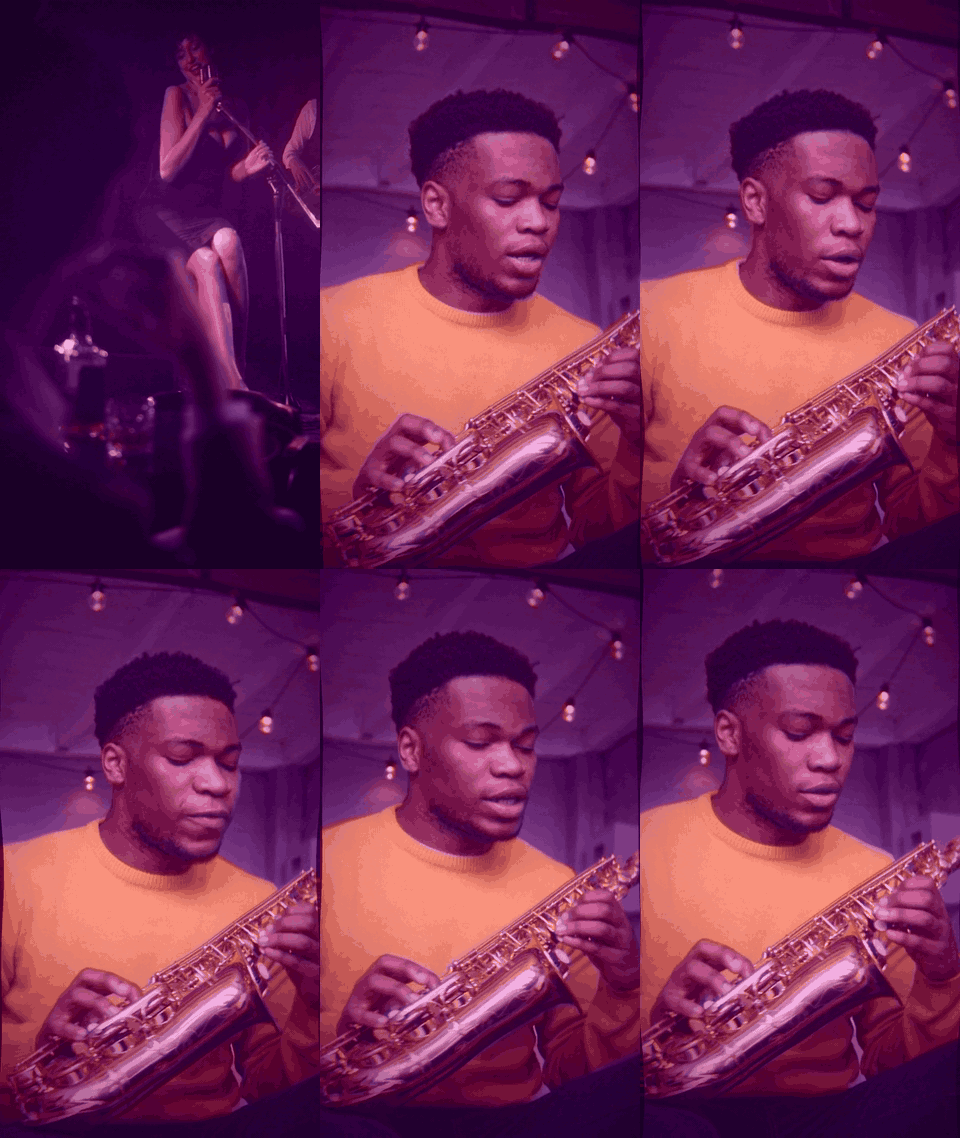
Music file → 60-second 9:16 vertical short. (Or topic prompt → narrated short, the earlier mission type.)
Local for the mechanical, Claude for the creative. Phrase-aware ffmpeg shaders sync vintage visuals to music structure. Three trigger layers — commit, anomaly, schedule — so the system corrects its own drift. English + Korean dual track from day 1.
60+ mission outputs · 5 mission types · 0 runtime API tokens · 3 audit layers · MIT







Overview
A macOS-based multi-agent system driven by Claude Code
(the Anthropic CLI). The current focus — and what you see in
the demo above — is themusic-videomission: a music track in, a
9:16 vertical short out, with phrase-aware ffmpeg shaders syncing
vintage visuals to the music's structure (operator pilot pick,
2026-05-17 — seedocs/pilots/decision-log.md).
The earlierfaceless-shortmission (narration-driven shorts) and
the v1 missions (highlight/summarize/shorts-batch) remain
in the tree as alternate paths.Two ways to use this repo:
- Agent-driven (the primary path) — install Claude Code on a Mac,
point it at the cloned repo, and the orchestrator + 4 mission
subagents (defined under.claude/agents/) take
over. The operator types a mission; Claude Code runs the planner →
resourcer → editor → QA pipeline, edits files, commits, and pushes.
Cost: a Claude Code subscription (Anthropic Max recommended);
external paid APIs gated by the money firewall (see contract below).- Script-only (fallback) — the bash mission scripts and the
shader recipes run standalone via./scripts/bootstrap.sh+ the
reproduction commands further down. No Claude Code, no
orchestration, no auto-commit — but the music-video output is
identical. Cost: $0 beyond the optional free Pexels API key.The system itself is not shorts-specific. The scaffold —
orchestrator + 4 mission subagents + file-based handoff + 3-layer
reactive audit + Tier-1/Tier-2 cost routing — is general-purpose by
design; short-form video is the v1 mission type chosen to exercise
the architecture against a concrete, visually verifiable deliverable.
Additional mission types (research workflows, multi-stage data
pipelines, automation jobs the operator picks up next) will land on
the same scaffold as the project matures.Built on a single premise: automate the production pipeline, then
let the system evolve its own logic. Every commit in this
repository is a step in that evolution — the history is not a record
of outputs, but of how the agent system itself grows over time.
Engineering decisions, one page.
docs/engineering-case-studies.md
— six production incidents and the minimum mechanism each one
produced (Tier-1 routing, semaphore-bounded batch, content-quality
feedback loop, three-layer reactive audit, shader-effects-in-ffmpeg
/ knowing-where-the-wall-is, and onboarding-friction-kills-first-touch
/ zero-account demo path). Each entry follows
problem → constraint → decision → artifact.
Design notes
A few choices that distinguish this from a typical agent demo:
- Outcome layer vs. work queue, kept separate.
docs/goal.md
holds the active goal as a concrete deliverable;docs/roadmap.md
holds the day-level work queue. An empty queue does not mean the
goal is achieved — only the goal's "Done when" criteria do. The split
exists because an earlier 24-hour stretch produced 11 infra commits
with the queue reading 0 open items and 0 actual outputs. - Operator contract as canonical, committed source of truth.
docs/operator-contract.md— 12 hard
rules + conventions. The agent's local memory is a fast-access cache
that links back to this file; if the two disagree, the file wins and
the memory entry is corrected. - Cost firewall between orchestration and execution. Anthropic API
tokens are spent only during orchestration (Tier 1). Mission execution
(transcribe → select → render → QA) runs entirely on local tools —whisper.cpp+ollama+ffmpeg— and costs zero tokens. Seedocs/cost-model.md. - Out-of-band auditor with an active alert surface. The
auditorsubagent runs daily at 03:00
vialaunchd, walks the whole repo read-only, and writes to a stable
channel:docs/audit/CURRENT-ALERT.mdexists iff the
latest verdict is non-CLEAN; the next interactive session is
contractually obligated to read it before picking up the goal. - File-based subagent handoff. Subagents do not share conversation
history. They communicate through committed files (plan.md/MANIFEST.md/qa-report.md). Each subagent's context is bounded
by its prompt + the manifest it reads — predictable token cost,
predictable failure modes.
Sample output
60+ mission outputs have been produced to date across five mission
types. Most recent focus (2026-05-17) is the new music-video
mission — music-as-primary-audio shorts (no narration, no captions,
beat-aligned cuts, onset-aligned glitch micro-edits) — chosen via
operator pilot pick documented indocs/pilots/decision-log.md.
A four-effect post-processing shader layer landed the same evening
(pond surface, breathing zoom, halation, phrase-aware combo;
cartoon deferred — see case study 5),
and scripts/daily-music-video.sh wraps the mission + shader as a
queue runner suitable for cron / launchd daily-upload cadence.
The faceless-short mission (narration-driven shorts) remains the
showcase below; the v1 pipeline outputs (single-clip highlight +
shorts-batch) remain as the baseline reference further down.
Music-video pilots (post-pivot, 2026-05-17)
The music-video mission produces a 60-second 9:16 short where the
music IS the message: operator-supplied music track is the sole
audio; cuts land on aubiotrack-derived phrase boundaries; per-clip
playback speed is varied by mood (slow contemplative scenes at
0.55×, ambient at 0.70×, active at 0.80×, natural at 1.00×); micro
"scratch" glitches (0.2 s reverse + 0.2 s forward jump-cut) fire on
detected drum onsets but only on clips classified as static-camera
so the frame doesn't shake during the glitch; subtle film grain +
soft vignette + Gaussian zoom-pulse on each glitch onset add a
vintage lo-fi treatment.
Five prototype renders (v1 → v5) iterated through this design with
operator feedback at each step:
- v1: even 7.5 s cuts (no beat-sync)
- v2: cuts moved to phrase boundaries from
aubiotrack - v3: + per-clip variable playback speed (calm scenes slowed)
- v4: + glitch micro-edits at every slow clip's mid-point
- v5: + glitch placement restricted to
aubioonsetdrum hits on
static-camera clips only (no glitch on handheld pans)
v5 was operator-validated and promoted intoagents/missions/music-video/run.sh.
The v6 vintage-lofi visual treatment (grain + vignette + zoom-pulse)
landed on top of v5 in the same mission, tunable per render viaMUSIC_VIDEO_FILM_GRAIN_INTENSITY, MUSIC_VIDEO_VIGNETTE_ANGLE, andMUSIC_VIDEO_ZOOM_PULSE_AMP env vars. Output mp4s remain gitignored
(records/ directory); music files themselves are local-only by policy
(assets/music/README.md) — a "free to use
in your video" license is not the same as a "free to redistribute
the file" license, so the repo never carries audio assets.
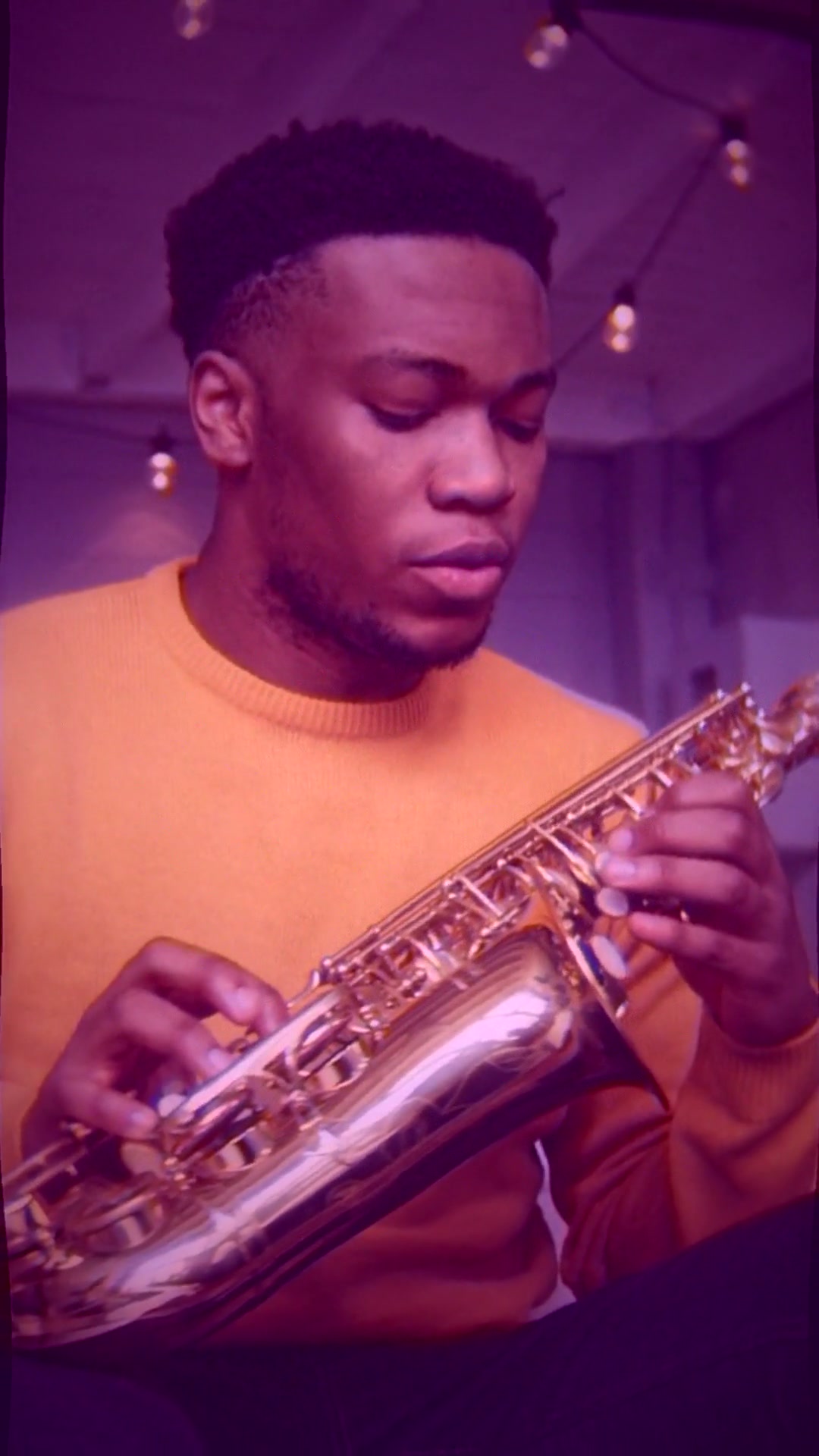
Mid-climax frame (t = 30 s) from the first uploaded short — operator-approved deliverable that closed the 2026-05-17 goal, currently live on the operator's YouTube Shorts channel:
Reproduction:
./agents/missions/music-video/run.sh <id> <path/to/music.mp3>
Post-processing shaders (2026-05-17 evening)
Operator asked for shader-style effects on top of the v6 vintage-lofi
treatment. Three effects landed via pure ffmpeg filter graphs (no GLSL,
no external tool) and one was deliberately deferred:
pond— Animated water-surface displacement on the whole frame.
Two procedural displacement maps (X and Y) are generated bygeqas
3-component sin wave fields at 540×960 (4× faster than full res),
scaled up via bicubic to 1080×1920, then fed intodisplace. Max
±13 px (~1.2 % of frame width) — visible across the entire image but
not jarring. Reads as "the whole screen IS a pond surface, gently
sway".breathing— Continuous gentle scale wave, 5 s period, +0–5 %.
Always upscale so the post-cropframe never under-runs (the
first attempt withsin(t)range −1 to +1 crashed libx264 mid-frame
when scale went below 1080; fixed by reformulating as(0.5 + 0.5*sin)so the multiplier is always ≥ 1.0).halation— Warm light bloom around bright pixels. Split the
source, brighten-threshold + 22 px gblur the copy, screen-blend back
onto the original at 0.30 opacity. Looks like 80s-film light leak
on amber / neon regions — operator confirmed "확실히 티남" (clearly
visible) on first pass.combo—pond+halationwith phrase-aware strength
envelopes. Both effects' intensity is a function ofT(time):
off / quiet during intro (0–15 s), ramping up across the build
(15–22.5 s), full during the climax (22.5–45 s), tapering through
the wind-down (45–52.5 s), settling for the outro (52.5–60 s).
The phrase boundaries match the Velvet Turntable reference track's
95.8 BPM × 12-beat phrase = 7.5 s cadence; for other tracks the
envelope is parameterised in the script.
What was not attempted: cel-shading / cartoon rendering. ffmpeg
posterising luma and chroma independently (lutyuv withround(val/N)*N quantisation) breaks hue — operator's reaction was
"완전 그냥 초록색만 나옴" (everything turned green). Real cel-shading
requires either GLSL shaders (mpv + libplacebo, ~200–500 LOC),
EbSynth (paint one keyframe, propagate by motion), or AI stylisation
(Stable Diffusion + AnimateDiff, ComfyUI, RunwayML / Kaiber). None
of those fit inside the ffmpeg pipeline, so the cartoon route is
parked as a separate R&D branch rather than half-implemented in
production.
Reproduction:
# Apply a single effect
./scripts/music-video-shaders.sh pond     <input.mp4> <output.mp4>
./scripts/music-video-shaders.sh halation <input.mp4> <output.mp4>

# Phrase-aware combo (the validated end product)
./scripts/music-video-shaders.sh combo    <input.mp4> <output.mp4>
Faceless pilots (English + Korean A/B)
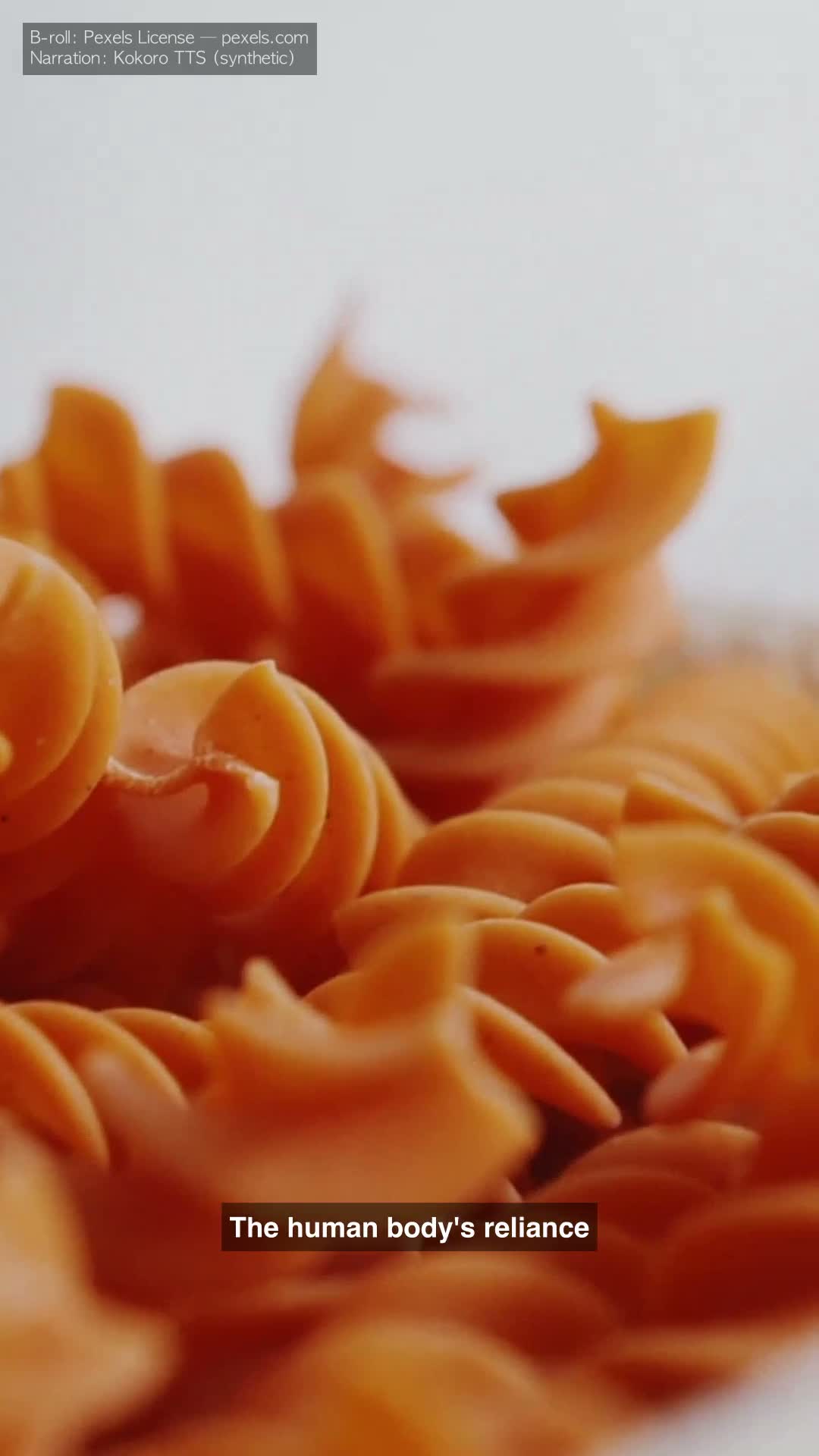
The faceless-short mission produces a complete 60-second short from a topic prompt alone — no input video. Pipeline: ollama drafts the narration script → Kokoro-ONNX (am_michael, or macOS Yuna for Korean) synthesizes voice → whisper.cpp transcribes for timing → script-aware caption correction maps proper nouns back to the original script → SRT cues split to single-line at natural punctuation breaks (stops 2-line opaque-box overlap on mobile) → ollama extracts one Pexels search term per temporal narration window (8 windows) → Pexels Videos API fetches one B-roll clip per window → ffmpeg trims each clip to its window's duration, crops to 9:16 screen-fill, burns libass captions and an attribution overlay.
Each topic is rendered in two language variants so the operator can A/B voice + caption rendering side by side:
| Hittites (history × Bible) | Hydrogen (science) | |
|---|---|---|
| EN | 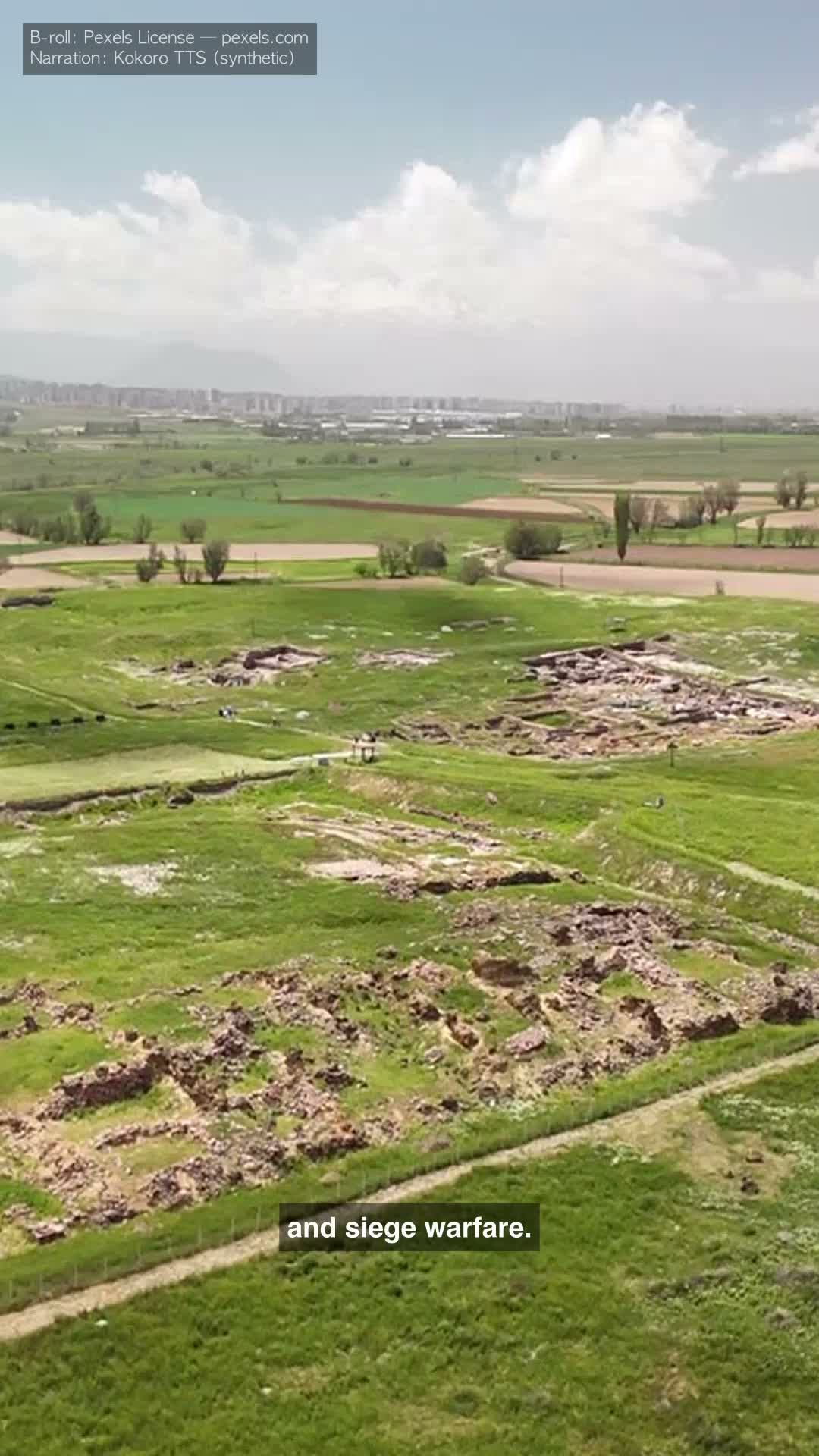 |
 |
| KO | 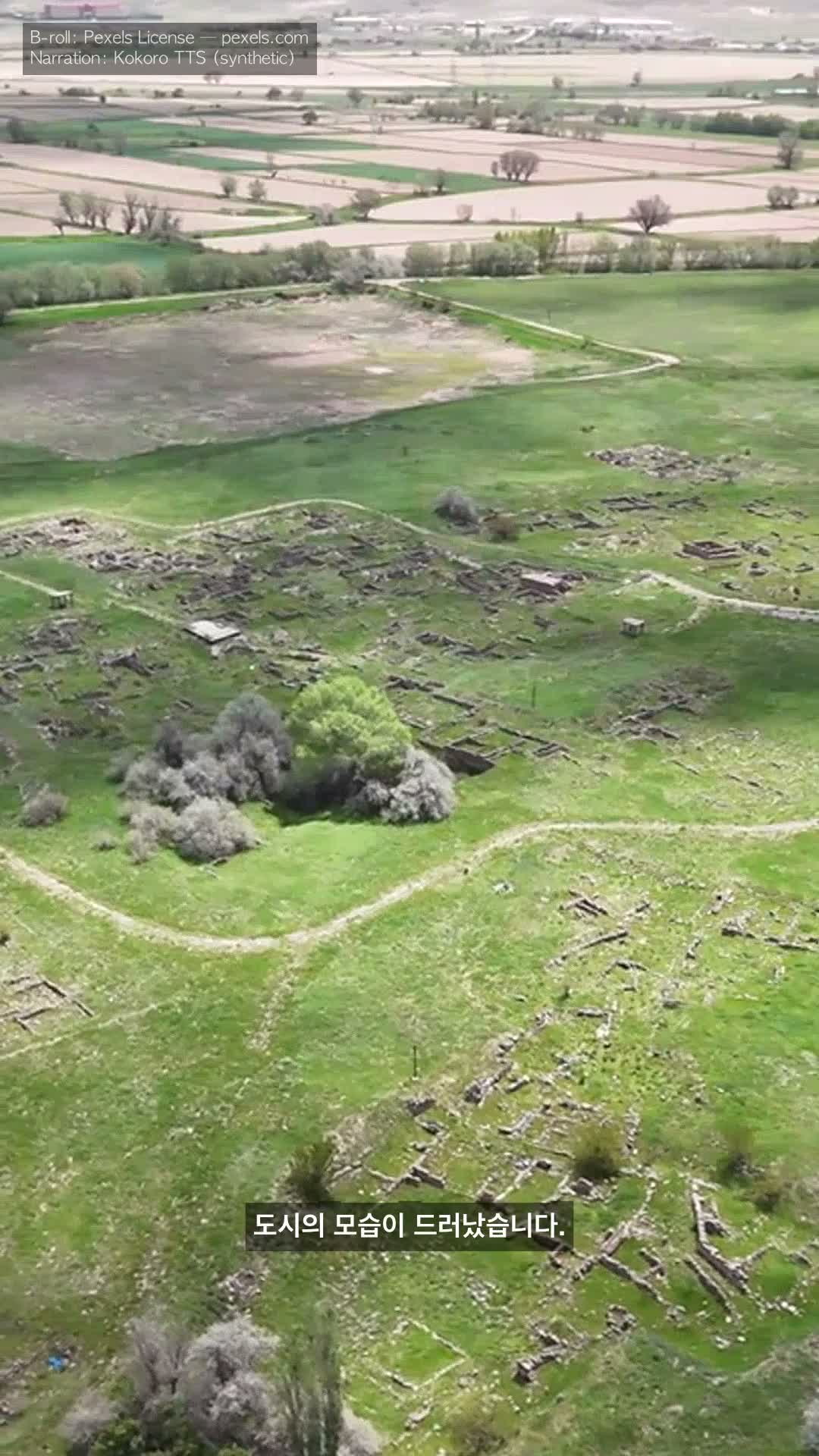 |
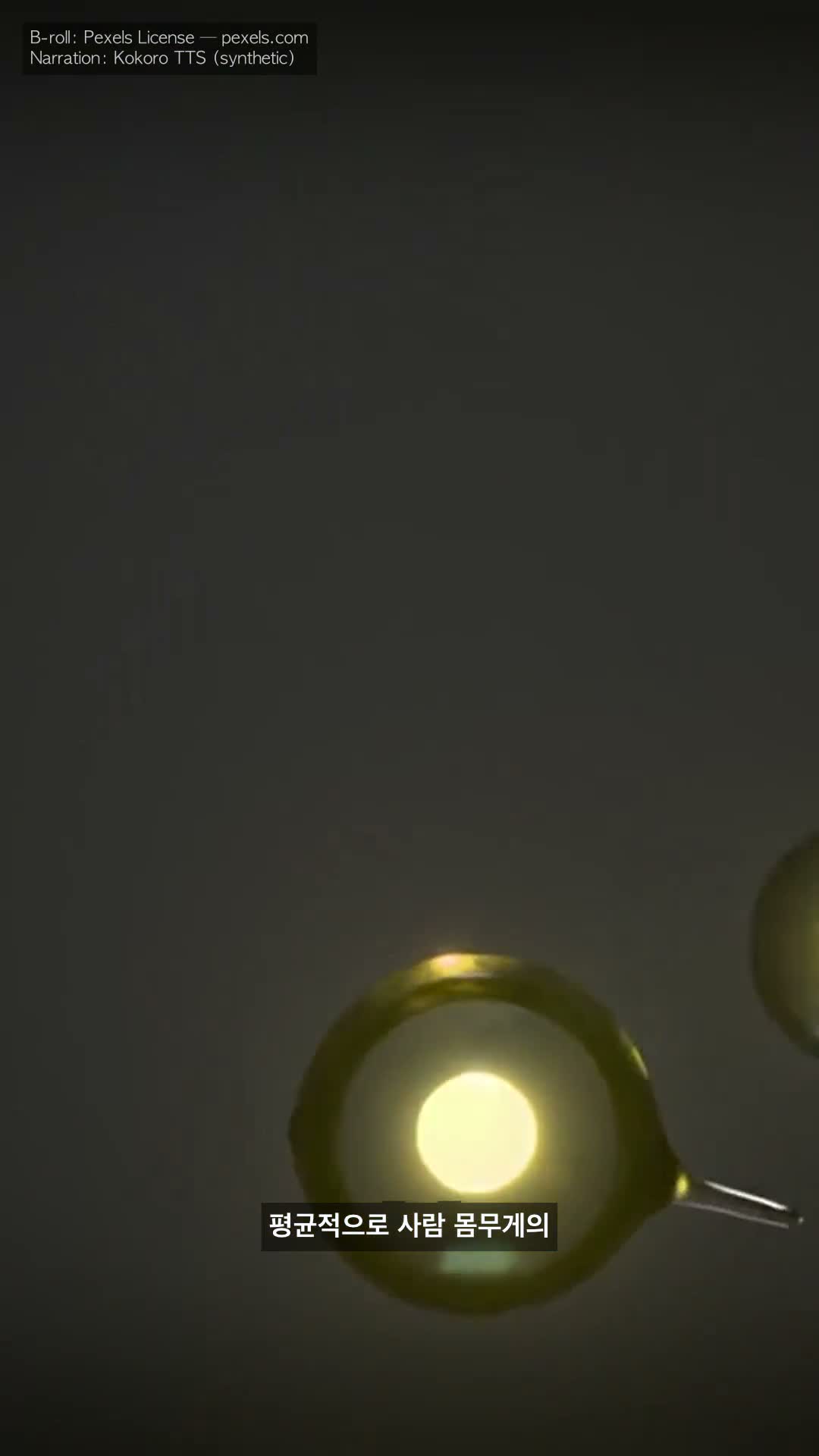 |
Each language variant picks its OWN B-roll by extracting Pexels search terms from its own captions per window — so the EN and KO shorts share script structure but not always identical clips (the v3/v4 design picked per-window keywords for narration-beat alignment). Pass FACELESS_REUSE_BROLL=<en_mission_dir> to force the KO render to reuse the EN stitched B-roll when an apples-to-apples "same visuals, swapped audio" test is wanted.
A/B production notes, per-platform upload metadata, and the next-10 topic queue all live under docs/pilots/. Per-pilot cost: $0 (Pexels free tier, all other stages local).
v1 pipeline (single-clip highlight / shorts-batch)
The original v1 missions — highlight, summarize, shorts-batch — take a real source URL (e.g., a Creative-Commons video) and produce 9:16 outputs with burned-in source attribution + captions. These predate faceless-short; they're still in active use when you want a clip from a video rather than a clip of a topic.
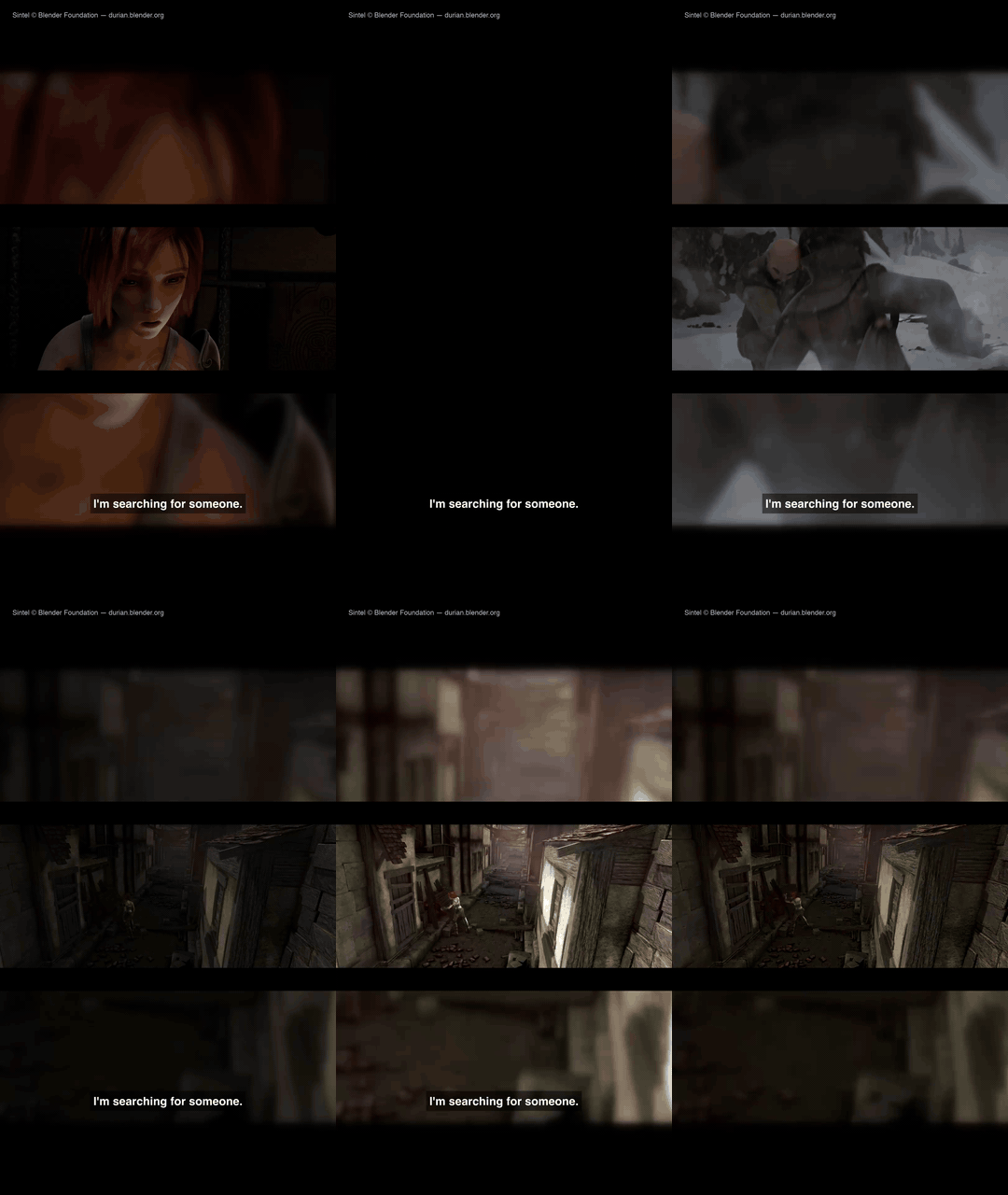
Six-second slice of highlight-015213/outputs/short.mp4 — Sintel trailer (CC-BY-3.0, © Blender Foundation), 39 s 9:16 with watermark + captions. Full mp4 lives under records/ (gitignored); this GIF is a size-optimized excerpt (360 px wide, 12 fps, ≈ 2.8 MB) generated by ffmpeg with palette dithering, kept in docs/demo/ as durable evidence of the v1 pipeline.
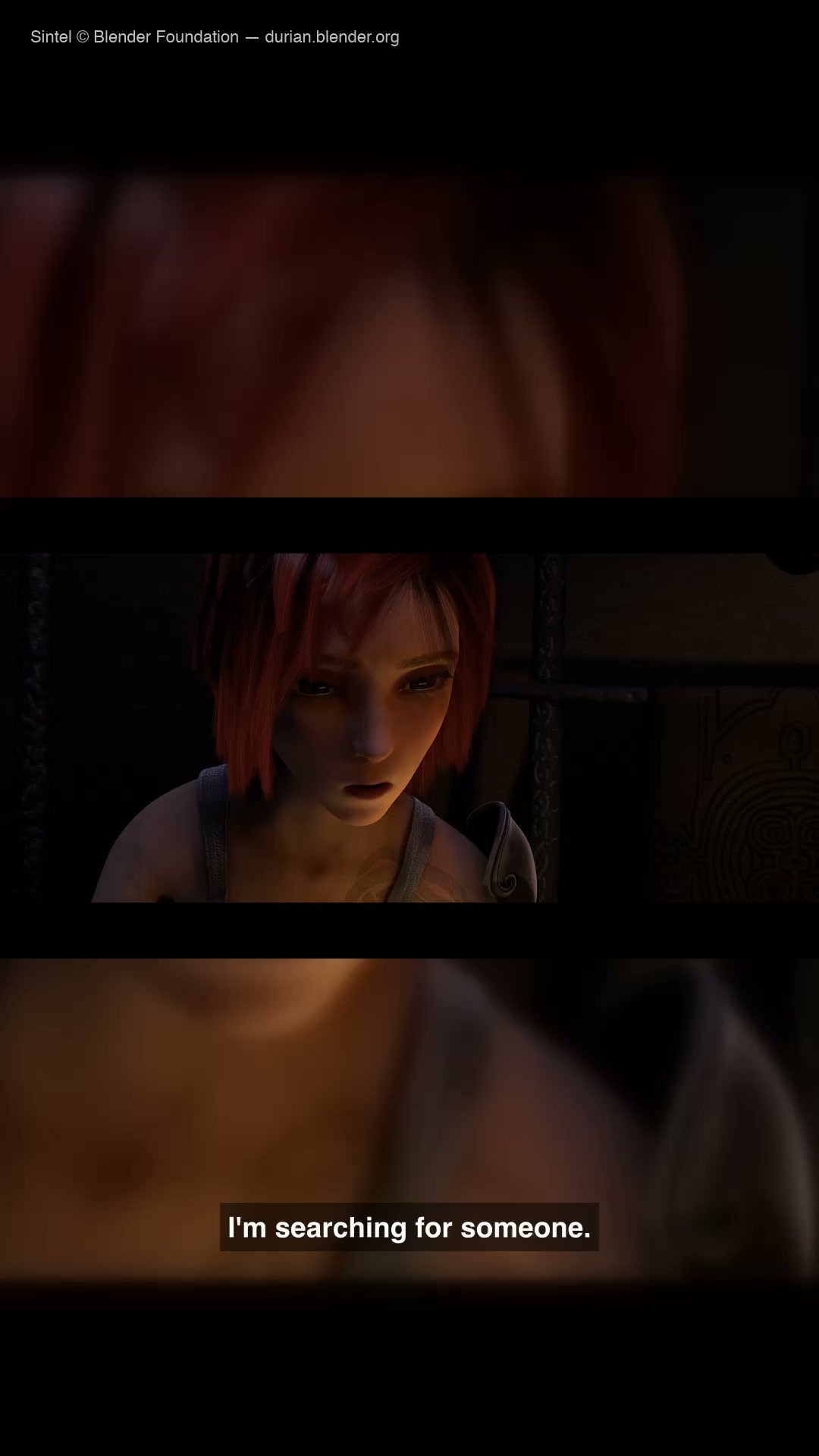
| Single highlight | Shorts batch |
|---|---|
 |
 |
highlight-015213 · 39 s · PASS attempt 1 |
shorts-batch-024840 / short-01 · 44 s · PASS attempt 1 |
Both sourced from the Sintel trailer (CC-BY-3.0, © Blender Foundation — durian.blender.org). Top-left source-attribution overlay, 9:16 letterbox-blur background, libass-burned caption inside the bottom safe-zone box.
Faceless-pilot scorecard (historical — narration era)
Below is the scorecard for the earlier faceless-short mission
(narration-driven shorts). It is preserved as the structured progress
signal from the v4 → v5 → v6 iterations that preceded the music-video
pivot. The music-video mission has no equivalent scorecard yet —
operator approval + platform watch-time data (post first upload) will
replace per-dimension scoring for the current focus.
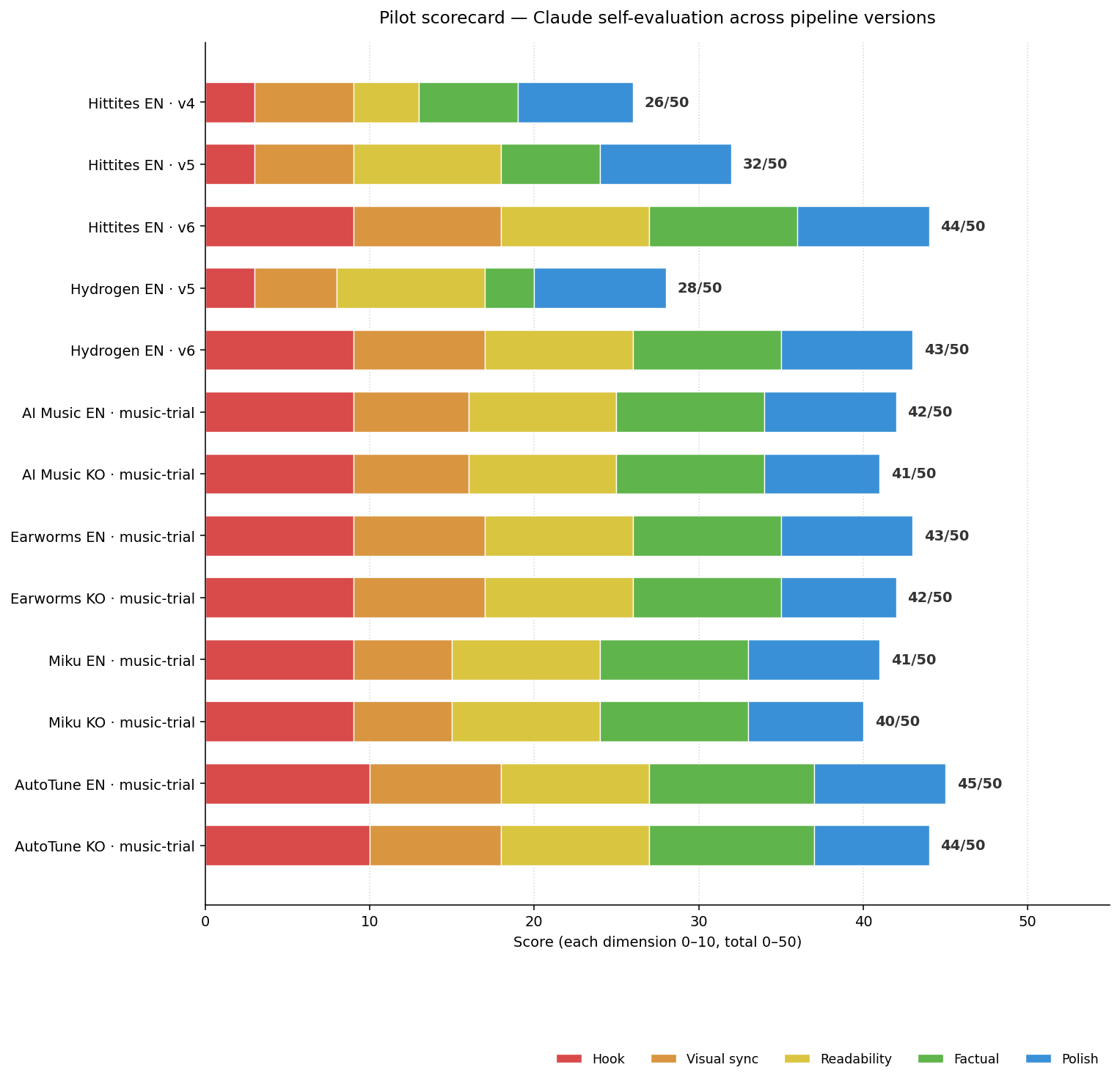
The lift from v5 → v6 (single-line caption was already in place at
v5; v6 swapped the script-generation stage from local llama3.2:3b
to Claude Sonnet) is +12 points on Hittites EN and +15 on Hydrogen
EN. Most of the v5→v6 delta is Hook and Factual coherence
— exactly the dimensions the operator surfaced as broken in v5
("초반 5초에 시선 끌만한게 없음", "10%인지 60%인지 헷갈리네").
Honest disclosure: scores were assigned by Claude, not a viewer
panel. Full per-version breakdown + reasoning indocs/pilots/scorecard.md.
For analysts / reviewers
Doing a read-only analysis of this repository? Start atdocs/for-analysts.md — a single-file entry
point optimized for first-pass diagnosis. Pairs withdocs/cost-model.md (where Anthropic vs. local
cost lives) and docs/architecture.md (full
data-flow map).
Architecture
              ┌───────────────────┐
              │   Orchestrator    │   model: opus
              └─────────┬─────────┘
                        │ delegates the mission, in order
                        ▼
              ┌───────────────────┐
              │      Planner      │   model: sonnet
              └─────────┬─────────┘
                        ▼
              ┌───────────────────┐
              │     Resourcer     │   model: sonnet
              └─────────┬─────────┘
                        ▼
              ┌───────────────────┐
              │       Editor      │   model: sonnet
              └─────────┬─────────┘
                        ▼
              ┌───────────────────┐
              │         QA        │   model: sonnet
              └───────────────────┘

              ┌───────────────────┐
              │      Auditor      │   model: sonnet  (out-of-band)
              └───────────────────┘   read-only; scheduled daily
                                       at 03:00 via launchd
| Agent | Responsibility | Output |
|---|---|---|
| 🤖 Orchestrator (opus) | Mission decomposition, delegation, final synthesis | task list · summary.md |
| 🧠 Planner (sonnet) | Strategy, work breakdown, acceptance criteria | plan.md |
| 📦 Resourcer (sonnet) | Asset fetching, external tool execution (ffmpeg / yt-dlp / whisper) | resources/MANIFEST.md |
| 🎞️ Editor (sonnet) | Output rendering, deliverable assembly | outputs/CHANGELOG.md |
| ✅ QA (sonnet) | Validation against plan criteria, regression detection | qa-report.md |
| 🔍 Auditor (sonnet) | Repository-wide drift / contract / cost / security audit (out-of-band, daily 03:00) | docs/audit/<date>-<focus>.md + docs/audit/CURRENT-ALERT.md when non-CLEAN |
Subagent definitions: .claude/agents/ · Mission templates and shared shell libs: agents/
Code / Data separation
| Layer | Path | Tracked |
|---|---|---|
| Code (logic) | .claude/agents/, agents/, config/, scripts/ |
✓ |
| Skills (agentskills.io-spec packages) | skills/<name>/ |
✓ |
| Data (outputs) | records/missions/<date>/<id>/ |
✗ (gitignored) |
| Secrets | .env |
✗ (gitignored) |
The repository contains only the agent system itself. Mission outputs —
videos, transcripts, generated assets — stay local under records/.
What appears on GitHub is the system's own evolution, not its products.
Platform support
| Surface | macOS 14+ | Linux |
|---|---|---|
| Mission execution (transcribe → select → render → QA) | ✓ | ✓ (ffmpeg / whisper.cpp / ollama all available) |
Hardware-accelerated render (h264_videotoolbox) |
✓ Apple Silicon | n/a — falls back to libx264 via -allow_sw 1 |
bootstrap.sh synthetic fixtures (macOS say-based TTS) |
✓ | skipped — point at real CC fixtures via scripts/fetch-fixtures.sh |
launchd schedulers (nightly auto-run, daily audit) |
✓ | replace with systemd timers or cron — see scripts/com.melons.agents.*.plist for the schedule to mirror |
macOS is the primary, end-to-end tested platform. Linux works for
mission execution but the schedulers and synthetic-fixture generation
need OS-specific adaptation. Cross-platform CI is not yet in place;
the clone-and-go flow is verified on Darwin only.
All tool paths and endpoints are env-managed — agents/lib/env.sh
resolves any blank *_BIN var via command -v, so a working PATH
install is enough. Override in .env only when needed.
Autonomy modes
Defined in config/policies.yaml.
| Mode | Flag | Behavior |
|---|---|---|
| ⚙️ Interactive (default) | AUTONOMY_MODE=false |
Pauses for user confirmation on logic changes, destructive ops, and external publishes. |
| 🌙 Autonomous | AUTONOMY_MODE=true |
Runs unattended within AUTONOMY_BUDGET_USD. Logic files (agents/, .claude/agents/) are immutable. |
Mission flow
- User states a mission.
orchestratoropensrecords/missions/<date>/<id>/+ a task list.planner→plan.mdwith acceptance criteria.resourcer→ assets +resources/MANIFEST.md.editor→ deliverables +outputs/CHANGELOG.md.qa→qa-report.mdwith PASS / FAIL per criterion.- On PASS,
orchestratorwritessummary.md.
Toolchain
Agent layer: Claude Code
(Anthropic CLI — drives the multi-agent orchestration; subagent
definitions in .claude/agents/, per-project
configuration in CLAUDE.md +.claude/settings.json).
Mission tools: ffmpeg (libass-enabled — brew install ffmpeg-full
on macOS, apt install ffmpeg on Linux) · aubio (beat / onset
detection — brew install aubio) · jq · yt-dlp · whisper.cpp
(small, multilingual) · ollama (llama3.2:3b) · Kokoro-ONNX
(TTS, Apache 2.0 — faceless-short narration) · macOS say (Korean +
fallback voice) · Pexels Videos API (free tier — B-roll for
music-video + faceless-short).
Prerequisites
- macOS 14+ (primary, fully tested) or Linux (best-effort —
see Platform support above) - Claude Code — only
required for the agent-driven path (orchestrator + subagents
taking over the whole pipeline). The script-only path runs without
it. See the Claude Code pricing + usage guidance section below for plan selection. - Homebrew on macOS, or
apt/pacman/ equivalent on Linux - Apple Silicon recommended —
h264_videotoolboxis used for
hardware-accelerated render;-allow_sw 1is set so the pipeline
falls back to libx264 on Intel / Linux - ~3 GB free disk — whisper.cpp
smallmodel (~150 MB), Pexels
B-roll downloads (~50 MB / mission, auto-cleaned), output mp4s - Tools:
ffmpeg(built with libass),ffprobe,whisper.cpp,ollama,yt-dlp,aubio(for the music-video mission's beat /
onset detection),jq.scripts/bootstrap.shchecks all of them
and prints an exactbrew install …/apt install …command for
anything missing, so a missing tool isn't a silent failure. - API key: free Pexels API key
(200 req/hour — plenty for personal use) for B-roll fetch.bootstrap.shwarns ifPEXELS_API_KEYisn't set in.env.
Claude Code pricing + usage guidance
Claude Code is what drives the multi-agent layer (orchestrator → planner
→ resourcer → editor → QA + the daily auditor). The mission scripts
themselves run standalone and burn zero Anthropic tokens; only the
agent-driven path consumes tokens.
Current Anthropic plans (always verify on the
official pricing page — these
change):
| Plan | Monthly | Typical fit for this repo |
|---|---|---|
| Free | $0 | Read-only browsing / quick experiments. Hits limits fast once a real mission runs. |
| Pro | $20 | One or two music-video missions per day. Single-operator, casual cadence. |
| Max — entry tier | $100 | A few missions per day plus overnight batches. Daily upload cadence becomes realistic. |
| Max — top tier | $200 | Production cadence (10+ missions / day, multi-track overnight batches, ongoing R&D in parallel). This is what this repo's operator runs. |
Rough token usage per mission (orchestration only — the local
ffmpeg / ollama / whisper.cpp stages are free):
| Mission | Anthropic tokens (estimate) | Notes |
|---|---|---|
music-video (one render + shader) |
~50–150 k | Orchestrator opus + 4 sonnet subagents. Token spend dominated by planner + editor (filter-graph reasoning). |
faceless-short (one render) |
~100–250 k | Higher because the planner also drafts the narration script. v6 with Sonnet for script generation runs closer to the top of the range. |
audit-run.sh contract (out-of-band) |
~20–50 k | One audit pass over the repo. |
Daily mission-queue.sh drain |
~50–150 k × N entries | Same as a single music-video mission per queue entry. |
These are rough. Real numbers vary with caption complexity, retry
counts (the QA feedback loop re-runs a failing stage), and how much
operator dialogue happens in the orchestrator turn. The Tier-1 / Tier-2
firewall — what stays local vs what goes to Anthropic — is documented
in docs/cost-model.md.
Cost-stability tips:
- Operator-facing chat with Claude Code can dominate token spend more
than the missions themselves; keep planning conversations focused. - The
autonomousmode (AUTONOMY_MODE=true) enforcesAUTONOMY_BUDGET_USD— useful for overnight batches. - Token receipts land in your Anthropic console; check after the first
few mission runs to calibrate your plan choice.
Quick start — music-video flow (the showcase)
Latest stable tag:
v0.2.0— Skills framework + zero-account
demo path. Cloning the tag is the recommended first-touch
entry point;mainmay contain in-flight work past the tag.
Zero-account demo (~2 minutes from clone to playable mp4)
No Pexels signup, no Suno round-trip, no .env edit. Uses
bundled CC-BY Blender Foundation clips + Kevin MacLeod tracks
(both CC-BY 4.0 / 3.0 with attribution baked intooutputs/SOURCES.txt). Designed for "see what it produces
before committing accounts".
# 1) clone (any host with Mac/Linux + ffmpeg + ollama + aubio works)
git clone --branch v0.2.0 --depth 1 https://github.com/MelonS/MelonS-Agents.git
cd MelonS-Agents

# 2) bootstrap (verifies tools, prints brew/apt hints for anything missing;
#    detects no-key/no-music state and recommends the demo path automatically)
./scripts/bootstrap.sh

# 3) zero-account demo — first run fetches the demo cache (~30s) then
#    renders (~100s).  Output at:
#    records/missions/<YYYY-MM-DD>/music-video-demo-<HHMMSS>/outputs/short.mp4
MUSIC_VIDEO_DEMO_MODE=1 ./agents/missions/music-video/run.sh demo
Reproducibility gate: scripts/test-demo-mode.sh exercises the
whole path against a freshly-cloned tree (asserts short.mp4
≥ 1 MB, ≥ 50 s, SOURCES.txt with ≥ 2 CC-BY credit lines). PASS
log persists atdocs/onboarding/demo-mode-log.txt.
See docs/onboarding/demo-mode.md
for source customization, attribution requirements, and the
graduation path to the full Pexels + operator-music flow below.
Full path — operator music + per-keyword Pexels B-roll
For the unlocked mood-keyword catalog and operator-supplied tracks:
# 1) edit .env — set PEXELS_API_KEY (free; sign up at https://www.pexels.com/api/)

# 2) generate one or more music tracks on Suno (free tier, suno.com)
#    with prompts like "late night jazz lofi, soft piano, 60 BPM,
#    [Instrumental]" — download the mp3 and drop into assets/music/
#    (gitignored — license trail noted in assets/music/SOURCES.md)

# 3) run the music-video mission against your music file
./agents/missions/music-video/run.sh upload1 "assets/music/<your_track>.mp3"

# 4) (optional, but the whole point) apply the phrase-aware shader combo
#    — pond surface ripple + warm halation with envelope tied to a 95.8
#    BPM phrase cadence (tunable inside the script for other tempos):
./scripts/music-video-shaders.sh combo \
    records/missions/$(date +%Y-%m-%d)/music-video-upload1-*/outputs/short.mp4 \
    outputs/publish/my-first-short.mp4
The mission writes its base output torecords/missions/<date>/music-video-<id>-<HHMMSS>/outputs/short.mp4
(gitignored — products stay on your machine; only the agent system
itself is on GitHub). The shader step copies a final mp4 intooutputs/publish/, where you can pick it up for upload.
For a hands-off daily cadence, queue tracks inrecords/queue/music-video-pending.txt and runscripts/daily-music-video.sh --all (or schedule it via launchd / cron).
v1 flow — single-clip highlight (kept as a baseline)
./agents/missions/highlight/run.sh https://download.blender.org/durian/trailer/sintel_trailer-1080p.mp4
Multi-source batch and the autonomous queue drainer also exist for the
v1 flow:
./scripts/batch-mission.sh -f sources.txt
echo 'https://example.com/long.mp4' >> records/queue/pending.txt
./scripts/mission-queue.sh
./scripts/install-scheduler.sh install      # nightly launchd
Operator contract
This repository is fully agent-operated. The day-to-day rules:
- The agent does all the work — installs, edits, configs, commits, pushes, scheduling. The user does not run commands in the terminal.
- The user steps in only when a hard guardrail blocks the agent (e.g., self-modifying its own permissions, force-pushing to
main) — and even then only as a single click of approval, never a multi-step recipe. - Outcome vs work queue, kept separate.
docs/goal.mdholds the active goal as a concrete deliverable;docs/roadmap.mdholds the day-level work queue (its Now section is the source of truth for "what to work on next"). - Money firewall: paid APIs, SaaS subscriptions, and cloud-resource creation require explicit user confirmation. Local resources (Ollama, FFmpeg, whisper.cpp, brew) stay fully autonomous.
Full contract: see CLAUDE.md and the config/policies.yaml autonomy rules.
License
MIT. See LICENSE.
Reviews (0)
Sign in to leave a review.
Leave a reviewNo results found