pipeshub-ai
Health Pass
- License — License: Apache-2.0
- Description — Repository has a description
- Active repo — Last push 0 days ago
- Community trust — 3737 GitHub stars
Code Pass
- Code scan — Scanned 12 files during light audit, no dangerous patterns found
Permissions Pass
- Permissions — No dangerous permissions requested
No AI report is available for this listing yet.
PipesHub is an open-source platform for securely connecting enterprise knowledge to AI. Give AI agents trusted context and your team permission-aware search with verified citations across your business systems.

The Open-Source Workplace AI Platform
Website · Docs · Discord · Roadmap















Translations: Français · Deutsch · 简体中文 · 日本語 · Русский · עברית · 한국어 · Español · Português · Türkçe · Tiếng Việt · Italiano
PipesHub - Explainable & Extensible
PipesHub is an open-source platform for connecting AI applications to the knowledge stored across your company's business systems.
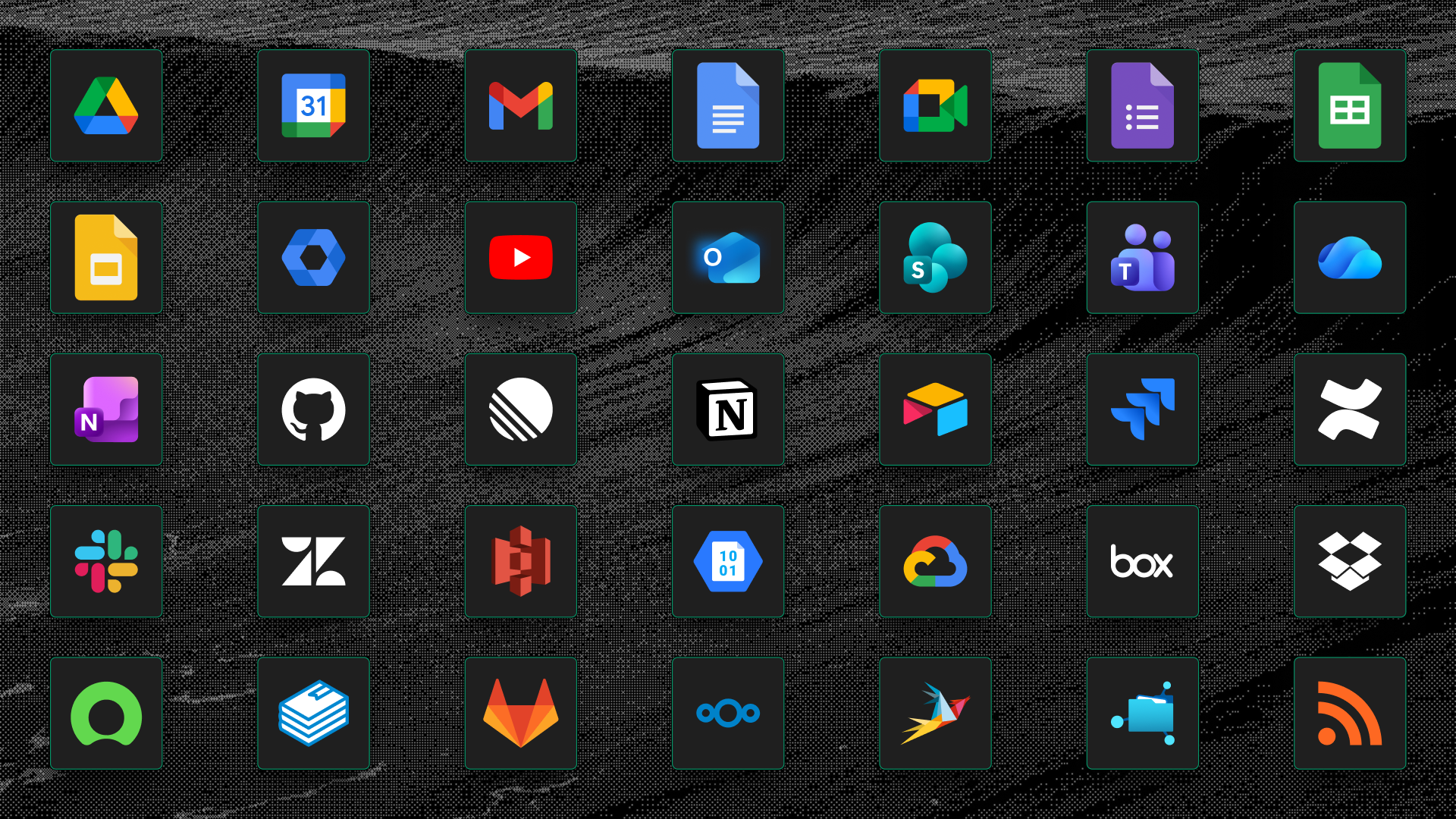
Connect Slack, Google Drive, GitHub, Microsoft 365, Notion and 50+ other systems. Search across them and get answers with citations, filtered by what each person is allowed to see — or give that same context to your own agents, workflows and MCP clients.
[!TIP]
Deploy with a single command:curl -fsSL https://get.pipeshub.com/install | bash
PipesHub in Action
Connectors
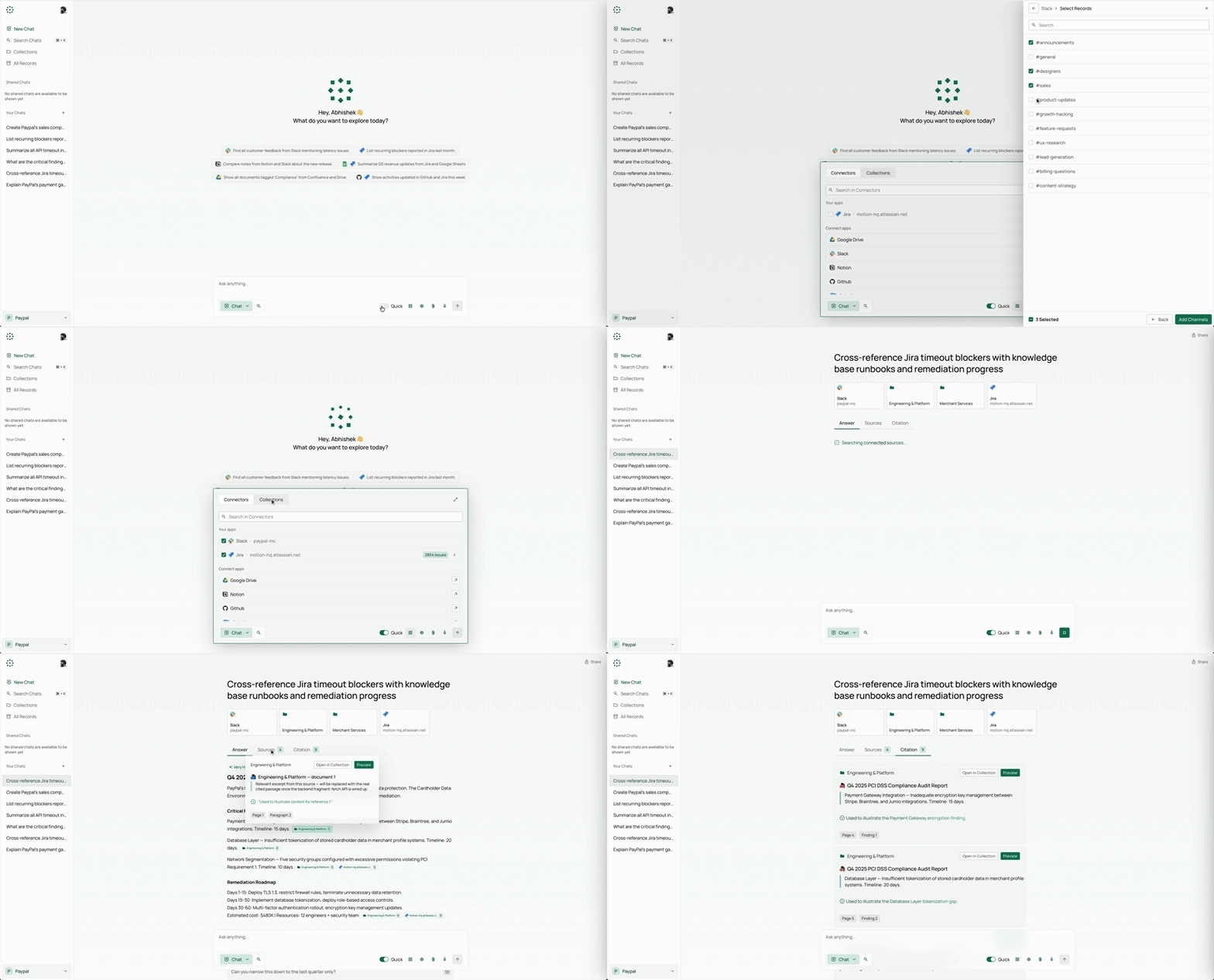
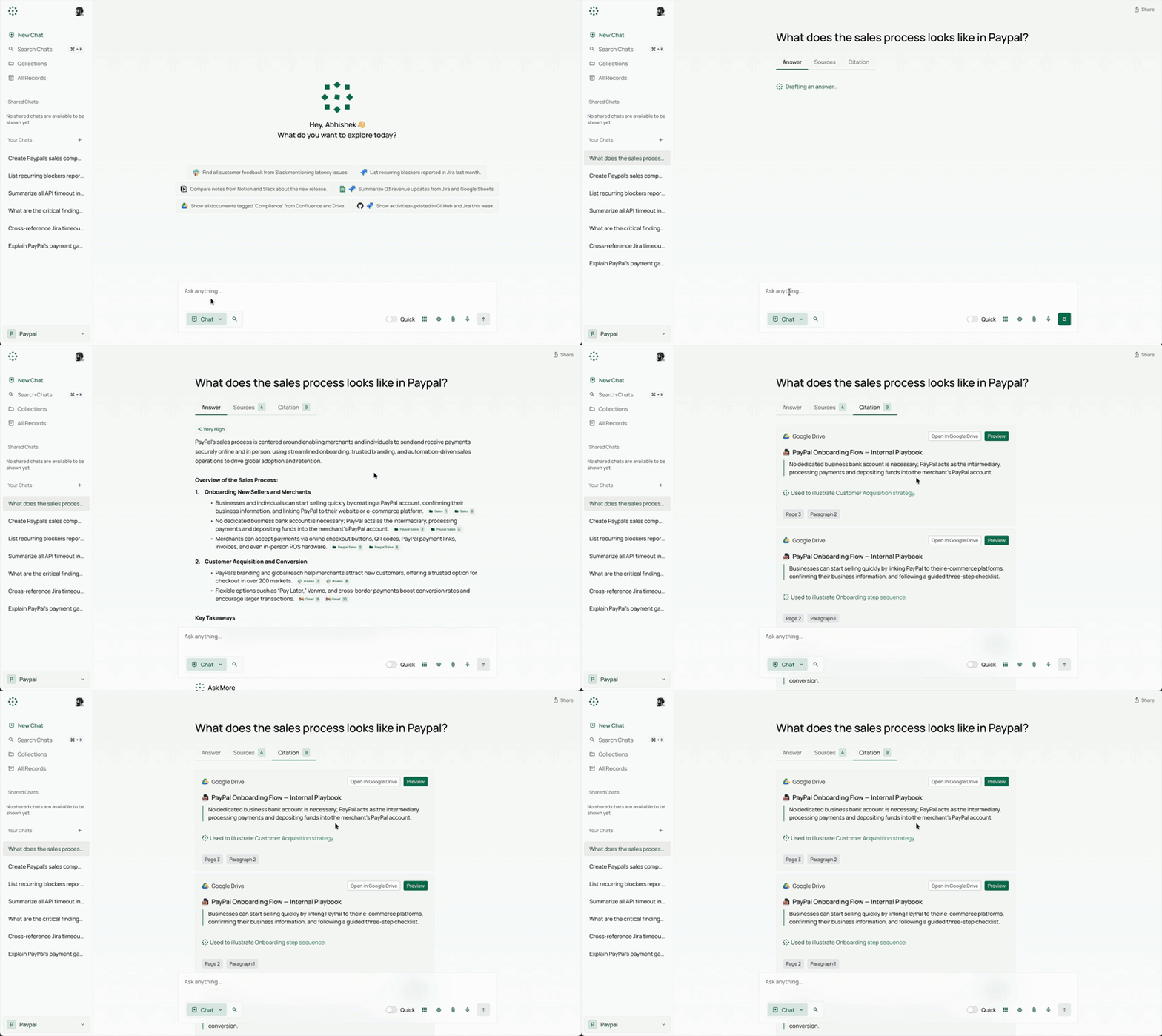
Citations
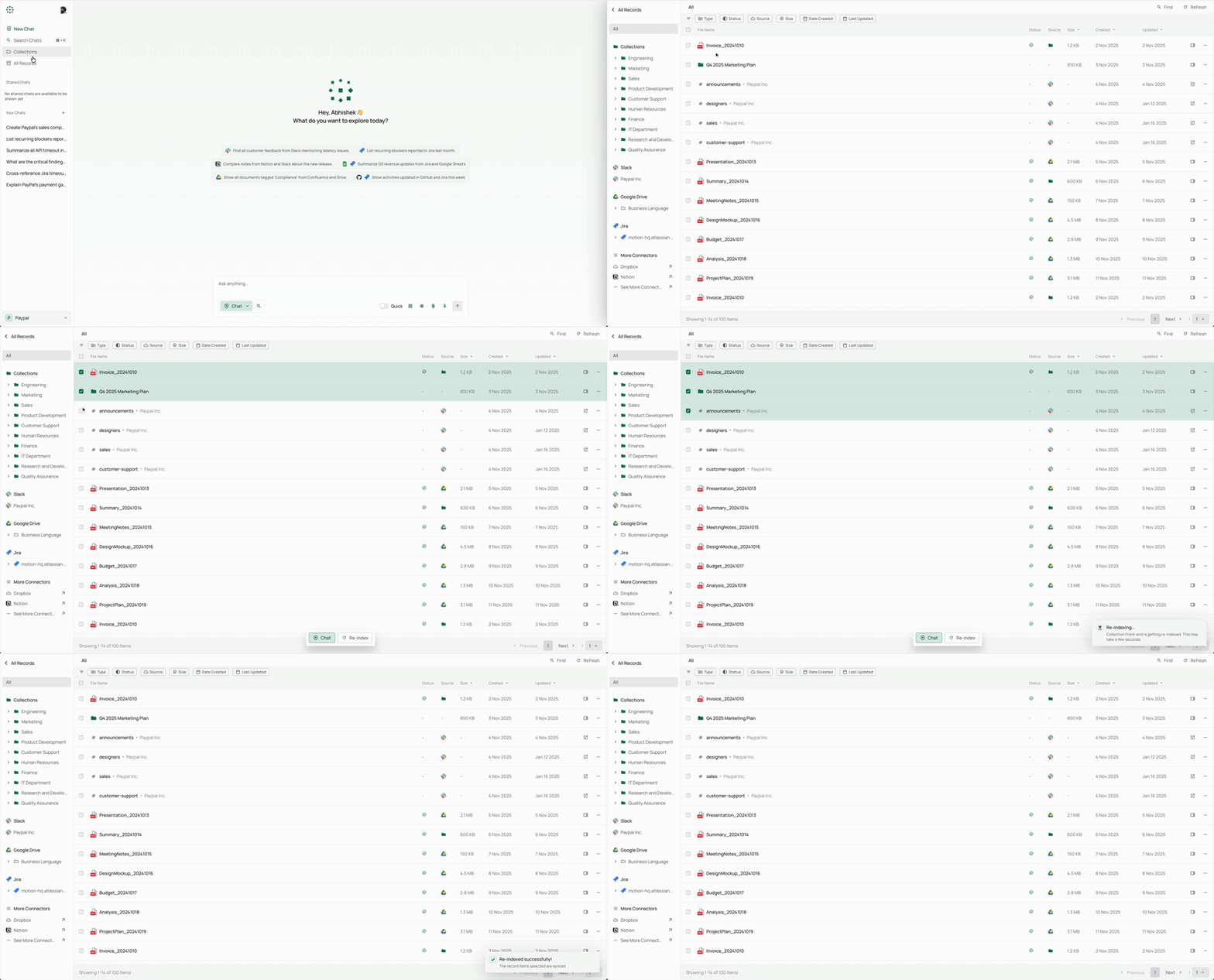
All Records
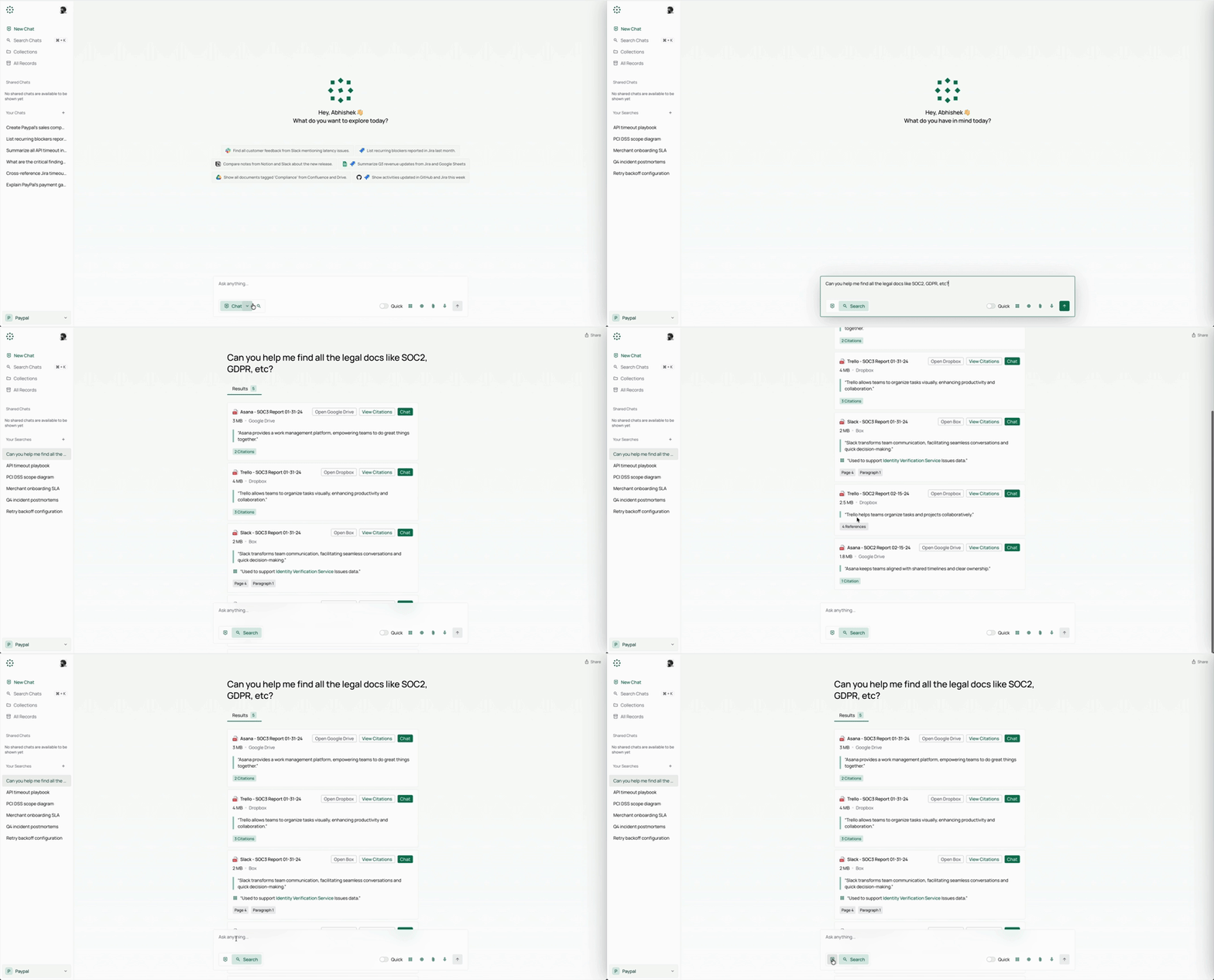
Knowledge Search
Features
Answers you can trust
- 📝 Explainable Answers: PipesHub delivers grounded answers with precise block citations to the original documents.
- 🔒 Permission-Aware Search: Enforces source-level access controls so users only see what they're authorized to.
- 🧠 Bring Your Own Model, Fully Self-Hostable: Any LLM provider, deployed in your VPC — data never leaves your infrastructure.
Connected to your systems
- 🔌 Enterprise Connectors: 50+ connectors with real-time and scheduled indexing out of the box.
- 🕸️ Knowledge Graph Retrieval: Graph-backed retrieval that captures relationships across enterprise data.
- 🎙️ Multimodal Support: Image, diagram, and scanned-file understanding plus voice-based interaction.
What you can build
- 🔍 Unified Search, Deep Research, and Agents: Search, Q&A, deep research, web search, and AI agents on one context layer.
- 🤖 No-Code Agents and Actions: Build agents visually and execute actions across enterprise tools.
- 📊 Artifacts and Code Execution: Generate reports, charts, and dashboards in a safe execution sandbox.
- 🛠️ Developer-First and Extensible: APIs, SDKs, MCP tools, custom connectors, and independently scalable services.
PipesHub Cloud
Prefer a fully managed PipesHub without running your own infrastructure? PipesHub Cloud is coming soon.
👉 Join the Cloud Waitlist to get early access.
Connectors
File Formats Supported
| Format | Details |
|---|---|
| Including scanned PDFs | |
| Docx / Doc | Microsoft Word |
| XLSX / XLS | Microsoft Excel |
| PPTX / PPT | Microsoft PowerPoint |
| CSV | Comma-separated values |
| Markdown | .md files |
| HTML | Web pages |
| Text | Plain text files |
| Google Docs, Sheets, Slides | Google Workspace formats |
| Images | PNG, JPG, etc. |
| Audio | Audio files (Coming Soon) |
| Video | Video files (Coming Soon) |
Tech Stack
Frontend
| Technology | Description |
|---|---|
| Next.js | App Router UI (client-rendered React) |
| TypeScript | Strongly typed JavaScript superset |
| Radix UI Themes | Accessible component primitives and styling |
| Zod | Schema validation and parsing |
| React Hook Form | Flexible form state management |
Backend
| Category | Technologies |
|---|---|
| GraphDB | Neo4j / ArangoDB |
| VectorDB | Qdrant / OpenSearch / Redis |
| Document Store | MongoDB |
| Blob Storage | Local filesystem / S3 / Azure Blob |
| Message Broker | Kafka / Redis Streams |
| Cache | Redis |
| KV Store | Redis / etcd |
| Task Queue | Celery |
| Web Framework | FastAPI |
| LLM Interface | LangChain (multi-provider model access) |
| Embeddings | sentence-transformers / fastembed |
| Document Parsing | pdfplumber, selectolax, markdown-it, openpyxl, csv (default) — or Docling, opt-in via PARSER_BACKEND |
| Document Conversion | LibreOffice, CairoSVG |
| Data Analysis | pandas |
🚀 Deployment Guide
PipesHub can be run locally or deployed on any server using Docker Compose. The interactive installer handles all configuration — including secrets, graph DB, broker, and image tag selection — and generates a .env for you.
HTTPS on cloud servers: If you deploy PipesHub on a cloud server, use an HTTPS endpoint. Browsers block certain requests over plain HTTP. Use Cloudflare, Nginx, or Traefik to terminate TLS. A white screen after HTTP-only deployment is typically caused by this restriction.
⚡ Quickstart (Recommended)
Requires Docker with Compose v2. One command:
curl -fsSL https://get.pipeshub.com/install | bash
This downloads the deployment files for the latest release into ./pipeshub and
launches the interactive installer. Open http://localhost:3000 once it
finishes.
Prefer to read before running? Download and inspect the script first:
curl -fsSL https://get.pipeshub.com/install -o pipeshub-install.sh
less pipeshub-install.sh        # review it
bash pipeshub-install.sh
The installer will:
- Check Docker, RAM, and disk prerequisites
- Ask whether you want a slim or full deployment
- Let you optionally customise the graph DB, message broker, and KV store
- Generate randomised secrets and write a
.envfile - Pull images and start the stack
- Wait for PipesHub to become healthy, verify it is reachable, and print the URL
🛠️ From a cloned repository (developers)
To build from source, contribute, or pin the installer to your checkout:
git clone https://github.com/pipeshub-ai/pipeshub-ai.git
cd pipeshub-ai

# Same installer, run from the repo root
./install.sh
Building local images from source requires this cloned-repo path (./install.sh --build);
the one-command installer above always uses prebuilt images.
Installer options
| Flag | Description |
|---|---|
-y / --yes |
Accept all defaults; skip interactive prompts (CI-friendly) |
--version TAG |
Pin a specific image tag, e.g. --version 0.7.0 |
--reconfigure |
Re-run the wizard and overwrite an existing .env |
--print-env-only |
Write .env and print the compose command without starting containers |
Advanced options: CI environment variables, slim vs. full deployment types, manual Compose profile usage, and local source builds are covered in Advanced Deployment Options.
Build with PipesHub
The built-in search experience is one way to use PipesHub. The same connected,
permission-filtered context is available to your own agents and applications —
over MCP for any compatible client, or through the SDKs when you are calling it
from your own code.
An agent connects as a specific person rather than as the application, so it
retrieves exactly what that person is allowed to see. Access is resolved when
the query runs, against the source system's own permissions, instead of being
approximated at build time.
MCP Server
Use PipesHub with any MCP-compatible client to bring your enterprise context into AI workflows. Check the README for setup and usage.
Repository: pipeshub-ai/mcp-server
Connecting an Omnigent agent
First, mint a long-lived credential: workspace → Developer settings →
Personal Access Tokens → New token. Pick an expiry (30/90/365 days, or
never) — this runs as you, so results respect your own per-user
permissions, unlike an OAuth app's client-credentials flow.
Three ways to connect, from least to most setup:
- Attach in the Omnigent web UI (fastest, no clone). Open a session's
info panel → Manage MCP Servers → add PipesHub's URL and anAuthorization: Bearer <token>header → restart the session. - Run the packaged example agent. A ready-made agent bundle (tuned
prompt + instructions) ships with Omnigent:PIPESHUB_MCP_URL=... PIPESHUB_MCP_TOKEN=... omnigent run examples/pipeshub/. - Use the connect kit in
integrations/omnigent/
(setup.sh/run.sh) for CI, service accounts, or password/OAuth
client-credentials auth instead of a personal token.
SDKs
PipesHub provides developer SDKs for Python, TypeScript, and Go to help you integrate quickly. Check the respective SDK repository README for setup and usage details.
| Name | Description | Link |
|---|---|---|
| Python SDK | Python SDK for PipesHub | pipeshub-ai/pipeshub-sdk-python |
| TypeScript SDK | TypeScript SDK for PipesHub | pipeshub-ai/pipeshub-sdk-typescript |
| Go SDK | Go SDK for PipesHub | pipeshub-ai/pipeshub-sdk-go |
Need an SDK in another language? Reach out to us at [email protected]
RoadMap
We ship in the open. Here's what's done and what's next:
- ✅ 🤖 Workplace AI agents: first-class no-code agent builder
- ✅ 🔗 MCP (Model Context Protocol) support, both server and client
- ✅ 🧰 Developers SDKs
- ✅ 🔍 Code search across GitHub and GitLab
- ⬜ 👤 Personalized search based on team, role, and history
- ✅ ☸️ Production Kubernetes deployment with HA defaults
- ⬜ 📈 PageRank-augmented relevance across the knowledge graph
👉 View the full product roadmap on Notion
👥 Contributing
Want to join our community of developers? Please check out our Contributing Guide for more details on how to set up the development environment, our coding standards, and the contribution workflow.
Where to go for what
| Ask a question or get help | Discord |
| Report a bug or request a feature | GitHub Issues |
| Report a security issue | Report Security Issue |
| Read the docs | Pipeshub Docs |
| See what changed in each release | Changelog |
FAQ
What is PipesHub?
PipesHub is an open-source platform for connecting AI applications to the knowledge stored across your company's business systems.
It connects systems such as Slack, Google Drive, GitHub, Microsoft 365 and Notion, then makes what they hold available in two ways: permission-aware search with citations for your team, and trusted context for your AI agents through APIs, SDKs and MCP. Agents get the same governed view of your company's knowledge that a person would, with the same access controls applied, so they can answer from real company data instead of guessing across tools. You can use the built-in search experience, or build your own agents, workflows and applications on top of it.
How is PipesHub different from other workplace AI tools?
PipesHub is fully open-source (Apache 2.0) and self-hostable — your data never leaves your infrastructure. It features permission-aware search that enforces source-level access controls, and delivers explainable answers with precise block citations to original documents.
What connectors does PipesHub support?
PipesHub has 50+ enterprise connectors with real-time and scheduled indexing. It supports file formats like PDF, Docx, XLSX, PPTX, CSV, Markdown, HTML, Google Docs/Sheets/Slides, images, audio, and video.
How do I deploy PipesHub?
curl -fsSL https://get.pipeshub.com/install | bash
This writes Compose files into ./pipeshub and starts the interactive installer. Open http://localhost:3000 when it finishes. Use HTTPS for cloud deployments — HTTP may cause frontend security blocks.
Developers building from source should clone the repository and run ./install.sh (or ./install.sh --build) from the repo root. See the Deployment Guide.
What LLM providers does PipesHub support?
PipesHub is "Bring Your Own Model" — you can use any LLM provider. Deploy in your VPC with your preferred models. The tech stack includes LangChain for LLM pipelines and workflows.
What is the Knowledge Graph Retrieval feature?
PipesHub uses graph-backed retrieval that captures relationships across enterprise data. It uses Neo4j or ArangoDB as graph databases, combined with Qdrant for vector similarity search.
Does PipesHub have an MCP server?
Yes. PipesHub provides an MCP server for integration with any MCP-compatible client. Repository: pipeshub-ai/mcp-server.
What SDKs are available?
PipesHub provides SDKs for:
- Python: pipeshub-ai/pipeshub-sdk-python
- TypeScript: pipeshub-ai/pipeshub-sdk-typescript
- Go: pipeshub-ai/pipeshub-sdk-go
Can I build AI agents without coding?
Yes. PipesHub has a no-code agent builder. You can build agents visually and execute actions across enterprise tools without writing code.
What is the multimodal support?
PipesHub supports image, diagram, and scanned-file understanding, plus voice-based interaction. It uses Docling and pdfplumber for document parsing, or a multimodal LLM (VLM) for scanned PDF OCR.
How do I troubleshoot deployment issues?
- Ensure HTTPS is configured for cloud deployments
- Check Docker compose logs:
docker compose logs - Verify environment variables in env.template
- Consult docs.pipeshub.com for detailed guides
Where can I get help?
- Discord — Ask questions and get help
- GitHub Issues — Report bugs or request features
- PipesHub Docs — Read the documentation
⭐ Star us on GitHub!
It helps the project reach the teams who need it.
Built with ❤️ by the PipesHub team and contributors around the world.
Reviews (0)
Sign in to leave a review.
Leave a reviewNo results found