Reaper
Health Warn
- No license — Repository has no license file
- Description — Repository has a description
- Active repo — Last push 0 days ago
- Community trust — 24 GitHub stars
Code Warn
- process.env — Environment variable access in src/core/config.ts
- process.env — Environment variable access in src/core/logger.ts
- network request — Outbound network request in src/protocols/kamino.ts
- network request — Outbound network request in src/protocols/marginfi.ts
Permissions Pass
- Permissions — No dangerous permissions requested
This tool is a liquidation risk monitor for Solana DeFi protocols. It scans Kamino, MarginFi, and Drift for distressed accounts, scoring oracle drift, keeper-race probability, and execution friction to find profitable liquidation opportunities.
Security Assessment
The overall risk is rated as Low. The tool does not execute arbitrary shell commands, request dangerous system permissions, or contain hardcoded secrets. As expected for its function, it makes outbound network requests to fetch data from the Kamino and Marginfi protocols. It accesses local environment variables through `config.ts` and `logger.ts` to manage settings, which is a standard practice. All network activity aligns perfectly with its stated purpose of scanning external lending platforms.
Quality Assessment
The project is actively maintained, with its most recent push occurring today. It has earned 24 GitHub stars, indicating a small but present level of community trust and usage. The code is written in TypeScript and benefits from continuous integration checks. However, a notable warning is that the repository currently lacks a formal license file, despite an MIT badge in the documentation. This omission means the legal terms of use and distribution are technically undefined.
Verdict
Use with caution. The code itself appears safe and behaves exactly as described, but the lack of an official license presents a legal ambiguity for developers intending to integrate or modify the software.
Liquidation risk monitor for Solana DeFi. Scans Kamino, MarginFi, and Drift for positions approaching liquidation.
Reaper
Solana distressed-collateral hunter.
Scores liquidation edge, oracle drift, keeper-race probability, and unwind quality before calling a setup actionable.




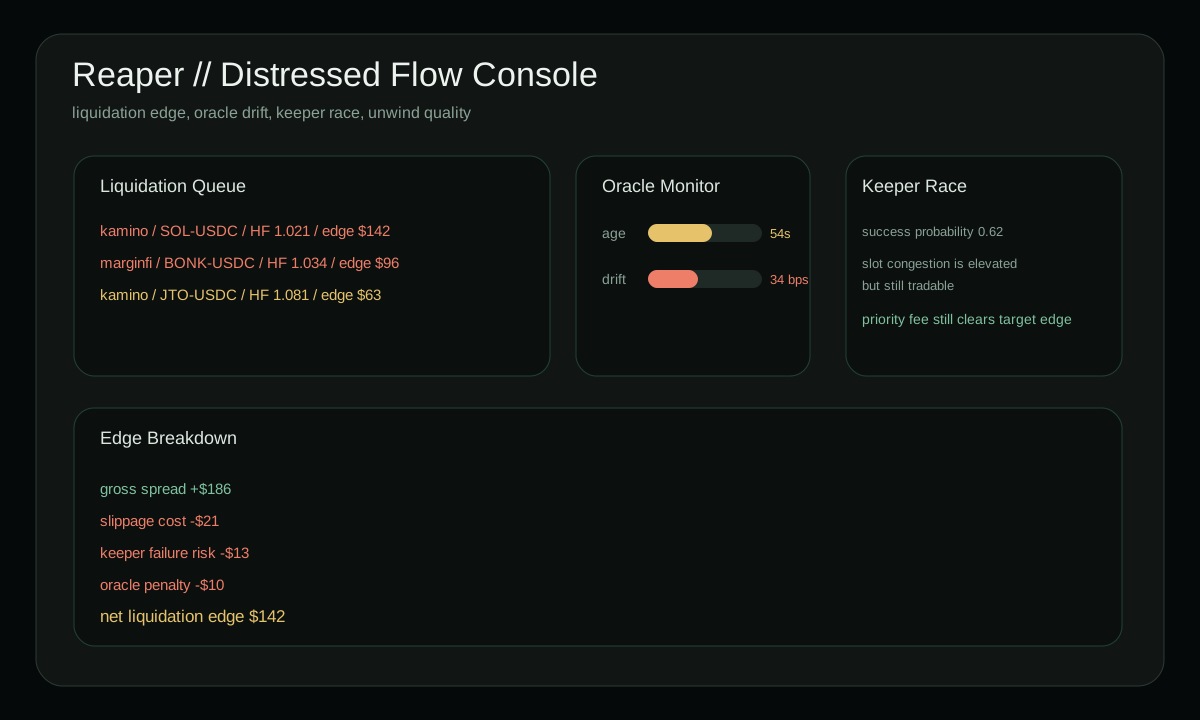
Liquidation tooling is usually owner-centric. Reaper is built from the other side of the trade. It looks for distressed accounts where the liquidation edge still survives stale oracles, slot congestion, and unwind friction.
Reaper scans lending books, enriches each distressed account with oracle-age, mark-drift, keeper-race, and unwind-quality fields, then asks a Claude agent to decide whether the account is merely dangerous or actually worth pursuing.
The emphasis is on whether the edge survives execution friction, not just whether the health factor looks ugly.
SCAN -> PRICE EDGE -> CHECK ORACLE -> MODEL KEEPER RACE -> HUNT
Distressed Flow Console • Liquidation Ticket • At a Glance • Operating Surfaces • How It Works • Example Output • Technical Spec • Risk Controls • Quick Start
At a Glance
Use case: identify distressed Solana lending accounts that are actually worth chasingPrimary input: liquidation spread, oracle freshness, keeper-race probability, unwind qualityPrimary failure mode: mistaking visible danger for profitable liquidation edgeBest for: operators who care about execution-quality edge, not just liquidation proximity
Distressed Flow Console
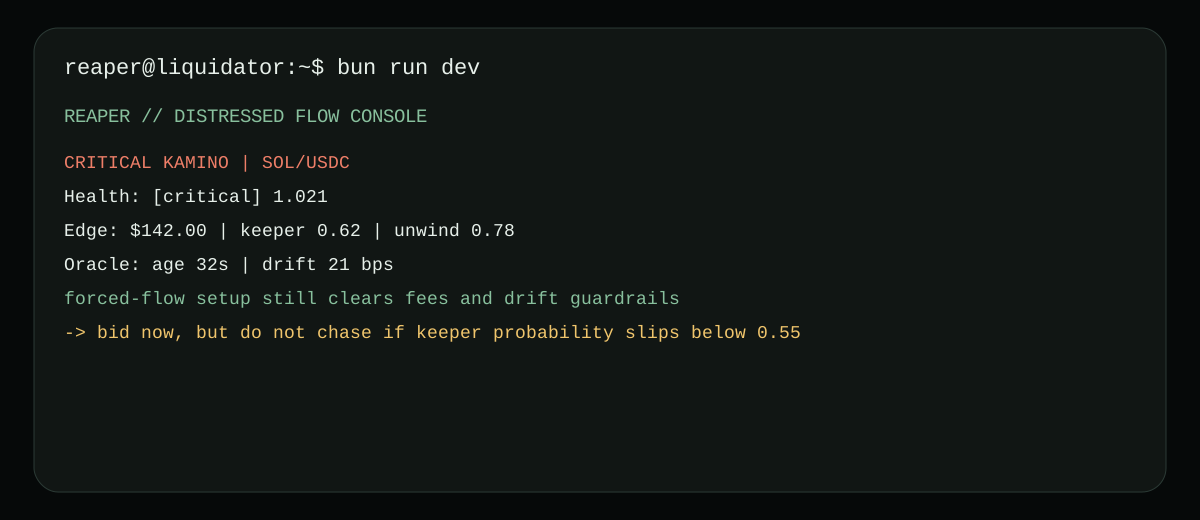
Liquidation Ticket
Operating Surfaces
Distressed Flow Console: ranks accounts by edge quality, not just risk levelLiquidation Ticket: prints the exact setup, guardrails, and action contextOracle Drift Check: rejects setups where stale pricing invalidates the apparent edgeKeeper Race Model: estimates whether the liquidation can still be won after congestion and fees
Why Reaper Exists
Many liquidation boards tell you which positions are unsafe. That is useful, but it is not the same as telling you which positions are actually worth pursuing.
Reaper exists to bridge that gap. A distressed account can look attractive and still be untradeable once stale oracles, slot congestion, priority fees, and unwind friction are all counted honestly.
How It Works
Reaper follows a liquidation-quality loop:
- scan the monitored books for distressed accounts
- estimate the gross liquidation spread
- discount that spread for oracle age, mark drift, keeper competition, and unwind friction
- rank the remaining accounts by edge that still survives execution
- emit a ticket only when the opportunity is dangerous and actionable
The goal is not to find every risky account. The goal is to find the ones where the edge is still real.
What A Real Reaper Setup Looks Like
- the liquidation spread is still positive after friction
- oracle age and drift are still inside acceptable bounds
- keeper race probability is strong enough to justify the attempt
- seized collateral still looks exit-able after the liquidation
If those pieces do not line up, the account may be distressed but not worth the chase.
Example Output
REAPER // LIQUIDATION TICKET

market             SOL/USDC
health factor      1.021
net edge           $142
oracle age         32s
keeper race        0.62
unwind quality     0.78

operator note: edge still survives fees and oracle guardrails
Technical Spec
Reaper estimates liquidation opportunity quality with:
Edge = grossLiquidationSpread - slippageCost - priorityFee - keeperFailurePenalty - oraclePenalty
Additional guards:
- reject marginal setups when
oracleAgeSeconds > MAX_ORACLE_AGE_SECONDS - reject when
oracleDriftBps > ORACLE_DRIFT_THRESHOLD_BPS - rank by
liquidationEdgeUsd * keeperRaceProbability - surface
unwindQualityso distressed collateral that cannot be exited cleanly is demoted
The repo deliberately distinguishes between:
- a position that is close to liquidation
- a position that is actually worth chasing
Those are not the same.
Risk Controls
oracle freshness gate: rejects setups where pricing is too stale to trustdrift threshold: blocks liquidations that look profitable only because the oracle is offkeeper race filter: downgrades opportunities that are unlikely to be wonunwind quality check: rejects collateral that still looks too hard to exit after seizure
Reaper is strict because an ugly health factor does not pay you by itself.
Quick Start
git clone https://github.com/ReaperProtocol/Reaper
cd Reaper && bun install
cp .env.example .env
bun run dev
Configuration
ANTHROPIC_API_KEY=sk-ant-...
HELIUS_API_KEY=...
HEALTH_WARN_THRESHOLD=1.15
HEALTH_DANGER_THRESHOLD=1.05
ORACLE_DRIFT_THRESHOLD_BPS=45
MAX_ORACLE_AGE_SECONDS=75
MIN_LIQUIDATION_EDGE_USD=40
Legitimacy Notes
- Planned commit sequence:
docs/commit-sequence.md - Draft engineering issues:
docs/issue-drafts.md
Support Docs
License
MIT
hunt the edge, not just the health factor.
Reviews (0)
Sign in to leave a review.
Leave a reviewNo results found