Tally
Health Warn
- No license — Repository has no license file
- No description — Repository has no description
- Active repo — Last push 0 days ago
- Community trust — 25 GitHub stars
Code Warn
- network request — Outbound network request in src/fetchers/realms.ts
- network request — Outbound network request in src/fetchers/snapshot.ts
- process.env — Environment variable access in src/lib/config.ts
Permissions Pass
- Permissions — No dangerous permissions requested
Tally is a governance signal board for Solana and DeFi proposals that tracks active Snapshot and Realms proposals. It fetches proposal data, scores it by importance, and generates readable governance digests for token holders.
Security Assessment
The tool makes outbound network requests to fetch governance data from Snapshot and Realms APIs. It accesses environment variables in a config module, likely for API keys or endpoint configuration. No dangerous permissions are requested, no shell commands are executed, and no hardcoded secrets were detected. The scope of network activity is narrow and predictable — it only calls known governance platforms. Overall risk: Low.
Quality Assessment
The repository was last updated today, indicating active maintenance. It has 25 GitHub stars, suggesting early-stage community adoption. A notable concern is the absence of a license file despite the README badge claiming MIT — this creates legal ambiguity for anyone wanting to use or contribute to the code. The repository also lacks a description in its metadata, which is a minor housekeeping issue. The codebase is TypeScript and appears focused in scope. Documentation in the README is thorough and well-structured, covering use cases, workflow, and risk controls.
Verdict
Use with caution — the tool appears safe from a security standpoint with limited and predictable network behavior, but the missing license file should be clarified before depending on it in any production context.
Tally
Governance signal board for Solana and DeFi proposals.
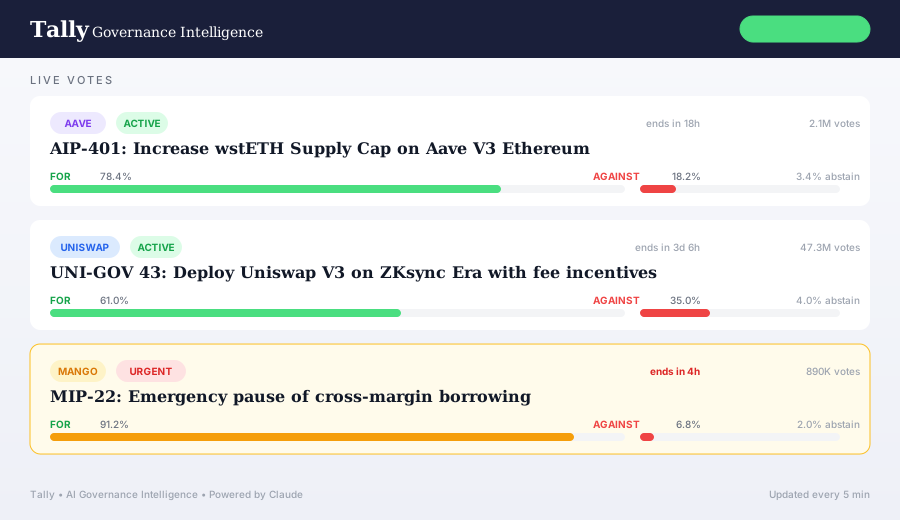
Tally watches Snapshot and Realms, builds readable governance digests from proposal text and metadata, and ranks proposals by how much they actually matter to token holders.



Governance is one of the few places where a token can change dramatically while the market is barely paying attention. Treasury policy, tokenomics shifts, voting power changes, and emergency proposals often move faster than most holders realize.
Tally is built to close that gap. It tracks active proposals, scores them by importance, and turns governance-speak into a digest a normal operator can scan in one pass.
FETCH -> SCORE -> SUMMARIZE -> CLASSIFY -> DIGEST
Live Vote Dashboard • Proposal Detail • Why Tally Exists • At a Glance • Governance States • What Makes A Proposal Important • Reader Workflow • Example Output • Importance Model • Risk Controls • Quick Start
Live Vote Dashboard
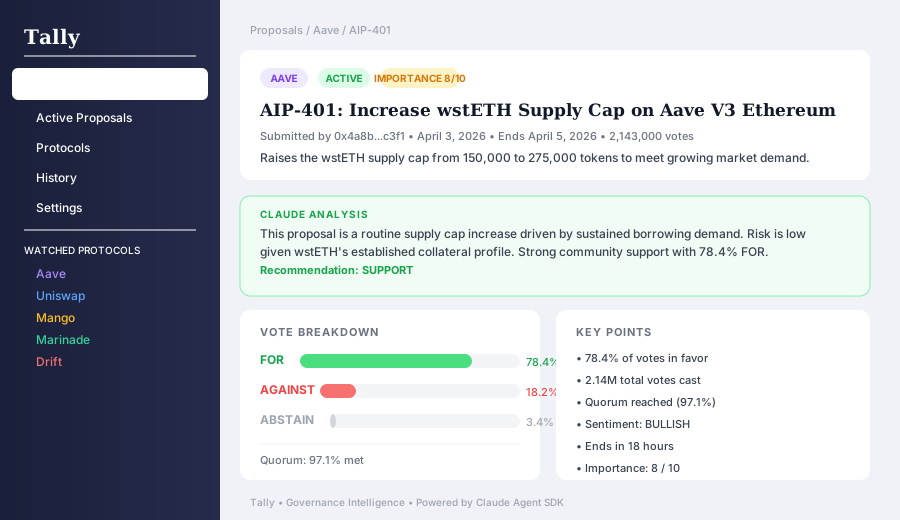
Proposal Detail
Why Tally Exists
Most token holders do not ignore governance because they do not care. They ignore it because governance writing is slow to parse, full of internal language, and hard to rank.
That means the proposals with the biggest downstream impact often get treated like background noise until after they pass. Tally is meant to make that impossible to miss.
It is not a voting app and it is not trying to become a whole governance portal. It is a prioritization layer for people who want to know which proposals deserve attention now, which ones can wait, and what the proposal actually does in plain language.
At a Glance
Use case: tracking governance decisions across Solana and DeFi without reading every raw proposalPrimary input: active proposals, venue metadata, proposal text, and importance scoringPrimary failure mode: treating every proposal like it matters equally or missing the quiet ones that actually reshape the tokenBest for: holders, operators, and governance watchers who want a readable proposal board instead of a feed dump
Governance States
| State | What it usually means | Typical behavior |
|---|---|---|
watch |
proposal is real but not urgent yet | keep visible, monitor discussion |
important |
meaningful change to mechanics, treasury, or token structure | read now and decide positioning |
critical |
emergency, security, or high-impact proposal | immediate attention |
routine |
administrative or low-impact motion | digest later |
Tally is strongest when the state feels obvious after one glance.
What Makes A Proposal Important
Not every proposal deserves the same level of energy. Tally should bring the important ones to the front for reasons that are easy to understand.
The board becomes useful when it highlights proposals that affect:
- treasury spending or asset movement
- tokenomics and emissions
- governance power and control
- core protocol parameters
- emergency or security response
This is where the repo becomes much more launchable than a plain "governance aggregator." The value is not aggregation alone. It is readable prioritization.
Reader Workflow
Tally is built for a simple reading pattern:
1. Scan The Board
Find which venues and proposals are active right now.
2. Check Importance
Use the score to decide whether the proposal is routine, meaningful, or urgent.
3. Read The Digest
This is where the product earns its keep. The digest should explain the proposal in plain language and make the urgency obvious without forcing the reader through raw governance text.
4. Decide What To Do
Some proposals deserve immediate action, some deserve tracking, and some deserve almost none of your attention. Tally should make that difference obvious.
How It Works
Tally follows a narrow governance loop:
- fetch active proposals from Snapshot and Realms
- normalize them into one comparable proposal surface
- score each proposal for importance and urgency
- build a readable digest from proposal text, timing, and vote structure
- publish a board that lets operators sort signal from governance clutter
The value is not merely "all the proposals in one place." The value is knowing which ones matter before they become post-mortem discussion.
What A Good Tally Summary Sounds Like
A good digest should not repeat the title with slightly cleaner words. It should explain:
- what changes if this passes
- who gains or loses influence
- whether the proposal changes token-holder reality in a meaningful way
- whether the operator should review now, keep it in watch mode, or safely leave it as low priority
That tone matters a lot for launch because most buyers are not governance specialists. They just need the proposal to become understandable fast.
Example Output
TALLY // PROPOSAL DIGEST

venue             Realms
proposal          Adjust staking emissions schedule
importance        8.4
state             important
recommendation    review now

summary: proposal changes reward pacing and could alter near-term token pressure.
Importance Model
| Score | Meaning |
|---|---|
9-10 |
emergency, security, or proposal with immediate protocol-wide consequences |
7-8 |
high impact on tokenomics, treasury, or core mechanics |
5-6 |
meaningful but not urgent |
1-4 |
low-priority or mostly administrative |
The board gets better when those scores feel earned. Inflationary changes, treasury reallocations, and control shifts should obviously rank higher than routine housekeeping.
Why Tally Is More Than A Feed Reader
- it turns governance text into readable language
- it ranks proposals by impact instead of posting everything flat
- it brings Snapshot and Realms into one board
- it helps normal holders notice the proposals that silently reshape token outcomes
That is a much stronger launch story than a simple aggregator.
Risk Controls
importance scoring: prevents routine proposals from burying urgent onesdigest summaries: reduces the risk of unreadable governance jargon while preserving links to the source proposalvenue normalization: makes cross-platform governance easier to comparedigest framing: keeps the product focused on proposals that should alter attention and behavior
Tally should be judged on whether it makes governance easier to understand and harder to ignore.
Quick Start
git clone https://github.com/TallyGov/Tally
cd Tally
bun install
cp .env.example .env
bun run dev
License
MIT
governance only looks boring until a proposal changes the token.
Reviews (0)
Sign in to leave a review.
Leave a reviewNo results found