composer
Health Pass
- License — License: MIT
- Description — Repository has a description
- Active repo — Last push 0 days ago
- Community trust — 14 GitHub stars
Code Pass
- Code scan — Scanned 2 files during light audit, no dangerous patterns found
Permissions Pass
- Permissions — No dangerous permissions requested
This tool provides a high-performance JavaScript framework for composing live data streams into actionable insights. It is designed for Industrial IoT (IIoT) and edge computing, allowing users to wire together small, focused building blocks for tasks like anomaly detection and predictive maintenance.
Security Assessment
The overall risk is rated as Low. The automated code scan found no dangerous patterns, no hardcoded secrets, and the tool does not request any dangerous system permissions. While the system processes live data streams and integrates with external services like QuestDB, Grafana, and Mosquitto (which inherently involves network requests and data handling), the light audit found no malicious execution of shell commands or unauthorized data access.
Quality Assessment
The project is in good health and actively maintained, with its last push occurring today. It uses the permissive MIT license and has a clear, detailed description. Community trust is moderate, currently sitting at 14 GitHub stars. One important note is that the README indicates the project is currently "transitioning to open source." This means the full source code may not yet be available for a comprehensive manual review, though the scanned components appear completely safe.
Verdict
Safe to use, though developers should be aware the full source code is still transitioning to open source.
Composable Streaming Intelligence
winkComposer


Composable Streaming Intelligence

A sensor spikes. An engine runs hot. A building's energy use surges. A server degrades. A cold chain breaks.
winkComposer turns live data streams into clear, actionable insights by composing small, focused building blocks — signal conditioning, anomaly detection, and health assessment — into pipelines underpinned by neural-network intelligence.
A high-performance JavaScript framework for IIoT and beyond. Runs on a Raspberry Pi or a production server or k8 cluster on cloud. Purpose-built for SMBs and MSMEs. Integrates with QuestDB, Grafana, and Mosquitto — open source, end to end.
winkComposer calls its building blocks nodes — each with a single responsibility, wired through a declarative flow language. Small vocabulary, unbounded composition — the same nodes that detect bearing wear also catch server latency degradation and process yield drift.
[!NOTE]
The documentation site is live and growing — interactive demos run real winkComposer nodes in your browser, no installation or sign-up required. winkComposer is transitioning to open source; the repository and full source will follow as development progresses. MCP integration for AI-driven queries over pre-computed insights is in active development.
Explore Possibilities
Real data. Real insight. Each demo runs the same winkComposer core that powers edge-to-cloud deployments — right here in your browser.
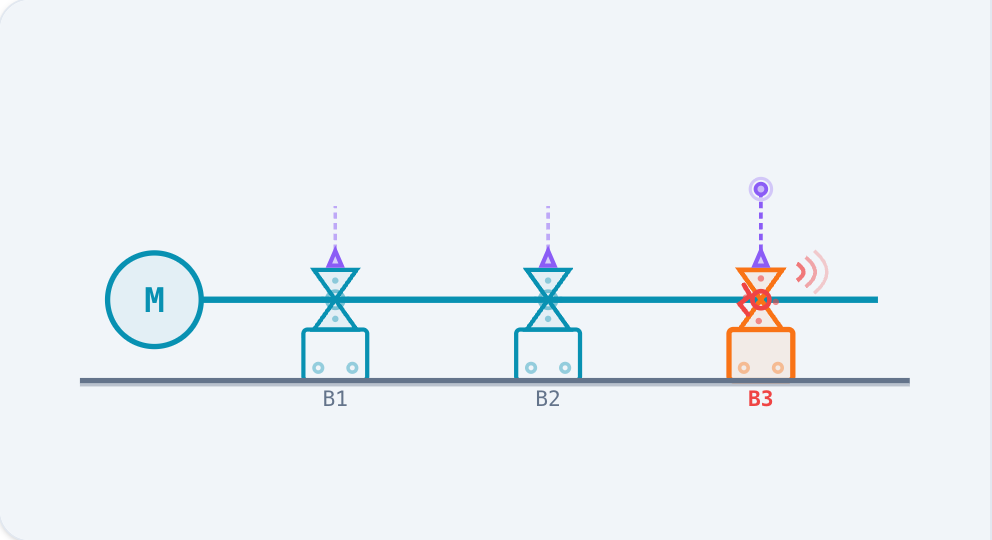 |
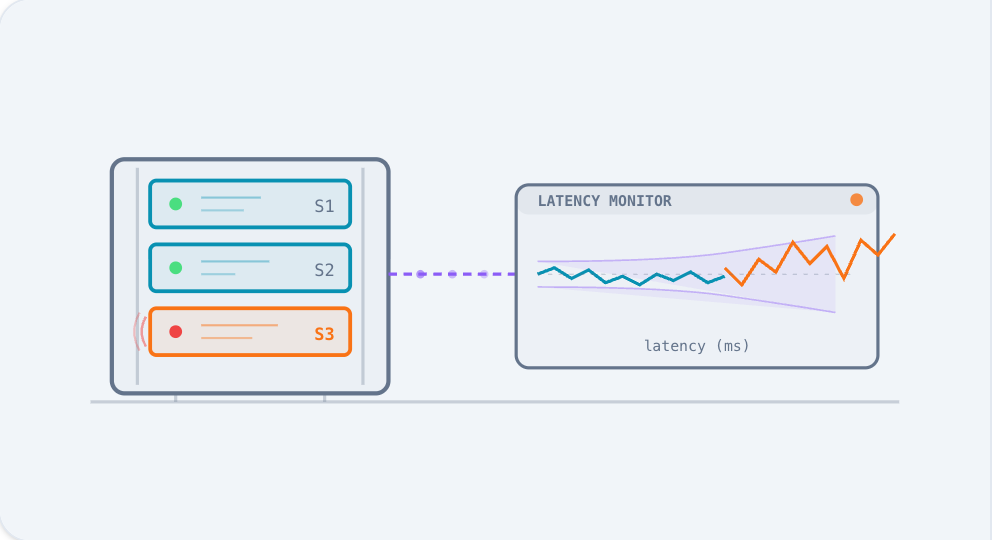 |
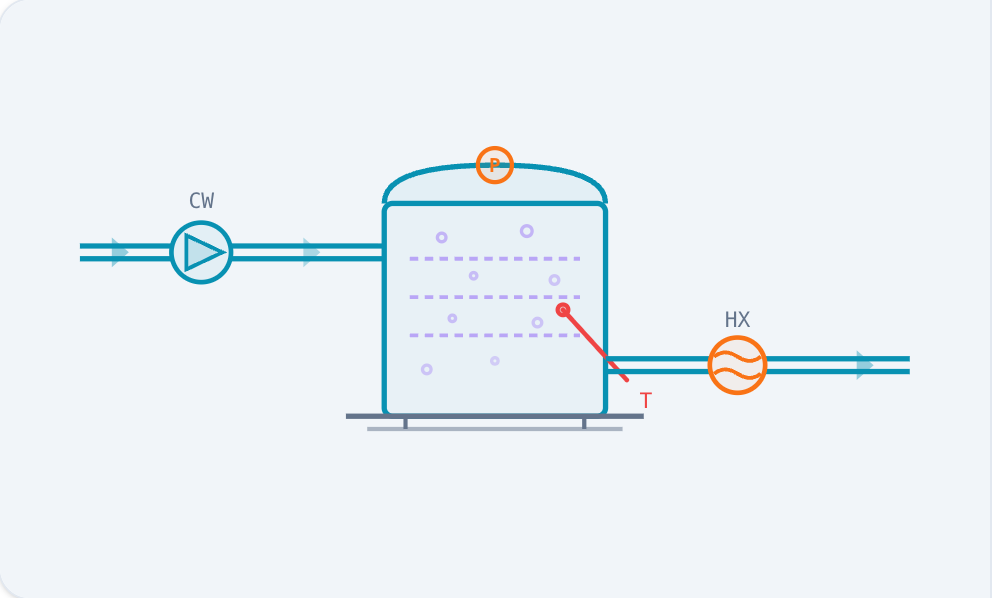 |
|---|---|---|
| Detecting Bearing Failure | Detecting Server Latency Degradation | Catching Process Drift |
| Predictive Maintenance | AIOps | Process Control |
Documentation
| Resource | What it covers |
|---|---|
| Hello Flow! | Build a 4-node temperature monitor from scratch — smooth, detect, confirm, broadcast — with an interactive demo running real nodes in your browser. The natural starting point. |
| Recipes | Focused, runnable patterns for common detection problems: gradual drift (fast/slow esMean crossover with Page-Hinkley), sudden shifts (Kalman filter), sensor freeze (collapsed standard deviation), and subtle process shifts (Western Electric run rules). Each runs in the browser. |
| Explore Nodes | Single-node sandboxes — drag a slider, watch the node respond in real time. Covers the Kalman 1D filter and the kernel convolution node, with more to come. |
| Under the Hood | How messages flow and get enriched node by node, how bad data and throwing functions are handled without crashing the pipeline, how per-asset isolation works, and timestamp requirements. |
| Flow Language | The complete DSL reference — flow anatomy, node call signatures, dynamic options (tunables), single vs. multi-field processing, naming policies, and node processing types. |
| Composition Patterns | Proven node combinations for recurring problems: noise-tolerant alarms, drift detection, adaptive diagnostics, layered flows, and downsampling for storage. Includes clear guidance on when to use passIf, emitIf, or controller/disable. |
| Semantics | How to define what computed values mean — types, units, physical ranges, operational limits — as a single source of truth shared by storage, dashboards, and query engines. Covers the facts-vs-decisions design principle. |
| Node Index | Every node grouped by category — Signal Conditioning, Detection, Feature Extraction, Intelligence, and more — with what each computes and what it adds to the message. |
Performance
A pure compute benchmark — every step a live message takes, from arrival through all 8 nodes to final computed output, with no I/O. Asset pipelines are created dynamically as each new asset is first encountered; the benchmark runs 10 such pipelines concurrently, interleaved in random order to reflect real multi-asset deployment. Measured with process.hrtime.bigint() across 4.5 million messages (10 pipelines × 900 data points × 500 iterations). Storage and MQTT I/O are excluded.
| Configuration | Throughput |
|---|---|
| Raspberry Pi 5 | ~100K messages/second |
| Modern server | ~1.2M messages/second |
| Tracking 200K assets | ~300K messages/second |
The same pipeline runs in your browser — browser results are typically 30–60% of native Node.js throughput due to JIT differences.
Built for the Real World
Each asset runs in its own isolated state — a fault in one never affects another. Messages queue locally when the network drops and drain cleanly on reconnect. The same pipeline code runs unchanged from edge to cloud. Shutdown is ordered and deterministic: sources close first, storage last, with no data corruption.
Get Involved
| Star winkComposer | Follow @winkjs | Discussions |
|---|---|---|
| Support open-source streaming intelligence. | Stay updated on releases and ecosystem developments. | Questions, ideas, or feedback — all welcome. |
About winkJS
winkJS is the open-source home of two high-performance, production-grade tools — built from first principles, tested to near-perfection, and trusted by thousands of projects worldwide.
Reviews (0)
Sign in to leave a review.
Leave a reviewNo results found