DeLive
Health Pass
- License — License: Apache-2.0
- Description — Repository has a description
- Active repo — Last push 0 days ago
- Community trust — 45 GitHub stars
Code Pass
- Code scan — Scanned 12 files during light audit, no dangerous patterns found
Permissions Pass
- Permissions — No dangerous permissions requested
This is a desktop transcription workspace and MCP server that captures system audio, routes it through various speech recognition backends, and provides an AI-powered review suite with summaries, chats, and mind maps. It is designed to keep data local-first while offering real-time floating captions in over 60 languages.
Security Assessment
Overall Risk: Medium. The tool inherently requires access to sensitive data—specifically, your system's audio output. However, it processes this data locally by default. It requires network requests to function fully, as it integrates with six different ASR (Automatic Speech Recognition) backends and LLM AI providers to generate transcriptions and summaries. The automated code scan found no hardcoded secrets and no dangerous code execution patterns (such as spawning unauthorized shell commands). Users should be aware that while the application itself is safe, any captured audio data will be sent over the internet if external ASR or AI APIs are selected in the settings.
Quality Assessment
Quality is good. The project is actively maintained, with its most recent code push happening today. It uses the standard Apache-2.0 license, making it safe for commercial and personal use. The project has a solid foundation of community trust with 45 GitHub stars, and the repository is well-documented, featuring detailed multilingual instructions and clear setup guidelines.
Verdict
Safe to use, provided you review the application settings to ensure sensitive audio is only routed to trusted external API providers.
System audio capture + multi-provider ASR + local-first AI review workspace. Floating live captions, 6 ASR backends, 60+ languages, AI summary/chat/mindmap, Open API, MCP server, and Agent Skill.

DeLive
System Audio Capture | Multi-Provider ASR | Local-First AI Review Workspace








DeLive is a desktop transcription workspace for system audio. It captures whatever your computer is playing, routes the audio through the ASR backend that fits the job, keeps everything on your machine, and turns completed transcripts into searchable history with a full AI Review Desk — rich Markdown-rendered chat, Q&A threads, structured briefings, and mind maps.
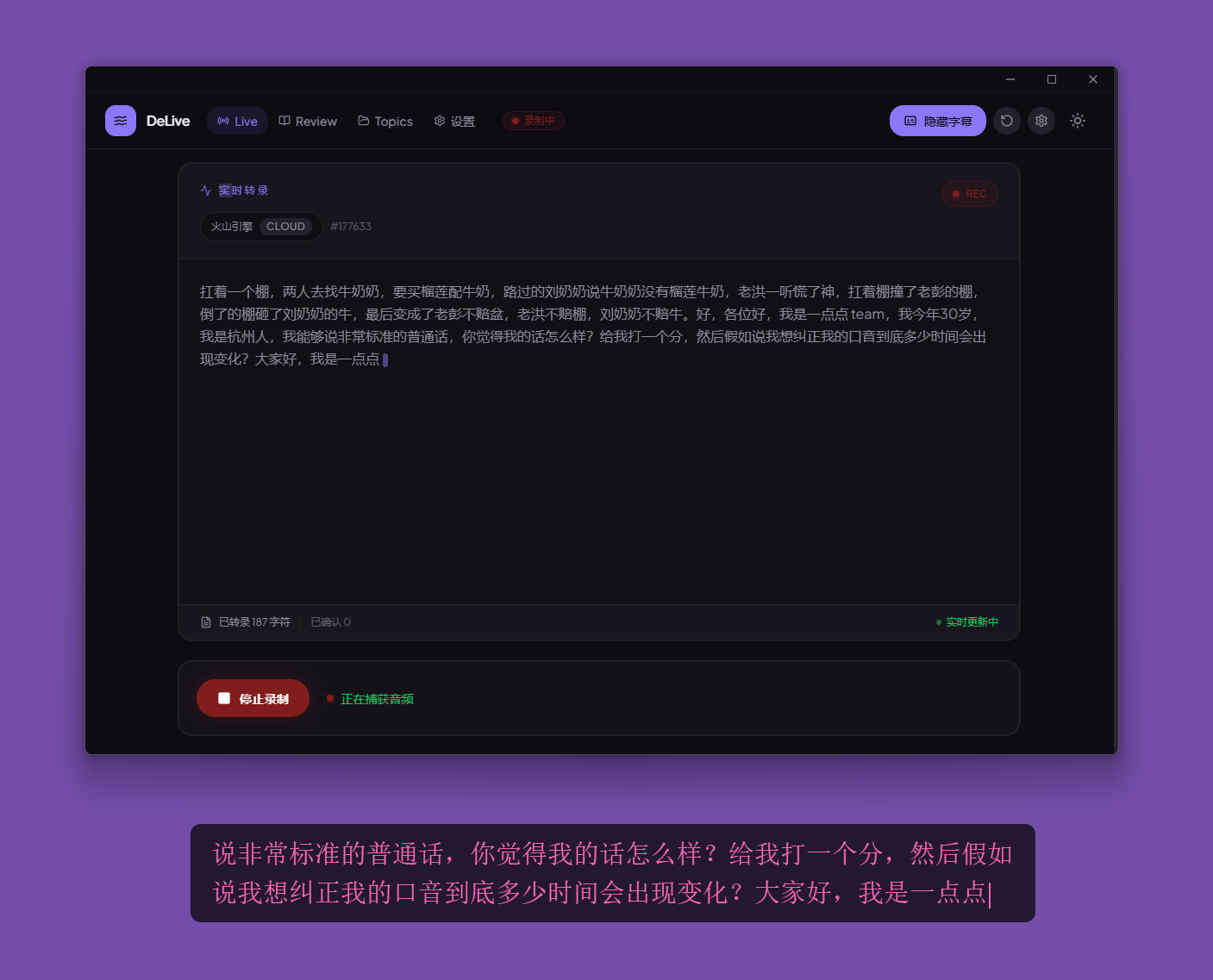
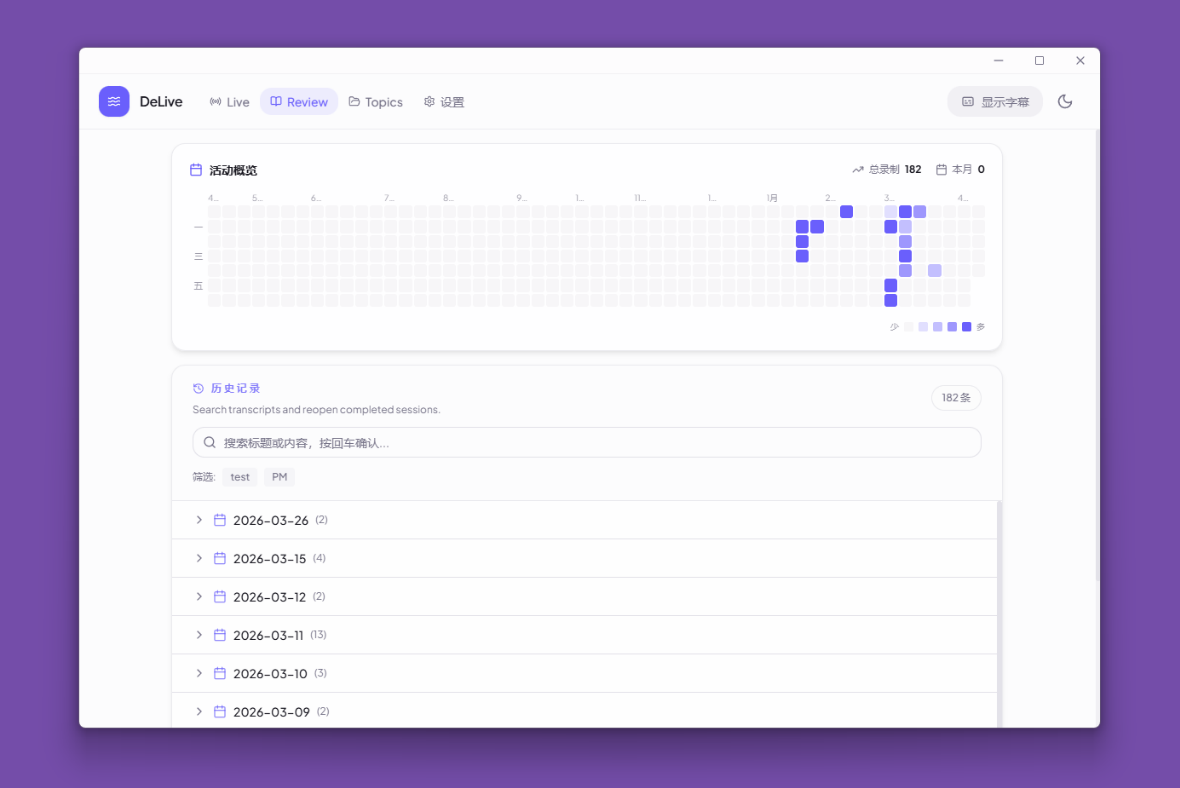
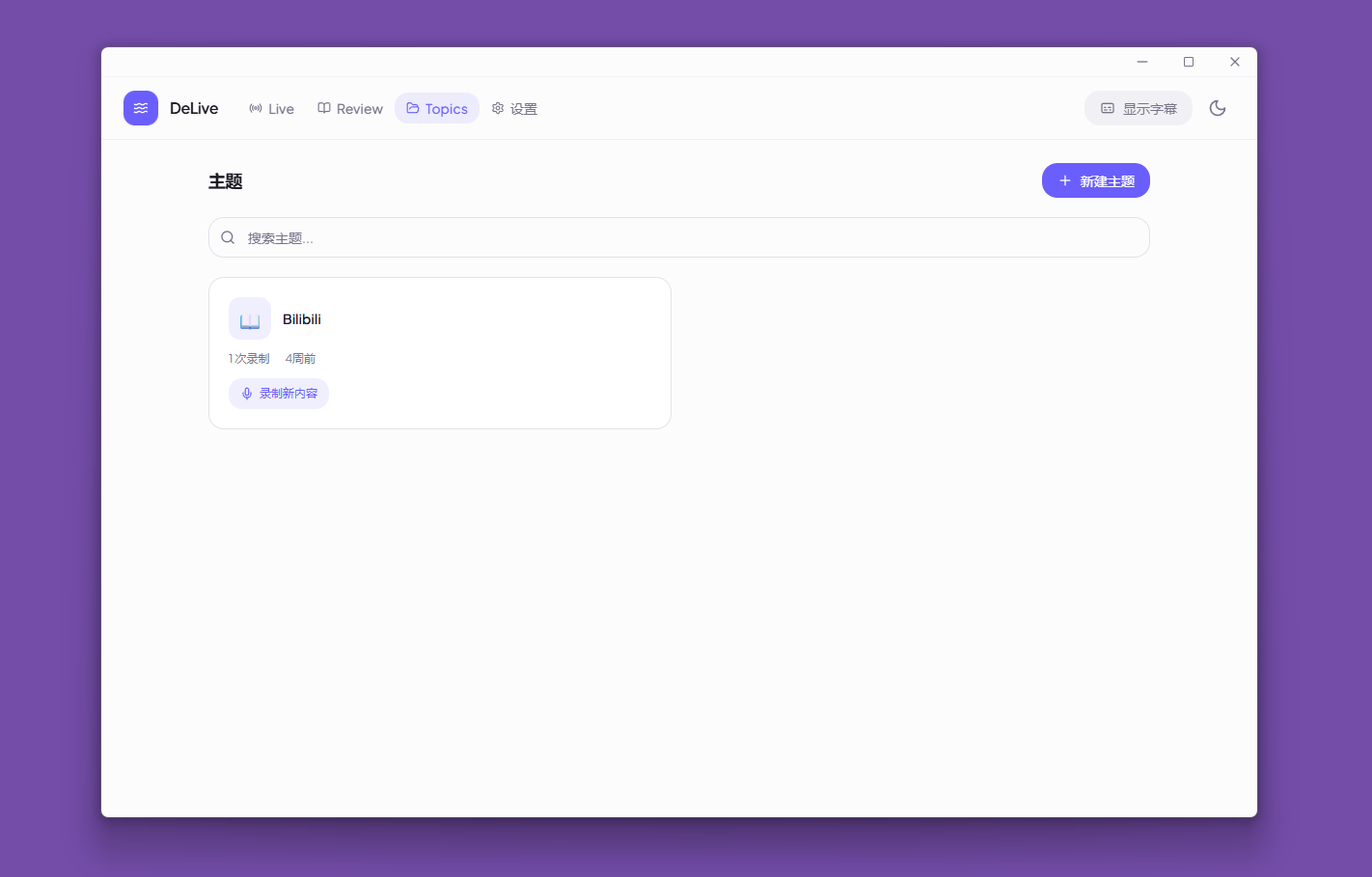
| Live Transcription | Review & History | Topics |
|---|---|---|
| Real-time transcription with floating caption overlay | Session history with activity heatmap and search | Project-based session organization |
 |
 |
 |
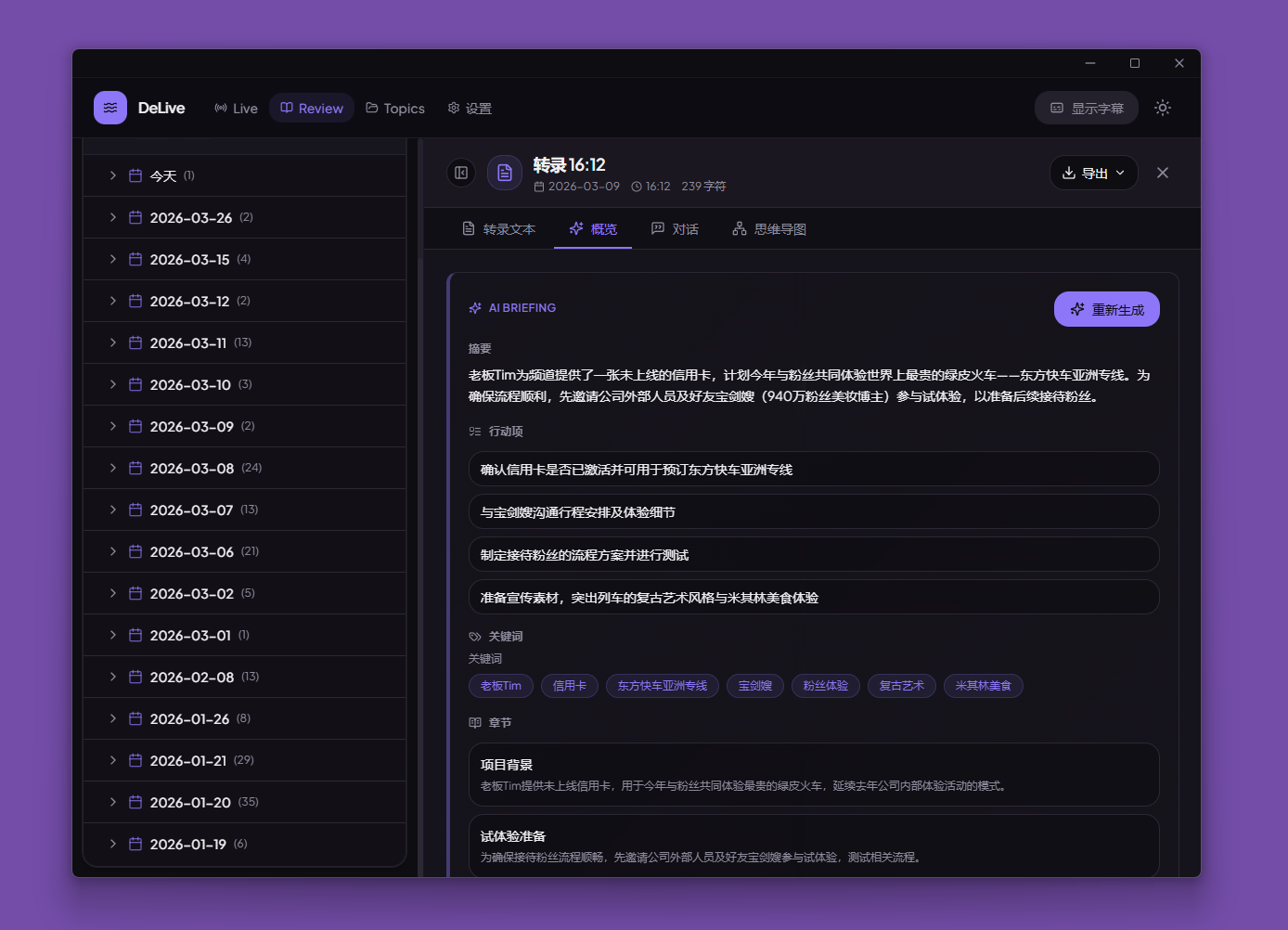
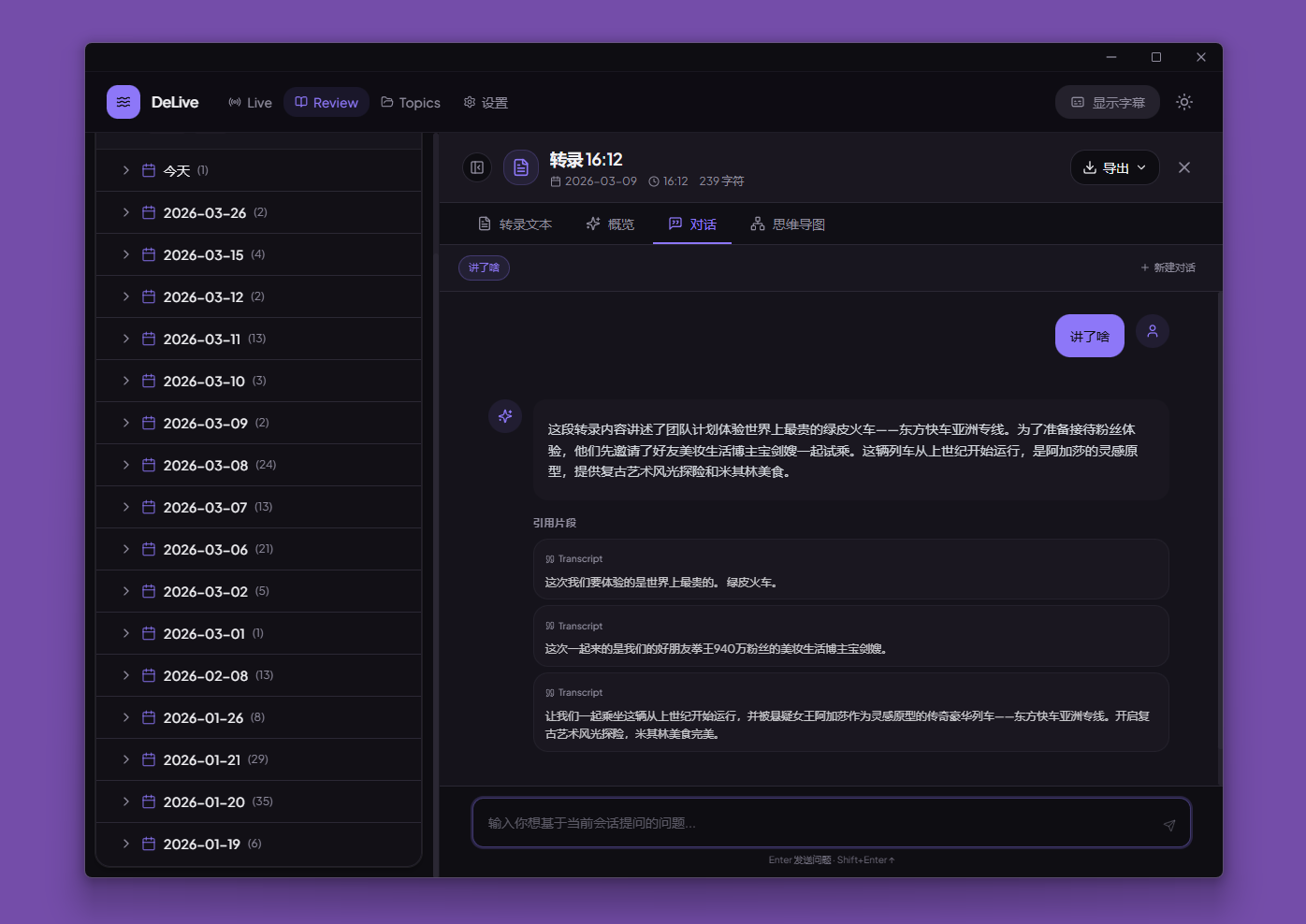
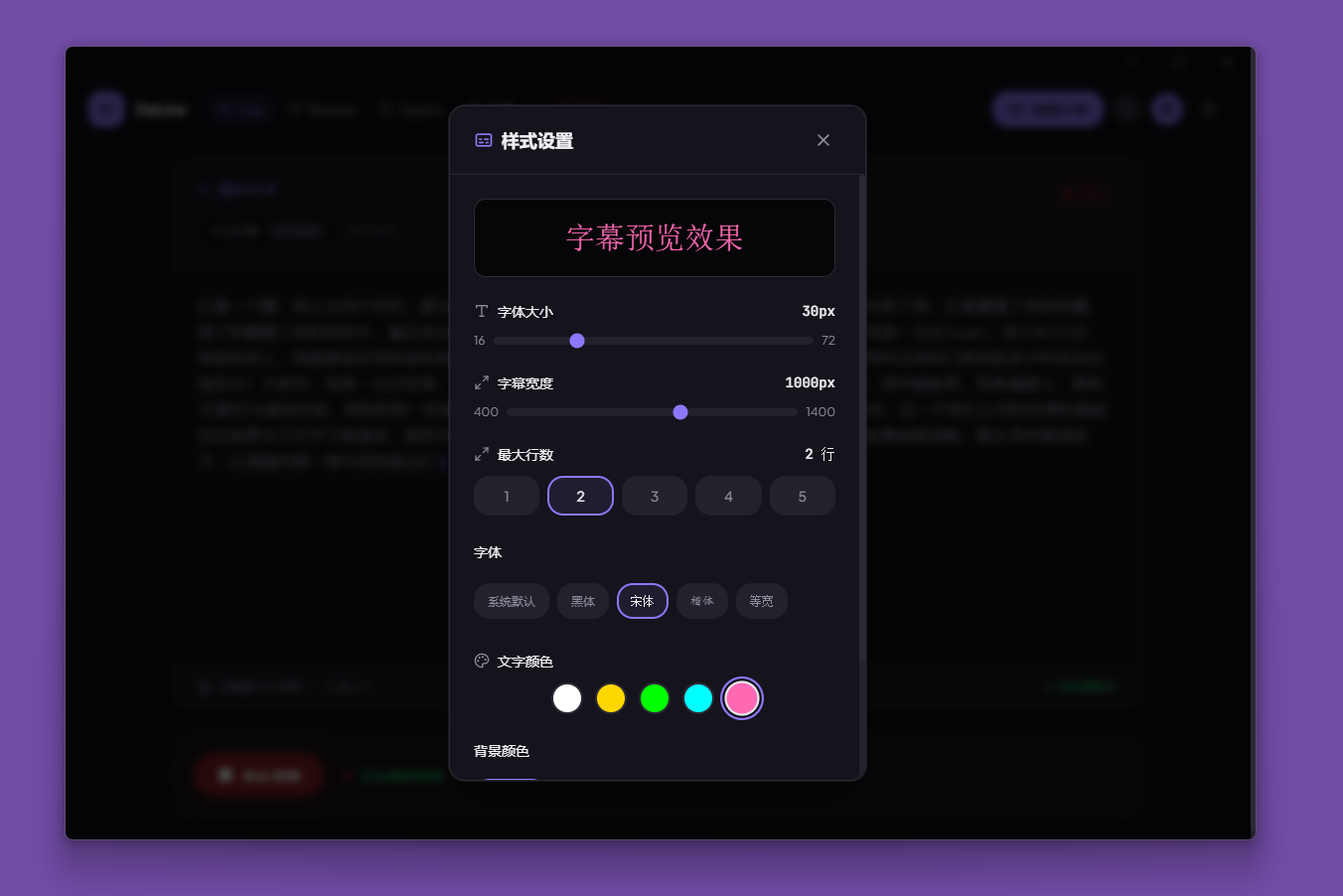
| AI Overview | AI Chat | Mind Map & Export |
|---|---|---|
| Summary, action items, keywords, and chapters | Multi-thread conversation with cited references | Caption style editor with live preview |
 |
 |
 |
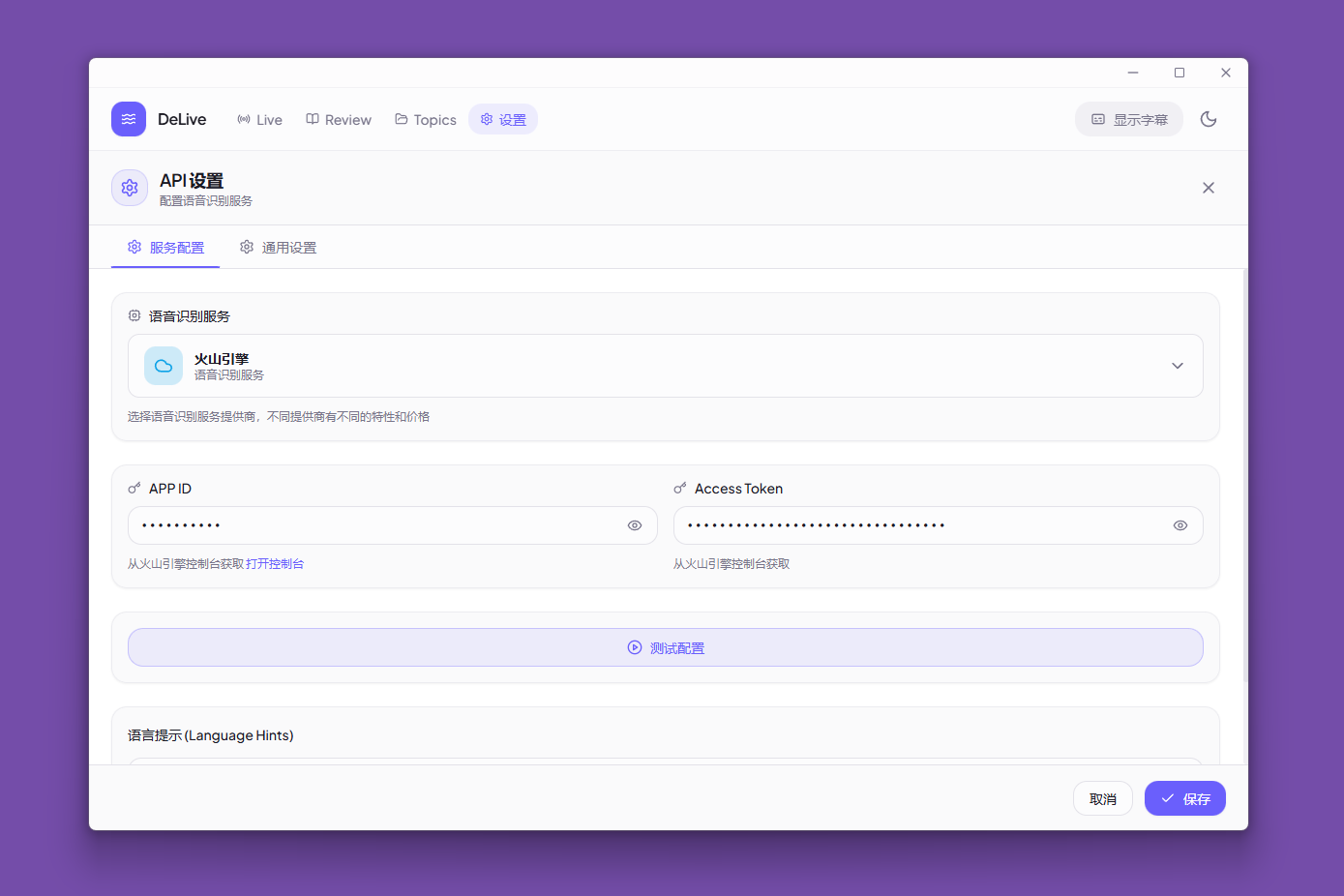
| Settings | Caption Overlay |
|---|---|
| Provider configuration with credential management | Draggable always-on-top floating caption window |
 |
 |
Table of Contents
- Core Features
- Download
- Supported ASR Providers
- Quick Start
- Usage
- Project Map
- System Architecture
- Tech Stack
- Security
- Open API & MCP Ecosystem
- Extending Providers
- Notes
- License
- Acknowledgments
🎯 Core Features
- System-audio capture for real desktop use — browser video, live streams, meetings, courses, podcasts, or any other playback source
- Six ASR backends behind one UI — Soniox, Volcengine, Groq, SiliconFlow, OpenAI-compatible local services, and local
whisper.cpp - Provider-aware capture pipeline — auto-switches between
MediaRecorderandAudioWorkletPCM16 capture based on provider requirements - Three execution modes — true realtime streaming, windowed batch retranscription, and Electron-managed local runtime
- Session lifecycle management — draft sessions, autosave while recording, interrupted-session recovery, and completed-session history
- Floating caption overlay — separate always-on-top window with source / translated / dual display modes and style customization
- Soniox bilingual & speaker-aware flows — realtime translation, dual-line captions, diarization tokens, speaker-grouped preview
- AI Review Desk — full-page workspace with animated tab navigation (Overview, Transcript, Chat, Mind Map)
- Rich AI Chat — multi-thread conversation with GFM Markdown rendering, syntax-highlighted code blocks, hover actions, and more
- Structured AI briefing — summary, action items, keywords, chapters, title/tag suggestions, and cited Q&A
- Mind maps — generate Markmap-compatible Markdown, edit live, export SVG or PNG
- Topics — organize sessions into project-based containers with emoji icons
- Local model workflows — detect local services, discover models, pull from Ollama, import/download
whisper.cppassets - 5 color themes — Cyan, Violet, Rose, Green, Amber — each with full light and dark mode
- Local-first persistence — sessions, tags, topics, and settings in IndexedDB/localStorage; secrets via Electron
safeStorage - Desktop integration — tray, global shortcut, auto-launch, updater, diagnostics export
- Security hardening — trusted-window IPC, CSP injection, navigation guard, path allowlist, encrypted secret storage
- Open API & MCP ecosystem — local REST API, real-time WebSocket, MCP server for AI agents, token-based authentication, and agent skill definition
- Cross-platform — Windows, macOS, and Linux
📥 Download
Get the latest release for your platform:



| Platform | Files |
|---|---|
| Windows | .exe installer, portable .exe |
| macOS | .dmg (Intel x64 and Apple Silicon arm64) |
| Linux | .AppImage, .deb |
All downloads are available on the Releases page.
🔌 Supported ASR Providers
| Provider | Type | Transport | Audio path | Highlights |
|---|---|---|---|---|
| Soniox V4 | Cloud | Realtime streaming | MediaRecorder (webm/opus) → WebSocket |
Token-level realtime transcription, realtime translation, bilingual captions, speaker diarization |
| Volcengine | Cloud | Realtime streaming | AudioWorklet PCM16 → embedded proxy → WebSocket |
Chinese-oriented realtime path; proxy injects required headers from Electron |
| Groq | Cloud | Windowed batch retranscription | AudioWorklet PCM16 → WAV → REST |
Whisper large-v3-turbo / large-v3 style flow with quasi-realtime session updates |
| SiliconFlow | Cloud | Windowed batch retranscription | AudioWorklet PCM16 → WAV → REST |
SenseVoice, TeleSpeech, and Qwen Omni-backed transcription flow |
| Local OpenAI-compatible | Local service | Windowed batch retranscription | MediaRecorder (webm/opus) → /v1/audio/transcriptions |
Works with Ollama or other compatible gateways; supports service/model discovery and optional Ollama pull |
Local whisper.cpp |
Local runtime | Electron-managed local runtime | AudioWorklet PCM16 → local /inference |
Starts whisper-server, manages binary/model assets, and stays fully local |
🚀 Quick Start
Prerequisites
- Node.js 18+ (
release.ymluses Node 20 in CI) - One provider path:
- Soniox: API key from soniox.com
- Volcengine: APP ID and Access Token
- Groq: API key from groq.com
- SiliconFlow: API key from siliconflow.cn
- Local OpenAI-compatible: local service exposing
/v1/modelsand/v1/audio/transcriptions - Local
whisper.cpp:whisper-serverplus a local.binor.ggufmodel, or let DeLive import/download them
Installation
git clone https://github.com/XimilalaXiang/DeLive.git
cd DeLive
npm run install:all
Development
npm run dev
npm run dev starts Vite and Electron together. The Volcengine proxy is embedded in the Electron main process, so normal desktop development does not need a separate backend.
For standalone proxy debugging:
npm run dev:server
Quality Checks
npm run check
npm run check runs frontend lint, frontend tests, and a full app build.
To run just the frontend tests:
npm run test:frontend
Current suite status: 184 tests across 22 files with coverage around provider config, transcript state/stabilization, subtitle export, session lifecycle/repository, storage, and AI post-process parsing.
Build
npm run dist:win
npm run dist:mac
npm run dist:linux
npm run dist:all
Artifacts are written to release/.
Optional: Stage whisper.cpp Into Packaged Builds
npm run fetch:whisper-runtime -- --target win32
npm run stage:whisper-runtime -- --binary /path/to/whisper-server --target linux
If local-runtimes/whisper_cpp/whisper-server(.exe) exists at build time, electron-builder packages it as an extra resource. End users can still import or download binaries and models later from the UI.
📖 Usage
Typical Recording Flow
- Open settings and choose a provider.
- Fill in credentials or local runtime details, then run Test Config.
- Click Start Recording.
- Pick a screen or window and make sure audio sharing is enabled.
- Watch partial and final text update in the main window and, optionally, the floating caption overlay.
- Stop recording and open the saved session from History for review, AI actions, or export.
Caption Overlay
- Toggle the floating caption window from the main UI.
- Adjust font, colors, width, line count, shadow, and position.
- Switch between source, translated, and dual modes when the provider supplies translation output.
- Use draggable/interactive states to reposition the overlay without closing it.
Topics
Organize recordings into project-like containers:
- Open the Topics tab from the navigation bar.
- Create a topic with a name, emoji icon, and optional description.
- Start recording into a topic in two ways:
- Click Record New on a topic card — jumps to Live with the topic pre-selected.
- In the Live view, click the Select Topic link above the recording controls and pick a topic.
- The selected topic appears as a badge above the record button. Recordings are assigned automatically.
- Existing sessions can be moved into (or out of) a topic from the Overview tab in Review.
- Sessions inside a topic are hidden from the default Review list, but global search still finds them.
AI Review Desk
Completed sessions open in a dedicated full-page Review Desk (not a modal) with an animated sliding tab bar and keyboard arrow navigation:
- Overview tab: AI briefing — summary, action items, keywords, chapters, title/tag suggestions, and one-click apply
- Transcript tab: Timestamped segments in a left gutter, color-coded speaker badges, consecutive same-speaker merging, hover highlight, and TXT/Markdown/SRT/VTT export
- Chat tab: Multi-thread AI conversation — GFM Markdown rendering with syntax-highlighted code blocks (one-click copy), user/AI avatars, hover Copy/Regenerate actions, animated thinking-dots indicator, auto-resizing composer (Enter to send), floating scroll-to-bottom button, and per-thread delete
- Mind Map tab: Generate Markmap-compatible Markdown, edit it live, and export SVG or PNG
- Metadata actions: apply suggested title/tags and rename speaker labels for diarized sessions
Local OpenAI-compatible Services
- Select Local OpenAI-compatible.
- Fill in
Base URLandModel. - Use the local-model guide to probe the service and list installed models.
- If the detected service is Ollama, DeLive can pull the selected model directly from the app.
Local whisper.cpp Runtime
- Select Local whisper.cpp.
- Prepare the runtime binary by importing an existing
whisper-serverfile or downloading a recommended official release asset. - Prepare the model by choosing, importing, or downloading a
.bin/.gguffile. - Start the runtime or run Test Config.
- Record normally; Electron manages the runtime lifecycle through IPC.
History, Backup, and Recovery
- Sessions can be renamed, tagged, organized by topic, searched, and exported as TXT, Markdown, SRT, or VTT.
- Recording drafts are autosaved and incomplete sessions can be restored after an interrupted launch.
- Full local data can be exported/imported for backup or migration.
- Diagnostics export generates a redacted JSON bundle with system info and recent logs for troubleshooting.
🧩 Project Map
| Area | Key files | Responsibility |
|---|---|---|
| Desktop shell | electron/main.ts, electron/mainWindow.ts, electron/captionWindow.ts, electron/tray.ts, electron/shortcuts.ts, electron/desktopSource.ts, electron/autoUpdater.ts, electron/ipcSecurity.ts |
Starts Electron, owns native windows, tray behavior, shortcuts, desktop source picking, updater lifecycle, IPC security, and app shutdown. |
| Renderer app | frontend/src/App.tsx, frontend/src/components/*, frontend/src/i18n/* |
Main settings, recording, history, topics, preview, and caption-control UI. Workspace view (Live / Review Desk / Topics / Settings) is driven by Zustand. |
| ASR orchestration | frontend/src/hooks/useASR.ts, frontend/src/services/captureManager.ts, frontend/src/services/providerSession.ts, frontend/src/services/captionBridge.ts |
Resolves provider setup, starts the right audio pipeline, forwards transcript events, and mirrors text to the caption overlay. |
| Provider abstraction | frontend/src/providers/registry.ts, frontend/src/providers/implementations/* |
Normalizes six backends behind one contract and capability model. |
| State management | frontend/src/stores/sessionStore.ts, frontend/src/stores/topicStore.ts, frontend/src/stores/uiStore.ts, frontend/src/stores/settingsStore.ts, frontend/src/stores/tagStore.ts, frontend/src/stores/transcriptStore.ts |
Zustand store slices for sessions, topics, UI state, settings, tags, and a unified facade for backward compatibility. |
| Session intelligence | frontend/src/services/aiPostProcess.ts, frontend/src/components/ReviewDeskView.tsx, frontend/src/components/PreviewModal.tsx |
AI briefing, Q&A, mind maps, tagging, and speaker label editing. |
| Topics | frontend/src/components/TopicsView.tsx, frontend/src/components/TopicDetailView.tsx, frontend/src/components/TopicDialog.tsx, frontend/src/components/TopicPicker.tsx |
Card-grid topic browser, per-topic session list, CRUD dialogs, and Live-view topic selection. |
| Review Desk UI | frontend/src/components/review/SessionTabBar.tsx, frontend/src/components/review/SessionHeader.tsx, frontend/src/components/review/OverviewTab.tsx, frontend/src/components/review/TranscriptTab.tsx, frontend/src/components/review/ChatTab.tsx, frontend/src/components/review/MindMapTab.tsx, frontend/src/components/review/MarkdownRenderer.tsx |
Animated tab bar with keyboard navigation, session header with multi-format export (TXT/Markdown/SRT/VTT), per-tab content views, GFM Markdown rendering with syntax highlighting, and mind map editing. |
| Settings UI | frontend/src/components/settings/ServiceSettingsPanel.tsx, frontend/src/components/settings/GeneralSettingsPanel.tsx |
Provider credential configuration and general app settings (language, theme, AI config, backup/restore). |
| Runtime UI | frontend/src/components/runtime/BundledRuntimeSummaryCard.tsx, frontend/src/components/runtime/BundledRuntimeAdvancedPanel.tsx |
Status card and advanced panel for managing bundled whisper.cpp runtime assets. |
| Shared UI system | frontend/src/components/ui/* |
Button, Badge, Switch, EmptyState, StatusIndicator, DialogShell primitives with semantic color tokens across five themes. |
| Local model/runtime tooling | frontend/src/utils/localModelSetup.ts, frontend/src/utils/localRuntimeManager.ts, frontend/src/components/LocalModelSetupGuide.tsx, frontend/src/components/BundledRuntimeSetupGuide.tsx, electron/localRuntime.ts, electron/localRuntimeFiles.ts, electron/localRuntimeShared.ts, electron/localRuntimeIpc.ts |
Detects local services, checks models, supports Ollama pull, imports/downloads whisper.cpp assets, manages runtime files, and starts/stops the local runtime. |
| Electron IPC layer | electron/appIpc.ts, electron/captionIpc.ts, electron/safeStorageIpc.ts, electron/updaterIpc.ts, electron/diagnosticsIpc.ts, electron/apiIpc.ts |
Modular IPC handlers for app lifecycle, caption window control, secret storage, auto-update, diagnostics, and Open API data bridge. |
| Open API layer | electron/apiServer.ts, electron/apiBroadcast.ts, frontend/src/hooks/useApiIpcResponder.ts |
REST API endpoints, WebSocket live transcript broadcasting, and renderer-side IPC responder for session data queries. |
| MCP & agent ecosystem | mcp/delive-mcp-server.js, skills/delive-transcript-analyzer/SKILL.md |
Standalone MCP server exposing DeLive as tools/resources and agent skill definition. |
| Shared contracts | shared/electronApi.ts, electron/preload.ts, shared/volcProxyCore.ts |
Typed bridge between renderer and main process plus shared protocol helpers for the embedded Volcengine proxy. |
| Debug and release support | server/, scripts/, .github/workflows/release.yml, .github/workflows/ci.yml |
Standalone Volc proxy debugging, icon/runtime staging scripts, continuous integration, and tagged multi-platform release builds. |
| Design references | design-system/delive/MASTER.md |
Product and visual reference material used during UI iteration. Not part of the runtime path. |
🔄 Recording Lifecycle
App.tsxinitializes storage, theme, settings, tags, and saved sessions.useASRasksProviderSessionManagerto resolve the selected provider's capabilities and connect.CaptureManagerrequests system audio throughgetDisplayMediaand chooses eitherMediaRecorderorAudioWorkletPCM16 capture.- Provider events flow into
sessionStore, whileCaptionBridgemirrors stable and non-final text to the floating caption window. sessionStorebuilds session snapshots, autosaves drafts, and restores interrupted work on next launch.- Completed sessions open in the preview workspace for transcript review, AI briefing, Q&A, mind map generation, tagging, and export.
🏗 System Architecture
graph TB
    subgraph "Desktop Shell"
        EM[Electron Main Process]
        WIN[Main Window]
        CAP[Caption Overlay Window]
        DESK[Tray / Shortcut / Auto Launch / Updater]
        SEC[IPC Security / SafeStorage / Diagnostics]
    end

    subgraph "Renderer"
        UI[React App]
        STORES[Zustand Stores]
        CFG[Provider and Runtime Setup]
        PREV[History / Preview / AI Workspace]
    end

    subgraph "Orchestration"
        ASR[useASR]
        CAPMGR[CaptureManager]
        PROVSESS[ProviderSessionManager]
        CAPBR[CaptionBridge]
    end

    subgraph "Capture Pipeline"
        GDM[getDisplayMedia]
        MR[MediaRecorder<br/>WebM / Opus]
        AP[AudioWorklet<br/>PCM16 16kHz]
    end

    subgraph "Provider Layer"
        REG[Provider Registry]
        SON[Soniox]
        VOL[Volcengine]
        GRQ[Groq]
        SIL[SiliconFlow]
        LOA[Local OpenAI-compatible]
        WCP[whisper.cpp Runtime]
    end

    subgraph "Electron Services"
        PROXY[Embedded Volc Proxy]
        RTM[Local Runtime Controller]
    end

    subgraph "Persistence"
        REPO[Session Repository]
        IDB[IndexedDB]
        LS[localStorage]
        SAFE[safeStorage]
    end

    UI --> STORES
    UI --> CFG
    UI --> PREV
    UI --> ASR

    ASR --> CAPMGR
    ASR --> PROVSESS
    ASR --> CAPBR

    CAPMGR --> GDM
    GDM --> MR
    GDM --> AP

    PROVSESS --> REG
    REG --> SON
    REG --> VOL
    REG --> GRQ
    REG --> SIL
    REG --> LOA
    REG --> WCP

    MR --> SON
    MR --> LOA
    AP --> VOL
    AP --> GRQ
    AP --> SIL
    AP --> WCP

    VOL --> PROXY
    WCP --> RTM

    STORES --> REPO
    REPO --> IDB
    REPO --> LS
    CFG --> SAFE

    UI --> EM
    EM --> WIN
    EM --> CAP
    EM --> DESK
    EM --> SEC
    EM --> PROXY
    EM --> RTM
    CAPBR --> CAP

    style UI fill:#61dafb,color:#000
    style EM fill:#334155,color:#fff
    style CAP fill:#f472b6,color:#000
    style REG fill:#f59e0b,color:#000
    style PROXY fill:#10b981,color:#fff
    style RTM fill:#0f766e,color:#fff
    style SEC fill:#ef4444,color:#fff
    style SAFE fill:#a855f7,color:#fff
    style IDB fill:#3b82f6,color:#fff
Architecture Overview
| Layer | Main components | Notes |
|---|---|---|
| Desktop shell | Electron main process, main window, caption window, tray, updater, diagnostics | Owns native lifecycle, source picking, caption overlay, and OS integration. |
| Renderer | React UI, Zustand stores, history/preview workspace, topics, settings panels | Handles recording flow, configuration, topic management, session review, and user actions. |
| Orchestration | useASR, CaptureManager, ProviderSessionManager, CaptionBridge |
Keeps provider logic separate from capture and UI. |
| Provider layer | Registry plus 6 implementations | Unifies realtime cloud, windowed batch cloud, local service, and local runtime flows. |
| Electron services | Embedded Volc proxy, local runtime controller, safe-storage IPC, diagnostics IPC | Provides features that the browser environment cannot do directly. |
| Persistence | Session repository, IndexedDB, localStorage, safeStorage |
Autosaves drafts, restores interrupted sessions, and stores secrets separately from general settings. |
| Shared contracts | Typed preload bridge and shared helper modules | Keeps renderer/main contracts explicit and safer to evolve. |
📁 Project Structure
DeLive/
├── electron/                         # Electron main process, windows, tray, IPC, updater, runtime control, Open API server
├── frontend/                         # React renderer app, providers, stores, UI components, tests
├── shared/                           # Shared TypeScript contracts for preload/renderer/main and proxy helpers
├── server/                           # Standalone Volcengine proxy used mainly for debugging
├── mcp/                              # Standalone MCP server for AI agents (Claude, Cursor, etc.)
├── skills/                           # Agent skill definitions
├── local-runtimes/                   # Optional packaged runtime assets (for whisper.cpp staging)
├── scripts/                          # Icon generation, runtime fetch/stage, release notes
├── design-system/                    # Design reference material
├── assets/                           # README and branding assets
├── build/                            # Electron-builder icons and packaging resources
├── .github/workflows/ci.yml          # Push/PR continuous integration pipeline
├── .github/workflows/release.yml     # Tag-triggered quality + release pipeline
├── README.md
└── package.json
Generated outputs such as dist-electron/, release/, and dependency folders are omitted here.
🔧 Tech Stack
| Layer | Technology |
|---|---|
| Desktop app | Electron 40 |
| Frontend | React 18.3 + TypeScript 5.6 + Vite 6 |
| Styling | Tailwind CSS 3.4 |
| State management | Zustand 4.5 |
| Testing | Vitest 4 |
| Audio processing | MediaRecorder, AudioWorklet, WAV conversion utilities |
| Desktop services | Electron main-process IPC, Express, ws |
| Persistence | IndexedDB, localStorage, Electron safeStorage |
| AI review | OpenAI-compatible chat completions for briefing, Q&A, and mind maps |
| Packaging | electron-builder |
| Release automation | GitHub Actions tag workflow |
🔒 Security
| Feature | Description |
|---|---|
| Context isolation | contextIsolation: true, nodeIntegration: false |
| Trusted IPC senders | Sensitive handlers verify the caller belongs to a registered trusted window |
| Content Security Policy | CSP is injected at the Electron layer and allows only the required connect targets |
| Navigation guard | Unexpected renderer navigation is blocked |
| Path allowlist | File-path checks are limited to safe roots such as userData, home, desktop, downloads, and documents |
| Secret storage | API keys are stored through Electron safeStorage when OS encryption is available |
| Open API gating | Local REST API and WebSocket are disabled by default; optional Bearer token authentication when enabled |
| Diagnostics hygiene | Exported diagnostics redact secret-looking fields before writing the JSON bundle |
⌨️ Keyboard Shortcut
| Shortcut | Function |
|---|---|
Ctrl+Shift+D / Cmd+Shift+D |
Show or hide the main window |
🌐 Open API & MCP Ecosystem
DeLive exposes its transcription data through a local API, enabling external tools, scripts, and AI agents to programmatically access session history, live captions, and recording status.
Enabling the API
- Go to Settings > General > Open API.
- Toggle Enable Open API to on.
- Optionally set an Access Token for authentication (recommended).
REST API
When enabled, the following endpoints are available at http://localhost:23456/api/v1/:
| Endpoint | Description |
|---|---|
GET /health |
Health check (always accessible, even when API is disabled) |
GET /sessions |
List sessions with search, filter, and pagination |
GET /sessions/:id |
Full session detail including transcript and AI summary |
GET /sessions/:id/transcript |
Plain text transcript only |
GET /sessions/:id/summary |
AI summary, action items, and mind map |
GET /topics |
List all topics |
GET /tags |
List all tags |
GET /status |
Current recording status |
If a token is set, include it as Authorization: Bearer <token>.
WebSocket
Real-time transcript streaming is available at ws://localhost:23456/ws/live. Authenticate via ?token=<token> query parameter or Authorization header.
MCP Server
A standalone MCP server (mcp/delive-mcp-server.js) exposes DeLive's API as tools and resources for AI agents (Claude Desktop, Cursor, etc.). See mcp/ for setup instructions.
Agent Skill
An agent skill definition is available at skills/delive-transcript-analyzer/SKILL.md, providing structured guidance for AI agents to use DeLive's capabilities.
🔧 Extending Providers
- Add a provider implementation under
frontend/src/providers/implementations/. - Define accurate
ASRProviderInfometadata, required fields, and capability flags. - Register the provider in
frontend/src/providers/registry.ts. - Add config-test logic in
frontend/src/utils/providerConfigTest.tsif the provider supports validation. - For local-service or local-runtime flows, wire model/runtime helpers in
frontend/src/utils/localModelSetup.tsorfrontend/src/utils/localRuntimeManager.ts. - If the provider needs custom headers or native process control, add the Electron-side support in
electron/.
⚠️ Notes
- System requirements: Windows 10+, macOS 13+, or Linux with PulseAudio loopback support.
- Volcengine proxy: normal desktop usage does not require a separate backend process; Electron starts the proxy internally.
- Local OpenAI-compatible mode: discovery expects
/v1/models, while transcription expects/v1/audio/transcriptions. whisper.cppmode: packaged binaries are optional; users can also import or download runtime assets later.- Tray behavior: closing the main window hides to tray instead of exiting the app.
- Auto-launch: currently supported on Windows and macOS.
- Auto-update: supported on Windows, macOS, and Linux AppImage builds.
🛡️ Windows SmartScreen Warning
Windows may show a SmartScreen warning the first time you launch DeLive. That is expected for unsigned or newly distributed apps.
- Click More info.
- Click Run anyway.
You can also inspect the source code directly and verify released binaries independently.
📄 License
Apache License 2.0
🙏 Acknowledgments
- Soniox for realtime speech recognition APIs
- Volcengine for Chinese-focused speech recognition
- Groq for high-performance Whisper inference
- SiliconFlow for speech and multimodal ASR services
- Ollama for local model workflows
whisper.cppfor local open-source runtime support- BiBi-Keyboard for multi-provider architecture inspiration
Made by XimilalaXiang
Reviews (0)
Sign in to leave a review.
Leave a reviewNo results found