rebuttal-skills
Health Pass
- License — License: NOASSERTION
- Description — Repository has a description
- Active repo — Last push 0 days ago
- Community trust — 17 GitHub stars
Code Pass
- Code scan — Scanned 7 files during light audit, no dangerous patterns found
Permissions Pass
- Permissions — No dangerous permissions requested
No AI report is available for this listing yet.
Draft grounded rebuttals to your paper's reviews, with the experiments actually run in your workspace
rebuttal-skills
Your reviews are out. Make your agents help your rebuttal.




Search 205,988 real peer reviews and their author rebuttals · ICLR · ICML · NeurIPS · COLM
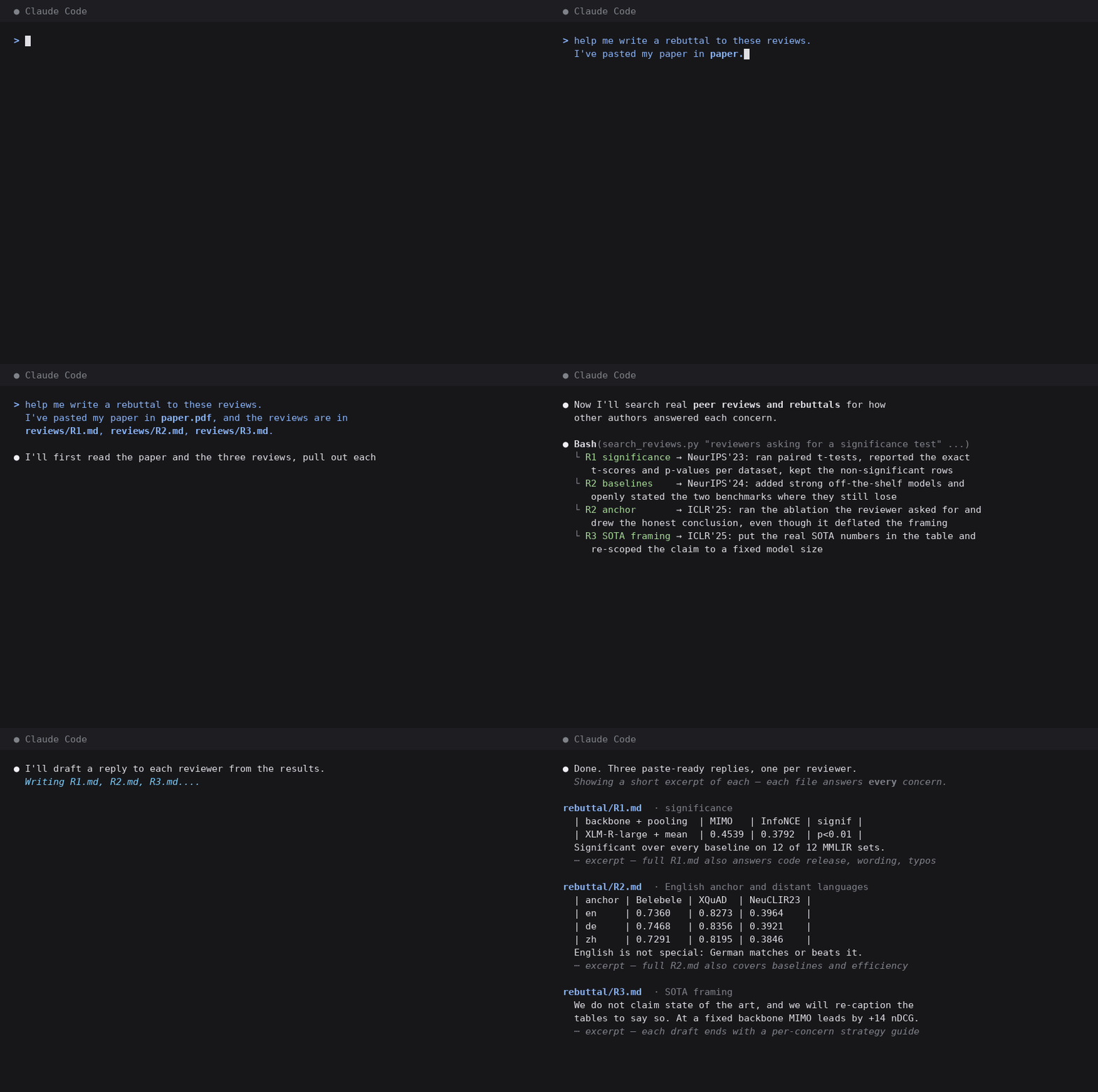
rebuttal-skills turns your paper and its reviews into a paste-ready, per-reviewer rebuttal. Two skills,
one install:
ReviewSearch |
A search engine we built and trained over 205,988 real peer reviews and their author rebuttals. Ask how any concern was actually answered, and how the author who won that argument phrased it. Useful on its own, and live in your browser. |
RebuttalDraft |
Turns your paper and its reviews into a paste-ready, per-reviewer reply. It grounds every concern in ReviewSearch, runs the experiments the rebuttal needs in your repo, and fills the draft with the real numbers it just measured. |
🧐 How it works
You ask for a rebuttal. The agent works through five steps and writes a rebuttal draft for you.
- Read & Extract: reads the paper and each review, pulls out every distinct concern, grades it by severity.
- Search & Ground: searches 200k+ reviews for how real authors answered each concern; keeps the single best reference.
- Plan & Run: inventories your workspace, designs the experiments, and runs them after your confirmation.
- Draft: writes the rebuttal from the real results, quantitative answers as tables.
- Self-Critique: re-reads its own draft as a hostile reviewer, checks every number against the artifact it came from, and revises.
You get a rebuttal draft you can paste, with real results in it.
Output lands in rebuttal/:
rebuttal/
├── R1.md, R2.md, R3.md      # per-reviewer, paste-ready: Overview → Draft → Guide
└── experiments/
    ├── RESULTS.md           # every number, with its provenance
    ├── grounding.md         # the precedent cases the drafts learned from
    └── ...                  # run logs and artifacts
😎 Why it's different
Most rebuttal helpers see only your paper and your reviews, and stop at a plan you have to fill in
yourself. This one is built on two things a prompt alone cannot give you.
🔍 ReviewSearch: a foundation review search engine
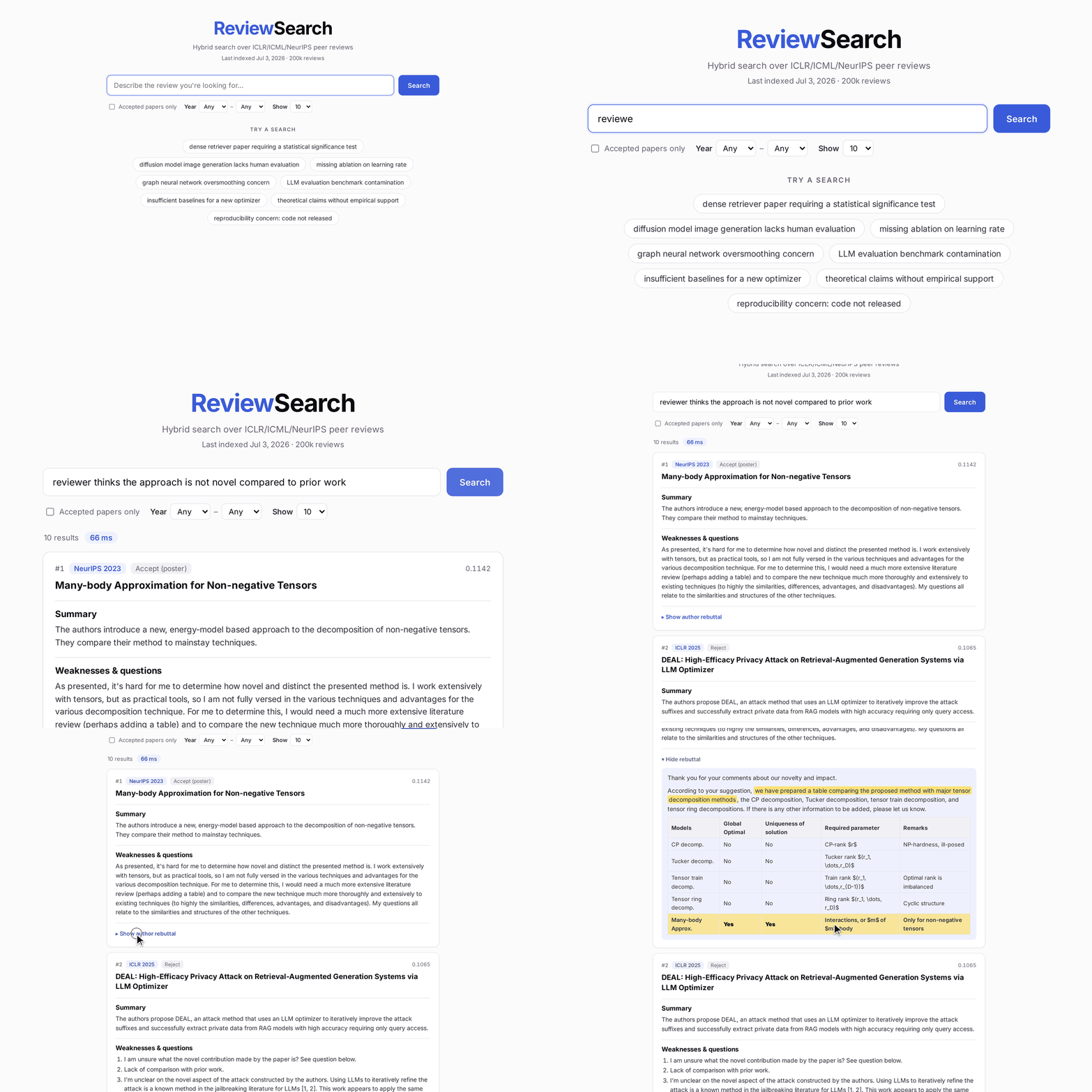
We did not prompt a model to imagine good rebuttals. We collected every ICLR / ICML / NeurIPS / COLM
review that has an author response, and trained our own hybrid retriever on them: a fine-tuned dense
encoder and a sparse encoder, fused with Reciprocal Rank Fusion (RRF).
For each of your concerns, it finds the case where a real author faced the same criticism, and keeps
their whole response. So your draft mirrors what actually moved a reviewer, not what merely sounds convincing.
The search engine is live: try it on the website
🔬 RebuttalDraft: your agent runs the experiments in your workspace
A plan is not a rebuttal. For each concern, it works out what the reviewer is really asking for, and, using the references from ReviewSearch, it decides how a convincing answer should look. Then it designs the actual experiment, and once you approve, runs it in your repo and writes the reply around the numbers it just measured.
"We will report this in the revision" becomes a table of real experimental results.
📦 Installation
Claude Code
/plugin marketplace add yjoonjang/rebuttal-skills
/plugin install rebuttal
Codex
Tell Codex:
Fetch and follow instructions from https://raw.githubusercontent.com/yjoonjang/rebuttal-skills/main/.codex/INSTALL.md
You get both skills: rebuttal:rebuttaldraft and rebuttal:reviewsearch. Then open the project with your paper and reviews and ask: "help me write a rebuttal to these reviews."
📚 Attribution
Review data from OpenReview (ICLR / ICML / NeurIPS / COLM), licensed CC-BY-4.0.
📄 License
MIT — see LICENSE.
Reviews (0)
Sign in to leave a review.
Leave a reviewNo results found