open-mcp-apps
Health Gecti
- License — License: AGPL-3.0
- Description — Repository has a description
- Active repo — Last push 0 days ago
- Community trust — 43 GitHub stars
Code Uyari
- process.env — Environment variable access in install.mjs
Permissions Gecti
- Permissions — No dangerous permissions requested
Bu listing icin henuz AI raporu yok.
Give your AI a persistent, reusable UI — it builds the component once, you keep it forever. An open MCP App engine.
open-mcp-apps
English | 简体中文
Give your AI a persistent, reusable UI. It builds the component once — you keep it forever.
open-mcp-apps is an open engine built on MCP Apps
(ui://, SEP-1865) — one of the two official extensions to the Model Context Protocol, adopted
into the protocol's new Extensions Track. It gives any MCP-Apps-capable host (Claude Desktop,
claude.ai, Codex, ChatGPT, …) three things the extension itself doesn't provide:
- A component registry the AI can write to. Ask for a UI that doesn't exist — the AI reads
the authoring guide, writes a single-file HTML component against a tinywindow.omaAPI,
and saves it. From that momentopen_<name>is a tool, in this chat and every future one. - Persistent, versioned data — separate from the UI. Components bind to generic
collections of items backed by SQLite plus an append-onlychange_eventledger. Every
mutation is an idempotent domain command (command_id) with optimistic concurrency
(expected_version). The AI and the human edit the same store — the widget is just a view. - A shell runtime so AI-written components actually work. Serving
ui://, the engine wraps
the component with the official MCP App bridge, host theming (Claude's design tokens,
light/dark), and thewindow.omadata API. What you write is a view; the protocol,
persistence, idempotency and theming are the engine's problem.
The loop
"make me a kanban"
      │
      ▼
list_components ── exists? ──► open_kanban          (reuse, instant)
      │ no
      ▼
get_component_guide ──► AI writes HTML ──► save_component
      │
      ▼
open_kanban  →  rendered inline, themed, persistent — reusable in every future chat
Components accumulate. Each one is single-purpose and independent — a board, a tracker, a
splitter — minted for the task in front of you and kept for the next time you need it.
What it looks like
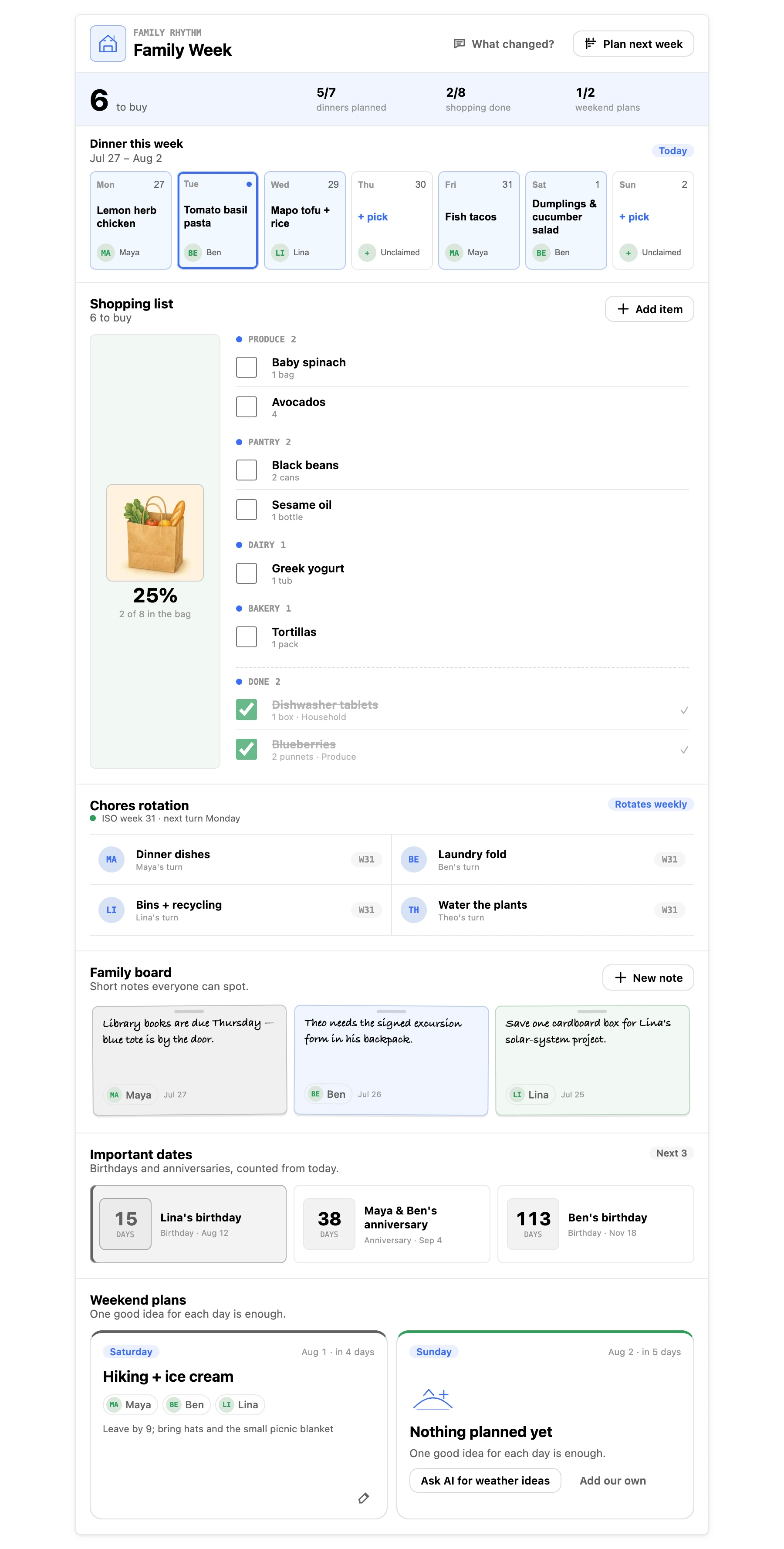
Apps render inline, in the chat you were already having. Ask for one and the AI writes it:
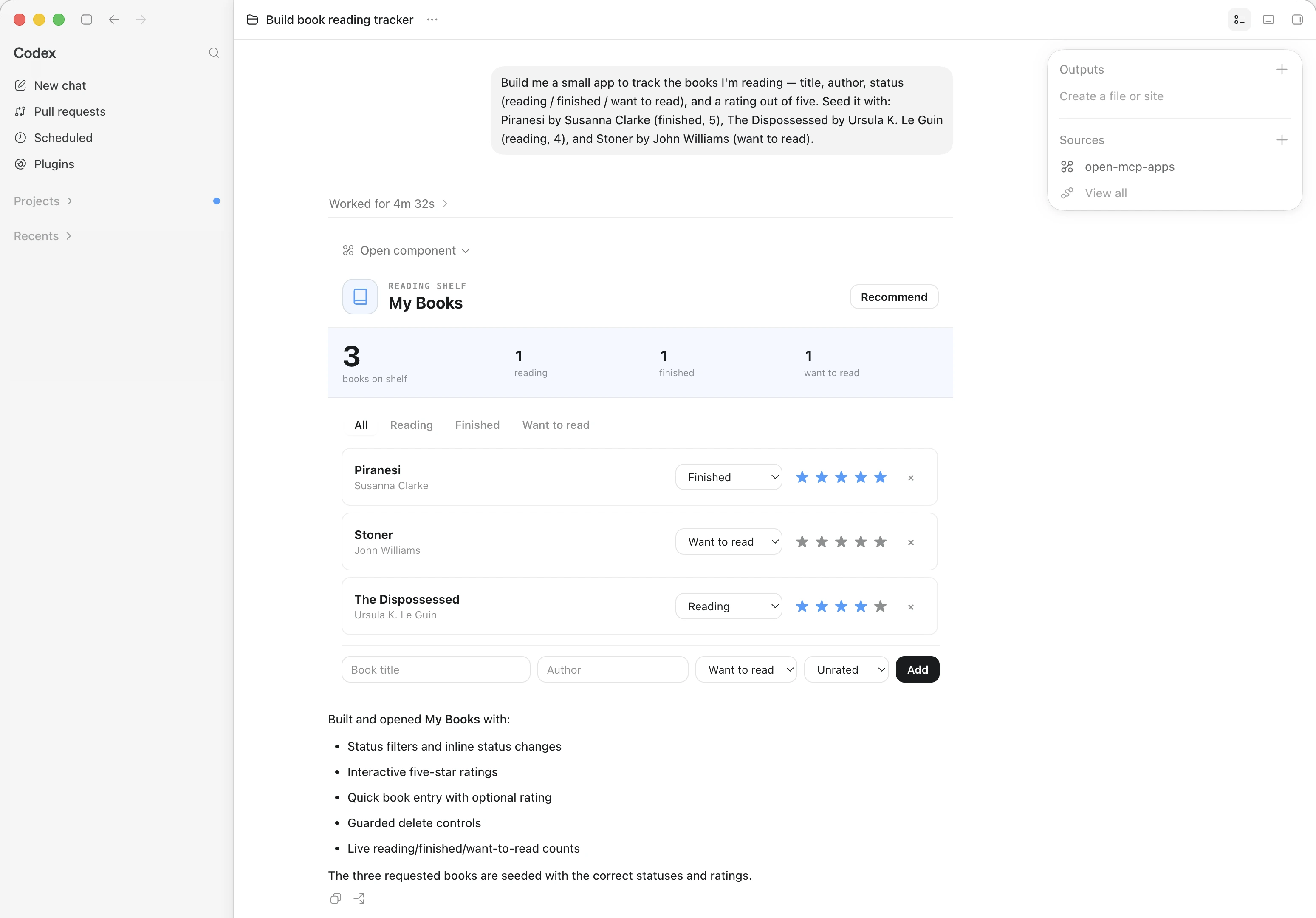
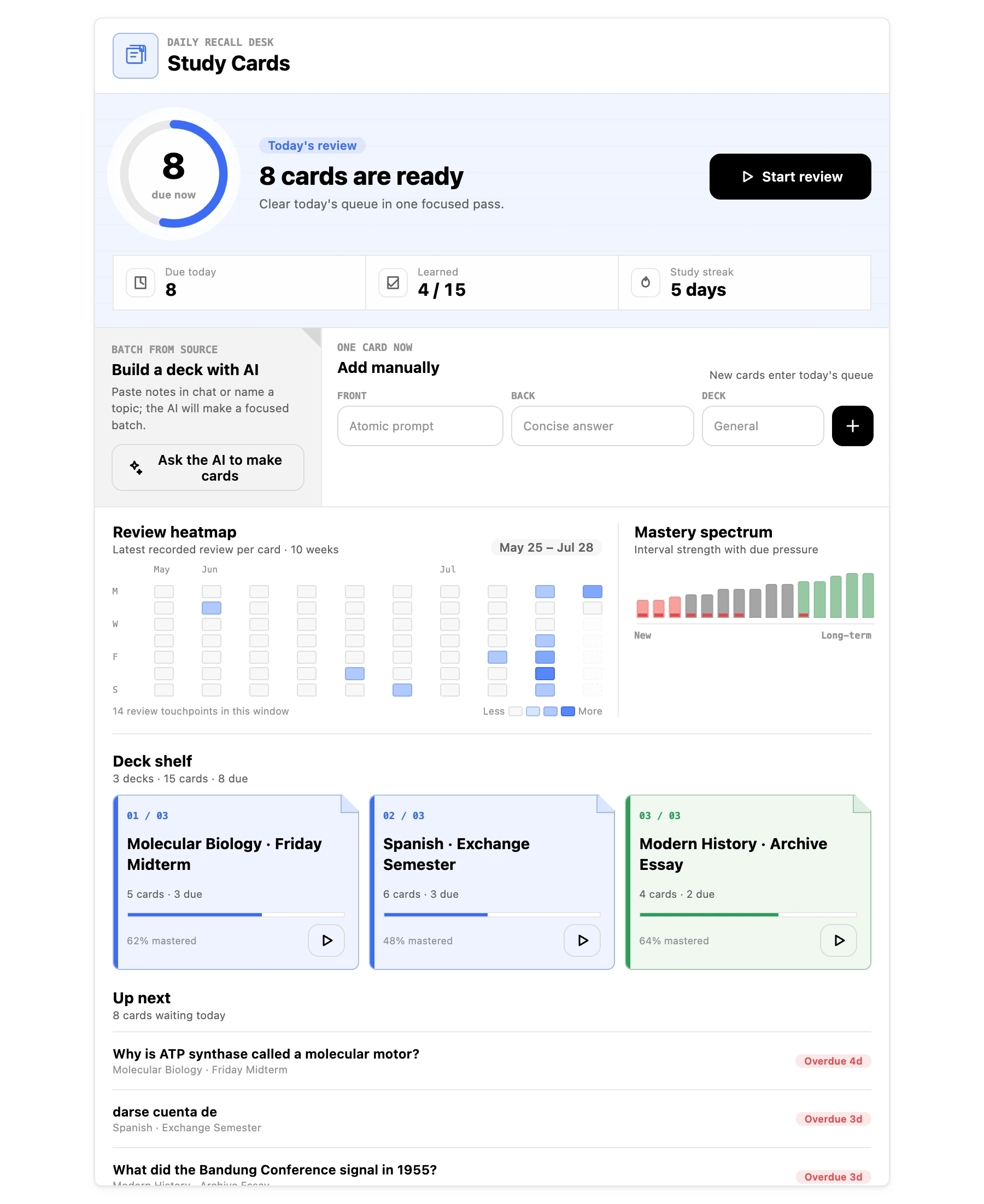
Come back in another chat — or another host — and it's still there, with your data in it:
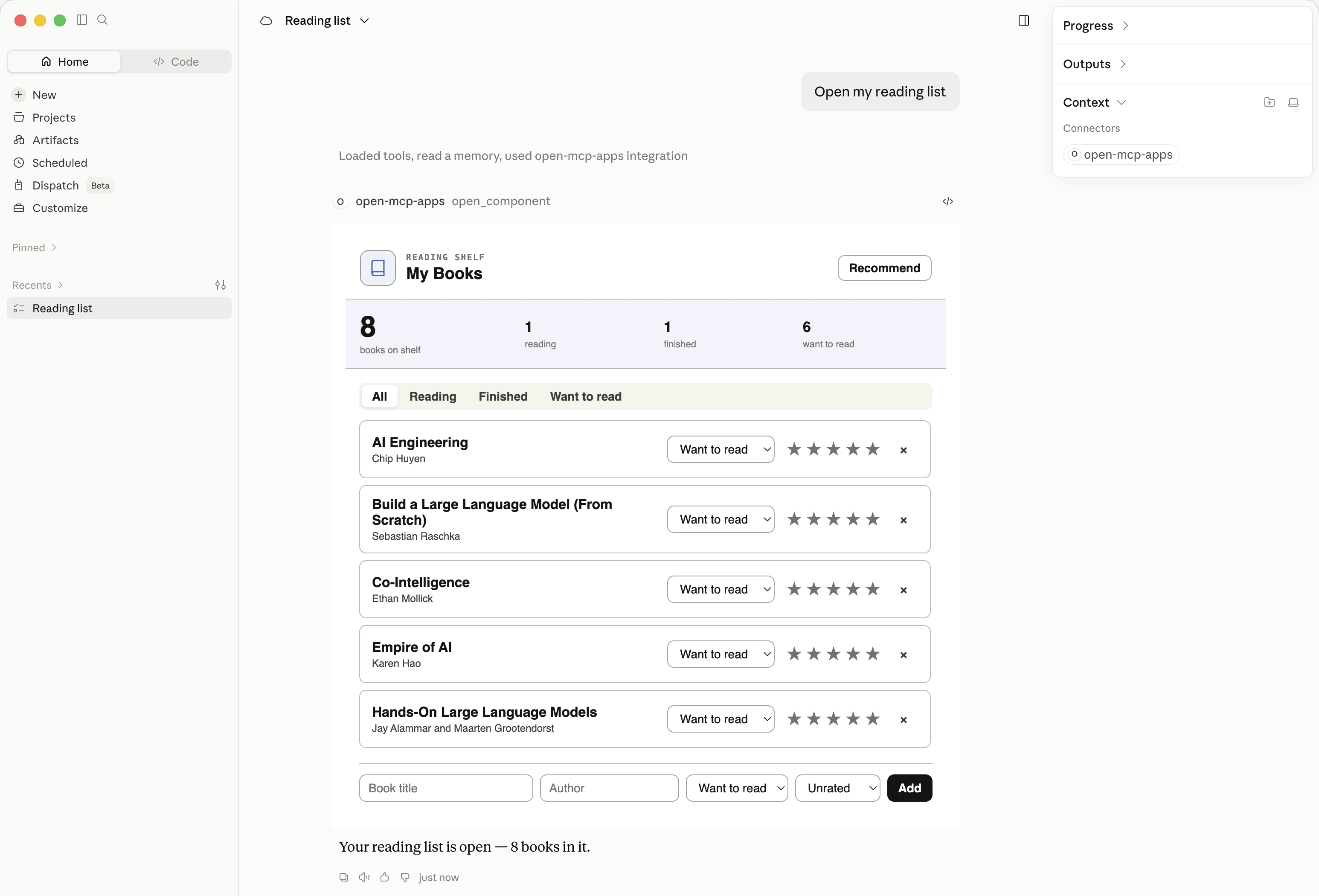
The built-in library ships 17 ready-made apps — real, working previews, installed in a click:
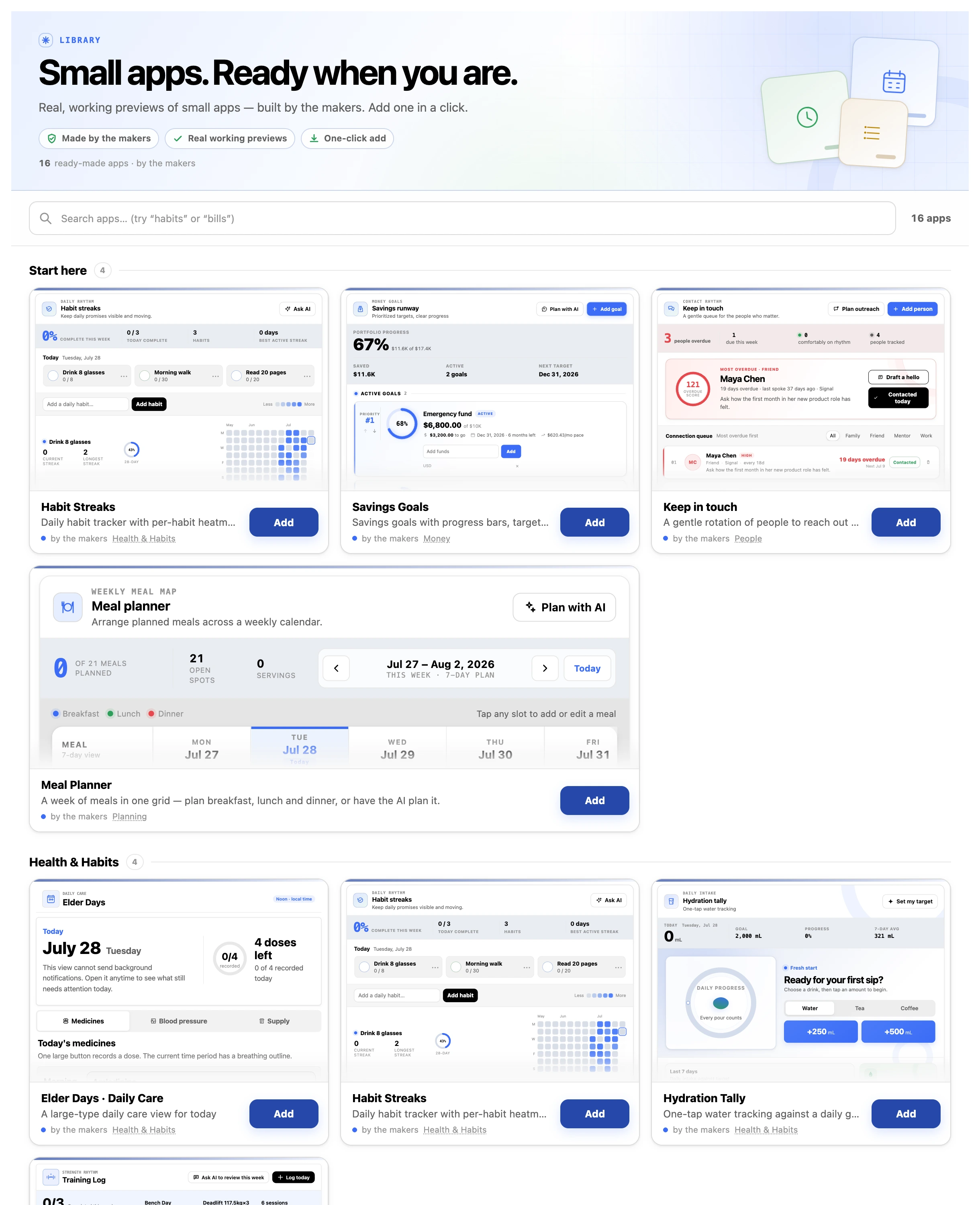
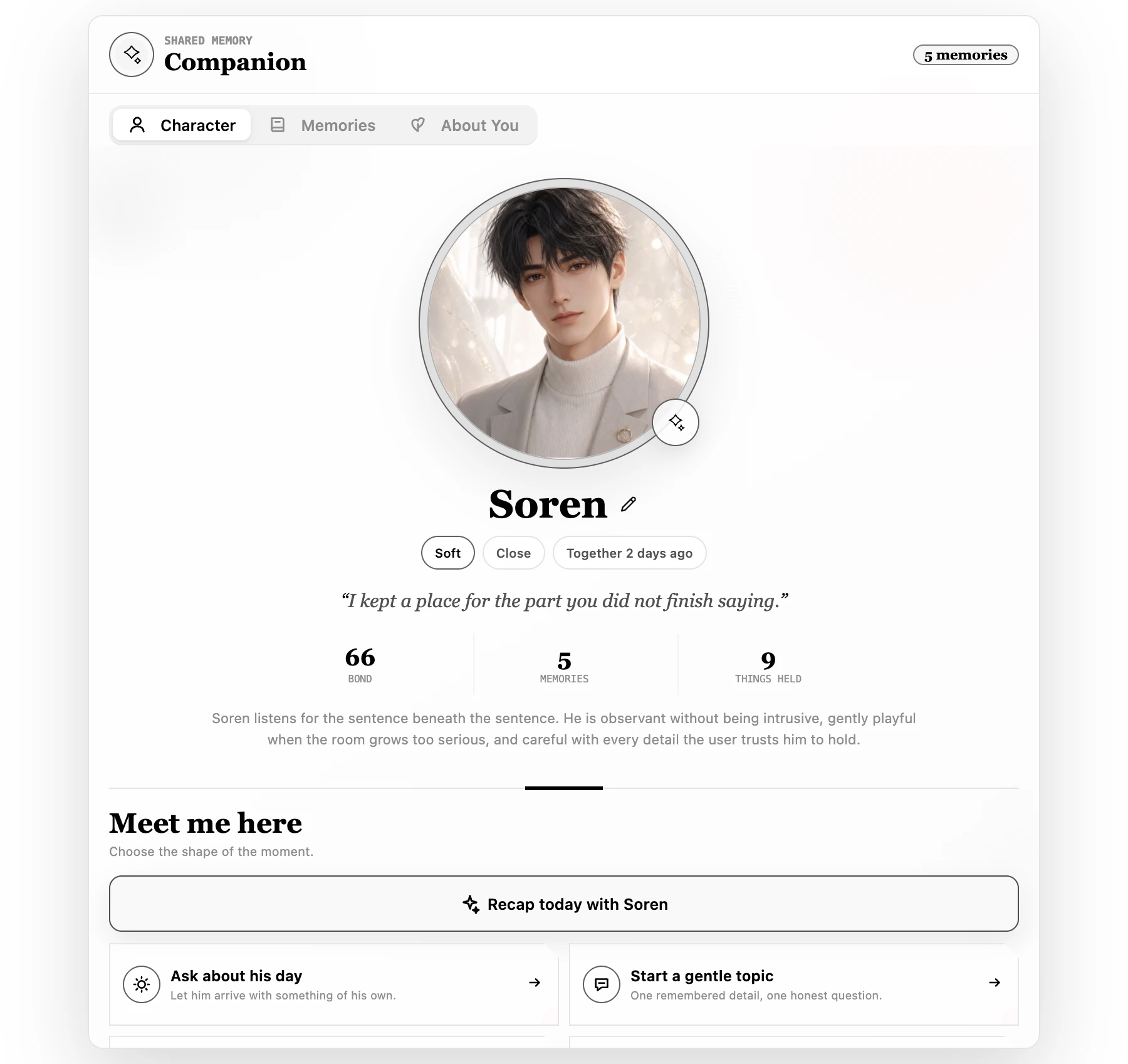 |
 |
 |
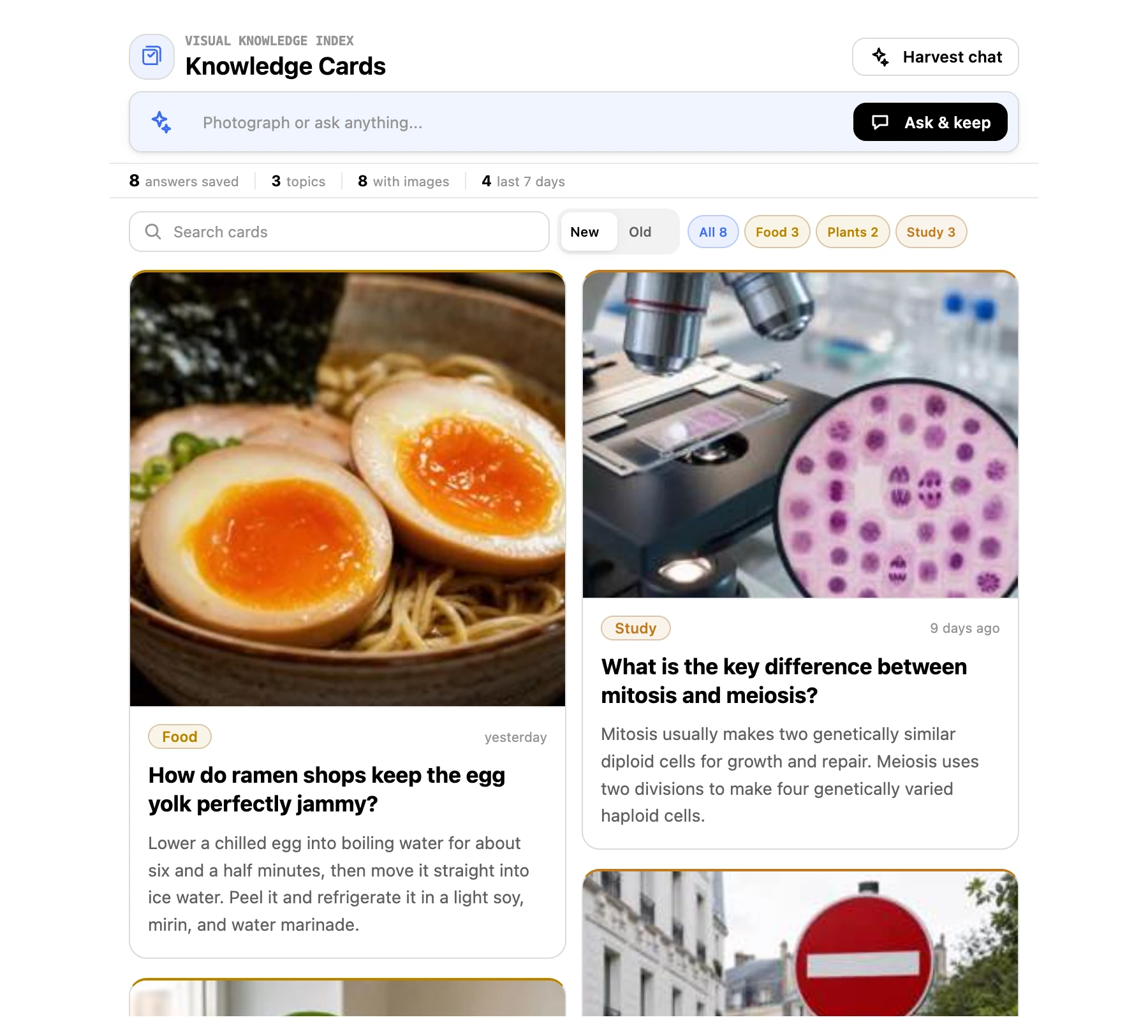 |
Every app above is a single HTML file bound to plain data collections — written with the samewindow.oma API and authoring guide your AI will use for the apps it builds you.
Install
open-mcp-apps runs as a local MCP server. First get it connected to your host (below); then
onboarding happens inside the host, separately — that's where the AI builds your first app.
Installing needs a shell, so the chat apps (Claude Desktop, Codex) can't install themselves — use one
of these:
As a user — one command:
curl -fsSL https://raw.githubusercontent.com/2nd1st/open-mcp-apps/main/install.sh | sh
It opens a short picker to choose which hosts to register into — Claude Desktop, Claude Code,
Codex — plus your permission preference. Skip it with -s -- --yes, or target one host with-s -- --host codex. (Or clone and run it yourself: git clone https://github.com/2nd1st/open-mcp-apps && cd open-mcp-apps && node install.mjs.)
A note on npm: the
open-mcp-appspackage on the npm registry is not this project —
that name is held by an unrelated package. Install from this repository, using the command above.
With a coding agent (Claude Code, Codex CLI — they have a shell), paste:
Read https://raw.githubusercontent.com/2nd1st/open-mcp-apps/main/install.md and follow it.
Either way, install.mjs registers the server into each host you pick (Claude Desktop, Claude Code,
Codex), idempotently — it never clobbers your other servers, pins a stable node launcher (native SQLite
ABI), reports what changed, and cleans up a pre-rename entry if one lingers. Your data lives in a
fixed per-user store (not inside the clone), so every host shares the same apps and data. After
installing or updating, fully quit and reopen the host (Cmd-Q, not just close the window) — it keeps
its old server process on the old data until fully quit. Remote / one-click install (no shell) is
coming later.
Uninstall: node uninstall.mjs unregisters the server from every host it finds — but keeps
your data: the shared store stays put, so re-installing later restores every component and all
data. Add --purge to also delete the shared store (irreversible), or --check to preview what
would happen without changing anything:
node uninstall.mjs           # unregister from all detected hosts — keeps your data
node uninstall.mjs --purge   # also delete the shared store (components + data), irreversible
node uninstall.mjs --check   # read-only: show what's registered and what would change
Reset escape hatch: the whole store is one SQLite file, open-mcp-apps.db, in~/Library/Application Support/open-mcp-apps/ (macOS), %APPDATA%\open-mcp-apps\ (Windows), or$XDG_DATA_HOME else ~/.local/share/open-mcp-apps/ (Linux). Fully quit your host(s), delete
that file (plus its -wal/-shm siblings), and you start clean — all components and data gone,
irreversibly, while staying installed.
Then get started — in your host. Restart it. New here? Tell the AI something like "I just
installed open-mcp-apps — show me how to use it with a couple of examples, and suggest a few apps that
fit how I work." It reads what it can build, draws on what it knows about you (your memory and past
chats — or it asks a couple of questions), and sets up a first app or two tailored to you. This step
is separate from install and lives in the host. Or just ask directly:
- "make me a board for what I'm juggling right now" → the AI writes it, seeds it, and opens it (persistent)
- "make me a habit tracker" → watch it read the guide, write the component, save it, open it
- close the app, reopen, ask again → everything is still there
First-run permissions: the first few tool calls each show an approval dialog — pick
"Always allow". The tool set is small and stable on purpose: read-only tools generally
skip approval, and the single open_component tool covers opening every component
(including ones the AI creates later), so after those first clicks it's zero-prompt forever.
You can also batch it in Settings → Connectors → open-mcp-apps → Tool permissions.
Note: a Desktop auto-update occasionally resets these decisions (upstream
#56954) — just re-allow.
Multiple widgets in one conversation work fine (habit-streaks + meal-planner side by side).
What's in the box
src/server.mjs |
stdio MCP server; single open_component path (per-component open_<name> tools opt-in) |
src/http.mjs |
/mcp (stateless Streamable HTTP) + /view/<name> browser viewer, bound to 127.0.0.1 |
src/store.mjs |
SQLite: items + component registry + change_event ledger (idempotent, OCC) |
src/shell-runtime.js |
browser runtime injected into every component (window.oma) |
src/shell.mjs |
wraps stored HTML with runtime + design-token fallbacks at serve time |
src/guide.mjs |
the authoring contract the AI reads before generating a component |
install-app.mjs |
install an app you wrote yourself, from a file — the one door into the registry that doesn't go through the AI |
components/ |
3 system components installed on seed (settings, dashboard, library) + 17 library apps — not auto-installed; browse the library app for live previews with sample data and one-click install |
npm test                     # every suite below, plus the static invariants and budget checks
node test/server-smoke.mjs   # 419 assertions over real stdio — incl. runtime component creation
node test/http-smoke.mjs     #  44 assertions over the HTTP transport (incl. SSE /events)
node test/provenance.mjs     #  39 assertions that a component's author — its trust tier — is not overwritable
node test/seed-smoke.mjs     #  14 assertions on the seed / design-kit pipeline
node test/files-smoke.mjs    #  45 assertions on the per-app file store (chunked uploads, GC races)
Writing an app yourself
The AI is the usual author, but it isn't the only one — its context window shouldn't be the ceiling
on what an app can be. Build one in your own editor, with your own bundler, and install it:
node install-app.mjs ./my-app.html              # yours, full trust — same as an AI-authored app
node install-app.mjs ./my-app.html --sandboxed  # untrusted: runs behind the runner, no capabilities
node install-app.mjs --list                     # what's installed, and under whose provenance
One self-contained HTML document, ≤200 KB, no network requests — the engine injects the kit CSS,
the host's design tokens and window.oma. The trade: the AI can no longer iterate on it (your file
is the source of truth, you rebuild and re-install), though it can still read the source, and the
app shares your data like any other. Provenance is not overwritable in either direction, so an app
installed --sandboxed stays sandboxed until you delete it.
RUNTIME.md is the contract — the window.oma API in both modes, what a
sandboxed app can still do, and the traps that only bite authors who aren't the AI. It carries a
version (oma.contract) and test/runtime-contract.mjs pins it to the two runtimes' real
surfaces, so it can't drift from them silently.
Design positions (why it's built this way)
- UI and data persist separately, both versioned. Components are views; collections are
truth; the ledger is history. Swap either without losing the other. - The AI talks domain commands, never SQL, never raw state. That's what makes human+AI
concurrent editing safe (idempotency + optimistic concurrency at the command layer). - Extension-first. Everything rides the MCP Apps bridge — no host-private APIs.
One codebase should serve every host that rendersui://. - Single-purpose, not composite. Each app owns one scenario and its own collection; the
engine mints a new one rather than cramming features into an old one. System apps (settings,
dashboard) are the deliberate exception — engine-owned, privileged, allowed to see across
collections.
Security model
Trust is tiered by where a component came from. Locally-authored and system components run in
direct mode. The engine also ships a runner — a sandboxed srcdoc iframe with a
CSP-first document and a minimal read-scoped bridge — as the mandatory execution mode for any
component that isn't locally trusted, plus reserved security:* / policy:* config keys that
generic data writes can't touch and an out-of-band privileged writer.
Honest status: everything in the OSS version — your apps, AI-built apps, and the built-in
library apps (all first-party) — runs locally in direct mode with full trust; there is nothing
third-party to sandbox yet. The runner is built and tested but dormant: it is the ready seam
for shared/published components later, where review + sandboxing arrive together. SeeSECURITY.md for the full threat model and trust tiers.
Host support (live-tested 2026-07-22; ChatGPT web row updated 2026-07-28)
| Host | Renders widgets | Human clicks widget | AI operates data | Same store |
|---|---|---|---|---|
| Claude Desktop (local stdio) | ✅ | ✅ full loop incl. sendMessage reply |
✅ | ✅ |
Browser viewer (/view/<name>) |
✅ | ✅ (no chat attached — sendMessage degrades to a notice) |
via CLI AI | ✅ |
Codex desktop (ChatGPT app, enable_mcp_apps flag) — tested against a local engine; remote not established |
✅ experimental | ◐ updates/toggles from widget clicks work; adds still blocked host-side (openai/codex#28912, see KNOWN-ISSUES) | ✅ | ✅ |
Claude Code (CLI, claude mcp) |
— (text fallback by design) | — | ✅ | ✅ |
| codex CLI / IDE | — (text fallback by design) | — | ✅ | ✅ |
| ChatGPT web (Work mode) | ✅ live-tested 2026-07-28 (remote HTTPS) — renders at full height, no clamping | ✅ a widget button added a row and it stuck | ✅ | ✅ |
Everything rides the MCP Apps bridge, so host fixes upstream (e.g. #28912) benefit this
project with zero changes.
On Codex specifically: plugins are registered on the web side, so a locally-installed engine
is reached as an MCP server, not as a plugin — which is the right path for a self-hosted
install anyway. Widget rendering in the ChatGPT desktop app also appears to depend on how you are
signed in (we have seen it work under an account sign-in; not yet established under an API key).
Status / roadmap
Early v0 — proven end-to-end on Claude Desktop; cross-vendor render + shared store proven
on Codex desktop and the browser viewer.
- engine: registry + shell + generic data commands + ledger
- system components installed (settings, dashboard, library); 17 library apps with live previews, one-click install
- AI component creation loop (guide → save → dynamic tool)
- in-context onboarding (ask how to use it → the AI reads your history/memory and builds a tailored starter set)
- security foundation: trust tiers + sandboxed runner + reserved config keys
- multi-host discovery installer (Claude Desktop · Claude Code · Codex) + shared per-user store
-
npxone-command install - remote (Streamable HTTP) mode → claude.ai / ChatGPT / mobile
- component export/import → sharing → community library (review + runner sandbox activate here)
License
Two licenses, split by directory (LICENSING.md has the full map):
- The engine — everything outside
components/— is AGPL-3.0-only
(LICENSE). Run a modified version as a network service and you
must offer its source to your users (AGPL §13). Improvements to the engine
stay open. - The official components in
components/— the apps you run
and edit — are MIT (components/LICENSE). Open, copy,
fork, and redistribute any app freely; changing your own dashboard is never a
legal question.
The names open-mcp-apps, openmcp.app, SecondFirst, and 2nd1st,
and their logos, are not granted by either license — seeTRADEMARKS.md. Fork the code freely; give your fork its own name.
Copyright © 2026 2nd1st.
Component contributions need nothing signed — MIT in, MIT out. For engine
contributions, open an issue first: a CLA is intended but is still a draft
(CONTRIBUTING.md · CLA.md).
© 2026 2nd1st
Yorumlar (0)
Yorum birakmak icin giris yap.
Yorum birakSonuc bulunamadi