aicode-toolkit
Health Pass
- License — License: AGPL-3.0
- Description — Repository has a description
- Active repo — Last push 0 days ago
- Community trust — 151 GitHub stars
Code Pass
- Code scan — Scanned 12 files during light audit, no dangerous patterns found
Permissions Pass
- Permissions — No dangerous permissions requested
This toolkit provides a set of MCP servers designed to help AI coding agents work more reliably across large codebases. It manages project conventions and uses templates to scaffold new projects, review code edits, and guide file-level design.
Security Assessment
Overall Risk: Low. The automated code scan checked 12 files and found no dangerous patterns, hardcoded secrets, or requests for risky permissions. Because this is an MCP server designed to orchestrate coding tasks, it inherently executes commands (such as `npx`) and interacts with your local file system to apply templates and scaffolding. However, the package relies on standard `npx` execution without requiring elevated system privileges. No malicious exfiltration of sensitive data or suspicious network requests were detected.
Quality Assessment
The project appears to be actively maintained, with its last push occurring today. It has garnered 151 GitHub stars, indicating a healthy level of community trust and adoption. It is legally clear to use under the AGPL-3.0 license. Keep in mind that this license is a strong copyleft agreement; if you modify the core toolkit code and host it as a network service, you are required to make your modified source code available to users.
Verdict
Safe to use, provided your project complies with the AGPL-3.0 copyleft requirements.
Toolkit for Coding Agents to work reliably with repo of any size.
AI Code Toolkit


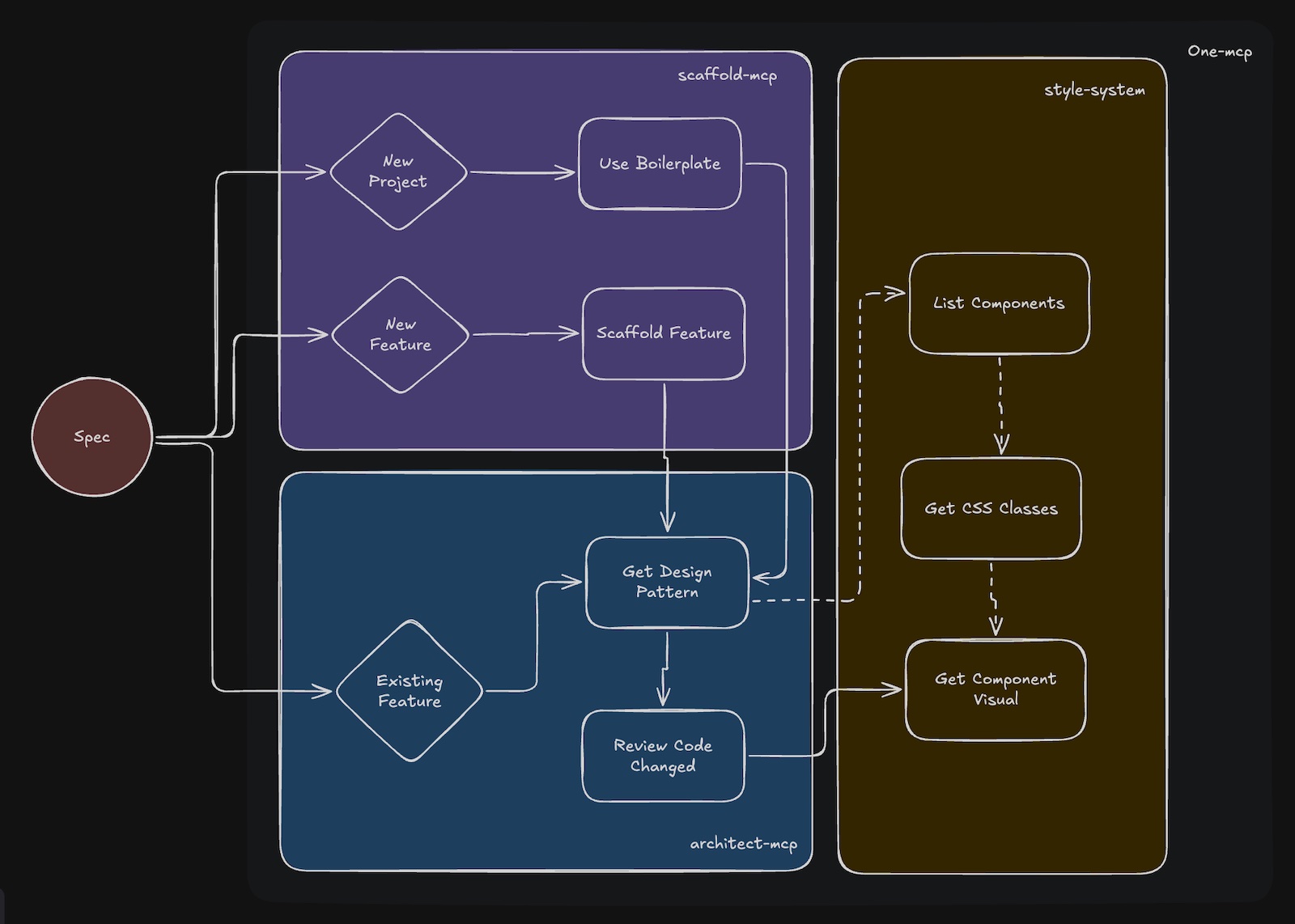
This repo provides:
- project and feature scaffolding via templates
- file-level design guidance before edits
- rule-based review after edits
- design-system discovery for frontend work
Why This Exists
As projects scale, conventions in docs like CLAUDE.md, AGENTS.md, and style guides become hard to keep concise and consistently applied by AI agents. This toolkit moves those conventions into reusable template configs (scaffold.yaml, architect.yaml, RULES.yaml) so agents can discover only the relevant guidance when needed.
Quick Start
Requirements:
- Node.js >= 18
- an MCP-compatible agent such as Claude Code, Cursor, or Gemini CLI
1. Initialize a Workspace
# Existing project
npx @agiflowai/aicode-toolkit init

# New project
npx @agiflowai/aicode-toolkit init --name my-app --project-type monolith
This creates templates/ and .toolkit/settings.yaml. Projects reference templates through sourceTemplate in project.json or .toolkit/settings.yaml.
2. Configure MCP
init can configure MCP automatically. For manual setup, add the servers you need to your agent config.
Example for Claude Code:
{
  "mcpServers": {
    "scaffold-mcp": {
      "command": "npx",
      "args": ["-y", "@agiflowai/scaffold-mcp", "mcp-serve", "--admin-enable"]
    },
    "architect-mcp": {
      "command": "npx",
      "args": [
        "-y", "@agiflowai/architect-mcp", "mcp-serve",
        "--admin-enable",
        "--design-pattern-tool", "codex",
        "--review-tool", "gemini-cli"
      ]
    },
    "style-system": {
      "command": "npx",
      "args": ["-y", "@agiflowai/style-system", "mcp-serve"]
    }
  }
}
Useful flags:
--admin-enable: enable admin/template-authoring tools--design-pattern-tool <tool>: use an LLM to filter design patterns--review-tool <tool>: use an LLM for review output
3. Verify
Ask the agent:
What boilerplates are available?
It should call list-boilerplates. If not, restart the agent.
Repo Layout
AI agent
  ├─ scaffold-mcp
  ├─ architect-mcp
  ├─ style-system
  └─ one-mcp
        ↓
     templates/
       ├─ scaffold.yaml
       ├─ architect.yaml
       └─ RULES.yaml
scaffold-mcp
Generates projects and feature boilerplate from templates.
Core tools:
list-boilerplatesuse-boilerplatelist-scaffolding-methodsuse-scaffold-method
Admin tools:
generate-boilerplategenerate-feature-scaffoldgenerate-boilerplate-file
architect-mcp
Provides file-specific patterns before edits and reviews changes against RULES.yaml.
Core tools:
get-file-design-patternreview-code-change
Admin tools:
add-design-patternadd-rule
style-system
Provides theme, CSS class, and component discovery tools.
Core tools:
list_themesget_css_classesget_component_visuallist_shared_componentslist_app_components
one-mcp
Provides progressive tool discovery to reduce MCP prompt overhead.
Typical Workflow
Create a Project
User: "Create a Next.js app called dashboard"

Agent:
1. list-boilerplates
2. use-boilerplate
3. Project is generated
Add a Feature
User: "Add a products API route"

Agent:
1. list-scaffolding-methods
2. use-scaffold-method
3. Feature files are generated
Edit a File Safely
User: "Add a products page"

Agent:
1. get-file-design-pattern
2. edit the file using the returned patterns and rules
3. review-code-change
4. fix any violations
Style a Component
User: "Style the button with our theme colors"

Agent:
1. get_css_classes
2. list_shared_components
3. update the component
4. get_component_visual
Template Structure
templates/
└── nextjs-15/
    ├── scaffold.yaml
    ├── architect.yaml
    ├── RULES.yaml
    └── boilerplate/
scaffold.yaml
Defines boilerplates and feature scaffolds.
boilerplates:
  - name: nextjs-15-app
    description: "Next.js 15 with App Router"
    targetFolder: apps
    includes:
      - boilerplate/**/*

features:
  - name: add-route
    description: "Add route with page and layout"
    variables_schema:
      name: { type: string, required: true }
    includes:
      - features/route/**/*
architect.yaml
Defines file-level patterns that should be shown before edits.
patterns:
  - name: server-component
    description: "Default for page components"
    file_patterns:
      - "**/app/**/page.tsx"
    description: |
      - Use async/await for data fetching
      - Keep components focused on rendering
      - Move business logic to server actions
RULES.yaml
Defines review rules. Rules can be inherited from a global templates/RULES.yaml.
version: '1.0'
template: typescript-lib
rules:
  - pattern: src/services/**/*.ts
    description: Service Layer Implementation Standards
    must_do:
      - rule: Create class-based services with single responsibility
        codeExample: |-
          export class DataProcessorService {
            async processData(input: string): Promise<ProcessedData> {
              // Implementation
            }
          }
      - rule: Use dependency injection for composability
    must_not_do:
      - rule: Create static-only utility classes - use functions
        codeExample: |-
          // ❌ BAD
          export class Utils {
            static format(s: string) {}
          }

          // ✅ GOOD
          export function format(s: string): string {}
Project Types
Monorepo
Each project references its template in project.json.
my-workspace/
├── apps/
│   └── web-app/
│       └── project.json
├── packages/
│   └── shared-lib/
│       └── project.json
└── templates/
Monolith
Monoliths use .toolkit/settings.yaml.
version: "1.0"
projectType: monolith
sourceTemplate: nextjs-15
Built-in Templates
Included templates:
| Template | Stack | Includes |
|---|---|---|
nextjs-drizzle |
Next.js 15, App Router | TypeScript, Tailwind 4, Drizzle, Storybook |
typescript-lib |
TypeScript Library | ESM/CJS, Vitest, TSDoc |
typescript-mcp-package |
MCP Server | Commander, MCP SDK |
Custom Templates
For template authoring, start from an existing repo or template and use the admin prompts:
/generate-boilerplate
/generate-feature-scaffold
For design/rule authoring, use:
add-design-patternadd-rule
Supported Agents
| Agent | Config Location | Status |
|---|---|---|
| Claude Code | .mcp.json |
Supported |
| Cursor | .cursor/mcp.json |
Supported |
| Gemini CLI | .gemini/settings.json |
Supported |
| Codex CLI | .codex/config.json |
Supported |
| GitHub Copilot | VS Code settings | Supported |
| Windsurf | - | Planned |
Packages
| Package | Description |
|---|---|
| @agiflowai/aicode-toolkit | CLI for init and config sync |
| @agiflowai/scaffold-mcp | Scaffolding server |
| @agiflowai/architect-mcp | Pattern and review server |
| @agiflowai/style-system | Design-system server |
| @agiflowai/one-mcp | MCP proxy for progressive discovery |
Contributing
See CONTRIBUTING.md.
License
Reviews (0)
Sign in to leave a review.
Leave a reviewNo results found