read-aware
Health Pass
- License — License: AGPL-3.0
- Description — Repository has a description
- Active repo — Last push 0 days ago
- Community trust — 334 GitHub stars
Code Fail
- process.env — Environment variable access in .github/workflows/release.yml
- rm -rf — Recursive force deletion command in apps/desktop/src-tauri/dmg/generate-background.sh
Permissions Pass
- Permissions — No dangerous permissions requested
No AI report is available for this listing yet.
An ebook reader with a self-evolving agent: it remembers your reading across books, and plugins extend the reader and the agent alike.

ReadAware
Reading that remembers.
An agent-first reader with a plugin system at its core: one agent that understands your books, your annotations, and the ideas you keep returning to — inside an app built to be extended, eventually by the agent itself.
ReadAware is free and built in the open. If it makes your reading better,
give it a star — stars are how new
readers find the project.
One reader. One agent. Open-ended plugins.
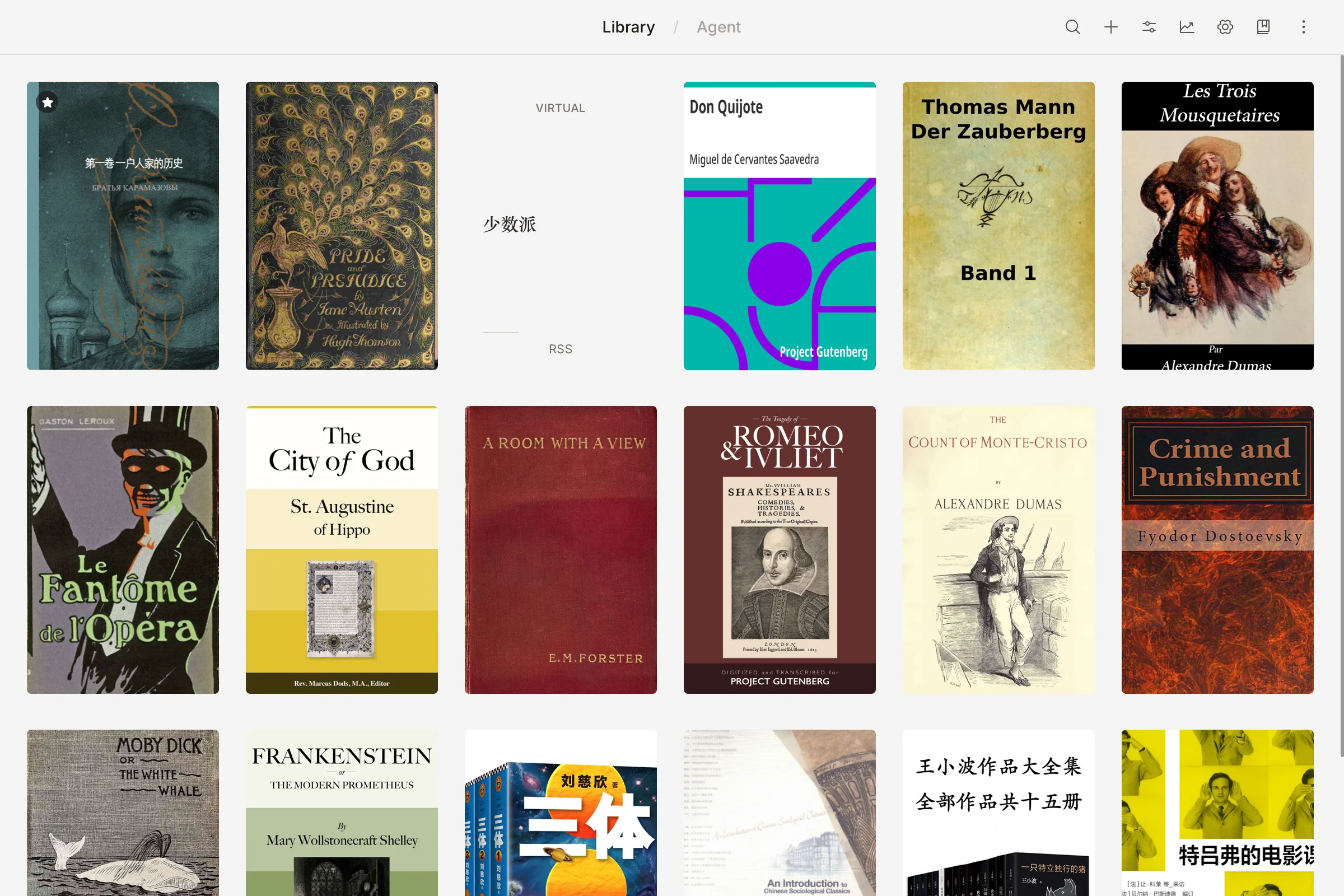
ReadAware is a free and open-source reader for macOS, Windows, Linux, Android,
and iOS. At its center is a single agent that can use tools, answer questions
in context, and build an evolving memory from the books, passages, notes, and
conversations that matter to you. Around it is a sandboxed plugin system that
extends the reader — and the agent — from the inside.
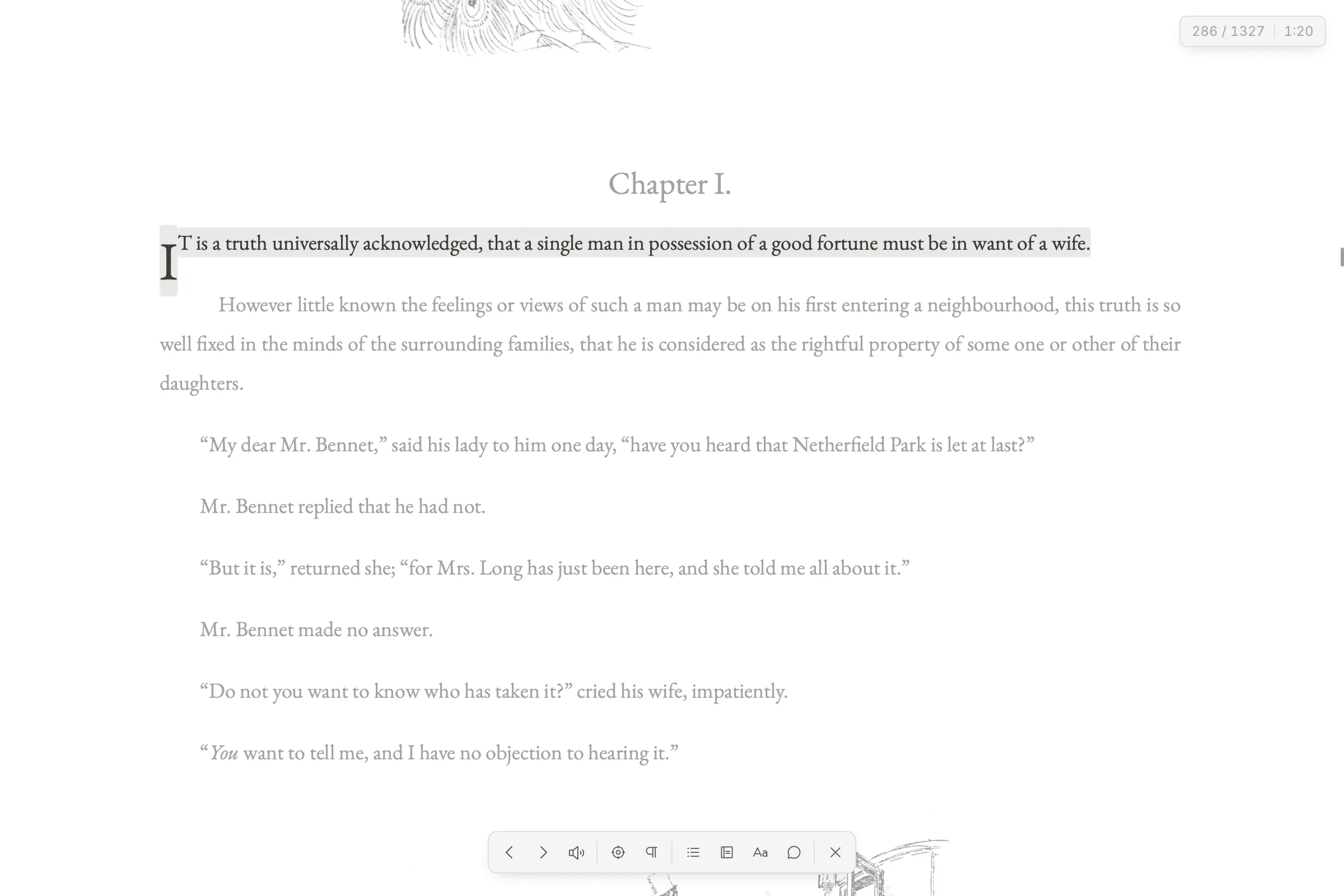
- Stay with the sentence. Sentence-by-sentence reading keeps the page calm,
focused, and ADHD-friendly. - Mark things your way. Underline, highlight, and write notes without
breaking your reading flow. - Ask from the page. Chat with AI about an unfamiliar passage, follow an
idea further, or look up a word without leaving the book. - Extend it from the inside. Install sandboxed plugins from the built-in
marketplace: read-aloud voices, reading themes, dictionaries, feeds that
read like books, new commands — and new tools the agent picks up and uses. - Keep words for later. Annotate vocabulary as you read so it can become
useful review material instead of a one-off lookup. - Make the page yours. Switch languages, color themes, fonts, type sizes,
spacing, and other reading settings. - See the habit forming. Reading-time statistics make progress visible
across books and sessions. - Pick up on another device. Sync books, reading progress, annotations,
conversations, and memory with end-to-end encryption, through the ReadAware
relay or your own WebDAV server. - Bring almost any book. EPUB, MOBI, AZW3, FB2, PDF, TXT, HTML, CBZ, and
CBR share one reading, selection, annotation, and progress model, with no
format conversion.
|

|
Why it feels different
Most apps bolt AI onto a sidebar. ReadAware is built the other way around: one
agent orchestrates retrieval, context assembly, tool use, and memory, and the
interface is a surface it can act on. Plugins extend the same seams from the
outside — sandboxed and permission-gated, they add voices, themes,
dictionaries, feeds, commands, and tools the agent immediately knows how to
use.
That combination is the long game: an agent that operates the app through the
same contracts plugins are written against can, eventually, extend the app for
you. The reader is designed to evolve itself.
The craft underneath is the floor, not the pitch. The interface stays quiet,
coherent, and tuned to the pixel — typography first, controls only when they
are useful, no AI slop — and the agent stays beside the reading experience
rather than taking it over, because a reader earns attention with the page,
not the chrome.
Platforms
| Platform | Status |
|---|---|
| macOS | Available |
| Android | Available |
| Windows | Available; broader real-world testing is welcome |
| Linux | Available; broader real-world testing is welcome |
| iOS | Supported; App Store distribution is not available yet |
Cross-device sync
Cross-device sync is available now. Books, reading progress, highlights, notes,
conversations, and memory sync between your devices. Supported app, AI, and
plugin preferences roam too; device-specific settings such as reading typography
stay local. Choose where your encrypted data is stored:
- ReadAware relay. Connect your ReadAware account in Settings > Data & Sync.
See pricing for storage allowances and plans. - Your own WebDAV server. Install the WebDAV Sync plugin from the
marketplace, configure its server URL, username, password (or app password),
and folder, then connect WebDAV in Settings > Data & Sync. This uses your
WebDAV storage instead of the ReadAware relay and does not require a ReadAware
sync account.
Both options use the same sync engine: data is encrypted on your device before
upload, and the remote stores ciphertext. Use the same encryption passphrase
on every device connected to the same account or WebDAV folder. Keep it safe:
it cannot be recovered if forgotten. The WebDAV login password and the
encryption passphrase serve different purposes.
ReadAware remains local-first: reading and writing notes work offline, changes
merge when you reconnect, and disconnecting sync keeps your local data. Optional
AI inference is separate from sync encryption: relevant reading context is sent
to your chosen model provider.
Architecture
ReadAware uses one agent to orchestrate retrieval, context assembly, tool use,
and memory updates. Chat transcripts are source material rather than the memory
system itself: durable context is built from the reader's ongoing trace across
books.
ReadAware app
├── React interface          shelf, reader, annotations, chat, settings
├── Local agent runtime      tools, retrieval, context, memory updates
├── Plugin runtime           sandboxed workers, marketplace, contribution points
├── SQLite                   product data, event log, FTS, projections
└── Native filesystem        imported books and large blobs

Remote services
├── Model provider           optional inference through the reader's account
└── Sync storage             ReadAware relay or WebDAV; encrypted events and blobs
The source of truth is local. Raw domain events form the syncable record;
memory and search state are rebuildable projections. Retrieval uses SQLite FTS
plus scope, recency, and importance signals rather than requiring a vector
database.
Plugins and the agent reach the product through the same domain API layer, and
every read, write, and event carries its origin — the user, a plugin, or the
agent. What the agent can do today, a plugin can extend tomorrow, and vice
versa.
The repository itself is a Bun workspace monorepo orchestrated by Turborepo.
| Path | Responsibility |
|---|---|
apps/web |
React 19 interface, TanStack Router, Jotai, Tailwind CSS v4 |
apps/desktop |
Tauri 2 shell and native storage/platform commands |
apps/landing |
Public website and release downloads |
packages/agent |
Agent runtime, model adapters, retrieval, and memory pipelines |
packages/core |
Domain entities, events, and storage contracts |
packages/ui |
Shared design system and co-located Storybook stories |
packages/plugin-types |
The public plugin API surface |
plugins/ |
First-party plugins: dictionary, themes, RSS, read-aloud voices, WebDAV sync |
Architecture decisions and target data contracts live indocs/agent-architecture.md anddocs/data-model.md. The plugin API reference and
publishing guide live at
readaware.app/docs/plugins.
Releases
Version tags build macOS, Windows, Linux, and Android artifacts through.github/workflows/release.yml. See the
latest release for
current downloads and installation files.
Sponsors
ReadAware is free and open source. A heartfelt thank-you to the sponsors
who help keep it that way:
- ikeba Inc. — a Tokyo-based technology company
building AI and medical businesses.
Interested in sponsoring ReadAware? Say hello on the
ReadAware Discord.
Community
Questions, ideas, bug reports, and reading stories are welcome on the
ReadAware Discord.
License
ReadAware is free and open source under the GNU AGPL-3.0.
The public plugin API, @read-aware/plugin-types,
is MIT-licensed so third-party plugins can use any license they like.
Reviews (0)
Sign in to leave a review.
Leave a reviewNo results found