android2linux
Health Gecti
- License — License: MIT
- Description — Repository has a description
- Active repo — Last push 0 days ago
- Community trust — 78 GitHub stars
Code Uyari
- process.env — Environment variable access in apps/dev/cdp-eval.mjs
- network request — Outbound network request in apps/dev/cdp-eval.mjs
- process.env — Environment variable access in apps/dev/live-css.mjs
- network request — Outbound network request in apps/dev/live-css.mjs
Permissions Gecti
- Permissions — No dangerous permissions requested
Bu listing icin henuz AI raporu yok.
Turn an Android phone into a Linux pocket computer you control: guides, an agent skill, phone notes, scripts and apps for postmarketOS and Ubuntu Touch.

Turn an Android phone into a Linux pocket computer you control.
A phone running Linux (postmarketOS, Ubuntu Touch) needs no Google account. It's a real computer in your pocket: a terminal, SSH, your own scripts and web apps, an interface you can change. It won't hide you from intelligence agencies (yet?): the modem still runs closed firmware and the carrier still knows where you are. But it shares far less with Google and the companies that buy ads.
It won't run everything an Android phone does: banking apps and other apps that require Android or Google's integrity checks won't work. A practical setup is to carry the Linux phone and keep an Android phone at home for those apps.
Getting Linux onto a particular phone means finding the right port, unlocking the bootloader, flashing safely and fixing whatever hardware doesn't work yet. The information is spread across wikis, forums and source code, and mistakes can brick the phone. An AI assistant can do that research for your exact phone, check each step before it runs, and explain what it does. This repository gives the assistant the method, the safety rules and what has already been learned, and gives you the same material to read.
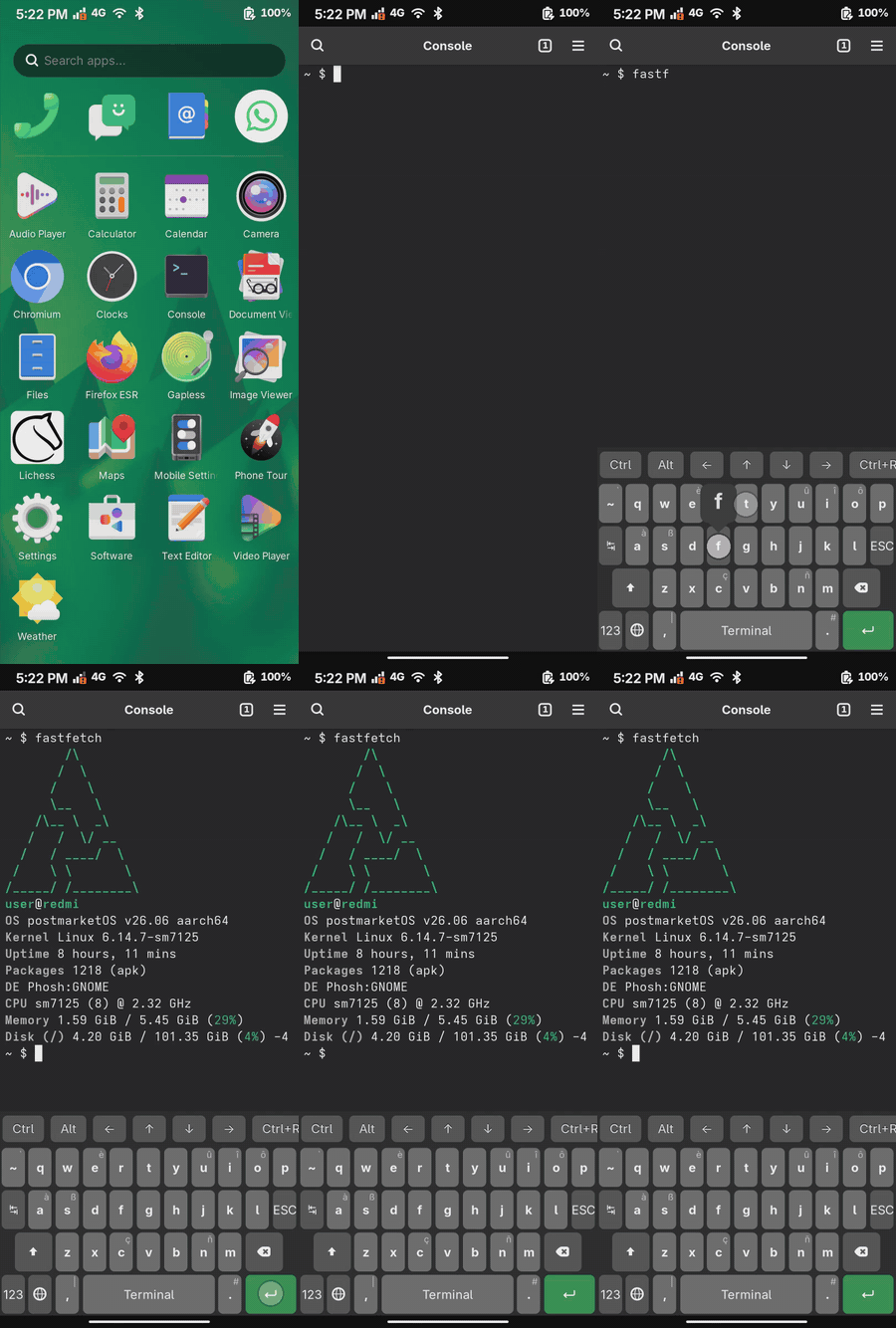
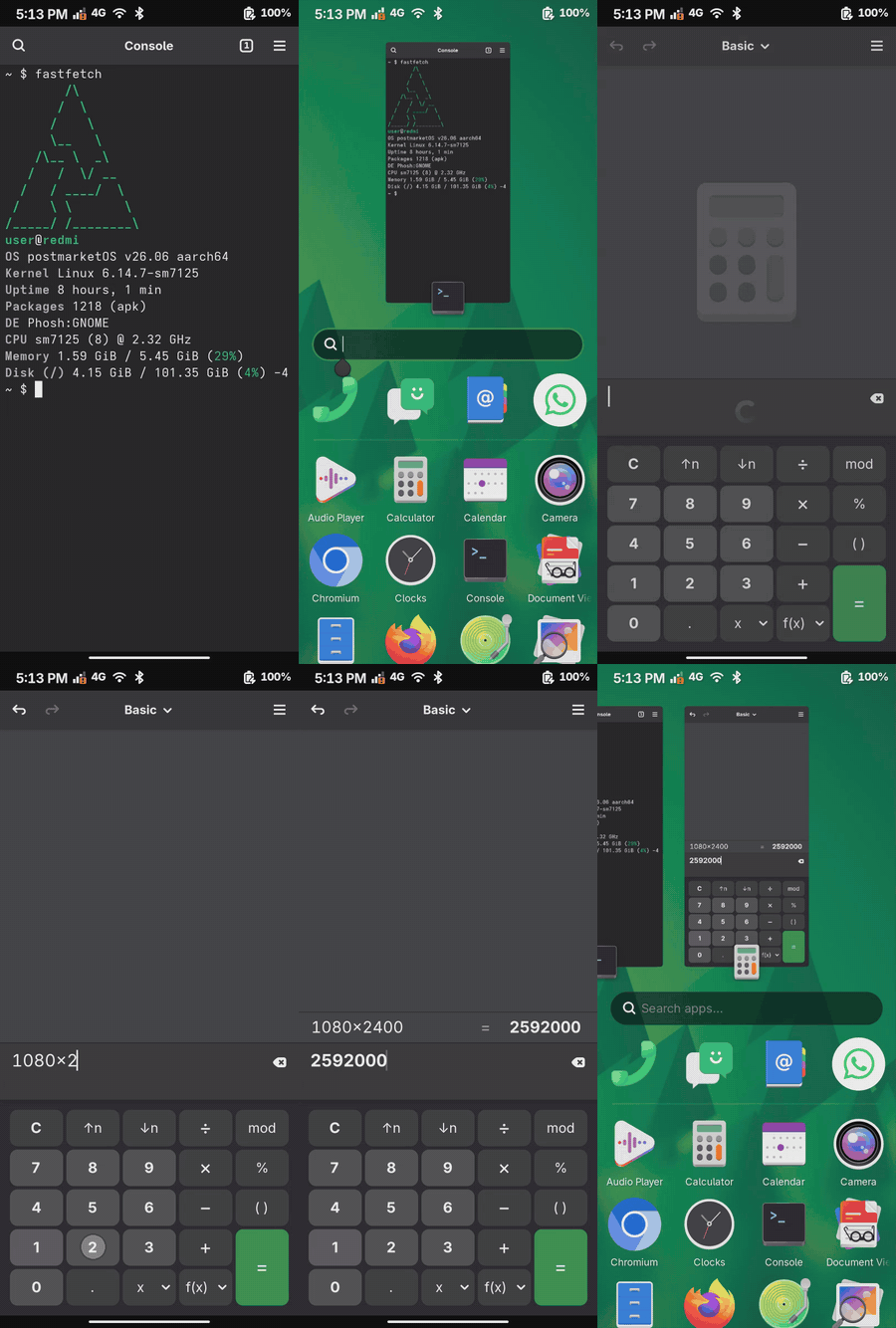
| Terminal | Search and switching apps | Chess |
|---|---|---|
 |
 |
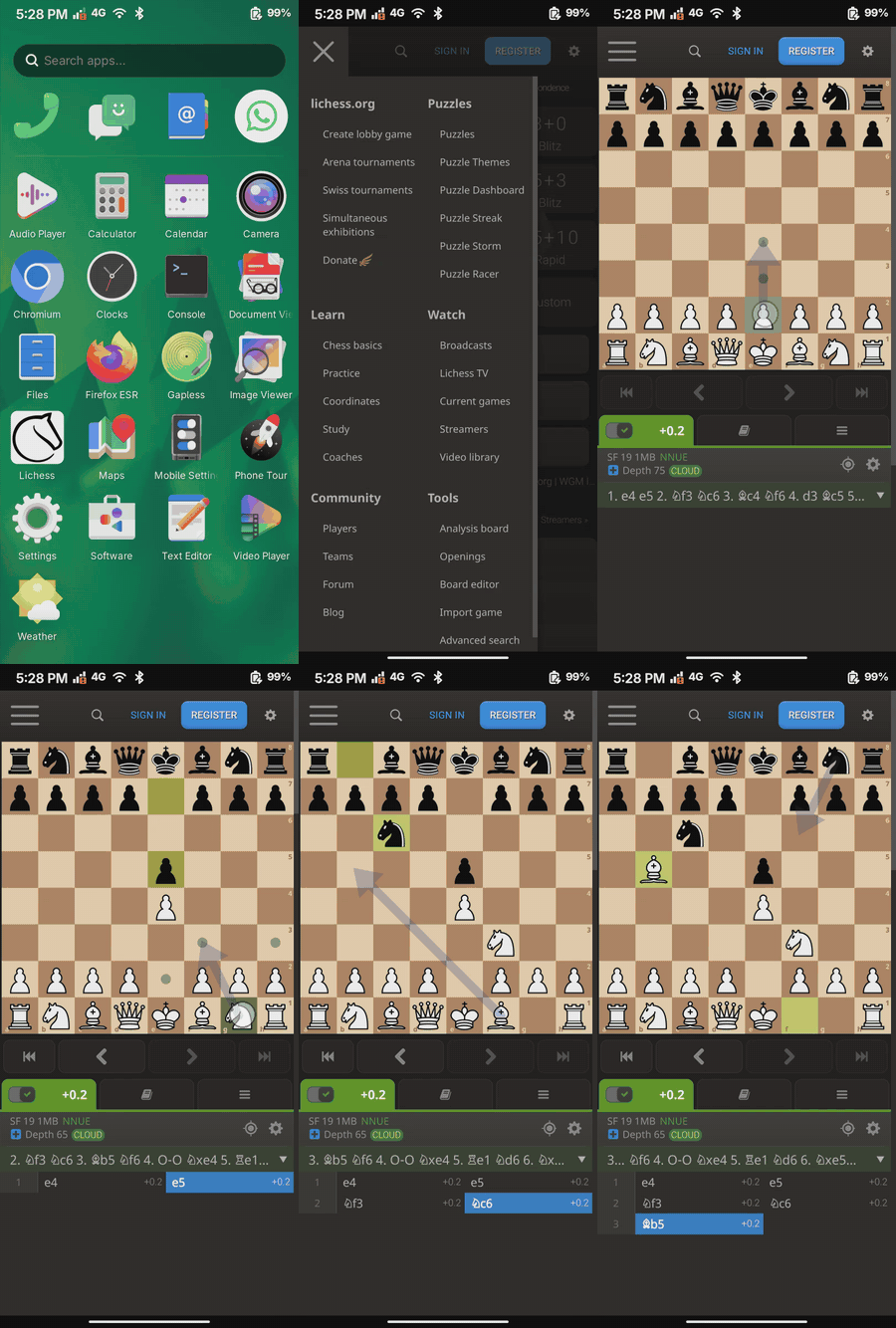 |
postmarketOS v26.06 with Phosh on a Redmi Note 9 Pro Max. The dots show the taps and swipes.
Contents
- What's in this repository
- Phones
- Getting started
- Safety
- Guides
- Apps
- Make it yours
- Contributing
- License
What's in this repository
skills/android2linux/ |
An agent skill: the method, the safety rules, and which guide to read when |
| Guides | The method step by step, for any phone, and a list of gotchas |
phones/ |
One folder per phone: what runs on it, how to install it, what works, the fixes it needs |
apps/ |
Web apps reworked for phone screens, with one installer |
scripts/ |
Tools for the common steps: phone facts, ROM checks, patching, modem diagnostics, screenshots, a kiosk |
AWESOME.md |
The systems, tools, apps and communities this builds on |
Phones
| Phone | Chip | Linux | Status |
|---|---|---|---|
Xiaomi Redmi Note 9 Pro Max (excalibur) |
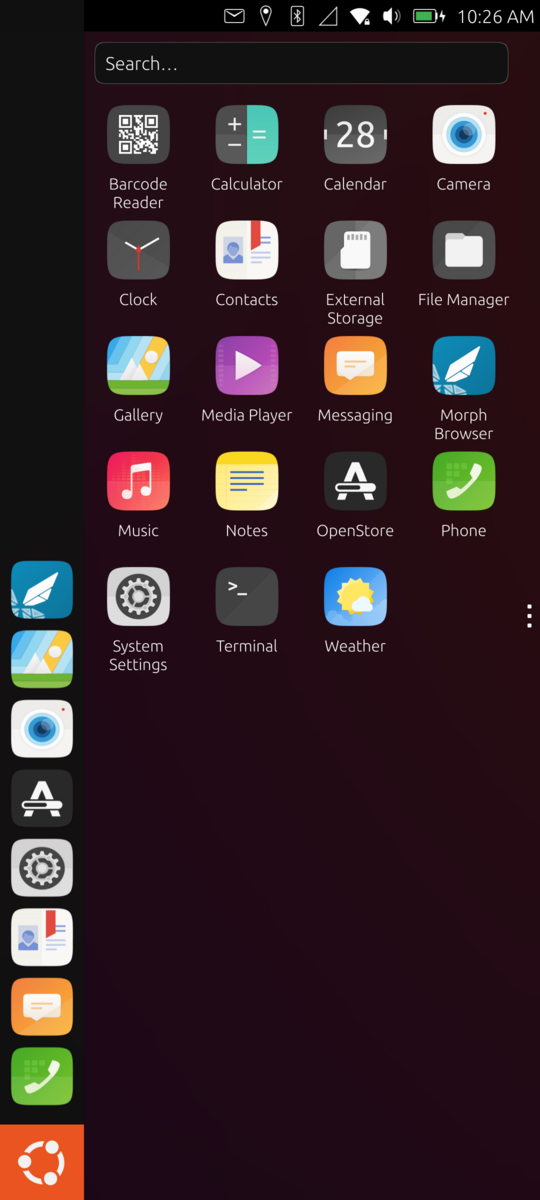
Snapdragon 720G | Ubuntu Touch 24.04; postmarketOS v26.06 | Both run. postmarketOS needs two fixes for this variant; no charger driver; only the macro camera, with a device tree of its own |
Xiaomi Poco X8 Pro Max (dash) |
Dimensity 9500s | none yet | No Linux port; Linux runs only inside Android |
The full list, generated from each phone's phone.json, is in phones/.
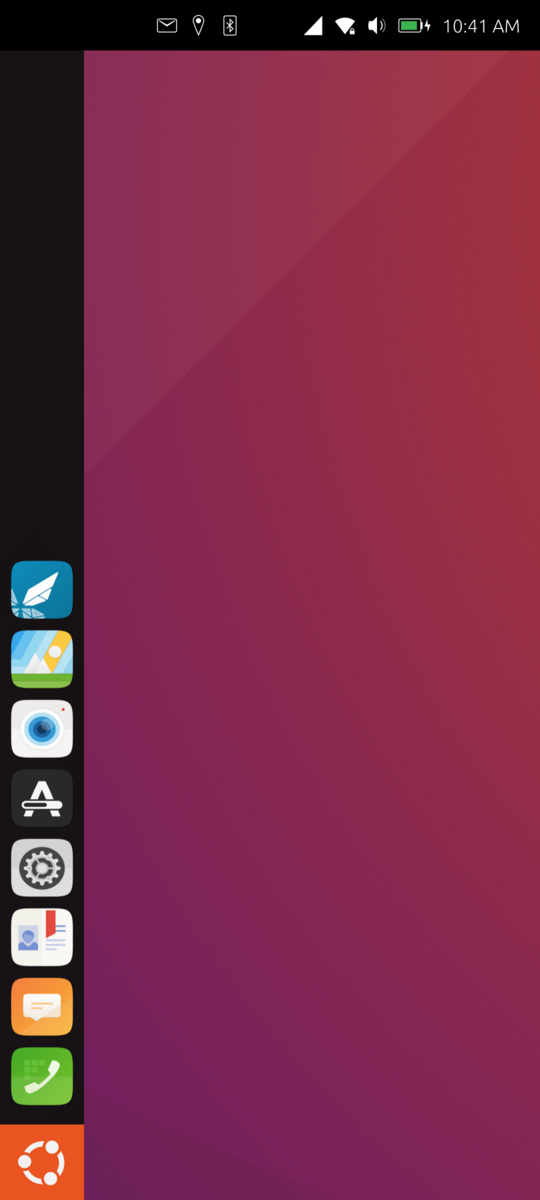
| Ubuntu Touch 24.04 | postmarketOS v26.06 | |
|---|---|---|
 |
 |
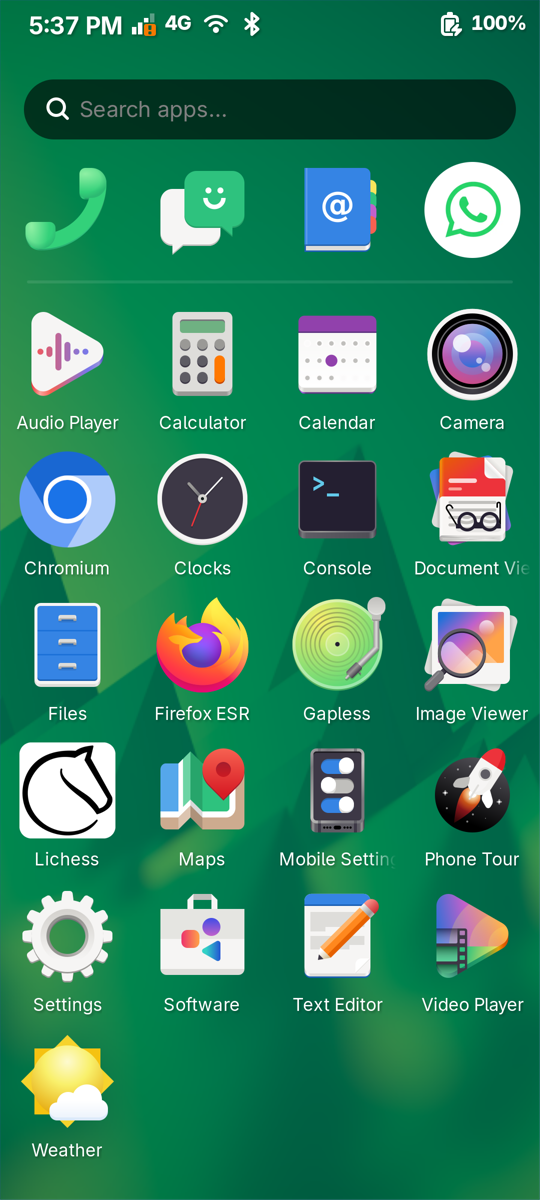 |
| Home screen | App drawer | App grid in Phosh |
Getting started
With an AI assistant. Install the skill so the assistant uses it when you talk about Linux on phones. Link it from a clone rather than copying it: the skill reads the phones/ and apps/ folders next to it, and git pull keeps everything current. For Claude Code:
git clone https://github.com/android2linux/android2linux ~/android2linux
mkdir -p ~/.claude/skills
ln -s ~/android2linux/skills/android2linux ~/.claude/skills/android2linux
Then start a session in a working folder and describe what you want, for example "I have a Redmi Note 9 Pro, can it run Linux?" or "my SIM doesn't work on postmarketOS". Other assistants that support agent skills can load the same folder.
Without one. Start with Assess your phone and follow the links.
Safety
Flashing a phone can destroy it and its data. The skill and the guides keep to a few rules: never relock a bootloader on modified software, never flash an image for another codename, never go below the phone's anti-rollback index, and back up before anything that wipes. The assistant explains each step before running it; if it doesn't, ask. You are responsible for your device.
Guides
| Guide | Covers |
|---|---|
| Assess your phone | Whether it can run Linux: codename, ports, unlock policy |
| Unlock a Xiaomi from Linux | Mi Unlock binding, MiUnlockTool with browser login |
| Safe flashing | Read-only checks, verifying ROMs, anti-rollback, never relock |
| Ubuntu Touch | Installer, access, the read-only system, notch fix |
| postmarketOS on an unsupported variant | pmbootstrap from git, the U-Boot match patch, flashing |
| Qualcomm modem debugging | From DeviceNotReady to a working modem |
| Charging without a driver | What the hardware defaults give, and how to measure |
| Cameras on a mainline Qualcomm kernel | Why no camera shows, which sensors can work, a fix booted from a second entry |
| Chromium kiosk, and Chromium in Phosh | Full-screen web UIs with cage; web apps that fit the screen |
| Working from your PC | SSH, adb, screenshots, sudo, pitfalls |
| Communities and AI | Each project's rules, and how to report bugs |
| Gotchas | Pitfalls, one line each |
Apps
Many services have no Linux app, only a web app made for a desktop screen. Each folder in apps/ turns one into a phone app: the site in a Chromium window that fits the screen, an extension that adapts the layout where needed, and an icon in the app grid. So far: WhatsApp, with an extension for a one-pane phone layout, and Lichess, which fits as it is. apps/dev/ has the tools to build more.
Make it yours
The interface of a Linux phone is ordinary software that can be changed or replaced. Phosh, the default on postmarketOS, is one of several shells to choose from (Plasma Mobile and Sxmo are others); apps/ turns web apps into phone apps; and a whole interface can be a web page running full-screen in Chromium (Chromium kiosk).
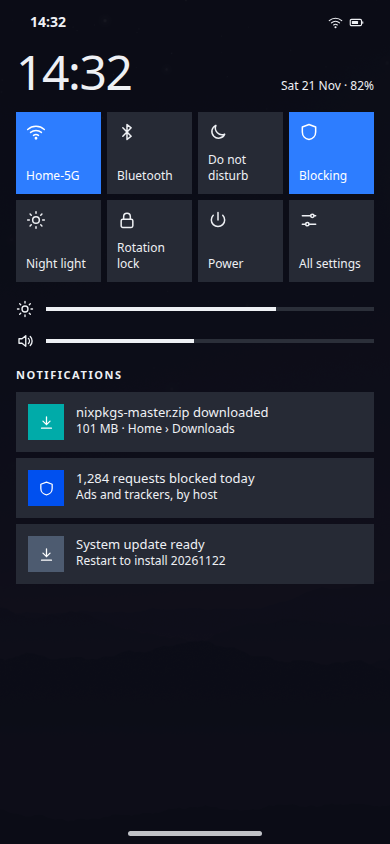
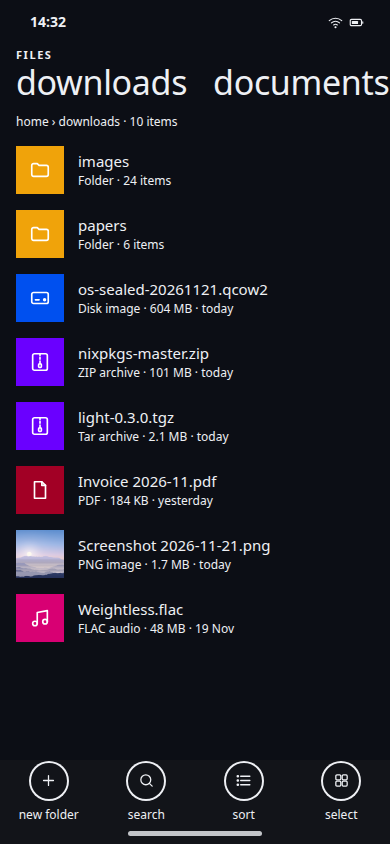
In progress: a phone interface
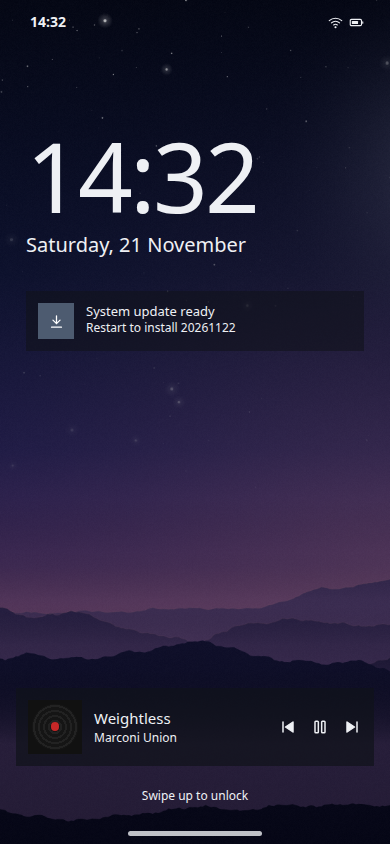
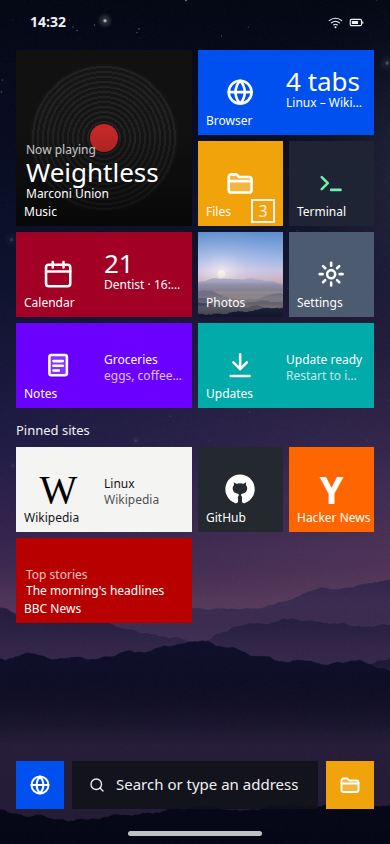
A phone interface inspired by Metro, the design of Windows Phone: live tiles, an address bar at the bottom, quick settings that count the trackers blocked. These are design renders, not screenshots yet.
| Lock screen | Start | Quick settings | Files |
|---|---|---|---|
 |
 |
 |
 |
Contributing
Phones, apps, guide fixes and scripts are welcome, including a phone that can't run Linux yet. A change starts with an issue and arrives as a pull request; CONTRIBUTING.md has the workflow, what to test and what to leave out. Contributions made with an AI assistant are welcome here; postmarketOS forbids them in its own spaces (Communities and AI).
License
MIT, see LICENSE. The projects this builds on (postmarketOS, Ubuntu Touch, U-Boot, the Linux kernel, tqftpserv and others) have their own licenses. This repository contains no firmware: vendor firmware is proprietary and stays on your own machine.
Yorumlar (0)
Yorum birakmak icin giris yap.
Yorum birakSonuc bulunamadi