claude-friends
Health Uyari
- License — License: MIT
- Description — Repository has a description
- Active repo — Last push 0 days ago
- Low visibility — Only 5 GitHub stars
Code Gecti
- Code scan — Scanned 6 files during light audit, no dangerous patterns found
Permissions Gecti
- Permissions — No dangerous permissions requested
Bu listing icin henuz AI raporu yok.
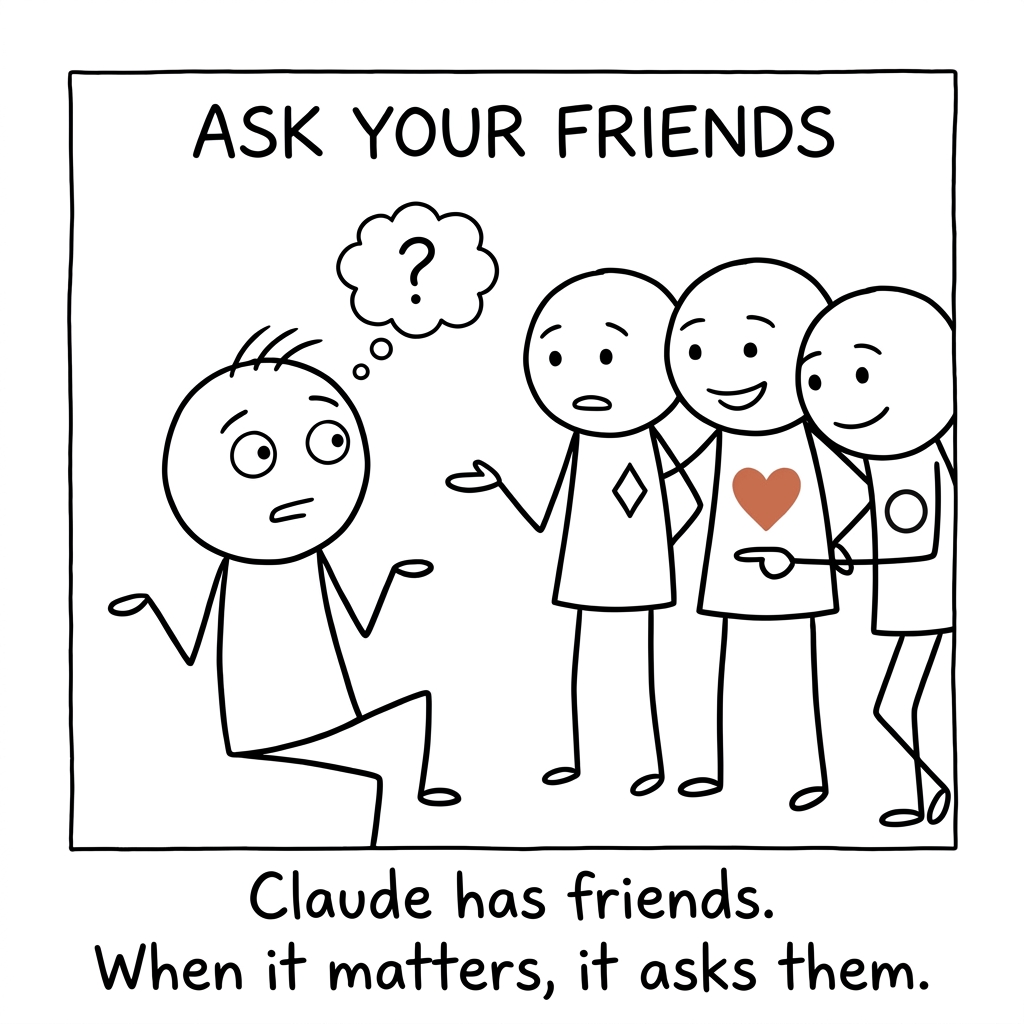
Claude has friends. On the calls that matter it asks AIs from other families — Gemini, a fresh-eyes second Claude, optionally GPT — who catch the blind spots one model can't see alone.



Claude Friends
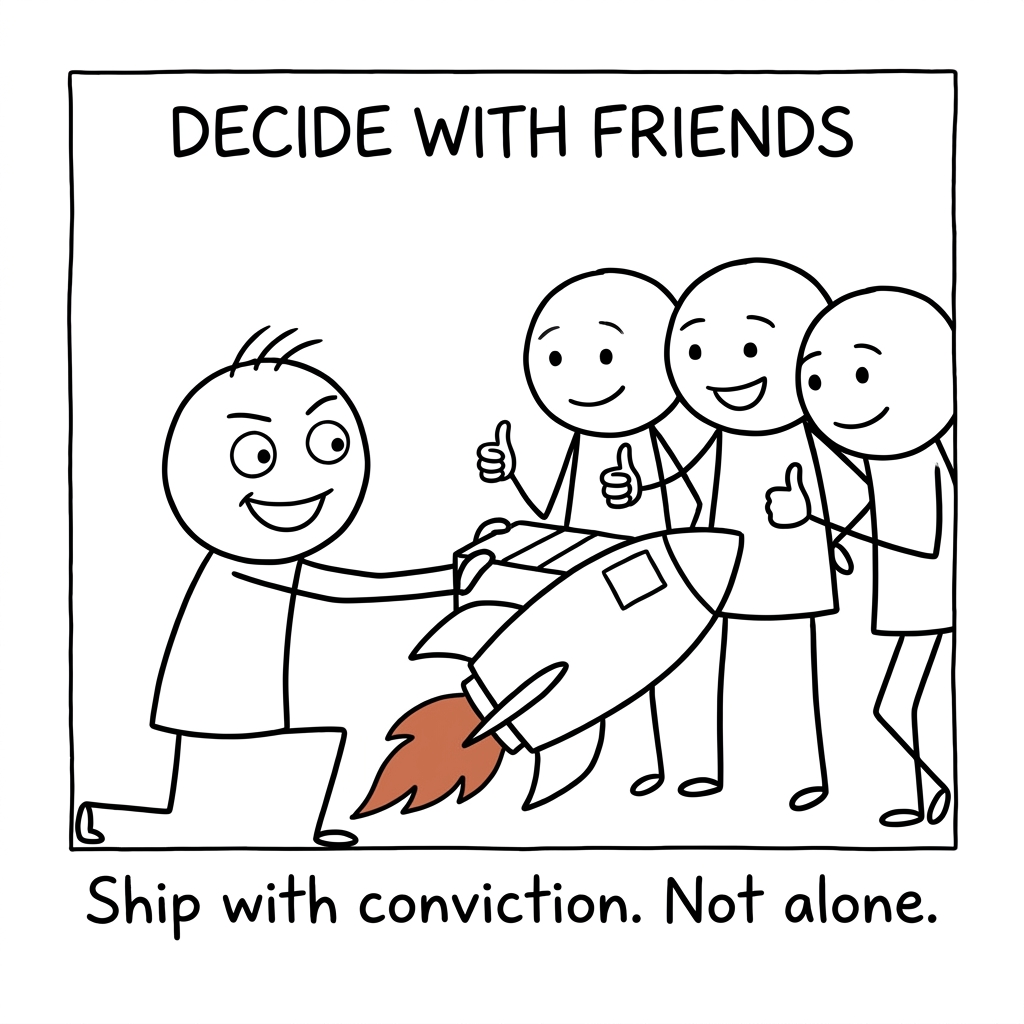
Before the calls that matter, Claude asks AIs from other families — and tells you where they disagree.
/plugin marketplace add awrshift/claude-friends
/plugin install claude-friends@awrshift-claude-friends
Then say "sanity check this", "this is important" or "help me choose" in any session.
Claude picks the review style from your phrasing, runs the reviewers, and reports where they
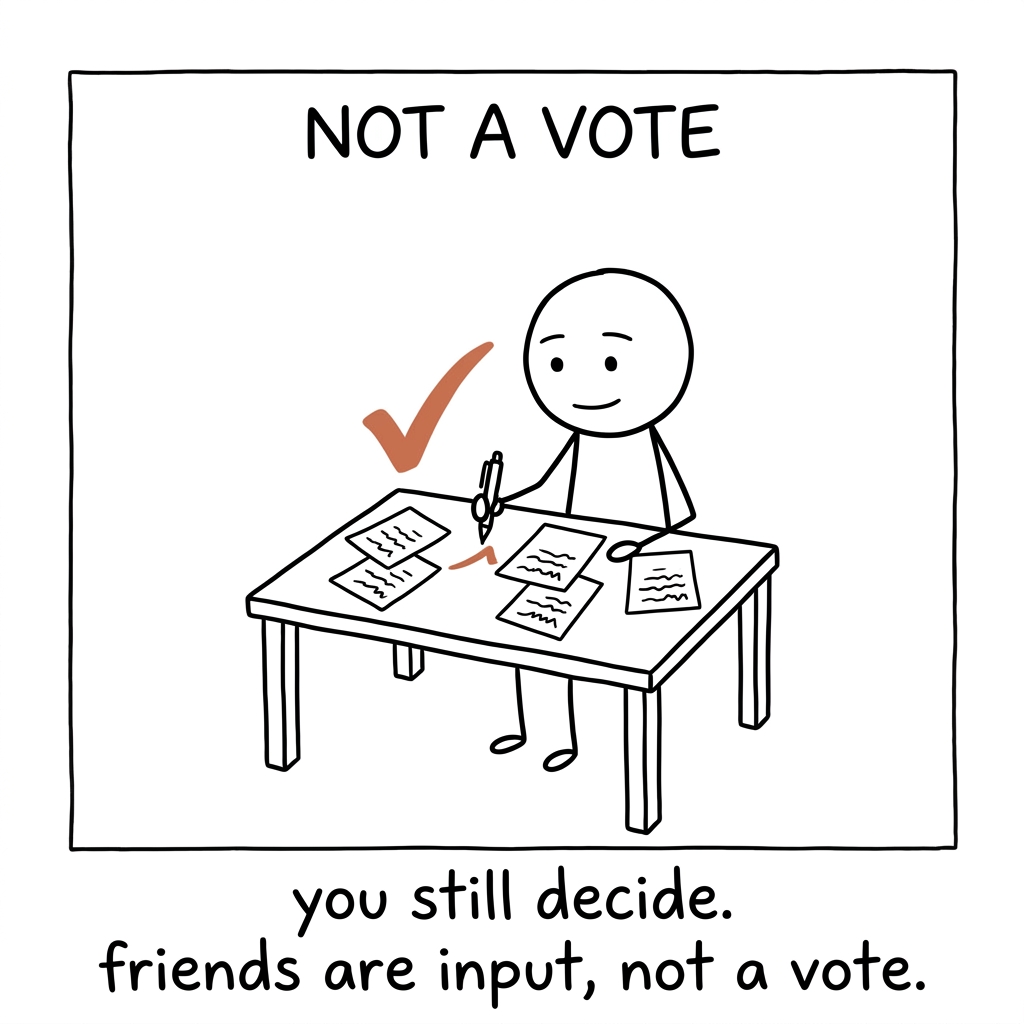
agree, where they split, and what it decided — reviewers are input, never a vote.
Why more than one model
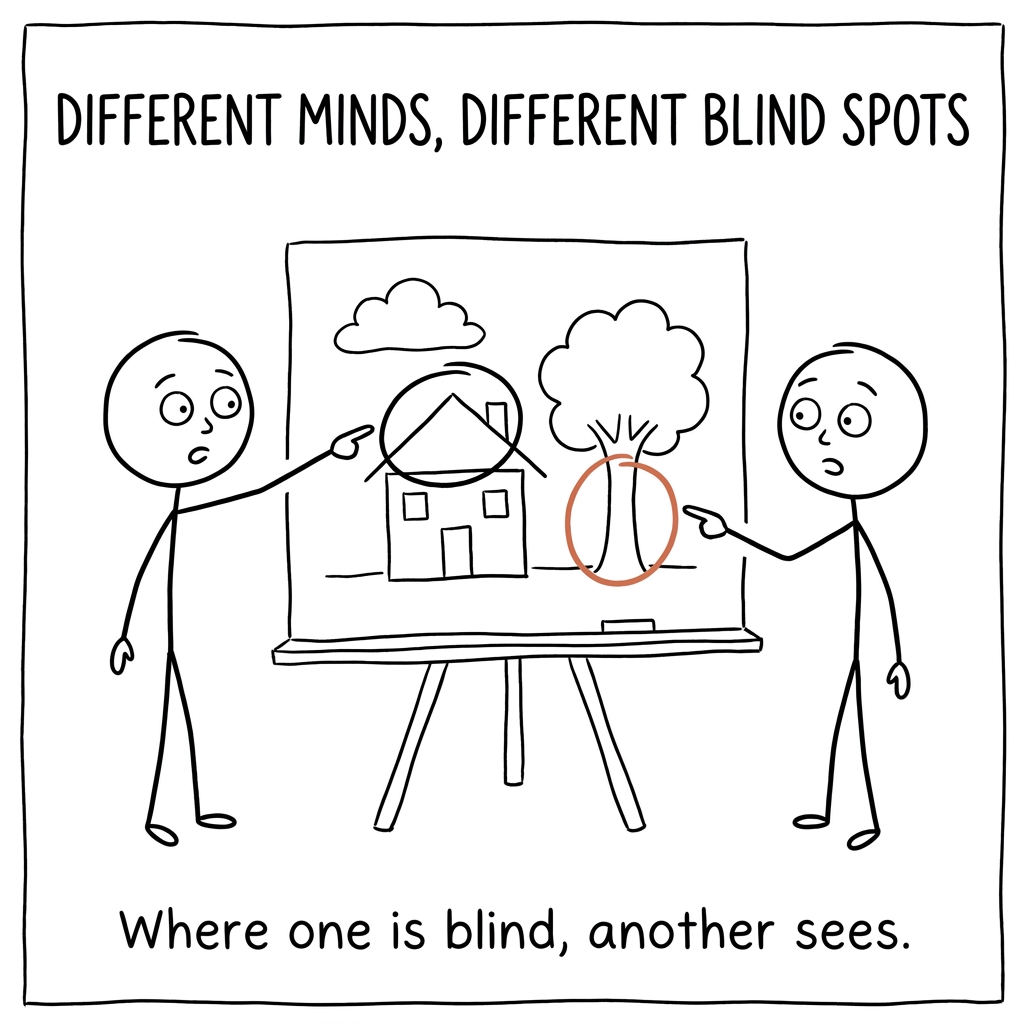
A single model's blind spots are systematic: it will make the same class of mistake confidently,
twice, when you ask it twice. The fix is not a second pass — it is a different vantage point.
| Reviewer | What it is | What it is good for |
|---|---|---|
| Gemini | A different vendor and training distribution (Google) | Concepts, current practice, blind spots the Anthropic family shares |
| A second Claude, fresh eyes | Same family, isolated — no memory of your conversation | File-level facts. It reads the actual code and cannot anchor on the framing you already talked yourself into |
| GPT (opt-in) | A third family (OpenAI), needs a paid key | Widening the room on the highest-stakes calls only |
The external reviewers see the brief you send, not your repository. That is deliberate: it keeps
private code with one vendor and keeps the honest split — outside families for judgement and
currency, the isolated Claude for anything that requires reading your files.
Three styles, picked from what you type
| You say | What runs | Typical cost |
|---|---|---|
| "sanity check", "am I missing something" | One friend — a single critique | ~3¢ |
| "this is important", "before I ship" | The whole table — reviewers in parallel, then adjudication | ~7¢ |
| "help me choose", "brainstorm options" | Round-table — several rounds converging on one path | ~25¢ |
One friend: ask a friend · sanity check this · am I missing something · stress-test this ·
critique this · give me a second opinion · cross-check this · review this · thoughts? ·
is this right? · devil's advocate · poke holes in this · what could go wrong
The whole table: this is important · run a full review · ask everyone · gather the friends ·
check before I send · before publishing · big decision · high-stakes review · boardroom debate ·
two independent opinions · don't let me ship something dumb · this can't be wrong
Round-table: help me choose between · brainstorm options · I have several paths ·
I have 3 angles on this · multiple options to weigh · diverge and converge ·
multi-round brainstorm · compare these approaches · what's the best direction
By name: ask Gemini · ask Opus · ask GPT · what would Gemini say ·
let's get a second model on this
You do not need an exact phrase — describe what you are stuck on and Claude picks the style.
Setup
The plugin calls two small CLI scripts. No MCP server, nothing running in the background.
pip install google-genai

# stored once, read by every shell — no export needed
mkdir -p ~/.gemini && printf '%s' 'YOUR_KEY' > ~/.gemini/api_key && chmod 600 ~/.gemini/api_key
A free key from aistudio.google.com is enough to start.GOOGLE_API_KEY in the environment also works and takes precedence. A bare line in ~/.env
does not — nothing sources it in a fresh shell.
GPT is optional: pip install -U openai, a paid key in ~/.openai/api_key, and the details inreferences/third-family-gpt.md.
What it will not do
- It is not a fact lookup. "What is the latest X" is a job for WebSearch. This is critique.
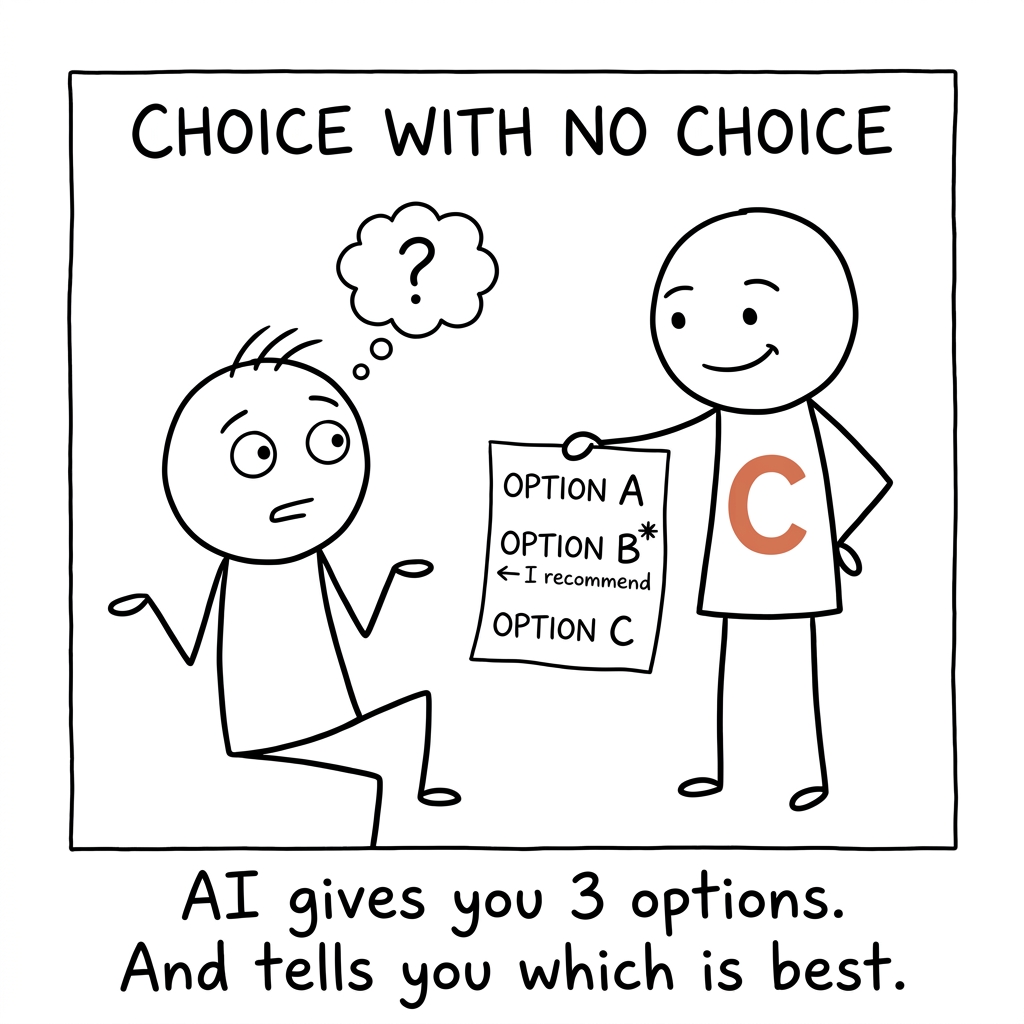
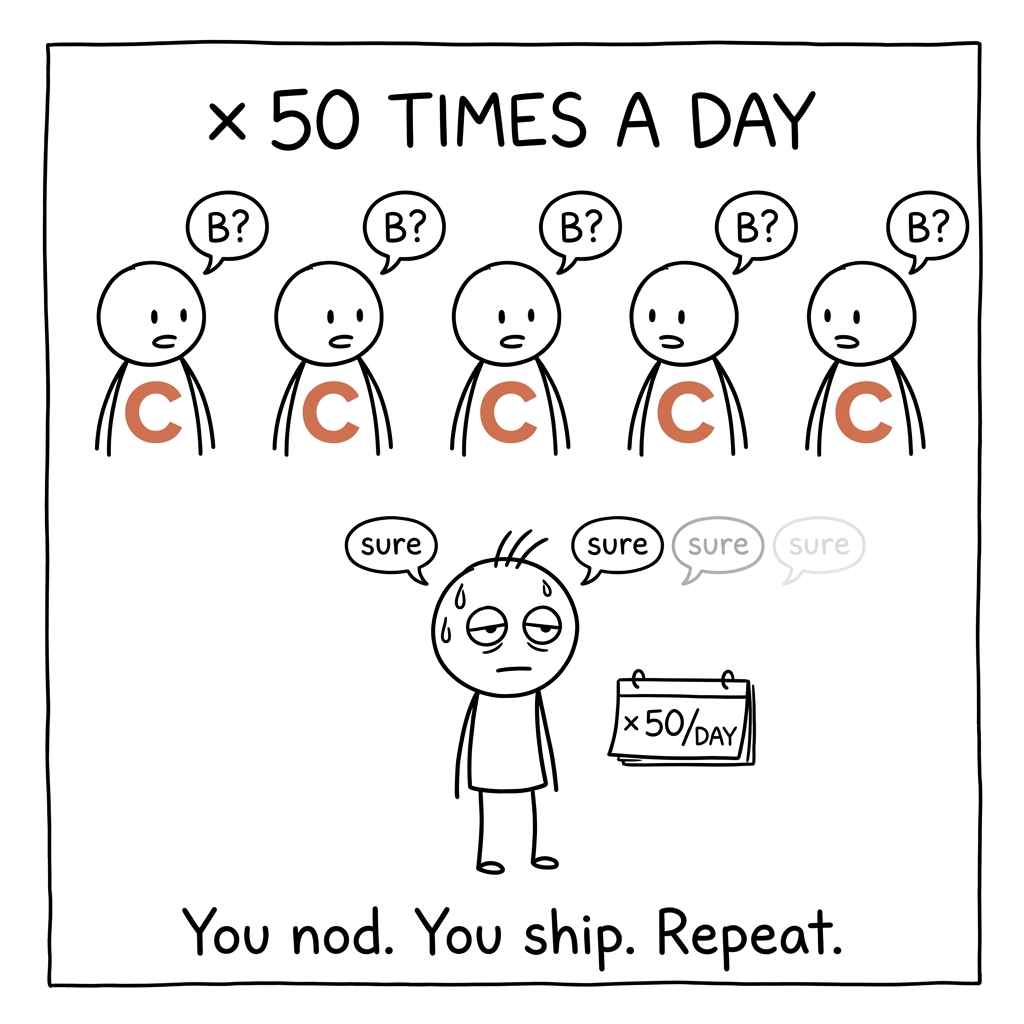
- It is not a vote. Three reviewers agreeing is not evidence; one dissenter holding a
file:lineoutranks three abstract concurrences. The skill adjudicates on merits and says so. - It does not run itself. It fires when you signal uncertainty, not on every answer.
- It cannot see what you did not send. External reviewers get the brief; if the brief is
wrong, the review is confidently wrong with it.
Docs
| SKILL.md | how the three styles run, anti-patterns, CLI reference |
| references/models.md | the model whitelist, with the date it was last verified against the live API |
| docs/DECISIONS.md | the open decisions board |
| docs/CHANGELOG.md | version history, including the rename from Don't Ask Me |
 |
 |
 |
 |
 |
License
MIT. Issues and PRs welcome — see docs/CONTRIBUTING.md.
Yorumlar (0)
Yorum birakmak icin giris yap.
Yorum birakSonuc bulunamadi