TermFold
Health Uyari
- License — License: Apache-2.0
- Description — Repository has a description
- Active repo — Last push 0 days ago
- Low visibility — Only 9 GitHub stars
Code Basarisiz
- os.homedir — User home directory access in app/src/main/assets/termfold-browser.js
- fs module — File system access in app/src/main/assets/termfold-browser.js
- network request — Outbound network request in app/src/main/assets/termfold-browser.js
- rm -rf — Recursive force deletion command in app/src/main/assets/termfold-setup.sh
Permissions Gecti
- Permissions — No dangerous permissions requested
Bu listing icin henuz AI raporu yok.
A real Ubuntu terminal and AI coding agents (Claude Code, Codex, Gemini CLI, OpenCode, Cursor, Pi) on Android tablets and phones. No root.

TermFold
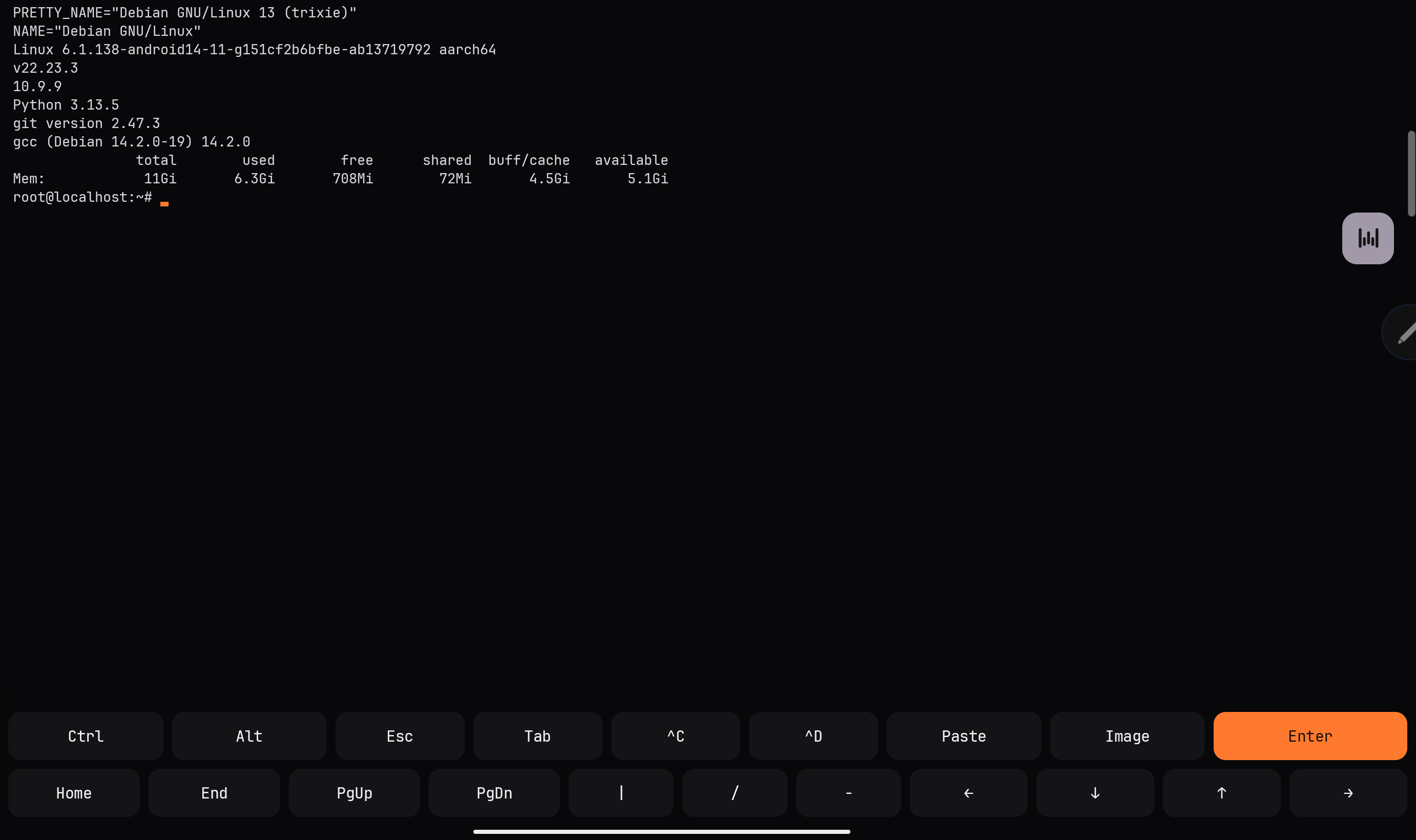
A real Debian terminal and AI coding agents on your Android tablet or phone.
Claude Code, Codex, Gemini CLI, OpenCode, Cursor, Pi and more, in real Linux projects.
No root. No laptop. No cloud IDE.





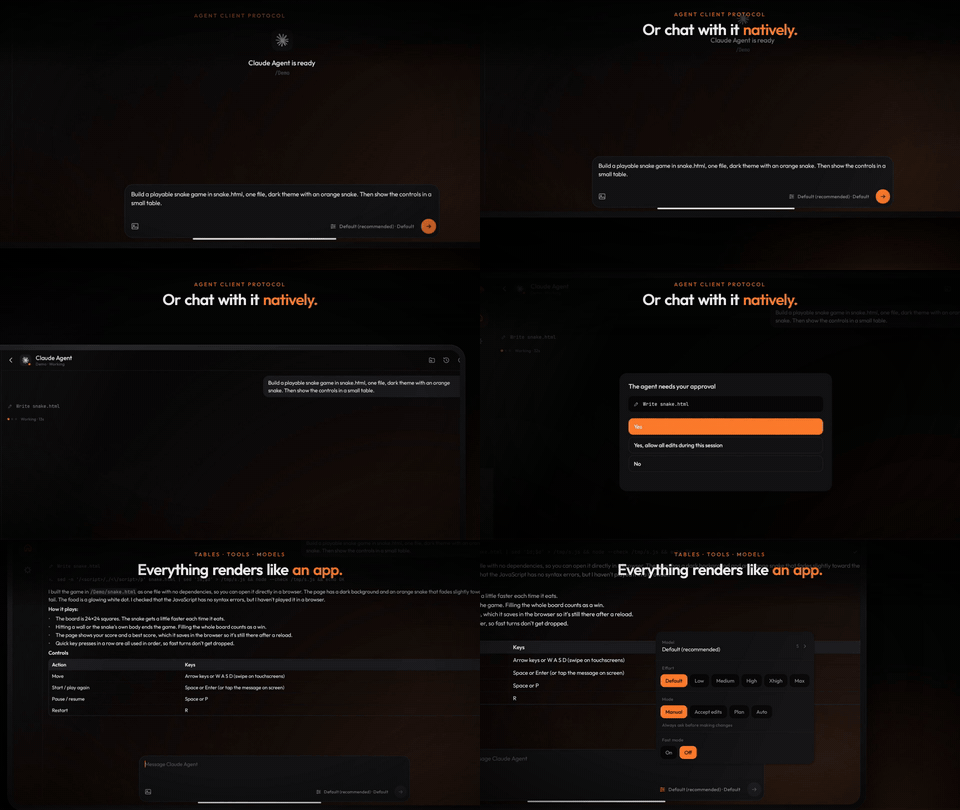
▶ Watch the 50-second film (with sound)
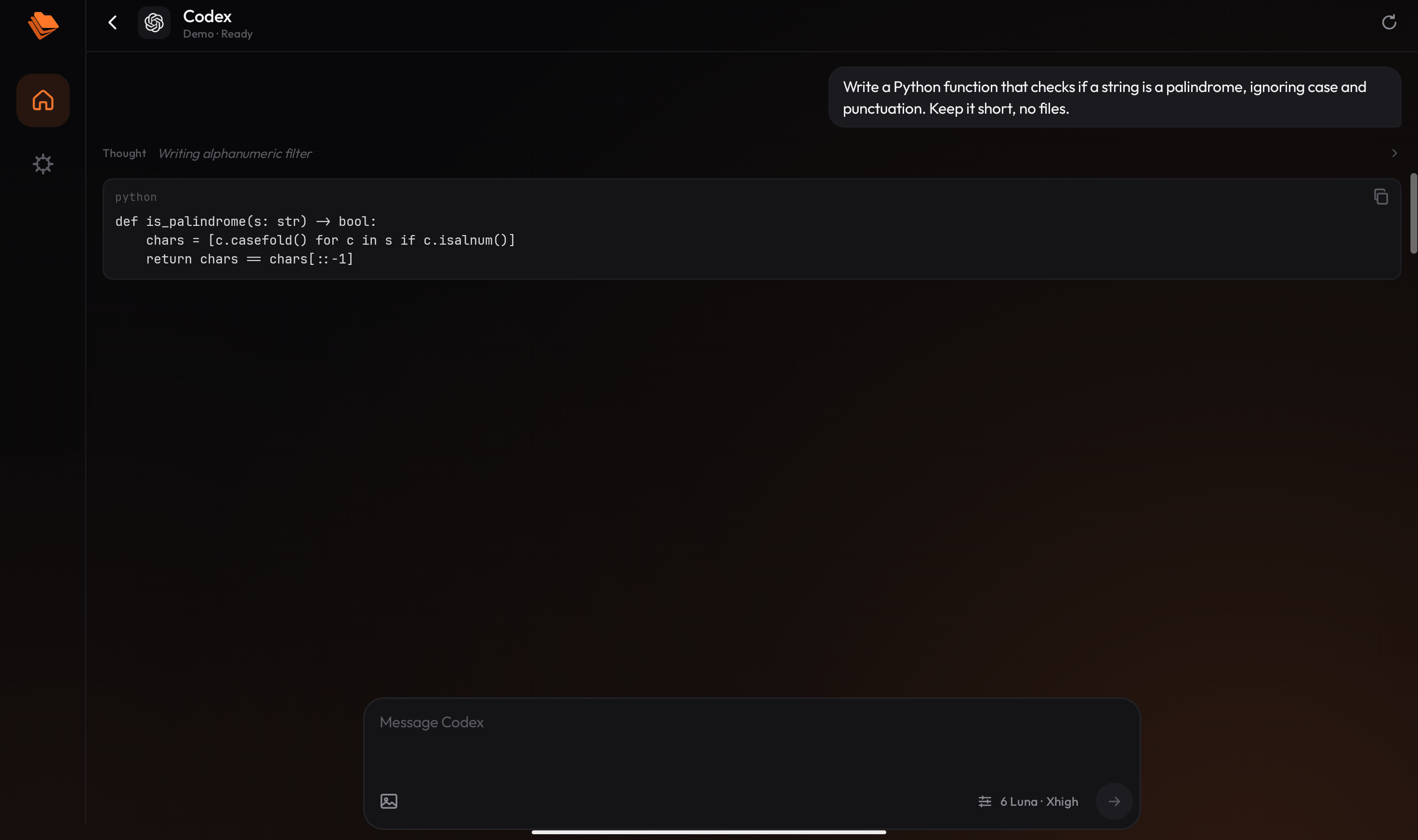
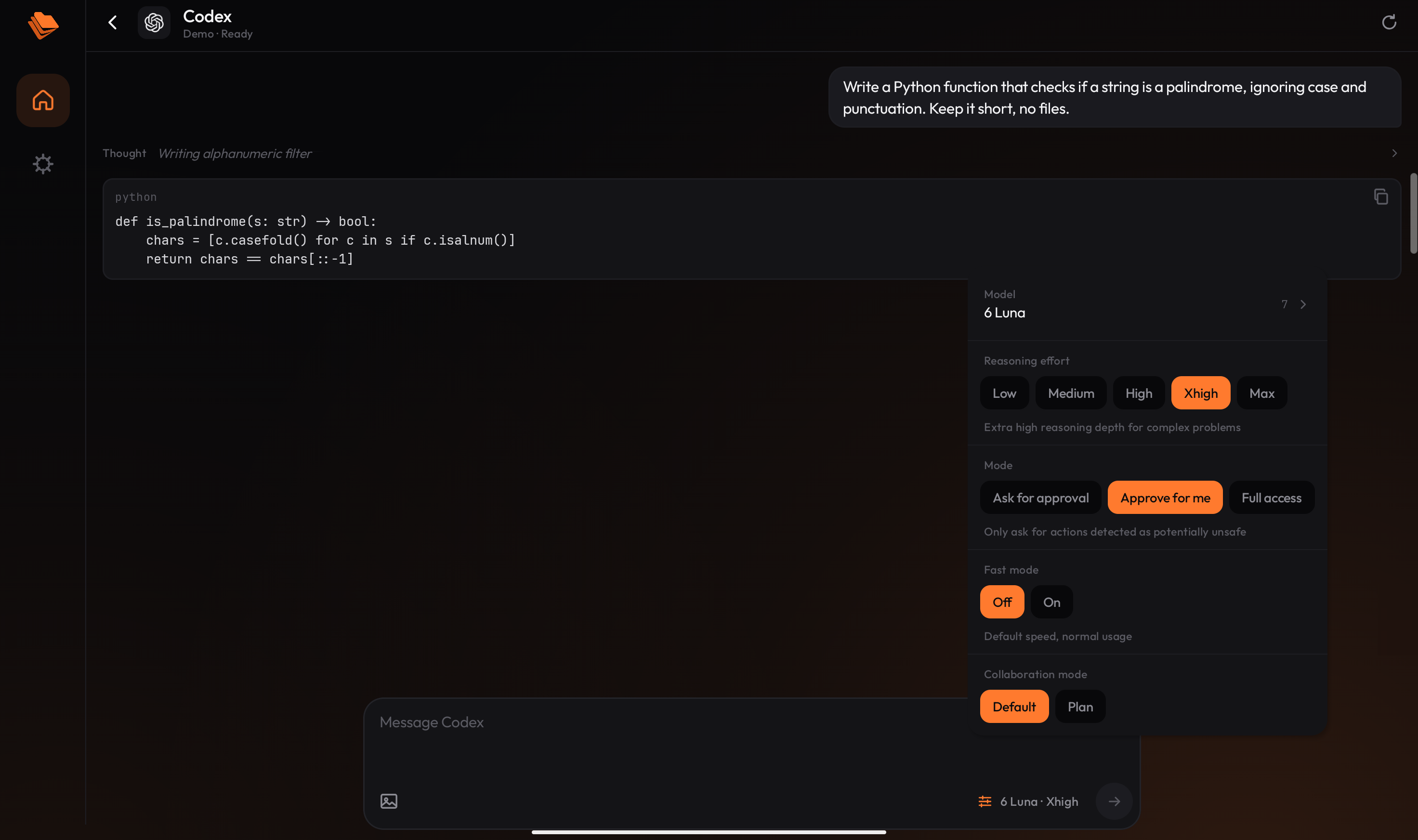
| Native chat with any ACP agent | Model, reasoning and mode in one tap |
|---|---|
 |
 |
Why TermFold
You have a tablet with a keyboard, and you want to code on it: run git, python, node, and
the AI coding agents everyone uses on a laptop. On Android that usually means juggling a terminal
app, proot scripts and broken package installs. TermFold is one app that does it all:
- A full Debian 13 environment inside the app.
apt installanything. Python, Node 22,
git, build tools, SSH and SCP work out of the box after a one-time setup. - Real Linux projects. Projects live in Debian's own storage (
~/projects), so symlinks,
permissions, executables, git, npm and virtualenvs behave exactly as on a PC. Start one empty,
clone it from Git, or import a folder from the device. - Every popular coding agent. Run
claude,codex,gemini,opencode,piorqwen
in the terminal; each installs itself the first time you type it. - Or talk to them natively. Agents that speak the Agent Client Protocol
get a real chat UI: Markdown with code blocks and tables, a live thinking ticker, tool calls with file
names, plans, permission prompts, slash commands, and a model / reasoning / mode picker.
Supported out of the box: Claude, Codex, OpenCode, Cursor, Devin, Pi and omp. Google Antigravity's
chat server cannot run on Android; itsagyCLI works in a Shell session. - A file manager built in. Browse your Linux home, your projects or the whole system;
search, sort, list or grid; create, rename, copy, move and delete. Code opens in a real editor
(CodeMirror: 40+ languages, search, undo, Ctrl+S) that reloads files an agent changes. Pictures
open in a zoomable viewer that can copy them to the clipboard, ready to paste into an agent.
On a tablet the places sit in a side pane; a Files button in every project, chat and shell
shows the project tree. - Files in and out, any type. Upload files or whole folders, or share to TermFold from any
app (a PDF for an agent, a dataset, screenshots). Export to any folder on the device, share, or
open with another app. TermFold also appears in Android's own file picker, so other apps can
open your project files directly; hidden files such as agent sign-ins are never exposed. - A browser beside your work. Preview dev servers (
localhost:5173), the project's own
pages (served like a real server, reloading as files change) or any site, next to the chat on
a tablet. Phone and desktop widths, the page's console with a copy button, and screenshots to
the clipboard or the project. Running dev servers show up by themselves. Minimize it to a
small pill you can drag anywhere; the page keeps running, so an agent can keep using it. - Agents use the browser too. Agents open pages, read them, click, type, fill forms, scroll,
take screenshots and read the console, with real taps and keys, while you watch an orange
frame and their pointer move. Chat agents get it as MCP tools automatically; in a shell it is
thetermfold-browsercommand, with a skill for Claude Code and notes for Codex, Gemini,
OpenCode, pi and Qwen. Stop hands the browser back to you at any moment. - Pick up where you left off. Chats reopen their last session, and
/resume(or the history
button) lists the agent's earlier sessions in that folder to continue any of them, with search,
and a delete button that also removes the saved conversation. - Keeps working while you're elsewhere. Leave the app and TermFold floats as an Android
bubble that opens right where you were. Agents keep running in the background, and you get a
notification when one finishes, needs permission, or a long command in a shell ends. - Built for tablets. Full-width Ctrl / Alt / Esc / Tab / arrow key rows with repeating
arrows, physical-keyboard support (the on-screen keyboard steps aside while you type on a real
one), JetBrains Mono, pinch to zoom. - Paste anything. Paste images into the chat, or into the terminal where they arrive as a file
path that Claude Code and Codex attach. Long pastes in the chat become.txtattachments. - No root, no Termux, no account. Everything runs inside the app. Open source under Apache-2.0.
Install
- Download the
.apkfrom the latest release
and install it (allow installs from your browser or file manager when asked). - Open TermFold and tap + to start a project: empty, cloned from Git, or imported from the
device. - Open Shell. The first time, it sets up Debian for coding (updates, build tools, git,
Python, Node 22). This downloads a few hundred MB, once. - Type
claude,codex,gemini,opencodeorpi, or add an ACP session for the native
chat. Sign in once in a Shell (for exampleclaudeorcodex login), and the chat uses the
same sign-in.
Requirements: Android 8.0+ on an arm64 (almost every phone and tablet) or x86_64 device, and a
few GB of free space for Debian and the tools you install.
Automatic updates: add the repo to Obtainium (badge
above) and it installs each new release for you.
Why not Google Play? Play only accepts apps that target a recent Android version, and those
are not allowed to run programs they ship themselves, which is exactly what a Linux environment
does. TermFold targets an older version on purpose (Termux does the same), so it is distributed
here instead. Every release is built from this repository and signed with the same key, and each
one lists its SHA-256 checksum.
How it works
TermFold (Kotlin, Jetpack Compose)
  ├── Terminal: Termux's terminal emulator + view, on a real PTY
  ├── ACP client: JSON-RPC over the agent's stdio, rendered as native UI
  └── PRoot (userspace chroot, from nativeLibraryDir)
        └── Debian 13 base image, unpacked into app storage, persistent
              └── bash, apt, git, python, node, the agents…
Projects are ordinary directories in ~/projects, and every shell or agent session starts in
its project. Nothing depends on Android's shared storage, which cannot hold symlinks, hard links,
permissions or executables. Android also forbids hard links in app storage, so a tiny library
preloaded into every guest program (/etc/ld.so.preload, as a distribution would) turns a refused
hard link into a real copy: dpkg, npm, git, pip and tar all work unchanged. Everything installed
with apt or npm persists across restarts and app updates.
Getting a full Linux userland to behave inside an Android app took working around a dozen
platform restrictions (W^X on app storage, a seccomp filter that blocks fork and rename,
forbidden hard links, no CA bundle, symlink-less shared storage, and more). Each one, with its
symptom and its fix, is written up in docs/SHELL-NOTES.md.
Building
py -3 tools/fetch-shell-runtime.py    # PRoot and the Debian images, into jniLibs/ and assets/
py -3 tools/fetch-ca-bundle.py        # the CA bundle, into assets/
./gradlew :app:assembleDebug
Release builds are signed when termfold-release.jks exists at the repo root andtermfold.storePassword is set in local.properties (or TERMFOLD_STORE_PASSWORD in the
environment). Without them the release APK is built unsigned.
Tests: ./gradlew :app:testDebugUnitTest.
Other tools:
tools/make-icons.pyregenerates the launcher icon fromtools/brand/logo-source.pngtools/build-compat-shim.pyrebuilds the compatibility library preloaded into the guest (needspip install ziglang)tools/editor/is the code editor's source (npm install && npm run buildwritesassets/editor/editor.js)tools/make-file-icons.pybundles the file tree's icons from thematerial-icon-themenpm packagetools/promo-v2/is the launch film (Remotion, real device footage) andmusic.py, its original soundtracktools/translations.pywrites the translated strings from one tableapp/src/main/assets/termfold-browser.jsis the agent side of the browser (command and MCP server);termfold-browser-skill.mdis the guide installed for agents
Coming from Ubuntu (before 2.2)
Earlier versions ran Ubuntu 24.04. Debian is lighter and faster, so from 2.2 the app ships Debian 13
and offers to move an existing install across when it starts (or from Settings, "Switch to Debian").
The move keeps your projects and files, agent sign-ins, shell history, Node.js and the agent CLIs
(they are plain glibc programs), then removes Ubuntu. The system packages belong to Ubuntu, so the
first shell after the move installs the developer tools again and lists the apt packages you had
(~/.termfold/ubuntu-packages.txt) so you can reinstall the ones you still want. Python virtual environments may need recreating. "Later"
keeps Ubuntu working for a day. A move cut off half way (the app was killed) finishes on the next start.
Limits
- Architecture: the Debian image must match the CPU (arm64 or x86_64); there is no emulation.
- Not a VM. It is the Android kernel with a translated filesystem: no
systemd, kernel
modules or raw sockets.apt, compilers, language runtimes and full-screen TUIs all work. - Uninstalling (or clearing the app's data) deletes the Debian environment and your projects,
since they live in the app's storage. Push to git, or export projects to the device from Files,
to keep a copy.
Contributing
Issues and pull requests are welcome. If something does not work on your device, please include
the device model, Android version, and what the terminal or agent printed.
License
TermFold is licensed under the Apache License 2.0. The APK also contains third-party
components under their own licenses (PRoot, talloc, the Termux terminal libraries, the Debian base
image, the Outfit and JetBrains Mono fonts); see THIRD_PARTY_NOTICES.md.
Yorumlar (0)
Yorum birakmak icin giris yap.
Yorum birakSonuc bulunamadi