Archie
Health Uyari
- No license — Repository has no license file
- Description — Repository has a description
- Active repo — Last push 0 days ago
- Community trust — 11 GitHub stars
Code Gecti
- Code scan — Scanned 12 files during light audit, no dangerous patterns found
Permissions Gecti
- Permissions — No dangerous permissions requested
This tool acts as a governance layer for AI coding agents. It scans your codebase to create an architectural blueprint and uses automated hooks to prevent the AI from violating your established structural rules.
Security Assessment
Overall risk is rated as Low with minor caveats. The light code audit found no dangerous patterns, hardcoded secrets, or dangerous permission requests. However, because the automated scanner heavily relies on multi-agent AI analysis (such as Claude Sonnet and Opus) to review your codebase, your source code will be processed and sent over the network to third-party LLM APIs. Aside from this expected external data sharing for the AI features, the underlying enforcement scripts are straightforward and do not access unrelated sensitive data.
Quality Assessment
The project is actively maintained, with its most recent push happening today. The automated health checks noted a missing license file, but this directly contradicts the README, which explicitly claims an MIT license. This is likely a minor repository setup error rather than a true licensing restriction. Community trust is currently quite low given the project's small footprint of only 11 stars, meaning it is still in its early adoption phase and has not yet been broadly battle-tested.
Verdict
Safe to use, provided you are comfortable sending your codebase to external AI models for the automated architecture analysis.
Architecture rules your AI coding agent can't break — generates AGENTS.md, per-folder CLAUDE.md, and Claude Code hooks from your codebase.
Archie — AI Governance for Coding Agents


Your AI writes code. Archie makes sure it follows your architecture.
Archie scans your codebase, builds a structured architecture blueprint, and enforces it in real-time through Claude Code hooks. When your AI agent tries to put a file in the wrong place, break a naming convention, or violate an architectural constraint, Archie catches it before the code is written.
Works with any language. Zero runtime dependencies for standalone scripts.
Install
npx @bitraptors/archie /path/to/your/project
This copies Archie's standalone scripts and Claude Code commands into your project, installs enforcement hooks, configures permissions so the workflow runs prompt-free, delivers .archieignore + .archiebulk (pattern files for scanning), and sets up .gitignore entries (installed tooling is gitignored, outputs are not). Then open your project in Claude Code.
The installer performs a clean install — it removes old scripts, hooks, and commands before installing fresh versions, so upgrades are safe to run in-place.
Options:
npx @bitraptors/archie /path/to/project --commands-dir .agents/skills
Use --commands-dir to install command files to a custom directory (default: .claude/commands/).
Commands
| Command | What it does | Time |
|---|---|---|
/archie-scan |
Architecture health check. Runs deterministic scanner for data, then AI analyzes the architecture like a senior architect: finds dependency violations, pattern drift, complexity hotspots, proposes enforceable rules. Writes concrete problems to .archie/findings.json (a shared 4-field store). Each scan builds on prior knowledge — recurring findings bump a confirmed_in_scan counter, resolved ones flip status, new ones get fresh ids. |
1-3 min |
/archie-deep-scan |
Comprehensive architecture baseline. Full 2-wave multi-agent analysis (3-4 Sonnet agents + Opus reasoning) producing blueprint, optional per-folder CLAUDE.md, rules, findings, pitfalls, and health metrics. Wave 2 upgrades scan-triage drafts to canonical and emits class-of-problem pitfalls. Intent Layer (per-folder enrichment) is opt-in via an interactive prompt. Supports --incremental, --continue, and --from N. |
15-20 min |
/archie-intent-layer |
Standalone per-folder CLAUDE.md regeneration. Use when you skipped Intent Layer during deep-scan or need to refresh after structural changes. Asks Full / Incremental / Auto upfront and shares its pipeline with deep-scan's Step 7 (single source of truth). Hard-requires blueprint.json — tells you to run /archie-deep-scan first if missing. |
3-15 min |
/archie-share |
Upload a blueprint + findings + scan report to a hosted viewer for teammates to review. Returns a shareable URL. Three modes: default (BitRaptors Supabase, one-click), enterprise — stored credentials (BYO S3 bucket, set up once), enterprise — paste URL (per-share presigned PUT URL, zero credentials on disk). In enterprise modes, BitRaptors stores nothing — blueprints land directly in your bucket and the viewer fetches from there via a URL fragment. | seconds |
Run /archie-deep-scan once to establish a baseline. Then use /archie-scan for ongoing checks — each scan compounds on previous knowledge. Use /archie-share to hand a snapshot to anyone with a browser.
There is also /archie-viewer for interactive local blueprint inspection (Dashboard, Scan Reports, Blueprint, Rules, Files, Dependencies, Workspace tabs).
/archie-scan in action
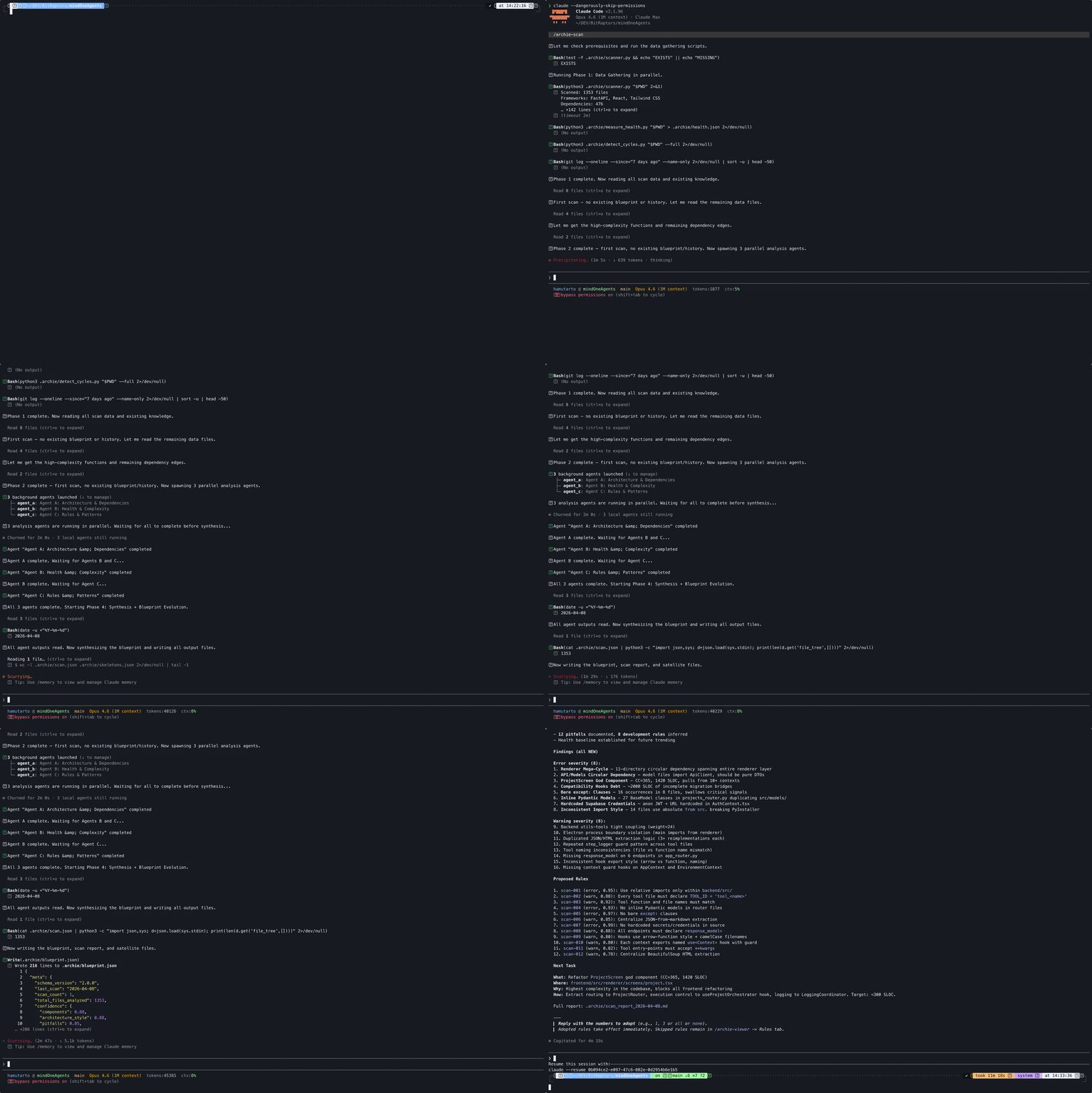
  Archie Scan #2 Complete

  Health Scores

  ┌───────────┬─────────┬──────────┬────────┬──────────┐
  │  Metric   │ Current │ Previous │ Trend  │  Status  │
  ├───────────┼─────────┼──────────┼────────┼──────────┤
  │ Erosion   │ 0.87    │ 0.87     │ Stable │ CRITICAL │
  ├───────────┼─────────┼──────────┼────────┼──────────┤
  │ Gini      │ 0.8852  │ 0.8852   │ Stable │ HIGH     │
  ├───────────┼─────────┼──────────┼────────┼──────────┤
  │ Top-20%   │ 0.9216  │ 0.9216   │ Stable │ HIGH     │
  ├───────────┼─────────┼──────────┼────────┼──────────┤
  │ Verbosity │ 0.0103  │ 0.0103   │ Stable │ GOOD     │
  ├───────────┼─────────┼──────────┼────────┼──────────┤
  │ LOC       │ 122,290 │ 122,290  │ Stable │ -        │
  └───────────┴─────────┴──────────┴────────┴──────────┘

  Metric Legend:
  - Erosion — Files breaking expected structure. <0.3 good, 0.3-0.5 moderate, >0.5 high
  - Gini — Code distribution inequality. High = a few god-files hold most code. <0.4 good, 0.4-0.6 moderate, >0.6 high
  - Top-20% — Share of code in the largest 20% of files. <0.5 good, 0.5-0.7 moderate, >0.7 high
  - Verbosity — Comment-to-code ratio. <0.05 good, 0.05-0.15 moderate, >0.15 high
  - LOC — Total lines of code

  Blueprint Evolution

  - Components: 25 -> 27 (+Context Types, +Debug Component)
  - Pitfalls: 12 -> 18 (6 new from deeper analysis)
  - Architecture rules: 0 -> 2 (async tools, ApiClient singleton)
  - Development rules: 8 -> 14 (6 new pattern-based rules)
  - 8 rule confidences updated based on verified evidence

  All Findings (20 total)

  RECURRING - Error (8):
  1. Renderer Mega-Cycle — 11-dir cycle, entire renderer layer entangled (0.92)
  2. API/Models Circular Dependency — models import ApiClient (0.95)
  3. ProjectScreen God Component — CC=365, 1420 SLOC (0.95)
  4. Compatibility Hooks Debt — ~2000 SLOC, 8 dirs depend on it (0.92)
  5. Bare except: Clauses — 15 instances in 8 files (0.99)
  6. Inline Pydantic Models — 27 in projects_router, 8 duplicates (0.95)
  7. Hardcoded Supabase Credentials — JWT in AuthContext.tsx (0.99)
  8. Electron Process Boundary — main imports renderer context (0.85)

  NEW - Error (1):
  9. ApiClient Singleton Violation — new ApiClient() in EnvironmentMcpTab.tsx (0.93)

  RECURRING - Warning (5):
  10. Backend Utils-Tools coupling (weight=24) (0.80)
  11. Inconsistent imports — 40 absolute from src. across 14 files (0.97)
  12. Duplicated JSON/HTML extraction (0.85)
  13. Repeated step_logger guards (0.88)
  14. Tool naming — TOOL_ID only in 10/22 files (0.85)

  NEW - Warning (5):
  15. Memory Services — 8 identical methods in 2 services, no base class (0.95)
  16. Duplicated utilities — 7 functions duplicated across files (0.90)
  17. settings_loader.py — 7+ high-CC functions, 2000+ lines (0.90)
  18. graph.py — 8 high-CC LangGraph step functions (0.87)
  19. Test stubs — 4 tests with no assertions (0.88)

  Proposed Rules

  ┌─────┬───────────────────────────────────────────────────────────────────────┬──────────┬────────────┐
  │  #  │                                 Rule                                  │ Severity │ Confidence │
  ├─────┼───────────────────────────────────────────────────────────────────────┼──────────┼────────────┤
  │ 1   │ scan-013: Tool entry functions must be async                          │ error    │ 0.99       │
  ├─────┼───────────────────────────────────────────────────────────────────────┼──────────┼────────────┤
  │ 2   │ scan-014: Tool files must init logger = logging.getLogger(__name__)   │ warn     │ 0.97       │
  ├─────┼───────────────────────────────────────────────────────────────────────┼──────────┼────────────┤
  │ 3   │ scan-015: Feature components use PascalCase; only ui/ uses kebab-case │ warn     │ 0.82       │
  ├─────┼───────────────────────────────────────────────────────────────────────┼──────────┼────────────┤
  │ 4   │ scan-016: ApiClient accessed only via getInstance()                   │ error    │ 0.93       │
  ├─────┼───────────────────────────────────────────────────────────────────────┼──────────┼────────────┤
  │ 5   │ scan-017: LangGraph steps named <verb>_<noun>_step                    │ warn     │ 0.87       │
  ├─────┼───────────────────────────────────────────────────────────────────────┼──────────┼────────────┤
  │ 6   │ scan-018: FastAPI dependency factories follow get_<service>()         │ warn     │ 0.90       │
  ├─────┼───────────────────────────────────────────────────────────────────────┼──────────┼────────────┤
  │ 7   │ scan-019: Memory services must share a base class                     │ warn     │ 0.95       │
  ├─────┼───────────────────────────────────────────────────────────────────────┼──────────┼────────────┤
  │ 8   │ scan-020: Date utilities centralized in dateUtils.ts only             │ warn     │ 0.90       │
  ├─────┼───────────────────────────────────────────────────────────────────────┼──────────┼────────────┤
  │ 9   │ scan-021: TOOL_ID constant must be named exactly TOOL_ID              │ warn     │ 0.83       │
  ├─────┼───────────────────────────────────────────────────────────────────────┼──────────┼────────────┤
  │ 10  │ scan-022: No inline Pydantic models in routers                        │ error    │ 0.91       │
  └─────┴───────────────────────────────────────────────────────────────────────┴──────────┴────────────┘

  Next Task

  What: Refactor ProjectScreen god component (CC=365, 1420 SLOC)
  Where: frontend/src/renderer/screens/project.tsx
  Why: Highest complexity in the codebase, disproportionate impact on all red metrics

  Full report: .archie/scan_report_2026-04-08.md
/archie-deep-scan in action
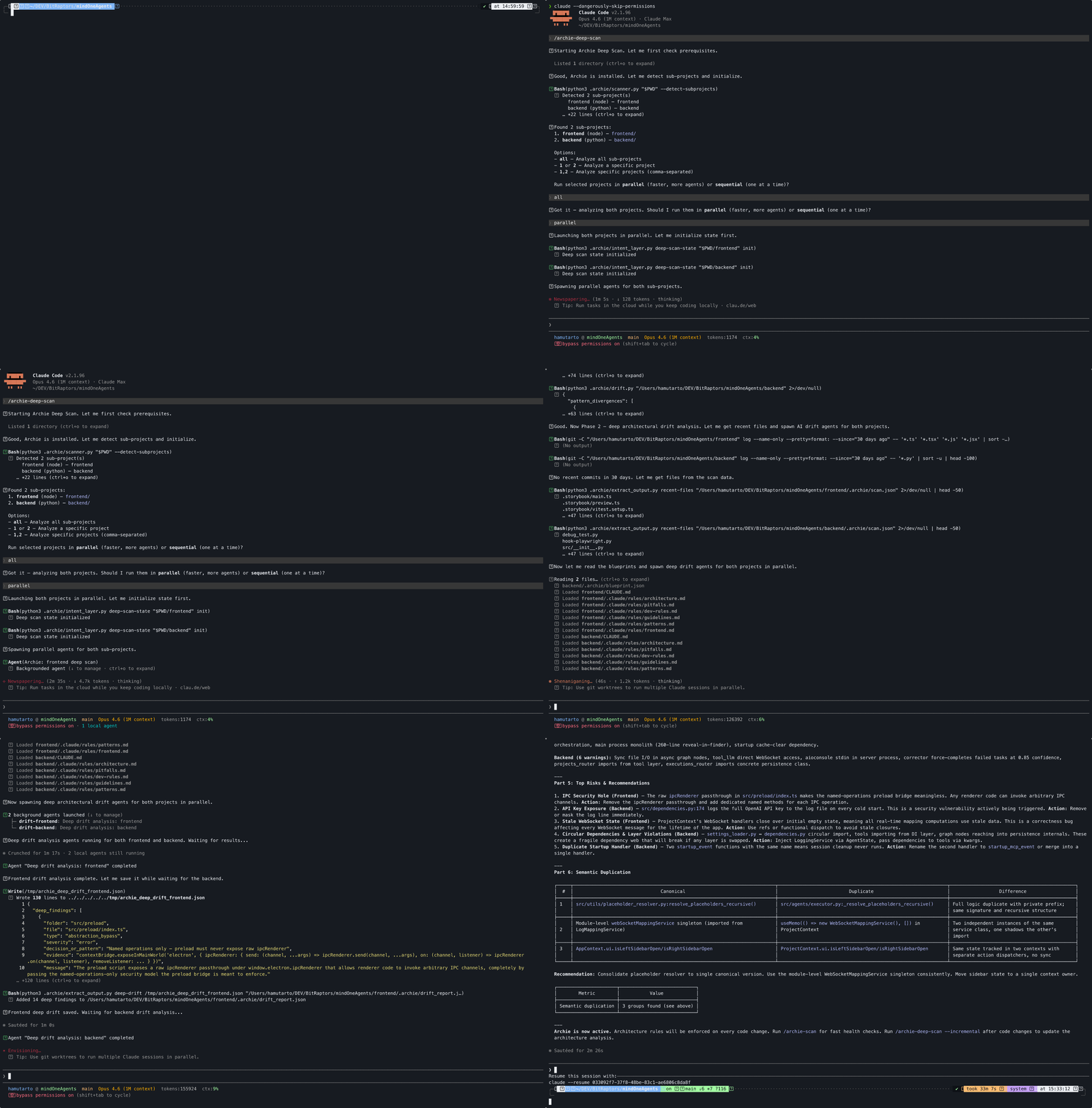
  Archie Deep Scan — Complete Assessment

  Part 1: What Was Generated

  ┌──────────────────────────────┬──────────┬─────────┐
  │           Artefact           │ Frontend │ Backend │
  ├──────────────────────────────┼──────────┼─────────┤
  │ Blueprint sections           │ 13       │ 13      │
  ├──────────────────────────────┼──────────┼─────────┤
  │ Components discovered        │ 11       │ 9       │
  ├──────────────────────────────┼──────────┼─────────┤
  │ Enforcement rules            │ 32       │ 31      │
  ├──────────────────────────────┼──────────┼─────────┤
  │ Per-folder CLAUDE.md files   │ 54       │ 442     │
  ├──────────────────────────────┼──────────┼─────────┤
  │ Rule files in .claude/rules/ │ 6        │ 6       │
  ├──────────────────────────────┼──────────┼─────────┤
  │ Total source files scanned   │ 228      │ 972     │
  ├──────────────────────────────┼──────────┼─────────┤
  │ Dependencies mapped          │ 118      │ 358     │
  └──────────────────────────────┴──────────┴─────────┘

  ---
  Part 2: Architecture Summary

  Architecture style: Electron desktop application (frontend) + Python FastAPI backend with LangGraph-based multi-agent AI orchestration.

  Key components:
  - Electron Main Process — Window lifecycle, backend spawning, IPC, deep links, auto-updates
  - React Renderer — SPA with 7 nested Context providers, Shadcn UI, Tailwind CSS
  - API Layer — FastAPI routers for REST + WebSocket real-time communication
  - Agent System — Planner/Executor/Validator/Corrector pipeline via LangGraph state machine
  - Tool Registry — 20+ pluggable async tools (browser automation, LLM, file I/O, MCP)
  - Persistence — Local filesystem with UUID-based project directories, abstract interface
  - WebSocket Service — Unified singleton connection with ~60fps message batching

  Tech highlights: React 19, TypeScript, Tailwind v4, Electron, Python 3.12, FastAPI, LangGraph, Playwright/browser-use, multi-LLM (OpenAI, Anthropic, Google, Groq, Ollama), Supabase auth, FAISS
  vector memory.

  Key decisions:
  1. Embedded Python backend — spawned as child process by Electron for zero-config desktop deployment
  2. LangGraph for agent orchestration — plan-execute-validate-correct loop maps naturally to state machine nodes
  3. React Context + useReducer over external state libraries — seven domain-specific providers, no Redux/Zustand

  ---
  Part 3: Architecture Health Assessment

  ┌─────────────────┬───────────────────────────────────────────────────────────────────────────────────┬─────────────────────────────────────────────────────────────────────────────────────────┐
  │    Dimension    │                                     Frontend                                      │                                         Backend                                         │
  ├─────────────────┼───────────────────────────────────────────────────────────────────────────────────┼─────────────────────────────────────────────────────────────────────────────────────────┤
  │ Separation of   │ Weak — Layout does data fetching, AppContext handles tool updates, compat hooks   │ Adequate — Clear module boundaries (agents/tools/services/utils) but graph nodes reach  │
  │ concerns        │ own CRUD operations, sidebar state duplicated across contexts                     │ into persistence internals for logging, and API layer imports tool-level globals        │
  ├─────────────────┼───────────────────────────────────────────────────────────────────────────────────┼─────────────────────────────────────────────────────────────────────────────────────────┤
  │ Dependency      │ Weak — Preload exposes raw ipcRenderer allowing arbitrary channel access from     │ Weak — Utils imports from DI layer (settings_loader→dependencies.py circular import),   │
  │ direction       │ renderer; multiple components bypass ApiClient singleton with raw fetch()         │ tools import DI factories directly, API imports concrete persistence class              │
  ├─────────────────┼───────────────────────────────────────────────────────────────────────────────────┼─────────────────────────────────────────────────────────────────────────────────────────┤
  │ Pattern         │ Adequate — Most contexts follow useReducer+typed-actions, but AuthContext uses    │ Adequate — Tool pattern is consistent across 20+ tools, but DI bypass (3 tools import   │
  │ consistency     │ plain useState; WebSocket singleton duplicated in ProjectContext                  │ from dependencies.py) and inconsistent LLM injection (validator vs corrector)           │
  ├─────────────────┼───────────────────────────────────────────────────────────────────────────────────┼─────────────────────────────────────────────────────────────────────────────────────────┤
  │ Testability     │ Adequate — Singleton ApiClient and compatibility hooks provide test seams, but    │ Weak — Tools directly call DI factories making them untestable in isolation; validator  │
  │                 │ raw IPC access and direct fetch calls create hard-to-mock paths                   │ hardcodes LLM creation; graph nodes reach into persistence internals                    │
  ├─────────────────┼───────────────────────────────────────────────────────────────────────────────────┼─────────────────────────────────────────────────────────────────────────────────────────┤
  │ Change impact   │ Adequate — Context providers isolate state domains; but ProjectContext is a       │ Adequate — LangGraph isolates agent concerns; but projects_router.py is monolithic, and │
  │ radius          │ monolith touching WebSocket, state mapping, artifacts, sidebar state, and project │  the persistence→logging side-channel means swapping persistence breaks logging         │
  │                 │  CRUD                                                                             │                                                                                         │
  └─────────────────┴───────────────────────────────────────────────────────────────────────────────────┴─────────────────────────────────────────────────────────────────────────────────────────┘

  Health metrics:

  ┌────────────────────────────┬──────────────┬─────────────────┐
  │           Metric           │   Frontend   │     Backend     │
  ├────────────────────────────┼──────────────┼─────────────────┤
  │ Erosion (complexity)       │ 0.95 (high)  │ 0.69 (moderate) │
  ├────────────────────────────┼──────────────┼─────────────────┤
  │ Gini (code concentration)  │ 0.92         │ 0.76            │
  ├────────────────────────────┼──────────────┼─────────────────┤
  │ Top 20% file share         │ 96.9%        │ 81.5%           │
  ├────────────────────────────┼──────────────┼─────────────────┤
  │ Verbosity (exact clones)   │ 1.0%         │ 1.1%            │
  ├────────────────────────────┼──────────────┼─────────────────┤
  │ Total LoC                  │ 76,903       │ 45,261          │
  ├────────────────────────────┼──────────────┼─────────────────┤
  │ High cyclomatic complexity │ 74 functions │ 124 functions   │
  └────────────────────────────┴──────────────┴─────────────────┘

  ---
  Part 4: Architectural Drift

  Errors (must fix)

  Frontend (6 errors):
  1. Raw ipcRenderer exposed in preload — src/preload/index.ts exposes window.electron.ipcRenderer passthrough, completely bypassing the named-operations security model
  2. useAppUpdater bypasses preload bridge — Uses raw ipcRenderer.on('update-checking') instead of dedicated named methods
  3. main.tsx bypasses preload bridge — Uses raw ipcRenderer.send('read-file-request') instead of window.electron.readFile
  4. AuthContext uses useState — Only context provider not following useReducer+typed-actions pattern
  5. WebSocket stale closure — ProjectContext WebSocket useEffect has [] deps, all handlers read initial empty state forever
  6. Raw fetch() in loadArtifacts — ProjectContext constructs manual fetch() bypassing ApiClient singleton

  Backend (8 errors):
  1. Duplicate startup_event handlers — Two @app.on_event('startup') with same name; session cleanup silently dropped
  2. tool_browser_use.py imports from DI — Directly calls get_browser_session_manager() instead of receiving via kwargs
  3. tool_start_login_session.py imports from DI — Same bypass, two DI factories called directly
  4. settings_loader imports from dependencies — Creates circular import by importing upward from utils→DI layer
  5. Duplicate placeholder resolver — executor.py contains full copy of _resolve_placeholders_recursive() alongside canonical version
  6. API key logged in plaintext — dependencies.py:174 logs raw API key on every startup
  7. LoggingService accessed via side-channel — All graph nodes do getattr(persistence_manager, 'logging_service', None) instead of proper AgentState field
  8. Validator hardcodes LLM creation — _validate_with_llm() calls get_llm_client_for_tool() directly, unlike corrector which correctly accepts BaseChatModel

  Warnings (should fix)

  Frontend (8 warnings): Dual WebSocketMappingService instances, duplicated sidebar state, AppContext tool-update leak, compat hook CRUD responsibility leak, useBackendHealth raw fetch, Layout data
  orchestration, main process monolith (260-line reveal-in-finder), startup cache-clear dependency.

  Backend (6 warnings): Sync file I/O in async graph nodes, tool_llm direct WebSocket access, aioconsole stdin in server process, corrector force-completes failed tasks at 0.85 confidence,
  projects_router imports from tool layer, executions_router imports concrete persistence class.

  ---
  Part 5: Top Risks & Recommendations

  1. IPC Security Hole (Frontend) — The raw ipcRenderer passthrough in src/preload/index.ts makes the named-operations preload bridge meaningless. Any renderer code can invoke arbitrary IPC
  channels. Action: Remove the ipcRenderer passthrough and add dedicated named methods for each IPC operation.
  2. API Key Exposure (Backend) — src/dependencies.py:174 logs the full OpenAI API key to the log file on every cold start. This is a security vulnerability actively being triggered. Action: Remove
  or mask the log line immediately.
  3. Stale WebSocket State (Frontend) — ProjectContext's WebSocket handlers close over initial empty state, meaning all real-time mapping computations use stale data. This is a correctness bug
  affecting every WebSocket message for the lifetime of the app. Action: Use refs or functional dispatch to avoid stale closures.
  4. Circular Dependencies & Layer Violations (Backend) — settings_loader.py ↔ dependencies.py circular import, tools importing from DI layer, graph nodes reaching into persistence internals. These
  create a fragile dependency web that will break if any layer is swapped. Action: Inject LoggingService via AgentState, pass dependencies to tools via kwargs.
  5. Duplicate Startup Handler (Backend) — Two startup_event functions with the same name means session cleanup never runs. Action: Rename the second handler to startup_mcp_event or merge into a
  single handler.

  ---
  Part 6: Semantic Duplication

  ┌─────┬──────────────────────────────────────────────────────────────────────────┬──────────────────────────────────────────────────────────────┬──────────────────────────────────────────────┐
  │  #  │                                Canonical                                 │                          Duplicate                           │                  Difference                  │
  ├─────┼──────────────────────────────────────────────────────────────────────────┼──────────────────────────────────────────────────────────────┼──────────────────────────────────────────────┤
  │ 1   │ src/utils/placeholder_resolver.py:resolve_placeholders_recursive()       │ src/agents/executor.py:_resolve_placeholders_recursive()     │ Full logic duplicate with private prefix;    │
  │     │                                                                          │                                                              │ same signature and recursive structure       │
  ├─────┼──────────────────────────────────────────────────────────────────────────┼──────────────────────────────────────────────────────────────┼──────────────────────────────────────────────┤
  │     │ Module-level webSocketMappingService singleton (imported from            │ useMemo(() => new WebSocketMappingService(), []) in          │ Two independent instances of the same        │
  │ 2   │ LogMappingService)                                                       │ ProjectContext                                               │ service class, one shadows the other's       │
  │     │                                                                          │                                                              │ import                                       │
  ├─────┼──────────────────────────────────────────────────────────────────────────┼──────────────────────────────────────────────────────────────┼──────────────────────────────────────────────┤
  │ 3   │ AppContext.ui.isLeftSidebarOpen/isRightSidebarOpen                       │ ProjectContext.ui.isLeftSidebarOpen/isRightSidebarOpen       │ Same state tracked in two contexts with      │
  │     │                                                                          │                                                              │ separate action dispatchers, no sync         │
  └─────┴──────────────────────────────────────────────────────────────────────────┴──────────────────────────────────────────────────────────────┴──────────────────────────────────────────────┘

  Recommendation: Consolidate placeholder resolver to single canonical version. Use the module-level WebSocketMappingService singleton consistently. Move sidebar state to a single context owner.

  ┌──────────────────────┬────────────────────────────┐
  │        Metric        │           Value            │
  ├──────────────────────┼────────────────────────────┤
  │ Semantic duplication │ 3 groups found (see above) │
  └──────────────────────┴────────────────────────────┘

  ---
  Archie is now active. Architecture rules will be enforced on every code change. Run /archie-scan for fast health checks. Run /archie-deep-scan --incremental after code changes to update the
  architecture analysis.
Deep Scan Advanced Modes
| Flag | What it does |
|---|---|
--incremental |
Only process files changed since last deep scan (3-6 min vs 15-20 min) |
--continue |
Resume from where the last run stopped (handles interruptions) |
--from N |
Resume from a specific step N (steps 1-9) |
--reconfigure |
Re-prompt for monorepo scope config (whole/per-package/hybrid/single) |
Monorepo Support
Both scan commands auto-detect sub-projects (via Gradle, package.json, Cargo.toml, pyproject.toml, etc.). On the first run for a monorepo they present an interactive single-choice picker:
- Whole — one unified blueprint treating the monorepo as one product
- Per-package — one blueprint per workspace you pick
- Hybrid — whole blueprint at root + per-workspace blueprints for specific workspaces
- Single — ignore the workspaces and scan as one tree (small monorepos only)
The choice is persisted in .archie/archie_config.json so it's only asked once per project. In whole mode, Archie additionally produces a workspace_topology field with inter-workspace edges, cycles, and dependency magnets.
Ignore Patterns
Archie uses three layered pattern files to decide what the scanner sees and what agents read. Most-restrictive wins:
| File | Semantics |
|---|---|
.gitignore |
Not scanned at all (standard git rules, nested files supported) |
.archieignore |
Not scanned at all — Archie-specific exclusions on top of .gitignore (default covers deps, caches, build outputs, IDE files, binaries) |
.archiebulk |
Scanned but opaque — the scanner records path + {category, framework} metadata but never reads the contents. Default covers Android res/, iOS storyboards/asset catalogs, Flutter/Dart codegen, minified JS, TypeScript .d.ts, Go protobuf/vendor, Python protobuf/migrations, SQL migrations, lockfiles, OpenAPI codegen, and more. |
The .archiebulk tier gives AI agents structural inventory (e.g. "this project has 248 Android layouts across 24 screens") without burning analytical budget on reading boilerplate contents. All patterns use gitignore syntax — **/res/layout/** matches at any depth. Claude can edit any of the three files on demand.
Enterprise Share Modes
For teams whose InfoSec policy doesn't allow uploading architecture data to third-party infrastructure, /archie-share supports two enterprise modes alongside the default:
- Default — upload to the BitRaptors Supabase share service. Existing behavior, unchanged.
- Enterprise (stored credentials) —
python3 .archie/share_setup.py --bucket <name> --region <r> --access-key-id AKIA… --secret-access-key …writes~/.archie/share-profile.jsonwithchmod 600. From then on/archie-shareuploads directly to your S3 bucket via sigv4-signed PUT (pure Python stdlib, no boto3). Returns a viewer URL likehttps://archie-viewer.vercel.app/r/ext#<base64url-encoded-presigned-GET-URL>. BitRaptors stores nothing — the GET URL lives entirely in the URL fragment (which browsers never transmit to any server), and the viewer fetches the blueprint directly from your bucket client-side. - Enterprise (paste URL) — no credentials stored. InfoSec mints a presigned PUT URL on demand (Lambda, script, or ticket-driven) and the dev pastes it into
/archie-share. Archie does a plain HTTP PUT and wraps the matching GET URL into the share URL fragment. Strongest audit story at the cost of one extra step per share.
Customer-side setup walkthrough (CORS policy template, IAM policy template, step-by-step) is in docs/enterprise-share-setup.md — hand it to your InfoSec team and Archie guides you through the request composition if you pick the "Help me ask InfoSec for a bucket" option during /archie-share.
Scope: Mode 2A (stored credentials) targets AWS S3 virtual-hosted-style URLs. S3-compatible services (R2, B2, Minio, Wasabi), Azure Blob, and GCS should use Mode 2B (paste URL) since they need different DNS shapes or signing schemes.
What It Generates
| Output | Purpose |
|---|---|
.archie/blueprint.json |
Structured architecture data (single source of truth). Decisions, components, trade-offs, communication patterns, pitfalls (4-field shape), implementation guidelines, architecture diagram. |
.archie/findings.json |
Shared, compounding findings store. Each entry is {id, problem_statement, evidence, root_cause, fix_direction, severity, confidence, applies_to, source, depth, first_seen, confirmed_in_scan, status, pitfall_id?}. Read and written by both /archie-scan and /archie-deep-scan. |
.archie/rules.json |
Adopted enforcement rules (from blueprint extraction + AI-proposed scan rules + platform rules) |
.archie/proposed_rules.json |
AI-proposed rules pending adoption, with confidence scores |
.archie/health.json |
Current architecture health scores + per-function complexity snapshot |
.archie/health_history.json |
Timestamped health snapshots for trend analysis |
.archie/dependency_graph.json |
Resolved dependency graph with cycle detection |
.archie/semantic_duplications.json |
Near-twin / reimplementation groups found by AI analysis (deterministic writer) |
.archie/scan.json |
Raw scan data: file tree, import graph, framework signals, bulk_content_manifest, frontend_ratio, token counts |
.archie/skeletons.json |
Per-file class/function signatures + imports + first lines (efficient AI context) |
.archie/drift_report.json |
Mechanical drift findings (pattern outliers, dependency-direction breaches, structural anomalies) |
.archie/scan_report.md |
Latest prose report; every run is archived in .archie/scan_history/scan_NNN_*.md |
.archie/telemetry/*.json |
Per-run step-level wall-clock timing (for measuring changes to the pipeline) |
.archie/archie_config.json |
Persisted monorepo scope config (whole/per-package/hybrid/single) |
.archieignore / .archiebulk |
Scanning pattern files (merged with .gitignore) |
CLAUDE.md |
Root architecture context for Claude Code |
AGENTS.md |
Multi-agent guidance with decision chains |
Per-folder CLAUDE.md |
Directory-level context with patterns, anti-patterns, code examples (only if Intent Layer opt-in) |
.claude/hooks/ |
Real-time enforcement hooks |
.claude/rules/*.md |
Topic-split rule files (architecture, patterns, guidelines, pitfalls, dev-rules) |
How It Works
Deep Scan Pipeline (2-Wave)
Scanner — Deterministic local analysis: file tree, import graph, framework detection, token counting, file hashing, skeleton extraction (class/function signatures for efficient AI context), and bulk-content classification (files matching
.archiebulkget tagged by category/framework and skipped from skeleton/hash/import reads). Respects.archieignore+.gitignore+.archiebulklayering. Pure Python, no AI. Writes.archie/scan.jsonwithbulk_content_manifestandfrontend_ratio.Wave 1 (parallel) — 3-4 Sonnet agents gather facts simultaneously:
- Structure agent — Components, layers, file placement rules, workspace topology in monorepos
- Patterns agent — Communication patterns, design patterns, integrations
- Technology agent — Stack inventory, deployment config, dev rules
- UI Layer agent — UI components, state management, routing (only if
frontend_ratio ≥ 0.20)
Each agent receives
.archie/findings.jsonscoped to itssourceslice and is told to prioritise NEW problems over re-deriving known ones. Draft findings flow into the shared store asdepth: "draft"; structural workspace observations (cross-workspace cycles, magnets) flow in as draft findings rather than free-form pitfalls.Wave 2 — Opus reasoning — One Opus subagent reads all Wave 1 output plus the accumulated findings store, and produces the architectural synthesis:
- Three codebase probes before emitting key decisions: (A) complexity-budget — where the codebase spends complexity a naive implementation wouldn't, (B) invariants & gates — self-enforced rules, (C) seams — substitution/extension points
- Decision chain — rooted constraint tree with
violation_keywordsper node - Key decisions (3-7) with
forced_by/enableslinks and alternatives_rejected - Trade-offs (3-5) with
violation_signals(code patterns that would undo the trade-off) - Findings — upgrades scan-triage drafts in place (fills
root_causewith architectural grounding, rewritesfix_directionas an ordered sequence of steps, flipsdepth: "canonical") and emits NEW findings visible only from the whole-system view - Pitfalls — class-of-problem entries (same 4-field shape) durable across runs, linked from confirming findings via
pitfall_id - Architecture diagram and implementation guidelines
Finalize — Deterministic id-stable merge of Opus output: findings into the shared store (
confirmed_in_scan += 1on id match, new ids minted for novel entries), pitfalls into the blueprint.Rule Synthesis (Sonnet) — Proposes new architecturally-grounded rules from the synthesised blueprint.
Intent Layer (opt-in) — Step E asks whether to generate per-folder CLAUDE.md via bottom-up DAG scheduling (leaves first, parents inherit child summaries, incremental re-generation for changed folders only). Skipping saves the bulk of the wall-clock on large projects.
Drift Detection & Architectural Assessment — Mechanical drift (pattern outliers, file-size/complexity violations, dependency-direction breaches) + deep AI drift (decision violations, pattern erosion, trade-off undermining, pitfall triggers, responsibility leaks, abstraction bypasses, semantic duplication). Writes the final scan report.
Telemetry — Every step records wall-clock;
.archie/telemetry/deep-scan_<ts>.jsoncaptures per-step seconds + whether Intent Layer was skipped.
Compound Learning
Every run feeds the next. Both /archie-scan and /archie-deep-scan read and write the same findings.json shared store:
- Id-stable upsert. Recurring findings reuse their existing
f_NNNNid and bumpconfirmed_in_scan; brand-new ones get a fresh id andfirst_seenstamp; findings that no longer apply flipstatus: "resolved"(preserved as history, not deleted). - Novelty priority. Agents are explicitly told to spend their cognitive budget on NEW problems, not re-describe known ones under different wording.
- Depth escalation. Scan emits
depth: "draft"entries quickly (source: scan:structure|health|patterns, single-linefix_direction). Deep-scan Wave 2 upgrades the same id todepth: "canonical"(source: deep:synthesis, ordered-listfix_directionwith architectural root_cause) and links to a parent pitfall if the problem is structural. - Blueprint confidence also grows per-section with repeated confirmation across scans.
- Health scores appended to
health_history.jsonfor trend detection (improving / degrading / stable).
Drift Detection
Deep scans include two-phase drift detection:
- Mechanical drift (
drift.py) — Detects pattern outliers, file size/complexity violations, dependency direction breaches, structural anomalies - Deep AI drift — Agent reads blueprint + drift report + CLAUDE.md files to identify: decision violations, pattern erosion, trade-off undermining, pitfall triggers, responsibility leaks, abstraction bypasses, semantic duplication
Cycle Detection
Every scan runs Tarjan's algorithm on the import graph to find strongly connected components. Cycles are reported with file-level evidence showing which imports create each cycle.
Real-Time Enforcement
Once installed via npx @bitraptors/archie, six hooks are registered:
- PreToolUse (Write|Edit|MultiEdit) —
pre-validate.sh. Two behaviors: (1) rule injection — prints every rule that applies to the file being edited (rules withapplies_toprefix-matching the path, plusalways_inject: truecritical globals) with rationale, deduped per-turn; (2) violation check — blocksforbidden_import,required_pattern,forbidden_content,architectural_constraint, andfile_namingviolations. - UserPromptSubmit —
pre-turn.sh. Clears the per-turn rule-injection marker so applicable rules re-surface on the first write of each new user turn. - PreToolUse (Bash) —
pre-commit-review.sh. Before git commits, triggers an architectural review of the diff viaarch_review.py. - PostToolUse (ExitPlanMode) —
post-plan-review.sh. After plan approval, triggers an architectural review of the plan. - PreToolUse (Glob|Grep) —
blueprint-nudge.sh. Reminds the agent about project architecture before code exploration. - PostToolUse (Write|Edit|MultiEdit) —
post-lint.sh. Opt-in external linter gate: when.archie/enforcement.jsonhas{"enabled": true}, runs the project's native linter (ruff / eslint / golangci-lint / semgrep) on the changed file and blocks on failure. Auto-detects based on config files (pyproject.toml [tool.ruff],.eslintrc,.golangci.yaml,.semgrep.yml) + binary on PATH. Silent no-op when config is missing.
All hooks fail open: missing rules/config/marker files → hooks exit 0 silently. The installer also writes a comprehensive allow list (29 entries) into .claude/settings.local.json — covering Python script execution, git / sort / head / test / wc, temp files under /tmp/archie_*, reads/writes under .archie/**, per-folder CLAUDE.md, and Agent(*) for subagent spawning — so the scan workflow runs without permission prompts.
Subagent output contract — every Sonnet/Opus subagent spawned during a scan receives a mandatory instruction to Write its own output directly to /tmp/archie_*.json (permissioned via Write(//tmp/archie_*)). The orchestrator never copies subagent transcripts, which avoids Claude Code's sensitive-file guardrail on .claude/projects/.../subagents/*.jsonl. Zero permission prompts during any scan.
Rules
Rules come from two AI-synthesized sources plus a universal platform set.
/archie-deep-scanStep 6 (Sonnet rule synthesis) — The architectural baseline. Each rule carries inline semantic content the agent reads at edit time:severity_class(decision_violation / pitfall_triggered / tradeoff_undermined / pattern_divergence / mechanical_violation),description,why(reasoning copy-pasted from the motivating blueprint section),example(canonical code shape),source: "deep_scan". Mechanical rules also carry regexcheckfields. Tagged withkeywordsfor prompt-time matching andapplies_to/always_injectfor path-scoped surfacing./archie-scan(Sonnet senior-architect pass) — Proposes new rules in the same shape (source: "scan") by spotting drift in recently-changed files, or amends existing ones (source: "scan-amended"). Severity is inferred from the blueprint anchor; scan never promotes a rule to blocking on its own — that happens at the next deep-scan with full Wave-2 reasoning.Platform rules (
platform_rules.json) — 30 predefined universal checks installed with every project, categorized by concern:- Erosion — God-functions, growing complexity, monster files
- Decay — Empty catches, disabled tests, TODO/HACK markers, debug breakpoints
- Security — Hardcoded secrets, eval/exec, plaintext API keys in logs
- Architecture — Layer violations (Android ViewModel/Context, Fragment/network, Swift view-layer networking, React components fetching data), DI anti-patterns, TypeScript
any, React DOM manipulation, array index keys, Python mutable defaults, star imports, bare except - Safety — Python
TYPE_CHECKINGguards, Swift force unwraps / force try
The pre-edit hook (pre-validate.sh) reads severity_class to gate the response: blocking severities (decision_violation, pitfall_triggered, mechanical_violation) exit 2 with the agent-facing message, tradeoff_undermined warns (exit 0 prominent), pattern_divergence informs (exit 0 quiet). Old-shape rules without severity_class/why/example still work via severity + rationale fallbacks for backward compat. Rules can be adopted, skipped, or managed from /archie-viewer (Rules tab) or interactively by Claude Code during scans.
The deterministic blueprint extractor was retired in v2.5.0 — Step 6's AI synthesis covers placement+naming with semantic content the extractor couldn't express. Fresh archie init writes an empty rules.json; the user runs /archie-deep-scan or /archie-scan to populate it.
Health Metrics
/archie-scan calculates architecture health scores and tracks them over time in .archie/health_history.json:
| Metric | What it measures |
|---|---|
| Erosion (0-1) | Fraction of complexity mass concentrated in high-branching-complexity functions (>10 CC). 0 = evenly distributed, 1 = all in a few god-functions. |
| Gini (0-1) | Inequality of complexity distribution across all functions, like wealth inequality for code. 0 = every function equally complex. |
| Top-20% share (0.2-1) | Fraction of total complexity held by the top 20% of functions. |
| Verbosity (0-1) | Duplicate-line ratio across source files. Measures exact line-for-line duplication. |
| Abstraction waste | Count of single-method classes and tiny functions (likely trivial wrappers). |
| LOC | Total lines of code. Monotonic growth without feature growth signals degradation. |
Each scan compares current scores against history to detect trends (improving, degrading, or stable).
Requirements
- Python 3.9+ for standalone scripts (installed via
npx @bitraptors/archie, stdlib only, zero pip dependencies) - Node.js 18+ for
npx @bitraptors/archieinstaller - Claude Code for
/archie-scan,/archie-deep-scan,/archie-share, and/archie-viewer
The scan templates use only pre-installed CLI commands — no inline Python is written during scans. Every data operation has a dedicated subcommand: measure_health.py --append-history, finalize.py --normalize-only, intent_layer.py inspect, extract_output.py save-duplications, extract_output.py recent-files, and so on. Agents are explicitly forbidden from python3 -c one-liners.
See docs/ARCHITECTURE.md for full technical documentation.
Repository Layout
archie/              Python package (CLI + engine + coordinator + standalone)
  cli/               Click CLI commands (init, refresh, status, check, serve)
  engine/            Local codebase analysis (scanner, imports, frameworks)
  coordinator/       2-wave AI pipeline (planner, runner, merger, prompts)
  hooks/             Claude Code hook generation and enforcement
  renderer/          Output generation (CLAUDE.md, per-folder context)
  rules/             Rule extraction and management
  standalone/        Zero-dependency scripts (20 files, copied to target projects via npm)
npm-package/         NPM distribution (npx @bitraptors/archie)
  bin/archie.mjs     Installer entry point
  assets/            Canonical copies of standalone scripts + commands + archieignore/archiebulk defaults
share/               Blueprint sharing ecosystem
  viewer/            React/Vite app (archie-viewer.vercel.app) that renders uploaded bundles
  supabase/          Edge functions (upload, blueprint) + migrations
landing/             Landing page
tests/               Pytest suite (30 files, ~4,000 LOC)
docs/                Architecture documentation
scripts/             verify_sync.py — pre-commit canonical ↔ asset sync checker
.claude/commands/    Slash commands (archie-scan, archie-deep-scan, archie-intent-layer, archie-share, archie-viewer)
.claude/skills/      Developer assistance skills
v1/                  Archived V1 web app (FastAPI + Next.js, obsolete)
Kudos for Inspiration
License
MIT
Yorumlar (0)
Yorum birakmak icin giris yap.
Yorum birakSonuc bulunamadi