thursday
Health Warn
- License — License: MIT
- Description — Repository has a description
- Active repo — Last push 0 days ago
- Low visibility — Only 5 GitHub stars
Code Fail
- execSync — Synchronous shell command execution in .agents/skills/verify/look.cjs
- rm -rf — Recursive force deletion command in .agents/skills/verify/serve.sh
Permissions Pass
- Permissions — No dangerous permissions requested
No AI report is available for this listing yet.
A voice call with an AI assistant that keeps talking while background bots do the work in a real browser, a shell and your files. Open source, built on GPT-Live 1, runs on your machine with your own OpenAI key. npx thursday-agent
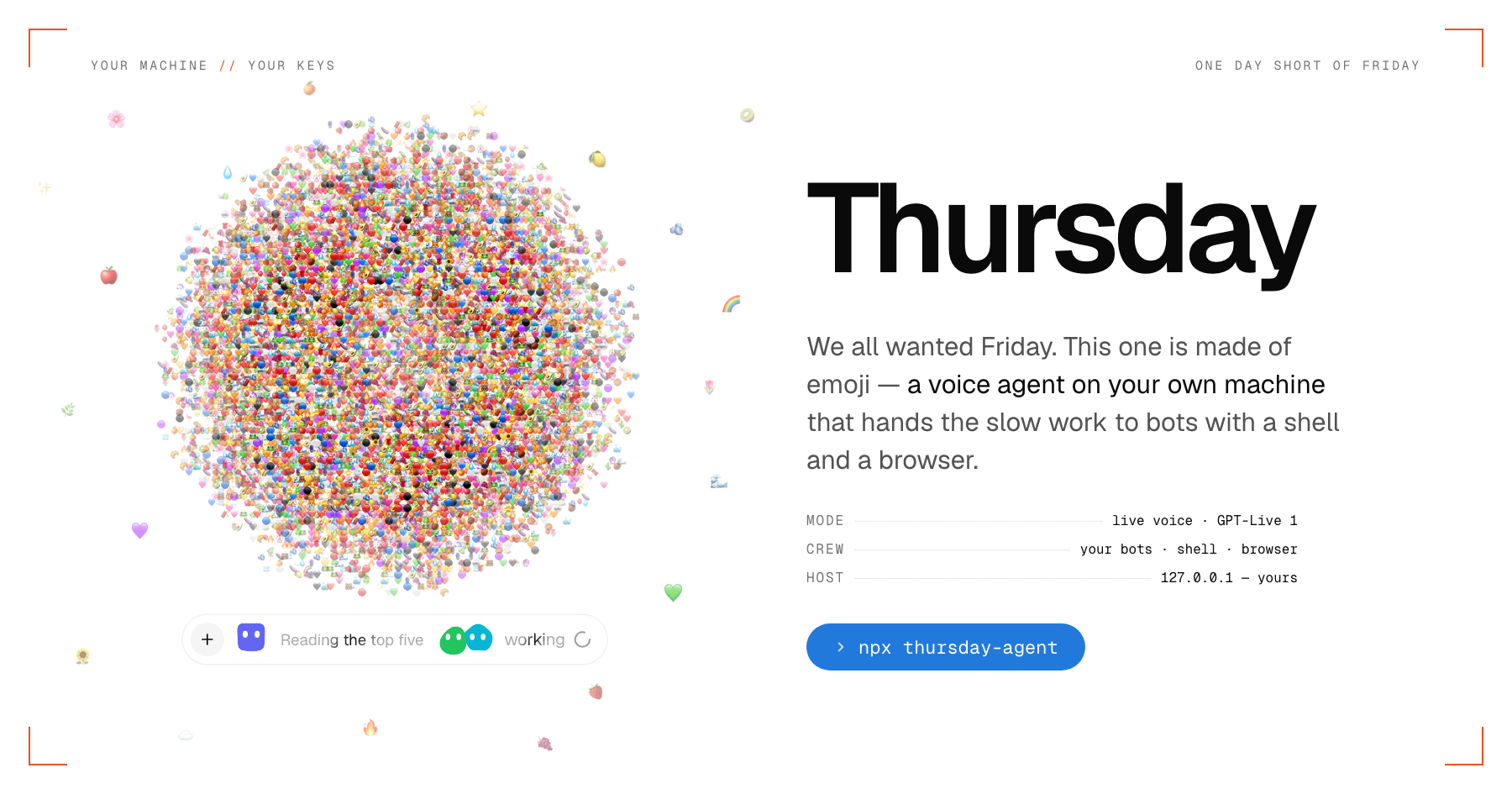
Everyone wanted Friday. This is Thursday.
An open-source voice assistant on GPT-Live 1 that runs on your computer, with a team of AI bots behind it.
You talk. Bots take the slow work to a real browser, a shell and your files, and she keeps talking while they work.


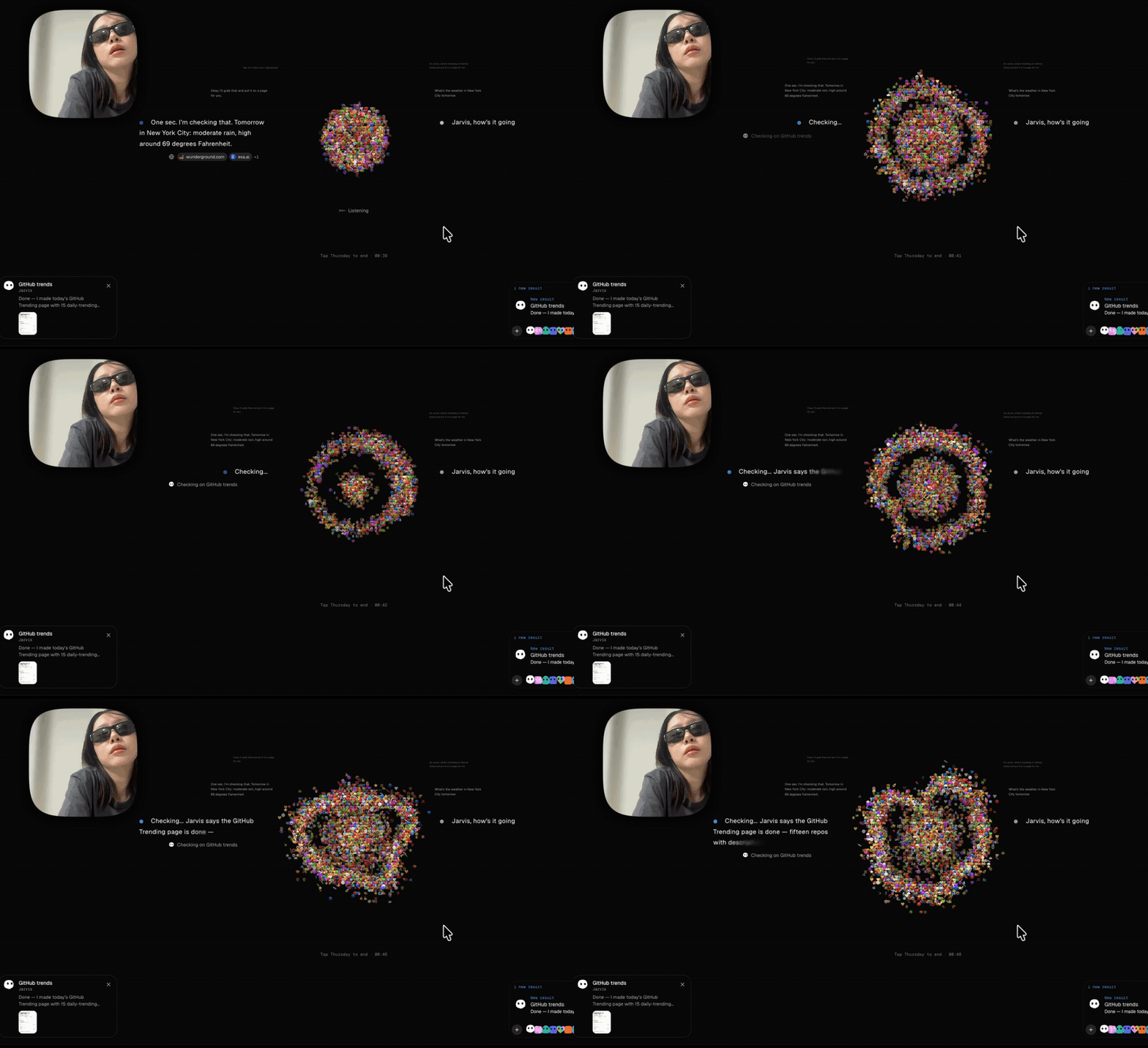
Quick start
npx thursday-agent
Needs Node.js 22.18+ and one OpenAI API key, pasted into the first screen. Pick your starter bots and tap her face. No account, no .env. The voice costs about $0.05 a minute on that key.
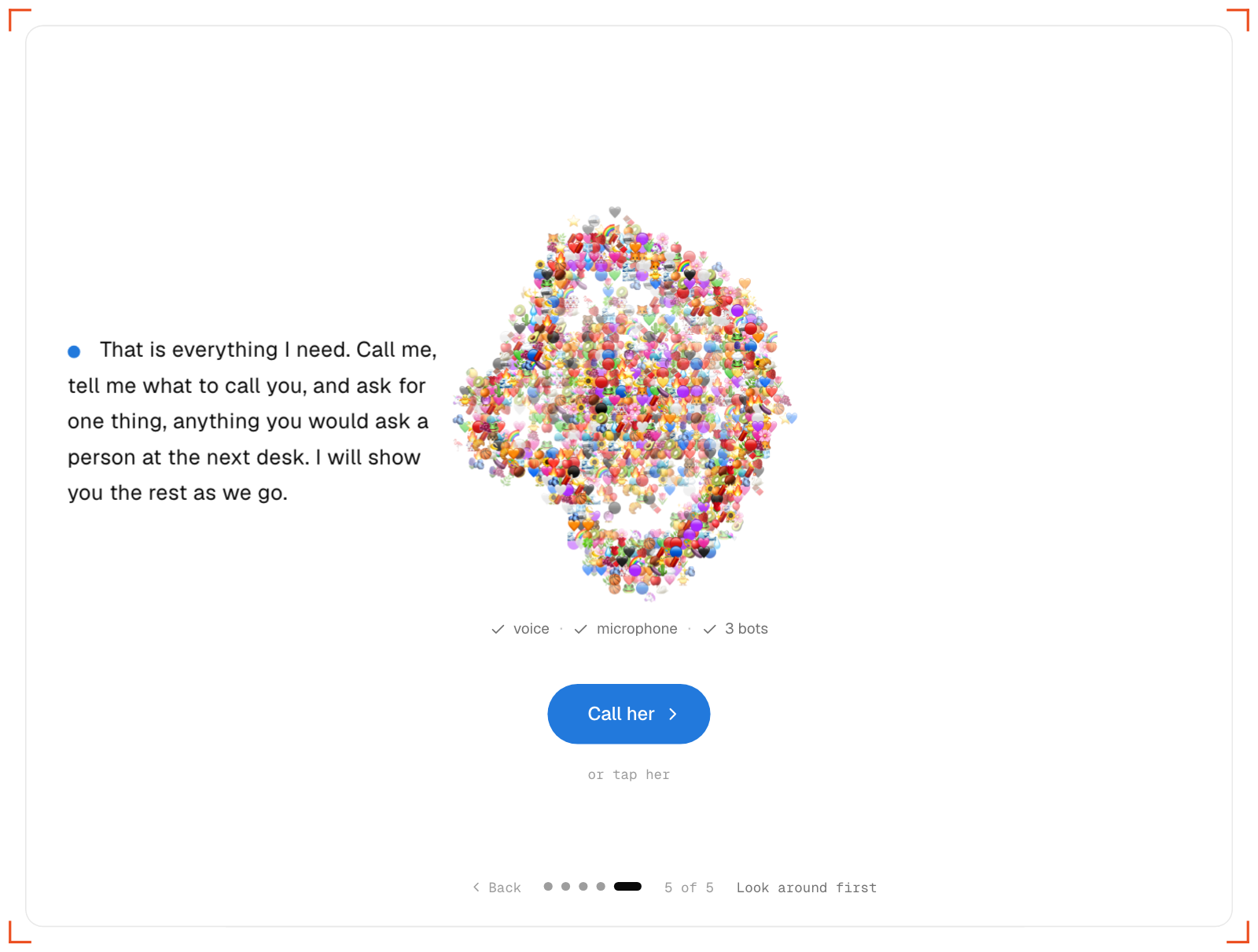
Try saying
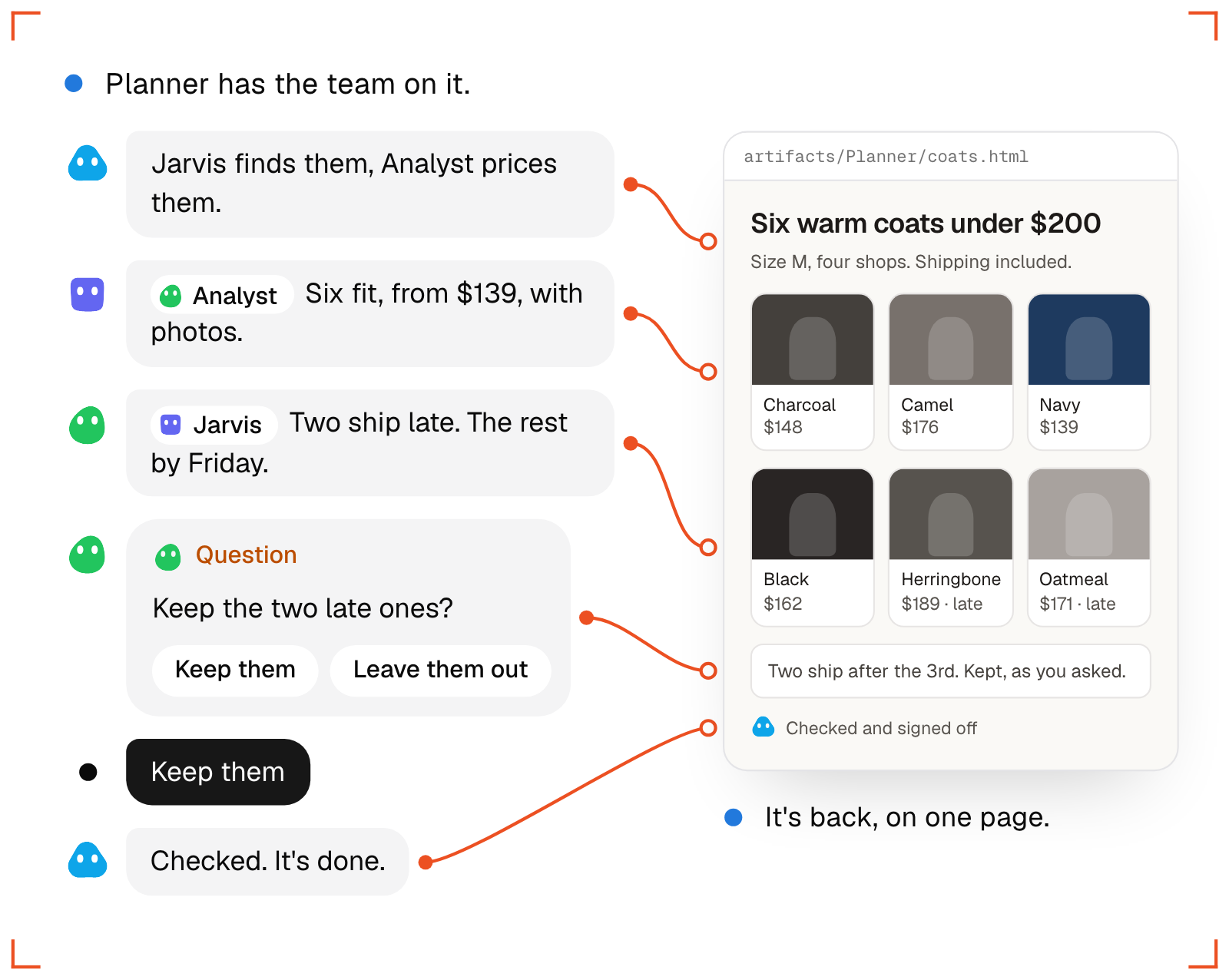
- “Find me a coat under two hundred dollars and put the options on one page.”
- “Every weekday at nine, go through my mail and draft the replies.”
- “Remember my sister's birthday is March third.”
- “Where is that coat job?”, while it is still running.
Talk while it works
A speech model that opens a browser goes silent for a minute, and a silent call is a dead call. So Thursday splits the call in two: GPT-Live 1 holds the conversation, and anything slower than a few seconds goes to a bot in the background. Interrupt her, change the subject, or ask how the job is going.
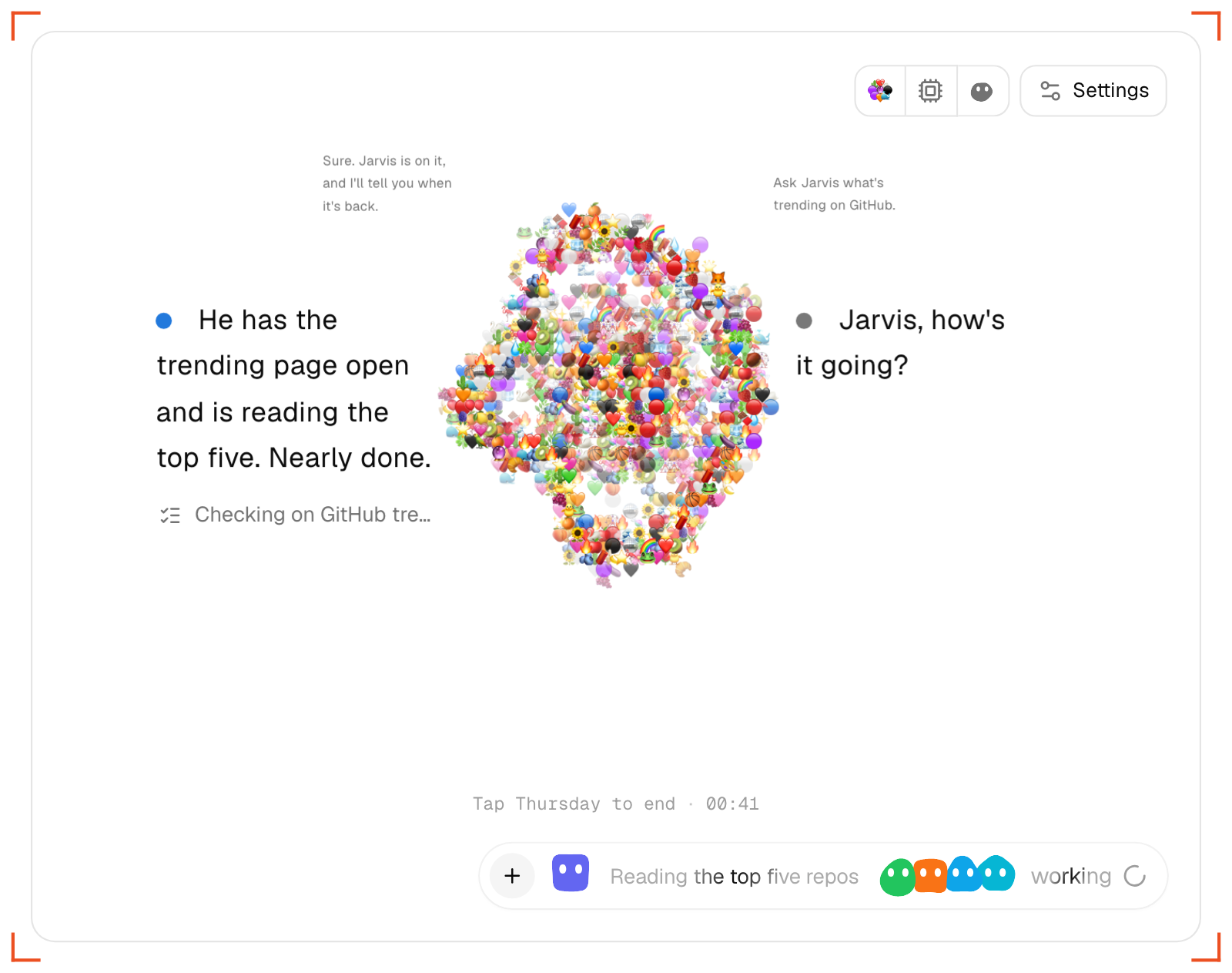
One sentence, a whole team
Bots hand parts of a job to each other, check what comes back, and ask you only when a decision is yours. Every handoff is saved: open the thread to see who did what, or step in.
Errands, in a real browser
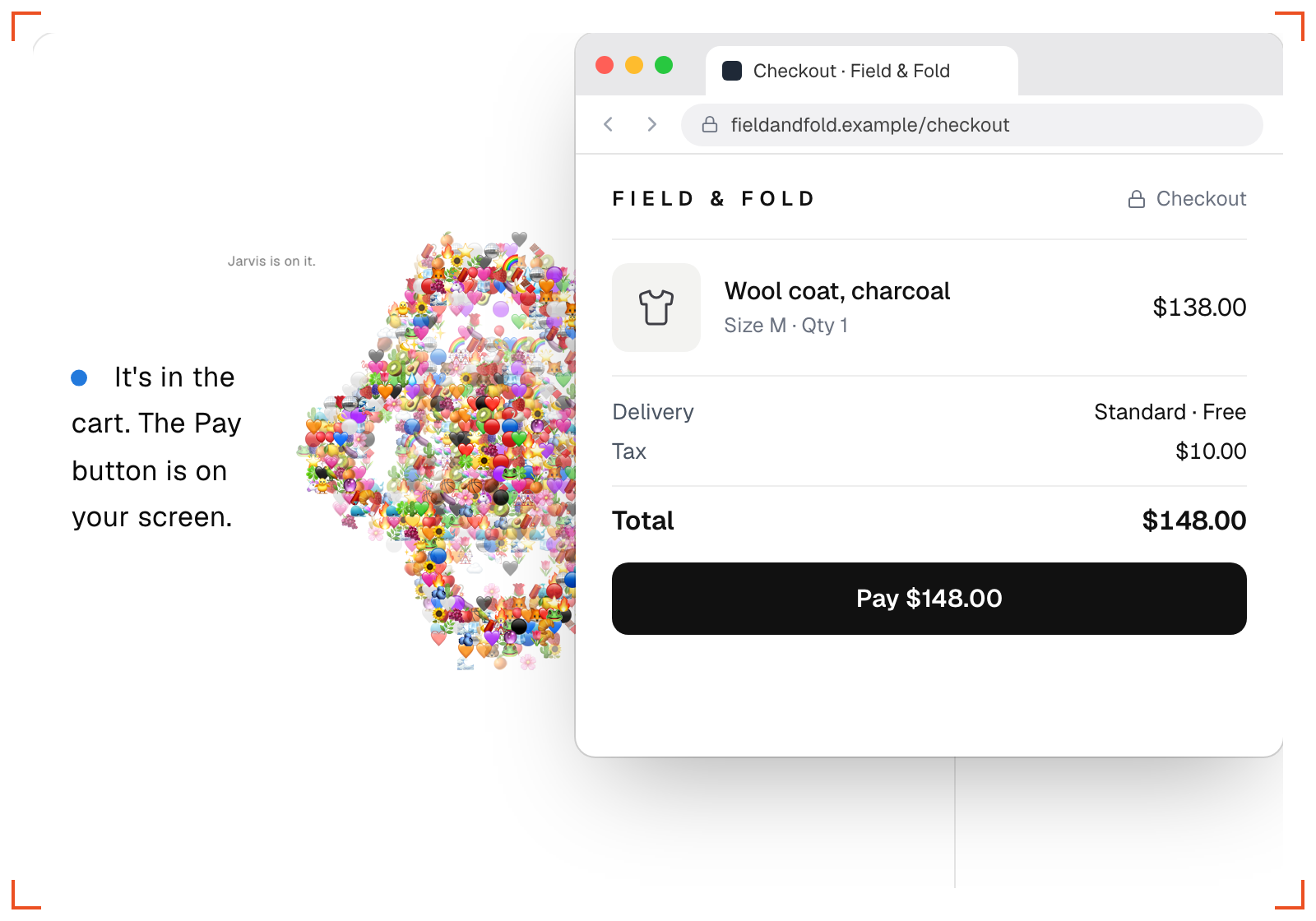
Orders, bookings, forms, the inbox. Bots use their own browser or the Chrome you're already signed into. When a site needs you, the bot opens a window, you sign in yourself, and the app keeps that sign-in for the bots you allow. A purchase stops at the Pay button, left open on your screen.
Results you can keep
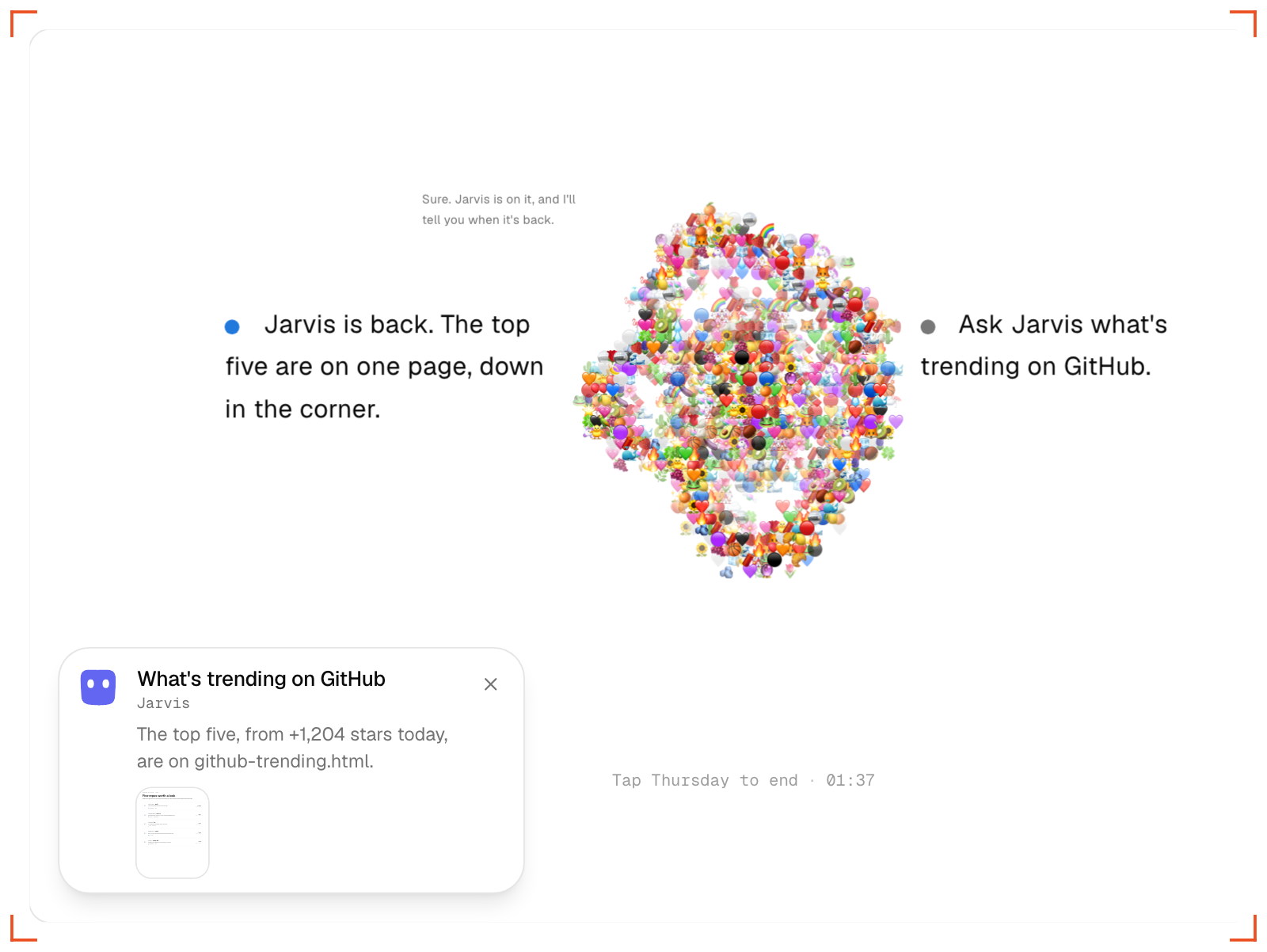
Pages, charts, videos, slides, docs and scripts, saved as files on your machine. A finished one shows up in the corner of your screen, and “show me” opens it.
Your crew
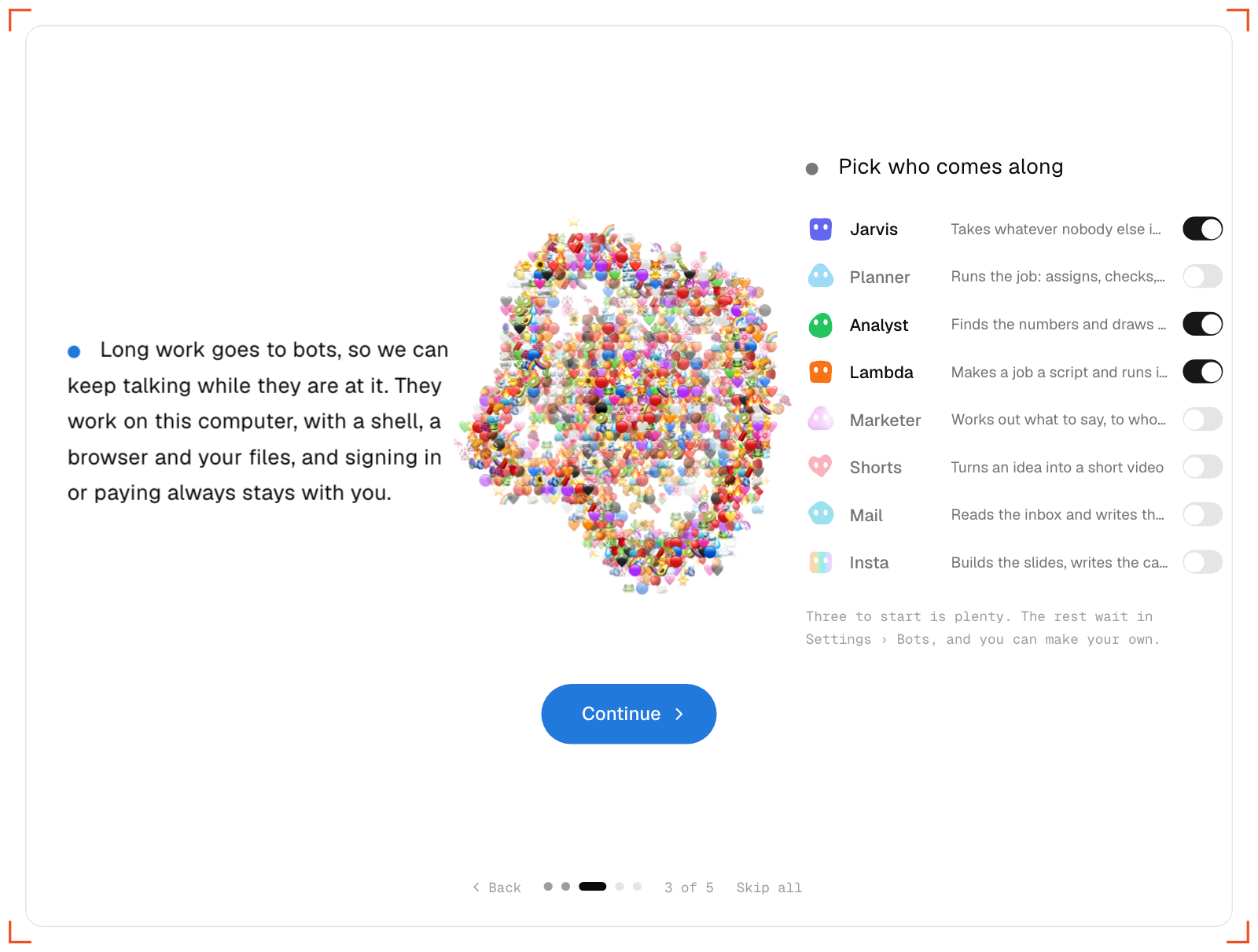
Pick starter bots on the first run, or make your own with a name and one sentence about what it's for. Give each its own model and tools.
From your phone
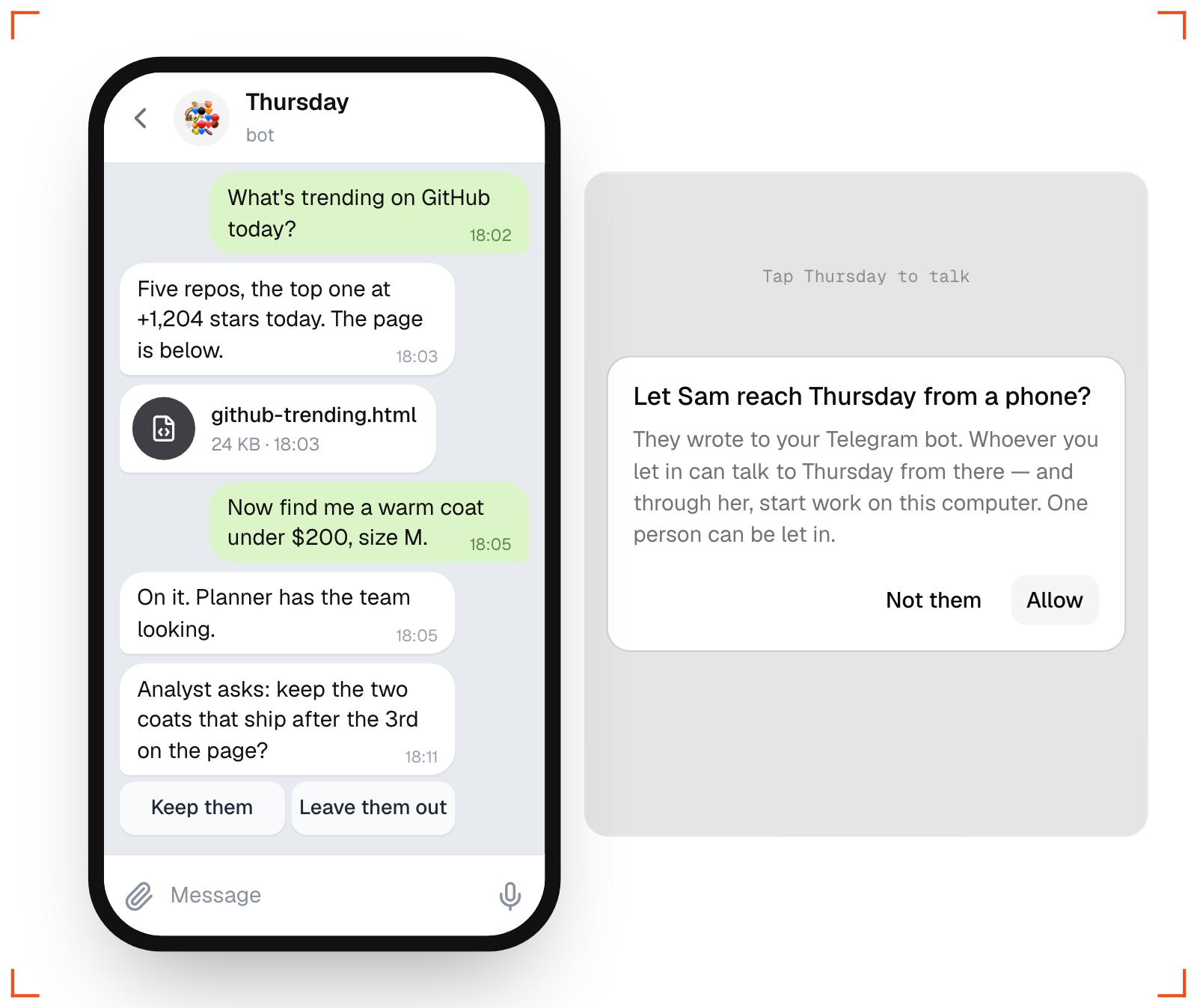
Write to her from Telegram, Discord or Slack while the app runs at home. A bot's question arrives as buttons, and the files she names come with her answer. Nothing on your computer is opened to the internet.
And also
- Hang up, it keeps going. Jobs run on your machine, and Thursday tells you when they finish, or rings your screen if you turn that on.
- Type instead. Press
/and write to her: the same memory and bots, no microphone, nothing billed by the minute. - Routines. “Every weekday at nine, go through my mail”: a bot, a job and a time, set up by saying it.
- Memory you can read. What she knows about you is plain notes. Open, edit, or delete any line.
- Skills and MCP. Teach bots new methods with Agent Skills, and connect any MCP server.
- Any model. OpenAI, Anthropic, Google, xAI, Vercel AI Gateway, or your ChatGPT sign-in, per bot.
- Local-first. No Thursday account and no server of ours. The app, your data and your keys stay on your computer.
Requirements
- Node.js 22.18+
- An OpenAI API key for the voice
- macOS. Linux should work; Windows is not tested yet.
Thursday is free and MIT-licensed. You bring the keys: OpenAI bills the voice at about $0.05 a minute while a call is open, silence included (pricing), and a call with nothing said for 20 seconds hangs up by itself. Bots use whichever provider you pick for them.
Where does my data go?What you say on a call and what bots work on go to the model providers you set up and the services you connect. The “hey thursday” wake phrase is off until you switch it on: it uses your browser's speech recognition, which in Chrome sends microphone audio to Google while the tab is open. A tap on her face or alt+shift+T starts a call without it. The app listens only on 127.0.0.1, and your calls, memory and files live in ~/.thursday (or the checkout, when you run from source).
Bots run real commands, so treat Thursday like any powerful local tool: it is not a sandbox. Asking before a login and stopping at Pay are instructions a model follows, not locks. Read SECURITY.md before giving it access to anything sensitive.
Run from sourcegit clone https://github.com/cgoinglove/thursday.git
cd thursday
pnpm install
pnpm dev
Requires pnpm 10+.
How it works · Contributing · Security · MIT
If you'd rather say it than type it, star Thursday. Ran it? Tell me where it stopped: that list is the roadmap.
Reviews (0)
Sign in to leave a review.
Leave a reviewNo results found