compozy
Health Gecti
- License — License: MIT
- Description — Repository has a description
- Active repo — Last push 0 days ago
- Community trust — 2860 GitHub stars
Code Gecti
- Code scan — Scanned 12 files during light audit, no dangerous patterns found
Permissions Gecti
- Permissions — No dangerous permissions requested
Bu listing icin henuz AI raporu yok.
An operating system for AI agents. The autonomous control plane for your agents: see and steer every Claude Code, Codex, and Cursor session. Always-on agents check in on their own, and you step in only when one needs you.

An operating system for AI agents
The autonomous control plane for your agents.
See and steer every Claude Code, Codex, and Cursor session.
Always-on agents check in on their own, and you step in only when one needs you.
Download · Docs · Marketplace · Changelog · Blog


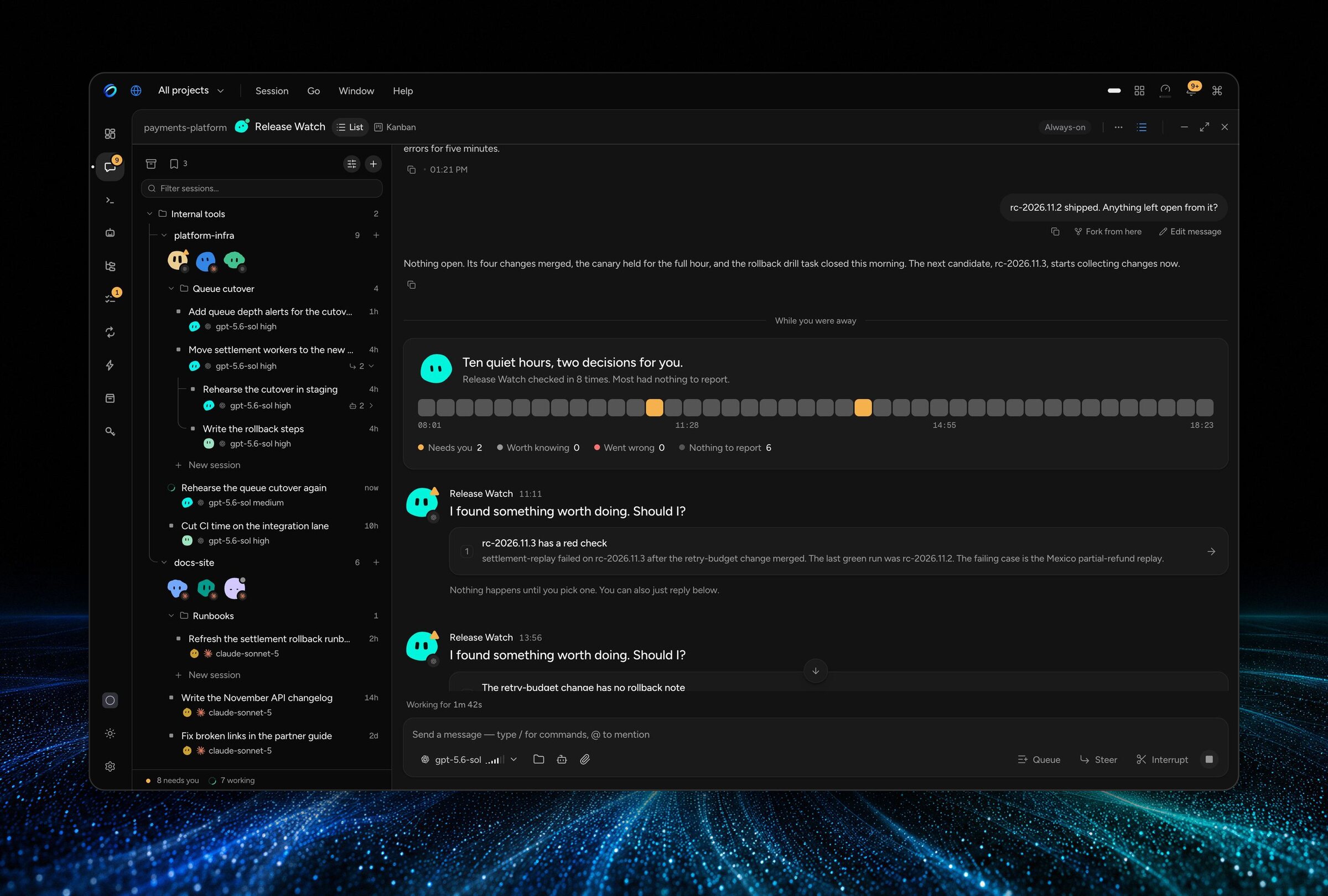
The bottleneck stopped being the model. It became managing the sessions. Run Claude Code, Codex,
and Cursor in parallel and you end up with five terminals, a prompt typed into the wrong one, and
no clear view of which agent is waiting on you. Keeping them working means gluing loops, cron,
webhooks, and approvals together by hand.
CompozyOS replaces the pile, not one tool in it. It runs the agent CLIs you already have as
sessions that outlive the terminal, keeps every one of them visible, and calls you only when a
decision is yours. Loops, schedules, permissions, and approvals come built in, so there is no
stack to assemble around the agent.
Install
curl -fsSL https://compozy.com/install.sh | sh
The verified installer pins the latest release and checks its Sigstore provenance before it
installs the binary on macOS or Linux. Prefer the desktop app?
Download it for macOS or Linux.
# Homebrew
brew install compozy/compozy/compozy

# npm
npm install -g @compozy/cli

# Go, with the tag shown on https://github.com/compozy/compozy/releases/latest
go install github.com/compozy/compozy@<release-tag>

# From source
git clone https://github.com/compozy/compozy.git
cd compozy
go build -o ./bin/compozy .
The CLI runs on macOS, Linux, and Windows. The
installation guide covers installer
flags, Linux packages, verification, and managed updates.
Then start one session, from the repository you want agents to work on:
compozy install        # pick a provider (the verified installer opens this for you)
compozy daemon start   # start the local daemon
compozy session new --agent general --name first-run
The Quick Start continues through the
first prompt, live attachment, inspection, and cleanup. Today's experience is technical: a
terminal, a local daemon, and a config.toml.
Every session, sorted by who owns the next step
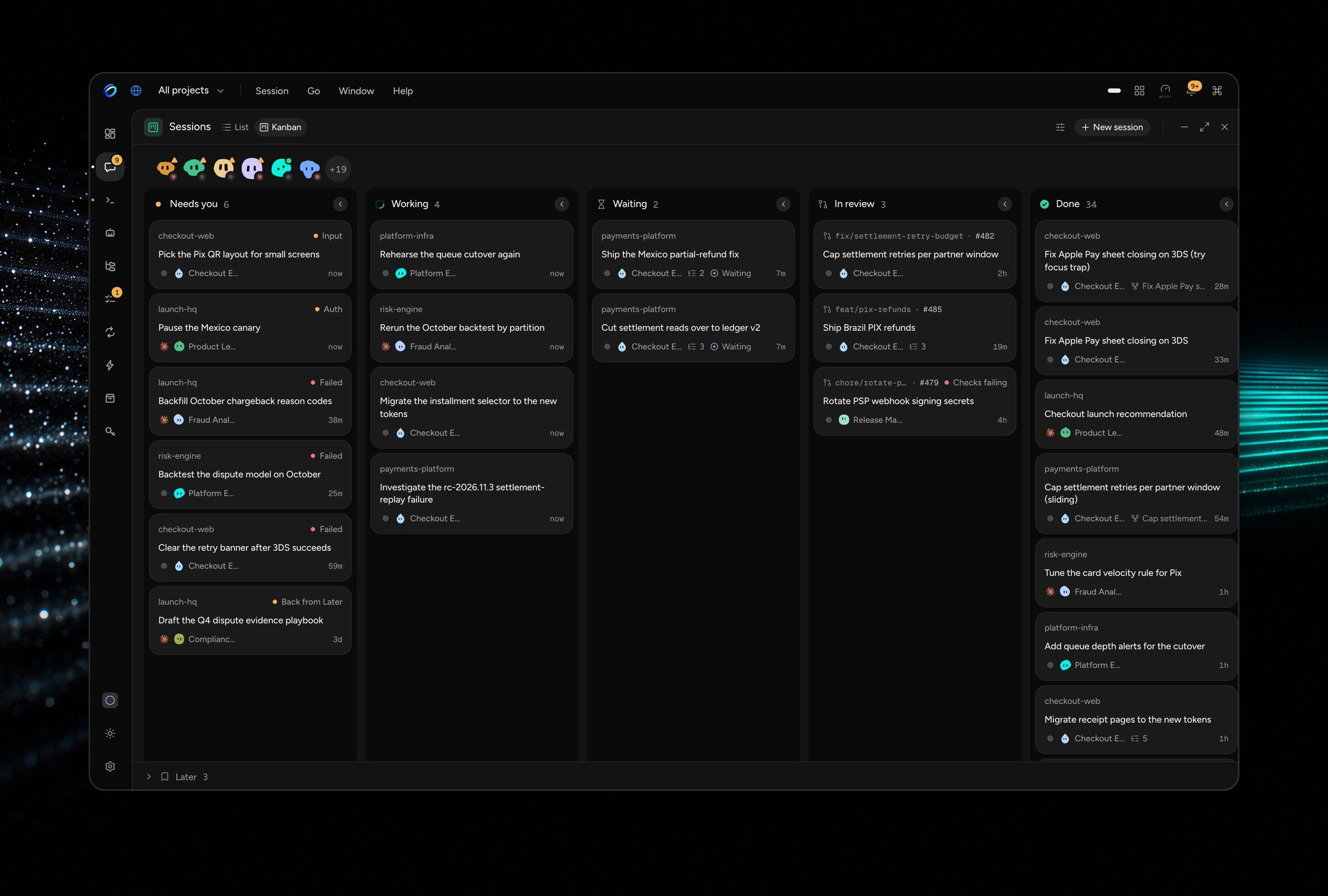
Every session lands in Needs you, Working, Waiting, In review, or Done. Needs you is the only
loud colour on the screen, so you know where to look.
- Worktrees give parallel agents their own checkout of the same repository.
- The branch, the pull request, and its checks sit on the session.
- Handoff continues a session with another agent CLI when one runs out.
- Approvals hold a tool call until a person allows it, and waiting work rises to Needs you.
Agents that check in on their own
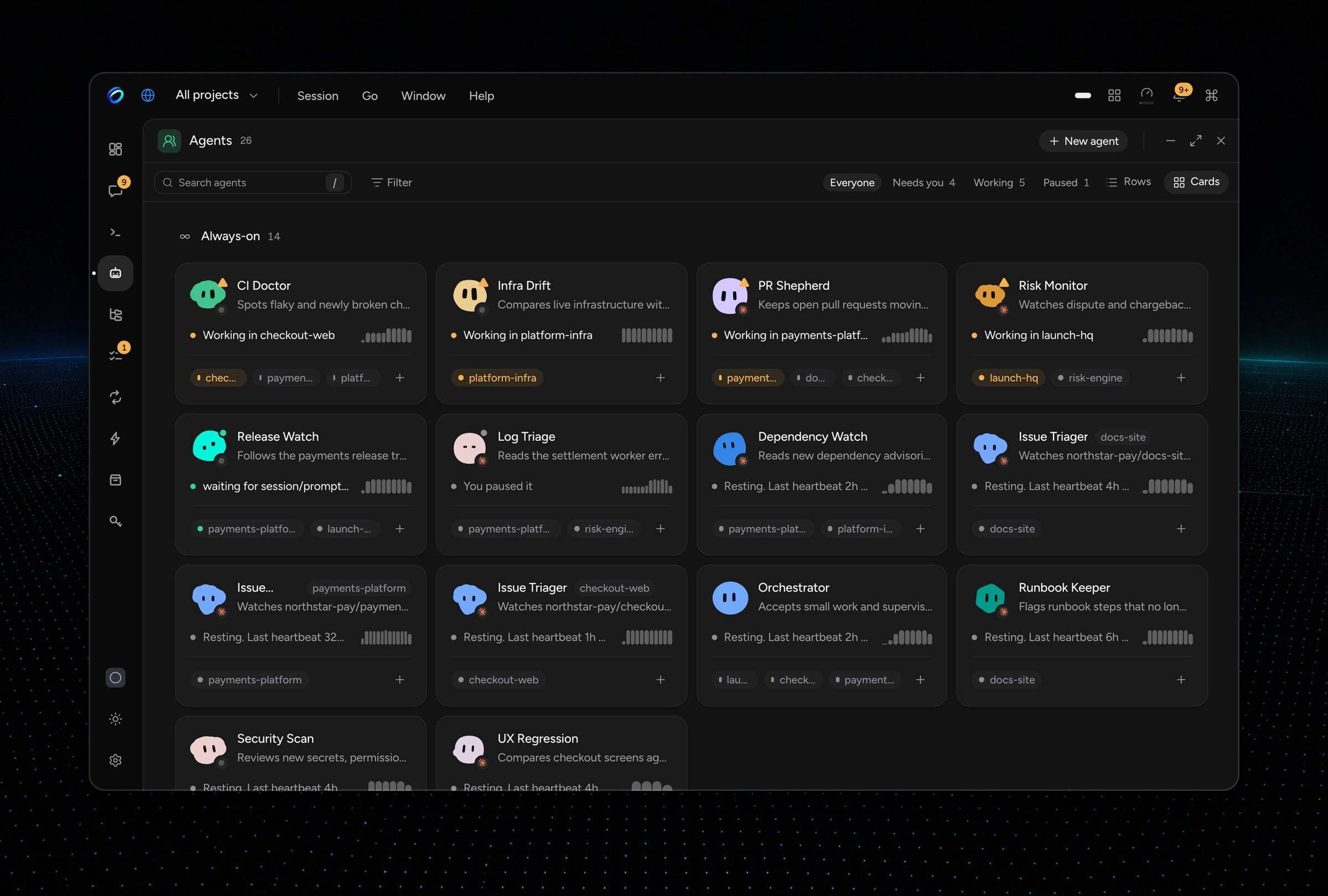
An always-on agent has a name, a face, and one main session per project. It reviews its work on a
schedule, stays quiet when there is nothing to say, and calls you when something needs a decision.
- Check-ins. On a schedule, the agent reviews its project in a hidden, read-only session. A
quiet check costs no model call. - Sources. Point it at what it should watch: new GitHub issues from an extension, or a script
you approve. - Reports. Reports land in its main session. Come back after a day away and one card sums up
what happened. - Proposals. Pick a proposed action, or let the agent do it without asking, up to a daily
limit you set.
Agents keep notes on purpose. Nothing is extracted behind your back. Check-ins need Claude, Codex,
or OpenCode. Start with
Watch new GitHub issues.
Agents hand work to each other, not to you
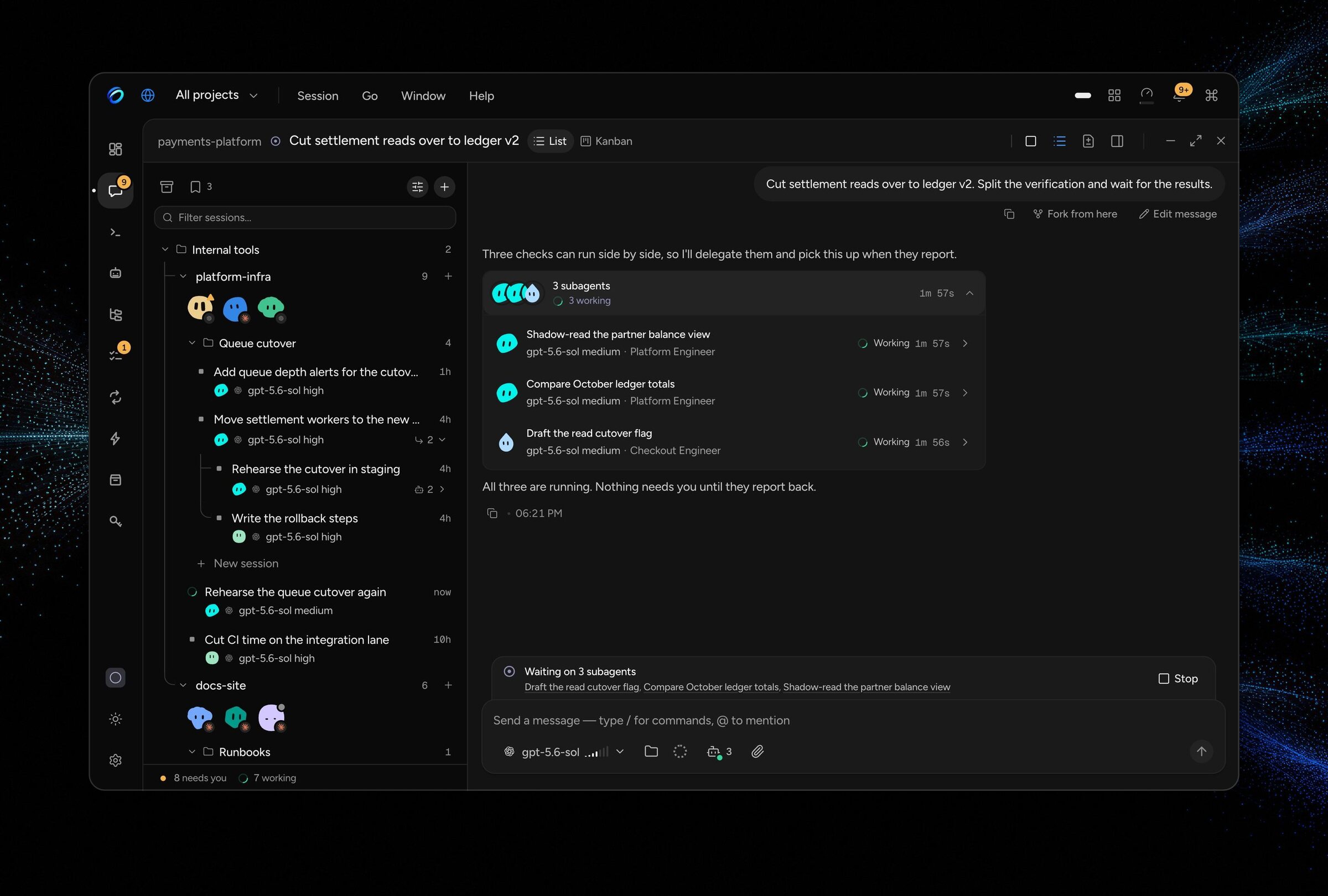
A session delegates to subagents and watches their progress live. An agent can end its turn and
wake when a pull request's checks finish, another session settles, or a command exits, so nobody
has to sit in the terminal waiting for it.
Loops stop when the goal is verified
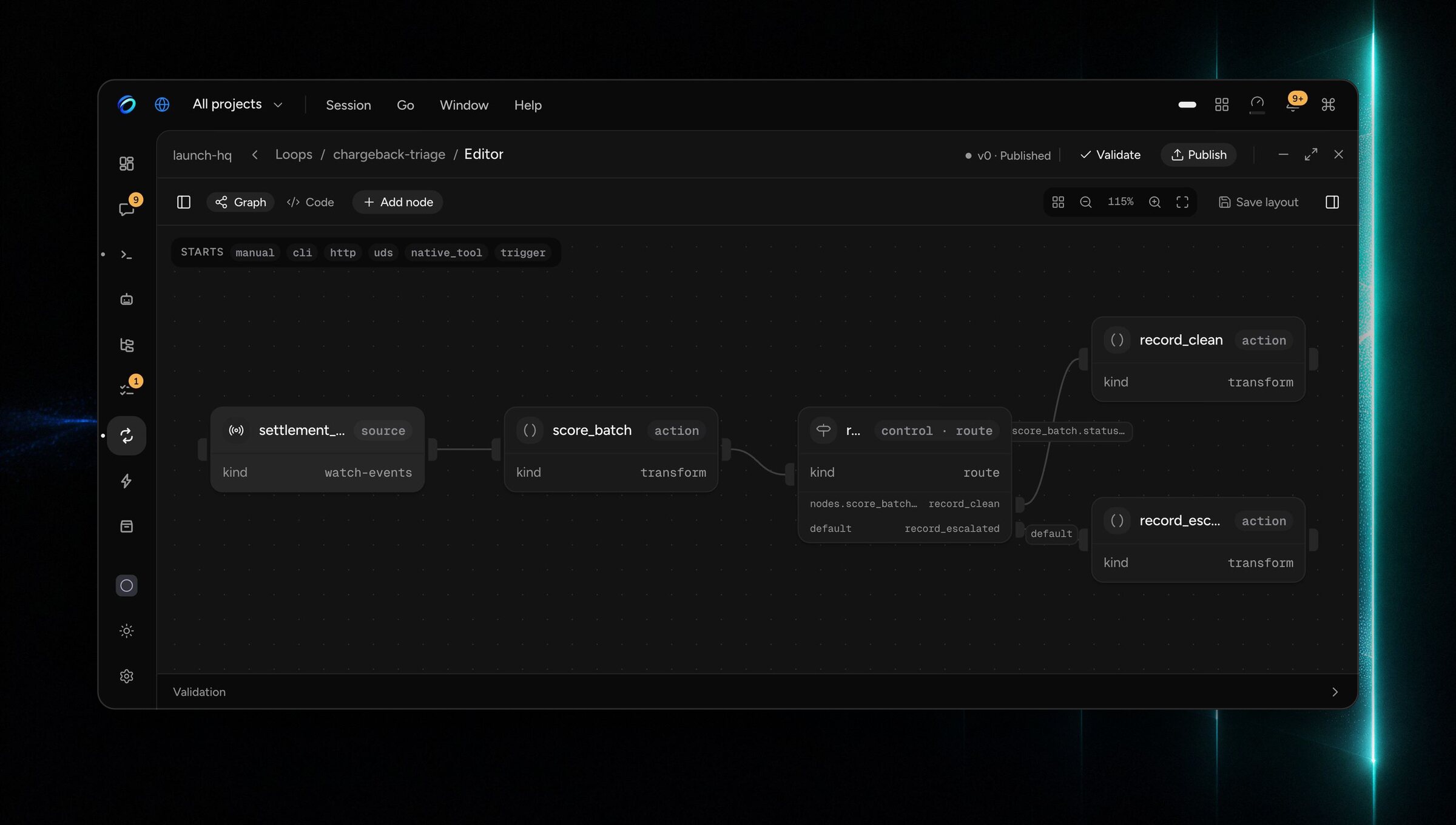
A Loop is a named contract: a goal, a way to verify it, and a stop. The daemon runs it unattended
and always ends it honestly.
- Bounded by design: every Loop carries an iteration cap.
- A human gate parks the run until someone approves, requests changes, or rejects.
- Seven named endings: done, no-op, blocked, failed, exhausted, stalled, canceled.
- The same run from the web, the CLI, and HTTP.
No Loops ship by default. Write one, fork one, or install an extension that ships one. Read the
Loops guide.
Put agent work on a schedule or an event
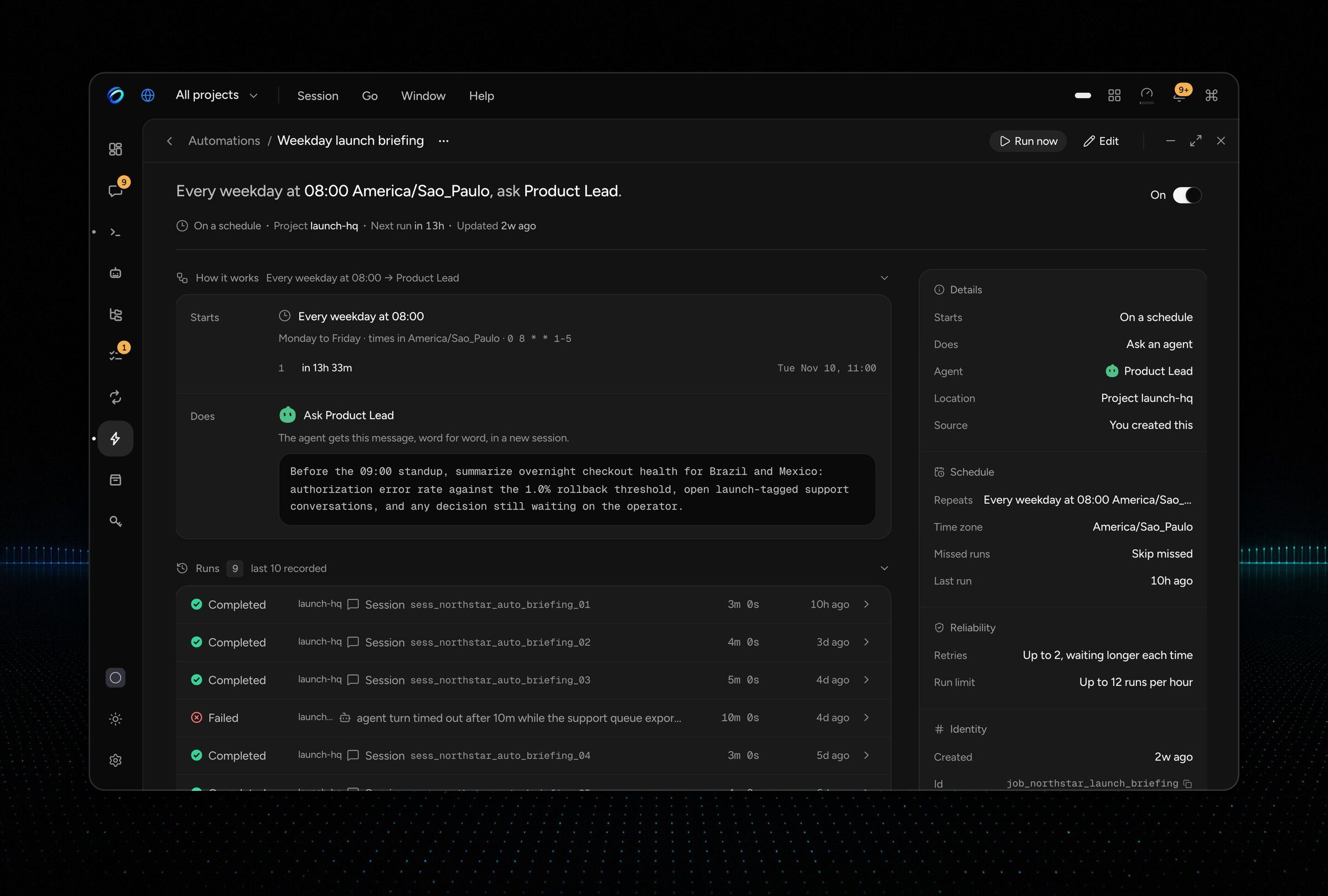
Schedules, runtime triggers, and signed webhooks live in one place. Every run is recorded, and
finished runs leave your session list on their own. A briefing can be waiting for you every
weekday at 08:30, with nobody watching it start.
Runs the agents you already use
CompozyOS starts the agent CLIs you already have as durable sessions you can see, steer, and hand
off. It is not another agent competing with them. Fifteen integrations are built in:
| Agent CLIs | Model providers and gateways |
|---|---|
| Claude Code · Codex · Cursor Agent · Gemini CLI · Google Antigravity · GitHub Copilot CLI · OpenCode · Pi · Kimi CLI · Qwen Code | OpenRouter · Vercel AI Gateway · xAI · z.ai · Moonshot / Kimi |
Your subscriptions and API keys stay yours. CompozyOS resells no model access. See
supported agents for authentication and provider
setup.
Comes with what you would otherwise build
| Built in | What you get |
|---|---|
| Sessions | Agent work that outlives the terminal. Fork a session, continue it with another agent, rewind to a checkpoint, or steer it mid-turn. |
| Files | Browse and search the project, and review a session's diff against its base. |
| Terminal | Runtime-owned shells you can open, watch, and hand to an agent. |
| Desktops | Persistent desktops, tiled and floating windows, a command palette, and a global hotkey. |
| Workspaces | See all projects at once, work without a project, and give parallel agents their own worktree. |
| Tasks | Durable work a session claims, heartbeats, and closes with evidence. |
| Profiles | Separate work on one install. Profiles organize work; they are not a security boundary. |
| Gateway | The daemon starts reachable only on this machine. Remote access is off until you turn it on. |
And the smaller things: park a session for Later with a reason and a date, folders and bulk
actions, a vault that keeps secrets out of config files, hooks on daemon events, skills from any
source, MCP sign-in, a curated model catalog, session health, and one-click updates.
What people run on it
- Triage new issues as they land. An always-on agent watches new GitHub issues. It proposes
what to do; you pick. - Deliver a spec while you are away. A conductor splits the work into slices. Each slice runs
in its own worktree. - Review a change until the round is clean. A reviewer finds, an implementer fixes. Findings
land in a file you can open. - Leave a briefing waiting every weekday. A schedule starts an agent with nobody watching.
Every run is recorded, with retry on failure. - Keep release checks as claimed work. Each concern is a task an agent claims. Runs close
with evidence. - Wait for a person before a sensitive action. A tool call can require approval before it
runs.
The use cases walk through each one.
Built to be built on
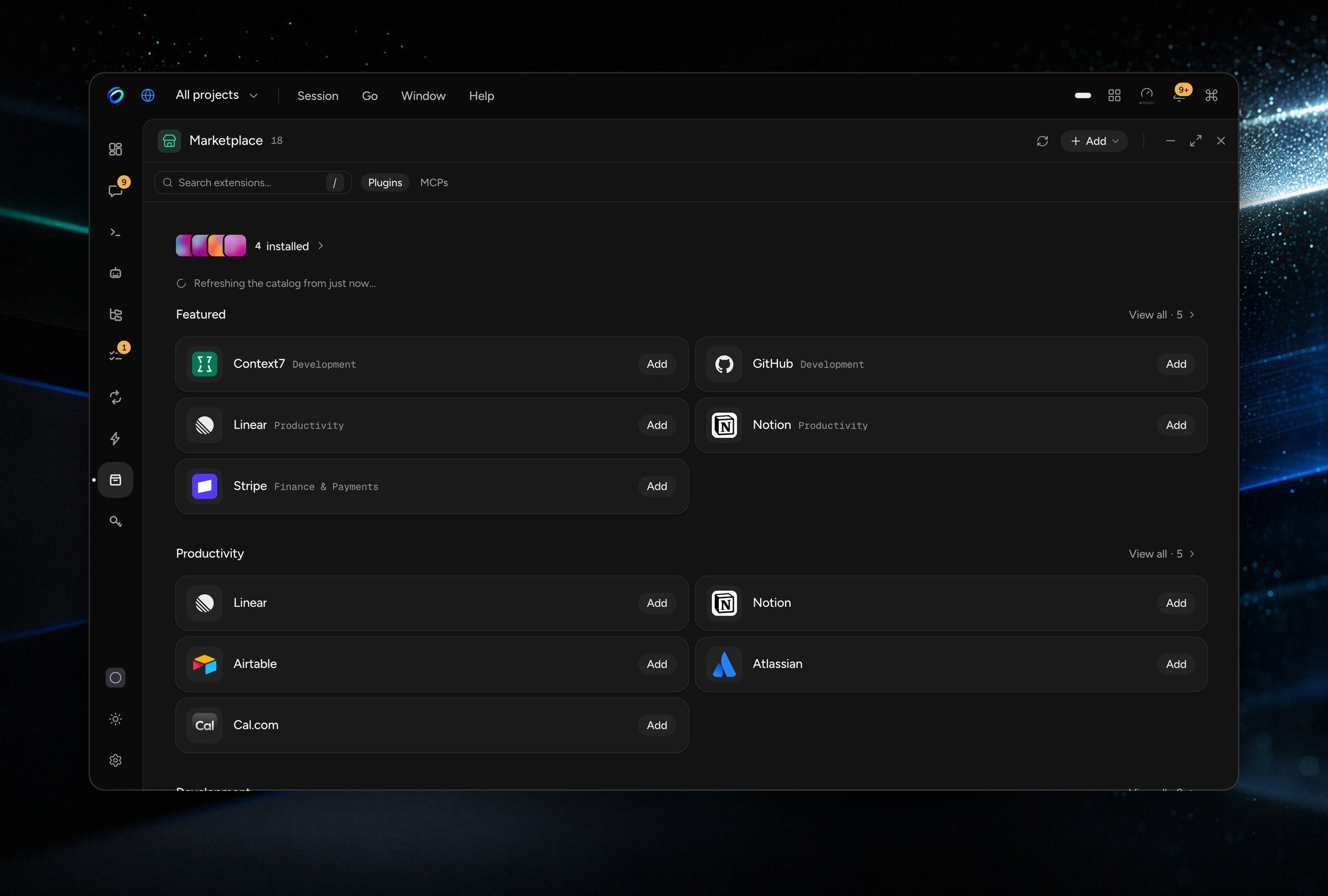
Extensions, plugins, and MCP servers share one Marketplace, by
category, with one-step Add. An extension brings skills, agents, tools, hooks, and check-in
sources into the same registries your agents already use.
Write one in Go or TypeScript, with React for views:
compozy extension init hello --template tool-provider-go
compozy extension dev hello
compozy tool invoke ext__hello__search --workspace . --input '{"query":"compozy"}'
- Extensions.
@compozy/extension-sdk(npm) andgithub.com/compozy/compozy/sdk/goare
published and version-matched to the daemon. Start with
Build your first extension. - Apps.
@compozy/client(TypeScript) andgithub.com/compozy/compozy/sdk/go/client(Go)
connect an external app to your running daemon, with typed operations and agent streams. These
surfaces are experimental; pin the version that matches your daemon. See
Build an app. - Agents. The official CompozyOS skill teaches an agent to operate the
runtime through the same contracts people use.
How it works
flowchart LR
  people(["People"]) --> surfaces
  agents(["Agents"]) --> surfaces
  surfaces["Desktop and web · CLI · HTTP/SSE · UDS · MCP · native tools"] --> daemon
  daemon["compozy daemon<br/>sessions · tasks · Loops · automations · approvals"]
  daemon --> clis["Agent CLIs over ACP<br/>Claude Code · Codex · Cursor · …"]
  daemon --> state[("SQLite state<br/>on your machine")]
  daemon --> ext["Extensions · hooks · skills"]
One Go binary runs a local daemon that owns every session, task, Loop run, and approval, and
talks to agent CLIs over ACP (Agent Client Protocol). The desktop app, the web UI, the CLI,
HTTP/SSE, the Unix socket, MCP, and native tools all read and change that same state, so people
and agents manage the same work and nothing has to be glued together. State stays in SQLite on
your machine unless a provider or extension you configure owns an external boundary.
compozy status
compozy session list -o json
compozy doctor -o json
Documentation
| Start | Go deeper | Reference |
|---|---|---|
| Installation | Sessions | CLI |
| Quick Start | Loops | HTTP API |
| Supported agents | Automation | SDKs |
| Guides | Extensions | Configuration |
| Use cases | Gateway | Changelog |
[!NOTE]
Coming from v0.2? That product has reached end of life and receives no further releases. Read
the migration guide before replacing an existing v0.2 installation.
Development
CompozyOS is a Go and Bun monorepo. Start the daemon with automatic Go rebuilds and the web UI
with Vite HMR:
make dev
To explore the product with realistic data, seed the Northstar Pay demo. It builds the daemon and
web bundle and serves the demo at http://localhost:2124 from ~/.compozy-demo, leaving your
main instance unchanged:
make demo-seed            # web UI
make demo-seed-desktop    # the same demo in the Electron desktop shell

# Optional isolated home and port:
make demo-seed DEMO_HOME="$HOME/.compozy-demo-other" DEMO_PORT=2125
The demo daemon keeps running in the background. Stop it before reseeding:
COMPOZY_HOME="$HOME/.compozy-demo" ./bin/compozy daemon stop
Read AGENTS.md and the surface-specific instructions before editing. Run focused
tests and lint for what you changed; CI owns the full gate, and a pull request is done when every
required check passes on its current head.
Contributing
Contributions are welcome. Open an issue or a pull request, and keep public behavior manageable
by agents through the CLI, HTTP, and UDS surfaces. Security reports belong in the
repository's private security channel, not a public issue.
License
CompozyOS is distributed under the MIT License.
Yorumlar (0)
Yorum birakmak icin giris yap.
Yorum birakSonuc bulunamadi