PropMotion
Health Pass
- License — License: MIT
- Description — Repository has a description
- Active repo — Last push 0 days ago
- Community trust — 86 GitHub stars
Code Warn
- Code scan incomplete — No supported source files were scanned during light audit
Permissions Pass
- Permissions — No dangerous permissions requested
No AI report is available for this listing yet.
Claude Code skill: make one 3D object perform in your SwiftUI app. SceneKit stages, baked choreography, hand-rolled physics, real shadows.
PropMotion
A Claude Code skill for making 3D objects move well in SwiftUI apps.





What it's for
Sometimes an app needs one 3D moment. A product spinning on a pedestal. An
achievement badge that rolls in and thuds. A coin that drops when the user
hits a goal. Not a game, not AR. One object that moves well.
SceneKit does all of this and sits in any SwiftUI layout, but the knowledge
of how is scattered and half of it is undocumented. The docs tell you what
an SCNNode is. They don't tell you that deferred shadows silently break
under MSAA, or that the first frame of a fresh SCNView compiles shaders in
the middle of your entrance animation. This skill is the missing manual,
written for an agent.
What you can make with it
- an object that rolls onto the screen, settles, and casts a real shadow
over your plain SwiftUI background - grab it, throw it, it bounces off the edges; every impact taps the
haptic engine - weight you can see: heavy things rise slow, fall fast, land with a thud
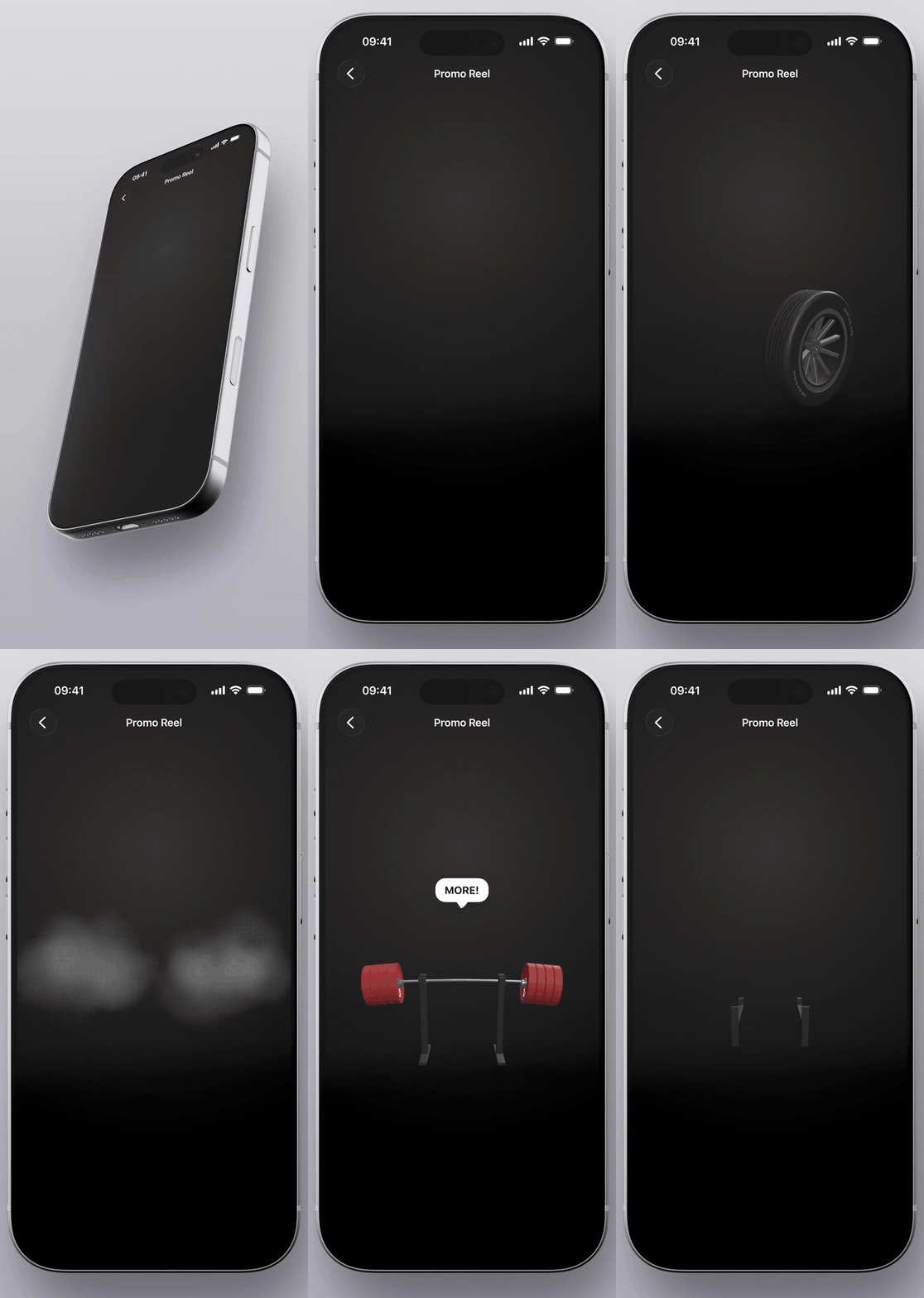
and a shiver - coins raining into a pile, marbles colliding, a wheel doing a burnout
with smoke - several scenes cut into one continuous clip, like the one above
All geometry from primitives in code, all motion baked keyframes with
hand-rolled physics. No Unity, no Blender, no assets to license.
How to work with it
Two different problems, two different inputs. This is how the clip above
was actually made.
Shape: show photos. The dumbbell started as two photos of two
different dumbbells, from two angles. Same for the plate and the tire.
An agent reads proportions off a reference far better than off
adjectives: "a rubber dumbbell with a steel grip" gets you a generic
guess, a photo gets you the thing in the photo. Two shots from different
angles is enough; the skill makes the agent take real-world measurements
off them before modeling anything.
Motion: write the script. The barbell scene got no pictures at all.
Just a precise description of what happens and when: rolls in from the
bottom, racks itself, plates slam on one by one, and at the end the whole
rack tips over backward. The skill turns a description like that into a
cue sheet before any code gets written, so the tighter your sequence, the
closer the first take.
Iterate on what you see. A screenshot of what's wrong beats a
paragraph about what's wrong. And when motion feels off and you can't say
why, ask the agent to draw the path as a red line on the floor. One look
usually settles whether the problem is the trajectory or the staging.
What's inside
One SKILL.md the agent reads first, and ten reference files it pulls in
when the task calls for them. Roughly:
- how a stage is built. Transparent SCNView over your SwiftUI layout,
a camera that behaves, three lights and a separate shadow rig - how motion is designed. Cue sheets before code, baked keyframes instead
of timers, a tiny integrator instead of a physics engine - how it survives real fingers. Grabs, throws, haptics, and what happens
when the user interrupts a beat halfway through - how single scenes get cut into a sequence like the clip above
- the traps. Each one named, each one with the fix that actually works
The writing is opinionated because the alternatives were tried and looked
worse on screen.
Install
The quick way, from your project directory:
npx skills add dembsky/PropMotion
Or by hand for Claude Code: copy the scenekit-product-stages folder into~/.claude/skills/, so the file lands at~/.claude/skills/scenekit-product-stages/SKILL.md. That folder is the
skill; everything else in this repo is for you, not the agent.
Claude.ai: zip the scenekit-product-stages folder and upload it under
Settings > Capabilities > Skills.
Then ask for something concrete. "A coin that drops onto the table, bounces
twice and settles" is a better first prompt than "add 3D".
Testing
evals.md has the scenarios I use to check the skill triggers when it
should and stays quiet when it shouldn't. Run them in a fresh session.
License
MIT. Take it, ship things with it.
Reviews (0)
Sign in to leave a review.
Leave a reviewNo results found