grand-rounds
Health Warn
- License — License: MIT
- Description — Repository has a description
- Active repo — Last push 0 days ago
- Low visibility — Only 5 GitHub stars
Code Pass
- Code scan — Scanned 12 files during light audit, no dangerous patterns found
Permissions Pass
- Permissions — No dangerous permissions requested
No AI report is available for this listing yet.
Grand Rounds: evidence-first medical presentations for Claude Code, Codex & Antigravity. Grills you first, plans with your approval, traces every number to a source, lifts original Kaplan–Meier vectors, builds HTML or PPTX in your template, and audits for AI slop and citation errors.

Grand Rounds
Evidence-first medical presentations, built by your coding agent.
A skills harness for Claude Code, Codex and Antigravity that interviews you, plans the talk,
checks every number against its source, and catches the tells of machine-made slides.






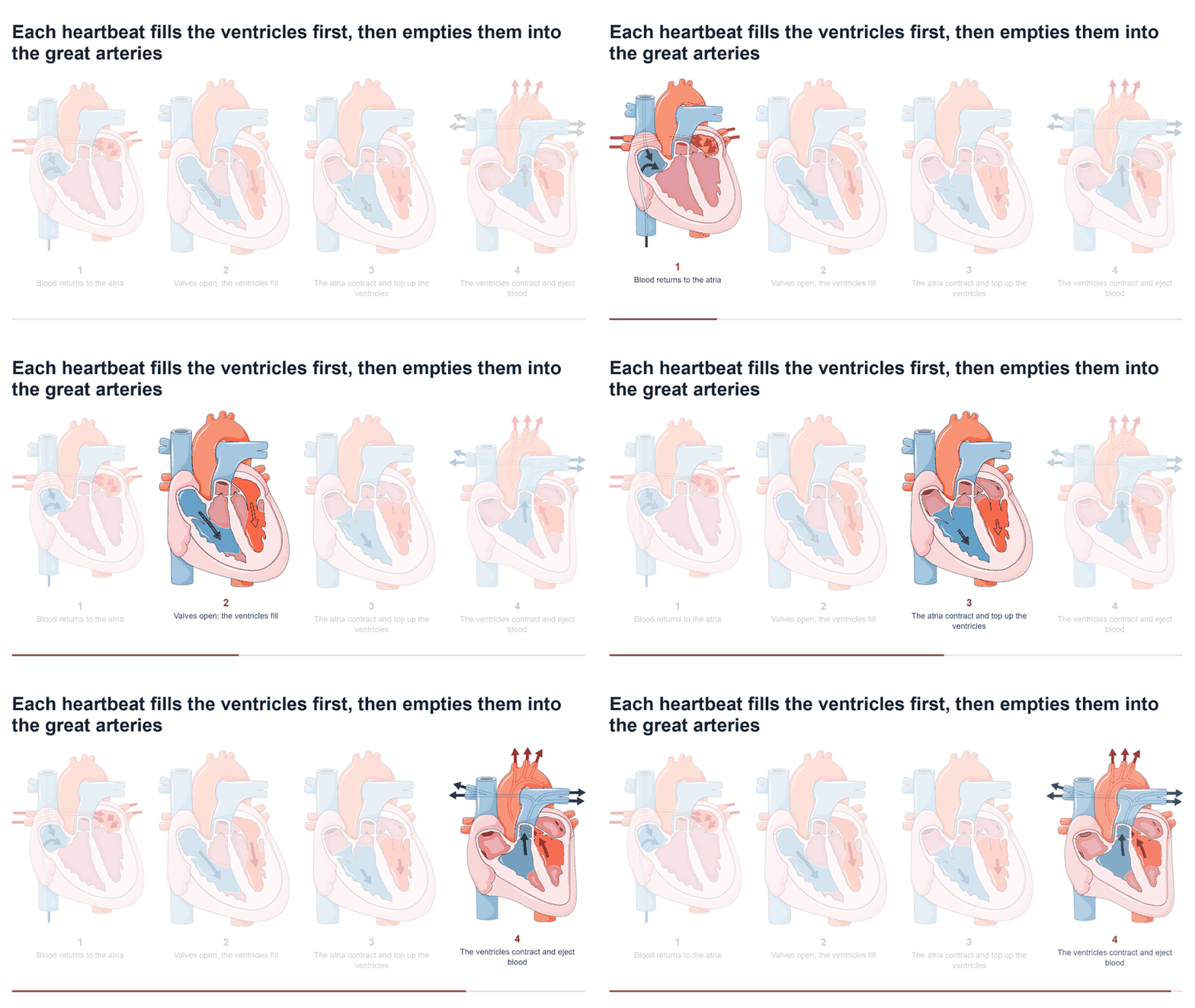
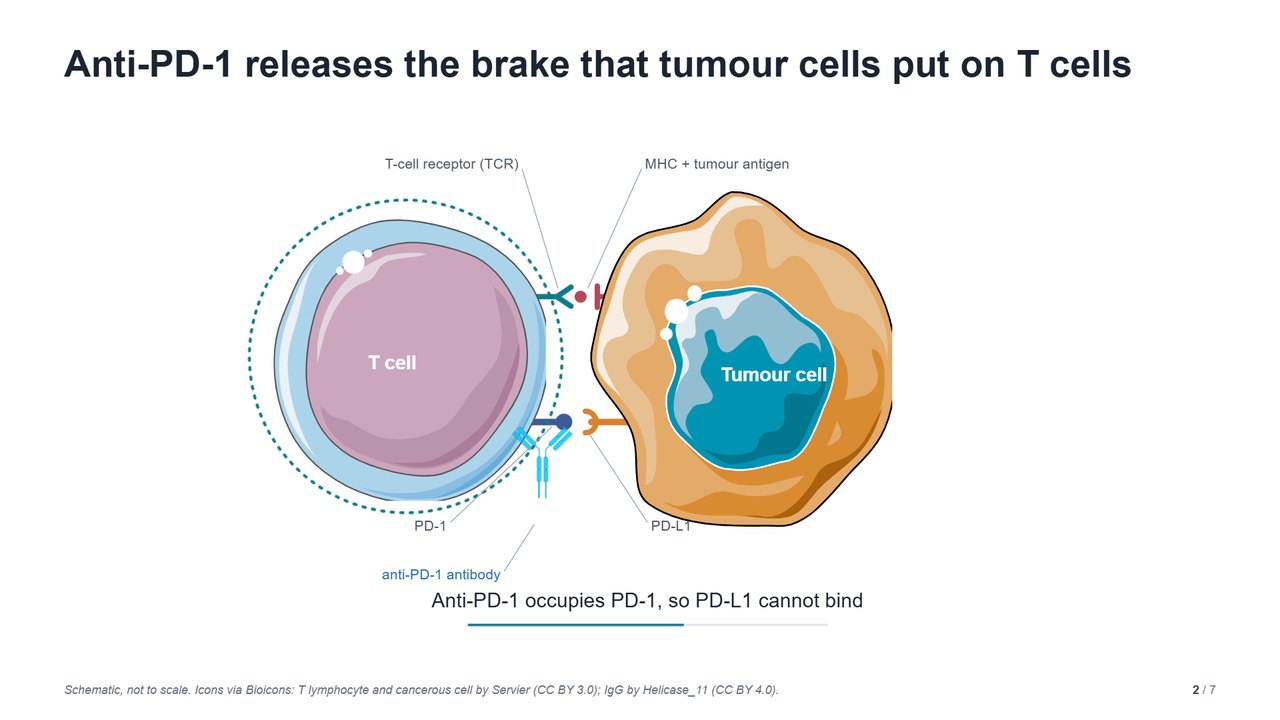
Motion inside the slide instead of a pasted video: a mechanism built from Bioicons cells and antibody (left) and a sequence of Servier Medical Art drawings played as a loop (right).
Why this exists
Ask a general-purpose agent for "a journal club deck on trial X" and you usually get a file
within minutes. It is also usually wrong in ways that matter in front of a medical audience:
- It decides for you. PowerPoint or HTML, which template, who the audience is, report or
critique. Testing showed a baseline agent listing these as "assumptions" after
committing to them. - Numbers drift. A hazard ratio from one endpoint lands under another. "Overall survival
improved" appears for HR 0.77 with P = 0.33. - References are recalled, not retrieved. A PMID "from memory, please verify" ends up in
the footer. - The slides look machine-made: numbered eyebrow labels, KPI-card grids, presenter cues
printed on the slide ("▸ click for next"), notes about how a figure was made ("original
figure, recoloured").
Grand Rounds turns slide-making into a method with gates, in the spirit of
Superpowers, and starts with a structured interview
inspired by Matt Pocock's grilling skill.
How it works
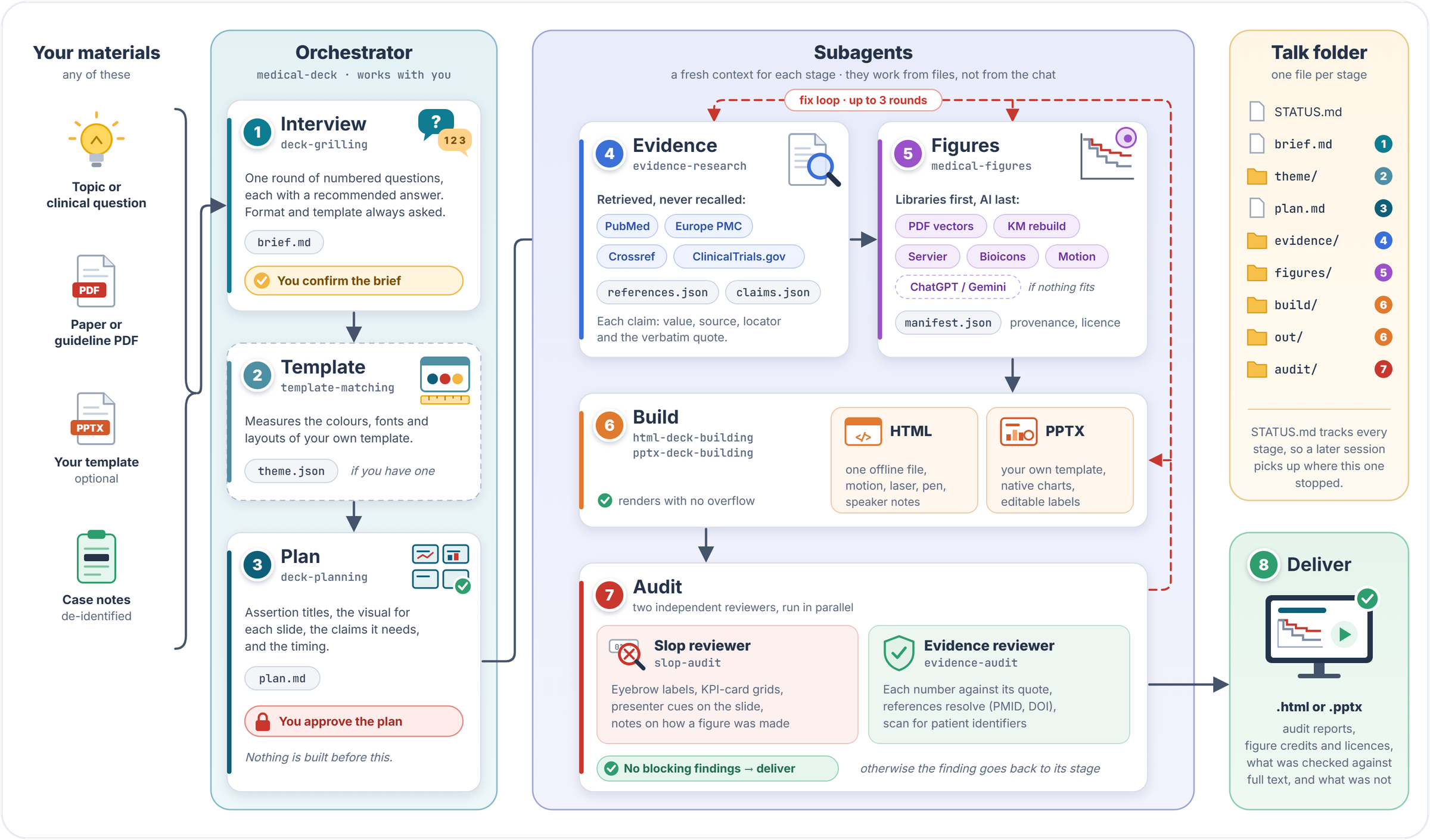
The orchestrator skill (medical-deck) runs the stages. Stages 4–7 go to fresh
subagents with written role briefs: evidence researcher, figure maker, deck builder,
slop reviewer and evidence reviewer. Each works from files, not from the conversation, and
hands back a short structured report. Two gates stop for you: the brief and the
plan. Nothing is built before you approve the plan.
Every stage leaves a file in the talk folder, so a later session can resume and you can see
what was decided:
my-talk/
├── STATUS.md            stage tracker
├── brief.md             what you decided in the interview
├── plan.md              assertion titles, visuals, claims needed, timing
├── theme/               measured template: theme.json, scan.json, renders
├── sources/             your PDFs, guidelines, (de-identified) case notes
├── evidence/            references.json + claims.json (value, source, locator, verbatim quote)
├── figures/             SVG/PNG + manifest.json (provenance and licence)
├── build/               source, render screenshots, rendered DOM
├── out/                 the deliverable (.html or .pptx)
└── audit/               slop-report.md, evidence-report.md
The skills
| Skill | Invoked by | What it is for |
|---|---|---|
medical-deck |
model or you | Orchestrator: stages, gates, subagent dispatch, fix loop |
deck-grilling |
model | Interview in rounds of numbered questions, each with a recommended answer. Facts are looked up; decisions are asked. Output format and template are always asked. |
deck-planning |
model | Storyline recipes (journal club, conference, lecture, guideline update, clinical case, M&M), assertion titles, visual grammar, time budget |
evidence-research |
model | PubMed (MCP or bundled pubmed.py), Europe PMC full text, ClinicalTrials.gov; a claim ledger with locators and verbatim quotes |
medical-figures |
model | Lift Kaplan–Meier curves and forest plots as vectors from the PDF and recolour them; rebuild CONSORT, PRISMA, trial schemas and timelines; Servier Medical Art at full resolution or AI-generated illustrations (ChatGPT, Gemini) with editable labels; looping motion graphics for mechanisms and physiology |
template-matching |
model | Measure a hospital or congress .pptx (colours, fonts, layouts, title boxes, backgrounds) and reproduce it |
html-deck-building |
model | One offline HTML file: 1920 × 1080 stage, fragments, speaker notes, smooth GPU-only motion, laser pointer, circle and pen tools |
pptx-deck-building |
model | Editable PowerPoint inside your template: native shapes for diagrams, native charts, notes |
slop-audit |
model | A catalog of 21 machine-made tells (S01–S21) and a linter for the mechanical ones |
evidence-audit |
model | Every number on every slide traced to a claim; PMIDs/DOIs verified against PubMed/Crossref; overclaim checks; patient-identifier scan |
/grill-deck |
you | Just the interview, to sharpen a talk idea |
/audit-deck |
you | Audit a deck you already have, HTML or PPTX |
What makes it different
- Claims before slides. Each number on a slide is a record in
claims.jsonwith
its source, page/table/figure locator, a verbatim quote and a verification level (full
text, abstract only, unverified).check_claims.pyflags any number on a slide that no
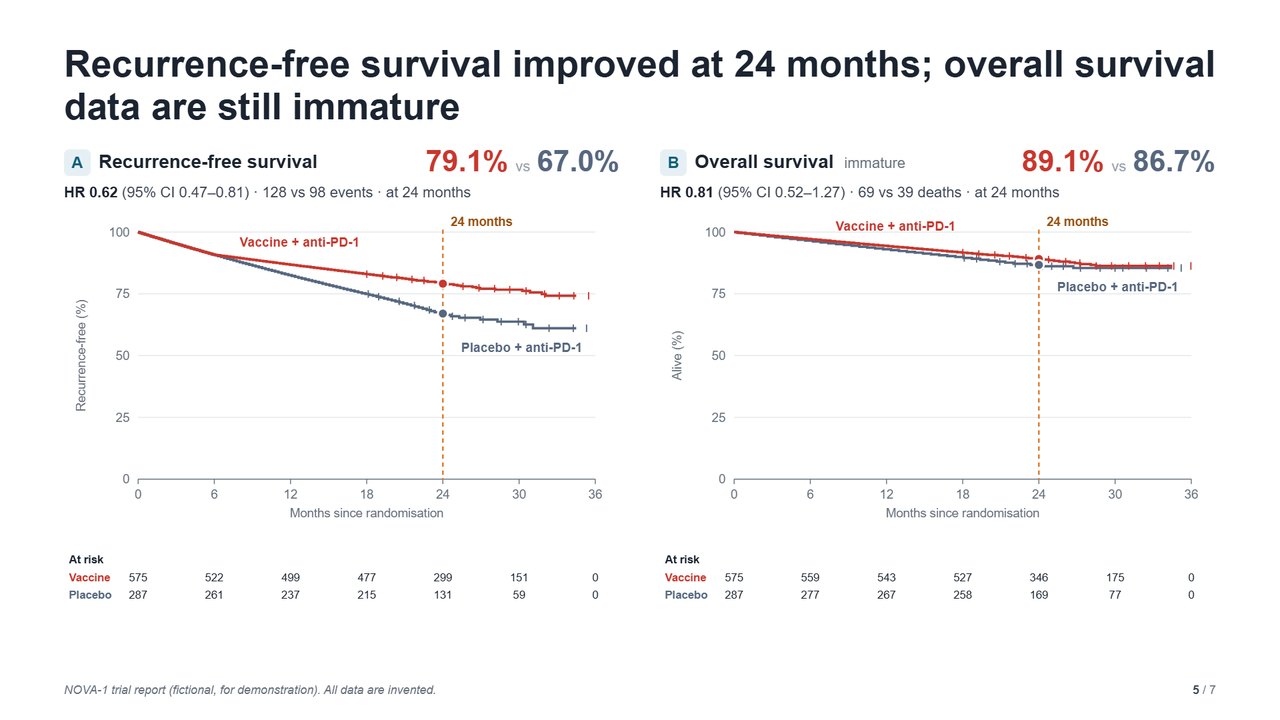
claim covers. - Original figures, not redraws.
pdf_figures.pycuts a Kaplan–Meier panel out of a
journal PDF as vector line art, recolours the arms to the deck's palette and separates the
curves into their own layer. Every step, censor tick and number at risk is preserved, and
the curves can be animated. - Slop is a catalog, not a vibe. Eyebrows (S01), presenter cues on slides (S02) and
process narration (S03) block delivery. The linter runs on the rendered DOM, so it also
catches text injected by JavaScript. - Your template, measured.
scan_template.pyreports the layouts and title positions
that the template's own slides use, so the deck sits inside the template rather than
imitating it. - Libraries first, AI second, labels always editable. Illustrations come first from
existing medical libraries: Servier Medical Art (exported at full resolution from its
vector PowerPoint kits) and Bioicons (bioicons.pysearches ~2,800 icons and writes the
credits). Only when no library has the picture is one generated, with ChatGPT or Gemini,
whichever account you have, through your own signed-in browser and with no text in the
pixels. Its anatomy is then checked against a reference. Labels are laid out as editable
text with leader lines (label_figure.py, or native text boxes in PPTX). - Motion graphics instead of videos. A mechanism or a pathway is assembled from Bioicons
parts (cells, antibodies, receptors) and animated in CSS, so it loops inside the slide like
a GIF. It stays sharp on any
projector, weighs kilobytes, carries a caption per stage, and pauses on a poster frame
for PDF export and screenshots. - Motion that doesn't stutter. Only transform and opacity are animated. The render
checker measures frame timing; the demo's curve reveal and both motion graphics run at a
16.6–16.7 ms median frame interval (60 fps).
Install
Claude Code
/plugin marketplace add drtranquanghung91-vn/grand-rounds
/plugin install grand-rounds@grand-rounds
Or for one session from a clone: claude --plugin-dir path/to/grand-rounds.
Codex
The repository ships a Codex plugin manifest (.codex-plugin/plugin.json) and a marketplace
file (.agents/plugins/marketplace.json). Each skill also has an agents/openai.yaml, and/grill-deck and /audit-deck are marked as explicit-only. If your Codex version has no
plugin installer, copy or link the skills:
git clone https://github.com/drtranquanghung91-vn/grand-rounds
cp -r grand-rounds/skills/* ~/.agents/skills/
For subagents, enable [features] multi_agent = true in ~/.codex/config.toml.
Antigravity
agy plugin install https://github.com/drtranquanghung91-vn/grand-rounds
Antigravity has no Skill tool, so the skills tell the model to read a skill's SKILL.md
when it applies. Subagents use invoke_subagent.
Status of v0.1.0: the Claude Code marketplace manifest passes
claude plugin validate;
the skills were exercised in behaviour scenarios and every script by unit tests and real
runs. The Codex and Antigravity manifests follow the layout Superpowers uses for those
harnesses but have not yet been installed end-to-end. Reports are welcome.
Tools the scripts use
| Need | Install |
|---|---|
| Everything except the items below | Python 3.10+ (standard library only) |
| Lifting figures from PDFs | pip install pymupdf |
| Labels on illustrations | pip install pillow |
| Bioicons search and download | nothing extra (standard library; uses the GitHub API) |
| AI-generated illustrations | a browser tool (Playwright MCP, Claude in Chrome, Antigravity browser) signed in to your ChatGPT or Gemini account |
| PPTX build and checks | pip install python-pptx |
| HTML render check, SVG → PNG | pip install playwright, then python -m playwright install chromium, or use an installed Edge or Chrome |
| PPTX renders for visual QA | PowerPoint (Windows) or LibreOffice |
| PubMed through MCP (optional) | any PubMed MCP server; otherwise the bundled pubmed.py is used |
Try it
Make a 10-minute journal club deck on the attached paper.
I need to present our hospital's case of drug-induced liver injury at grand rounds, 15 minutes, PowerPoint, template attached.
Summarise what changed in the 2025 heart failure guideline for our residents, 20 minutes.
/audit-deck slides/conference-talk.pptx
The agent starts with a single round of numbered questions. Reply "yes" to accept every
recommendation, or answer the ones you care about.
Examples
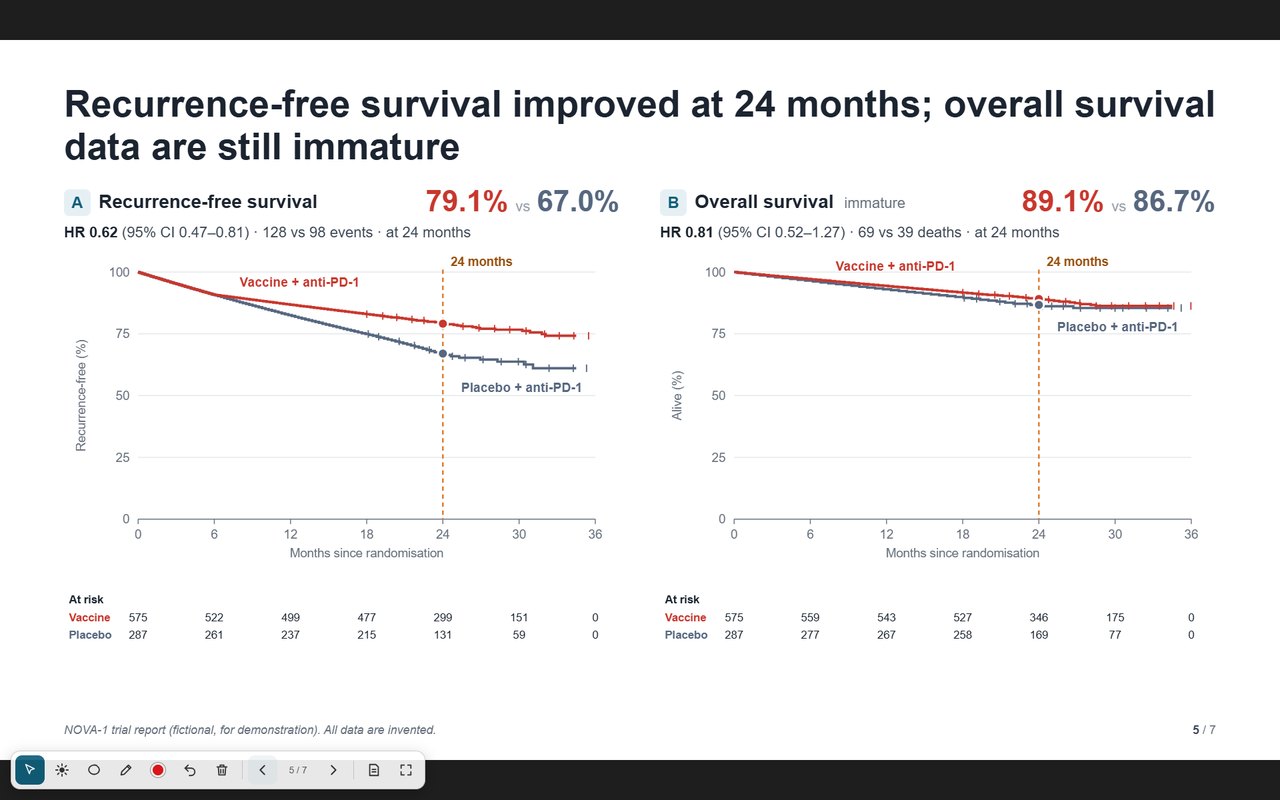
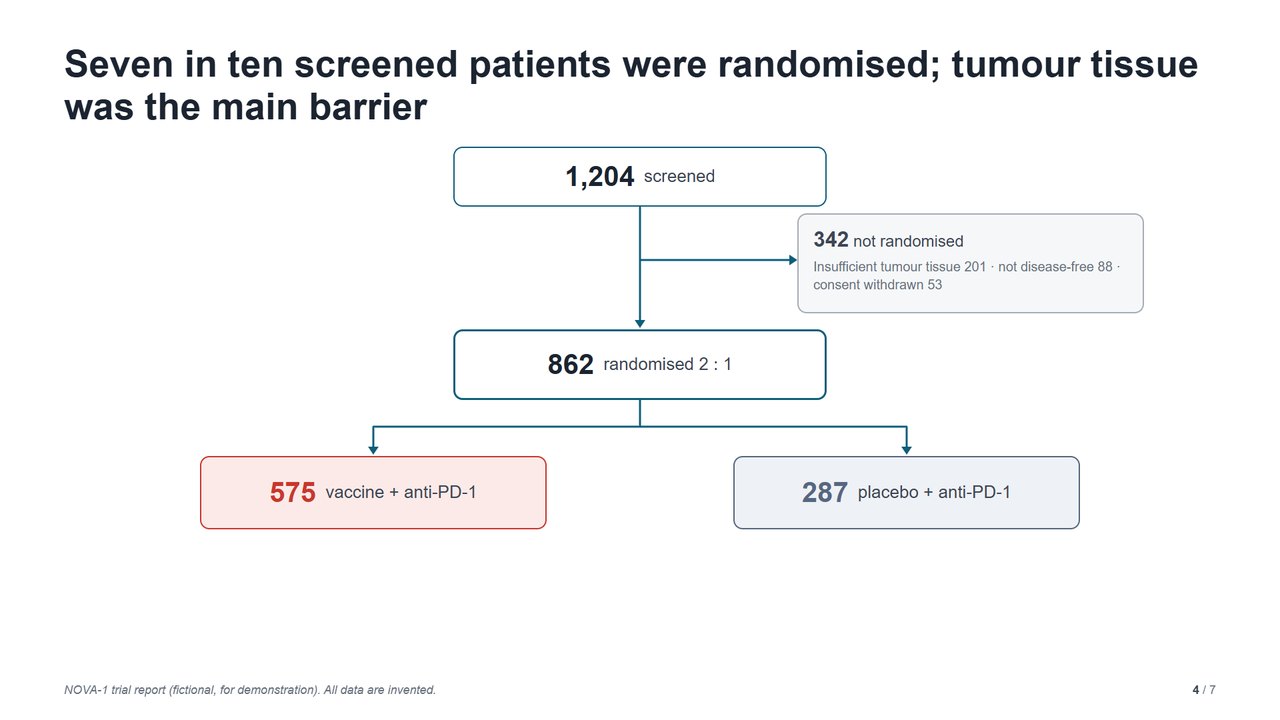
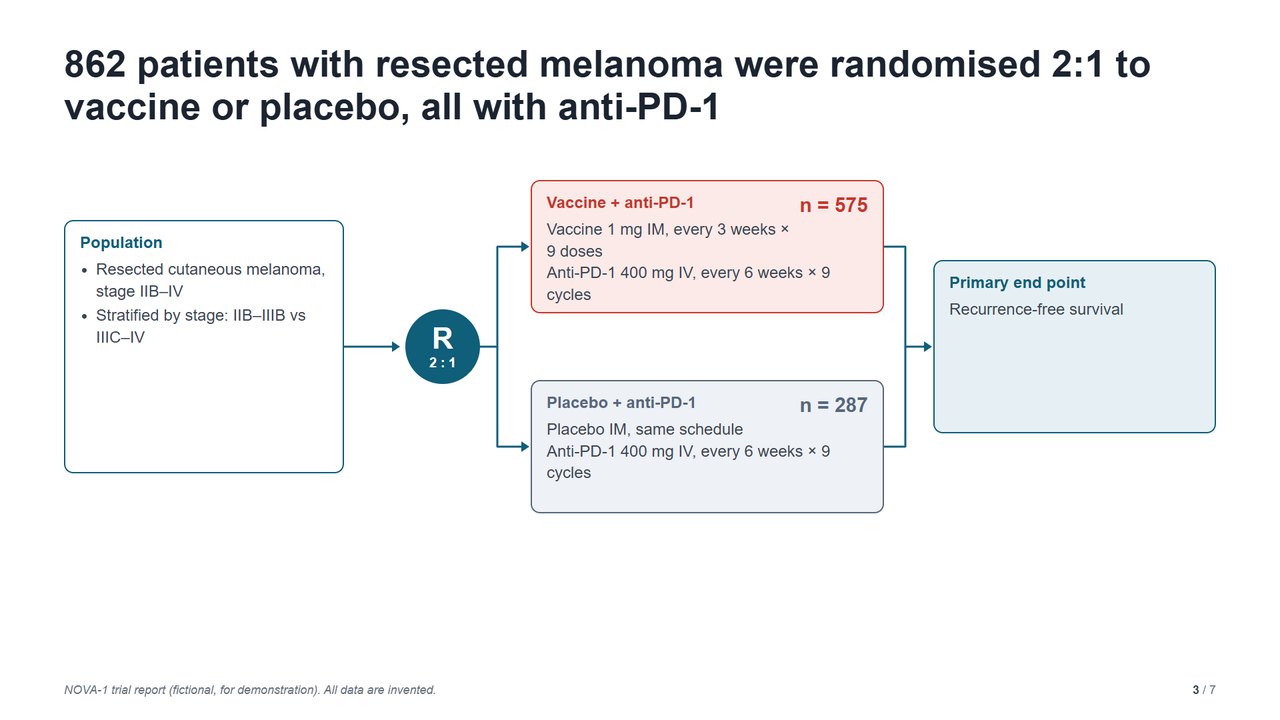
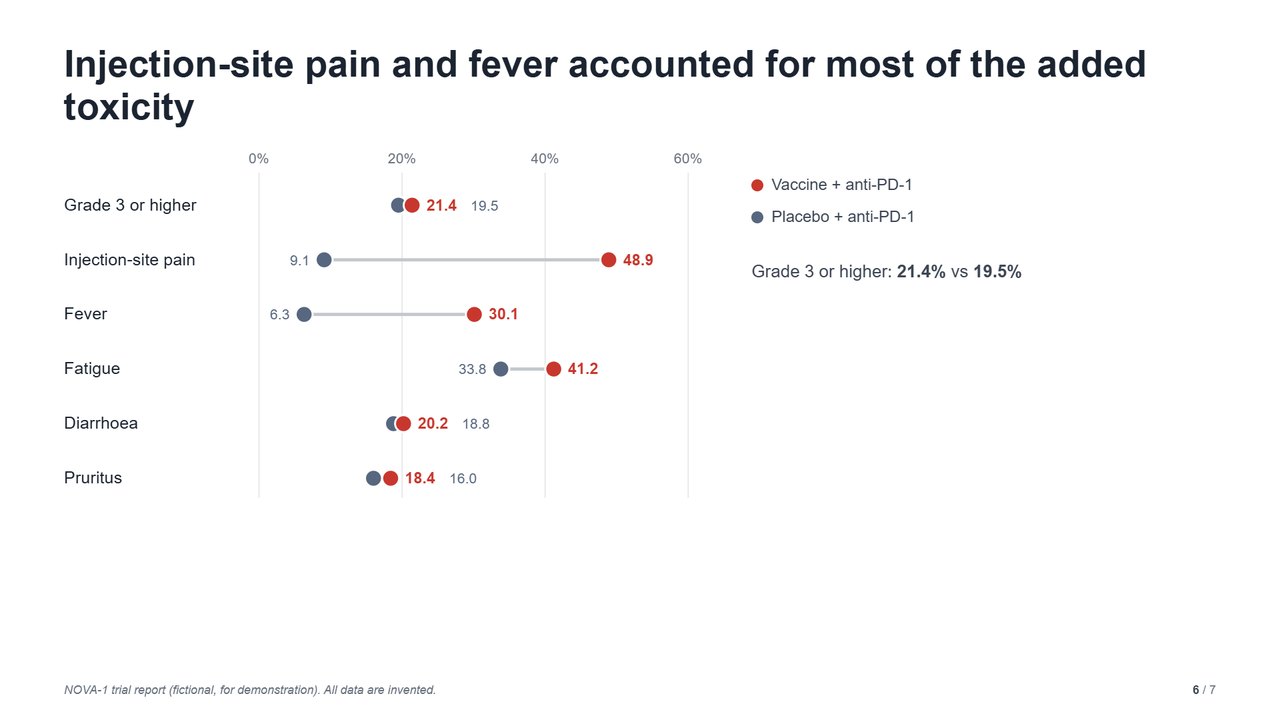
examples/fictional-trial/ is a complete journal-club run on a
fictional trial. Every stage's file is present: brief, plan, claims, figures manifest,
built deck and both audit reports. Open out/nova1-journal-club.html in a browser and use →
to step through it, L for the laser, C to circle and N for notes.
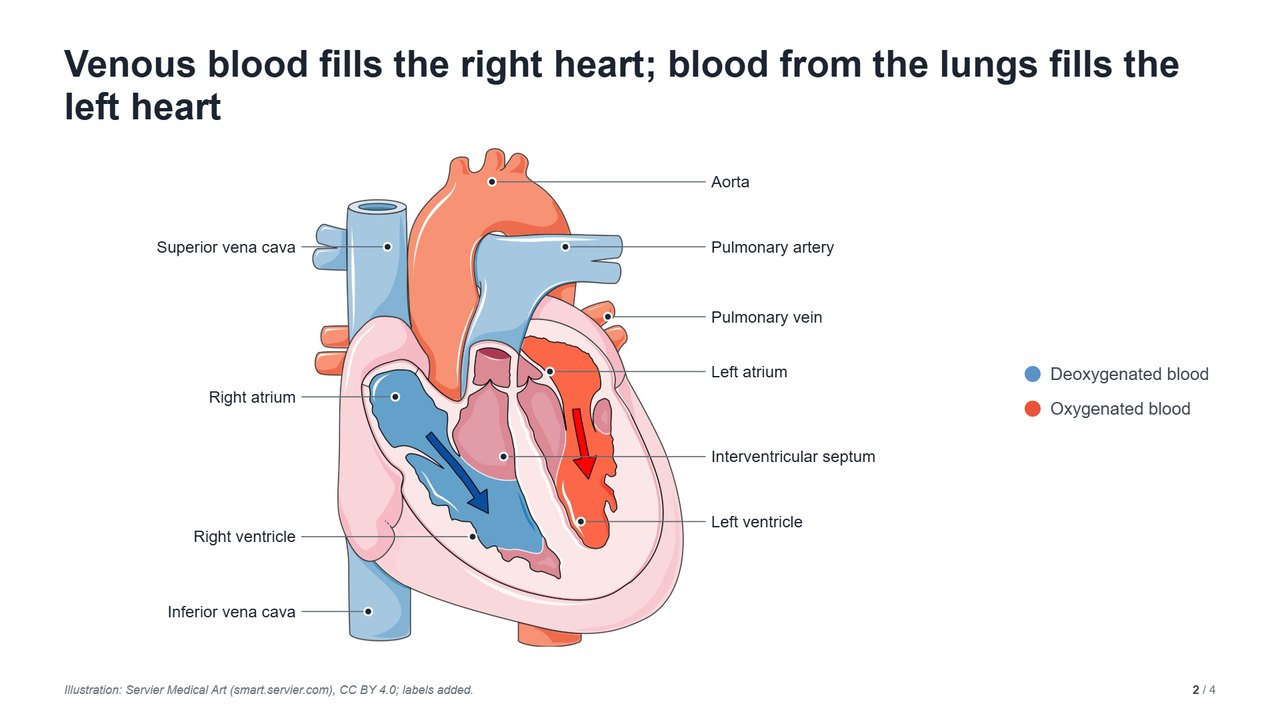
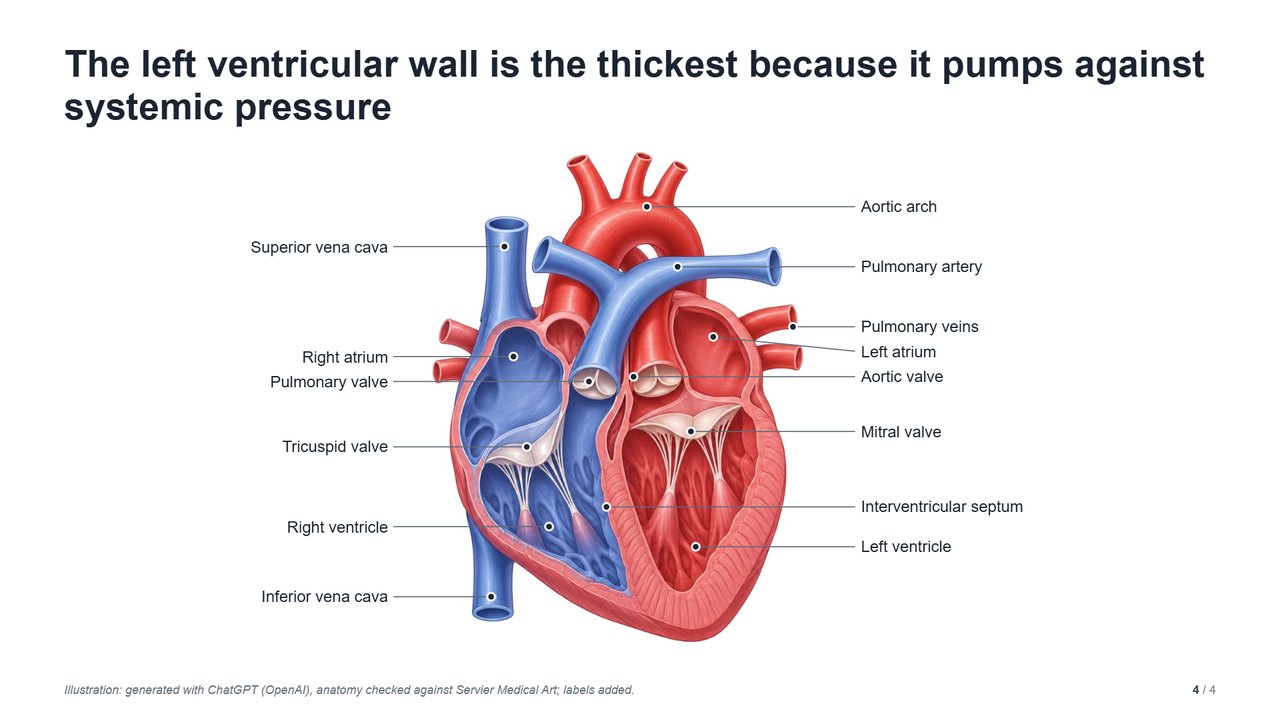
examples/heart-anatomy/ shows the illustration routes on a
teaching topic:
- a Servier Medical Art drawing with labels added as text;
- the four Servier drawings of the cardiac cycle played as a loop;
- an illustration generated with ChatGPT and checked against Servier. The check found that
the vessels on the left are drawn into the right atrium; that error is left unlabelled
and recorded in the manifest.
Repository layout
skills/                 one folder per skill: SKILL.md, references, scripts/, agents/openai.yaml
  medical-deck/roles/   subagent briefs for stages 4–7
examples/fictional-trial/   an end-to-end journal-club run with every intermediate file
examples/heart-anatomy/     teaching slides: Servier and AI illustrations, labels, a cycle loop
tests/unit/             tests for every script (python -m unittest discover -s tests/unit)
tests/scenarios/        RED/GREEN behaviour scenarios for the skills
docs/                   architecture and per-harness notes
.claude-plugin/ .codex-plugin/ .agents/ .antigravity-plugin/   harness manifests
Testing
python -m unittest discover -s tests/unit -v
The skills were written test-first, as Superpowers prescribes. Each behaviour was first run
on an agent without the skills, and the failures were recorded intests/scenarios/BASELINE.md. The skills were then written
to fix those failures, and the scenarios re-run with them loaded
(tests/scenarios/README.md).
Acknowledgements
Grand Rounds borrows ideas, not code, from these projects. Thank you to their authors.
- obra/superpowers: skills as methodology, TDD for
skills, multi-harness packaging - mattpocock/skills: the
grillingdesign-tree
interview, user- vs model-invoked skills - Gabberflast/academic-pptx-skill:
action titles and academic storytelling - kgraph57/medical-slide-templates:
medical slide patterns and safety gates - kau10082/slide-verify: "a real paper does not
make the number right", verification ledgers - mpuig/agent-slides,
Rich627/slides-skill,
vedraut/slidesage,
openai/skills: composable slide skills, spec-driven
rendering, render-and-check loops - HKUDS/Paper2Slides and
OpenDCAI/Paper2Any: paper-to-slides pipelines - Illustration libraries the figures skill points to:
Servier Medical Art (CC BY 4.0) and
Bioicons
Disclaimer
Grand Rounds helps prepare presentations. It does not give medical advice. The presenter is
responsible for the content, for checking every claim against its source, for patient
consent and de-identification, and for the right to reuse published figures.
Licence
MIT © 2026 Trần Quang Hưng. The licence covers this repository's code and text.
The Servier Medical Art and Bioicons images in the examples keep their own CC BY licences (see NOTICE).
The MIT licence does not extend to third-party figures or illustrations you add to your own
decks.
Reviews (0)
Sign in to leave a review.
Leave a reviewNo results found