shader-skills
Health Pass
- License — License: MIT
- Description — Repository has a description
- Active repo — Last push 0 days ago
- Community trust — 372 GitHub stars
Code Pass
- Code scan — Scanned 12 files during light audit, no dangerous patterns found
Permissions Pass
- Permissions — No dangerous permissions requested
No AI report is available for this listing yet.
GLSL and Shadertoy shader skills for Claude Code, Codex, Cursor, Copilot and Gemini CLI. 186 functions, SDF raymarching, procedural terrain, water, clouds and generative art, with a bundler, checker and 11 examples.
Shader Skills — GLSL & Shadertoy for AI coding agents


Create, debug and refine procedural GLSL shaders with Claude Code, Codex, Cursor, GitHub Copilot and Gemini CLI.
Shader Skills combines an agent skill with 186 GLSL functions in 20 modules, a dependency bundler, a checker
and 11 ready-to-run Shadertoy examples. Build SDF raymarched scenes, procedural textures, terrain, water,
clouds and generative art. The library is compiled in WebGL2 and checked with GPU property tests.
npx skills add gokayfem/shader-skills
Choose shader-art-coding and your coding agent in the installer. Then ask:
Create a Shadertoy shader of an alpine valley with snow, a winding river and atmospheric depth.
Use the shader-art-coding skill, bundle the result into one file, and check it.
Install options · Shader gallery · Usage ·
GLSL library ·
Video-to-shader prompt ·
Releases · Contributing
Shader gallery
 |
 |
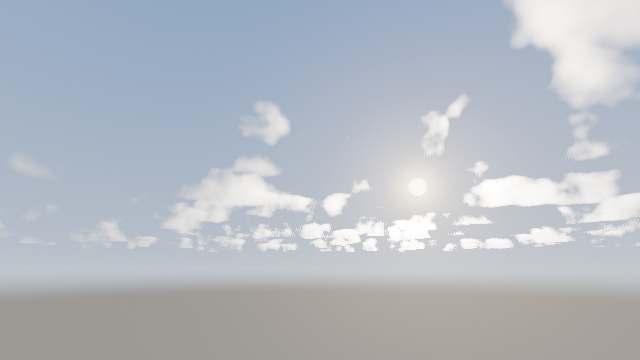 |
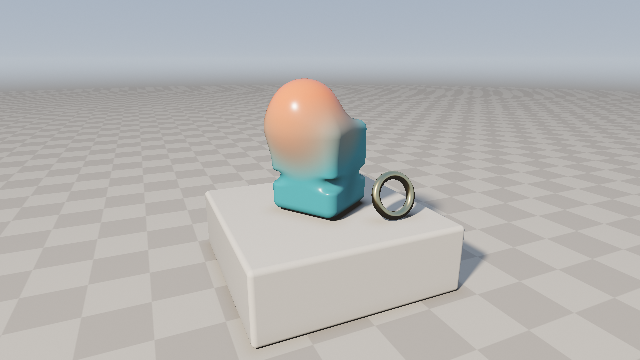
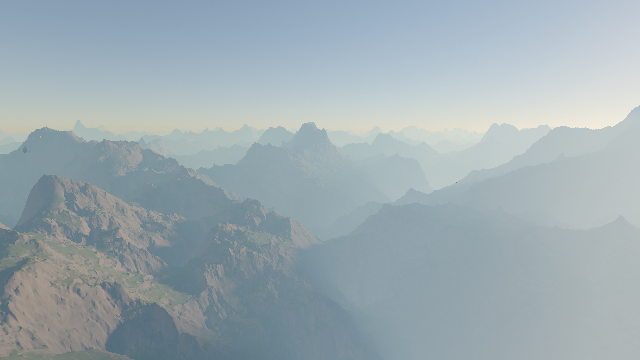
| SDF still life: smooth blends with blended materials, PBR, soft shadows, AO, AgX | Eroded terrain under a physically based sky with aerial perspective | Volumetric cumulus: energy-conserving integration, Beer-Powder, dual-lobe phase |
 |
 |
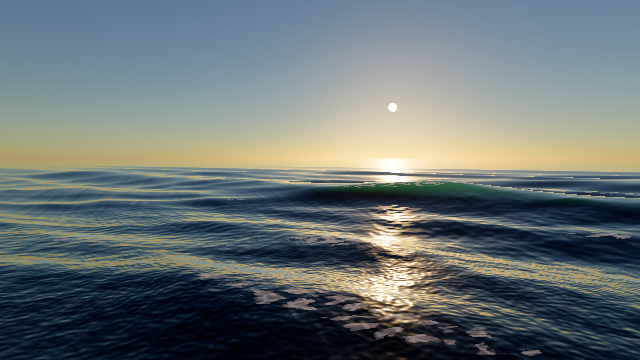 |
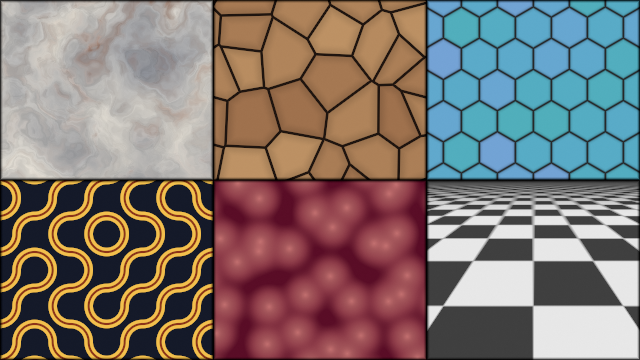
| 2D distance-field poster: Oklab gradients, polar leaves, Bézier trunks | Texture-free materials: warped marble, Voronoi cracks, hex tiles, Truchet, filtered checker | Ocean: dispersive waves with analytic curvature foam, Fresnel sky, glitter path widening with distance |
Each image links to its paste-ready shader. The sources are in skills/shader-art-coding/templates/.
Why
Coding agents can misremember formulas or skip visual checks, and WebGL rejects code that desktop GLSL accepts.
Common results are struct ternaries, sine hashes that differ per GPU, SDFs with wrong signs,
double gamma, and fog that ignores the sky. This skill closes those gaps:
Tested building blocks instead of recalled ones. Every SDF is checked on the GPU:
- the Lipschitz bound (safe to raymarch);
- exactness, by projecting points onto the surface;
- inside/outside signs;
- for curves, agreement with brute-force distance.
Noise derivatives are checked against finite differences, curl noise for zero divergence, color transforms for
round trips, and intersectors against their SDFs.A bundler, so the agent writes
sdRoundCone(...),softShadow(...),tonemapAgX(...)by name and ships one
self-contained file.A checker that catches WebGL1 leftovers, sine hashes,
#versionlines and missingmainImage, and compiles
with glslangValidator.A workflow with a fixed debug-mode convention, so problems are inspected as fields rather than guessed at.
Routing from subjects ("a jellyfish", "snowy mountains") to techniques, templates and formulas.
Install
Claude Code (plugin marketplace):
claude plugin marketplace add gokayfem/shader-skills
claude plugin install shader-skills@shader-skills
For a manual Claude Code installation, copy skills/shader-art-coding into ~/.claude/skills/ after cloning the repository (see below).
Codex, Cursor, Gemini CLI, GitHub Copilot and other supported agents (via skills):
npx skills add gokayfem/shader-skills
The installer requires Node.js 22.20 or later and installs into the current project by default; add -g for a
global installation. See the skills CLI documentation for supported agents.
Manual installation: clone the repository first, then copy the skill into your agent's skill directory.
git clone https://github.com/gokayfem/shader-skills.git
cd shader-skills
- Codex: copy
skills/shader-art-codingto~/.agents/skills/. - Cursor: copy it to
~/.cursor/skills/, plus the rule inadapters/cursor/. - Copilot:
gh skill install gokayfem/shader-skills shader-art-coding, plusadapters/copilot/. - Gemini CLI:
gemini extensions install https://github.com/gokayfem/shader-skills. - Hermes: copy it to
~/.hermes/skills/.
claude.ai: download shader-art-coding-v2.0.0.zip from the v2.0.0 release and upload it under Settings > Capabilities > Skills. The ZIP also works as a portable skill folder for manual installation.
ChatGPT, Gemini Gems and other chat tools: see adapters/.
Use
Ask naturally: "Make a Shadertoy shader of a glass jellyfish drifting through god rays", or "why does my
raymarcher have holes?" The skill routes the request, then the agent finds blocks, writes the shader, bundles it
and checks it. From a cloned repository, try the included still-life template:
python3 skills/shader-art-coding/scripts/glsl_tools.py search petal leaf
python3 skills/shader-art-coding/scripts/glsl_tools.py bundle skills/shader-art-coding/templates/raymarch-sdf.glsl -o /tmp/shader-skills-example.glsl
python3 skills/shader-art-coding/scripts/glsl_tools.py check /tmp/shader-skills-example.glsl
What the commands do:
searchranks functions by name, summary and@usetags.bundleresolves dependencies transitively and emits them in declaration order.checklints the file and compiles it whenglslangValidatoris installed (brew install glslangorapt install glslang-tools).
The command-line tools need Python 3 and use only its standard library. Generated shaders target
Shadertoy / WebGL2 / GLSL ES 3.00; HLSL and Unity ShaderLab are outside this skill's scope.
For an existing video reference, start with the video-to-shader prompt,
which guides scene analysis, procedural reconstruction and visual comparison against the clip.
What's in the library
| Module | Highlights |
|---|---|
hash |
PCG integer hashes (pcg3d, pcg4d): bit-exact across GPUs, no sine; safe integer-input float wrappers |
noise |
value, gradient and 2D simplex noise with analytic derivatives, fBm, eroded/ridged/billow fBm, two-level domain warp, hybrid terrain height, curl noise, Voronoi (F1/F2, borders, smooth), interleaved-gradient and R2 dithering |
pattern |
box-filtered checker, grid and stripes (alias-free with no supersampling), hex grid with edge distance, Truchet |
sdf3d |
22 primitives including exact capped cone, round cone, cut and hollow spheres, death star, hex prism, link, gyroid, 3D Bézier tube |
sdf2d |
16 primitives including vesica, moon, heart, star, regular polygon, rounded box with per-corner radii, quadratic Bézier |
operators |
smooth min/max/subtract (quadratic and C2 cubic), smooth union with material blend weight, chamfer, stairs, engrave, round, onion, extrude, revolve, exact elongate |
domain |
repetition (infinite, limited, mirrored), polar sectors, folds, twist and bend with their Lipschitz corrections |
architecture |
stable parcel-based building dimensions/roof IDs, box-filtered facade windows that converge to opening area |
raymarch |
sphere tracing with distance-relative hit threshold, tetrahedral normals, improved soft shadows, AO, thickness; WebGL-safe loops |
shading |
GGX + height-correlated Smith + Schlick, metallic-roughness shadePBR, environment BRDF approximation, wrap diffuse, translucency, rim |
water |
finite-depth dispersion, analytic wave height/slope/curvature, exact dielectric Fresnel including TIR, RGB Beer-Lambert attenuation |
color / tonemap |
exact sRGB curves, Oklab / OkLCh mixing, blackbody colors; AgX (default), AgX punchy, Khronos PBR Neutral, ACES fitted, Reinhard |
volume / atmosphere |
HG, dual-lobe, Rayleigh and Cornette-Shanks phase, energy-conserving volumeStep, Beer-Powder, analytic height fog; physically based single-scattering sky, sun disk with limb darkening |
camera / intersect / post / debug |
look-at, thin-lens DOF, ortho; analytic sphere/box/plane hits; AA helpers, R2 supersampling offsets, cos⁴ vignette, grain, TPDF dither; distance, normal, id and heat debug views |
The full catalog with signatures, exactness and uses isreferences/library-index.md.
Noise: from a first field to a game use case
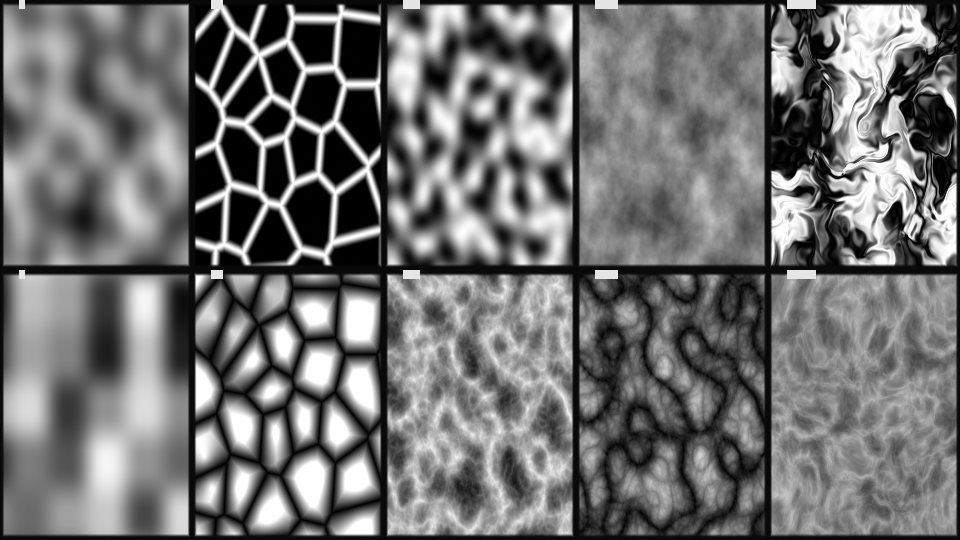
The noise learning guide covers all ten entries in the
Noise Learning Progression reference: what each means, where its code lives, when to use it, tuning, and links to
author-maintained external implementations. It includes eleven compile-checked recipes and two complete shaders.
| Technique | Call the library | Use it for |
|---|---|---|
| Perlin-style gradient | gradientNoise, gradientNoiseD |
Broad hills, weather masks, surface normals |
| Voronoi | voronoiBorder, smoothVoronoi |
Rock plates, constant-width cracks, cell walls |
| Simplex | simplexNoise, simplexNoiseD |
Ripples, rotating-gradient flow, churning lava |
| Fractal / fBm | fbm, erodedFbm |
Multiscale terrain, clouds, slope-damped detail |
| Domain warp | warpedFbm |
Marble, agate, distorted terrain and cloud bands |
| Value | valueNoise, valueNoiseD |
Cheap smooth masks; quantize inputs for retro blocks |
| Cellular / Worley | voronoi F1/F2 and cell IDs |
Biome regions, foam, per-stone variation |
| Ridged | ridgedFbm |
Mountain crests, canyons, rocky veins |
| Billow | billowFbm |
Puffy smoke, cumulus lobes, rounded terrain |
| Hybrid | hybridTerrainHeight |
Bounded heightmaps combining warped hills, ridges and cells |
These functions are in noise.glsl. Voronoi and Worley refer to the
same cellular family here; fBm and domain warping compose base fields. Simplex performance depends on implementation
and target hardware. The guide distinguishes smooth value noise from blocky hashes and designed river masks from
hydrological simulation.
 |
 |
|---|---|
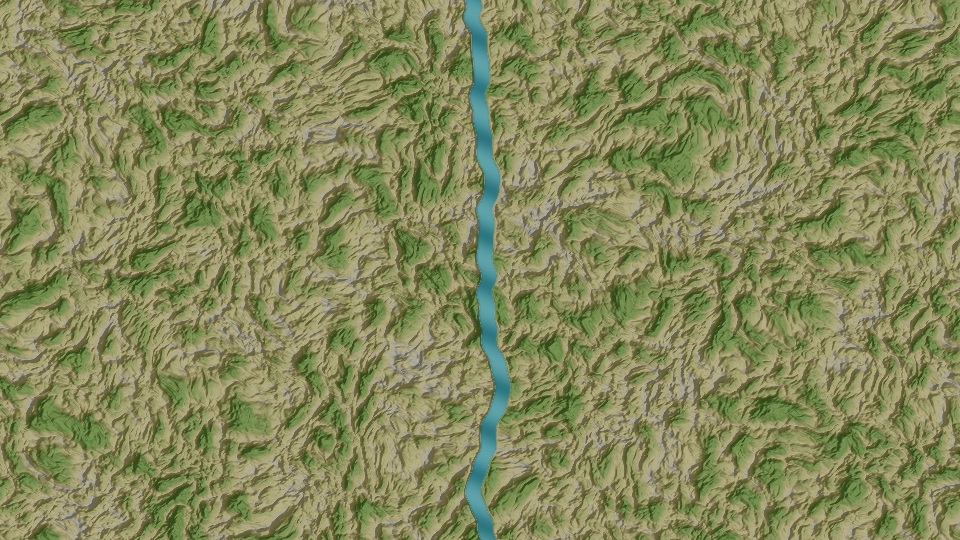
| Top: gradient, Voronoi borders, simplex, fBm, marble warp. Bottom: smooth value, F2−F1 cellular, ridged, billow, hybrid. | Putting it together: warped hills, ridged mountains, cellular breakup, slope-based materials and a designed river channel. |
Click a preview for the standalone Shadertoy shader. Editable sources:noise-progression.glsl andnoise-terrain-map.glsl.
Procedural buildings, terrain and water
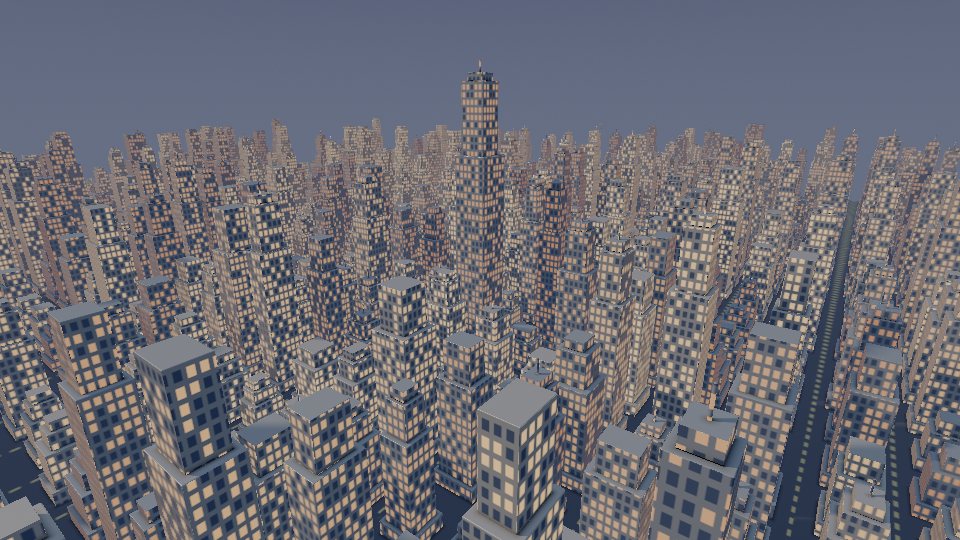
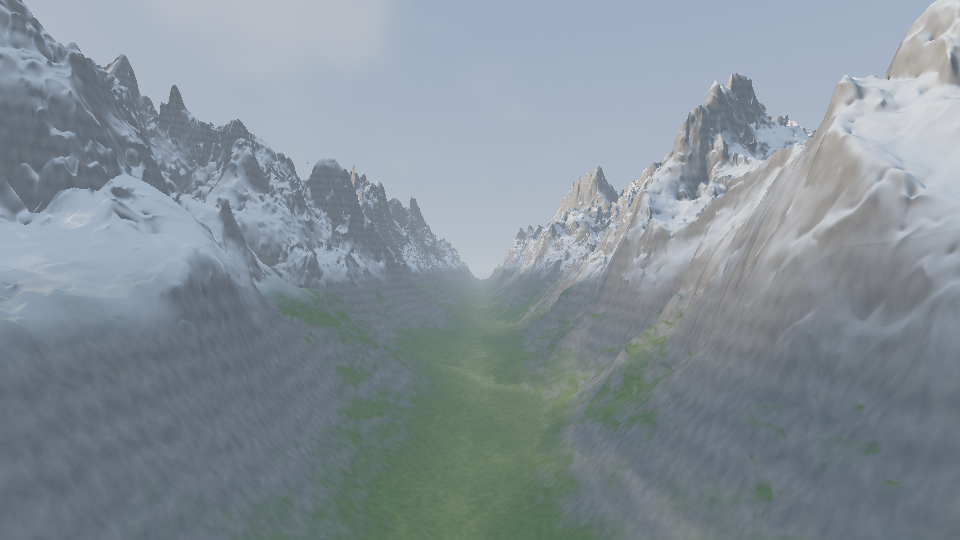
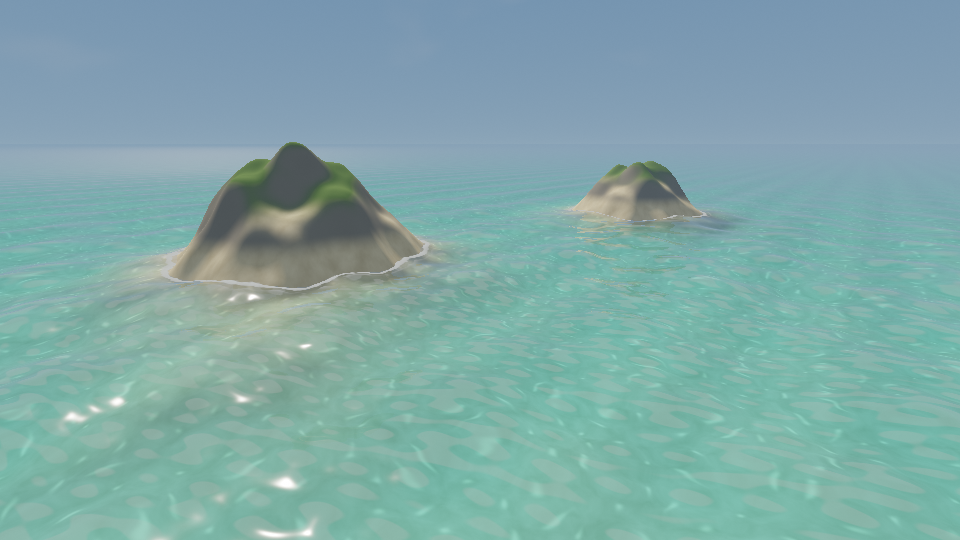
Three complete, texture-free starting points cover construction, landscape and shallow-water optics. Each has
art controls, inspectable debug modes, a standalone Shadertoy bundle and a rendered preview.
 |
 |
 |
|---|---|---|
| Parcel-based masses, podiums/setbacks, varied roofs, filtered occupied windows, AO, shadows and height fog. | Designed valley, eroded/ridged terrain, snow by slope/altitude, rock strata, grass and atmospheric depth. | Analytic waves, refracted seabed, reflected land, exact Fresnel, RGB depth absorption, shore foam and three quality presets. |
- Procedural buildings: massing hierarchy,
deterministic parcels, neighbor-safe repetition, facade filtering, geometry versus material detail, and mesh/engine integration. - Terrain production: heightfields versus density,
silhouette/detail separation, primary-trace refinement, biome masks, chunk coordinates, seams and LOD. - Water quality: shallow coast versus open ocean,
reflection/refraction paths, finite-depth waves, filtering, quality presets, and the extra renderer/simulation
systems needed for film or production water. The existing open-ocean shader remains available.
The coastal example uses QUALITY 1/2/3 for sky reflection, reflected-land rays, and a four-sample still preset
with more waves/steps. It is a single-pass visual study: foam, in-scattering and caustics include artistic
approximations; it does not simulate breaking surf or FFT ocean spectra. The guides identify implemented features
and limits rather than promising a universal “highest quality” or frame rate.
Sources are in templates/. Bundle with glsl_tools.py bundle as above.
All three water presets and every annotated diagnostic view are compiled and rendered by the harness.
Verification
| Check | Where | What it proves |
|---|---|---|
| Lint + drift | glsl_tools.py check |
docs and tags on every function, module order, no WebGL1 or sine-hash patterns, reference snippets identical to the library |
| glslang compile | CI (checks.yml) |
every library module, reference snippet and template compiles as GLSL ES 3.00 |
| WebGL2 compile | tests/ harness |
all library/reference/template units and annotated quality/debug variants compile under ANGLE, which also enforces WebGL-only rules |
| GPU property tests | tests/properties.py |
90 tests × 16,384 samples: Lipschitz, exactness, signs, brute-force curve distance, derivatives, divergence, ranges, round trips, facade filtering, water dispersion/Fresnel/attenuation |
| Renders | harness + gallery | 11 beauty templates plus 16 quality/debug variants; no NaNs or black frames; beauty PNGs saved to gallery/ |
| Bundler regressions | tests/test_bundler.py |
conditional quality macros cannot hide dependencies; annotated variants replace the intended define and reject missing defines |
| Skill effect | evals/ (claude plugin eval, paid, manual) |
output-rule adherence with the skill vs without it on 6 shader tasks, plus no false triggers on 3 near-miss tasks; see evals/README.md |
Run it locally: python3 tests/build_harness.py && python3 tests/serve.py, then openhttp://127.0.0.1:8765/build/harness.html. Headless: python3 tests/run_webgl.py (needs Playwright).
Conventions
#define DEBUG_MODE 0: 0 final, 1 distance field, 2 normals, 3 ids, 4 steps, 5 masks, 6 lighting terms.- Scene contract
vec2 map(vec3 p)returnsvec2(distance, materialId). - Color pipeline:
- Light in linear color.
- Apply exposure.
- Tonemap each AA sample.
- Average the samples.
- Encode once with
linearToSrgb. - Dither.
Repository
skills/shader-art-coding/   the skill: SKILL.md, glsl/ library, templates/, references/, scripts/glsl_tools.py
tests/                      WebGL2 harness, GPU property tests, gallery builder, headless runner
evals/                      plugin eval suite: with vs without the skill
gallery/                    rendered templates and paste-ready bundles
adapters/                   prompts for tools without skill support
.claude-plugin/             Claude Code plugin + marketplace manifests
See CONTRIBUTING.md to report a bug, suggest a shader technique or contribute a fix.
AGENTS.md defines the checks every library change must pass.
Release history and downloads are in the changelog and
GitHub Releases.
Credits and license
MIT. Every function is an original implementation of a published technique. The sources are listed in
CREDITS.md: Inigo Quilez's articles, hg_sdf, Jarzynski & Olano's GPU hash study, Hillaire's
atmosphere and volume work, AgX, Khronos PBR Neutral, Oklab and others.
Reviews (0)
Sign in to leave a review.
Leave a reviewNo results found