agentic-workflow
Health Uyari
- License — License: MIT
- Description — Repository has a description
- Active repo — Last push 0 days ago
- Low visibility — Only 5 GitHub stars
Code Gecti
- Code scan — Scanned 11 files during light audit, no dangerous patterns found
Permissions Gecti
- Permissions — No dangerous permissions requested
Bu listing icin henuz AI raporu yok.
Stack-agnostic agentic-programming workflow skills + documentation scaffold
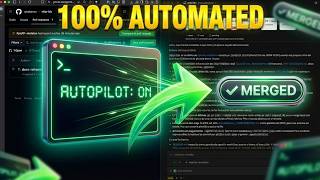
ship-roadmap opening a PR end to end on a sample repository — click to watch
Agentic Workflow Skills
A reusable set of agent skills that run a disciplined, doc-driven workflow
for building software with agents — from idea/issue to a reviewed, classified,
merge-ready change. The skills are project-adaptive: they discover and obey
each repository's own guide, architecture, roadmap and style docs at runtime, so
the same workflow works on any stack.
They are plain Markdown (SKILL.md files), so they work with any agent that
reads skills — Claude Code, Cursor, Codex, OpenCode, Cline, and
70+ others — installed with theskills CLI (see
Install).
The examples in
docs/are generic and illustrative; the skills
themselves are stack-agnostic and architecture-agnostic.
What's inside
skills/                  the 25 skills (12 user-facing + 13 internal) — the installable source
.claude/skills           symlink → ../skills, so this repo dogfoods them in Claude Code
template/                 the exportable documentation scaffold (the substrate the skills read)
docs/workflow/           the full tutorial (feature flow, issue flow, reference, replication)
docs/features/_TEMPLATE  feature SPEC template + ROADMAP (the planning artifacts skills produce)
docs/fix/                fix SPEC template + index
.github/                 issue + PR templates the workflow expects
The skills are the behavior; template/ is the substrate they read (a
generic CLAUDE.md + documentation map, SPEC/feature/fix templates, and GitHub
templates). Scaffold a new project's way of working withnpx degit gtrabanco/agentic-workflow/template my-project — seedocs/workflow/REPLICATE.md.
The skills
12 user-facing skills (one menu entry each) + 13 internal ones composed
for you: the plan-feature router's three planning steps, the review-change
engine, and the workflow's own 9-skill internal review pack (review-code,review-security, review-verify, review-debt, review-design,review-a11y, review-brand, review-perf, review-seo) — so no external
review skill is ever required, on any agent, with any model. One disciplined
path: plan → execute → review → audit → merge.
Setup
| Skill | What it does |
|---|---|
init-workspace |
Fetches the template/ scaffold and adapts it to your project by interview (gate, doc map, architecture); suggests the companion review skills your platform needs; offers to install the skills |
Plan
| Skill | What it does |
|---|---|
plan-feature |
One entry point to plan a feature. Detects the input — a raw idea (interview), an issue #N (issue → scoped SPEC), or a scoped slug/SPEC (straight to scaffolding) — routes to the right step, then registers the roadmap entry. --next plans the next roadmap item. Sizes every feature (XS/S/M/L): small ones get a SPEC-only, single-pass path — no artifact ceremony; M/L get the full set with a mandatory hardening phase. |
plan-fix |
The fix-flow counterpart: architect-drafts a tightly-scoped fix SPEC from an issue, commits on a fix branch, stops for review. |
You only ever call
plan-feature; it composes the internal stepsplan-feature-interview,plan-feature-from-issue, andplan-feature-scaffold
(hidden from the menu).
Execute
| Skill | What it does |
|---|---|
execute-phase |
Implements one phase of a feature (default), a small XS/S feature in a single pass, or a fix (--fix). Dependency gate first: the unit's transitive Depends on: closure must be merged, or it stops with the unmet chain and build order (--force overrides, logged). Tests-first on domain/orchestration work, never commits red, gate-verified, one commit per phase; hands off to review-change every 2 phases and once at the end (mandatory). A finished unit always opens its PR and flips to done (built, not merged). |
Review & audit — change → PR → product
| Skill | Scope | What it does |
|---|---|---|
review-change |
the change | Runs only the reviews that apply to your platform (code, security, verify, design, a11y, brand, perf, SEO) and classifies → one decision table + an explicit manual-verification checklist |
audit-pr |
the PR | Merge gate: acceptance met, all phases done, docs/tests/CI green, Closes #N, review axes clean → merge-ready or a list of blockers |
product-audit |
the product | Periodic full-spectrum health check; mines feature docs → proposes issues + roadmap add/remove (never auto-fixes) |
audit-docs |
the docs | Audits docs ↔ roadmap ↔ code ↔ fix index for drift |
review-change's findings engine is the internalreview-implementation— the
two-phase find → classify pass it composes (andaudit-pr/product-audit
reuse) — plus the internal review pack: onereview-*skill per axis, each a
fixed checklist returning a findings table + PASS|FAIL. None are menu entries;
you reach them throughreview-change.
Decide
| Skill | What it does |
|---|---|
triage-issue |
Classifies an issue (fix-now / promote / postpone / wontfix) by verifying its trigger against the code |
Session
| Skill | What it does |
|---|---|
log-session |
Appends a structured entry to docs/LOGS.md — what the session did, files touched, decisions + why, and the next step — so you (or anyone) can resume cold. Run it before /clear or before closing. The template/ also ships free, opt-in hooks that auto-append a mechanical entry on /clear/exit and can re-inject the last entry on start. |
Repo maintenance
| Skill | What it does |
|---|---|
bump-skill |
After editing a skill in this repo: bumps version: in the SKILL.md frontmatter, adds rows to CHANGELOG.md + CHANGELOG.es.md, and updates the skill and model tables in README.md + README.es.md. Also lints the repo's authoring rules (every skill closes with a → Next: block; phases are P1, P2, …, never S1/"Steps"). Run before every commit that touches a skill. |
Autopilot — the whole flow, end to end
| Skill | What it does |
|---|---|
ship-roadmap |
Builds the whole app from the roadmap. One upfront interview (product, features, stack, architecture — recommended proportionally, never defaulting to a named pattern — quality bars, ops, autonomy, budget), founds the project if needed, creates or adopts the complete roadmap, then a /loop-driven build loop ships it feature by feature through the skills above — with no further questions. Default: opens PRs, you merge; --fullauto merges MERGE-READY PRs under non-negotiable safety floors. Ends with a final report: issues to open, discovered feature proposals, manual checks, product-audit cadence. |
How the autopilot runs the workflow — one interview in, reviewed PRs out, and
you only step in to merge (amber):
flowchart LR
    I([Interview]):::you --> RM[Roadmap] --> P[Plan]
    P --> X[Execute] --> RV[Review] --> PR[Open PR] --> A[Audit] --> M([Merge]):::you
    M -->|next feature| P
    M -.->|roadmap done| REP[Final report]
    classDef you fill:#f6c177,stroke:#8a5a00,color:#3a2406;
The same plan → execute → review → audit → merge path you'd run by hand — the
autopilot just moves you to its edges. Under --fullauto, ship-roadmap also
handles the merges, under non-negotiable safety floors.
The review axes are self-contained: the bundled internal review pack covers
code, security, verify, debt, design, a11y, brand, perf and SEO on any agent.
Platform-specific extras (a framework skill, a stack linter) are optional —review-change and product-audit run them in addition when installed,
never as a dependency. See docs/workflow/RECOMMENDED_SKILLS.md.
Upgrading from an older install? See
docs/workflow/MIGRATION.md— three skills were
renamed, so re-add to update + delete the three old folders.Versioning. Each skill is versioned independently (
version:in its
frontmatter); changes are logged inCHANGELOG.md. Upgrade an
install withnpx skills update.
Recommended model & effort
Each skill pre-sets its model and effort in frontmatter (table below). The
model uses a floating tier alias (opus/sonnet/haiku) that auto-updates to the
latest version — so it never goes stale. Both apply only for that skill's turn;
your session model/effort resume afterward. You stay in control: to change
them, edit the skill's model: / effort: lines (or model: inherit to follow
your session).
On agents other than Claude Code these frontmatter fields are ignored — and
that's covered: every user-facing skill ships a Portability section with
explicit fallbacks (no slash menu → follow the target SKILL.md in a fresh
conversation; no model tiers → strongest model for planning/review/audit,
cheaper for execution; no /loop/subagents → manual re-invocation guided by
each skill's closing → Next: block). The workflow is the contract; the Claude
Code features are conveniences.
| Skill | Model tier | Effort | Why |
|---|---|---|---|
init-workspace |
Opus | high | interview-driven project bootstrap + adaptation |
plan-feature |
Opus | high | router + planning: its internal interview/scoping steps run in its turn, so the router must carry the effort (composed skills inherit the turn's effort) |
plan-fix |
Opus | high | architect-level scoping + risk analysis |
execute-phase |
Sonnet | medium | mechanical implementation per SPEC — one phase or single-pass (Opus if the logic is subtle) |
review-change |
Opus | high | platform-adaptive review orchestration + synthesis |
audit-pr |
Opus | high | whole-PR merge-readiness judgement |
product-audit |
Opus | max | product-wide multi-axis sweep + proposals (max effort for the widest context sweep) |
audit-docs |
Sonnet | medium | mostly mechanical cross-document checks (Opus for deep audits) |
triage-issue |
Opus | high | verify triggers against the code; judgement call |
log-session |
Sonnet | medium | structured summarization, not judgement — deliberately the cheap tier, never Opus (the .claude/ hooks do the mechanical capture for free) |
ship-roadmap |
Opus | high | the autopilot conductor: composes the planning/review/audit skills in-turn (equal tier) and delegates implementation to Sonnet subagents — judgment stays strong, bulk tokens stay cheap |
The 13 internal skills aren't selected directly. Because they're composed
within a caller's turn, they inherit that turn's model/effort (a skill'smodel/effortis fixed at turn start) — the values in their frontmatter
(review-implementation,plan-feature-interview,plan-feature-from-issue,review-code,review-securityhigh;plan-feature-scaffoldand the rest of
the review pack medium) are declared defaults for a direct run, which is why
theplan-featureandreview-changeorchestrators themselves carryhigh.Rule of thumb: planning, judgement, review and audit → Opus (high, or max for
the product-wide sweep); mechanical execution → Sonnet, medium (bump to Opus
when the logic is subtle).
Model equivalence (non-Claude / free-inference models)
Claude tiers are the default (they set the reference bar), but nothing in the
workflow depends on them — the skills are model-agnostic. Map the tiers to
whatever family you run and edit each skill's model:/effort: accordingly:
| Claude default | Capability class | Use it for |
|---|---|---|
Opus + high/max |
Frontier reasoning — the strongest model you have, reasoning/thinking mode on | planning, review, audit, triage, the merge gate |
Sonnet + medium |
Mid workhorse — a solid coding model at default settings | mechanical execution per SPEC, doc checks, session logs |
| Haiku | Small & cheap — any fast lightweight model | optional grep-shaped evidence gathering |
Concrete picks (open-weight, as of July 2026 — this landscape moves
fast; sanity-check against a current leaderboard before pinning):
- Frontier reasoning (⇔ Opus +
high/max): DeepSeek V4 (tops
LiveCodeBench/Codeforces among open models), Kimi K2.6 (strongest for
agentic/repo-level coding and tool use), GLM-5.x / GLM-4.7 Thinking,
Qwen3 235B-A22B — run in reasoning/thinking mode. Closed non-Claude
equivalents: the top GPT / Gemini reasoning tier. - Mid workhorse (⇔ Sonnet +
medium): DeepSeek V3.2 (the value pick
via API), Qwen3-Coder / Qwen3 32B, GLM-5.1, or any of the frontier
picks with reasoning mode off. - Small & cheap (⇔ Haiku): Qwen3 4–14B, Mistral Small 3.1,
Gemma 3 27B, Phi-4-mini — local-friendly, fine for grep-shaped work.
 Running on NaN.builders
NaN Cloud serves the open-weight
frontier (full catalog: GLM-5.2 ~753B MoE ·
Mimo V2.5 310B · DeepSeek V4 Flash 284B · Qwen3.6 35B · Gemma4 26B) with
per-request Thinking toggle and effort control (Minimal → Max), which
maps 1:1 onto this workflow's tiers. Our picks per skill:
| Skill | NaN model | Thinking | Effort |
|---|---|---|---|
init-workspace, plan-feature, plan-fix, review-change, audit-pr, triage-issue |
GLM-5.2 | on | High |
product-audit |
GLM-5.2 | on | Max |
ship-roadmap (conductor) |
GLM-5.2 | on | High |
execute-phase (+ ship-roadmap's execution runs), audit-docs, bump-skill |
Qwen3.6 | off | Medium |
log-session, evidence gathering |
DeepSeek V4 Flash | off | Low |
Alternates: subtle implementation logic → bump execute-phase to GLM-5.2/High;
Mimo V2.5 (a different family) reviewing Qwen-written code adds reviewer
independence; Gemma4 swaps into the small tier. Whisper, Kokoro, Rerank,
Qwen3 Embedding and Flux 2 Klein are audio/retrieval/image models — not used by
the workflow. Sign up via this referral link.
If GLM-5.2 is down — fallback ladder:
| # | Fallback | Config | Good for | Never for |
|---|---|---|---|---|
| 1 | Mimo V2.5 (310B, reasoning, 1M ctx) | Thinking on, High (Max for product-audit) |
every GLM-5.2 slot, including audit-pr and product-audit; as a cross-family reviewer it even adds independence |
— |
| 2 | Qwen3.6 (35B) | Thinking on, High | plan-feature, plan-fix, init-workspace, triage-issue, ship-roadmap conductor — their output is re-checked downstream by review/audit |
audit-pr · product-audit · reviewing code Qwen3.6 itself wrote (≥ holds, independence doesn't) |
| 3 | DeepSeek V4 Flash (284B·21B active) | Thinking on, High | last-resort planning/triage when 1–2 are down | any verdict that gates a merge |
| — | Gemma4 (26B) | — | small mechanical tier only | judgment, ever |
The two merge-gating verdicts only run on tier 1 quality: audit-pr andproduct-audit may fall back to Mimo V2.5 (Max effort), but never further
down — a mid-model sweep returns a plausible-looking but shallow report,
worse than no report. Both GLM-5.2 and Mimo V2.5 down → defer: the human
gates the merge manually, the product audit waits. Everything already at the
Qwen3.6/Flash tiers is unaffected by a GLM-5.2 outage.
Prefer no model pinning at all? Install the #inheritance variant —
the same skills, auto-synced to latest on every push, with every model: /effort: field stripped so each skill inherits your session's model and
effort. Ideal for non-Claude agents or when you drive the model choice
yourself:
npx skills add gtrabanco/agentic-workflow#inheritance
effort: maps to your model's reasoning/thinking budget (high → maximum
reasoning; medium → default; no such control → just honor the strong/cheap
split above). Two invariants survive any mapping: never review a change with a
model weaker than the one that wrote it, and audit verdicts (the merge gate)
get the strongest model you have. Expect weaker models to follow the workflow
correctly — the skills are written as checklists and fixed output formats — but
produce shallower judgment; the discipline holds, the ceiling moves.
How to use them
Full tutorial in docs/workflow/. In short:
Build a feature
/plan-feature "<your idea>"     # or  /plan-feature <N> (issue)  ·  /plan-feature --next (next roadmap item)
        → router detects idea / issue / scoped slug → interview · issue analysis · scaffold
        → fills the SPEC + PLAN + TASKS + … and registers the roadmap entry
/execute-phase <NN> <phase>     # one phase at a time, gate-verified, one commit each
        → review checkpoint every 2 phases (and mandatory at the end)
        → a finished unit always opens its PR + flips to `done` (built, not merged)
/review-change                  # mandatory: applicable reviews, classified; non-fix-now → triage-issue
/audit-pr                       # merge gate: merge-ready or blockers (never merge with pending docs)
        → human merges
See docs/workflow/FEATURE_WORKFLOW.md.
Handle an issue
/triage-issue <N>
   → reads the issue's "when to fix" trigger, verifies it against the current code
   → fix-now  → plan-fix → execute-phase --fix
     promote  → plan-feature   (the router takes the issue → scoped SPEC)
     postpone → dated comment, leave open (no inline work)
     wontfix  → propose close
See docs/workflow/ISSUE_WORKFLOW.md.
Review, audit & classify
/review-change                  # runs the right reviews per platform + classifies → one table + manual checks
/audit-pr                       # is THIS PR ready to merge?  merge-ready or blockers
/product-audit                  # where does the whole product stand?  issues + roadmap proposals
/audit-docs                     # did the docs drift from code / roadmap?
See docs/workflow/REVIEW_AND_CLASSIFY.md.
Build the whole app (autopilot)
/ship-roadmap                   # ONE interview (product, features, stack, architecture, autonomy, budget)
        → founds the project if needed, writes the complete roadmap, locks the run policy
/loop /ship-roadmap --continue  # the loop ships the roadmap feature by feature (add --fullauto to auto-merge)
        → plan → execute → review → PR → audit → (your merge) → next feature → … → final report
You only reappear at the merges (default) and at the final report.
Resume across sessions
/log-session # before /clear or closing: append what you did + the next step to docs/LOGS.md
The template/ ships free, opt-in Claude Code hooks (template/.claude/) that
auto-append a mechanical entry on every /clear and exit, and can re-inject the
last entry on start so you resume cold — no model, no token cost for the capture.
Core principles
- Docs drive the work — every skill reads the project's guide, doc map,
architecture, roadmap and style docs first, and respects them. - Plan before code — features get a SPEC + artifacts before a line is written.
- One phase at a time — each verified and committed separately.
- One PR per unit, against the default branch — never on
main, never stacked. - Evidence over reflex — triage verifies triggers; deferred work is tracked, not inlined.
- Gate before commit — type-check + tests + build green.
Install
Use the skills CLI — it reads theSKILL.md files straight from this repo and installs them into whatever agent
you use (it auto-detects Claude Code, Cursor, Codex, OpenCode, Cline, and
70+ more).
# From the root of the TARGET repository — install all the skills:
npx skills add gtrabanco/agentic-workflow

# Pick specific skills, or target a specific agent:
npx skills add gtrabanco/agentic-workflow --skill plan-feature --skill triage-issue
npx skills add gtrabanco/agentic-workflow --agent claude-code --agent cursor

# Install for the current user (global) instead of the current project:
npx skills add gtrabanco/agentic-workflow --global

# Manage them later:
npx skills list
npx skills update
npx skills remove plan-feature

# No model pinning — every skill inherits YOUR session's model and effort
# (same skills, auto-synced to latest; ideal for non-Claude agents):
npx skills add gtrabanco/agentic-workflow#inheritance

# Pin a version: install from a tagged release (or any tag/branch) with #<ref>:
npx skills add gtrabanco/agentic-workflow#release-2026-07-02
#   …then `npx skills experimental_install` restores the exact set from skills-lock.json.
#   See CHANGELOG.md → "Installing & pinning a version" for how pinning works.
Installing on Hermes Agent (desktop & terminal)
Hermes only scans ~/.hermes/skills/ (its "source of truth") plus anyexternal_dirs you add in ~/.hermes/config.yaml — it does not scan the
project-scope paths the skills CLI writes by default (./.hermes/skills/,./.agents/skills/). That's why a plain project install "isn't detected".
Desktop app and terminal share the same mechanism. Category subfolders
(skills/devops/<skill>/) are optional — flat <skill>/SKILL.md folders are
detected fine.
# Install (use the inheritance variant — Hermes ignores model:/effort: anyway,
# so let the skills inherit whatever model your Hermes session runs):
npx skills add gtrabanco/agentic-workflow#inheritance --agent hermes-agent --global -y
#   → copies each skill to ~/.hermes/skills/<skill>/  ✔ detected by desktop & terminal

# Update later — re-run the add per agent, NOT `skills update`:
npx skills add gtrabanco/agentic-workflow#inheritance --agent hermes-agent --global -y
npx skills add gtrabanco/agentic-workflow --agent claude-code --global -y   # if you also install globally for Claude Code
#   Why: the global lockfile tracks ONE ref per skill name (last install wins),
#   so a blanket `skills update --global` can repoint every agent's copy to the
#   same ref — re-running each add refreshes each copy from its own ref.
#   Then start a NEW Hermes session (/reset in terminal, or restart the desktop
#   app) — skills load at session start; --now busts the prompt cache (extra tokens).
Per-project alternative: keep a project-local install and point Hermes at it in~/.hermes/config.yaml:
skills:
  external_dirs:
    - /path/to/your-project/.agents/skills
(Local ~/.hermes/skills/ wins on name collisions; missing dirs are silently
skipped.) Pick your session model per the model-equivalence table
— on NaN.builders, per the picks above.
Invoking: in Hermes, /<name> loads bundles, not individual skills —/execute-phase returns error: not a quick/plugin/skill command even when
the skill shows as enabled. Three working ways:
# 1. One-time: create a bundle → /workflow becomes the slash entry point
hermes bundles create workflow \
  -s init-workspace -s plan-feature -s plan-fix -s execute-phase \
  -s review-change -s audit-pr -s product-audit -s audit-docs \
  -s triage-issue -s log-session -s ship-roadmap \
  -d "agentic-workflow: plan → execute → review → audit → merge"
#    then, in any session:  /workflow execute-phase --fix #243

# 2. Terminal: preload skills for a session
hermes chat -s execute-phase

# 3. Any session, no setup: natural language — skills are matched by description
#    "use the execute-phase skill to implement fix #243"
No npm publish, no registry, no build step — skills clones the repo and copies
(or symlinks) the skill folders into the right place for each agent. The skills
discover the target project at runtime (agent guide, documentation map,
architecture, roadmap, fix index), so they work immediately without per-repo
configuration.
Prefer the skills regenerated and re-tuned to a different project's
conventions instead of copied verbatim? See the adaptive
portable prompt. Full details and the
"which method when" guide live indocs/workflow/REPLICATE.md.
Optional extra skills
The workflow needs nothing beyond this repo — the internal review pack covers
every review axis on any agent. docs/workflow/RECOMMENDED_SKILLS.md lists
optional extras that can sharpen specific axes when your agent has them
(e.g. karpathy-guidelines, simplify, the engineering:* set), and — crucially
— which ones to skip for a given project (e.g. design skills for a terminal
program, claude-api with no LLM features). Extras merge into the same review
tables; a missing extra is never a gap.
Projects built with this workflow
| Project | Notes |
|---|---|
| gtrabanco/ship-lab | json2csv CLI — built end-to-end with the ship-roadmap autopilot |
| gtrabanco/bingo-ev | Started with vibecoding, migrated to the workflow once it was working |
Yorumlar (0)
Yorum birakmak icin giris yap.
Yorum birakSonuc bulunamadi