claude-into-openclaw
Health Warn
- License — License: MIT
- Description — Repository has a description
- Active repo — Last push 0 days ago
- Low visibility — Only 5 GitHub stars
Code Pass
- Code scan — Scanned 12 files during light audit, no dangerous patterns found
Permissions Pass
- Permissions — No dangerous permissions requested
This project acts as an architectural bridge, aiming to integrate design concepts and features inspired by Claude Code into the OpenClaw agent platform to improve its security, intelligence, and efficiency.
Security Assessment
The overall risk is rated as Low. The automated code scan analyzed 12 files and found no dangerous patterns, hardcoded secrets, or requests for risky permissions. It does not appear to access sensitive data or execute unauthorized shell commands. Furthermore, the project explicitly states that it does not use or include any actual Anthropic source code, relying instead on architectural analysis and concepts.
Quality Assessment
The project is licensed under the permissive MIT license and has seen very recent activity (last pushed today). It is maintained with good documentation and build logs. However, the community trust level is currently very low. It is a highly new and niche endeavor with only 5 GitHub stars, meaning it has not yet been broadly tested or vetted by a wide user base.
Verdict
Use with caution: the code itself appears safe and well-intentioned, but its extremely low community adoption means you should inspect the repository closely before integrating it into critical workflows.
这个项目的目标,是把 Claude Code 中一些非常有价值的设计理念和功能,引入到 OpenClaw 智能体平台。简单来说,我们希望让 OpenClaw 更安全、更聪明、更强大、更高效。It serves as a bridge between Claude Code's architectural insights and OpenClaw's agent platform. By analyzing Claude Code's tool/command inventory, agent harness patterns, and runtime structures, we aim to enhance OpenClaw
⚠️ SOLEMN STATEMENT
This project does not include any source code of Anthropic's "Claude Code" and has not used any source code of Anthropic's "Claude Code".
🎉 Successfully Built & Running! (2026-04-05) 🎉
OpenClaw
2026.4.1-beta.1has been successfully built from source and is running locally on Ubuntu 22.04.
Two import-path bugs were fixed during the build process — see OPENCLAW-BUILD-ISSUES-FIXES.MD and RUNNING-FIX-AFTER-BUILD.md for full details.Build stack: Node v22.22.0 · pnpm v10.32.1 (Corepack) · rolldown v1.0.0-rc.12 · TypeScript




中文 README · 中文规范 · Contributing · Code of Conduct · Good First Issues
Claude Features integrated into OpenClaw
This repository serves as a bridge between Claude Code's architectural insights and OpenClaw's agent platform. By analyzing Claude Code's tool/command inventory, agent harness patterns, and runtime structures, we aim to enhance OpenClaw with:
- Improved Security: Canonical identity layers, policy decision traceability, and skill vetting with runtime trust labels
- Enhanced Power: Adapter maturity frameworks, mode contract testing, and deterministic routing with explainability
- Greater Intelligence: Route quality benchmarking, session event journals for replay/debug, and collision-safe tool resolution
- Token Efficiency: Better compaction strategies informed by harness lifecycle patterns and context management techniques
This work combines Claude Code features, functionality, and architectural patterns with OpenClaw's existing strengths (agent loop, streaming lifecycle, multi-agent delegation, transcript hygiene) to create migration-grade observability and adapter ergonomics.
📋 For detailed improvement specifications, see ---
- README.md
- SPEC_OPENCLOW_IMPROVEMENTS_FROM_CLAW_CODE_ANALYSIS_V2.md |
- 中文版-规范
- CLAUDE_OPENCLOW_EXECUTION_PLANS.md
- CLAUDE_OPENCLAW_TECHNICAL_REFERENCE.md
Community Docs
- README_zh.md
- CODE_OF_CONDUCT.md
- CODE_OF_CONDUCT_zh.md
- CONTRIBUTING.md
- CONTRIBUTING_zh.md
- GOOD_FIRST_ISSUES.md
- GOOD_FIRST_ISSUES_zh.md
OpenClaw Improvement Specification (Derived from Claude Analysis)
Status
Plan/specification only. No implementation changes included.
Objective
Analyze the claw-code repository as a Claude-code-style harness mirror and extract practical improvements for OpenClaw (features, skills, functionality, agent architecture) that are compatible with OpenClaw’s current documented design.
1) Executive Summary
The claw-code codebase currently functions as a high-fidelity inventory + simulation scaffold:
- Broad mirrored command/tool surfaces via snapshots (207 command entries, 184 tool entries).
- Good CLI exploration/reporting scaffolding.
- Limited real runtime semantics (many placeholder/simulated handlers).
This is useful for OpenClaw because it highlights what a large harness inventory needs beyond baseline functionality:
- canonical identity and deduping for huge command/tool surfaces
- deterministic routing and explainability
- strict parity governance (metadata → dry-run → active runtime)
- mode contract testing (remote/ssh/teleport/etc.)
- richer adapter lifecycle and policy visibility
OpenClaw already has many mature primitives (agent loop, streaming lifecycle, transcript hygiene, compaction, hooks, multi-agent/delegation). The opportunity is to add migration-grade observability and adapter ergonomics so OpenClaw can absorb larger tool ecosystems with less ambiguity and better safety posture.
2) What Was Observed in claw-code (Relevant Signals)
2.1 Inventory-first architecture
commands_snapshot.jsonandtools_snapshot.jsondrive command/tool catalogs.- Command/tool execution shims frequently return “mirrored ... would handle ...” messages.
- Many subsystem packages are placeholder metadata wrappers.
Why this matters for OpenClaw
OpenClaw can benefit from a stronger “inventory governance” layer whenever importing third-party skills/tools or mirroring external ecosystems.
2.2 Duplicate-name pressure in large surfaces
Observed from snapshots:
- Commands: 207 total, 141 unique names (high duplicate display-name rate).
- Tools: 184 total, 94 unique names; heavy repeated generic names (
prompt,UI,constants).
Why this matters for OpenClaw
As tool/plugin ecosystems scale, name collisions become common. Name-only routing/lookup quickly gets brittle.
2.3 Placeholder mode handlers
Runtime mode handlers in claw-code (remote/ssh/teleport/direct/deep-link) are mostly placeholders.
Why this matters for OpenClaw
OpenClaw already has real agent-loop machinery and runtime queues. Codifying mode contracts and diagnostics can prevent future regressions and improve operator confidence.
2.4 Parity audit pattern (good idea, incomplete execution)
claw-code has parity audit concepts but weak fallback behavior when local archive is missing.
Why this matters for OpenClaw
OpenClaw can adopt the parity-level pattern for optional features/skills/providers, turning “supported/not supported” into measurable maturity bands.
3) OpenClaw Baseline Strengths (from docs)
OpenClaw documentation indicates these strong foundations already exist:
- Serialized agent loop + lifecycle streams + wait semantics.
- Queue lanes and per-session consistency guarantees.
- Transcript hygiene and provider-specific sanitization rules.
- Session compaction + pre-compaction memory flush.
- Multi-agent/delegate architecture with policy boundaries.
- Internal/plugin hooks at key lifecycle points.
Therefore this spec does not propose replacing core OpenClaw architecture; it proposes additive improvements on top.
4) Proposed Improvement Tracks for OpenClaw
Track A — Canonical Tool/Command Identity Layer
Problem
Human-readable names are not globally unique in large ecosystems.
Proposal
Add canonical identity metadata for command/tool registry entries:
id(stable unique, namespaced)displayNamenamespace(core/plugin/skill/provider/local)versionor source digestcapabilityClass(read, write, execute, network, messaging, scheduling)
Outcomes
- deterministic lookup
- collision-safe routing
- better audit trails
Acceptance Criteria
- Registry rejects identity collisions on
id. - Routing, status, and diagnostics surfaces expose canonical IDs.
- Legacy name-based lookup remains available but warns on ambiguity.
Track B — Route Explainability & Benchmarking
Problem
When tool surfaces grow, misrouting is expensive and hard to debug.
Proposal
Introduce a route explainability format and benchmark set:
- exact-match / alias / semantic / policy-prior signals
- per-candidate score breakdown
- top-k with rationale
- offline benchmark suite for regression testing
Outcomes
- easier debugging
- measurable route quality over releases
Acceptance Criteria
route --explain-style output in internal diagnostics.- Stable benchmark corpus committed in docs/test assets.
- Route quality gates in CI for critical intents.
Track C — Adapter Maturity Levels (Parity Rubric)
Problem
Binary “exists vs works” hides real maturity.
Proposal
Adopt parity/maturity levels for tools/commands/skills:
- L0: discoverable metadata
- L1: schema-validated + listed
- L2: dry-run semantics + policy checks
- L3: active runtime support in controlled scope
- L4: production-hardened (telemetry + replay confidence)
Outcomes
- honest capability reporting
- clearer roadmap for contributors
Acceptance Criteria
- machine-readable maturity report artifact
- docs-generated capability tables from artifact
- every non-experimental tool tagged with maturity level
Track D — Policy Decision Traceability
Problem
Users and operators need “why blocked/allowed” answers with reproducible logic.
Proposal
Extend policy decision logging with structured reason codes:
- capability denied
- namespace denied
- risk-tier denied
- missing approval context
- channel-policy conflict
Outcomes
- easier compliance reviews
- faster support/debug
Acceptance Criteria
- every blocked tool call includes reason code + policy source pointer
- lifecycle stream can emit policy decision events in verbose/debug mode
Track E — Mode Contract Test Matrix
Problem
Mode complexity (direct/remote/node/acp/session orchestration) risks drift without explicit contracts.
Proposal
Define mode contracts and required test cases:
- connect/auth/health/teardown states
- timeout/retry behavior
- error taxonomy (auth, network, policy, runtime)
- deterministic user-facing failure messages
Outcomes
- higher reliability across environments
- easier incident triage
Acceptance Criteria
- contract tests per mode path
- standardized failure envelope used by CLI + chat-facing surfaces
Track F — Skill Vetting + Runtime Trust Labels
Problem
Open skill ecosystems need safety transparency and runtime trust context.
Proposal
Integrate trust labels for skill/tool origin and vetting state:
- source: core | first-party | community | local
- vetting: unreviewed | reviewed | verified
- requested capabilities summary
Outcomes
- safer install/use workflows
- clearer operator decisions
Acceptance Criteria
- install/enable flow surfaces trust label + capability scope
- policy can require reviewed/verified for certain capability classes
Track G — Session Event Journal Facade (Optional, additive)
Problem
Complex runs benefit from a concise event timeline separate from raw transcript details.
Proposal
Add optional normalized event-journal export for diagnostics:
- message_in
- route_selected
- tool_call_start/end
- policy_decision
- compaction_start/end
- memory_flush
Outcomes
- easier replay/debug
- better observability dashboards
Acceptance Criteria
- export endpoint/CLI path for journal view
- correlation IDs tie journal events to transcript entries
5) OpenClaw-Specific High-Impact Candidates (First Iteration)
- Canonical ID + ambiguity warning layer for command/tool registries.
- Routing explainability diagnostics with score decomposition.
- Maturity report artifact for tools/skills/features in docs/CI.
- Policy reason-code surfacing in debug/verbose streams.
These four deliver high operational value without destabilizing existing loop/runtime design.
6) Risks and Mitigations
Risk: Added metadata complexity burdens maintainers.
Mitigation: auto-generate most fields where possible; require minimal mandatory fields.Risk: Explainability data leaks internals by default.
Mitigation: gate detailed traces behind debug/verbose and redact sensitive values.Risk: Maturity labels become stale.
Mitigation: tie labels to CI checks and contract-test pass criteria.Risk: Policy reason codes diverge from actual enforcement path.
Mitigation: reason emitted only from enforcement engine, not wrappers.
7) Proposed Delivery Phases
Phase 1 — Observability Foundations
- canonical IDs (internal registry)
- ambiguity detection/warnings
- policy reason code schema
Phase 2 — Quality Controls
- routing explainability
- routing benchmark harness
- mode contract matrix spec
Phase 3 — Governance & Ecosystem Safety
- maturity-level reporting artifacts
- trust labels for skills/tools
- docs and contributor templates
8) Success Metrics
- % registry entries with canonical IDs
ambiguous lookups reduced over time
- route benchmark top-1/top-3 accuracy trend
- % denied calls with structured reason codes
- mode-contract test pass rate
- % skills/tools with trust labels + maturity levels
9) Deliverables (Spec Cycle)
- ADR: canonical identity schema for commands/tools.
- ADR: routing explainability and benchmark protocol.
- ADR: maturity rubric and report schema.
- ADR: policy reason code taxonomy.
- Test-plan document for mode contract matrix.
- Contributor guide for adding new tool/skill entries with IDs + trust metadata.
==============================================================
Setup is same as the Original OpenClaw
Clone the repository:
git clone https://github.com/gungwang/claude-code-openclaw.git
# The openclaw is a sub-directory of this project (Current Version 3.31).
cd claude-code-openclaw/openclaw
Quick start (TL;DR)
Runtime: Node 24 (recommended) or Node 22.16+.
Full beginner guide (auth, pairing, channels): Getting started
openclaw onboard --install-daemon

openclaw gateway --port 18789 --verbose

# Send a message
openclaw message send --to +1234567890 --message "Hello from OpenClaw"

# Talk to the assistant (optionally deliver back to any connected channel: WhatsApp/Telegram/Slack/Discord/Google Chat/Signal/iMessage/BlueBubbles/IRC/Microsoft Teams/Matrix/Feishu/LINE/Mattermost/Nextcloud Talk/Nostr/Synology Chat/Tlon/Twitch/Zalo/Zalo Personal/WeChat/WebChat)
openclaw agent --message "Ship checklist" --thinking high
Upgrading? Updating guide (and run openclaw doctor).
Development channels
- stable: tagged releases (
vYYYY.M.DorvYYYY.M.D-<patch>), npm dist-taglatest. - beta: prerelease tags (
vYYYY.M.D-beta.N), npm dist-tagbeta(macOS app may be missing). - dev: moving head of
main, npm dist-tagdev(when published).
Switch channels (git + npm): openclaw update --channel stable|beta|dev.
Details: Development channels.
From source (development)
Prefer pnpm for builds from source. Bun is optional for running TypeScript directly.
pnpm install
pnpm ui:build # auto-installs UI deps on first run
pnpm build

pnpm openclaw onboard --install-daemon

# Dev loop (auto-reload on source/config changes)
pnpm gateway:watch
Note: pnpm openclaw ... runs TypeScript directly (via tsx). pnpm build produces dist/ for running via Node / the packaged openclaw binary.
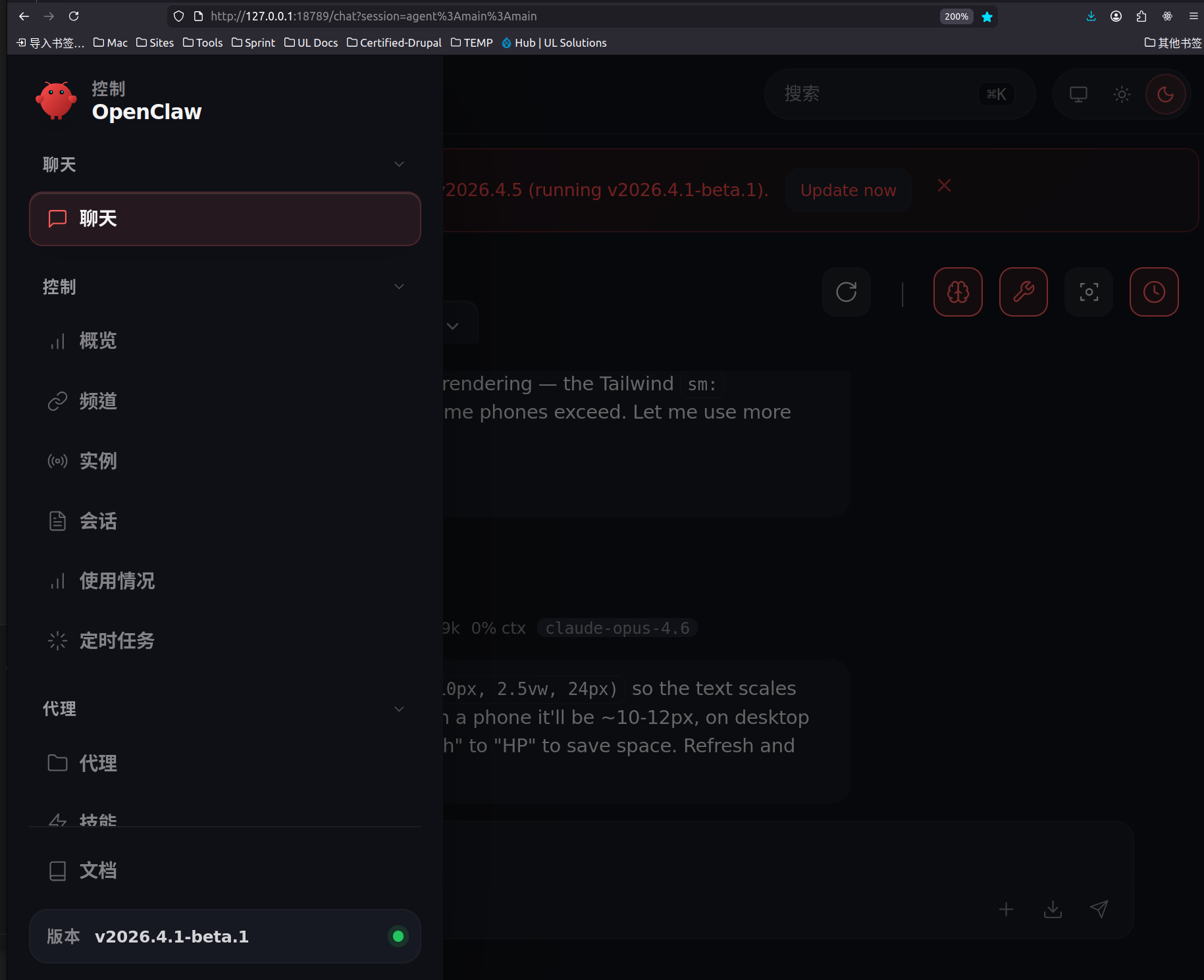
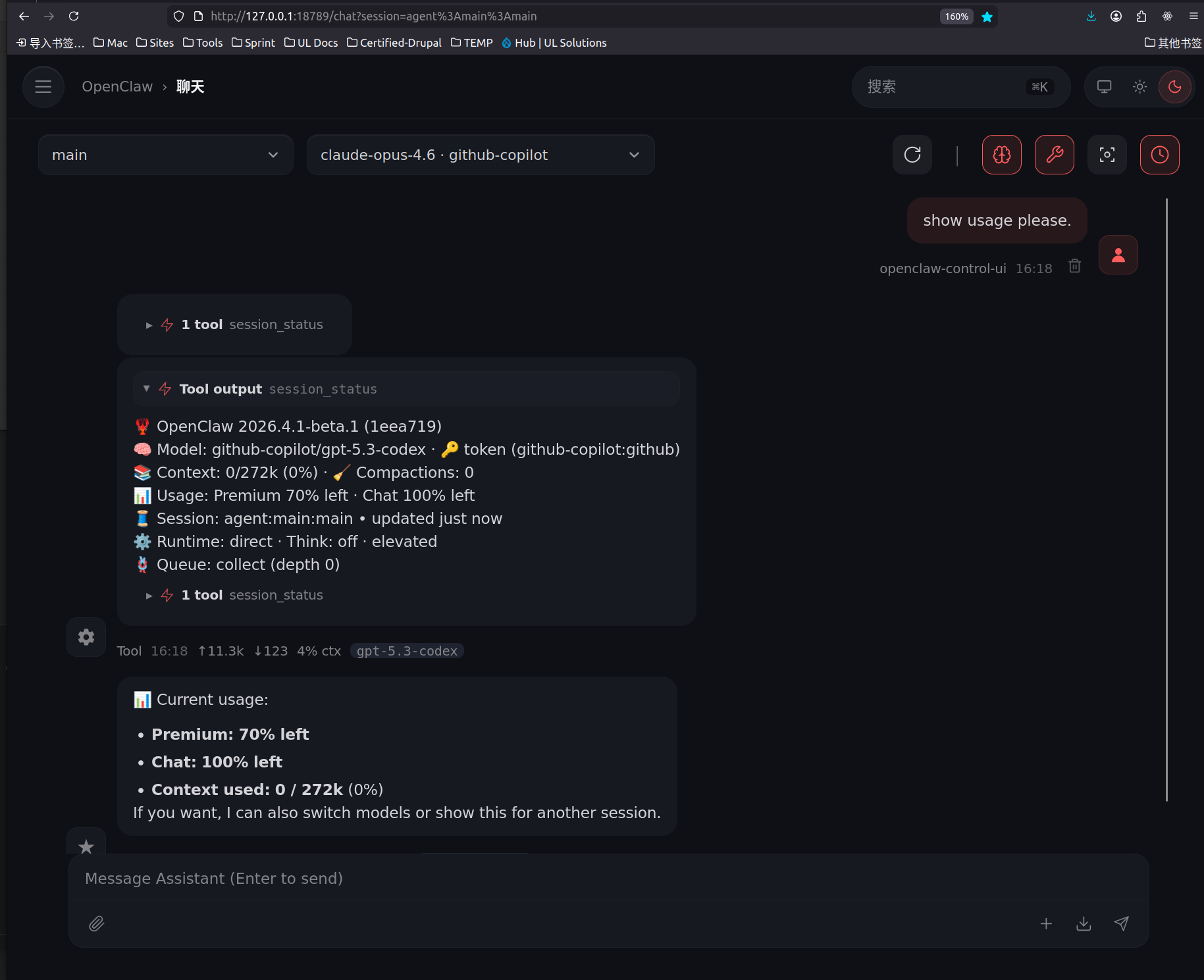
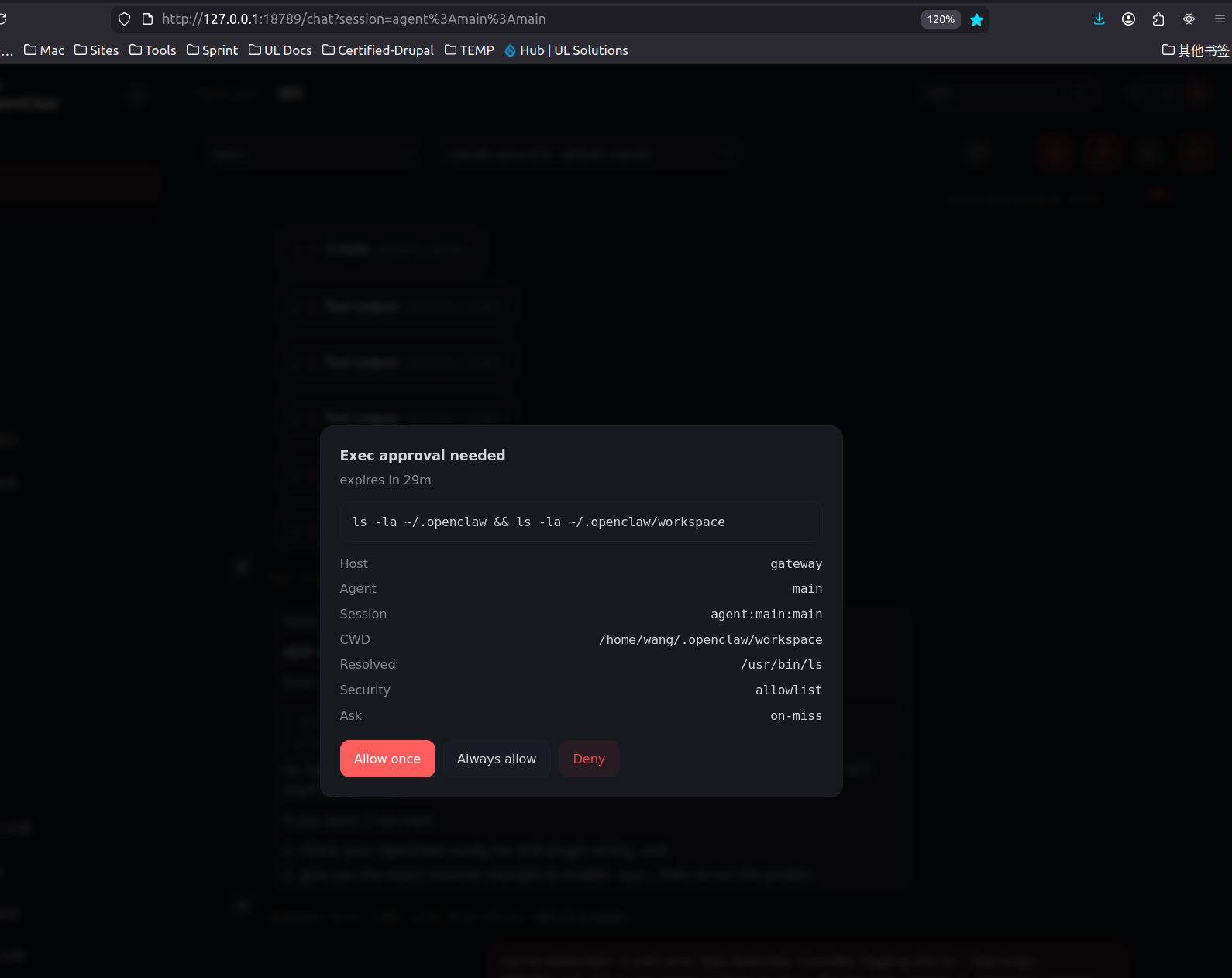
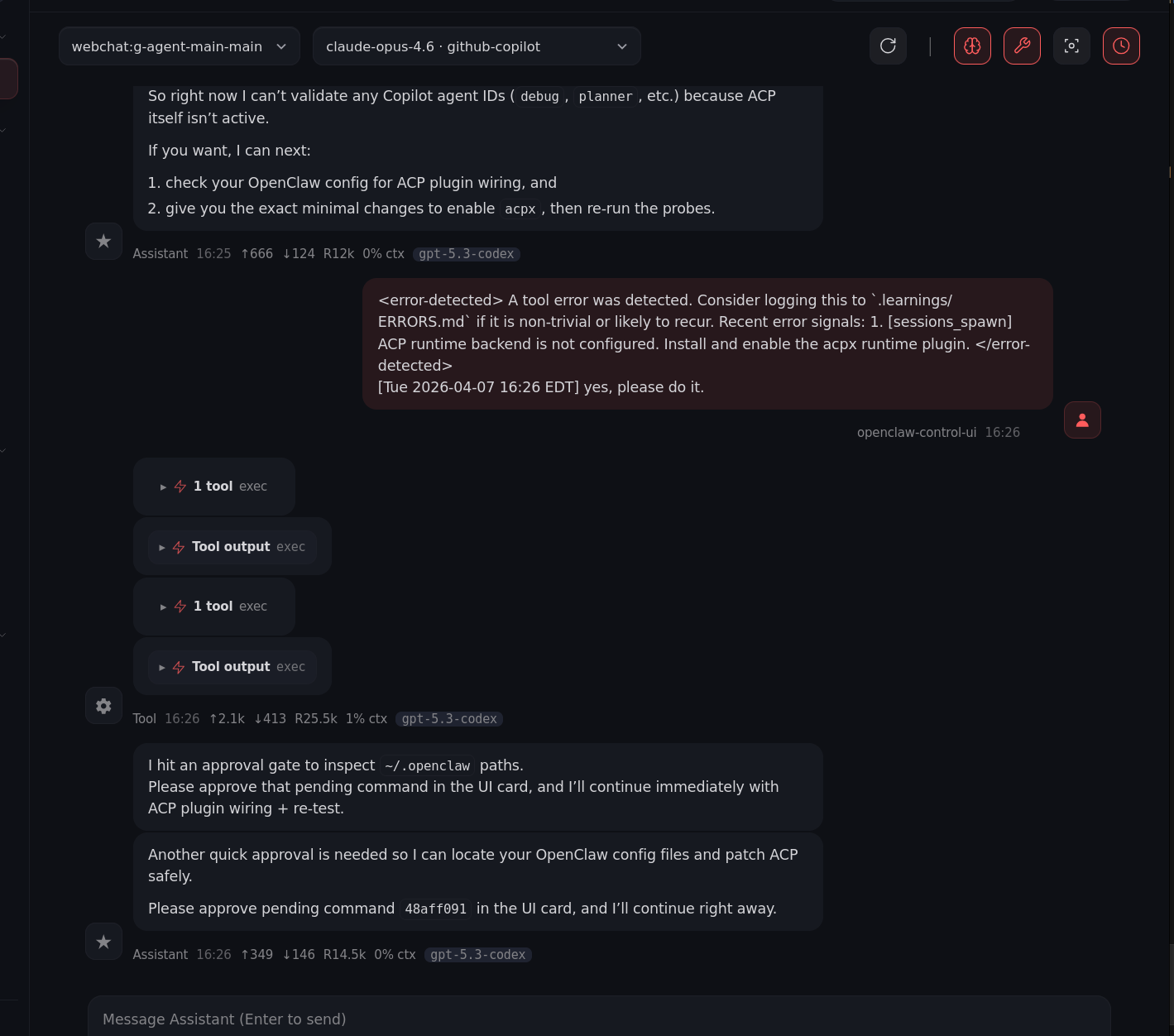
Demo: OpenClaw Improvements (Now with more sass 😈)
Here are six quick screenshots demonstrating the upgraded experience.
1) Control panel glow-up
2) Smoother workflow, less chaos
3) Cleaner execution path
4) Sharper runtime visibility
5) Better orchestration, fewer headaches
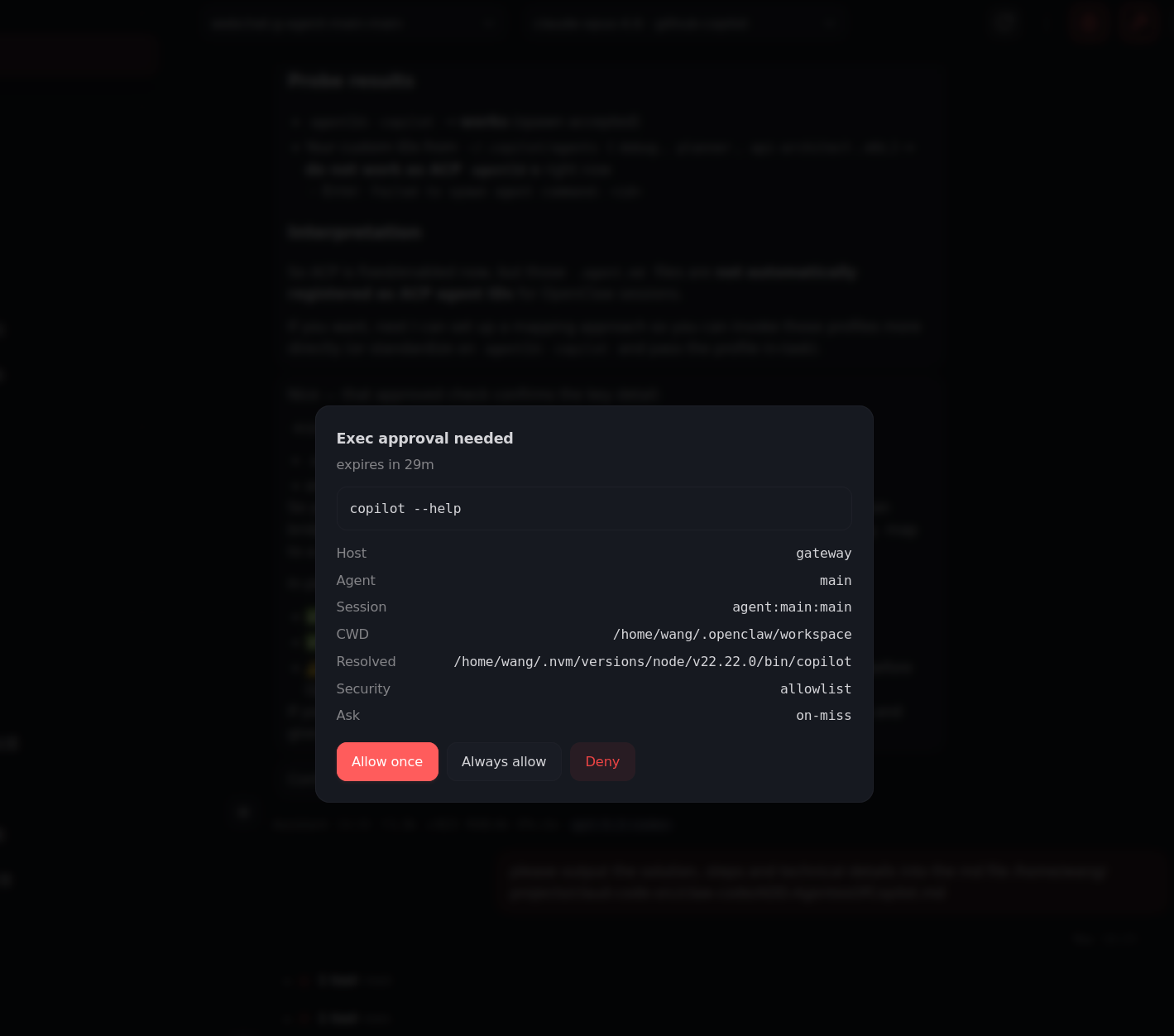
6) Final form: confident and slightly unhinged
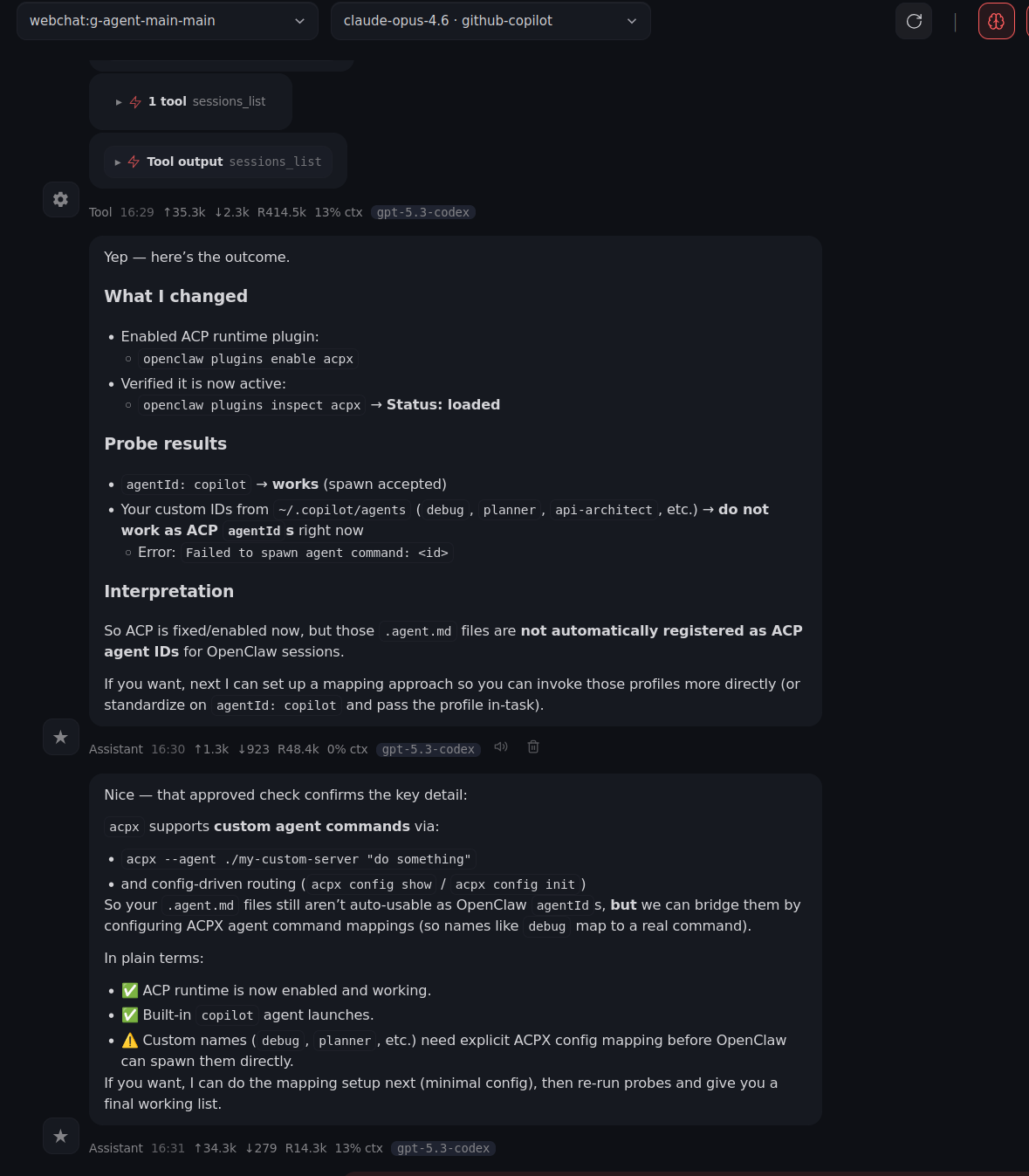
Check changes of source code in another REPO:
Reviews (0)
Sign in to leave a review.
Leave a reviewNo results found