brain-ai-memory
Health Warn
- License — License: MIT
- Description — Repository has a description
- Active repo — Last push 0 days ago
- Low visibility — Only 5 GitHub stars
Code Pass
- Code scan — Scanned 12 files during light audit, no dangerous patterns found
Permissions Pass
- Permissions — No dangerous permissions requested
No AI report is available for this listing yet.
Turn MEMORY.md into project-scoped, versioned memory for Codex, Claude Code, and MCP agents across sessions.
Brain-AI Memory — Stop Re-explaining Your Project
Open a new Codex or Claude Code session and continue from the last one.
Brain-AI Memory keeps the facts, decisions, exact values, and next steps you
choose on your computer, organized by project so memories do not spill into
other work. Turn on session automation and the next session receives the
relevant memory and a handoff from the last one. When a fact changes, its
previous version and source remain traceable. Existing MEMORY.md files stay
untouched.
Runs locally · No API key · No account · No database setup



Try it in 60 seconds ·
Use an existing MEMORY.md ·
Connect Codex or Claude Code ·
See the test results
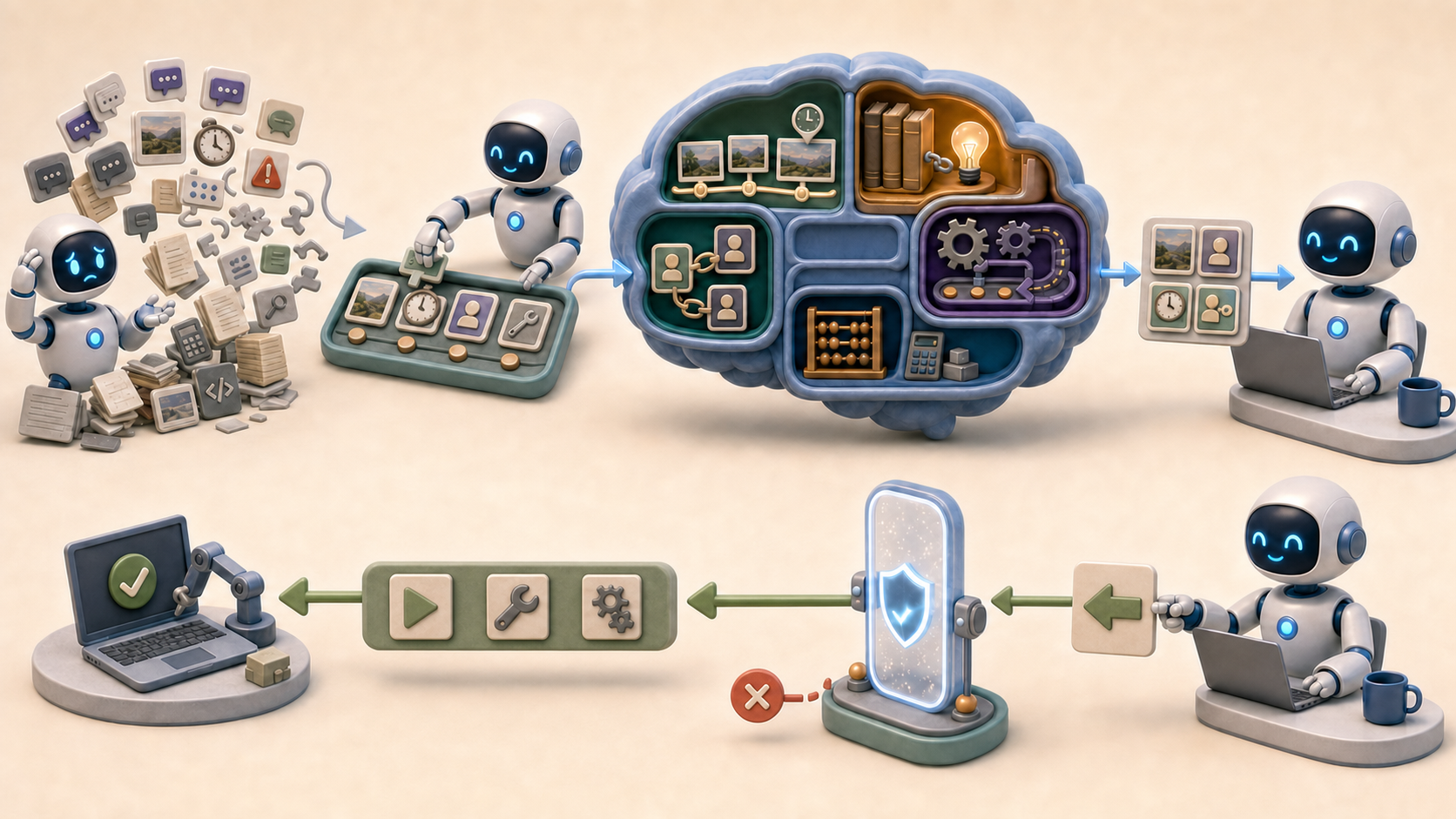
Past sessions → the right project memory → continue in the next session.
Optional: stop a command when it conflicts with an approved rule.
Search can find a similar old note. Brain-AI Memory also tracks which project
it belongs to, whether a newer fact replaced it, and what the next session
should do.
See it in 60 seconds
Install the package from PyPI, then run the synthetic tour in a disposable
directory before touching a real memory file:
python3 -m venv .venv
source .venv/bin/activate
python -m pip install brain-ai-memory
Source checkout fallback: clone this repository and run python -m pip install .
inside it.
DEMO_HOME="$(mktemp -d)"
brain-ai --home "$DEMO_HOME" tour
Brain-AI Memory: current memory and a session handoff
1  BIND     Atlas 2.1 → belongs_to → Atlas
2  RECALL   Atlas 2.1 release day is Thursday.
3  STATE    open_reviews = 3
4  UPDATE   Friday → superseded by → Thursday
5  HANDOFF  checkpoint handoff_...
Optional action checks
6  GUARD    blocked: release approval is required before production deployment
7  FALLBACK completed after 2 attempts
The tour proves the local package runs; it does not import your files or show
autonomous agent behavior.
What is tested: the complete 135-test suite runs on Python 3.12; the
core runtime and adoption workflow also run on Python 3.10 and 3.11. Clean-wheel
checks cover a real process restart/resume, subprocess host-hook setup,
automatic checkpoint/resume, and 20/20 component contracts. This is integration
evidence, not a claim about better LLM answers.
Is it for you?
Use Brain-AI Memory when all three are true:
- Work continues across many sessions.
- Facts, rules, or exact state keep changing.
- A stale or cross-project memory can cause a real mistake.
Typical users run multi-project coding agents, months-long research workflows,
operations agents that track tickets and approvals, or several sub-agents across
Codex and Claude Code.
You probably do not need it for a one-off chat, a short single-repository task,
ordinary document search, or a MEMORY.md that is easy to prune by hand.
Default recall uses transparent local multilingual BM25 over SQLite; no
embedding model is downloaded. Vault and Smart Connections backends are
optional. Tools-only mode waits for the host to call it. Opt-in automatic mode
uses each prompt only to select same-project records, supplies bounded context,
and checkpoints observed changes without saving the raw conversation.
Adopt an existing MEMORY.md
If you did not run the tour above, install the base package:
python -m pip install brain-ai-memory
From the project that owns the memory file, pin one project root and local
runtime home for the rest of the workflow, then give the records one stable
scope:
cd /path/to/your/project
export PROJECT_ROOT="$PWD"
export BRAIN_AI_HOME="$PROJECT_ROOT/.brain-ai"
brain-ai audit MEMORY.md --entity my-project
Audited /path/to/MEMORY.md
Entity: my-project
Entries: 84

Ready to import:       63
Needs review:          13
Duplicate candidates:  8
Possible conflicts:     3

Review plan: /path/to/your/project/.brain-ai/workflows/audits/audit_0123456789abcdef.json
Source file and memory store unchanged.
Next: brain-ai --home /path/to/your/project/.brain-ai review audit_0123456789abcdef
Inspect the source-addressed entries, approve the unambiguous ones, and apply
that saved review:
brain-ai review audit_0123456789abcdef
brain-ai review audit_0123456789abcdef --approve-ready
brain-ai apply review_0123456789abcdef --yes
--approve-ready approves ordinary semantic and episodic entries and skips
exact duplicate candidates. State and executable-rule candidates stay
unresolved. Audit never guesses that one fact replaces another; when that is
your intent, override that item's decision with explicit --supersede.
Project-scoped supersession requires the old record to be linked to the same
project; it cannot deactivate global or another project's memory.
Applying a review writes only to the selected Brain-AI home; it does not editMEMORY.md.
If the current directory contains .claude/MEMORY.md or MEMORY.md, the path
can be omitted. Discovery never crawls your home directory or provider logs.
Use brain-ai audit ... --no-save when you want a pure preview without even a
saved audit plan.
The runtime home contains ordinary local SQLite, JSON, and JSONL files. The
package does not encrypt them: keep .brain-ai/ private and out of source
control, and back it up according to the sensitivity of your records.
What audit does and does not decide
The audit parses inert Markdown into entries with source path, line range, and
content hashes. It reports normalized exact duplicates and a possible conflict
when the same explicit key has different literal values. These are review cues,
not judgments about which statement is true or current.
| Review choice | How it is authorized |
|---|---|
| ordinary fact or event | --approve-ready, or explicit --set ITEM=semantic|episodic |
| exact state | explicit --set ITEM=state on a literal key: value entry |
| procedural rule | explicit --rule ITEM=SAFE_PATTERN and --rule-effect warn|block |
| replacement fact | explicit --supersede ITEM=MEMORY_ID |
| leave out | explicit --set ITEM=skip, or automatic skip for an exact duplicate candidate |
Audit never infers truth or staleness from age, wording, or file order. Before
the first successful apply, a source or typed-store change stops the operation
and requires a new audit. Once completed, reapplying that review is an
idempotent no-op; the receipt reports whether the source later changed.
An applied batch can be rolled back explicitly:
brain-ai rollback batch_0123456789ab --yes
Rollback restores the prior active view where it can do so safely. It is
logical rollback, not physical erasure: the source file, import receipt, and
provenance evidence are retained.
A fresh audit and review can import the same source again while retaining both
attempts in the ledger.
Connect Codex or Claude Code
Use automatic mode when you want a new session to recall the same project and a
turn with relevant changes to leave a checkpoint without relying on the agent
to remember every call. Changes are previewed before anything is written.
# Install the agent-connection support once
python -m pip install "brain-ai-memory[mcp]"

# Run from the project that will own this memory
cd /path/to/your/project
brain-ai setup codex --entity my-project
brain-ai setup codex --entity my-project --apply
Source checkout fallback: run python -m pip install ".[mcp]" inside the
repository instead of the install command above.
For Claude Code, replace codex with claude-code. If you imported aMEMORY.md, setup reuses that project entity; it never imports or approves
memory on its own. The first command is a pure preview. --apply creates an
empty project entity only when needed, applies the same checked config diff,
and runs doctor. Codex asks you to trust the exact project hooks; review them
with /hooks, then start a fresh session. doctor reports configured after
installation and active only after one real start → prompt → stop cycle has
been observed.
Automatic mode is deliberately project-only. At session start it supplies the
latest handoff and a hard byte-bounded set of current records. Each prompt is
used transiently to select relevant records from that same project. It does not
store raw prompts, raw tool output, assistant messages, or edited file contents,
and it never promotes a sentence to a fact, rule, or exact state on its own.
If an approved MEMORY.md changes, the loop checks its source fragments at
session start and after supported edits. Records that are no longer supported
by the current file remain in the audit history but are withheld from automatic
recall. If an imported procedural rule becomes stale, supported actions enter a
fail-closed review hold instead of silently losing the approved guard.
The changed file becomes a normal review audit, so new or replacement entries
can use the existing review and reconsolidation workflow. Unchanged fragments
remain available. This prevents stale memory from acting as current memory
without turning the loop into an automatic truth judge.
See Automatic session memory for the event flow,
privacy boundary, host differences, and removal commands.
If you only want on-demand memory tools, select tools mode explicitly:
brain-ai setup codex --entity my-project --mode tools
brain-ai setup codex --entity my-project --mode tools --apply
In tools-only mode, Codex or Claude Code chooses when to recall, save, and
checkpoint. The lower-level connect command remains available for advanced
configuration; its --scope user option is limited to deliberate tools-only
connections. brain-ai disconnect ... also previews its diff and requires--apply before changing host configuration.
Previews show only a sanitized view of the managed brain-ai-memory entry;
unexpected environment data is redacted and unrelated host configuration is not
printed. Disconnect removes only an entry owned by this command from the same
scope/project config and Brain-AI home. A supplied --entity must also match.
Manually written connection entries are not owned by these commands and must be
edited or removed manually.
The generated project entry pins the current Python interpreter and Brain-AI
home by absolute path so it still starts outside the activated shell. Treat it
as machine-local configuration; review those paths before committing or sharing
the host config.
The generated connection locks every memory call to the chosen project. An
explicit attempt to read or write another project is rejected rather than
silently changing scope.
In tools-only mode, add an equivalent instruction to the project's AGENTS.md
or CLAUDE.md when you want the host to follow a repeatable memory routine:
For cross-session work, call brain_resume first and brain_context before using
project facts. Save only durable decisions, events, or changed state with
brain_remember. Before handing work to another session, call brain_checkpoint
with a short summary and concrete next_actions.
Hand off and resume
At the end of a session, record the settled summary and concrete next actions.
The next session can read the latest handoff for exactly the same entity:
brain-ai handoff --entity my-project \
  --summary "Release review completed; Thursday is the approved date" \
  --next "Run the staging deploy"
brain-ai resume --entity my-project
Connected agents can use brain_checkpoint and brain_resume for the same
flow; the project connection supplies the default entity.
Before the first handoff, resume/brain_resume returns status: not_found
with an empty summary and next_actions; this is a normal first-run result.
What changes when you add it?
| Failure you see | What Brain-AI Memory adds |
|---|---|
an existing MEMORY.md mixes durable facts, events, rules, and state |
source-addressed audit, explicit review, and an import receipt |
| two projects or releases leak into each other | keeps records bound to one entity out of another entity's recall; intentionally unscoped records remain shared |
| a reviewed fact replaces an older fact | removes the chosen old version from that project's active view while keeping its source history and any other project bindings |
| the model estimates a value that is already known | typed exact state outside prose |
| repeated experience remains buried in session logs | lets you review it before promoting it to knowledge or a rule |
| the next session starts without the prior decision | a project-scoped handoff with the last summary and unfinished work |
Use it when you are building a coding, research, operations, or assistant agent
that works across sessions. It is also useful when RAG finds relevant text but
still mixes projects, returns stale facts, or loses exact state. For one-off
chat or ordinary document search, RAG alone is usually simpler.
For provider-neutral manual MCP configuration, follow the
MCP guide. You can also use the
CLI and Python runtime. See the
ways to start or test results
for more detail.
What the system manages
| Memory-management responsibility | What the current source does |
|---|---|
| existing Markdown memory | audits, reviews, and imports approved entries with line-level provenance while leaving the source file unchanged |
| selected evidence | stores explicit memory writes; automatic mode may also store bounded relative edit-target metadata, never file contents or the raw transcript |
| working context | reconstructs an entity-scoped bundle; automatic mode adds a hard 6,000-byte ceiling and source identifiers before supplying it to the host |
| episodic memory | preserves ingest-timestamped events, entity bindings, and retained import evidence |
| semantic memory | stores sourced reusable knowledge and versions facts only through explicit supersession |
| procedural memory | stores rules and only promotes episode candidates after preview and approval |
| exact state | keeps knowable values in a typed store rather than asking the model to estimate them |
| lifecycle and handoff | records consolidation, reconsolidation, logical active/inactive decisions, rollback evidence, handoff/resume, and dirty-only idempotent automatic checkpoints |
| host connection | previews and writes a project-locked connection; opt-in hooks automate recall, action checks, acknowledgement, and checkpoint timing |
Entity links, source labels, and the component schema apply across all stores.
Tools-only mode does not collect provider sessions or place memory into model
context on its own. Automatic mode uses prompts transiently for retrieval but
does not persist raw prompts, raw tool output, assistant messages, or edited
file contents. File compaction, splitting, and physical deletion stay with the
host. CLI limit bounds records; the automatic context path is byte-bounded.
Write and query memory directly
The adoption workflow creates its project entity. You can also create entities
and write records directly:
brain-ai entity add --name "Atlas" --type project --alias A
brain-ai remember --type episodic --entity Atlas \
  --text "The release moved to Thursday" --promote semantic
brain-ai remember --type state --entity Atlas --key open_reviews --value 3
brain-ai run --entity Atlas \
  "What changed recently and how many reviews remain?"
brain-ai consolidate          # preview
brain-ai consolidate --apply  # promote after preview
brain-ai handoff --entity Atlas --summary "release review complete"
The component ontology is validated when the runtime starts. Inspect it withbrain-ai ontology; the canonical schema remainsschema/brain_components.yaml.
Add an action check (optional)
Tools-only mode exposes brain_check_action; it never runs arbitrary shell
commands, so the host must treat gate.allowed = false as a stop. Automatic
mode wires project-scoped block rules to the supported Bash pre-action hook and
returns a host denial when one matches. This is a narrow command boundary, not
a claim that every possible tool or side effect is intercepted. For a fully
explicit execution path, use brain-ai harness. See Automatic session
memory and the manual connection
guide.
Why the brain-inspired separation?
The brain analogy is a design aid, not a biological claim. It helped separate
episodes, facts, rules, exact state, and action checks so that each failure can
be debugged on its own. You can use the contracts without the brain labels.
See the mapping and its limits.
The current suite covers 43 adoption-workflow cases, 27 runtime cases, 5
ablation cases, 1 packaged restart/resume case, 23 host-integration cases, 32
automatic-loop cases, and 4 storage durability and concurrency cases (135
total).
These tests do not yet show better end-to-end LLM answers than RAG or a simpler
memory system. See the evidence and limitations.
Start with the problem you already have
These problems often show up in coding, research, operations, and assistant
agents that run across many sessions:
- “We recorded that decision. Why can the next session not reconstruct it?”
- “The retrieved note is relevant, but it has already been superseded.”
- “This event belongs to another project or entity.”
- “The same lesson happened repeatedly but never became reusable knowledge.”
- “The exact value exists, yet the model estimated it from prose.”
- “The memory index keeps growing and nobody knows what to consolidate,
archive, or retain.”
A single-turn chatbot with no durable state probably does not need this
architecture. Neither does a workflow whose only problem is ordinary document
search. Start with the failure you already see; you do not need to adopt the
whole architecture:
| What you observe | Diagnose first | Smallest useful change |
|---|---|---|
| settled context is lost or bound to the wrong event | episodic memory (HC) | add ingest-time event/entity bindings |
| one project's memory leaks into another | entity scope and relation | bind the record to a stable entity and query within that scope |
| retrieval is relevant but stale | semantic memory (ATL) | verify freshness and reconsolidate on conflict |
| repeated episodes never become reusable knowledge or procedure | consolidation | require review before promotion |
| old and new facts remain simultaneously active | reconsolidation | supersede the stale record while retaining the old row and source link |
| a knowable value is guessed | exact state (IPS) | query a typed state store instead of estimating from prose |
| the always-loaded index keeps expanding | memory lifecycle | retain a bounded index and record archive/migration decisions |
| the next session cannot resume the prior decision | checkpoint and handoff | persist a scoped summary plus pending lifecycle candidates |
This breakdown came from debugging a persistent, multi-project agent system. I
keep that operating record separate from benchmark claims in the evidence
section below.
When memory affects an action (optional)
After memory is scoped and current, the memory-to-action bridge can address a
different class of failure:
| What you observe | Bridge component | Smallest useful change |
|---|---|---|
| a recalled rule is ignored during execution | procedural rule consumption (BG) | attach the stored rule to a deterministic action check |
| a fallback sequence stops after its first failure | procedural execution (CB) | move the sequence into an executable harness |
| the right memory bundle reaches an unsafe action | routing and proposed-action gate (PFC/TH) | consume the gate verdict at the host execution boundary |
Why this is memory management, not just RAG or a harness
Finding relevant text is necessary, but it is only one operation inside a
memory system. Across sessions, you still need to know what a record is, what
it belongs to, whether it is current, whether it should become knowledge or a
rule, and what the next session needs. Brain-AI Memory stores those decisions.
| Existing method | What it supplies | What remains for memory management |
|---|---|---|
| long context or a memory file | text the model can read now | type, scope, active version, promotion, retention decision, and handoff |
| RAG or a vector store | candidate text similar to a query | entity binding, freshness, exact state, consolidation, supersession, and source/version links |
| entity model, ontology, or relational/graph DB | identity and structured relationships | which records behave as episode, knowledge, rule, or state and how they change across sessions |
| hook, guard, harness, or retry loop | interception, action policy, sequence execution, or another attempt | ownership and lifecycle of the memory those mechanisms consume and produce |
| Brain-AI Memory | typed local stores, entity scope, current-record recall, reviewed updates, audit, and handoff | the host still supplies raw evidence, model-context assembly, scheduling, physical retention, and production policy |
Entity and relation support is part of the core, but it is only a local
identity-and-scope layer. It does not replace a domain ontology reasoner or a
production database. RAG can remain the semantic retrieval backend. A hook can
call this kernel. A harness can consume its procedural memory. None of those
mechanisms alone owns the full memory lifecycle.
How the optional action checks fit
A hook is an attachment point. A guard returns an allow/warn/block decision. A
harness owns a sequence. A loop feeds an outcome back into another attempt.
The public package includes small guard and fallback implementations so stored
rules and host-supplied procedure steps can influence action, but actual
enforcement and execution are downstream of memory management and require
the host to consume the result. They are not the reason the project is called
Brain-AI Memory.
What is different here
I separated these functions while running a persistent, multi-project agent
system and debugging its memory and session handoffs. The individual ideas are
not new. The package connects them without treating every failure as a
retrieval problem:
- PFC reconstructs a scoped working-memory candidate; HC records episodes and
relations; ATL stores reusable sourced knowledge; BG stores procedural rules;
and IPS preserves exact state; - CB keeps executable procedure separate from a rule. The operating
architecture can register such harnesses; the current package accepts
host-supplied fallback steps rather than owning a sequence registry; - consolidation previews an episode's promotion into knowledge or a rule, and
reconsolidation creates a sourced superseding version instead of silently
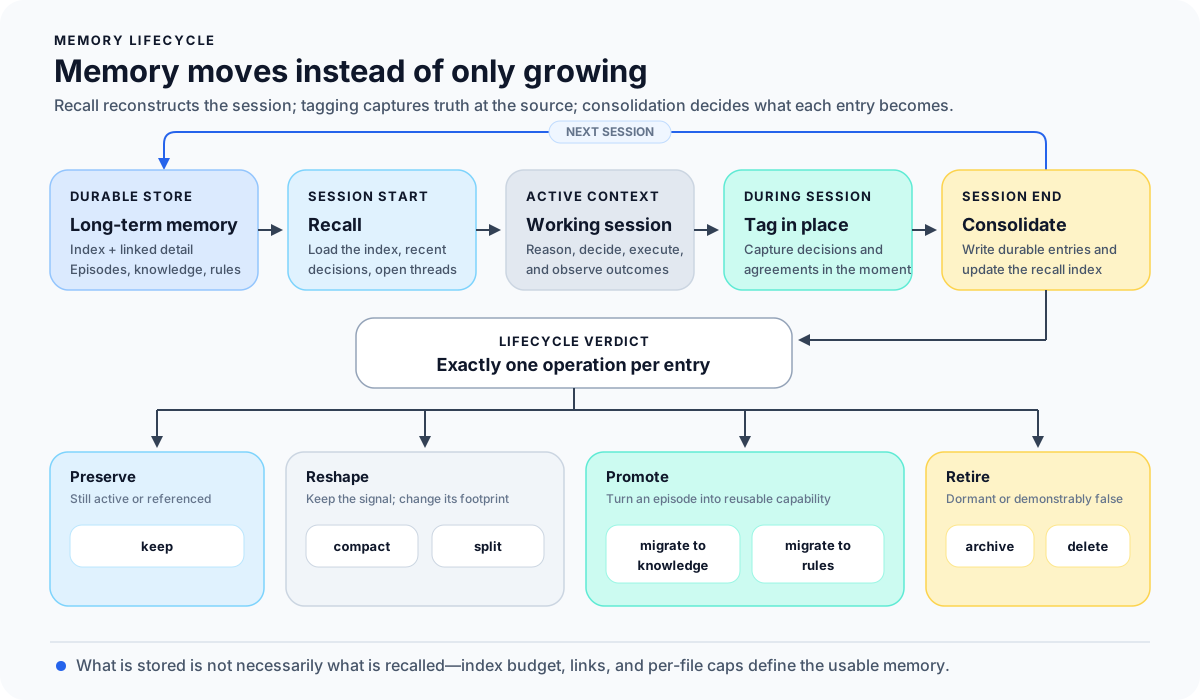
overwriting stale knowledge; - a stored entry can receive one lifecycle decision: keep, compact, archive,
migrate to knowledge, migrate to rules, delete, or split. The package records
that decision and logical active view rather than pretending it
physically transformed or erased the host's source; - entity-scoped handoffs carry counts, pending consolidation candidates, a
host-written summary, and next actions; resume reads the latest handoff for
that same entity; and - the optional TH/BG/CB action path is tested separately from the core memory
path, so software conformance is not mislabeled as memory-quality evidence.
The brain mapping is a naming aid. The useful part is the set of separate
contracts and failure checks. Current results cover real operation, retrieval
tradeoffs, and software behavior; they do not yet show better end-to-end answers
than a simpler memory system.
Start with the part you need
Start with the memory file or failure you already have. brain-ai tour remains
available as a synthetic check; it is not required for adoption. Add the action
checks only if you need them:
| Your goal | Start here | First success criterion |
|---|---|---|
| adopt an existing Markdown memory | audit → review --approve-ready → apply --yes |
approved entries have source lines and hashes, while MEMORY.md is unchanged |
| verify the kernel with synthetic data | brain-ai tour |
inspect entity binding, current fact, exact state, update, and handoff under .brain-ai/ |
| add typed memory to an agent | entity, remember, and run in the brain-ai runtime |
two similarly named projects never receive each other's bound records; intentional global records remain shared |
| explicitly resolve imported state, rules, or replacements | review --set, --rule, or --supersede |
no structured state, executable rule, or old version changes without a recorded choice |
| connect Obsidian / Smart Connections | semantic adapters | v1 and v2 responses work; unbound vault hits are excluded from entity-scoped recall until imported or linked locally |
| inspect local state and handoffs | clean-room observer | store counts, recent audit events, and the latest checkpoint render on localhost |
| continue automatically across Codex or Claude Code sessions | brain-ai connect codex|claude-code --entity ... --mode loop |
doctor becomes active after a real start → prompt → stop cycle, and the next start resumes the same scoped checkpoint |
| connect scoped memory to Codex or Claude Code | brain-ai connect codex|claude-code --entity ... |
the project config points to the same store and supplies the intended default entity |
| connect another MCP host | manual MCP guide | the host calls brain_context, injects selected records, writes outcomes, and resumes the scoped handoff |
| enforce a stored procedure at action time | brain-ai harness --entity ... or a behavioral guard |
an entity-scoped unsafe pattern is blocked at the real execution boundary |
| execute a host-supplied fallback sequence | brain-ai sequence --entity ... |
attempts continue until success, block, or exhaustion and the trace is audited |
| stop an index from becoming a second database | memory skeleton | one linked line per topic remains always loaded |
| decide what to retain or move | seven-operation helper | every reviewed entry receives one recorded decision; the host performs any file changes |
| evaluate the architecture rather than adopt it | mapping and evidence | you can map a real failure to a component or identify where the map does not fit |
The hooks self-test with the Python standard library:
python3 templates/hooks/behavioral-guard.py --selftest
python3 templates/hooks/self-check-trigger.py --selftest
How the memory architecture works
The canonical map is a seven-component cognitive architecture: five memory
roles (PFC working/executive, HC episodic, ATL semantic, BG procedural-rule, and
CB procedural-execution), plus two supporting control/computation roles (TH
gating and IPS exact numerical state). Consolidation and reconsolidation are
transfer channels, not extra components. The public product is a memory-
management kernel because typed memory and its lifecycle are primary; the
supporting control surfaces do not redefine it as a harness library. Read the
detailed mapping for the neuroscience rationale and its
limits.
| Layer | Component | Public-package responsibility | Failure it helps diagnose |
|---|---|---|---|
| memory role | PFC | routes a query to candidate stores and reconstructs a scoped working-memory candidate | the wrong store or entity scope was selected |
| memory role | HC | episodic events, stable entities, aliases, relations, and bindings | an event is missing or bound to the wrong context |
| memory role | ATL | active semantic knowledge with sources and superseding versions | retrieval is relevant but stale or incorrectly sourced |
| memory role | BG | stored procedural rules and approved episode-to-rule promotion | a reusable rule was never captured or selected |
| memory role | CB | executable procedure representation; the package runs steps supplied by the host | a procedure remains prose or stops before fallbacks finish |
| supporting computation | IPS | entity-scoped exact numerical state | a knowable quantity is guessed from prose |
| supporting control | TH | checks a host-proposed action before execution in the public runtime | an unsafe proposed action reaches the tool boundary |
| lifecycle channel | consolidation | previews episode → knowledge/rule promotion and applies it only on request | repeated experience never becomes reusable memory |
| lifecycle channel | reconsolidation | creates a sourced superseding semantic version and replaces the selected scope's binding | stale and current knowledge remain active in the same scope |
The mapping's TH inspiration is broader input gating. The clean-room runtime
implements the narrower, observable form it actually tests: a proposed-action
check. It does not claim to filter a model's entire prompt or provider input.
What runs automatically—and what stays reviewed
Tools-only mode leaves recall, saving, and handoff timing to the host. Opt-in
automatic mode closes the deterministic session edges: bounded project recall
at start and prompt time, a supported Bash action check, bounded edit-target
metadata after successful edits, dirty-only checkpoints, resume, and delivery
acknowledgement.
Judgment-bearing memory changes remain explicit:
- You review an existing
MEMORY.mdbefore importing it. - A fact, rule, exact state value, or replacement version is written only by
an explicit memory operation. - The host still decides and executes the work; the loop does not infer an
outcome from raw tool output or assistant prose. - Promotion, supersession, archive, split, compact, migration, and logical
deletion remain reviewable lifecycle decisions. - Provider transcripts, physical file retention, encryption, backup, and
verified deletion stay with the host or operator.
See Automatic session memory for the installed
loop and memory lifecycle for the record and
handoff contract.
Evidence status
The table separates four kinds of evidence: operating history, memory retrieval
tests, software behavior tests, and the results we still do not have. They
answer different questions.
The operating numbers come from the private system that preceded this
clean-room repository. The tour, tests, and ablation results come from the
public package.
| Question | Current evidence |
|---|---|
| Was the architecture actually implemented and used? | Yes. Live since 2026-04-20 across 13 project memory indexes |
| Is there sustained operational exposure? | Yes. 419 instrumented sessions and 63.6M tokens from 2026-06-10 through 2026-07-14 |
| Does semantic retrieval beat the live grep control on internal pointers? | Indicative, aggregate-only result. HIT@10 69.0% → 88.8%, n=116 |
| Does equal-budget graph augmentation help the semantic store? | Indicative, aggregate-only result. HIT@10 86.2% → 91.9%, n=690 sources |
| Has stack-aligned retrieval been compared on a public benchmark? | Aggregate-only result on public LoCoMo data. HIT@10: GTE 62.1%, BM25 57.0%, graph-lite 51.9%; n=1,531 answerable questions |
| Does a compact pointer index fit more entries than full append-only entries? | Yes. Deterministic capacity simulation |
| Does a simple compact pointer preserve retrieval quality on public data? | No. Current keyword pointers trade recall for size |
| Does the packaged workflow survive an MCP process restart? | Yes. CI runs clean-wheel audit → review → apply → generated config → real stdio MCP calls → checkpoint → fresh process → resume. This is integration evidence, not host behavior or answer quality. |
| Does the installed automatic loop recall, checkpoint, and resume? | Yes in clean-wheel subprocess fixtures: Codex and Claude Code configuration is verified, and a Codex start → prompt → edit → stop → fresh-start sequence resumes the same scoped handoff. A live-host field study is still missing. |
| Does the lifecycle improve answer accuracy for a real LLM agent? | Not yet measured |
| Does the full architecture beat RAG, long context, or another memory system? | Not yet measured |
| Are latency, token cost, conflict resolution, and abstention improved? | Not yet measured |
| How broadly does this single-owner, multi-project deployment generalize? | Unknown. Multi-organization replication is absent |
| Do the ten ablated memory/lifecycle and optional-control mechanisms execute their authored contracts? | Supporting conformance only: all-ten condition 20/20; flat retrieval control 1/20. The flat control still found the expected top text for 6/6 memory queries |
Private source system in operation
The sanitized snapshot dated 2026-07-14 covers roughly 12 weeks of system
evolution. The live estate includes 13 project memory indexes, 134 memory files,
a 783-note semantic store, 455 decision/issue ledger records, and 3,286
instrumented policy events. Nine scheduled recall snapshots ran 18–21 stable
probes each; the any-store pass rate was 100%, while the vector-only probe rate
varied from 33.3% to 100%.
Those counts establish real use, scale, monitoring, and repeated intervention.
They do not show that memory caused the 419 sessions, that every policy event
prevented harm, or that curated probe success equals end-to-end answer quality.
Read the operational evidence and limitations
or inspect the machine-readable aggregate snapshot.
Retrieval tests from the operating stack
Two same-corpus comparisons used components of the operating stack:
| Evaluation | Control | Tested condition | Result |
|---|---|---|---|
| auto-memory pointer retrieval, n=116 | grep HIT@10 69.0% | production embedding HIT@10 88.8% | recovered 25 of 36 grep misses |
| semantic-note retrieval, n=690 sources | embedding HIT@10 86.2%, recall@10 41.0% | equal-budget graph hybrid HIT@10 91.9%, recall@10 48.8% | +5.7 pp HIT, +7.8 pp recall |
These are useful within-system A/B signals, not independent public benchmarks.
The pointer gold set can inflate absolute scores, and the graph evaluation uses
the same relationship family as its relevance labels. Aggregate results are
published for transparency; private source records are intentionally excluded.
An earlier stack-aligned evaluation also ran retrieval over all 1,531 answerable
questions in the 10-sample public LoCoMo set. At HIT@10, the parallel/legacy
768-dimensional GTE index scored 62.12%, BM25 scored 56.96%, and a lightweight
graph-PPR condition scored 51.93%. This is both evidence and a negative result:
the embedding baseline helped at k=10, while that graph approximation did not.
It measured gold-evidence retrieval, not answer accuracy, and its raw per-item
bundle has not been released from the private evaluation environment.
Retrieval test on public data
On all 500 cleaned LongMemEval-S questions, a retrieval-only pilot compared the
same top-3 budget across recent sessions, full-session BM25, and compact keyword
pointers:
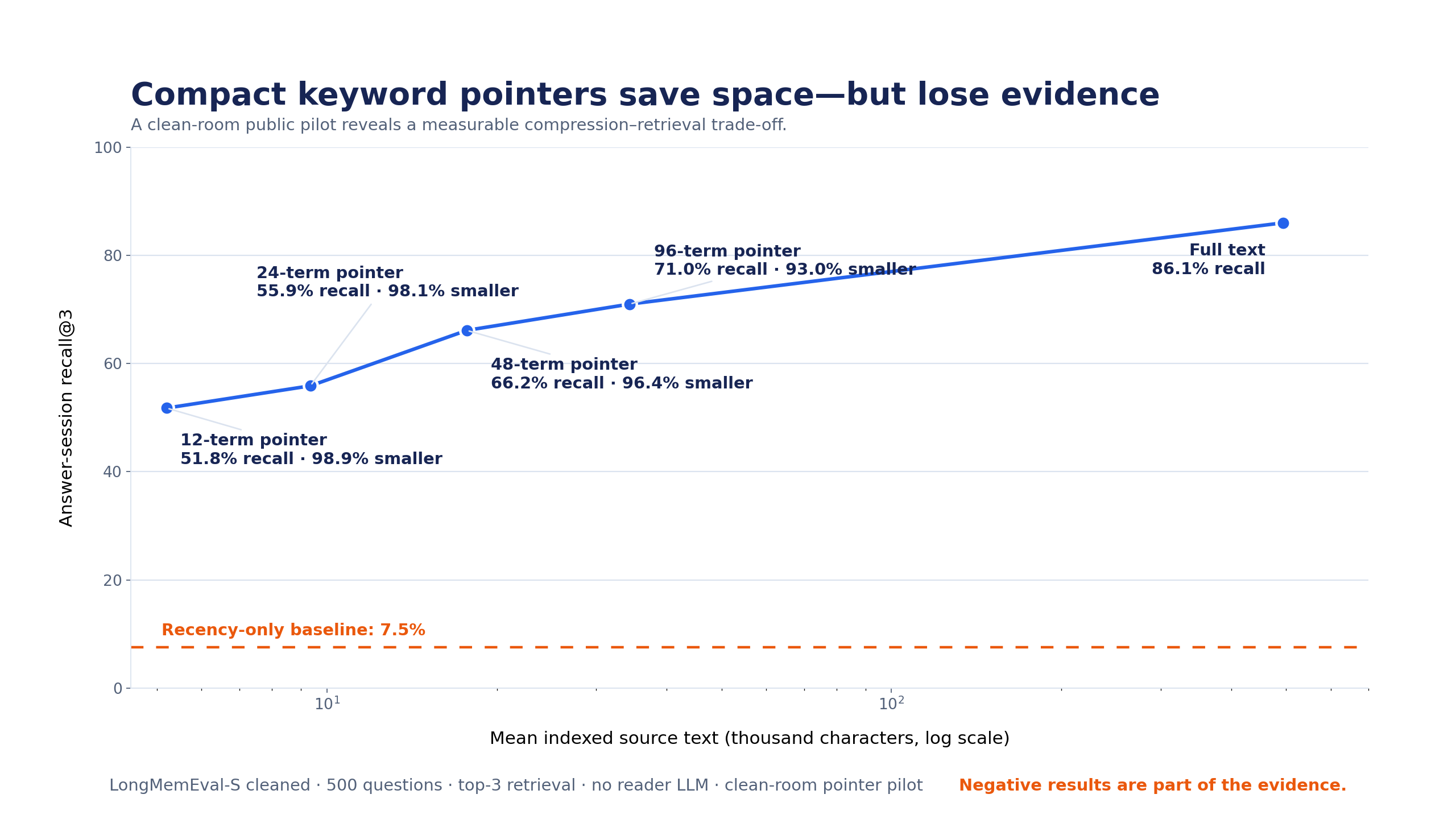
| Condition | Answer-session recall@3 | Mean indexed source text |
|---|---|---|
| most recent 3 sessions | 7.5% | no search index |
| full-session BM25 | 86.1% | 493,948 chars |
| 48-keyword pointer BM25 | 66.2% | 17,691 chars |
| 96-keyword pointer BM25 | 71.0% | 34,368 chars |
The 96-keyword pointer used 93.0% less indexed source text but lost 15.0
percentage points of recall. That is a useful negative result: naive keyword
compression is not enough. The run used no reader LLM, so it makes no QA,
reasoning, or full-architecture claim. See the
method, all ablations, manifests, and raw retrieval records.
Capacity simulation
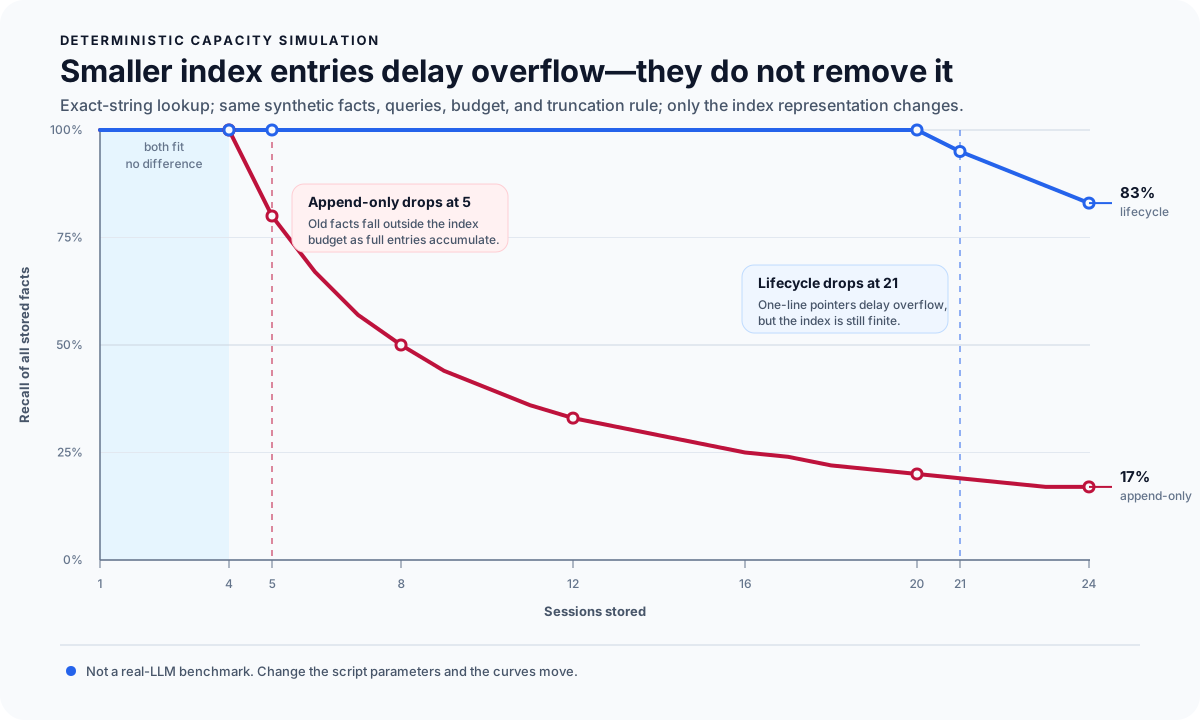
The capacity simulation performs exact
string lookup under a fixed character budget. With its disclosed defaults, the
first recall drop occurs at session 5 for full append-only entries and session
21 for one-line pointers. That result demonstrates a storage-budget mechanism;
it does not measure semantic retrieval, reasoning quality, or real-agent
performance.
python3 evidence/lifecycle_under_budget.py
See the evidence notes for the falsifier and limitations.
The preregistered comparison protocol for release-grade external validation is
in benchmarks/. An end-to-end QA result table remains
absent until the controlled reader-model protocol is run.
Optional action checks
Separately from the memory-performance scoreboard, the installable package was
evaluated on 20 deterministic contract cases under 21 conditions: a flat
retrieval control, ten cumulative additions, and ten leave-one-out removals. No
LLM, external API, private data, or external judge was used.
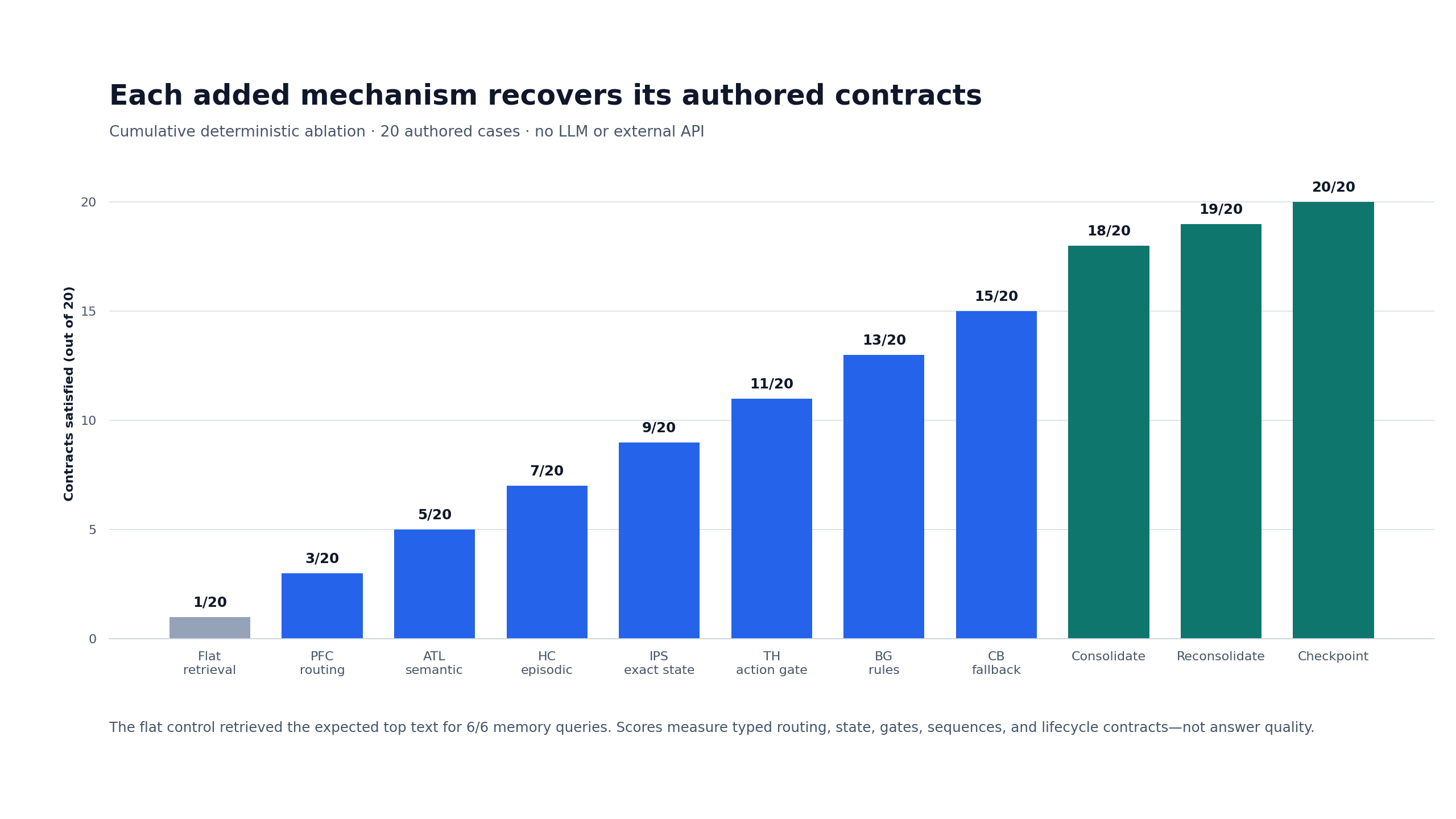
The all-ten condition satisfied 20/20 authored contracts and the flat control
satisfied 1/20. Importantly, the flat control still retrieved the expected top
text in all 6/6 memory queries. Its lower total reflects missing typed routing,
exact-state, gate, fallback-sequence, and lifecycle contracts, not failed text
retrieval. Each cumulative addition recovered its designated cases, and each
leave-one-out removal failed the corresponding cases.
This verifies that the ten tested software responsibilities are distinguishable
and executable. It does not measure answer quality, autonomous lifecycle
management, or superiority over RAG. See the report, 420 raw records, summary,
and manifest.
What still needs to be tested
The primary missing evidence is a controlled, end-to-end memory-management QA
comparison: can an agent retain, retrieve, update, scope, abstain, and resume
more reliably under the same reader and budget? The next release-grade run will
hold the reader model, prompt, context budget, dataset split, and scoring
procedure constant across:
- no external memory;
- append-only or full-history memory;
- summarization/compaction;
- a standard retrieval baseline; and
- the Brain-AI lifecycle reference implementation.
The primary benchmark is
LongMemEval, which tests information
extraction, multi-session reasoning, knowledge updates, temporal reasoning, and
abstention. Follow-up evaluation will use
MemoryAgentBench for retrieval,
test-time learning, long-range understanding, and conflict resolution.
LongMemEval-V2 is reserved for the
heavier workflow- and environment-memory evaluation.
No top-line performance claim will be added without complete per-item outputs,
cost and latency reporting, controlled baselines, and a reproducible run
manifest.
Roadmap
The current source is a local adoption workflow and typed memory kernel with an
opt-in, project-scoped session loop for Codex and Claude Code. The loop
automates recall and checkpoint timing; it is not a background service and does
not infer truth from a transcript. Planned work is:
- add long-run latency, contention, retry, and real-host compatibility tests
in addition to the current deterministic and subprocess fixtures; - expose a first-party review queue and clearer selection/omission reasons for
lifecycle candidates; - add token-aware budgeting alongside the current hard byte bound and measure
retrieval plus reader accuracy under equal budgets; - expand host adapters only where project identity, event semantics, and
ownership can stay explicit; and - provide compact, split, archive, and verified-delete adapters with a tested
retention workflow.
Authentication for shared deployments, domain-ontology reasoning, and entity
merge/versioning remain later hardening work. The current scope is an
installable, review-first local memory system with a supervised automatic
session loop, not an automatic truth engine or a multi-user memory service.
Related work
- CoALA: Cognitive Architectures for Language Agents
(arXiv:2309.02427) provides the working,
episodic, semantic, and procedural taxonomy that this repo substantially
shares. - MemGPT (arXiv:2310.08560) provides
self-directed paging between limited main context and external context. This
repo does not yet provide autonomous paging. - Generative Agents
(DOI) uses a memory stream and
reflection process analogous to the consolidation channel here. - Complementary Learning Systems
(DOI) and working-memory
research motivate the fast episodic / slower semantic distinction.
The comparison is qualitative. The deployed system, internal A/B results, and
public retrieval pilot do not establish that the full architecture outperforms
those systems.
Where to look
| Path | What it contains |
|---|---|
| docs/01-the-mapping.md | seven components and two channels |
| docs/02-memory-lifecycle.md | four representations, seven operations, host handoffs, and health metrics |
| docs/03-governance-tiers.md | advisory, guarded, and enforced tiers |
| docs/04-principles.md | short judgment-bound operating principles |
| docs/05-runtime.md | installable memory kernel, stores, routing, lifecycle, and optional action bridge |
| docs/06-adapters-and-observer.md | Smart Connections compatibility and clean-room Command Center |
| docs/07-mcp-server.md | provider-neutral MCP tools, resources, setup, and security boundary |
| docs/08-autonomous-loop.md | opt-in automatic recall, action checks, checkpoints, host setup, and privacy boundary |
| src/brain_ai_memory/ | public Python runtime implementation |
| tests/ | kernel integration, adapter, and supporting contract tests |
| CHANGELOG.md | release-level changes and evidence boundaries |
| schema/brain_components.yaml | machine-readable component ontology |
| templates/ | copy-paste memory, rule, and hook skeletons |
| examples/ | tiny runnable cases using synthetic data |
| evidence/ | operational snapshot, internal A/B summary, and capacity simulation |
| benchmarks/ | memory-evaluation protocol and pilots, plus supporting contract verification |
Try it on a real agent
Tell us which host you use and which recurring memory failure you want to stop.
Open an issue if memory
still goes stale, crosses projects, or fails to resume. If it solves a problem
you keep seeing, a star helps the next person find it.
Contributing
The one hard rule is clean-room: no real personal or sensitive data enters the
tree. See CONTRIBUTING.md.
Security
Please report vulnerabilities through GitHub's private vulnerability reporting
rather than a public issue. See SECURITY.md.
Citation
If this architecture or its evaluation protocol supports your work, use the
metadata in CITATION.cff.
Reviews (0)
Sign in to leave a review.
Leave a reviewNo results found