agente-pagokit
Health Gecti
- License — License: MIT
- Description — Repository has a description
- Active repo — Last push 0 days ago
- Community trust — 31 GitHub stars
Code Basarisiz
- network request — Outbound network request in hooks/checks/__tests__/agentic-token-scope.test.js
- process.env — Environment variable access in hooks/checks/__tests__/currency-mismatch.test.js
- fs.rmSync — Destructive file system operation in hooks/checks/__tests__/einvoice-obligation.test.js
- process.env — Environment variable access in hooks/checks/__tests__/einvoice-obligation.test.js
- fs module — File system access in hooks/checks/__tests__/einvoice-obligation.test.js
- process.env — Environment variable access in hooks/checks/__tests__/existing-webhook-check.test.js
- fs module — File system access in hooks/checks/__tests__/existing-webhook-check.test.js
- fs module — File system access in hooks/checks/__tests__/gitignore-check.test.js
Permissions Gecti
- Permissions — No dangerous permissions requested
Bu listing icin henuz AI raporu yok.
Claude Code plugin that picks and implements the right payment method for your app — from your terminal. 42 providers, 136 payment rails, and deterministic validators that block insecure payment code as it is written.
The agent that picks and implements the right payment method for your app — from your terminal, with Claude Code.



tododeia.com · @soyenriquerocha · [email protected]
🇪🇸 Leer en español · 📖 About · 🗺️ Coverage
Why it exists.
Every guide frames payment integration as a choice problem: thirty gateways, pick one.
Choosing takes an afternoon. What takes weeks — and what silently fails in production — is
everything after:
- A webhook that verifies a signature but never checks a timestamp, so a captured event is replayable forever.
- A webhook verified against the API key instead of the signing secret. It fails every event, and the developer goes off to debug the hashing algorithm.
amount * 100on a Japanese customer. JPY has no minor unit, so that is a 100× overcharge.- A refund endpoint on a Pix integration, where refunding a charge is not an operation that exists.
- A
payment_intent.succeededhandler that grants access, on a URL anyone can post to.
None of these throw. Most pass code review. PagoKit exists to make them hard to write.
It analyses your project, asks three questions, and generates a vertical-complete integration:
frontend, checkout endpoint, authenticated webhook, database migration, customer portal, refund
path, error mapper, production checklist and an audit trail.
Everything runs locally. No account, no API key, no telemetry. The only network calls are the
ones your generated code makes to your own provider.
Three deterministic engines.
An LLM asked to write payment code produces something plausible. Plausible is exactly the
failure mode that matters here. So the parts that must be correct aren't left to the model —
they're ordinary programs, with tests.
| What it does | Why it isn't the model's job | |
|---|---|---|
| Validators | Node checks on PreToolUse / PostToolUse hooks that block an insecure write |
The model cannot argue with a non-zero exit code |
| Advisor | scripts/advise.js — a pure function from situation to ranked providers |
Same input, same answer, every rejection carries its reason. "Why not X?" has an exact answer |
| Signer | scripts/sign-event.js — generates a validly signed event for any provider |
Testing a handler means a valid event accepted, a forged one rejected, a replayed one rejected |

What it knows.
42 providers · 136 payment methods · 74 countries (71 with a local provider) · 106 currencies with their ISO 4217 exponent · 6 webhook verification families in use.
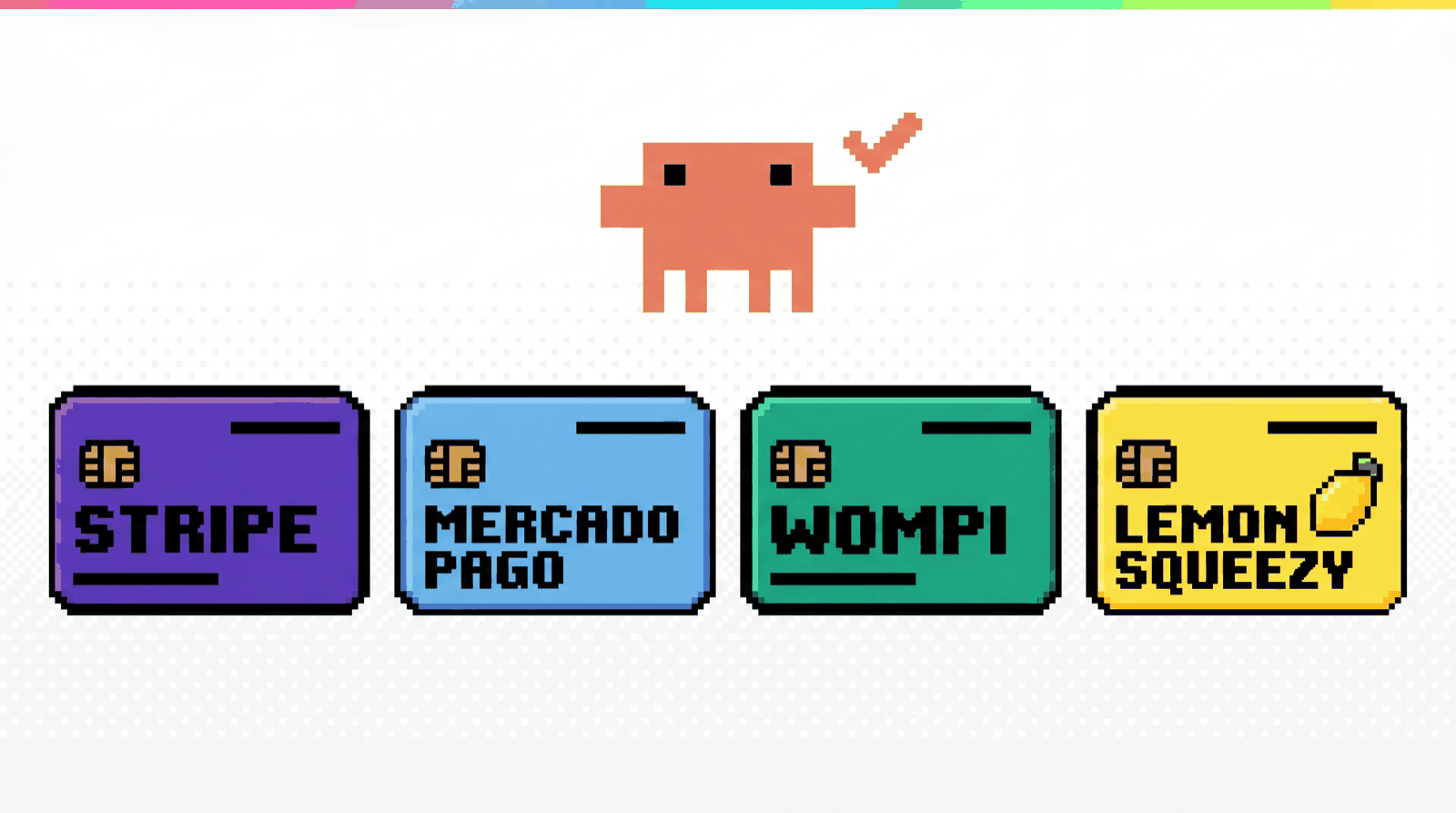
What PagoKit writes for you
| Provider | Level | Role | Buyer coverage | Subscriptions | MoR | Onboarding |
|---|---|---|---|---|---|---|
| Lemon Squeezy | full build | mor | Global | ✓ | ✓ | application_review |
| Mercado Pago | full build | psp | AR · BR · CL · CO · MX · PE · UY | ✓ | — | self_serve |
| Stripe | full build | psp | US · CA · UK · EU · MX · BR · SG · AU · … | ✓ | — | self_serve |
| Wompi | full build | acquirer | CO | — | — | application_review |
What PagoKit knows and recommends, but doesn't write
Another 38 providers with verified catalog data: the advisor compares them, computes their fees and explains their constraints — and tells you plainly that the code is yours to write. They move up to build once their signature scheme is verified and transcribed.
- Wave 1 — Asaas · Bold.co · Conekta · Kushki · Paddle (Paddle Billing) · Polar
- Wave 2 — Culqi · Flow.cl · Pagar.me · Transbank Webpay Plus · dLocal Go
- Wave 3 — Fintoc · Mobbex · Placetopay (Evertec) · Recurrente · ePayco
- Wave 4 — Adyen · GoCardless · Mollie · Redsys (TPV Virtual) · Revolut Merchant (Revolut Business)
- Wave 5 — Airwallex · Antom (Ant International — Alipay+ / Alipay / WeChat Pay acquiring) · Midtrans (GoTo Financial) · PayMongo · Razorpay · Xendit
- Wave 6 — Flutterwave · Paymob · Paystack · Safaricom M-Pesa (Daraja API) · Tap Payments · Yoco
- Wave 7 — Authorize.Net (Visa Acceptance) · Hyperswitch (Juspay) · Lago · RevenueCat · Square
Payment methods, because outside card-mature markets the right question is which rail
you need, not which gateway:
| Category | Methods | Examples |
|---|---|---|
| Cards | 8 | Bancontact · Credit/Debit Card · mada · Meeza · OmanNet |
| Wallets | 43 | Airtel Money · Alipay · AlipayHK · Alipay+ · Apple Pay |
| Bank transfer | 31 | ACH Credit · Botón Bancolombia · Bancolombia Transfer · BenefitPay · Bre-B |
| QR / instant | 11 | Bizum · CoDi · DuitNow · NQR (NIBSS QR) · PayNow |
| Cash vouchers | 14 | Alfamart / Indomaret (cash over counter) · Baloto · Boleto Bancário · Efecty · Fawry |
| Direct debit | 8 | ACH Direct Debit · Bacs Direct Debit · BECS Direct Debit (Australia) · PAC (Chile direct debit) · PayTo |
| Mobile money | 2 | M-Pesa · MTN MoMo |
| BNPL | 11 | Afterpay / Clearpay · Akulaku PayLater · BillEase · Billie (B2B invoice / BNPL) · EMI / Cardless EMI (India) |
| Crypto | 2 | USDC Stablecoin · USDT Stablecoin |
| Open banking | 1 | Pay by Bank (open banking) |
| Card present | 1 | Card present (terminal) |
| Benefits (EBT/HSA) | 2 | SNAP EBT · HSA / FSA card |
| Store billing | 2 | Apple In-App Purchase · Google Play Billing |
Full country × provider matrix: docs/COVERAGE.md.
What it will and won't build for you.
A wide catalog is only useful if it's honest about its own edges. Every provider carries an
integration level, and the advisor states it every time:
| Level | What happens |
|---|---|
| build | PagoKit writes the full idiomatic integration. |
| generic | PagoKit writes a working scaffold from the provider's verification family, and tells you it's a scaffold. |
| advise | PagoKit gives you the recommendation, the fee maths and a checklist — and says plainly that the code is yours to write. |
Backing that up is one rule the build enforces:
If a provider's webhook scheme isn't verified against its own documentation
(evidence.confidence != "high"), the generator must not emit a signature verifier.
It emits re-fetch, event-id dedup, and a loud TODO instead.
A verifier built on an unverified scheme is worse than none: it looks correct and accepts
forged events.
How it works.
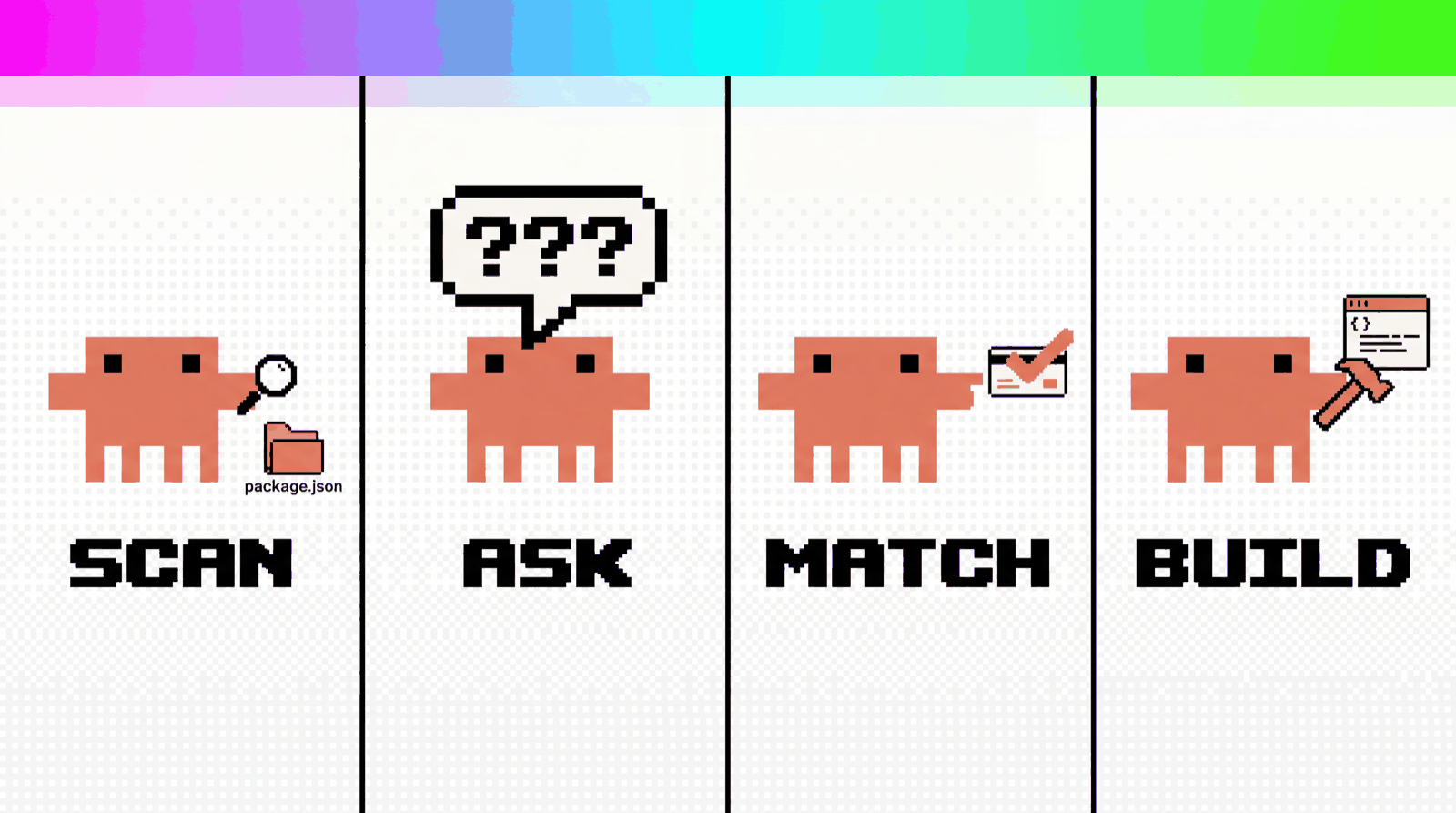
| Step | What happens |
|---|---|
| 1. SCAN | Reads package.json, route files, DB schema. Detects stack, ORM, deploy target, language, and use cases like marketplace or mobile IAP. |
| 2. ASK | Three questions, capped at five. Country and buyers · one-time or recurring · which local rails you need. |
| 3. MATCH | Runs the ranking engine. Hard filters first — including can you even open an account there, and can you get keys in time. Sanctioned markets are refused, not ranked. |
| 4. BUILD | The integration-specialist subagent writes the files, with the validators watching every write. |
Installation.
git clone https://github.com/Hainrixz/agente-pagokit ~/agente-pagokit
cd ~/your-project
claude --plugin-dir ~/agente-pagokit
Then run /pagokit:start.
Requires Node.js ≥ 18 and Claude Code 2.x.
Deterministic security.
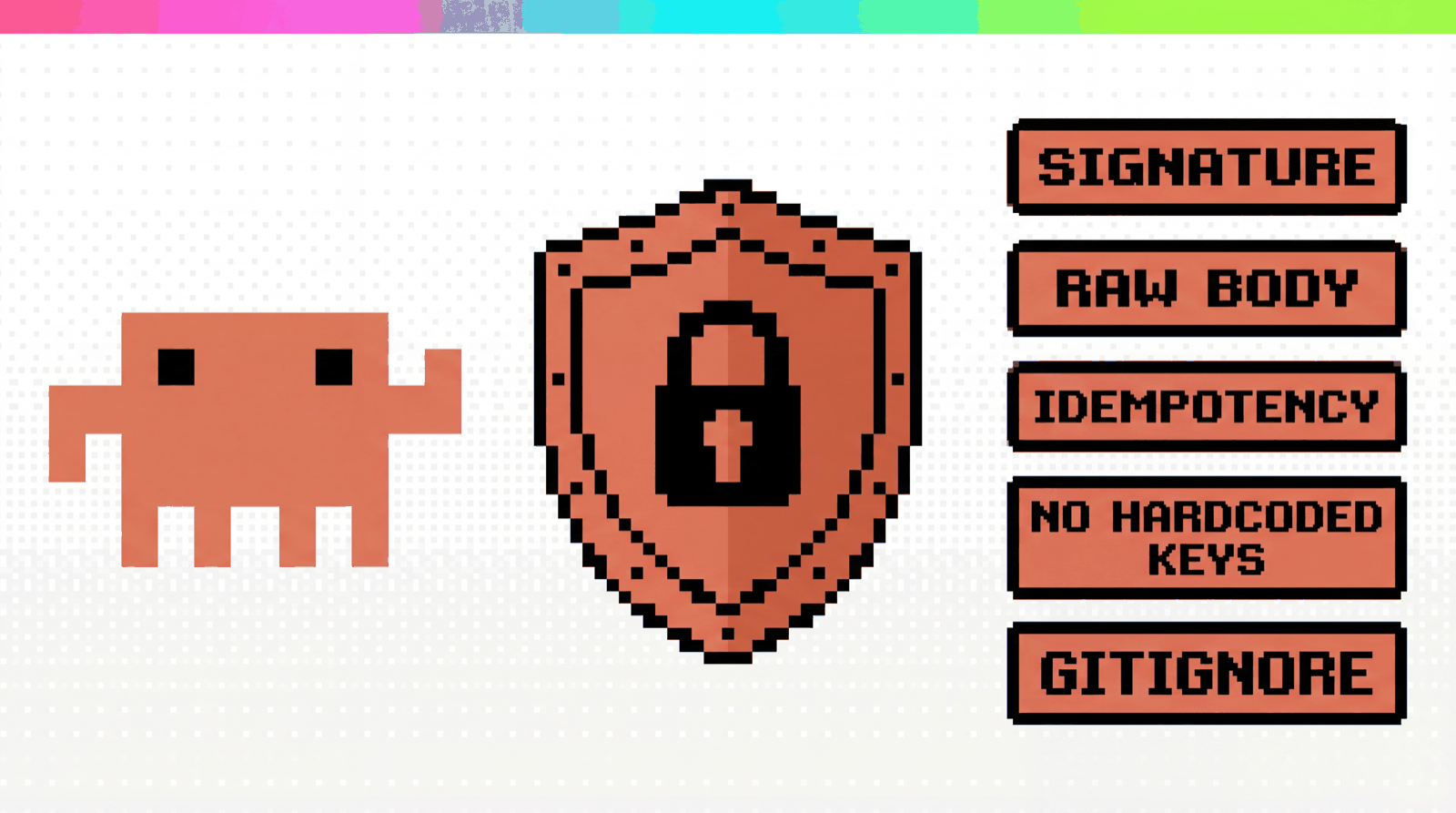
Security rules aren't advice in a markdown file the model may or may not follow. They're Node
processes wired to Claude Code's hooks. A write that breaks one is denied.
| Blocks | Because |
|---|---|
| A webhook handler with no signature verification | Anyone who knows the URL can mint a succeeded event |
request.json() before verifying |
The HMAC covers the exact bytes; parsing first breaks it permanently and silently |
Math.random() or Date.now() as an idempotency key |
Guessable keys collide across tenants and duplicate charges survive retries |
| A live key inline in source | Git history, screenshots, Sentry traces |
.env written before .gitignore covers it |
The single most common credential leak there is |
amount * 100 on a zero-decimal currency |
A 100× overcharge that nothing throws on |
=== on a signature |
A timing oracle — and on shared-secret schemes it is the whole security control |
| Card data crossing your own server | Moves you from PCI SAQ A to SAQ D, a six-figure project |
| A refund call on an irreversible rail | On Pix or SPEI, "refund the charge" isn't an operation |
| A webhook route that would overwrite an existing one | Clobbering someone's Clerk or Inngest endpoint |
When the tool is wrong and you're right:
// pagokit-ignore: webhook-has-signature -- custom verifier in lib/auth/payments.ts
Every bypass is logged to .pagokit/audit.log, so it's a decision on the record rather than a
silent hole.
Full rule set with enforcement tiers: SECURITY_RULES.md.
Commands.
| Command | What it does |
|---|---|
/pagokit:start |
The wizard: analyse, ask, recommend, implement. |
/pagokit:test |
Sends a valid, a forged and a replayed event to your local handler. Works for every provider whose scheme is signable — not just the one with a CLI. |
/pagokit:doctor |
Read-only audit of an existing integration: credentials, key modes, signature verification, routed events, schema, replay protection. |
What gets generated.
For a Next.js App Router + Prisma project:
app/api/checkout/route.ts        Server-side price lookup · UUID idempotency · correct minor units
app/api/webhook/<provider>/      Raw body · signature · replay window · event-id dedup · fast ack
app/api/portal/route.ts          Customer self-service (subscriptions)
app/api/refund/route.ts          Authorisation-checked — or the payout path on irreversible rails
components/CheckoutButton.tsx    Hosted, embedded or widget, per the provider
lib/payments/<provider>.ts       SDK init · API version pinned
lib/payments/errors.ts           Cross-provider error taxonomy · ES/EN
prisma/schema.prisma             payments · subscriptions · customers · idempotency_keys
                                 · webhook_events_processed
payment-page-scripts.json        PCI DSS 4.0.1 §6.4.3 authorised-script inventory
.env.example                     Test-mode values only
PAGOKIT_INTEGRATION.md           Audit trail · events routed · what's still TODO
PAGOKIT_PRODUCTION_CHECKLIST.md  Steps to go live
PAGOKIT_TAX_TODO.md              Only where the market mandates e-invoicing
Other stacks adapt the structure; the guarantees don't change.
Local rails it knows about.
Outside card-mature markets, the rail matters more than the gateway. The advisor recommends the
rail before the provider:
| Country | Dominant instant rail |
|---|---|
AR |
Transferencias 3.0 |
AU |
PayTo |
BR |
Pix |
CO |
PSE (Pagos Seguros en Línea) |
CR |
Sinpe Movil |
DE |
SEPA Instant Credit Transfer |
ES |
Bizum |
FR |
SEPA Instant Credit Transfer |
HK |
FPS |
IN |
UPI |
IT |
SEPA Instant Credit Transfer |
KE |
M-Pesa |
MX |
SPEI |
NG |
NIBSS Instant Payment |
NL |
SEPA Instant Credit Transfer |
PE |
Yape |
PT |
MB WAY |
SG |
PayNow |
UK |
Faster Payments |
US |
RTP (Real-Time Payments) |
ZA |
PayShap |
Roadmap.
Waves are ordered by evidence quality × rails unlocked ÷ template cost, not by market size. A
provider whose signature scheme can't be verified isn't a wave item — it's a research ticket.
| Wave | Focus | What it unlocks |
|---|---|---|
| 0 ✅ | Foundation | Typed webhook specs, the recommendation engine, the event signer, the currency exponent table, catalog-driven validators |
| 1 | MoR continuity + LATAM verification families | Paddle · Polar · Conekta · Bold · Asaas · Kushki → Ecuador, and the RSA / body-transform / shared-secret families a dozen later providers reuse |
| 2 | "The payload is not authoritative" | Transbank · Flow · dLocal Go · Culqi · Pagar.me → Chile and Peru properly, plus the return_url_commit and ping_then_poll models |
| 3 | LATAM long tail | Fintoc · Recurrente · ePayco · Mobbex · Placetopay → Central America gets a real answer |
| 4 | Europe self-serve | Mollie · Revolut · Redsys · GoCardless · Adyen → iDEAL, Bancontact, BLIK, Bizum, SEPA and Bacs mandates |
| 5 | Asia | Razorpay · Xendit · Midtrans · PayMongo · Airwallex · Antom → UPI, QRIS, PayNow, PromptPay, Alipay+ |
| 6 | Africa & MENA | Paystack · Yoco · Flutterwave · Paymob · Tap · M-Pesa → mada, KNET, M-Pesa, MoMo, PayShap |
| 7 | New categories | Square · Authorize.Net · RevenueCat · Lago · Hyperswitch · Forage → card-present, high-risk verticals, mobile IAP, metered billing, orchestration, SNAP EBT |
Development.
npm install
npm run verify            # everything: schemas, integrity invariants, all test suites
npm run generate:all      # regenerate every derived file
./scripts/dev-link.sh /path/to/test-project
| Gate | Catches |
|---|---|
validate:data |
Schema violations, duplicate ids, dangling references, coverage lies, and the two invariants: no LLM claim marked high-confidence, no build-level provider without a verified scheme |
test:validators |
Validator fixtures — the violation, the correct code, the near-miss that must not false-positive, the bypass |
test:advisor |
Every wrong recommendation PagoKit could give, locked as a fixture |
test:signatures |
Per provider: sign → verify → and reject a tampered body, a wrong secret, a missing header, a replay |
check:* |
Drift in any generated file — coverage, signatures, doctor table, README tables, catalog |
Nothing generated is edited by hand. See CONTRIBUTING.md.
Why the file count doesn't explode

Providers differ in a small number of ways, and those ways repeat. Writing one template per
provider makes the file count providers × stacks × billing modes. Writing one fragment per
capability family makes it additive — and adding provider 41 costs a JSON entry plus a
small override, not two dozen documents.
Security.
Found a vulnerability? Please don't open a public issue. Email [email protected] or use
GitHub Security Advisories.
Response within 48 hours. Full policy: SECURITY.md.
Author.
Enrique Rocha · tododeia.com · @soyenriquerocha · [email protected]
AI consulting · agents · automations · sprints in Miami.
If it saved you days, send me a screenshot. If it broke something, open an issue.
MIT · 2026 Enrique Rocha · tododeia.
Yorumlar (0)
Yorum birakmak icin giris yap.
Yorum birakSonuc bulunamadi