Reminal
Health Gecti
- License — License: AGPL-3.0
- Description — Repository has a description
- Active repo — Last push 0 days ago
- Community trust — 140 GitHub stars
Code Uyari
- network request — Outbound network request in cloudflare/src/index.ts
- network request — Outbound network request in cloudflare/src/rendezvous.ts
- network request — Outbound network request in cloudflare/src/session.ts
Permissions Gecti
- Permissions — No dangerous permissions requested
Bu listing icin henuz AI raporu yok.
Close the lid and walk away — every window, desktop and terminal on your machines, live in any browser. E2E-encrypted, no open ports, no client, no account.
reminal
Every window, desktop and terminal on your machines — live in any browser.
Close the laptop lid and walk away. reminal keeps the machine serving — and hands you its actual apps, not just a shell — in any browser, from anywhere.
No open ports, no keys on disk, nothing to install on the device you're holding.






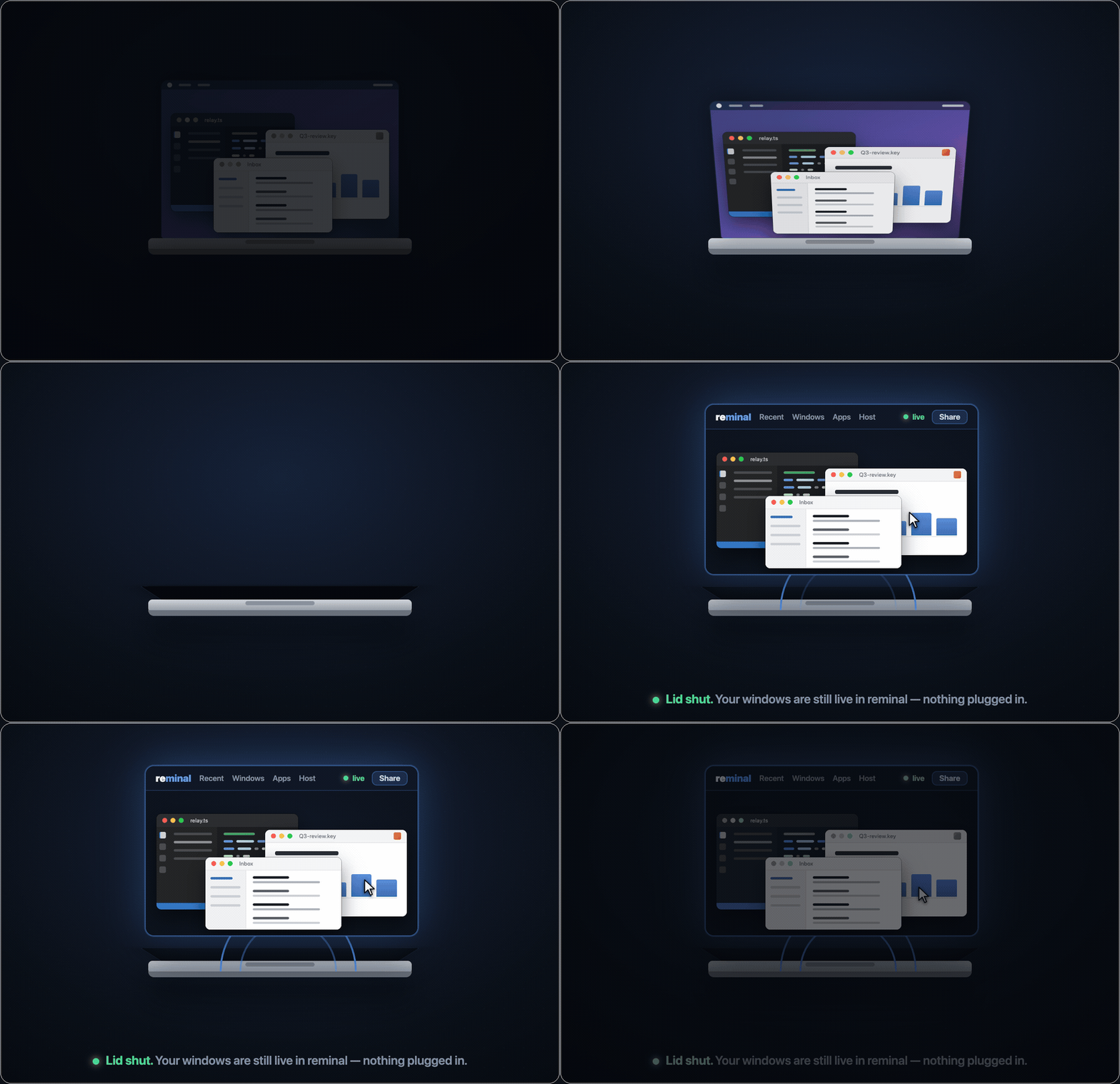
The lid shuts with no monitor and no dongle attached — and the windows keep streaming, live and controllable, into a browser.
No monitor. No dummy plug. No dongle.
Close a MacBook's lid and macOS puts it to sleep — unless it's on power with a monitor and keyboard attached. The usual fix is a hardware "dummy" HDMI plug that fakes a display, or just leaving the lid propped open on your desk.
Closed-lid mode does it in software. Flip it on and leave — no monitor, no dongle, in any order. reminal disables clamshell sleep and, because GUI apps need a screen to draw on, spins up a virtual display the moment the Mac goes headless — so window mirroring keeps working with nothing plugged in. Toggle it off and everything is undone.
Closed-lid mode is macOS-only; everything else below works on macOS, Linux and Windows alike.
Set it up in one line
curl -fsSL https://raw.githubusercontent.com/harshalgajjar/Reminal/main/install.sh | sh
reminal
On Windows (PowerShell):
irm https://raw.githubusercontent.com/harshalgajjar/Reminal/main/install.ps1 | iex
reminal
That's the whole setup — one command on the machine you're leaving behind. Everything else you own is already a client, because the client is a browser.
Reach in and drive the apps
Any app window streams live into your browser — and you don't just watch it, you drive it: cursor, click and right-click, type, scroll, drag, pinch-zoom. Not open yet? Launch any installed app on the host from the Apps menu, then drive it. Or tap Host → View full desktop to run the whole machine at once. On a phone the screen becomes a trackpad — your Mac, fully hands-on, from your pocket.

Real capture, unedited. The phone picks a window, types into it — the words appear in the real app on the Mac — then mirrors the whole desktop. Native capture, streamed peer-to-peer.
60 fps, from a machine that isn't here
And nothing about those windows says stream. Drag it, scrub a video inside it, watch a build scroll past — it stays fluid the whole way, on hotel Wi-Fi or a phone on cellular. Sixty frames a second, 17 ms from its screen to yours.
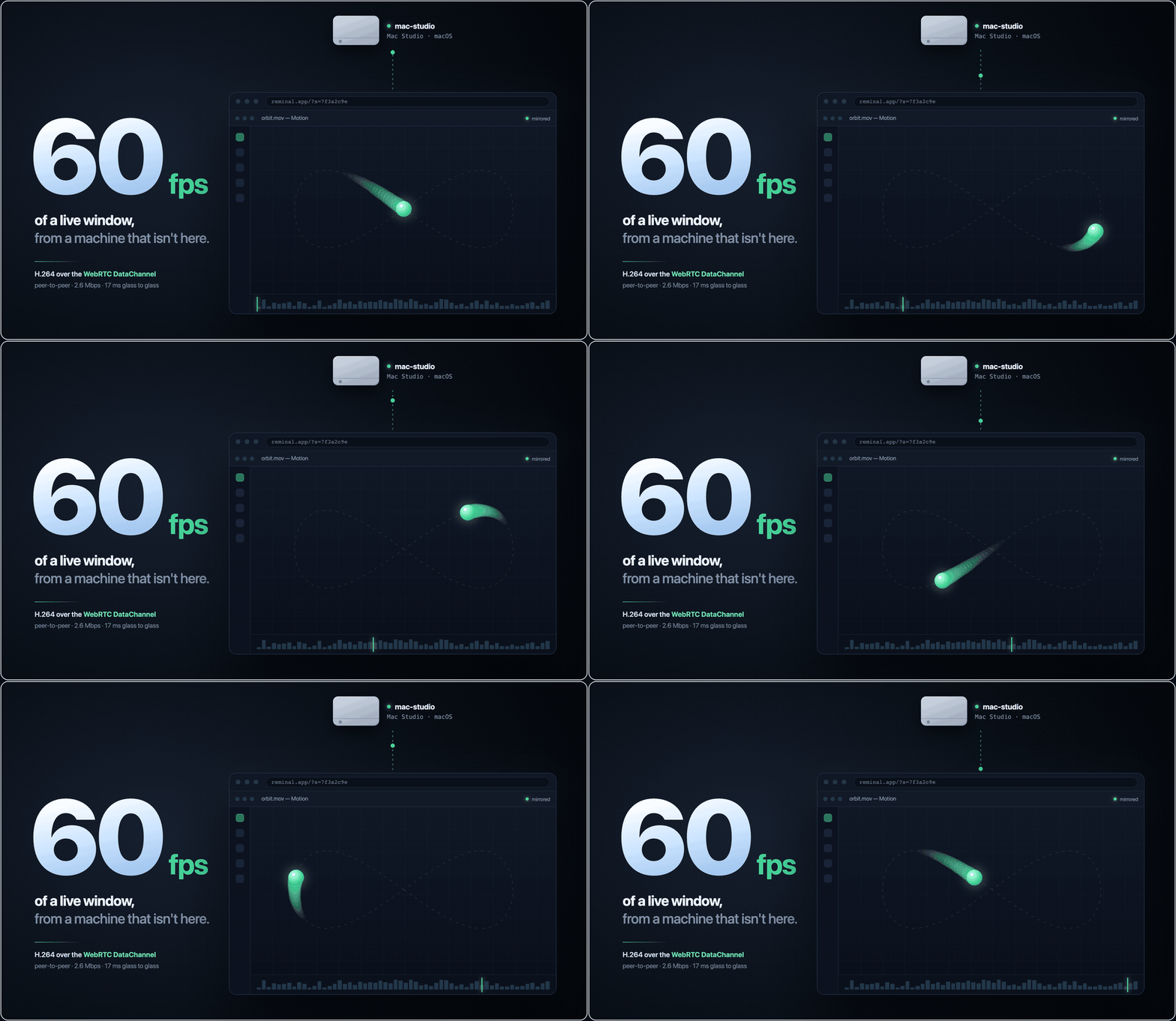
H.264 down the session's own DataChannel — peer-to-peer, about 2.6 Mbps. Relay-only viewers get the same video at 30 fps.
A full terminal, too — scan a QR and you're in
reminal prints a session ID, a PIN, and a QR code. Scan it, and your phone is a full terminal on your machine — real color, touch text-selection, on-screen modifier keys. No port forwarding. No keys to manage. Nothing to install on the phone; the browser is the client.
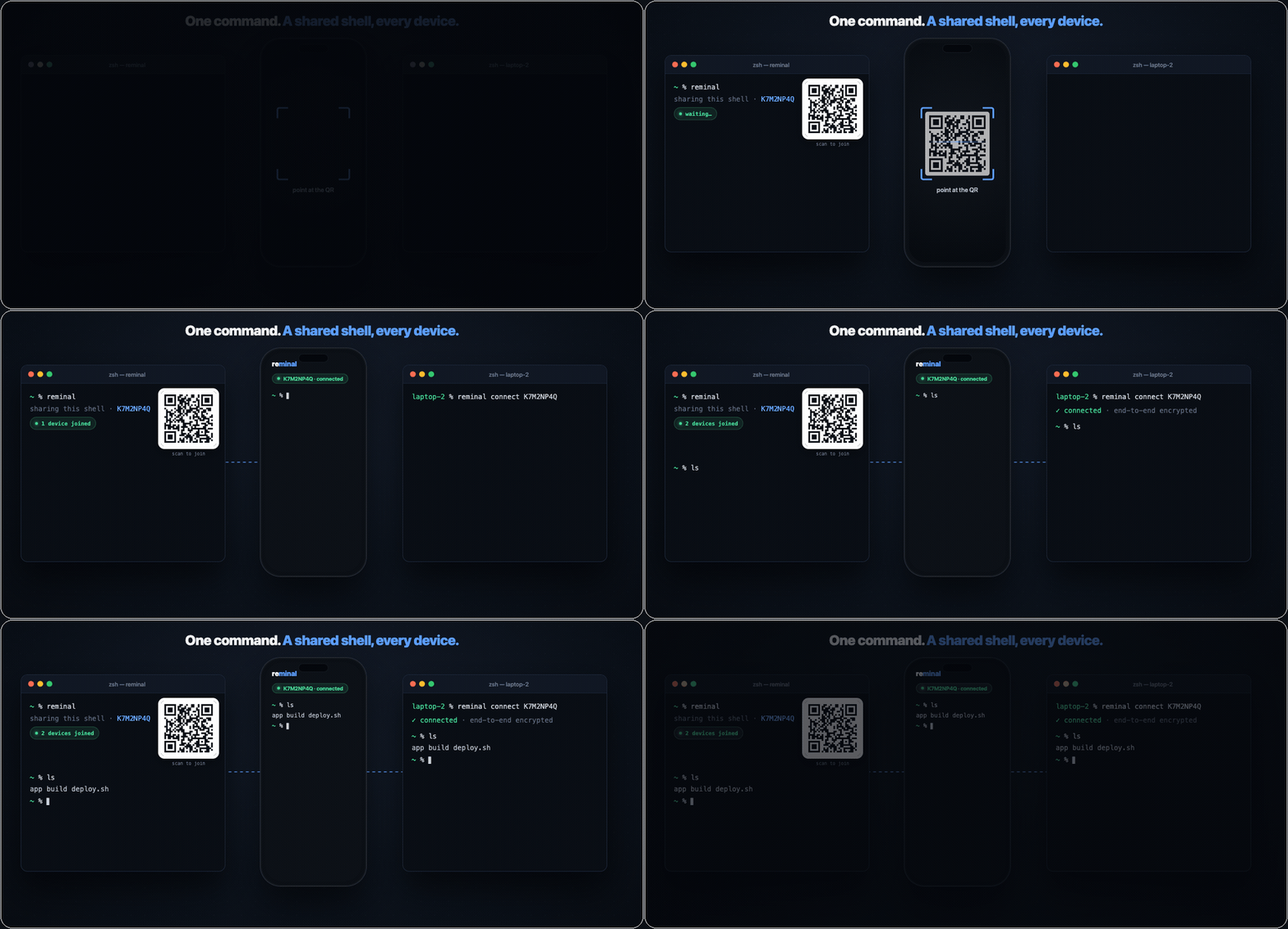
The fastest SSH you'll ever configure — because there's nothing to configure.
Interact with your machines like they're right here
Pop any remote window out onto your desktop and it sits there like its own app window — except it's running on another machine entirely. Line up an editor from your MacBook, a terminal on a cloud box, and a dashboard from the Mac mini at home, and work across all of them as if they were local.
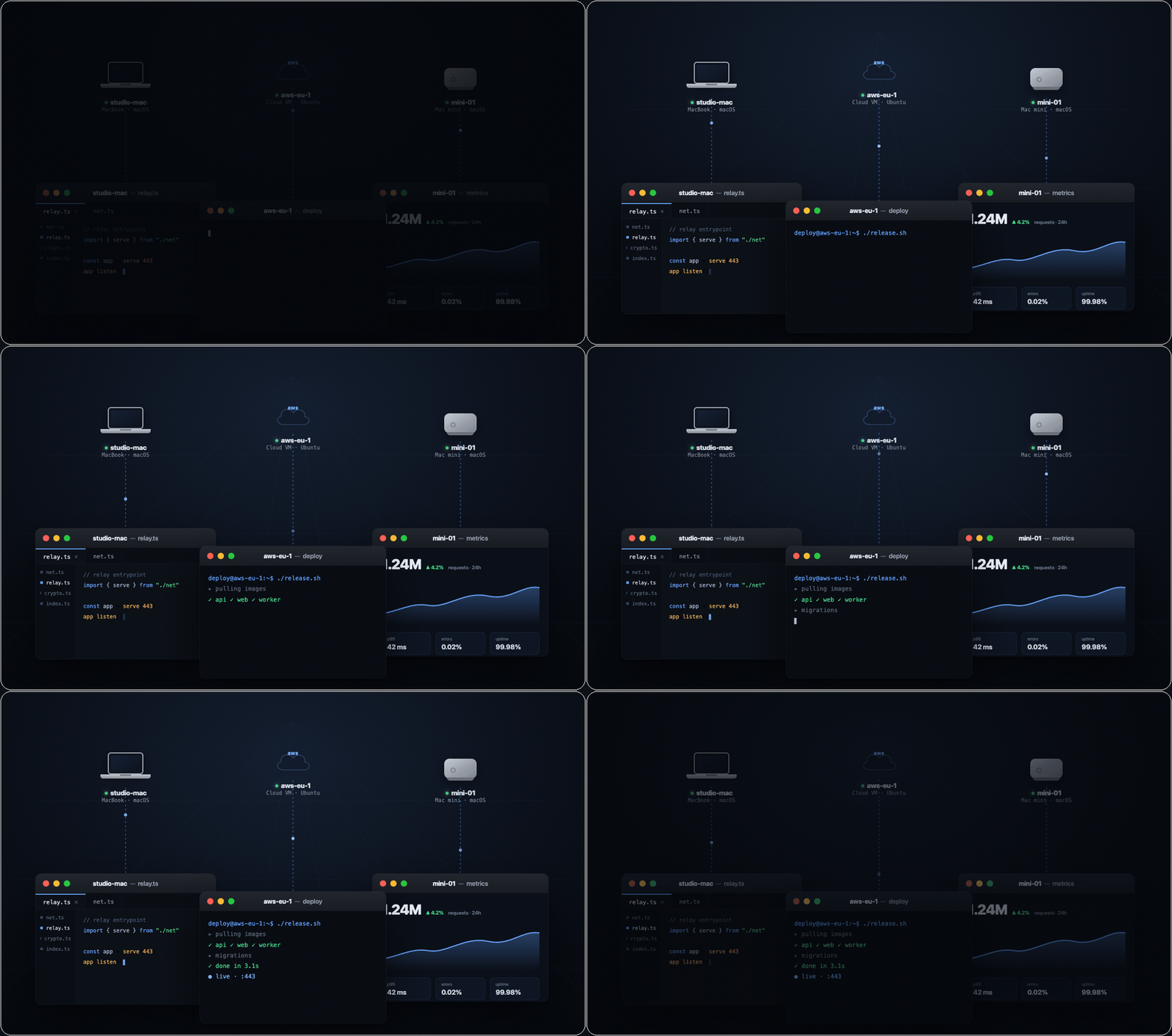
Own your machines. Watch them all.
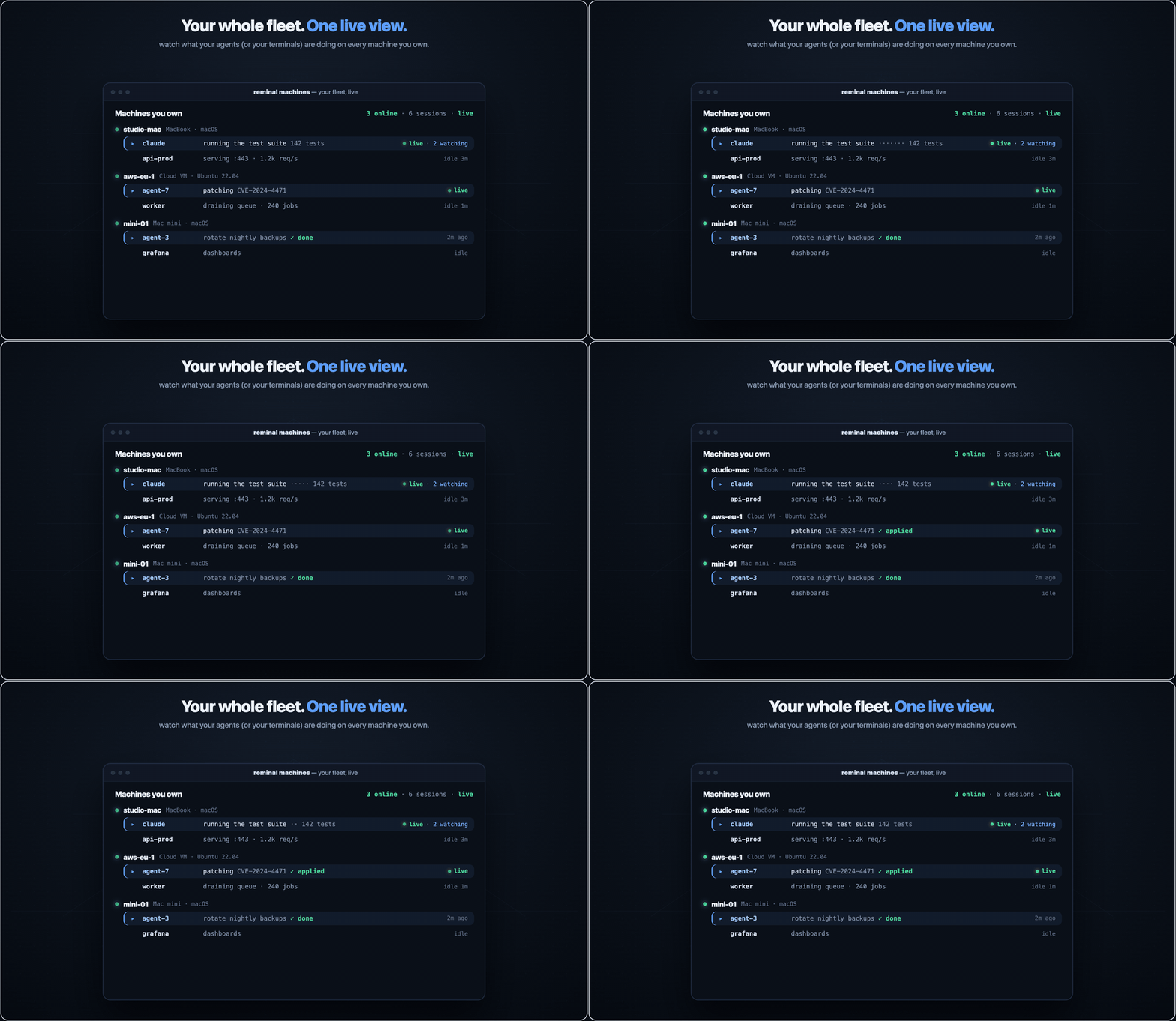
The moment your work spans more than one machine — a rack of servers, or agents let loose on several boxes at once — the hard part isn't starting it, it's seeing it. reminal machines is one live view of everything you own: every machine, every terminal on it, what's running right now, who's watching, how long it's been idle. An agent running a test suite on your laptop, patching a CVE on a cloud VM, and rotating backups on the Mac mini — or just your own sessions — all at a glance. It's on the CLI and in the web Machines panel, where you can jump into any session, rename it, spawn a new one, or kill it on any box.
That single pane works because you own the machines. Enroll a device once — reminal own prints its id, you paste sudo reminal add owner <id> on each machine — and from then on it reaches every session with no PIN. The trust is a per-device key: revocable one at a time, sudo-gated to grant, and the relay still only ever sees ciphertext.
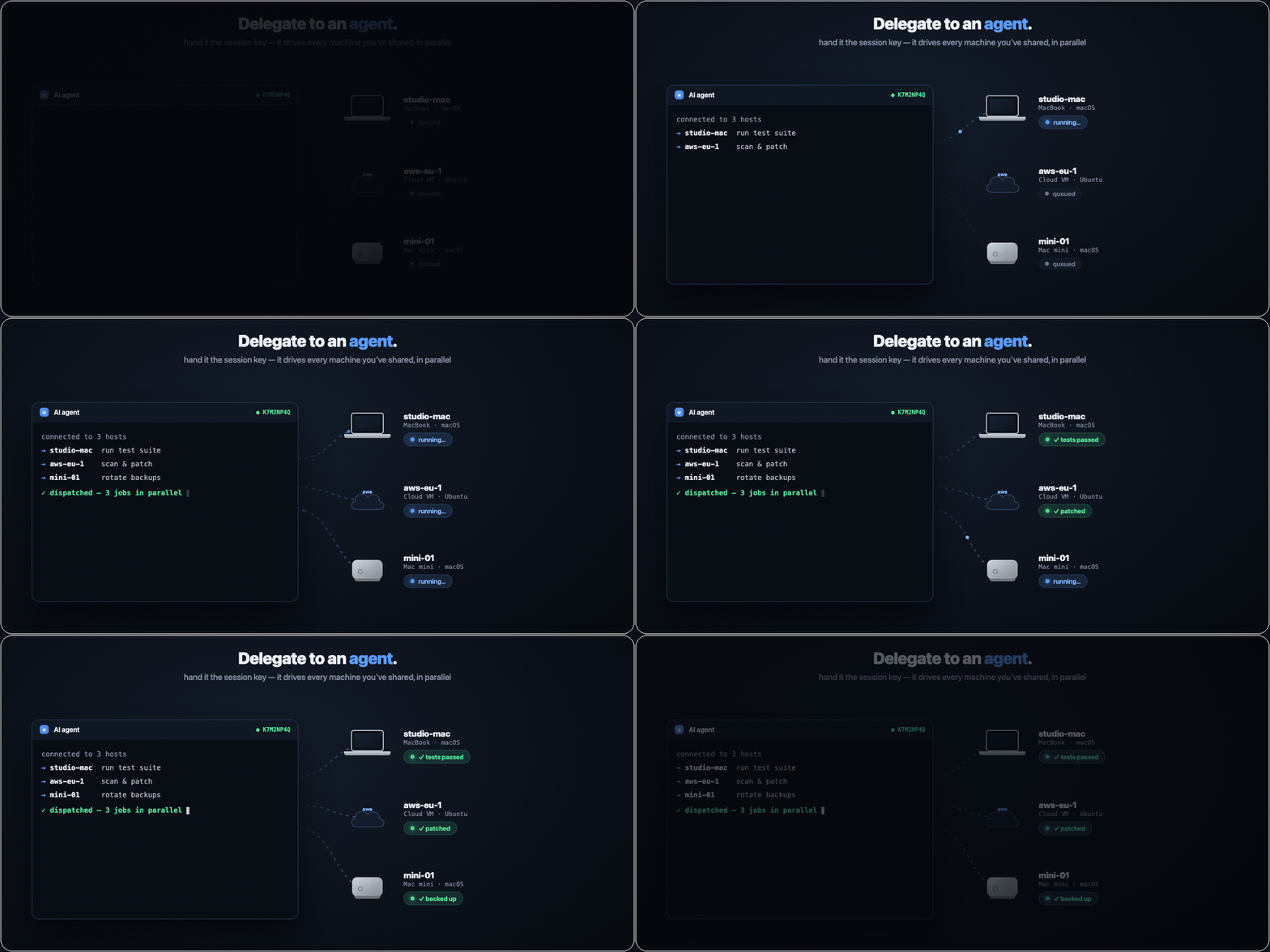
Point an AI agent at your fleet
Hand the session ID and PIN to an agent and it connects like any other viewer — to every machine you've shared. One credential, and it can triage an incident, run scans, and kick off or delegate long-running jobs across all your hardware at once, while you watch it happen in the same browser.
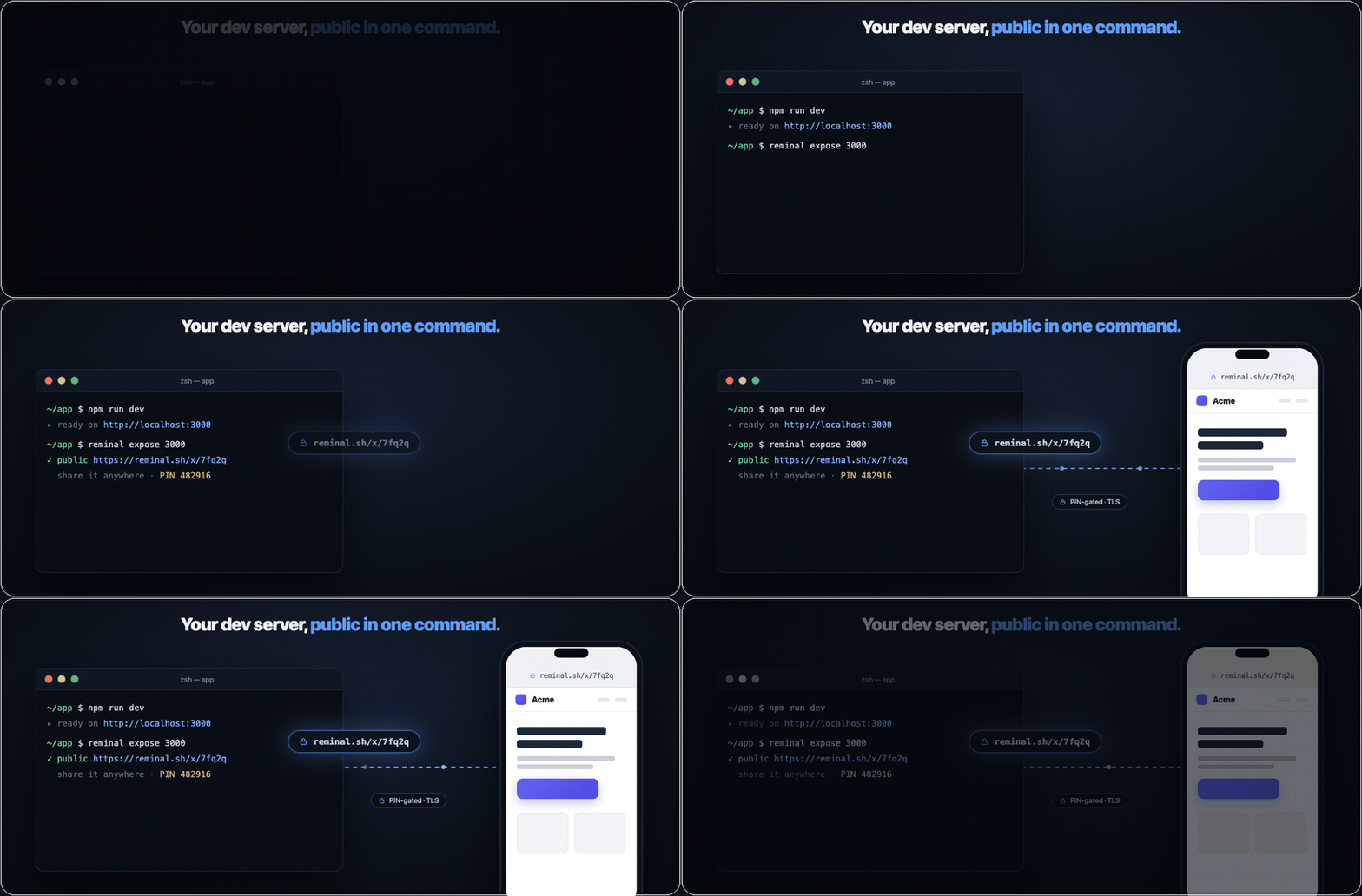
Share a local port with the world
reminal expose 3000 turns whatever's running on localhost into a public HTTPS URL — a dev server, a webhook target, a build to show a client. PIN-gated by default (or --public to open it up), so you can share the link without deploying anything. It's a built-in ngrok, on the tool you already have running.
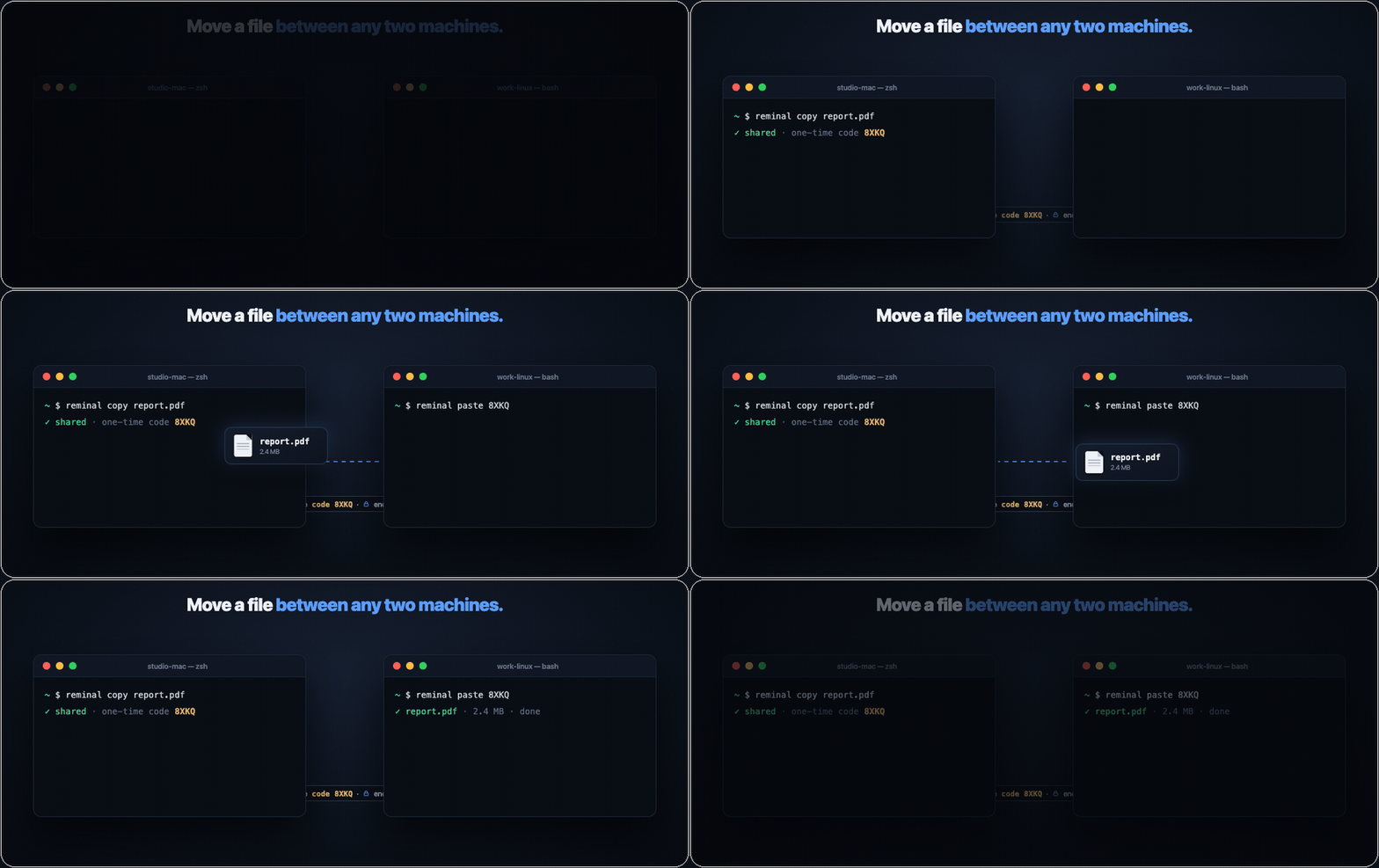
Move a file between any two machines
reminal copy report.pdf on one machine prints a one-time code; reminal paste <code> on another pulls the file down — Mac to Linux, Windows to Mac, laptop to server, anywhere to anywhere. End-to-end encrypted, no cloud drive, no account. AirDrop, for every machine you own.
The last thing you'll install standing at your computer
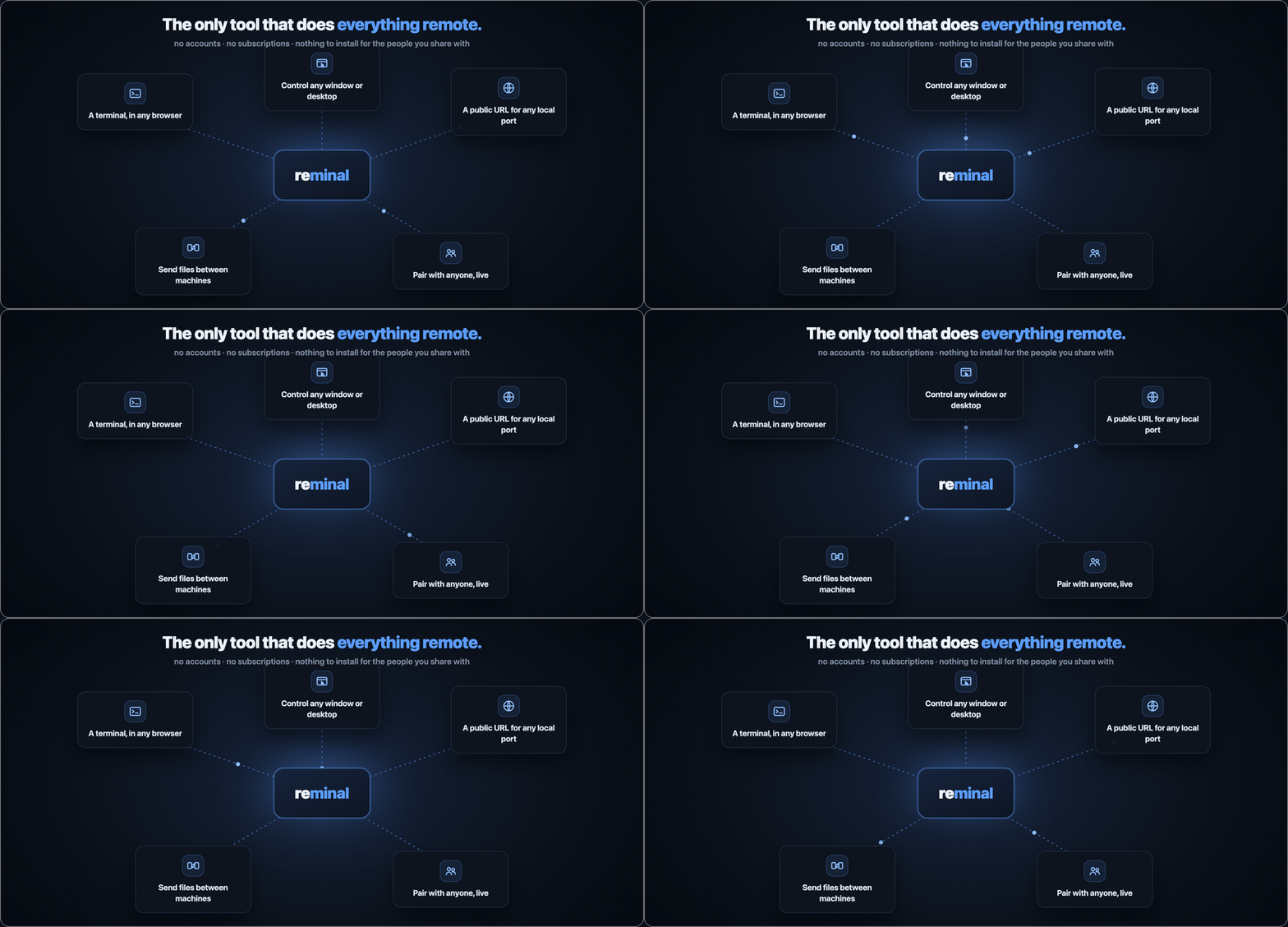
Set it up once, in person — then you never have to sit at that machine again. From any browser you get its terminal, any window, the whole desktop, a public link to a local port, files to and from it, even a live session shared with someone else. One tool, every remote job.
How it works
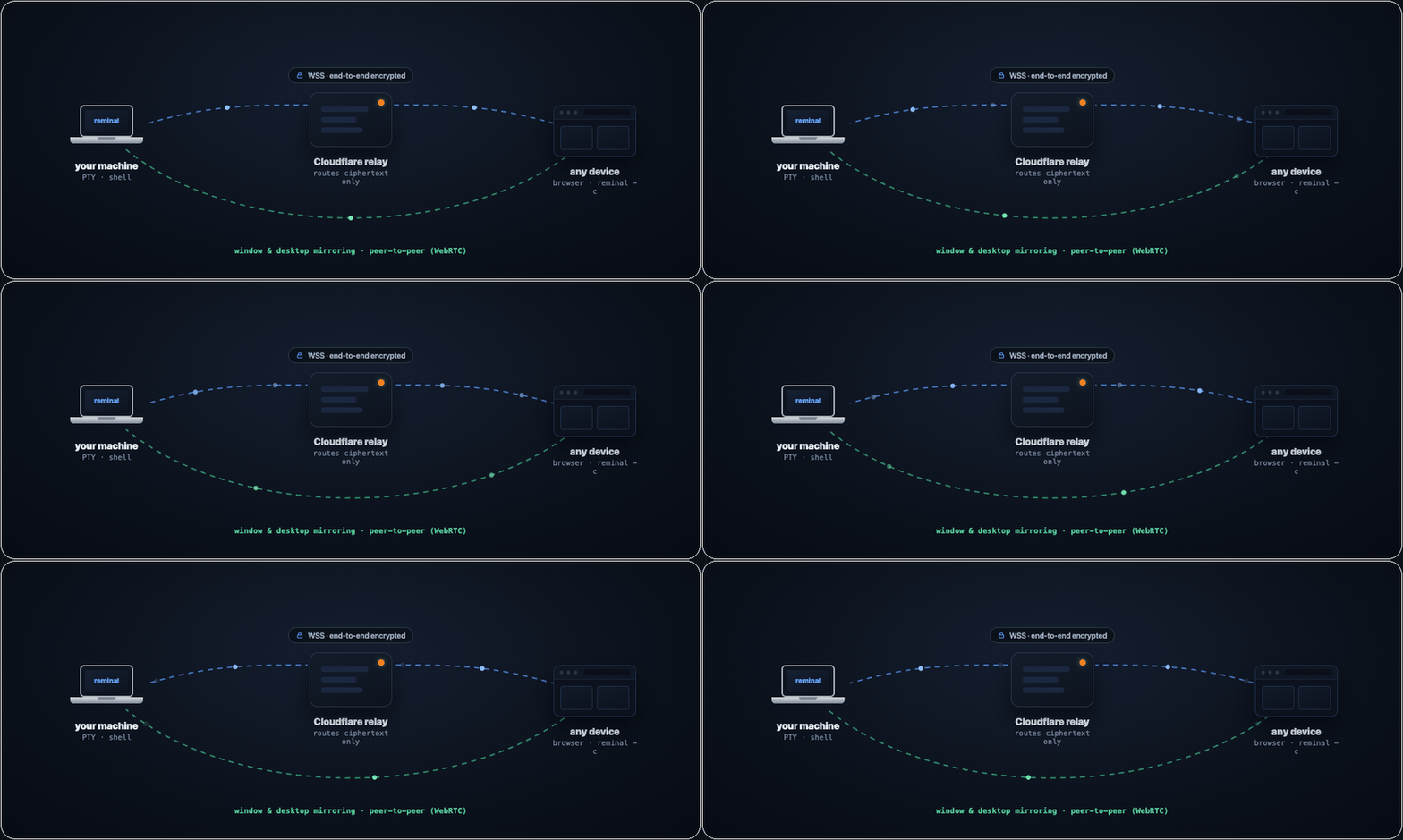
Your machine dials out to a relay over WSS; viewers dial out to the same relay. Nothing ever listens on your machine. Everything through the relay is encrypted end-to-end — it routes ciphertext it cannot read. Window and desktop frames don't even take that path: they ride a direct WebRTC connection between browser and host.
You trust Cloudflare to deliver packets — the same way you trust your ISP with SSH traffic. Neither can read what you send. The difference: reminal never opens your machine to the internet.
Everything you get
Join a session from anywhere — phone (scan the QR), any browser (open the URL, type the PIN), or another terminal (reminal --connect <id> --pin <pin>). Then:
Persistent, resilient shellClose the laptop, switch to your phone, reconnect from a different city — your shell is right where you left it, and the current screen paints instantly (a snapshot, no slow fast-forward). Wi-Fi drop, tunnel, elevator? Auto-reconnect with backoff, 2 MiB of scrollback intact. |
Pair with anyoneSend a session ID and PIN to a teammate over any channel and they join the same live shell — or a window mirror — from a browser. No account, no install, multiple viewers at once. Ctrl+C ends it; there's nothing to revoke. |
Sessions that outlive your terminalKick off a long job and close the lid — it keeps running. |
Zero-install web terminalA full xterm.js terminal is built into the relay. Any browser is the client — phone, iPad, locked-down work laptop, hotel-lobby PC. Pinch-zoom, text selection with draggable handles, on-screen modifier keys, voice dictation, find-in-scrollback. |
Files, ports & pings
|
Secure by constructionNo open ports, ephemeral session ID + PIN, AES-256-GCM end-to-end with a PIN-authenticated X25519 handshake the relay can't crack offline. Ctrl+C and the credentials are gone. Details below. |
Own a machine, skip the PINEnroll a device as an owner — |
Every machine, one list
|
Security
Built to be as secure as a properly configured SSH — and safer by default.
SSH leaves port 22 open, stores long-lived keys on disk, and trusts you to configure everything correctly. reminal takes the opposite approach: nothing to expose, nothing permanent to steal, encryption end-to-end.
| Layer | What it does |
|---|---|
| No open ports | Your machine only initiates outbound connections. There is nothing on the network to scan, brute-force, or zero-day. |
| Ephemeral credentials | Session ID and PIN exist only while reminal is running. Ctrl+C and they are gone forever. |
| Owner devices, revocable | A device you enroll as an owner connects without the PIN using its own key — a separate trust path from the ephemeral PIN, gated behind sudo to enroll and revocable per-device (or self-revoked from any browser). The relay still only routes ciphertext. |
| Dual-factor by design | An attacker needs both the session ID (~1 trillion combinations) and the 6-digit PIN. Knowing one is useless. |
| Rate-limited by the agent | Every PIN guess costs a full online handshake with your machine, and the agent answers at most ~6 per minute (burst of 8, one token per 10s). Exhausting a 6-digit PIN at that rate takes months — far longer than a session lives. |
| End-to-end encryption | AES-256-GCM with a fresh random 256-bit session key per agent run. Distributed to each viewer via a PIN-authenticated X25519 handshake (EKE-style) — the relay never sees the key or anything offline-brute-forceable from it. |
| Forward-secret handshake | Each WebSocket connection runs its own ephemeral X25519 exchange. Even if a future attacker recovers the PIN, recorded ciphertext stays unreadable. |
| Relay-blind | Cloudflare Workers route ciphertext. A relay that records traffic cannot recover the session key offline — wrong PIN guesses are detectable only by attempting a full handshake online (one shot each, bounded by the agent's kex throttle). |
| P2P you can trust | WebRTC signaling (SDP, ICE) rides inside the already-encrypted session channel, so the relay can't tamper with DTLS fingerprints — no man-in-the-middle window. Frames on the DataChannel are DTLS-protected end-to-end. |
| TLS in transit | WSS / TLS on every hop in production. |
One deliberate exception: reminal expose port-forwards are not end-to-end encrypted — the visitor is an ordinary browser with no reminal key, so that traffic passes through the relay in plaintext (PIN-gated, but readable by the relay). Everything else above is E2E. Self-host the relay if that matters to you.
Best practices: share the session ID and PIN over different channels (email the ID, text the PIN) · Ctrl+C when done — credentials die instantly · keep the client current with reminal upgrade.
Digging deeper: Security architecture · Threat model · Subprocessors & data handling · Self-assessment · Report a vulnerability
reminal vs SSH, at a glance
SSH was designed in 1995 — it assumes a static IP, a router you can configure, and keys you keep rotated. reminal assumes none of that, so the trade-offs line up differently:
| reminal | SSH | |
|---|---|---|
| Setup time | One command | Keys, configs, port-forwarding, firewalls |
| Listening port | None | TCP 22 exposed to the internet |
| Credentials | Ephemeral session ID + PIN | Permanent keys on disk |
| Behind NAT / hotel Wi-Fi | Just works | VPN or jump host required |
| Client required on viewer | None — a browser is the client | ssh + a configured key per device |
| Phone friendly | Scan QR → in | No native client |
| Session survives disconnect | Shell keeps running, hop between devices | Drop the connection, lose your work (unless you wrapped it in tmux) |
| Network blips | Auto-reconnect, scrollback replay | Write failed: Broken pipe |
| GUI apps | Mirror & control any window — or the whole desktop | X11 forwarding, if you dare |
| Laptop lid shut, no monitor | Closed-lid mode keeps serving on a virtual display | Terminal only |
| If laptop is stolen | Sessions already dead | Old keys still grant access |
| Encryption | End-to-end through relay | End-to-end direct (if configured right) |
Run your own relay (free, one time)
The relay runs on Cloudflare Workers + Durable Objects. The free tier handles thousands of sessions a month — and window frames go peer-to-peer, so the heavy traffic never touches it.
cd cloudflare
npm install
npx wrangler login
npm run deploy
Then point DefaultCloudRelay / DefaultCloudWeb in internal/config/config.go at your workers.dev URL and rebuild. Full guide in cloudflare/README.md.
Local development
# Terminal 1 — your own relay on localhost:8080
reminal relay

# Terminal 2 — share a session via the local relay
REMINAL_LOCAL=1 reminal

# Terminal 3 — connect from another shell or the browser
REMINAL_LOCAL=1 reminal --connect <session_id> --pin <pin>
# or http://localhost:8080/?s=<session_id>
Reference
Platform support
The mirroring you see above isn't macOS-only — window capture and full control (click, type, scroll, drag) work on Linux/X11 and Windows as well.
| Capability | macOS | Linux | Windows |
|---|---|---|---|
| Terminal sharing · sessions · files · port forwarding | ✅ | ✅ | ✅ ConPTY |
Owner connect (PIN-free) · reminal machines |
✅ | ✅ | ✅ |
| Window & desktop mirroring + control | ✅ ScreenCaptureKit — H.264 up to 60 fps | ✅ X11 — wmctrl · xdotool · ImageMagick |
✅ Win32 — PrintWindow · SendInput |
| Closed-lid mode (auto virtual display) | ✅ | — | — |
Hot restart (reminal restart) |
✅ | ✅ | ✅ (foreground sessions convert to background + attached viewer) |
Linux capture needs an X11 session (or Xwayland) — native Wayland blocks synthetic input, so it isn't supported yet. Apple Silicon, x86_64, and Windows ARM64 all supported.
Windows notes
- Shell: sessions open PowerShell 7 (
pwsh) when installed, else Windows PowerShell, elsecmd— set$env:SHELLto override. Terminals run through ConPTY, the same API Windows Terminal uses, so colors, TUIs, and resizing behave like a native console. - No permission prompts: unlike macOS's Screen Recording grant, window mirroring and input injection need nothing enabled — it works out of the box.
- Firewall prompt on first mirror: when a viewer first attaches to a window/desktop pane, Windows Firewall asks about reminal — that's the direct peer-to-peer (WebRTC) stream binding a UDP port, the same prompt any video-call app gets. Allow enables P2P; Cancel is also fine — streaming falls back to the encrypted relay path.
- Streaming: Windows uses the JPEG capture path (~5–15 fps). The 60 fps H.264 pipeline is currently macOS-only.
- Mirroring needs a logged-in desktop — a machine sitting at the login screen (or a service session) has no windows to capture; terminal sharing works regardless.
- Upgrades & hot restart:
reminal upgradeswaps the exe in place (the running one is renamed aside), andreminal restarthot-swaps a session's agent onto the new binary without touching the shell inside — each session's shell lives in a tiny ConPTY-holder process, so the agent can be replaced under it (the session's PID changes, unlike Unix). A foreground session restarts by converting: it moves to the background and your terminal becomes an attached viewer of it — same shell, same keystrokes, Ctrl-] detaches. The background host also restarts itself automatically after an upgrade.
Commands
| Command | What it does |
|---|---|
reminal [--name <name>] |
Share this terminal session |
reminal new [name] |
Spawn a fresh background session (detached — survives this terminal closing) |
reminal list [filter] [-v] |
List sessions, recent-first; filter by id/name/cwd/title (--idle, --viewers, --headless) |
reminal attach [id|name] |
Re-connect to a local session as a viewer (no arg → interactive picker) |
reminal connect <id-or-url> [pin] |
Connect to a remote session from your terminal (PIN prompted if omitted) |
reminal rename [id|name] <new-name> |
Rename a running session (inside a session: reminal rename <new-name>) |
reminal stop [id|name|port] |
Stop the reminal layer — kicks viewers, keeps your shell/server running |
reminal kill [id|name] |
Fully terminate a session (kills the shell — irreversible) |
reminal prune [dur] [-y] |
Kill idle, unwatched sessions in one go (default idle ≥ 30m) |
reminal restart [--all] |
Hot-swap the running agent(s) onto the latest binary — the shell stays alive |
reminal expose <port> [--public] |
Forward a local HTTP port to a public URL (PIN-protected by default) |
reminal send <file> |
Push a file to every connected viewer (web client auto-downloads) |
reminal copy [--ttl <dur>] <file> |
Offer a file for pickup anywhere; prints a one-time code |
reminal paste <code> [dest] |
Fetch a file offered by reminal copy on another machine |
reminal notify <message> |
Push a notification to viewers (browser notification on web) |
reminal connections |
List currently attached viewers with connect time |
reminal own |
Print this device's owner id + the add owner line to paste on machines you want to own |
reminal add owner <id> [--label <name>] |
Enroll an owner device on this machine (needs sudo / an Administrator terminal on Windows) — lets it connect PIN-free |
reminal owners [rename|revoke|restore <id|label> …] |
List / relabel / revoke / restore this machine's owner devices |
reminal machines [rename <id|name> <new-name>] |
List every machine you own and its live sessions (web Machines panel manages them) |
reminal info [id|name] [--all] [--qr] [--json] |
Show connect details — ID / PIN / URL / QR |
reminal qr [id|name] |
Print just the join QR (for a second screen) |
reminal settings |
Settings page: keep the Mac unlocked for remote control; closed-lid mode (serve with the lid shut and nothing plugged in — disables clamshell sleep, auto-creates a virtual display while headless) |
reminal doctor |
Self-diagnostic: version, relay reachability, terminal, shell |
reminal permissions |
macOS: grant Screen Recording to reminal once, so background (+) sessions can mirror windows |
reminal completion <bash|zsh|fish|powershell> |
Print a shell completion script |
reminal upgrade |
Upgrade to the latest release |
reminal relay [port] |
Start a local relay (development only) |
reminal version [--verbose] |
Print version |
Sessions resolve by exact id, exact name, unique id prefix, or unique substring of name / cwd / title — reminal attach deploy just works.
Environment variables
| Variable | Default | What it does |
|---|---|---|
REMINAL_RELAY |
Cloudflare relay URL | Override the relay WebSocket base URL |
REMINAL_WEB |
Cloudflare web URL | Override the web UI URL shown in the banner |
REMINAL_LOCAL |
— | Set to 1 to point everything at localhost |
REMINAL_OWNERS_DIR |
/etc/reminal (%ProgramData%\reminal on Windows) |
Where the machine's owner list lives (the admin-gated trust store) — override for tests or unusual layouts |
REMINAL_NO_KEEP_AWAKE |
— | Set to 1 to let the host sleep while reminal runs (defaults to keeping it awake via caffeinate / systemd-inhibit / SetThreadExecutionState) |
REMINAL_TURN / REMINAL_TURN_USER / REMINAL_TURN_PASS |
— | Optional TURN server for P2P window mirroring behind hostile NATs (or REMINAL_TURN_CF_KEY + REMINAL_TURN_CF_TOKEN for Cloudflare TURN). Without one, un-punchable viewers stay on the relay fallback |
REMINAL_NO_CAPTURE_HELPER |
— | Set to 1 to force the screenshot capture path (skip the native ScreenCaptureKit helper) |
REMINAL_DEBUG |
— | Set to 1 to append the raw error string to status lines, for diagnosing connection problems |
SHELL |
$SHELL, then probes /bin/zsh, /bin/bash, /bin/sh (Windows: pwsh → powershell → cmd) |
Which shell to spawn inside the session |
Installs to ~/.local/bin/reminal (macOS/Linux) or %LOCALAPPDATA%\Programs\reminal (Windows) — no sudo/admin needed. Apple Silicon, x86_64, and Windows ARM64. Build from source with ./scripts/build.sh (Go 1.25+, Swift toolchain on macOS for the native capture helper); on Windows it's a plain go build ./cmd/reminal.
Ready to try it?
curl -fsSL https://raw.githubusercontent.com/harshalgajjar/Reminal/main/install.sh | sh
reminal
On Windows (PowerShell):
irm https://raw.githubusercontent.com/harshalgajjar/Reminal/main/install.ps1 | iex
reminal
Scan the QR — you're in. No signup, no port-forwarding, no keys on disk. About 30 seconds from this page to your own machine, live in a browser.
License
reminal is dual-licensed under AGPL-3.0. Using it — personally or
inside a company, unmodified — needs nothing from us. A
commercial license covers embedding reminal in a product you
distribute, or running a modified copy as a service. SeeLICENSING.md for where that line sits, and CLA.md
if you'd like to contribute.
Built by @harshalgajjar. Stars are appreciated. Issues even more so.
Yorumlar (0)
Yorum birakmak icin giris yap.
Yorum birakSonuc bulunamadi