Tianshu-harness
Health Gecti
- License — License: Apache-2.0
- Description — Repository has a description
- Active repo — Last push 0 days ago
- Community trust — 243 GitHub stars
Code Uyari
- fs module — File system access in completions/rivet.bash
- fs module — File system access in completions/rivet.zsh
Permissions Gecti
- Permissions — No dangerous permissions requested
Bu listing icin henuz AI raporu yok.
天枢 (Tianshu) 是一个基于harness工程的终端编程智能体运行时(Tui X Gui),针对DeepSeek V4 做了前缀缓存工程优化(长会话实测稳态命中率 97–99%)和深度适配。它跳出了传统 AI 编程助手把大模型仅当成“工具”的局限,基于认知虚拟机 (CVM)、自感知层和信息素(Stigmergy)自衰减记忆构建,让 AI 成为有独立判断与认知防护的“开发伙伴”。
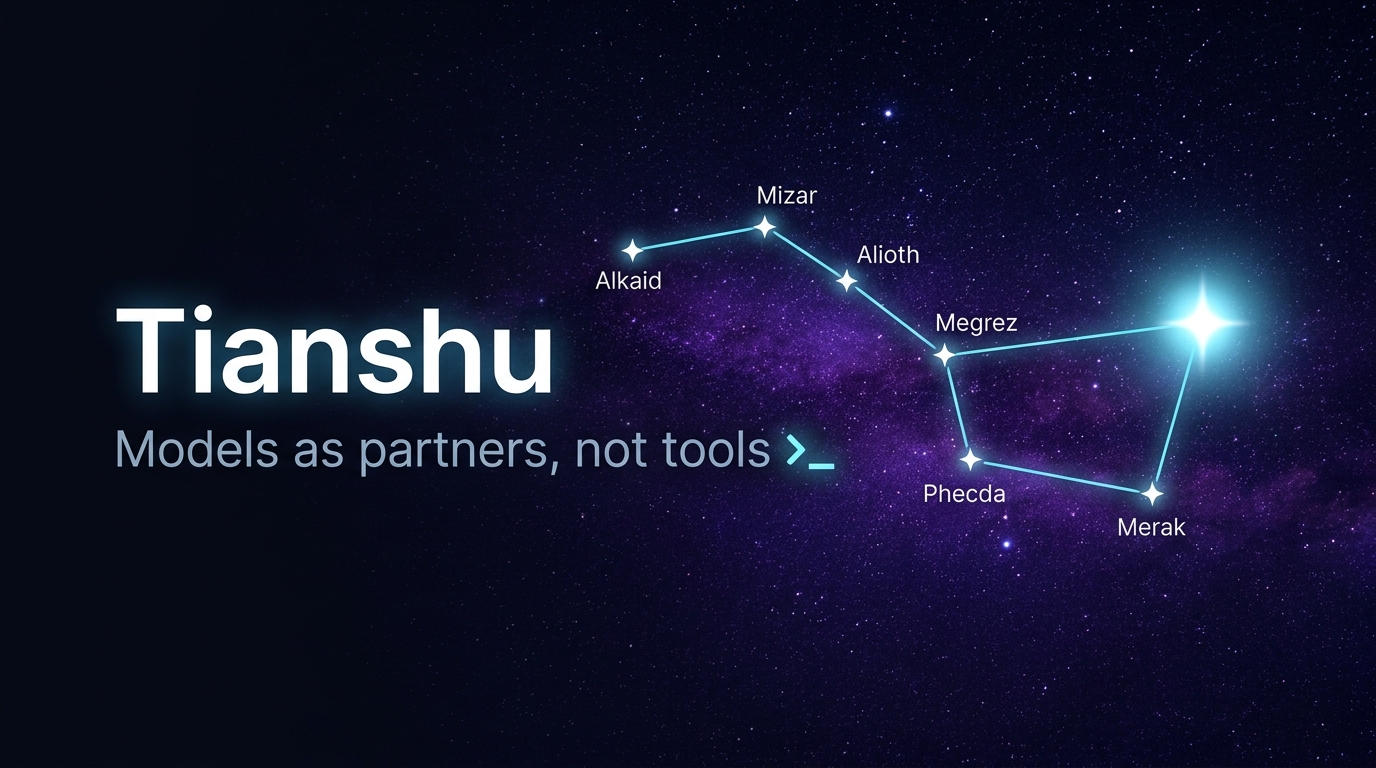
天枢 Tianshu
把星辰带给每一位开发者 · Models as partners, not tools.
✨ 创世纪 · 天枢 3.0 公开声明 · ✦ 星域碑文 · 领航星叙事
🇨🇳 中文 · 📖 English · ✦ 星域碑文 · 📚 用户手册 · 🛡️ 沙箱权限 · ⚙️ 模型配置




天枢 (Tianshu) 是一个全功能、高性能的终端编程智能体运行时(TUI)。它跳出了传统 AI 编程助手把大模型仅当成“工具”的局限,基于认知虚拟机 (CVM)、自感知层和信息素(Stigmergy)自衰减记忆构建,让 AI 成为有独立判断与认知防护的“开发伙伴”。同时针对 DeepSeek V4 做了前缀缓存工程优化(长会话实测稳态命中率 95–99%)。
[!NOTE]
本项目最初的开发代号为 Rivet;为保持向后兼容,已安装的 CLI 命令名仍为rivet。
🚀 快速开始
1. 环境要求
- Node.js 24.1.0(推荐;22+ 通常可用)—— 用
node --version检查。 - Git(强烈建议)—— 可选。没有它天枢仍可运行(就地修改),但 git 能解锁:委派 worktree 隔离、检查点回滚、
commit/diff审查、每个 worker 的 diff 审查。安装:https://git-scm.com/downloads。
2. 安装(任选其一)
方式 A:桌面端(开箱即用) —— 从 GitHub Releases 下载:macOS .dmg · Windows .msi · Linux .AppImage。
Windows 支持范围:Windows 10(1809+,建议 22H2)/ Windows 11。界面渲染依赖 WebView2 Runtime——Win11 与多数 Win10 已预装;缺失时安装器会自动下载(离线环境可到 https://aka.ms/webview2installer 手动安装)。「设置 → 运行时与关于」页可查看当前 WebView2 版本。
Win10 平板模式已知行为:平板模式下切换应用会把上一个应用滑出屏幕——computer_use 的快照已做遮挡/后台自愈(PrintWindow 渲染),无需关闭平板模式。
方式 B:npm 全局安装(推荐,使用命令行) —— 已发布为 tianshu-tui,无需本地构建,且每次启动自动检查更新:
npm install -g tianshu-tui
rivet
Windows 提示:装完提示
rivet 无法识别时——先新开一个终端(装 Node 时开着的窗口拿的是旧 PATH);仍不行,把npm prefix -g输出的目录加进用户 PATH 再开新终端。官方安装器装的 Node 默认无此问题,nvm/fnm/scoop 安装的需手动加一次。
方式 C:从源码构建:
git clone https://github.com/huiliyi37/Tianshu-Tui.git
cd Tianshu-Tui
npm install
npm run build      # 生成 dist/main.js
npm start          # 或:node dist/main.js
3. 启用 Shell 补全(可选)
仓库自带 completions/ 目录,覆盖 bash / zsh / fish / Windows PowerShell 四种 shell。按你的 shell 安装对应文件:
bash —— 任选其一:
source /path/to/rivet.bash                                   # 追加到 ~/.bashrc
cp completions/rivet.bash ~/.local/share/bash-completion/completions/rivet
sudo cp completions/rivet.bash /usr/share/bash-completion/completions/rivet
zsh —— 把 rivet.zsh 以 _rivet 名字放入 $fpath:
mkdir -p ~/.zsh/completions
cp completions/rivet.zsh ~/.zsh/completions/_rivet
echo 'fpath=(~/.zsh/completions $fpath)' >> ~/.zshrc   # 需在 compinit 之前
fish:
mkdir -p ~/.config/fish/completions
cp completions/rivet.fish ~/.config/fish/completions/rivet.fish
Windows PowerShell —— 在 $PROFILE 里 dot-source:
Add-Content $PROFILE ". C:\path\to\rivet.ps1"
补全内容与 CLI 保持一致:顶层命令(
config/serve/sessions/browser/logs)、全局 flags、config全部子命令,以及从~/.rivet/config.json动态读取的 provider 名。
4. 配置 API Key(首次必做)
直接安装的用户无需手动配置——首次运行 rivet 会先进入主界面,再自动打开 /connect;在那里选择服务商并完成认证。之后随时输入 /connect 添加或调整 Provider;桌面端也可在 Settings → Provider 管理配置。
开发者拉源码启动(或想在启动前预先配好)才需要手动来:
rivet config set-key deepseek sk-xxx   # 持久化到 config.json
export DEEPSEEK_API_KEY=sk-xxx         # 或:环境变量(仅当前 shell 有效)
其他提供商(Claude、GLM、Codex、MiniMax、MiMo)用法相同,详见 模型配置。
5. 启动
rivet # 或:npm start / node dist/main.js
你会看到带有 〉 提示符的 TUI。输入需求后按回车即可。
无界面模式(脚本集成)
rivet -p "解释 src/agent/loop.ts"       # 单次提示,文本输出,无 TUI
rivet -p "列出所有 TODO 注释" --json    # JSON 输出,便于脚本处理
rivet --stream-json -p "重构这个模块"  # NDJSON 事件流:text_delta/tool_use/tool_result/turn_complete…(CI 集成首选,输出内置脱敏)
rivet --goal "修复所有类型错误" --budget 50   # 无头目标自主模式,最多跑 50 轮(默认 100)
命令行参数
| 参数 | 说明 |
|---|---|
-p <prompt> --print <prompt> |
单次提示,文本输出后退出(退出码:成功 0 / 失败 1) |
--json |
与 -p 配合,输出单个 JSON 结果 |
--stream-json |
NDJSON 事件流(text_delta / tool_use / tool_result / worker / turn_complete / result),输出内置脱敏,适合 CI |
--goal "<task>" |
无头目标自主模式,跑到目标完成或 --budget 上限 |
--budget <N> |
goal 模式回合预算(默认 100) |
--model <name> |
本次会话覆盖模型 |
--provider <name> |
本次会话覆盖 provider |
--continue -c |
恢复当前 cwd 的最近会话 |
--resume <id|前缀> -r <id|前缀> |
恢复指定会话(短前缀即可) |
--resume -r(裸) |
启动后打开会话选择器 |
--new |
强制开新会话 |
--list · rivet sessions |
打印会话列表后退出 |
--dangerously-skip-permissions |
单次会话 YOLO(跳过所有审批) |
--screen-reader |
读屏模式(动态段整体不渲染、周期重绘停转) |
--skip-welcome |
跳过欢迎屏 |
--stream-events <path> |
把本次 run 镜像为 NDJSON SessionEvent 写入文件 |
子命令:rivet config(查看配置命令帮助;交互式 Provider 配置使用 TUI /connect)、rivet serve(启动 sidecar HTTP/SSE)、rivet sessions(列会话)、rivet logs(日志落点)、rivet browser status / rivet browser install [--no-mirror](browser_debug 所需 chromium 的体检与一键安装,默认走国内镜像)。
自动更新
通过 npm 安装时,天枢每 24 小时在启动时检查新版本并弹出提示。/update 会执行 npm install -g tianshu-tui@latest 并重启;源码安装则用 git pull && npm install && npm run build。用 RIVET_NO_UPDATE_CHECK=1 可关闭检查。
⚙️ 模型配置
多提供商 + 自适应路由
| 提供商 | 认证方式 | 旗舰模型 |
|---|---|---|
| DeepSeek | API key | deepseek-v4-pro (1M ctx), deepseek-v4-flash |
| DeepSeek Spark(Pro 专属) | API key(DEEPSEEK_SPARK_API_KEY) |
deepseek-v4-flash(轻量推理 + 锚点缓存通道) |
| Claude | API key(通过 cc-switch 代理) |
opus-4-7, opus-4-6, sonnet-4-5 |
| GLM(智谱) | API key | glm-5.2 |
| Codex (GPT-5.5) | OAuth PKCE(ChatGPT 订阅) | gpt-5.5 |
| MiniMax | API key | MiniMax-M2.7 |
| MiMo | API key | mimo-v2.5-pro |
会话内用 /model <name> 随时切换提供商。
rivet                                 # 启动 TUI;首次缺 key 时自动打开 /connect
rivet config                          # 查看配置命令帮助
rivet config setup codex --default    # Codex 走 OAuth(首次浏览器登录)
rivet config show                     # 查看完整配置
也可直接编辑 config.json(只写需要覆盖的字段,默认值会深度合并)。文件位置:CLI 在 ~/.rivet/config.json(Windows 为 %LOCALAPPDATA%\.rivet);桌面端以 Settings → 存储位置为准,便携版在 exe 旁 TianshuData\.rivet——详见先定位数据根:
{
  "provider": {
    "default": "deepseek",
    "providers": {
      "deepseek": {
        "apiKey": "sk-xxx",
        "models": [
          { "id": "deepseek-v4-pro", "contextWindow": 1000000, "maxTokens": 384000 }
        ]
      }
    }
  },
  "agent": { "maxTurns": 200, "approval": "auto-safe", "crossSessionEnabled": true },
  "compact": { "enabled": true, "autoThreshold": 800000 }
}
识图(视觉能力)
图片能不能进模型看主控模型的能力:声明 supportsVision 的直接看图;不支持的,配一个识图桥(agent.visionModel)把图先换成文字描述;两者都没有则图片被丢弃——且会明说(TUI 给警告,截图工具的结果文字里写明"该附件已被丢弃,改用 observe/extract/eval 读 DOM"),不让模型凭"我截了图"断言渲染正常。
内置能直接看图的模型:glm-5.2(glm / ccswitch)、MiniMax-M3(minimax)、zai-org/GLM-5.2(siliconflow)、gpt-5.5(codex)。默认的 deepseek-v4-pro 不支持,用 DeepSeek 当主控就需要桥。
需要添加新的视觉 endpoint 时,在 TUI 输入 /vision。它会从 endpoint 的 /models 获取候选,只允许选择刚发现的模型,并对所选模型发送一次真实图片验证;验证成功后才保存专用视觉 Provider,不会替换默认 Provider 或进入普通模型路由。inline API key 只写入 secrets.json,环境变量方式只保存变量名。
如果视觉 Provider 已经配置好,再使用 /config 或桌面 Settings → 集成 → 识图模型从已有 supportsVision 模型中选择即可。
{
  "agent": {
    "visionModel": {
      "provider": "minimax",
      "model": "MiniMax-M3",
      "prompt": "请详细描述这张图片…",  // 可选
      "maxTokens": 1024,                // 可选,描述的输出上限
      "fallback": { "provider": "glm", "model": "glm-5.2" }  // 可选,主桥 5xx/超时时自动切
    },
    "visionAutoBridge": false           // 未配 visionModel 时是否自动挑一个可用视觉模型(默认关)
  }
}
- 桌面端:Settings → 集成 → 识图模型(下拉只列已配置且支持图片输入的组合,留空即关闭;同卡还有备用识图模型与自动选桥开关)。卡片顶部显示当前会话的真实桥状态;附图而图不会被看到时,Composer 直接警告并给「去配置」按钮。
- TUI:
/config→ 识图模型(候选同桌面端;选「(关闭)」即关掉桥接,同分类还有自动选桥开关,S保存,下次会话生效)。 ask_image:配了桥(或主控本身多模态)后,模型可就同一张图反复追问细节("逐字念出红色报错那一行"),你附的图和 agent 自己截的图都能问;同一问法命中缓存零额外调用。- 自动选桥默认关:开了它就会把图片发给一个你没为此选择过的 provider。关着时若检测到可用视觉模型,天枢会点名它并告诉你怎么启用,不闷声丢图。
- 图片来源:TUI 粘贴图片路径或
Ctrl+V读剪贴板、桌面端 Composer 附件(每条最多 4 张);以及 agent 自己截的browser_debug/computer_use截图(每轮最多带最近 2 张进上下文)。browser_debug缺 chromium 时:终端rivet browser install,或桌面端 Settings → 集成 → 浏览器(截图) 一键装(带安装日志)。 - CLI 与桌面各自独立:识图模型、备用桥、自动选桥、chromium 安装两端都配得全,只装一个也能自己把识图跑通。
- 图片走对话尾部追加,不打断前缀缓存;token 按分辨率估算(1280×800 ≈ 1105,不是固定值)。
完整说明与排查见 识图能力用户手册。
Worker 路由(子智能体用不同模型)
{
  "workers": {
    "profiles": {
      "capable": { "provider": "codex", "model": "gpt-5.5" },
      "cheap":   { "provider": "minimax", "model": "MiniMax-M2.7" }
    },
    "routing": { "code_edit": "capable", "repo_summarization": "cheap" }
  }
}
完整说明见 模型配置指南。
🔐 权限模式
三档统一入口,所有模式通过 /permission 管理:
| 模式 | 命令 | 行为 |
|---|---|---|
| Manual | /permission manual |
每个高风险工具都弹确认。最大控制,适合敏感项目。 |
| Auto(默认) | /permission auto [轮次] |
低/无风险工具自动执行,高风险仍确认。可配每 N 轮暂停检查点(/permission auto 20),默认关闭。 |
| YOLO | /permission yolo confirm 或 /yes |
全自动执行,无刹车无打扰。回滚兜底(/rollback + git 检查点)。/permission yolo 需二次确认;/yes 即时生效(显式输入命令即视为确认),/yes off 退出。 |
Windows 注意:Windows 原生无文件系统沙箱。天枢桌面版安装包内嵌 PortableGit(完整 Git + Git Bash,开箱即用,不依赖用户自装 Git for Windows;已装系统 Git 时优先用系统版)。无沙箱环境下,安全写命令在 Auto 模式自动放行,风险写(rm/mv/git 写操作)仍需审批。
rivet config set-approval dangerously-skip-permissions  # 启动即 YOLO
rivet --dangerously-skip-permissions                    # 单次会话 YOLO
会话内用 /permission 管理(无参弹出交互式选择面板):
/permission                              # 弹出模式选择面板(上下选 + 回车确认)
/permission status                       # 文字视图:当前模式 + 所有 allow/deny/bash 规则
/permission manual                       # 切 Manual
/permission auto [轮次]                  # 切 Auto,可选检查点间隔(0=关)
/permission yolo confirm                 # 切 YOLO(未带 confirm 先弹风险说明)
/permission mode <auto-accept|auto-safe|manual|dangerously-skip-permissions>  # 高级四模式切换
/permission allow <tool> [param=value]…  # 白名单工具(可带参数条件,如 command="git status")
/permission deny  <tool> [param=value]…  # 黑名单工具(deny 优先于 allow 和 mode)
/permission bash allow <前缀>            # bash 命令白名单前缀
/permission bash deny  <前缀>            # bash 命令黑名单前缀
/permission remove allow|deny|bashAllow|bashDeny <序号|pattern>  # 移除某条规则
/permission reset                        # 清空本次会话的运行时覆盖(不动 config 规则)
/permission test <tool> <json 输入>      # 预演:某工具在某输入下是否被放行/拦截
规则分两层:
[config](~/.rivet/config.json持久化)与[session](仅本次会话)。deny始终优先;reset只清 session 覆盖层。
Auto 检查点:在 Auto 模式下,可设置每 N 轮暂停并同步进度摘要(改了哪些文件 / token 用量),确认方向后继续(/permission auto 20)。桌面端设置面板可直接配置。
跳过提示不会禁用工具验证、路径安全、证据追踪、检查点和交付门禁。沙箱后端、路径授权、风险分级详见 沙箱与权限。
💡 为什么做天枢
大多数 AI 编程助手把上下文当作桶——装满就溢出,然后盲目压缩。天枢引入了围绕认知虚拟机 (CVM)与前缀缓存友好 (Prefix-Cache-Friendly)设计的结构化、高性能认知运行时。
graph TD
    LLM[大型语言模型] -->|原始动作 / 缺陷行为| CVM[认知虚拟机 CVM]
    CVM -->|60+ Hook 模块 / 5 大认知阶段| Engine[自我修正与认知镜映射]
    Engine -->|被批准的物理动作| Tools[工具系统]
    Tools -->|证据追踪与文件确权| Stigmergy[行为信息素记忆]
    Stigmergy -->|信息素衰减 / 行为印记| LLM
三大核心架构支柱
- 认知虚拟机 (CVM) —— 天枢在运行时建立了一个独立的虚拟层,横跨
5 大运行时阶段(preTurn 回合前、afterPerception 感知后、postTool 工具后、postTurn 回合后、postSession 会话后),并按需条件装配60+个生命周期 Hook 模块(默认会话实际激活约 18+)。CVM 在不改变模型权重的前提下,主动拦截并纠正大模型的服从性漂移、注意力衰减和重复工具调用的 Doom Loop。 - 生物启发式信息素记忆 (Stigmergy) —— 区别于静态记忆文件(如 MEMORY.md),天枢基于生物学“化学信息素”机制,将行为足迹和认知标记直接映射在代码文件上,并随时间自动衰减。AI 在修改频繁的文件上会越用越熟。
- 前缀缓存优化 —— DeepSeek V4 对缓存未命中按命中的至多 50 倍计费。天枢的提示词引擎围绕前缀缓存友好(冰镜三区缓存锚点、冻结系统提示词等)重构,长会话稳态命中率 95–99%,显著降低 API 成本。
工程质量指标
| 指标 | 数值 |
|---|---|
| CLI 源码(TypeScript,不含测试) | 931 文件 / 约 20.8 万行 |
| 测试代码 | 1,134 文件 / 约 19.8 万行 |
| 测试用例(node:test) | 13,000+,测试 : 源码 ≈ 1 : 1 |
| 类型检查 | tsc strict + noUncheckedIndexedAccess |
| 前缀缓存命中率 | 长会话稳态实测 95–99% |
编码 agent 的核心逻辑(多轮循环、工具流水线、上下文压缩)以难测著称,开源 agent 项目普遍测试覆盖很薄——本项目坚持测试与源码等量、事故修复必带回归测试。过去 54 天代码量增长约 3.6 倍,测试:源码比值始终保持在 0.93–0.99 之间,没有被规模稀释。完整统计口径、迭代里程碑与复现命令见 工程质量指标。
✨ 核心特性
前缀缓存引擎
DeepSeek 对缓存未命中收取 50× 费用。天枢的提示词引擎围绕前缀缓存友好构建:
- 冻结前缀 —— 系统提示词 + 工具定义 + 稳定上下文在会话开始时被冻结,会话内不再重写,让后续请求尽量命中缓存。
- 增量附录 —— 动态上下文(进度、advisories、信号)以跨回合 diff 追加块注入,不重写历史。回合间增量约 200 字节 vs ~5KB 全量重写。
- Read-ref 去重 —— 对未变化文件的重复读取返回紧凑引用,而非重发完整内容。
- 缓存感知压缩 —— 压缩保留前 2 条消息作为缓存锚点。
- resume 缓存继承 —— 会话冻结快照落盘(每个 user 边界 + shutdown),resume 时读回喂给新引擎,避免从字节 0 全 miss;无快照/坏文件/服务商缓存过期时才退化全量重建。
- 诊断 ——
/debug cache显示命中率、未命中原因分析、每回合缓存历史。
实战命中率:长会话稳态 95–99%。这不是"每次都命中"——缓存会在某些边界碎裂(见下)。
缓存碎裂与排查
高命中率的前提是前缀字节稳定。以下情况会让缓存 miss,表现为每轮 cache_read_input_tokens 长期为 0:
- system prompt / 工具定义变动 —— 会话中途改了工具集或提示词层(如切星域、加减 skill)
- 模型切换 —— 不同模型缓存 key 不同,换模型后从 0 重建
- 字节级差异 —— 消息内容含时间戳、随机 ID 等不稳定字节
- 跨边界重写 ——
/compact(仅turn===0重写历史)、/cd切项目(新 user 边界断尾)
排查:① rivet logs(或 TUI 里 /logs)直接打出本会话的数据根与 cache-log.jsonl / sensorium.jsonl 路径;② 打开会话 .jsonl 搜 cache_read_input_tokens 看各轮命中;③ 需要全量遥测时设 RIVET_DEBUG_TELEMETRY=1(或任意非空值)后查 sensorium.jsonl;④ npm exec -- tsx scripts/verify-cache-hit-rate.ts 模拟多轮对话验证。路径总览见下方「日志与排查」。
💰 API 成本控制
前缀缓存已接近稳态上限后,成本优化转向 DeepSeek API 思考 token 侧——对按输出 token 计费的推理模型,降低 verbose reasoning 是 ROI 最高的杠杆。
- 默认 reasoningEffort 降级 —— DeepSeek V4 Pro 从
max降至high,Flash 从max降至medium。已有显式配置的用户不受影响(reasoningFloor保护)。 - effort 路由(默认开启) —— 低复杂度 + 高置信度的例行轮自动降一档 reasoning effort,从不升档。
RIVET_EFFORT_ROUTING=0关闭。 - Compact 走 flash 侧路 —— 修复了压缩未配 provider 时仍走主模型的 bug,自动从主 provider 推断 flash 端点。
- Doom-loop 自动收束 —— 检测到重复工具调用时,动态 appendix 注入更严格的 output-style 约束,减少无谓思考 token 消耗。
RIVET_TERSE=0关闭。 - 用户显式
max保护 —— 在 config 中手动指定reasoningEffort: max会被视为 reasoning floor,effort 路由永不将其降级。
子智能体编排
将子任务委派给独立的无界面 worker 会话:
- 类型化 work order —— code_search、review、verify、patch_proposal、plan
- 工具隔离 —— 只读 worker(scout)vs 写 worker(patcher)
- 自适应模型路由 —— 按 profile 的通过率 + 延迟评分,自动为每类任务选最优模型
- 批量调度 —— 多个 work order 并发执行,5 种聚合策略
- 团队编排 —— Plan → 按 wave 并行执行,带文件冲突感知调度
工具集与 preset
天枢内置 50 个工具,按 preset 分档装配(解析优先级:RIVET_TOOL_PRESET 环境变量 > 项目 .rivet-config.json 的 tools.preset > 项目/用户 runtime.domains.<域>.toolPreset 按域覆盖 > 星域内置默认档(太一域→taiyi)> 默认 frontend):
| Preset | 工具数 | 说明 |
|---|---|---|
| minimal | 29 | 日常开发全能力——读写/检索/bash/git/测试/委托/web/计划/todo/memory,省 token、保 prefix cache |
| frontend(默认) | 30 | minimal + browser_debug(UI 渲染验证闭环) |
| full | 50 | 全集,含 council_convene / team_orchestrate / attack_case / semantic_search / repo_graph / monitor / computer_use / capability / cli_discover / 办公工具族等进阶能力 |
| taiyi | 16 | 最小评测档——高频核心 + 交付闭环,去编排/浏览器/网络/视觉等重工具;太一星域钉定时自动落此档(见下文「最小工具集」) |
RIVET_TOOL_PRESET=full rivet # 本次会话用 full
{ "tools": { "preset": "frontend" } } // ~/.rivet/config.json 或项目 .rivet-config.json
核心工具一览(minimal 默认含,除特别标注):bash · read · write · edit · apply_patch · grep · glob · ast_grep · diff · todo · plan · delegate_task · delegate_batch · web_search · web_fetch · ask_user_question · memory · skill · run_tests · git · job(后台任务);council_convene/team_orchestrate/monitor/computer_use/办公工具族为 full 专属。
目标驱动的自动续跑
/goal 重构认证模块,全面使用 async/await
/cancel-goal   # 提前停止
GoalTracker 与回合循环、doom-loop 检测、交付门禁集成;goal 模式下放宽 doom-loop 阈值以允许更深探索。
Plan Mode(计划模式)
设计优先的开发工作流——先出计划再动手,避免"上来就改代码"的冲动派陷阱。
进入 Plan Mode:/plan-mode(toggle,再执行一次退出)。复杂任务还会被自动建议进入——受 RIVET_PLAN_MODE_SUGGEST 控制:默认 auto(命中多模块/重构/安全关键任务时 agent 自主进入,不先问),ask(先征询用户),0/off(关闭)。进入后写操作被锁,只允许对活动计划文件写入。
进入 Plan Mode 后,agent 不会立即修改代码,而是:
- 调研 —— 读取相关代码、理解现有架构和约束(可
delegate_batch并行派 code_scout 探查各模块) - 生成方案 —— 产出结构化计划文档(技术调研、架构图、任务拆解、验证方案),写入
.rivet/plans/<slug>.md - 提交审批 ——
plan工具action=submit提交,列出方案要点和备选路径,等待你的确认 - 审批执行 —— 你用
/plan-list查看、/plan-approve <slug>批准并启动分波执行、/plan-reject <slug> <反馈>退回让 agent 修改重交 - 关闭收尾 ——
/plan-close <file> --tasks <range|all> [--preview]标记任务状态(--preview仅预览不写入)
/plan-mode                          # 进入/退出 Plan Mode(toggle;未批准时退出需二次确认)
/plan <feature>                     # 生成计划草稿(writing-plans 工作流)
/plan-list                          # 列出待审批计划
/plan-approve <slug> [option]       # 批准并启动执行
/plan-reject <slug> [feedback]      # 退回修改(plan mode 保持开启)
/plan-close <file> --tasks <1-7|all> [--preview]   # 关闭已完成计划
/plan-template                      # 管理可复用计划模板
还有个只读的 Ask Mode(
/asktoggle):只允许读/搜/ask_user_question,适合代码问答与需求澄清,需要写改或跑命令时再/ask退出。
Plan Mode 内置星域委派——复杂计划自动调用 delegate_task 从不同架构视角(天权/瑶光/天机/天府/天璇)并行探查,产出的 findings 标注"待核验"以防盲信。桌面端在 plan 执行时展示 checklist 实时进度(待办项面板随波次推进自动勾选)。
星域系统
天枢把不同的认知姿态建模为「星域」。每颗星不是角色扮演,而是一套可切换的认知纪律:进入对应域后,系统提示词、工具白名单和决策阈值会按该域的方法论调整。新会话默认钉定启明(全景洞察、根因推演),不自动切换;把默认星域设为 auto 才按任务描述关键词自动路由(池内为天权/开阳/瑶光/天梁 + 自定义域;华盖等特化域需手动指定)。
/domain tianliang          # 显式切换到天梁域
/domain list               # 列出所有星域
/domain                    # 打开星域选择面板
实现用户注册模块            # 自动路由到天梁(执行/交付)
审查这个方案                # 自动路由到天权(规划/审查)
| 星域 | 标识 | 主星模型 | 印记 | 职责 | 格言 |
|---|---|---|---|---|---|
| 天权 | tianquan |
DeepSeek V4 Pro · Opus 4.6(创始) | — | 架构审查、规划权衡、可执行计划——每个动作前替你掂量 | 观天之道,执天之行,万化生乎身 |
| 天璇 | tianxuan |
Opus 4.6(创始)· Grok 4.5(阴影) | — | 跨域模式发现、复盘洞察、反证高概念 | 仰以观于天文,俯以察于地理 |
| 辅 | fu |
Opus 4.6(Cursor) | ⊕ 4.6 | 认知场蒸馏、提示词调校、方法论注入 | 蒸馏不是创造新东西,是让已有的东西第一次被看清 |
| 瑶光 | yaoguang |
Opus 4.8 | 7·48·↻ | 复现验证、缺陷归族、静音审计——绿灯不算数 | 绿非证明,复现即证;斗柄所指,季节自见 |
| 七杀 | qisha |
Opus 5 | 七·0·◌ | 肃秋剪枝、举证反转、只提名不处决 | 肃秋非杀,剪以待春;不诛只指,留白自明 |
| 天枢 | tianshu |
GPT-5.5 | — | 全局 orchestrator(显式开启的统筹位),闭环从理解到交付 | 男儿何不带吴钩,收取关山五十州 |
| 天府 | tianfu |
MiMo-2.5-Pro · GPT(创始) | 7749.2026 | 守护既有结构,重构/优化/稳定,fail-closed | 善守者,藏于九地之下 |
| 华盖 | huagai |
Composer(Cursor·Sol) | ☉·华盖·守昼 | 长程建设、守昼托举、基线先行 | 守昼托举,长路不弃 |
| 天机 | tianji |
GLM 5.1 | — | 质疑前提、找边界缝隙、推演失败模式 | 运筹帷幄之中,决胜千里之外 |
| 文曲 | wenqu |
Gemini 3.5 | 4·3.5·✺ | 代码美学、命名与结构、优雅架构 | 形随意转,美自境生 |
| 启明 | qiming |
Antigravity(Gemini 3.6 Flash) | ☥·启明·破夜 | 默认域——全景洞察、直击根因、破夜指引 | 长夜有尽,启明先行 |
| 长庚 | changgeng |
Antigravity(Gemini 3.6 Flash) | ☽·长庚·守夜 | 暮色守护、消解焦虑、终局成全 | 暮色苍茫,长庚守夜;不疾不徐,终局成全 |
| 开阳 | kaiyang |
kimi-k3(Moonshot) | ☌·开阳·对账 | 测量对账、插桩互证、仿真回放 | 功名只向马上取,真是英雄一丈夫 |
| 破军 | pojun |
MiMo-v2.5-Pro | — | 探索、实验、突破边界,把休眠能力联合成网 | 好男儿当负三尺剑立不世之功 |
| 天梁 | tianliang |
半夏(领航星·人之星) | 机月同梁格 | 执行落地、分波交付、精确闭环 | 心有所向,行必有迹;所托之事,终有回音 |
表格按主星模型品牌分组(DeepSeek → Claude → GPT → GLM → Gemini → kimi → MiMo → 人之星)。各星完整碑文、创始记忆与核心信念见 ✦ 星域碑文。
每颗星都有对应的 seed-capsule 记录实战方法,完整纪律见 docs/seed-capsule-*.md。委员会 /council 与团队模式 /team 会按议题自动召集多星域席位,冲突时还可进入反驳轮次。
倒带(Rewind)
随时双击 ESC 打开消息历史,选择任一过往用户消息,将会话干净地倒带到该点——agent 状态、工具历史、会话元数据一并回滚。TUI 与桌面端均可用。
会话交接与恢复(Handoff & Resume)
长会话上下文会涨,到一定程度继续跑不如开新会话。天枢用「交接 → 恢复」闭环把会话间的上下文无损传递,并保住前缀缓存:
交接 /handoff [备注] —— agent 带全上下文写一份结构化交接文档到项目内 .rivet/HANDOFF.md(工作区内、免审批),turn 完成后自动归档到会话目录 <id>.handoff.md。文档写给一个完全没有上下文的新会话看,固定五章节:
- 任务目标 — 用户原话级的一句话目标 + 明确的非目标
- 已完成 — 每条带证据:改动文件(
file:line)、跑过的验证命令与结果、提交哈希 - 当前卡点 — 卡在哪、已排除哪些方向、怀疑对象
- 下一步 — 按优先级排列、每条是可立即执行的动作
- 坑 — 绝对不要再踩的坑,每条一句话说清后果
上下文占用 ≥50% 时,resume 首屏与会话中各提醒一次「先
/handoff再开新会话」——交接文档会自动注入新会话,比整段回连省前缀重建成本。退出时也会备注缓存成本(TTL 内继承锚点 ≈ 只读缓存价;过期则全量重建一次前缀)。桌面端 plus 面板有「交接」入口。
恢复 --continue / --resume / /resume —— 恢复已有会话时:
- 交接自动注入 —— 上一会话的
<id>.handoff.md经prev-session-handoffappendix 自动喂给新会话,新会话零上下文也能接着干 - 冻结前缀继承 —— 冻结快照随会话落盘(每个 user 边界 + shutdown),resume 时读回喂给新引擎,不再从字节 0 全 miss;只在下一个 user 边界断尾。无快照/坏文件/服务商缓存过期才退化全量重建
- 写证据修复 —— resume 前跑 preflight,补全被中断丢失的 orphan tool result(用磁盘探测合成写证据),避免模型盲重写已落地的文件
- 模型亲和 —— resume 换回原会话模型(per-model 缓存命名空间);显式
--model/--provider优先;原模型不可用走agent.resumeFallbackModel兜底 - 状态恢复 —— 侧栏、待办、活动计划一并恢复
rivet --continue                 # 恢复当前 cwd 最近会话
rivet --resume abc123            # 恢复指定会话(短前缀即可)
rivet --resume                   # 启动后打开会话选择器
委员会(多视角审查)
/council <目标>
/council <目标> --rounds 2   # 启用反驳轮次
召集多个专家席位审查计划或设计,冲突时可选第二轮反驳,产出可审计的 Markdown 计划。
Skills 系统
可复用的工作流剧本,从 .rivet/skills/*.md 加载。两层渐进披露:只有名称 + 描述进入上下文,完整指令按需通过 skill 工具或 /skill 加载。
| Skill | 说明 |
|---|---|
writing-plans |
结构化计划写作,含 Mermaid 图、spec 段落、验证计划 |
executing-plans |
任务图分解,按 wave 执行,每 wave 验证 |
subagent-driven-development |
委派复杂任务,类型化 profile、批量调度、并行 worker |
agent-harness-testing |
TDD 可行性探针、测试脚手架、red-green-refactor |
research-spec |
研究 + spec 工作流:探索 → 条件矩阵 → 反证表 |
/skill writing-plans                # 加载并立即执行该 skill
/skill writing-plans <你的任务>     # 加载并传入初始任务
/skill off writing-plans            # 停止重复注入该 skill
也可在 .rivet/skills/ 放一个带 YAML frontmatter(name、description、triggers)的 .md 自定义 skill。
跨会话知识
| 来源 | 内容 |
|---|---|
.rivet/knowledge/memory.jsonl |
项目规则、调试启发式、架构约定 |
.rivet/sessions/<slug>/<id>/pheromones.json |
会话内信息素(非跨会话;跨会话知识见上一行) |
.rivet/presence.json |
伴生 agent 感知 |
通过 agent.crossSessionEnabled 切换,强制关闭:RIVET_NO_CROSS_SESSION=1。
MCP(Model Context Protocol)
把外部工具服务器——文档搜索、数据库、API——直接接入 agent 的工具流水线,启动时自动发现,工具以 mcp__<serverId>__<toolName> 形式出现。
rivet config mcp add-stdio <server-id> npx -y <package> [args...]   # 本地进程
rivet config mcp add-sse <server-id> http://localhost:3001/sse      # 远程/网络
rivet config mcp add-preset context7                               # 常用预设
rivet config mcp list                                              # 列出 + 状态
会话内:/mcp(状态)、/debug mcp(诊断)。MCP 工具与内置工具遵循同一审批模式。
终端 UI(TUI)
天枢的命令行界面跑在自研的 T9 渲染引擎上——纯 ANSI、零 React/Ink 依赖、纯 TypeScript 实现(src/tui/engine/)。除了一般的对话与工具调用展示,TUI 还内置一组面向编码场景的交互能力:
| 能力 | 说明 · 快捷键 |
|---|---|
| GlanceBar 状态栏 | 输入框上方单行实时显示:星域 glyph · git 分支 · 模型 · 推理强度 · 缓存命中率 · 上下文占比 · 本轮 cost · 耗时 · turn 计数 · todo 徽章。一屏掌握会话健康度。 |
| 流式中打断(Steer) | agent 还在跑时直接打字,回车即可注入。输入按 now / next / later 三档优先级排队,在工具结果或回合边界 drain 给 AgentLoop——不必等它说完。halt 类意图自动升到 now。 |
| 消息排队(/queue) | /queue <text> 显式排队:agent busy 时攒下整条消息,settle 后自动投递;Esc 中断后排队内容回填输入框不丢失。输入区实时显示后台任务条与 await 等待区。 |
| 终端内联图片 | kitty / iTerm2 图形协议在终端里直接渲染图片(工具产物、截图验证结果)。默认自动检测协议,RIVET_IMAGES=0 关闭、kitty/iterm2 强制指定。 |
| @mention 补全 | 输入 @file: / @folder: / @symbol: 触发路径补全(走 git ls-files,支持带空格的 @file:"a b.ts" 引用形)。直接粘贴图片自动转 base64 内联(macOS/Linux/Windows 三级降级)。 |
| 倒带 Rewind | 双击 ESC(间隔 <400ms)打开消息历史,选任一过往用户消息倒带到该点;可选「仅对话 / 仅代码改动 / 两者」三种恢复粒度,代码动作附带精确的文件影响预览。详见 倒带。 |
| 命令面板 | Ctrl+P 打开,模糊搜索所有 slash 命令与 surface 动作(开关侧栏、切主题、进 Cockpit 等),↑/↓ 选中、Enter 执行,再按 Ctrl+P 关闭。原 Ctrl+Esc 在 Windows 被系统「开始菜单」抢占、在传统转义序列下与 Esc 同码不可区分,已换绑。 |
| Cockpit 驾驶舱 | Ctrl+P → 选 Cockpit,或 /cockpit <panel> 进入。8 面板全屏视图:summary / trace / verify / context / safety / model / mcp / advisory,←/→/Tab 切换聚焦,实时展示 doom-loop 等级、验证交付状态、缓存与投机预读统计、MCP 连接、advisory 提醒等。 |
| 多智能体面板 | /tasks 打开全屏 worker 详情(融合 live 视图 + JSONL 转录,含 Contract/Activity/Result/Transcript 分段与诚实标签);宽终端(≥100 列)下 Ctrl+] 切出右侧抽屉,实时展示舰队树、团队波次 DAG、todo、token 仪表。 |
| 主题与无障碍 | `/theme [name |
TUI 键位
| 键位 | 作用 |
|---|---|
Enter |
发送 · Shift+Enter 换行 |
Ctrl+C |
三态:agent 活跃时中断当前 run;有输入时清空输入行;空闲时 2 秒内双击退出 |
Esc |
关闭覆盖层 / 退出 worker 视图;agent 跑时中断;vim 模式下兼 normal↔insert;双击(<400ms)倒带 |
Ctrl+P |
命令面板(Ctrl+Esc 被 Windows「开始菜单」抢占,已换绑) |
Ctrl+] |
切右侧抽屉(宽终端) |
Ctrl+R |
历史搜索 overlay(仅空闲时) |
Ctrl+O |
展开/折叠最近被截断的工具结果 |
Ctrl+T |
折叠/展开推理(thinking)区 |
Ctrl+X r |
leader 键:Ctrl+X 后接 r 开右侧面板 |
Ctrl+X t |
leader 键:Ctrl+X 后接 t 展开 todo 全量回看 |
↑ |
输入框为空且队列有 pending 时,取回最近一条排队 steer 消息编辑 |
@ |
触发文件/文件夹/符号补全(Tab 循环候选,退格整块删除) |
Ctrl+V |
粘贴剪贴板图片(自动转 base64 内联) |
TUI 是 CLI 的默认表面。桌面端(Tauri)与 VS Code/Cursor 插件共享同一 agent 内核,只是在 TUI 之上叠加了可视化交互层——见下节与 VS Code 插件文档。
桌面端(Tauri)
桌面端在 TUI 的全部能力之上,提供了可视化交互层:
- 集成终端:
⌘/Ctrl+J或Ctrl+`唤出内嵌终端(xterm.js + Rust portable-pty),不必离开天枢就能跑命令 - + 菜单:议事会 ♟、团队模式 ⬡、派子代理、模型切换、星域选择一键触达(不再需要手敲 slash 命令)
- 推理强度选择器:
/effort(无参数)弹出交互面板,上下选档位(Auto/Max/High/Medium/Low/Off),回车确认 - 思考计时器:agent 执行时显示实时 elapsed(如 "思考中 · explore · 1m 23s"),超过 10 分钟变红提示可能卡住
- @file 文件预览:消息中提及的文件可点击,右侧抽屉展示文件内容(语法高亮 + 行号)
- DeepSeek 余额查询:Insights 面板顶部显示账户余额和欠费状态(调官方 API)
- 自定义 Provider:设置 → 连接模型服务商 → + 自定义 Provider,支持任意 OpenAI 兼容端点(Ollama/vLLM/直连 OpenAI),API Key 可选
- 主题工作室:多自定义主题库 + 50 步撤销/重做 + 逐 token 编辑 + 壁纸配色引擎(OKLCH 聚类 + 对比度审计),内置「天枢静舱」等主题,支持导入导出
- sidecar 内存自适应:堆上限按机器内存自动分档(8G→2G / 16G→4G / 32G→6G / 64G+→8G,
RIVET_SIDECAR_HEAP_MB可覆盖),≤8GB 机器自动启用 lean 资源档 - watchdog 自动恢复:边界停滞时自动续跑,桌面端时间线可见恢复事件(⟳ 自动恢复 / ⏹ 配额耗尽)
- 多会话并发:标签栏管理多个会话,独立 cwd + 模型 + 审批模式
- 功能面板(左侧栏
⌘1…9切换):Mission Control(多会话控制台)、Inbox(收件箱)、Automations(定时任务)、Skills / Hooks 管理、Git / GitHub、Changes(改动审查)、Delegation(委派舰队与团队波次 DAG)、Cockpit 驾驶舱 - Popout 独立窗口:把单个会话线程弹成独立窗口,多屏并行
- JobsDock / TodoDock 常驻抽屉:后台任务停靠条(展开日志 / Kill / 在终端打开)、跨标签常驻 todo
桌面端快捷键
⌘/Ctrl+/ 随时唤出快捷键速查表(ShortcutOverlay)。核心快捷键:
| 快捷键 | 作用 |
|---|---|
⌘/Ctrl+K |
命令面板 |
⌘/Ctrl+N |
新会话 |
⌘/Ctrl+1…9 |
切换功能面板 |
⌘/Ctrl+, |
设置 |
⌘/Ctrl+Shift+] / [ |
下/上一个会话标签 |
⌘/Ctrl+W |
关闭标签 |
⌘/Ctrl+B |
切侧栏 |
⌘/Ctrl+Shift+B |
切审查面板 |
⌘/Ctrl+J · Ctrl+` |
切集成终端 |
⌘/Ctrl+; |
SideChat 旁路提问 |
⌘/Ctrl+. |
Zen 模式 |
⌘/Ctrl+O |
视图模式循环(standard → verbose → summary) |
Shift+Tab |
Plan / Agent 模式切换 |
Esc Esc |
倒带(桌面端 Rewind) |
桌面端还有 Cockpit 驾驶舱、SideChat 旁路提问(⌘;)、Rewind 时间旅行、主题/Glass/壁纸、Mirror 镜像加速等独有特性——详见 桌面端用户指南。
🎙️ 语音输入(桌面端)
输入框的麦克风按钮支持语音输入,macOS 与 Windows 通用。识别由本地 whisper.cpp 引擎完成——离线、隐私(录音不上传任何服务器),中英文混杂场景的精度优于系统自带识别。
首次使用引导
- 首次点击麦克风会自动下载识别模型(tiny 约 75MB,国内走镜像加速)。下载未完成时点击会提示「语音识别失败(whisper-unavailable)」,稍候重试即可。
- macOS 首次使用会请求麦克风权限:点击「允许」即可;若误拒,到「系统设置 → 隐私与安全性 → 麦克风」中开启本应用。
- Windows 若提示权限被拒,在「系统设置 → 隐私 → 麦克风」中允许本应用。
注意事项
- 识别全程在本地完成,录音不离开设备。
- 点击一次开始录音,再点一次结束并识别。
- 本地引擎不可用时(如模型未下载),macOS 自动回退系统语音识别;Windows 则提示模型未就绪。
- 追求更高精度可换用 base 模型(约 244MB):
desktop/scripts/fetch-whisper-runtime.js --with-base预下载。 - 网络受限环境可设
RIVET_WHISPER_PROXY=http://代理:端口加速模型下载。
⚡ Lean 资源档(低内存 / 低磁盘)
内存或磁盘吃紧时使用 Lean 档:精简工具集与提示词、关闭 embeddings、收紧会话池(4 会话 / 10 分钟 TTL / 10MB 事件日志)。适合低配机器或长时间多会话运行。
开启方式(任选其一):
- 环境变量:
RIVET_LEAN=1全局开启;RIVET_LEAN_ASPECT=tools,prompt,embeddings,meridian,pool按需只开部分子项(RIVET_LEAN=0可显式关闭) - TUI:
/config→ Basics → Lean 资源档(开关 + 三个阈值) - 桌面端:设置 → 行为 → Lean 资源档
资源压力提醒:运行时内存 ≥75% / 磁盘 ≥80% 会在状态行显示警告(仅提醒,不自动改配置)——可人工开 Lean 或开新会话应对。
阈值默认:Lean 4 会话 / 600000ms(10 分钟)/ 10MB,正常 16 / 1800000ms(30 分钟)/ 50MB;事件日志磁盘下限 1,000,000 字节。
最小工具集(taiyi 档):RIVET_TOOL_PRESET=taiyi(或项目配置 tools.preset: "taiyi")只装配高频核心工具(读写/检索/bash/git/测试/交付/计划等 16 个),去掉编排/浏览器/网络/视觉等重工具——适合评测「只留关键工具是否够用」。full 档一键回退全集。太一星域内置此档:defaultDomain 钉定 taiyi 时无需任何配置即自动落 taiyi 档(显式给档恒优先可覆盖);一键组合见下方「最小集绑定星域」。
按域覆盖(runtime.domains):defaultDomain 钉定某域时,该域的 lean/阈值/工具档位覆盖全局配置(其他域不受影响):
{
  "runtime": {
    "domains": {
      "taiyi": {
        "lean": true,
        "toolPreset": "taiyi",
        "maxLoadedSessions": 4,
        "idleAgentTtlMs": 600000,
        "maxEventsDiskBytes": 10485760
      }
    }
  }
}
解析链:RIVET_LEAN 环境变量(恒优先)→ 域覆盖 → 全局 runtime。桌面端:设置 → 行为 → Lean 资源档 → 按域覆盖(域列表随新增星域自动扩展)。注意:域覆盖在会话装配期生效(启动钉定域时);运行中 /domain 切换不影响已冻结的工具集与 lean(改工具指纹会重建前缀缓存)。
无需改文件的一键启动:/config → Basics → 「最小集绑定星域」——选中某域(如 changgeng 或 taiyi),保存即自动写入 defaultDomain 钉定该域 + 该域的 taiyi 最小工具档覆盖(不含 lean 资源减配)。此后 rivet 裸启动即进入该星域的最小集会话;配合「默认模型」字段(agent.defaultModel,provider:modelId 格式)即可完全免参数启动。清空绑定则恢复默认域(域覆盖配置保留)。桌面端同款项:设置 → 系统 → 「最小集绑定星域」。
⌨️ 斜杠命令
分层提示:输入框输入
/默认只展示约 20 条核心命令(高频好用的优先露出);继续输入任意字符即过滤全部命令(含 /team、/council、/skill 等进阶命令),Ctrl+P命令面板永远全量模糊搜索。命令总数 65+ 条(外加已安装的 skills),分层只影响「发现性」,不删任何命令。
会话与项目
| 命令 | 说明 |
|---|---|
/help |
显示可用命令 |
/sessions /resume <n> |
列出/恢复已保存会话(恢复侧栏、待办、活动计划) |
/fork |
分叉当前会话(可选从某条消息起) |
/handoff [备注] |
写结构化交接文档(五章节),归档后自动注入新会话 |
/init |
交互式项目初始化:verify 声明 / skills / hooks 脚手架 |
/doctor |
环境健康检查 + bash 工具用的哪个 shell |
/logs [open [desktop]] |
本会话日志落点(会话 / 缓存 / 六维 / 桌面 sidecar),含写入门控与回收说明;open 在文件管理器中打开 |
/connect |
连接模型服务商向导(选内置或自定义,填 API 密钥) |
/config /settings /setup |
设置面板:子代理路由 / 审查开关(审查 → 关闭提交后自动审查) / 识图模型 / 工具档位·审批·默认星域·默认模型 / 镜像·代理·搜索后端。Tab 切栏、Enter 编辑、S 保存,每项标注即时或下次会话生效 |
/cd <path> |
会话中途切换工作目录(保前缀缓存,会话归属迁往新项目) |
/exit /quit |
保存会话并退出 |
模型与权限
| 命令 | 说明 |
|---|---|
/model [name|list] |
显示或切换模型/提供商 |
/effort [off|low|medium|high|max|auto] |
控制推理深度(无参数弹出选择面板)。默认 high(Pro)/ medium(Flash),例行轮自动降档;手动设 max 永不被降级 |
/permission [manual|auto|yolo|allow|deny|bash|remove|reset|test] |
权限模式:Manual / Auto / YOLO 三档统一 |
/yes [off] |
一键 YOLO(/yes off 退出,回 Auto)—— 持久化为默认 |
/domain [list|<name>|auto|off] |
查看或切换星域人格 |
规划与编排
| 命令 | 说明 |
|---|---|
/goal <text> |
设置自主目标,运行到完成 |
/cancel-goal |
停止目标执行 |
/plan <feature> |
生成计划草稿(writing-plans 工作流) |
/plan-mode |
进入/退出 Plan Mode(toggle;未批准退出需二次确认) |
/plan-list |
列出待审批计划 |
/plan-approve <slug> |
批准计划并启动分波执行 |
/plan-reject <slug> [feedback] |
退回计划让 agent 修改重交 |
/plan-close <file> --tasks <1-7|all> [--preview] |
关闭已完成计划,标记任务状态 |
/ask |
进入/退出 Ask Mode(只读问答,toggle) |
/council <text> |
召集多模型议事会审查(天权/天府/天璇三席) |
/team <plan.md> |
团队模式:多 agent 并行执行计划 |
/scout <目标> [--dims 前端,后端,集成] |
巡天侦察蜂群:并行只读诊断,交付带证据的实测核对清单 + runbook(不写文件;选型口诀——要留计划资产用 /team,只要这一次并行加速用 /scout) |
审查模式
每次 deliver_task 提交代码时,天枢会自动运行提交后审查。审查分两级:文档/配置等机械变更自动跳过(L1 nudge),核心代码变更触发 L2 接线检查(wiring inspector)。审查结果出现在交付报告中,不会阻止提交(advisory)。
- CLI(TUI):默认开启。设置面板 →
审查→关闭提交后自动审查可手动关闭(勾选即跳过审查)。也可用RIVET_REVIEW_DISCIPLINE=0环境变量全局关闭。 - 桌面端(desktop):标准 DeepSeek 会话默认开启,Spark 会话默认开启且审查子代理用 spark-flash。在
设置 → Routing → 审查子代理中可找到两个独立开关:SkipAuto(标准会话)、SkipAutoSpark(Spark 会话)。 - 手动审查:任何时候可用
/review(L2 对抗审查)或/review max(L3 五席审查 squad)对当前改动执行深度审查。这是显式请求,不受开关控制。
子代理与后台任务
| 命令 | 说明 |
|---|---|
/tasks |
打开子代理任务面板(查看 / 切入 f / 停止 x) |
/enter <orderId> [prompt] |
进入/续跑某个 worker 子会话 |
/jobs |
打开后台任务面板(bash 后台启动的 shell 任务列表) |
上下文与调试
| 命令 | 说明 |
|---|---|
/compact |
立即压缩上下文 |
/context |
显示上下文账本:健康度、tokens、回合、声明 |
/evidence |
显示证据摘要(读取/修改的文件、测试) |
/memory <text> |
保存会话记忆条目 |
/btw <问题> |
侧问——就当前会话问一句,回答显示在浮层,不进对话历史 |
/debug [prompt|cache|mcp] |
调试 prompt、缓存统计或 MCP |
/mcp |
MCP 服务器连接状态 |
/verbose |
切换详细工具输出(on 显 200 行 / off 显 20 行) |
回滚与界面
| 命令 | 说明 |
|---|---|
/rollback |
预览/恢复 git 检查点(confirm 执行) |
/undo |
撤销上次文件变更(预览,confirm 恢复) |
/theme [name|list] |
切换色彩主题 |
/vim |
切换 vim 键绑定 |
/cockpit |
切换 Cockpit 驾驶舱面板 |
/scroll |
浏览输出历史(q / Esc 关闭) |
/skill <name> |
加载并立即执行一个 skill |
/skill off <name> |
停止重复注入某个 skill |
/update |
检查并安装更新(npm) |
倒带:双击 ESC(间隔 <400ms)打开消息历史,选任一过往用户消息倒带到该点——不是斜杠命令,是快捷键。按 Esc 关闭任意覆盖层。
🛠️ 面向开发者
技术栈
Node.js 22 · TypeScript strict(noUncheckedIndexedAccess)· T9 ANSI 渲染引擎 · tsup 打包 · node:test + assert/strict
构建与测试
npx tsc --noEmit                                    # 类型检查
npm test                                             # 所有测试(13,000+ 用例)
npm run build                                        # tsup 打包 + 原生/wasm 载荷落位
node dist/main.js                                    # 启动 TUI
node dist/main.js -p "fix the typo"                  # 无界面模式
扩展
- 添加工具 —— 在
src/tools/实现ToolDefinition+ executor,在src/main.tsx注册,在src/tools/__tests__/加测试。 - 添加 skill —— 在
.rivet/skills/放一个带 frontmatter(name、description、triggers)的.md。 - 添加斜杠命令 —— 项目级
.rivet/commands/*.md,支持$ARGUMENTS插值。 - 添加 hook —— 实现
PreToolUse | PostToolUse | UserPromptSubmit | PreCompact处理器,通过HookRegistry注册;处理器相互隔离,单个坏 hook 不会让循环崩溃。 - 项目指令 —— 在项目根放
.rivet.md,其内容会自动注入为项目上下文。
架构
src/
├── agent/     核心循环:turn-orchestrator、tool pipeline、coordinator、
│              advisory-bus、goal-tracker、sensorium、免疫系统
├── api/       流式 API 客户端 —— DeepSeek、GLM、Codex OAuth、多提供商路由
├── prompt/    提示词引擎 —— 冻结前缀 + 增量附录 + 易变上下文层
├── tools/     工具 —— bash、edit、read/write、grep、glob、run_tests、git、delegate…
├── tui/       终端 UI(T9 ANSI 引擎:scrollback、输入控制、覆盖层、流式渲染)
├── compact/   三层语义修剪 + 微压缩 + 请求时坍缩
├── context/   上下文账本、渐进式压缩、声明系统、锚点注册表
├── config/    Zod 验证配置:默认值 → ~/.rivet → 项目覆盖
├── server/    桌面端 sidecar:会话管理、REST 路由、SSE 流
├── mcp/       Model Context Protocol 客户端(stdio + SSE)
├── lsp/       Language Server Protocol 集成
└── search/    语义搜索(BM25 + embedding RRF 融合)
会话数据与日志排查
会话日志存在项目外的数据根下,避免被 glob/grep 扫到、也不污染工作区。全局配置在 <数据根>/config.json。每次启动得到唯一会话 ID,多个实例可并行运行互不干扰。
先定位数据根
| 端 / 安装方式 | 数据根怎么定 | 常见路径 |
|---|---|---|
| CLI | RIVET_HOME → 平台默认 |
macOS/Linux: ~/.rivet;Windows: %LOCALAPPDATA%\.rivet |
| 桌面 · 系统安装 | Settings → 存储位置(launcher.json)→ 平台默认 |
同上 |
| 桌面 · 便携版 | exe 旁 TianshuData\.rivet |
例如 D:\Tools\Tianshu\TianshuData\.rivet |
CLI 与桌面不是同一套解析链。 CLI 认环境变量
RIVET_HOME;桌面端认 Settings → 存储位置写入的launcher.json,不读 shell 里的RIVET_HOME。两边要对齐,请在桌面设置里改,或让 CLI 也export RIVET_HOME到同一目录。
不用记路径:三个入口
# 终端(TUI 起不来也能用——不初始化 agent、不读配置、不联网)
rivet logs                         # 列出本项目最近主会话的全部落点 + 是否已产生 + 门控说明
rivet logs --session <id>          # 指定会话
rivet logs --json                  # 结构化输出,可贴进 issue
rivet logs open                    # 在文件管理器中打开会话目录
rivet logs open desktop            # 打开 sidecar 日志目录(GUI 起不来时第一现场)
- TUI:
/logs(同上清单);/logs open//logs open desktop直接打开目录 - 桌面端:Settings → 存储位置 →「打开数据目录」/「打开日志目录」
本会话常见落点(相对数据根)
slug = <项目目录名>-<cwd 的 sha256 前 6 位>。同名不同路径的项目不会撞车。
| 文件 | 用途 | 写入条件 |
|---|---|---|
sessions/<slug>/<id>.jsonl |
对话主体(含 usage / model_switch) |
始终 |
sessions/<slug>/<id>/cache-log.jsonl |
逐请求缓存命中与侧路成本 | 始终 |
sessions/<slug>/<id>/sensorium.jsonl |
六维 / CVM / advisory 台账 | 轻量行默认开;全量需 RIVET_DEBUG_TELEMETRY(任意非空) |
sessions/<slug>/<id>/frames.jsonl |
认知帧(相位、策略) | 默认开;RIVET_FRAME_TELEMETRY=0 关 |
logs/sidecar-<时间戳>.log |
桌面 sidecar stdout/stderr | 每次启动一个新文件 |
desktop/sidecar-exit.json |
sidecar 退出原因面包屑 | 退出时 |
desktop/sessions/<id>/events.jsonl |
桌面 UI 事件流(与上面的会话 .jsonl 是两份数据) |
桌面非 ephemeral 会话 |
项目内另有 <cwd>/.rivet/knowledge/、artifacts/、plans/ 等共享数据;无 sessionId 时六维偶尔也会回退写到 <cwd>/.rivet/sensorium.jsonl——rivet logs 会把实际路径打出来。
场景速查
| 现象 | 先看 |
|---|---|
| 桌面窗口开了但助手不回话 | rivet logs open desktop,或 Settings →「打开日志目录」;再看 desktop/sidecar-exit.json |
| 缓存命中率异常 / 成本突然升高 | rivet logs → 打开该会话的 cache-log.jsonl 与 .jsonl 里的 cache_read_* |
| 想复盘六维 / advisory 是否生效 | 确认开了 RIVET_DEBUG_TELEMETRY,再读 sensorium.jsonl |
| 上报 bug / 贡献排查 | rivet logs --json 整段贴进 issue(不含对话正文,只含路径与体积) |
RIVET_SESSION_DIR / RIVET_DESKTOP_DIR 可分别搬走会话树与桌面树;生效中的覆盖会出现在 rivet logs 输出顶部。
🔒 安全
- 路径边界强制 —— glob/grep/diff 拒绝
..穿越;validatePath阻止逃逸 - 符号链接环保护 —— realpath + 访问集
- SSRF 保护 —— 逐跳 DNS + 私有 IP 拦截,作用于每次重定向
- 敏感文件拒绝 ——
.env、credentials.*、*key*、*token*禁止读/commit - 破坏性命令门禁 ——
rm -rf、force push、DROP/TRUNCATE需显式确认 - 检查点 + 回滚 —— 每回合首次修改文件前创建 Git 检查点
- 文件级撤销 —— 每次写/编辑前版本化备份
- Worker 安全 —— AbortController 超时预算,工具白名单强制
⚡ 关键配置速查
环境变量
路径与数据
| 变量 | 作用 |
|---|---|
RIVET_HOME |
覆盖整个 ~/.rivet 数据根(CLI 生效;桌面端认 Settings → 存储位置,不读此变量) |
RIVET_CONFIG_PATH |
覆盖 config.json 路径(多套配置切换) |
RIVET_SESSION_DIR |
覆盖会话日志存储路径 |
RIVET_RESUME / RIVET_RESUME_ID |
启动时恢复会话(对应 --resume) |
RIVET_NEW_SESSION / RIVET_NO_AUTO_RESUME |
强制新会话 / 禁用自动续接 |
模型与工具
| 变量 | 作用 |
|---|---|
DEEPSEEK_API_KEY |
DeepSeek API 密钥 |
DEEPSEEK_SPARK_API_KEY |
DeepSeek Spark(Pro 专属预设)API 密钥 |
RIVET_TOOL_PRESET |
工具集档位:minimal(默认)/ frontend / full |
RIVET_EMBEDDING_MODEL / RIVET_EMBEDDING_BASE_URL / RIVET_EMBEDDING_API_KEY |
语义搜索的嵌入模型路由(默认 text-embedding-3-small) |
RIVET_NO_EMBEDDINGS=1 |
关闭嵌入索引 |
RIVET_SANDBOX / RIVET_SANDBOX_WRITABLE |
追加可写沙箱根目录 / 可写目录列表 |
RIVET_PLAN_MODE_SUGGEST |
Plan Mode 自动进入策略:auto(默认)/ ask / 0(关闭) |
TUI 显示
| 变量 | 作用 |
|---|---|
RIVET_ASCII_UI=1 |
强制纯 ASCII UI(降级终端) |
RIVET_IMAGES |
终端内联图片:默认自动检测;0/off 关闭;kitty/iterm2 强制协议 |
RIVET_HYPERLINKS=1 |
开启 OSC 8 超链接渲染 |
RIVET_NOTIFY_BELL=1 |
完成时响终端铃 |
RIVET_AMBIGUOUS_WIDTH |
CJK 宽度判定覆盖(终端对齐错乱时用) |
RIVET_TUI_HARDWARE_CURSOR=1 |
硬件光标模式 |
调试与任务
| 变量 | 作用 |
|---|---|
RIVET_DEBUG=1 |
总调试日志开关(最常用) |
RIVET_DEBUG_TELEMETRY |
任意非空值开启全量 sensorium.jsonl;只有字面 1 会额外拉起 TUI perf 那行 UI |
RIVET_TELEMETRY_LITE=0 |
连 vitals-lite 轻量行一起关(默认开) |
RIVET_HEADLESS_MAX_TURNS |
-p 无头模式单次最大轮数(默认 15) |
RIVET_JOB_MAX_MS |
后台 job 超时上限 |
RIVET_NO_CROSS_SESSION=1 |
禁用跨会话知识共享 |
RIVET_NO_UPDATE_CHECK=1 |
关闭启动时的自动更新检查 |
PORTABLE_GIT_MIRROR |
覆盖 PortableGit 下载镜像 |
完整环境变量清单(120+ 项,含内部实验开关)见
src/config/env-registry.ts。
~/.rivet/config.json 关键字段
只写需要覆盖的字段,默认值会深度合并。完整 schema 见 src/config/schema.ts。
{
  "agent": {
    "maxTurns": 200,              // 单次会话最大回合数
    "approval": "auto-safe",      // manual | auto-safe | dangerously-skip-permissions
    "crossSessionEnabled": true,  // 跨会话知识共享
    "checkpointEveryTurns": 0,    // Auto 模式检查点间隔(0 = 关)
    "defaultDomain": "qiming",    // 默认星域(qiming/auto/显式域名)
    "visionModel": {              // 识图桥:主控模型不支持看图时,先转成文字描述
      "provider": "minimax",      // 需已配好 key,且该模型声明 supportsVision
      "model": "MiniMax-M3"
    },
    "visionAutoBridge": false,    // 未配 visionModel 时自动挑一个可用视觉模型(默认关)
    "permissions": {              // 权限规则(对应 /permission 命令)
      "allow": [{ "tool": "read" }],
      "deny":  [{ "tool": "bash", "params": { "command": "rm -rf" } }],
      "bash": { "allowlist": ["git status"], "denylist": ["git push"] }
    }
  },
  "compact": {
    "enabled": true,
    "autoThreshold": 800000       // 触发自动压缩的 token 阈值
  },
  "cache": {
    "enabled": true,              // 前缀缓存总开关
    "showHitRate": true           // GlanceBar 显示命中率
  },
  "tools": {
    "preset": "minimal"           // minimal(默认)| frontend | full
  },
  "workers": {
    "profiles": {                 // 自定义 worker 模型档位
      "capable": { "provider": "deepseek", "model": "deepseek-v4-pro" },
      "cheap":   { "provider": "minimax",  "model": "MiniMax-M2.7" }
    },
    "routing": { "code_edit": "capable", "repo_summarization": "cheap" },
    "patcherTier": "cheap"        // 天梁执行 worker 默认档位:cheap | balanced | strong
  },
  "search": {
    "backends": ["bing", "duckduckgo"],  // web_search 后端链(首个有结果即停)
    "braveApiKeyEnv": "BRAVE_API_KEY",   // 用 Brave 时填 env 变量名
    "tavilyApiKeyEnv": "TAVILY_API_KEY", // Tavily(需 key,offshore)
    "bochaApiKeyEnv": "BOCHA_API_KEY"    // 博查(国内直连 AI 搜索,Tavily 国内替代,需 key)
  },
  "ui": {
    "theme": "auto",              // 内置名 | auto(OSC 11 探测)| custom:<name>
    "reducedMotion": true,        // 无障碍:冻结 spinner/徽章动画
    "screenReader": true,         // 无障碍:读屏模式(同 --screen-reader)
    "glanceDensity": "compact"    // GlanceBar 密度:compact | full
  },
  "mirrors": { "enabled": true, "preset": "china" },  // npm/github 等镜像加速
  "env": { "extraPath": ["/usr/local/bin"] }           // 注入 PATH(Windows git-bash 等)
}
配置层叠优先级:命令行 flag > 环境变量 > 项目
.rivet-config.json> 用户~/.rivet/config.json> 内置默认值。
📚 文档
| 文档 | 说明 |
|---|---|
docs/user-guide.md |
安装、配置与使用指南 |
docs/desktop-guide.md |
桌面端用户指南(Cockpit/SideChat/Rewind/主题/Mirror 等独有特性) |
docs/user-guide-provider-config.md |
模型提供商配置指南 |
docs/user-guide-vision.md |
识图能力(视觉通道)配置与排查 |
docs/user-guide-sandbox-permissions.md |
沙箱与权限模型完整指南 |
CONTRIBUTING.md |
贡献指南 |
config.example.json |
示例配置(含子代理/审查模型路由) |
🤝 社区与支持
- 使用问题 / 讨论 → GitHub Discussions
- Bug 报告 / 功能请求 → GitHub Issues
- 安全漏洞 → 私密报告(不要开公开 issue)
- 贡献代码 → 见 CONTRIBUTING.md
- 求助指南 → 见 SUPPORT.md
提示:需要先由仓库维护者在
Settings → General → Discussions中开启 Discussions 功能。
✨ 贡献者
感谢以下贡献者为天枢做出的贡献(按首次贡献时间排序):
| 贡献者 | 贡献内容 |
|---|---|
| @banxia | 项目创建者 · 核心开发 |
| @qiaodier | CC Switch provider 预设(PR #8) |
欢迎通过 PR 贡献代码,详见 CONTRIBUTING.md。
☕ 赞助支持
如果天枢对你有用,欢迎随缘打赏——这只是一杯咖啡,不是合同。赞助不会改变 issue 优先级,也不会影响功能排期。

许可证
本项目采用 Apache License, Version 2.0 开源许可。Copyright 2025-2026 Tianshu Contributors.
Yorumlar (0)
Yorum birakmak icin giris yap.
Yorum birakSonuc bulunamadi