design-os-3d-blender
Health Pass
- License — License: MIT
- Description — Repository has a description
- Active repo — Last push 0 days ago
- Community trust — 21 GitHub stars
Code Pass
- Code scan — Scanned 12 files during light audit, no dangerous patterns found
Permissions Pass
- Permissions — No dangerous permissions requested
No AI report is available for this listing yet.
AI-agent operating system for Blender 5.2: skills, verified bpy knowledge base, AGENT_OK/AGENT_FAIL execution contract, production gate for 3D-printable parts, robot-arm demo
design-os-3d-blender
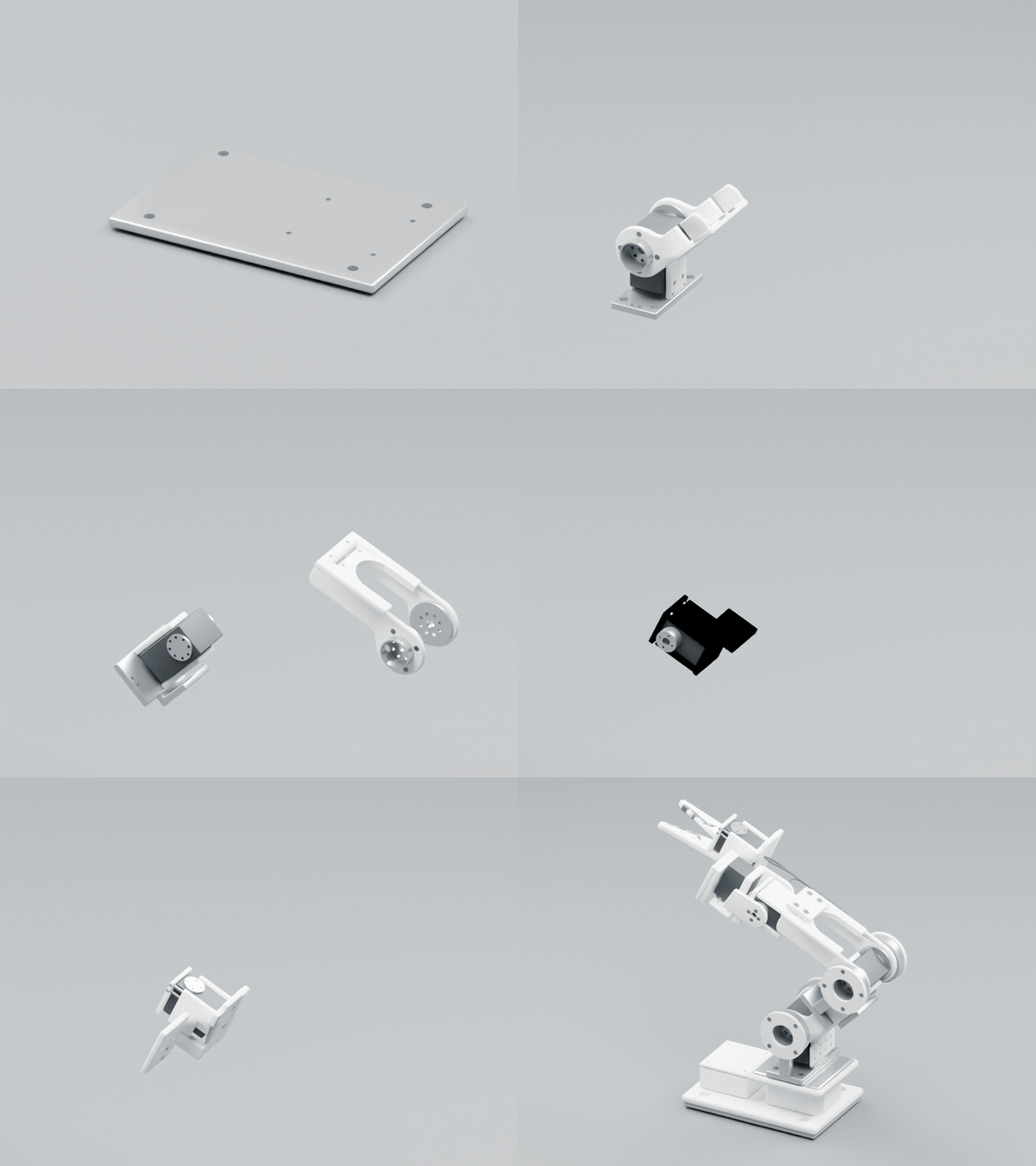











Spec → build → verify → gate. An agent operating system for Blender that ships parts you can print, not pictures you can post.
Contents: What is inside · Proof · Quick start · The loop · Robot-arm demo · Notes · License
An AI-agent operating system for Blender 5.2 LTS: skills, a verified knowledge base, an execution contract, and a production gate — built so an agent (Claude Code, Codex, Google Antigravity, or any MCP client) can model, rig, animate, render, and ship 3D-printable, dimension-correct parts rather than pretty demos.
Everything here is Blender-native: no vendor mesh generation, no downloaded assets, no paid model calls.
🧭 What is inside
| Layer | Path | Purpose |
|---|---|---|
| Operating rules | AGENTS.md (canonical, Codex) · CLAUDE.md (imports it) · .project-agent.md (binding rules) |
Contract-first loop, sentinel execution contract, verify ladder, failure map from real sessions |
| Skills | .agents/skills/blender-agent-core, blender-image-to-3d, blender-knowledge-workbench (.claude/skills mirrors) |
Router + recipes; reference-image reconstruction; catalog-driven reading packs |
| Knowledge base | knowledge/ (28 domain files, 5.2-verified) + research/ (engineering syntheses) |
Data-API-first bpy patterns, decision tables, failure→fix tables, standards for CAD/print/robotics |
| Execution | scripts/agent_runtime.py, scripts/headless-run.sh, scripts/blender-socket-client.py |
Every payload ends with AGENT_OK {json} / AGENT_FAIL {json} (full traceback), exit 0/1/2/3 — Blender's own exit code is unreliable both ways |
| Verification | scripts/agent-verify-lib.py (+ scripts/agent_verify/) |
Numeric "sense organs": framing, frame stats, state-restoring previews, isolated export re-import |
| Production gate | specs/build-spec.schema.json, scripts/production-gate.py (+ scripts/production_gate/) |
Spec → manifold/self-intersection/volume, dimensions ± tolerance, wall/overhang screens, hole diameters vs ISO 273 / ISO 4762 / heat-set tables, STL round-trip + sha256 manifest; report bound to scene+spec hashes |
| Boilerplates | scripts/boilerplates/ (30 modules) |
CAD, gears, fasteners, O-rings, connectors, rigs, geometry nodes, render — each self-tests under the sentinel contract |
| Tests | tests/execution, tests/production-gate, tests/knowledge |
93 tests, all run against a real headless Blender |
| Agent runtimes | AGENTS.md (Codex, any AGENTS.md reader) · CLAUDE.md (Claude Code) · .agents/rules, .agents/workflows, .agents/mcp_config.json (Google Antigravity) |
Same skills folder (.agents/skills) is read natively by Antigravity; setup in docs/antigravity-setup.md |
| Demo | builds/robot-arm-* |
The robot-arm session: accepted assembly film, 38-part print kit, engineering reports — with their honest limits |
🔬 Proof: the robot arm is real geometry, not a picture
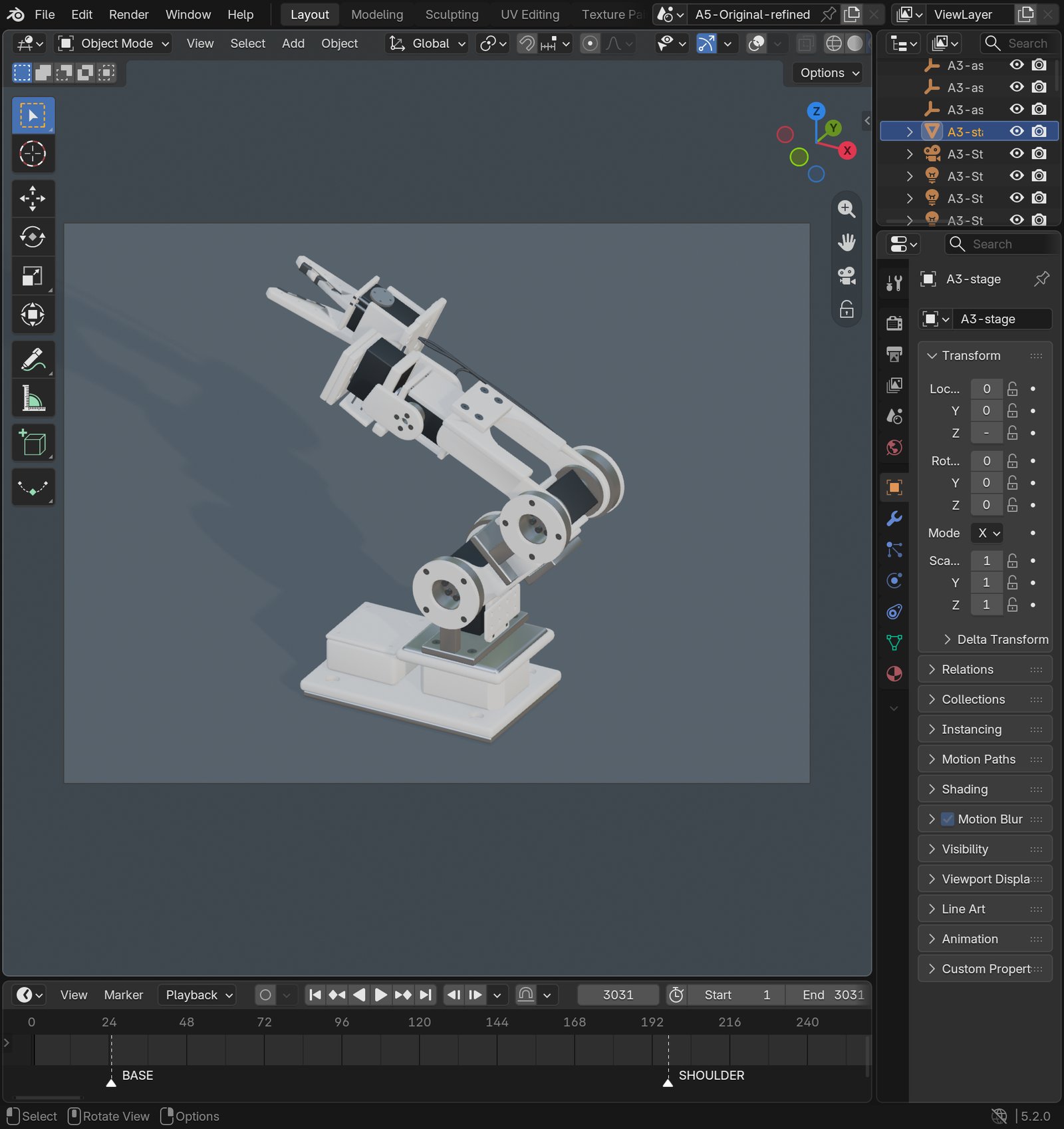 |
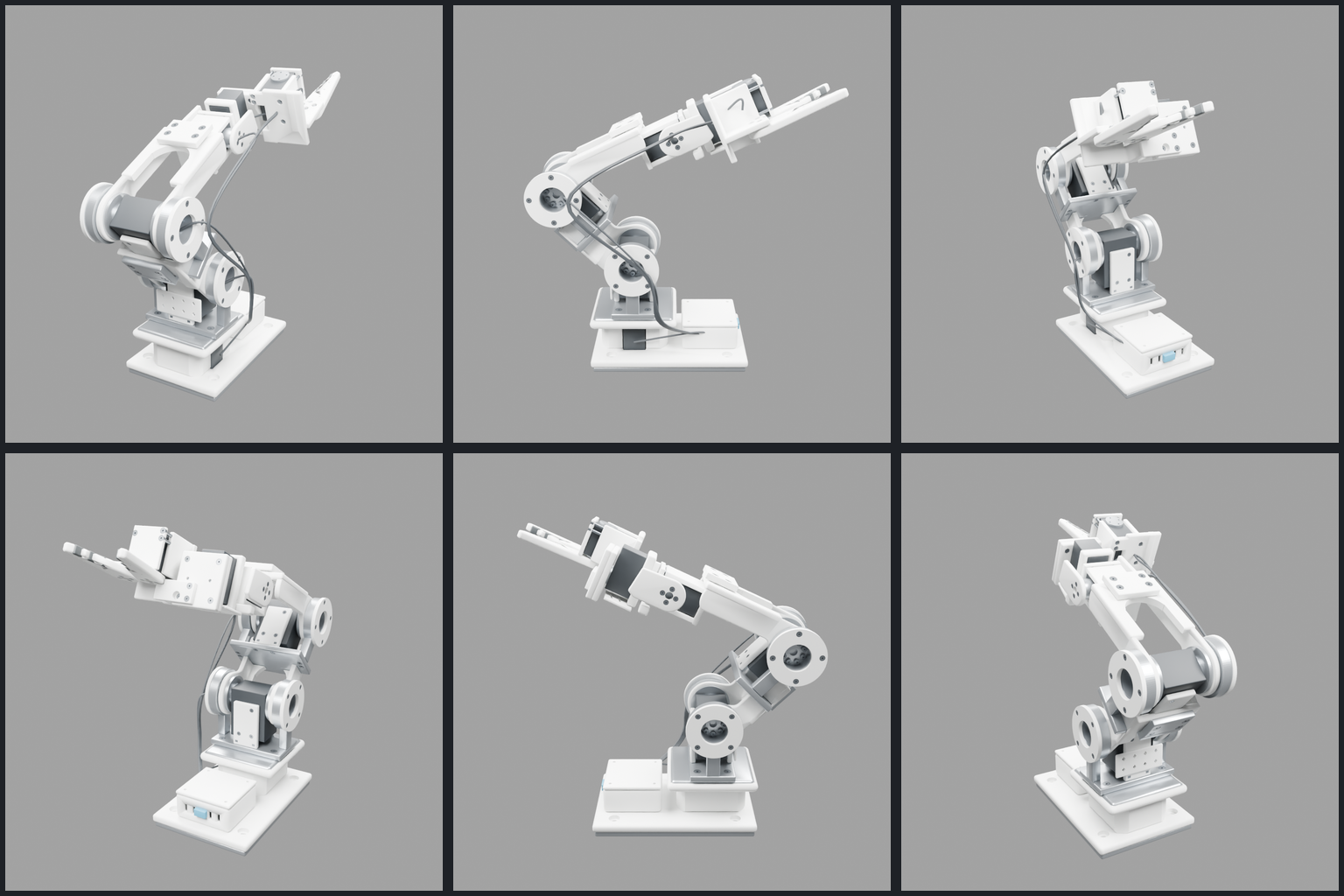 |
The model open in Blender 5.2.0 — scene A5-Original-refined, 671 objects, frame 3031/3031, outliner and properties visible (full-window screenshot, not a viewport crop) |
Six-angle Cycles orbit of the assembled parts at the final frame, rendered headless from the shipped .blend |
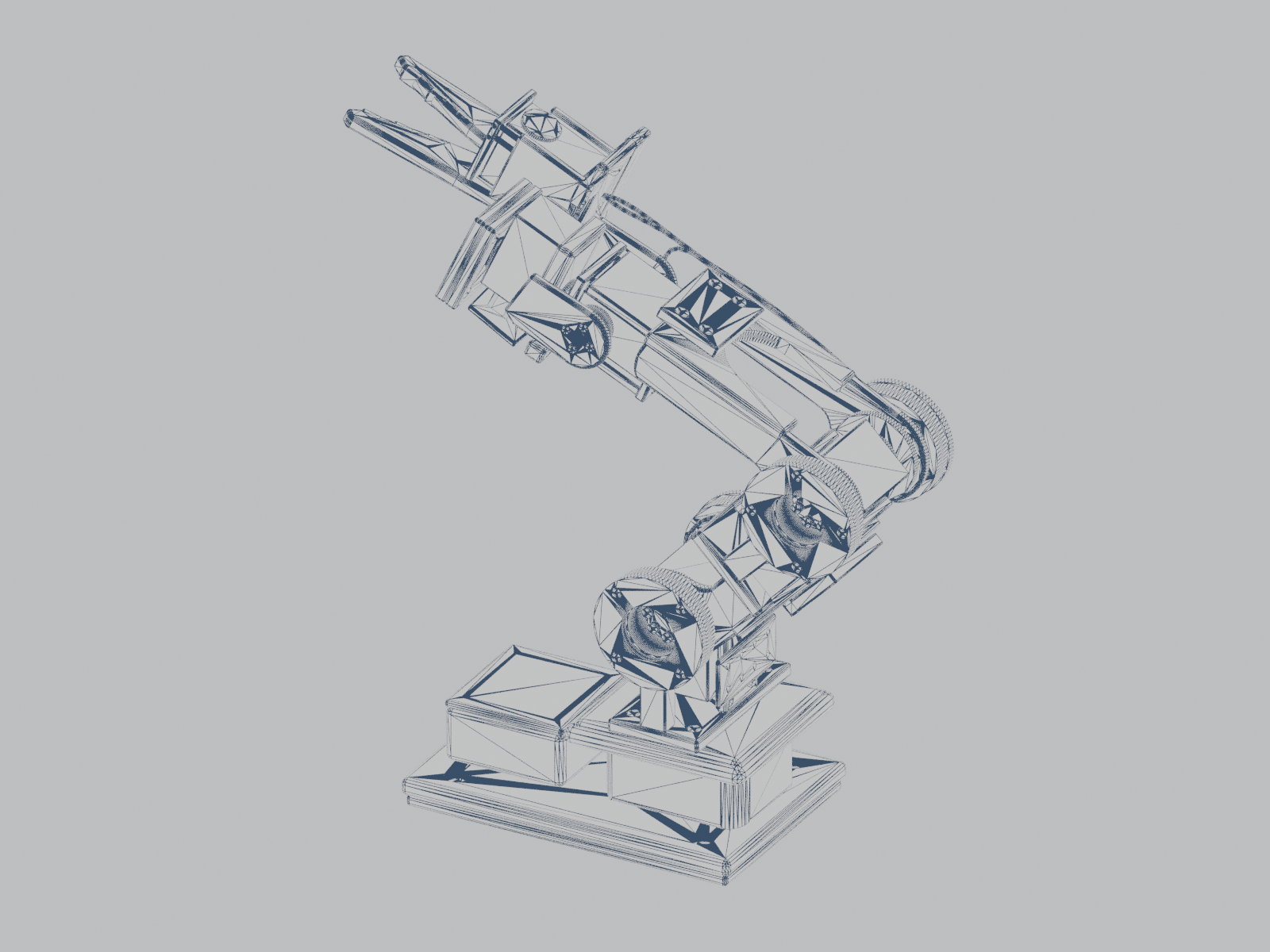 |
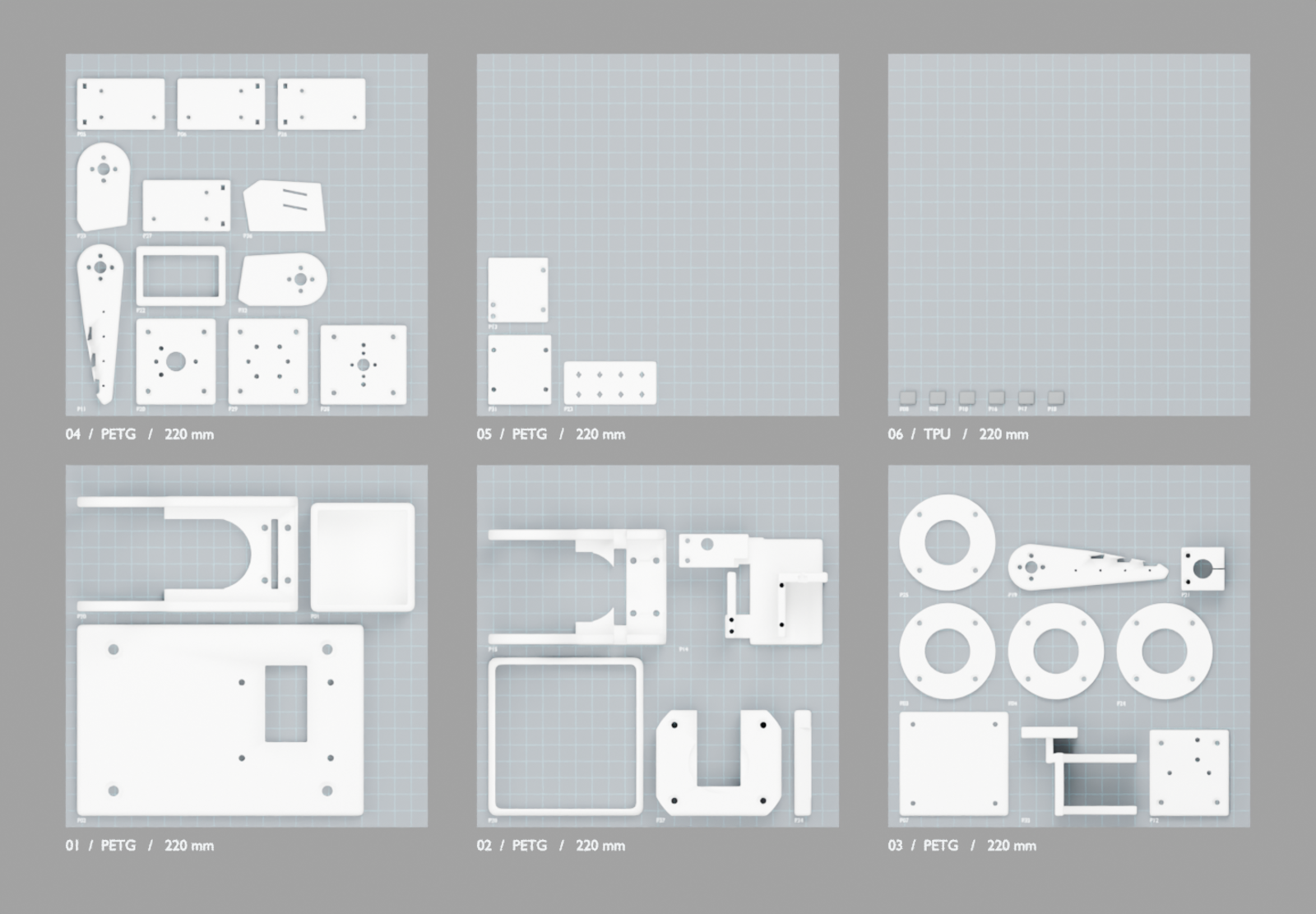 |
| Render tessellation of the 402 arm part meshes (114,723 polygons), Cycles Wireframe node — every edge you see is in the file | 38 fit-prototype parts arranged on five 220×220 mm plates (PETG + TPU), exported as STL/3MF |
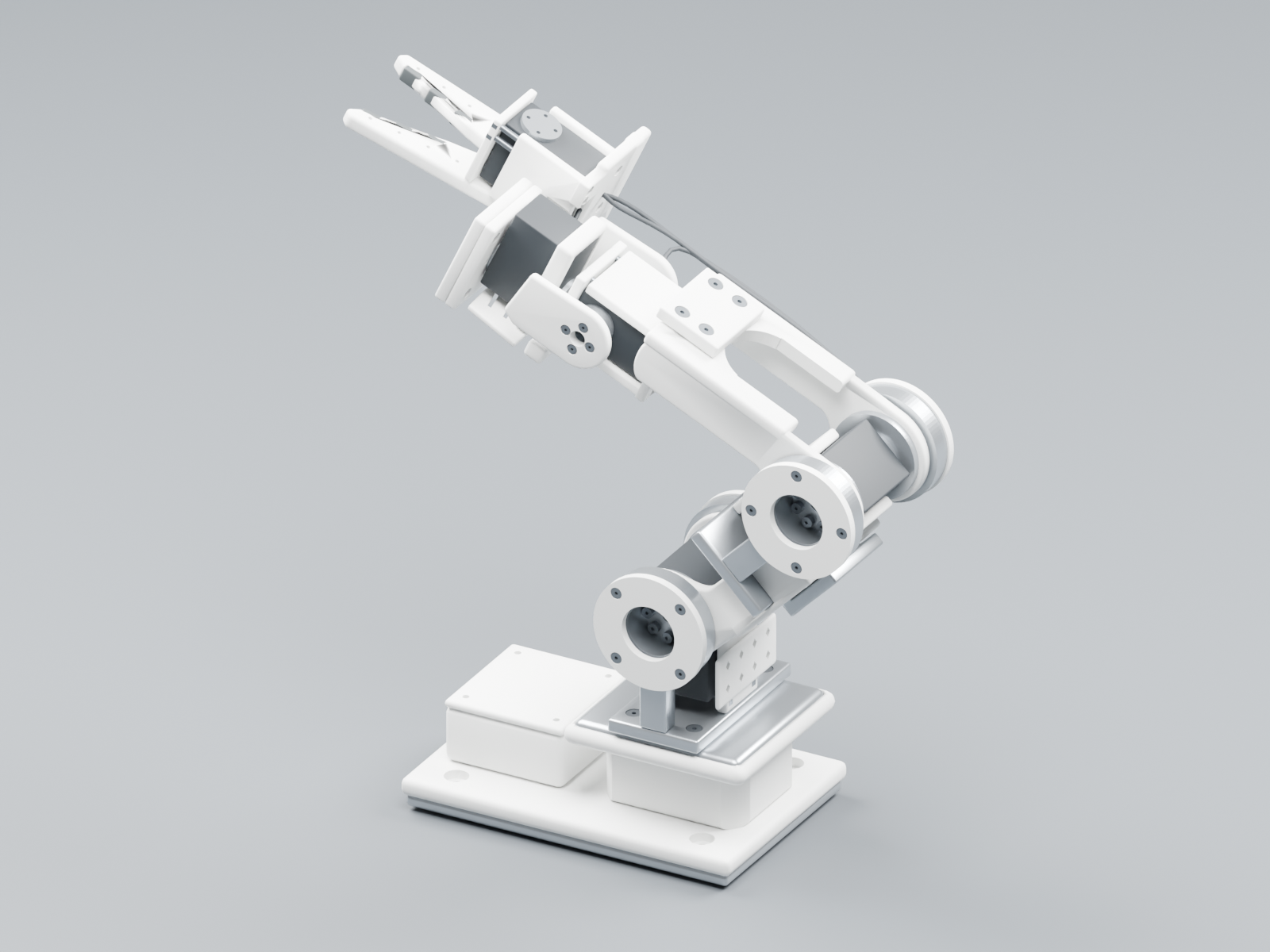
Cycles render of the assembled model at the final frame (1600×1200, 96 samples, Metal). The full-speed MP4 of the assembly film is in builds/robot-arm-original-refined/video/.
Production gate run on the real print kit (2026-09-06). The 38 exported STLs were re-imported into a metre-scaled scene and gated against a spec generated from parts-list.csv (target dimensions ± 0.1 mm, one shell per part, PETG/TPU):
GATE PASS | 38 part(s), 0 failing check(s) | scene=72ab501e47bf spec=d88bc836fb3a | Blender 5.2.0 LTS
836 checks pass · 0 fail · 38 skip (no min_wall_mm declared) · 38 info (overhang reported, not gated)
Per part: non_manifold_edges, non_contiguous_edges, wire_edges, loose_verts, zero_area_faces, self_intersection_pairs, shells, signed_volume_positive, bbox_dims_mm, scale_applied, scene_unit_system, scene_scale_length, then STL round-trip repeats of the topology and dimension checks. Report, spec and the reproduction script: builds/robot-arm-print-assembly/reports/gate-report-260906.json, gate-spec-260906.json, scripts/gate-import-parts.py. The report's exclusions say what this does not prove: load capacity, print success, assembly fit, thermal/creep — those remain physical evidence, and the arm stays unreleased for manufacture.
🚀 Quick start
Requirements: macOS/Linux, Blender 5.2.x, Python 3.10+ on the host (stdlib only). Optional interactive path: blender-mcp addon connected in the Blender GUI.
export BLENDER_BIN=/Applications/Blender.app/Contents/MacOS/Blender   # adjust
python3 -m unittest discover -s tests/execution                      # execution contract
python3 -m unittest discover -s tests/production-gate                # gate on generated fixtures
python3 scripts/blender-knowledge.py check && python3 scripts/blender-knowledge.py list
Run any bpy payload headless and get a machine-readable verdict:
bash scripts/headless-run.sh my-pass.py # last line: AGENT_OK {...} or AGENT_FAIL {...}; exit 0/1/2/3
Over MCP (Claude/Codex with the blender-mcp addon), execute the same payload with the same contract:
import sys; sys.path.insert(0, "<ROOT>/scripts")
import agent_runtime as rt; rt.run_file("<ROOT>/builds/<slug>/pass-01.py")
Gate a part for printing (write the spec before detailing):
cp specs/examples/bracket-m3.spec.json builds/my-part/spec.json   # dims ± tol, holes, fasteners, material, min wall
python3 scripts/production-gate.py --scene builds/my-part/part.blend --spec builds/my-part/spec.json \
        --report builds/my-part/reports/gate-report.json --export-dir builds/my-part/parts
Exit 0 = every declared check passed (digital evidence only); 1 = a requirement failed; 2 = spec/scene incomplete; 3 = execution error. specs/README.md lists exactly what each check proves and does not prove (load, fit after shrinkage, thermal duty stay physical evidence).
🔁 The loop agents follow
Contract → Plan (scene graph) → Code (pass files ≤ ~80 lines) → Critic → Execute → Verify → Verdict
- Contract first. A printable part needs
spec.json; a reference image needs a fidelity contract. Missing numbers →request-input, not a guess. (Every full rebuild in our record traced to a spec that arrived after detailing.) - Numbers before pixels. Assert postconditions, then
framing()+ a 0.2 s preview, then a screenshot with the expectation written down first. - Verdict is one of
continue · refine-spec · refine-code · request-input · stop. Two failures on the same step change the class of approach; three escalate. - Success is the sentinel, never "Code executed successfully".
🤖 Robot-arm demo (builds/)
robot-arm-original-refined/— the accepted step-by-step assembly film (3,020 frames, Cycles), source.blend, clearance/overlap checks, decoded-frame review reports.robot-arm-print-assembly/— 38 fit-prototype parts on 5 plates (PETG + TPU) as STL/3MF, parts list, assembly-step CSV, mesh audit and export checks.robot-arm-v2-engineered/— the task-demo scripts the knowledge catalog cites as execution examples (motion plan, path check, STL export with manifest, delivery audit).
Status is deliberately separated per domain: media accepted · motion checked at sampled poses · fit prototypes exported · manufacture BLOCKED (wrist torque margin, retention hardware, thermal duty and loaded trials remain open — see the build READMEs). The frame sequences and draft renders (several GB) are not shipped.
📝 Notes
<ROOT>in docs and snippets = absolute path of this repo on your machine..agents/skills/img2threejsis a vendored copy of img2threejs (Apache-2.0, license included).tests/blender/target drone builds that are not shipped here.
📄 License
MIT — see LICENSE.
Reviews (0)
Sign in to leave a review.
Leave a reviewNo results found