agora
Health Uyari
- License — License: MIT
- Description — Repository has a description
- Active repo — Last push 0 days ago
- Low visibility — Only 7 GitHub stars
Code Basarisiz
- fs module — File system access in package.json
- exec() — Shell command execution in scripts/gen-prompts.ts
Permissions Gecti
- Permissions — No dangerous permissions requested
Bu listing icin henuz AI raporu yok.
A Human-AI Alignment (HAA) framework for making human taste executable by AI coding agents.
A G O R A
The alignment layer between human intent and AI execution.





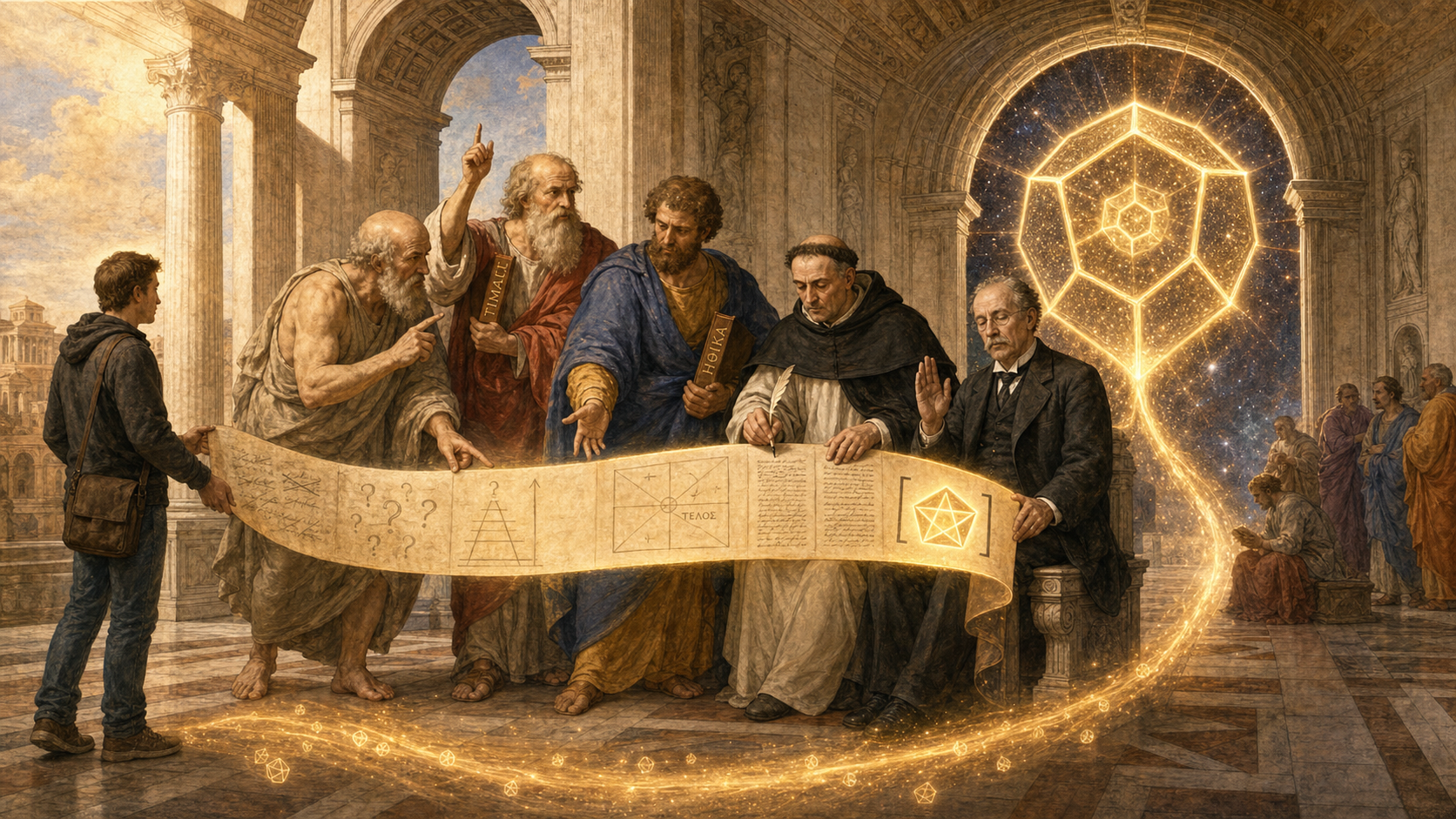
Your AI agent doesn't fail at writing code. It fails at understanding what you meant.
Agora is a Human-AI Alignment (HAA) framework for making human taste
executable by AI coding agents.Before a single line is written, five ancient philosophers interrogate your
intent until it's unambiguous. Then a verification-gated loop builds it —
checking at every iteration that the output still matches what you actually
wanted.
Quick start
Requires Claude Code (authenticated with a
Claude subscription) and Node 22+.
npm install -g @lazydevz/agora                 # installs the `agora` CLI + MCP server
claude mcp add --scope user agora -- agora mcp # register the tools in every project
Then open Claude Code in your project and ask:
"Use agora to align on a settings page, then build it."
Claude Code will call Agora's tools as needed: start or resume the project-local.agora/ session, run alignment, and build through the gates.
More install options and a worked example: docs/getting-started.md
Developing Agora with Codex or another coding agent? Readdocs/SESSION_HANDOFF.md first, then the sharedagent guide for task execution, model guidance and the
MCP host relay contract. The installation above is the shipped Claude Code path;
using Codex to contribute does not add an OpenAI runtime to Agora.
The problem every AI-coding developer knows
You ask for a feature. The agent confidently builds something. It compiles, it
runs — and it's subtly, frustratingly not what you meant. You correct it. It
drifts somewhere else. Five iterations later you're further from your intent than
when you started.
This isn't a model-quality problem. It's an alignment problem. And it compounds:
If each iteration drifts just 10% from intent:   0.9¹⁰ ≈ 0.35

After 10 iterations, the result resembles your intent by ~35%.
It does not matter how powerful the underlying model is. Alignment is the
leverage point, not raw generation power. Agora bets its entire architecture on
closing the gap before the loop starts — and policing it during every iteration.
Why philosophy (and not more prompts)
Everyone tries to close the intent gap with better prompts, plans, or templates.
Agora closes it with the most refined methods of inquiry humanity has ever
produced — operationalized as code. Each philosopher is a real module that drives
a real decision at a specific point in the workflow:
| Philosopher | Era | What they do in Agora |
|---|---|---|
| Husserl | 1859–1938 | Epoché — strips your hidden assumptions before any question |
| Socrates | 470–399 BCE | Elenchus — probes your answers with cases to expose gaps |
| Aristotle | 384–322 BCE | Four Causes — why (telos), what (form), with-what (material), by-whom (efficient) |
| Plato | 428–348 BCE | Divided Line (is this answer mature enough?) + Dihairesis (split the goal into atomic, verifiable pieces) |
| Aquinas | 1225–1274 | Disputatio — per-objection structured ruling, not crude majority voting |
How it works: two loops
Agora runs two loops back to back. The first makes sure you're building the right
thing. The second makes sure you build it right — and that it stays right.
A locked Seed is the handoff between them.
┌──────────────────────────────────────────────────────────────────┐
│  Alignment Loop  (Human-AI Alignment, "HAA")                       │
│  Goal: drive expected ↔ actual gap to ~0% BEFORE any code          │
│                                                                    │
│  Phase −1  Husserl Epoché   — bracket assumed frames (optional)    │
│  Phase  0  Auto-scan        — brownfield detect, ingest MD context │
│  Phase  1  Open intake      — receive all the context you can give │
│  Phase  2  Iterative rounds — Aristotle structures (4 causes),     │
│            Socrates tests, Plato measures maturity                 │
│  Terminate — user assent + structural validation + Plato Dihairesis│
│              splits the goal into atomic, verifiable pieces        │
└──────────────────────────────────────────────────────────────────┘
                           │
                           ▼  🔒 locked Seed (.agora/seed.json)
                           │
┌──────────────────────────────────────────────────────────────────┐
│  Ralph Loop  (verification-gated implementation)                   │
│  Goal: satisfy the Seed AND stay aligned, every iteration          │
│                                                                    │
│  Each iteration must pass the gates:                               │
│    Gate 0  Pre-flight infra   — CLIs authed, deps reachable        │
│    Gate 1  Deterministic      — lint, typecheck, build, test       │
│    Gate 2  Functional QA      — your project's Playwright tests    │
│    Gate 3  UI/UX quality      — Aquinas Disputatio                 │
│    Gate 4  Technical quality  — Aquinas Disputatio                 │
│    Gate 5  Alignment check    — output ↔ Seed telos   ◀ inviolable │
│                                                                    │
│  Loop continues until all gates pass AND you are satisfied.        │
└──────────────────────────────────────────────────────────────────┘
The Alignment loop refuses to terminate until intent is settled. The Ralph loop
refuses to ship until every gate passes — including the alignment gate, the one
that can never be waived.
What it feels like in practice
You: "I want a settings page."                    ← vague is fine; that's the point

[Husserl]   "A *page* — or do you actually want settings to *persist* per user?"
[Aristotle] "Why does this exist?"  → telos: users want to customize defaults
            "What's its essential structure?"  → form
            "Which stack?"  → material        "Who/when/how?"  → efficient
[Plato]     "That telos is still shallow — what *good* does customization serve?"
            → loops back until each answer is mature enough
[Plato]     splits it into atomic pieces:  ac_001  ac_002  ac_003 …

🔒 Seed locked.  Now Ralph takes over:

  ▸ implement ac_001  →  Gate 1 ✓  Gate 5 ✓ (drift 0.04)  Gate 3+4 ✓  →  done
  ▸ implement ac_002  →  Gate 1 ✓  Gate 5 ✗ (drift 0.41!) →  fix + retry
  ▸ …until every piece passes every gate.
Runs inside Claude Code — host-supplied reasoning
Agora is designed to run as a layer inside Claude Code. It contributes the
method (the philosophers) and the gates (verification); Claude Code contributes
the intelligence.
In the MCP path, Agora makes no LLM calls. When reasoning is needed, your
existing Claude Code session does the thinking — which means:
- ✅ Reasoning uses your host session under that host's plan and usage limits
- ✅ No Agora-side API key or nested LLM call is needed for this path
- ✅ Agora stays a thin, fast alignment/verification layer — anti-fragile to model upgrades
The augmentation bet: Agora is to AI coding agents what Linux distros are to
the kernel. When the next model ships, every workflow built on Agora inherits the
gain. We bet on AI progress, not against it.
Status
Agora is alpha and under active development. We believe an honest status beats a
polished lie — here's exactly what works today.
| Capability | State |
|---|---|
| Alignment loop: Husserl → Aristotle (4 causes) → Plato (maturity + Dihairesis) | ✅ working |
Acceptance-criteria capture + Seed lock (seed.json) |
✅ working |
| Ralph loop: leaf selection + Gate 1 (deterministic) | ✅ working |
| Gate 5 (alignment drift score) | ✅ working |
| Gate 3+4 (Aquinas Disputatio, per-objection ruling) | ✅ working |
Audit log + agora trace viewer (--follow tail mode) |
✅ working |
| Status dashboard with drift trend + sparkline | ✅ working |
| Non-interactive / agent-driven mode (JSON, no TTY prompts) | ✅ working |
Socrates (Elenchus case-probing) — agora socrates, auto-routed by agora round |
✅ working |
| Gate 2 (functional QA via Playwright) — detection-gated, shells out to your project's Playwright | ✅ working |
| In-Claude-Code plugin (MCP) mode | ✅ working end-to-end (ADR-0010 Slices A-E): eight tools — session bootstrap (agora_new, agora_intake), read-only (status/doctor/resume/trace), plus stepped agora_align_step + agora_ralph_step that drive the alignment + Ralph loops via host-supplied reasoning — Agora makes zero LLM calls in this path |
| Published to npm | ✅ @lazydevz/agora |
Note on architecture: the in-Claude-Code plugin model (above) is now the
primary path — all reasoning happens inside your interactive Claude Code session
via the stepped MCP tools. Standalone CLI (subprocess) mode remains supported
for non-plugin users and invokesclaude --print; its billing follows the
installed Claude runtime and account terms. The billing assumptions recorded
in ADR-0009 / ADR-0010 are historical, not a current pricing guarantee.
What makes Agora different
- One command, guided flow. You rarely think about subcommands —
agoratells
you what to do next at every step. - Biased over un-biased. We pick the best option so you don't have to.
- Per-folder isolated. Cross-folder context bleed is forbidden; same-folder
accumulation is welcomed. - Auto-detect everything detectable. We never ask what we can already know.
- Telos-first. Purpose (the final cause) is the primary axis of every
evaluation — not features, not file counts. - Built by the method it teaches — see ADR-0003.
Inspirations & credits
Agora was partly inspired by Ouroboros's
intuition that AI coding benefits from an intent-refinement phase before
implementation. Agora is an independent TypeScript implementation with its own
architecture, philosopher modules, Claude Code MCP mode, and verification gates.
See CREDITS.md for full attribution and MANIFESTO.md
for the philosophy behind the philosophy.
License
MIT. See LICENSE.
Built by Sang Rhee · lazydevz, Inc.
Yorumlar (0)
Yorum birakmak icin giris yap.
Yorum birakSonuc bulunamadi