pi-research
Health Gecti
- License — License: MIT
- Description — Repository has a description
- Active repo — Last push 0 days ago
- Community trust — 24 GitHub stars
Code Basarisiz
- process.env — Environment variable access in .github/workflows/ci.yml
- fs module — File system access in .github/workflows/ci.yml
- rm -rf — Recursive force deletion command in .github/workflows/release.yml
- process.env — Environment variable access in config/tooling/vitest.config.ts
Permissions Gecti
- Permissions — No dangerous permissions requested
Bu listing icin henuz AI raporu yok.
Web research for pi with smart and safe tooling + agent system

Free, unlimited web search & knowledge store for coding agents
Pi extension · Agent skill · SDK · Knowledge store · Configuration · Architecture



Search and scraping run locally through a stealth browser — no search provider, no monthly cap. You pay only for the LLM tokens you use.
Install
pi install npm:@lincoln504/pi-research
In pi it works out of the box, on your session's model and pi's configuration. Standalone use — agent skill, CLI, or SDK — needs a model configured; see Configuration. The first install pulls the stealth browser engine, which takes a few minutes.
How it works
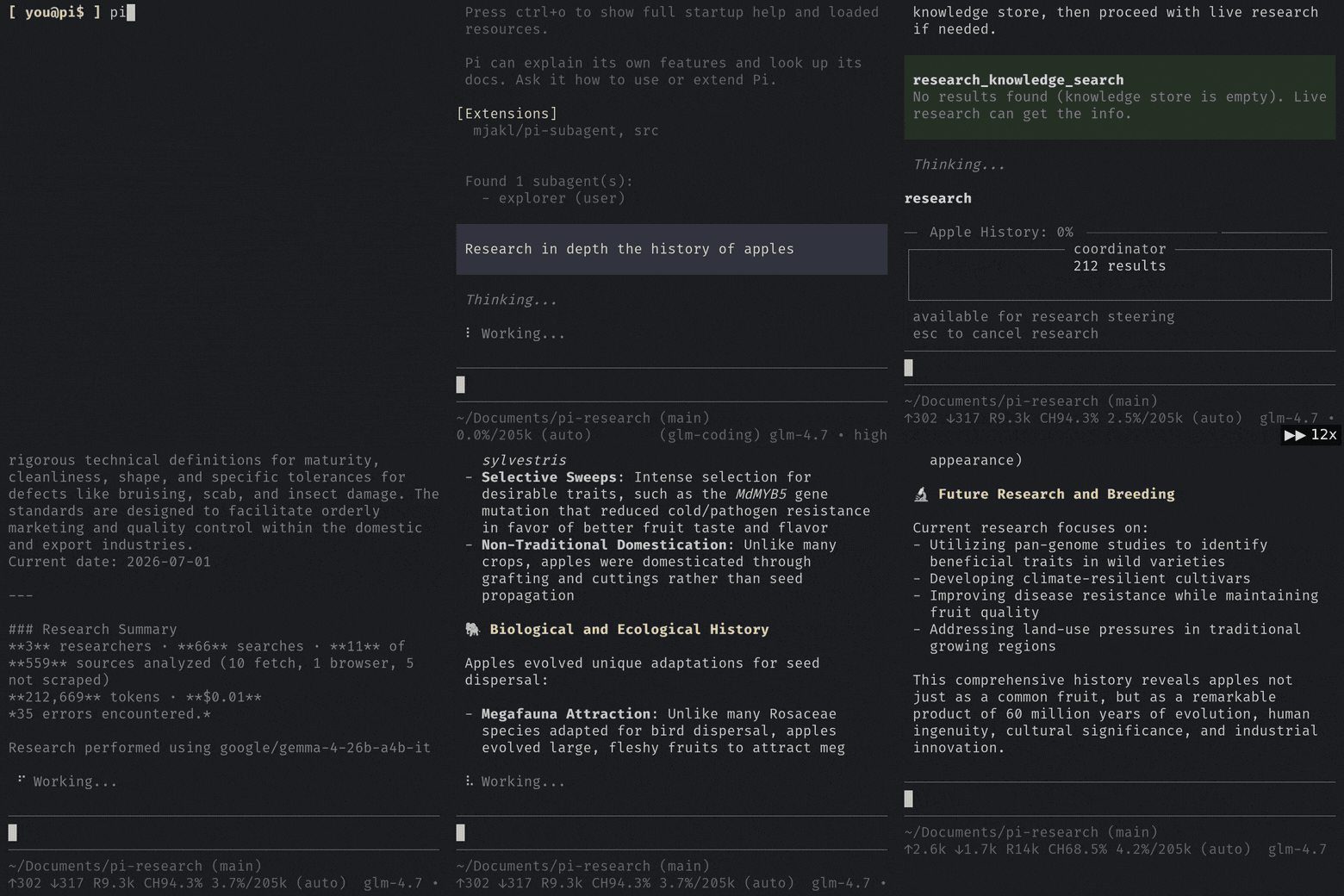
A research run loops through agent teams: a coordinator plans and opens with a search, researcher agents scrape and read in parallel, and an evaluator decides whether to go another round or synthesize. The result is one cited Markdown report, with findings optionally saved to the knowledge store.
Three depth levels — normal, deep, ultra — set the team size and number of rounds. Ask in natural language and the tool picks the right one:
Use cases
- Researching for your Pi Coding Agent — plug-and-play, no API key needed.
- Researching from Claude Code, Codex, OpenClaw, or another coding agent, with a cheaper or local model driving the run so it doesn't spend your main agent's budget.
- Keeping a persistent, searchable knowledge store of findings — global or per-project.
- Building agent systems that find and read web content, or populating a dataset of web sources.
Why pi-research
- No quota, no monthly fee. Most AI-search providers cap free searches and then charge, with results served from their index on their servers. pi-research searches and scrapes locally — DuckDuckGo via a stealth browser.
- You own your index. Every finding is written to a local LanceDB knowledge store that seeds future runs, so repeat questions get faster, cheaper answers.
- Cited reports, not raw dumps. One synthesized, sourced Markdown report instead of raw web content pasted into the conversation — context-efficient and easy to verify.
- Read-only by design. The research agent cannot run shell commands or write, edit, or delete anything. It can read and search files, so treat it as you would any read-only agent with access to your machine.
- Search a little or a lot. Depth levels span a quick pass to a large-scale investigation.
Requirements / limitations
- Node.js >= 22.19.0
- An LLM with a 100k+ context window — bring your own key or use a local model
- Internet access on a residential IP — search, scraping, and YouTube transcripts rely on a residential connection; a datacenter/VPS/cloud IP gets bot-blocked
- The pi runtime — the pi extension uses the host's copy; the standalone CLI and agent skill install it as a dependency
- Cloudflare and similar systems block scraping on some sites — a run flags pages it can't reach and compensates with a wide pool of search results to cite
Channels
npm (npm:@lincoln504/pi-research) is the stable channel, kept current with breaking pi changes. A git install is the development channel: latest commits, first to break.
License
MIT. Bundled third-party licenses are listed in docs/THIRD-PARTY-NOTICES.md.
Package identity
This project is always @lincoln504/pi-research on npm. The pi-research (unscoped) package is unrelated and deprecated.
Yorumlar (0)
Yorum birakmak icin giris yap.
Yorum birakSonuc bulunamadi