AI-SOC-Agent
Health Pass
- License — License: MIT
- Description — Repository has a description
- Active repo — Last push 0 days ago
- Community trust — 50 GitHub stars
Code Pass
- Code scan — Scanned 12 files during light audit, no dangerous patterns found
Permissions Pass
- Permissions — No dangerous permissions requested
No AI report is available for this listing yet.
Blackhat 2025 presentation and codebase: AI SOC agent & MCP server for automated security investigation, alert triage, and incident response. Integrates with ELK, IRIS, and other platforms.
SamiGPT
SamiGPT is an AI-powered security investigation and incident response platform that provides security operations teams with intelligent automation for case management, SIEM analysis, and CTI enrichment through the Model Context Protocol (MCP).
Note: This project is currently under active development. Features, APIs, and documentation may change as development progresses.
Demo
Watch the demo video to see SamiGPT in action:
For detailed documentation and presentation materials:
Quick Start
SamiGPT is started from a single entry point. That process serves the web UI
and, by default, also starts the MCP server as a separate HTTPS listener
with its own settings and health check.
Steps:
Clone the repository and create a virtual environment (skip if you already have one):
git clone <repository-url>
cd SamiGPT
python3 -m venv venv
source venv/bin/activate  # On Windows: venv\Scripts\activate
pip install --upgrade pip
pip install -r requirements.txt
Set the UI password in
config.json(copied fromconfig.json.exampleautomatically on first run):"web": { "username": "admin", "password": "choose-a-strong-password", "session_secret": "", "session_ttl_seconds": 43200 }session_secretis generated automatically if left empty.Add tokens/URLs for the integrations you want to enable in
config.json.
You only need to fill in the sections for the tools you actually use
(case management, SIEM, EDR, CTI, LLM provider, etc.) — everything else can
be left at its placeholder values. For example, to use Open WebUI as
the LLM provider:"llm": { "provider": "openwebui", "openwebui": { "api_key": "your-openwebui-api-key", "base_url": "https://your-openwebui-host:8080", "model": "auto" } }The same pattern applies to other sections, e.g.
thehive.api_key,iris.api_key,elastic.clusters[].api_key,edr.api_key,cti.base_url,
andnetbox.api_token. See the Configuration section below for the full list.Start the application:
python app.pyThe UI binds HTTPS on
0.0.0.0:8081. The first start writes a self-signed certificate tocerts/. Your browser will warn until you trust that cert or replace it with a real one.Optional flags:
python app.py --port 8081
python app.py --no-mcp    # web UI only; start MCP later from the UI
python app.py --debug     # auto-reload when files under src/ change
Open your browser:
Navigate tohttps://<host>:8081and sign in. Nothing in the UI, APIs, or static files is reachable without a valid session.Verify the LLM provider:
Open Settings to confirm the provider you configured in step 3 (Cursor
Agent, OpenAI, OpenRouter, Open WebUI, or any OpenAI-compatible endpoint),
or switch providers here instead. Save, then use Test provider.Check the MCP server:
Use the MCP button in the header. It shows health, bound host/port,
registered tools, and start/stop/restart controls. MCP HTTPS routes requireAuthorization: Bearer <mcp.api_token>fromconfig.json.Confirm Open WebUI is connected:
In SamiGPT, the MCP button should show the server as healthy with its
registered tools listed: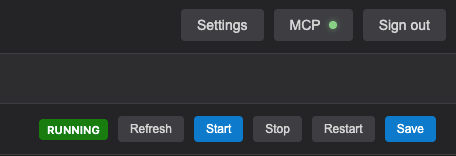
In Open WebUI, add SamiGPT as a tool server under Settings → Tools,
pointing it at the MCP HTTPS listener (https://<host>:<mcp.port>, e.g.https://<host>:8082) withAuthorization: Bearer <mcp.api_token>fromconfig.json, then verify the SamiGPT tools appear in the tool list there
too. Note this is separate from thellm.openwebuiconfig in step 3, which
instead points SamiGPT at Open WebUI as its LLM backend: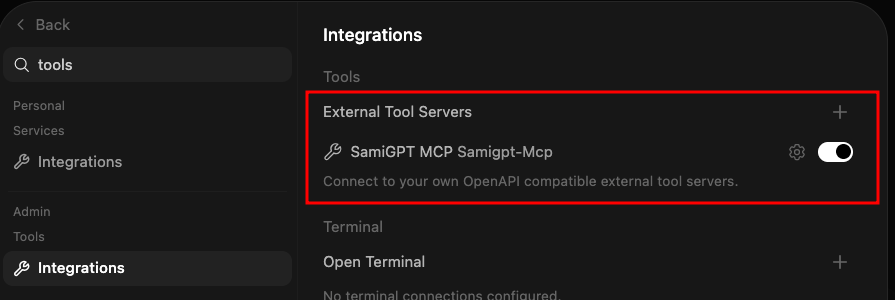
Install as a systemd service (servee)
To run SamiGPT as a boot-persistent service, use the installer under servee/.
It copies the app to /opt/servee, creates a Python 3.10+ venv, installs
dependencies, and enables + starts the servee unit (Restart=always).
Re-running the script reinstalls cleanly and preserves config.json, certs/,data/, and logs/.
# Install or reinstall (requires root; stop any manual `python app.py` first)
sudo ./servee/install.sh

# Service control
sudo systemctl status servee
sudo systemctl restart servee
sudo systemctl stop servee
sudo systemctl start servee

# Follow logs
journalctl -u servee -f
Optional: point the installer at a specific Python 3.10+ binary:
sudo PYTHON_BIN=/path/to/python3.11 ./servee/install.sh
After install, the UI is at https://<host>:8081 and MCP at :8082, with
runtime files under /opt/servee.
Overview
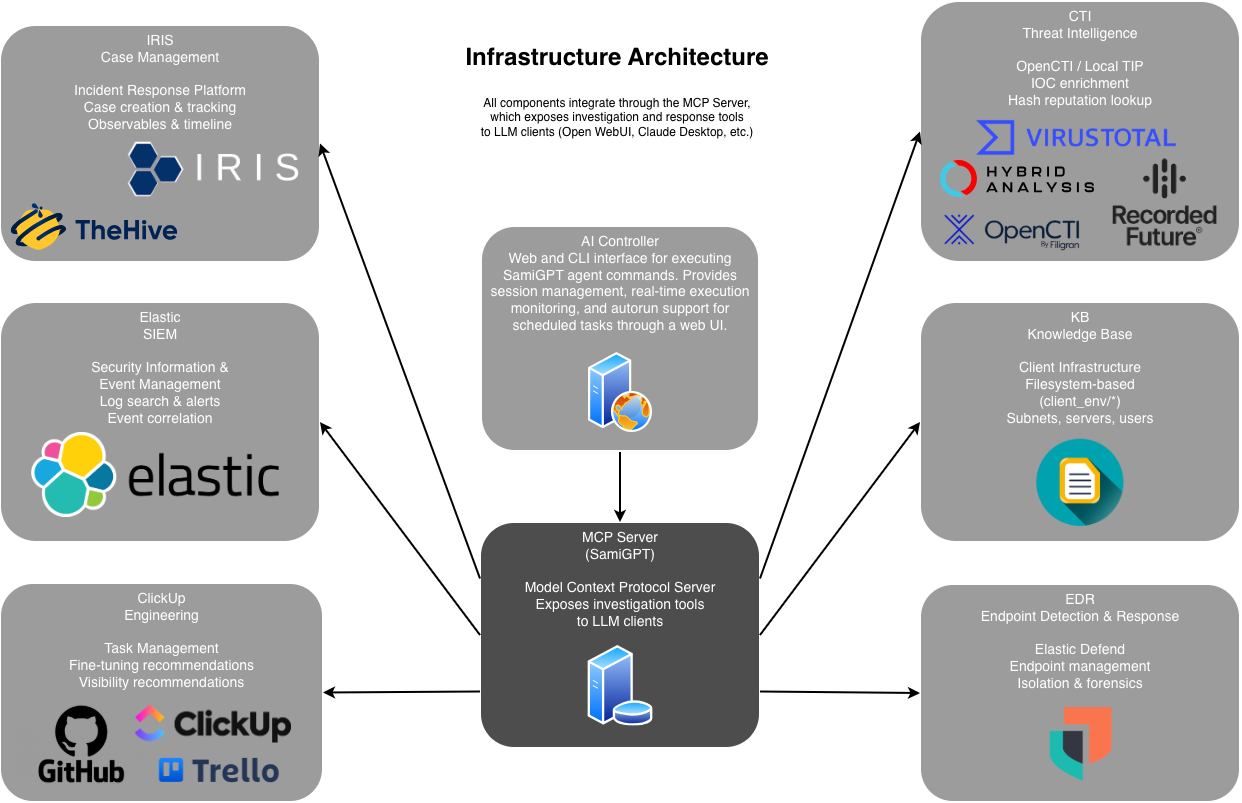
SamiGPT acts as an MCP server that exposes security investigation and response capabilities as tools that can be used by AI agents, LLM tools, and automated workflows. It provides a unified, vendor-neutral API layer that connects to:
- Case Management Systems (TheHive, IRIS)
- SIEM Platforms (Elastic)
- EDR Solutions (Elastic Defend)
- Threat Intelligence (OpenCTI, Local TIP)
- DCIM/IPAM (NetBox)
The platform enables automated triage, investigation, correlation, and response workflows through intelligent agent profiles organized by SOC tier (SOC1, SOC2).
Features
Core Capabilities
- Automated Alert Triage: Intelligent initial assessment and classification of security alerts
- Case Management: Create, update, and manage security cases with observables, comments, and timeline tracking
- SIEM Integration: Search security events, pivot on indicators, and correlate activities across environments
- EDR Response: Endpoint isolation, process termination, and forensic artifact collection
- Threat Intelligence: IOC enrichment and reputation analysis
- Infrastructure Lookup: Resolve IPs, hosts, and prefixes against NetBox DCIM/IPAM for asset context
- Multi-Tier SOC Workflows: Structured workflows for SOC1 (triage) and SOC2 (investigation)
Agent Profiles & Runbooks
SamiGPT includes pre-configured agent profiles with specialized runbooks:
- SOC1 Agents: Initial alert triage, enrichment, and false positive identification
- SOC2 Agents: Deep investigation, correlation, and case analysis
Workflows
SamiGPT uses structured workflows organized by SOC tier. The following diagrams illustrate the execution flow:
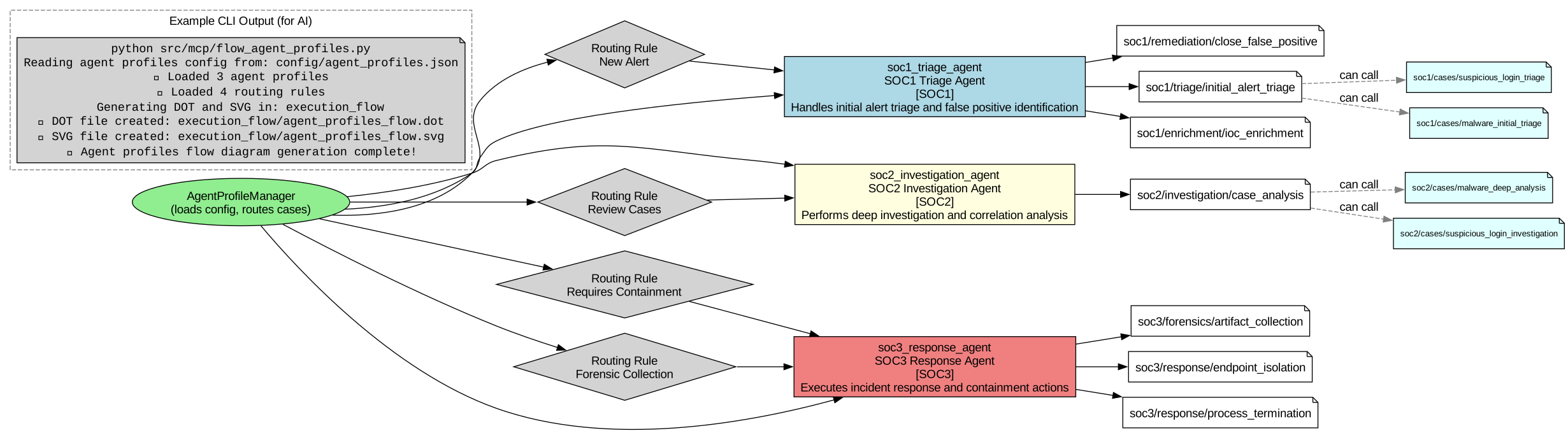
Agent Profiles Flow
This diagram shows how agent profiles are organized and how routing rules direct cases to the appropriate SOC tier agents.
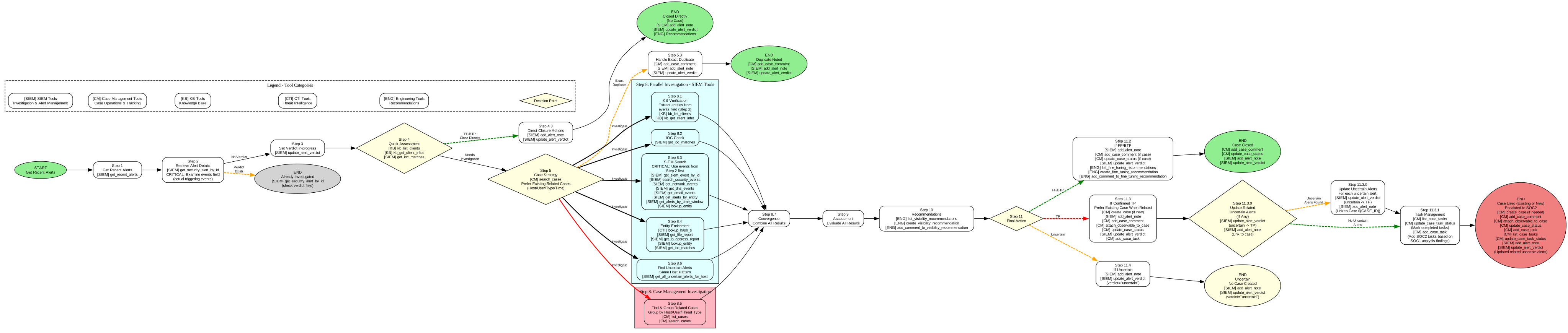
Initial Alert Triage (SOC1)
The initial alert triage workflow handles new security alerts, performs quick assessment, enrichment, and determines whether to create a case or close as false positive.
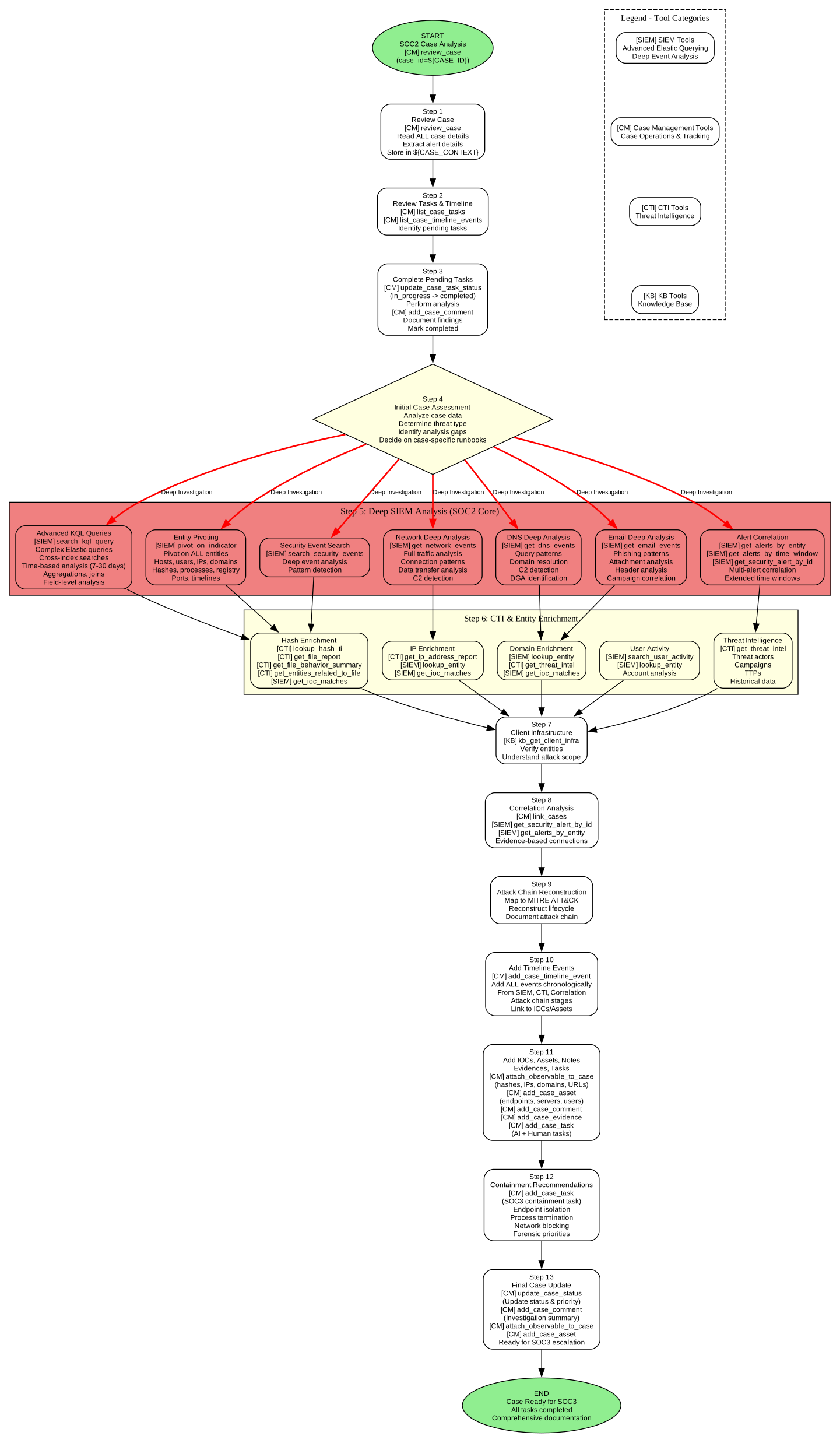
Case Analysis (SOC2)
The SOC2 case analysis workflow performs deep investigation, SIEM analysis, CTI enrichment, correlation, and prepares cases for SOC3 escalation.
Installation
Prerequisites
- Python 3.9 or higher (3.10+ if installing as a systemd service via
servee/) - pip package manager
Setup
See "Quick Start" above for cloning the repository, creating the virtual
environment, and installing dependencies. Once python app.py is running:
- Configure integrations (see Configuration section below)
Connect MCP Server to AI Tools
The official, supported way to use SamiGPT's tools is to connect them to
Open WebUI via the MCP HTTPS listener (see "Confirm Open WebUI is
connected" in Quick Start above). Once SamiGPT is registered as a tool server
in Open WebUI, you can drive it from any LLM provider Open WebUI
supports (OpenAI, OpenRouter, local/self-hosted models, etc.) without any
further per-client setup.
Other MCP-compatible clients that speak stdio or HTTPS — such as Cursor or
Claude Desktop — are also supported and can connect directly topython -m src.mcp.mcp_server (stdio) or the HTTPS listener below, but they
are not the primary/tested integration path and are not documented in
detail here.
HTTPS endpoints when app.py is running (defaults). Send Authorization: Bearer <mcp.api_token>:
- Health:
https://127.0.0.1:8082/health - Tools:
https://127.0.0.1:8082/tools - JSON-RPC:
POST https://127.0.0.1:8082/rpc
Architecture
Infrastructure Overview
Directory Structure
SamiGPT/
├── src/
│   ├── api/              # Generic interfaces (CaseManagementClient, SIEMClient, EDRClient)
│   ├── core/             # Configuration, logging, errors, DTOs
│   ├── integrations/     # Vendor-specific implementations
│   │   ├── case_management/  # TheHive, IRIS integrations
│   │   ├── siem/             # Elastic integration
│   │   ├── edr/              # EDR platform integrations
│   │   ├── cti/              # Threat intelligence integrations
│   │   ├── netbox/           # NetBox DCIM/IPAM integration
│   │   └── eng/              # Engineering board integrations
│   ├── llm/              # Pluggable LLM providers (Cursor, OpenAI, OpenRouter, Open WebUI, custom)
│   ├── mcp/              # MCP server, HTTP transport, supervisor, runbooks
│   ├── orchestrator/     # Workflow orchestration
│   └── web/              # Legacy integration config UI
├── app.py                # Single entry point for the web interface
├── run_books/            # SOC tier runbooks and workflows
├── config/               # Agent profiles and configuration
└── client_env/           # Client-specific infrastructure data (gitignored except templates)
Design Principles
- Vendor-Neutral APIs: All integrations implement generic interfaces, allowing easy swapping of security tools
- Separation of Concerns: AI/orchestrator layer only interacts with generic APIs, never vendor-specific code
- Modular Integration: Each vendor integration is self-contained with HTTP client, models, mappers, and client implementation
Configuration
Configuration is managed through config.json and can be edited via the web interface or directly.
Configuration File Structure
See config.json.example for the complete configuration schema. Key sections:
iris/thehive: Case management configurationelastic: SIEM configurationedr: EDR platform configurationcti: Threat intelligence configurationnetbox: NetBox DCIM/IPAM configurationeng: Engineering board configuration (ClickUp, Trello, GitHub)ai_controller: Web interface bind address and session storagellm: LLM provider used by the web UI (Cursor Agent, OpenAI, OpenRouter, Open WebUI, custom)mcp: HTTP MCP listener host/port and auto-startlogging: Logging configuration
Logging
SamiGPT provides comprehensive logging:
- MCP Server Logs:
logs/mcp/mcp_all.log,mcp_requests.log,mcp_responses.log,mcp_errors.log - Application Logs:
logs/debug.log,logs/error.log,logs/warning.log
Development
Adding a New Integration
- Create integration directory under
src/integrations/ - Implement generic interface from
src/api/ - Add HTTP client, models, and mappers
- Register in configuration
Example structure:
src/integrations/case_management/new_vendor/
├── __init__.py
├── client.py          # HTTP client
├── models.py          # Vendor-specific models
├── mapper.py          # Vendor ↔ Generic DTO mapping
└── case_client.py     # Implements CaseManagementClient
Running Tests
# Run all tests
pytest tests/

# Run specific integration tests
pytest tests/integrations/case_management/
Contributing
When contributing:
- Keep all vendor-specific code under
src/integrations/ - Ensure all integrations implement the generic APIs in
src/api/ - Add tests for new integrations
- Update documentation as needed
License
MIT
Support
For issues, questions, or contributions, please open an issue on the repository.
Acknowledgments
The following projects helped and inspired us during the literature review:
- AI-Powered SOC Detection System - ML-powered SOC platform with autonomous threat detection
- ADK Runbooks - Security investigation runbooks and workflows
Changelog
v0.2
- Single entry point (
app.py) serving an authenticated, HTTPS-only web UI (session login, auto-generated self-signed cert) - MCP server as a separate HTTPS listener with its own health check, supervisor, and start/stop/restart controls from the UI
- Pluggable LLM providers: Cursor Agent, OpenAI, OpenRouter, Open WebUI, and custom OpenAI-compatible endpoints, selectable and testable from Settings
- Open WebUI integration path: SamiGPT registers as an MCP tool server in Open WebUI, so it can be driven from any LLM provider Open WebUI supports
- Approval queue: human-in-the-loop review/approval workflow for agent actions before they execute
- Multi-cluster Elastic support with per-cluster skill vectors (MSV) controlling which capabilities are enabled per cluster
- Skill toggles in Settings: enable/disable individual skills per integration directly from the web UI, instead of editing the skill vector by hand
- NetBox integration (DCIM/IPAM) as a new data source for investigations
- Engineering board integration (GitHub Issues, Trello) for filing follow-up work from investigations
- Requests view in the UI for tracking in-flight and historical tool calls. A request, such as a detection or runbook gap, can be filed directly as a GitHub issue in a repository you configure, for example a Detection-as-Code repository, and its status stays synchronized when that issue is closed
- systemd service installer (
servee/) for running SamiGPT as a boot-persistent service - Secret-handling and TLS hardening (
core/secrets.py,core/tls.py), plus gitleaks-based secret scanning in CI
v0.1 — Black Hat version
Presented at Black Hat MEA 2025.
Performance & Cost
- ~ $0.18 per alert
- ~ 50 seconds to investigate an alert per agent/tab
For detailed cost and usage data, see: Cost Data CSV
Reviews (0)
Sign in to leave a review.
Leave a reviewNo results found