operating-swarm
Health Gecti
- License — License: MIT
- Description — Repository has a description
- Active repo — Last push 0 days ago
- Community trust — 17 GitHub stars
Code Gecti
- Code scan — Scanned 12 files during light audit, no dangerous patterns found
Permissions Gecti
- Permissions — No dangerous permissions requested
Bu listing icin henuz AI raporu yok.
Operating Swarm (OS): provider-agnostic agent operating layer and harness. Native execution, external harnesses, and peer OS instances as one abstraction.
Operating Swarm (OS)
Treat external harnesses and peer instances as one common abstraction.
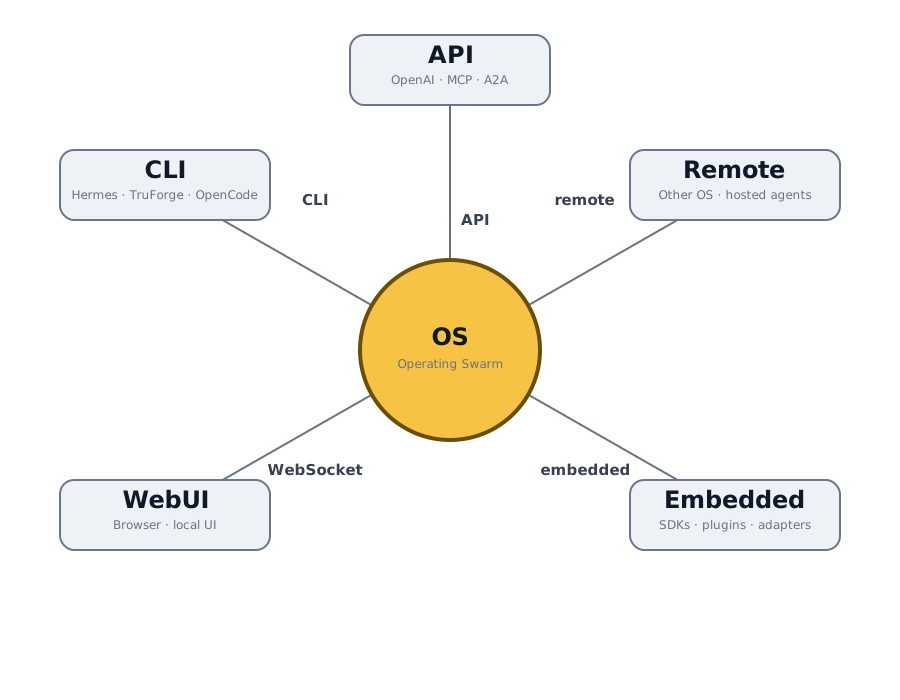
Operating Swarm (OS) is a provider-agnostic agent operating layer and harness. It runs its own native agentic execution (os-core), connects to external harnesses (os-adapter-hermes, os-adapter-truforge), and peers with other Operating Swarm instances (os-peer). Sessions persist while switching providers, harnesses, or OS nodes. OS is not only a UI, wrapper, gateway, adapter, or supervisor.
Three interfaces sit on that core: OS WebUI (os-webui), OS CLI (os-cli, shortcut os), and the OpenAI-compatible OS API (os-api). Umbrella repository: operating-swarm. Python import path remains swarm.
It seats four kinds of agents — CLI, API (true inference), Blueprint (programmatic / openai-agents), and Remote — and composes them with handoff and agent-as-tool. The same blueprint runs from os-cli and from /v1/chat/completions.
WebUI is first-class: left rail + the selected agent’s chat. Other clients (SDK, curl, Open WebUI, and os-cli tui — the interactive terminal client of that same API, REQ-111) hit the same seats at /v1/chat/completions and /v1/responses.
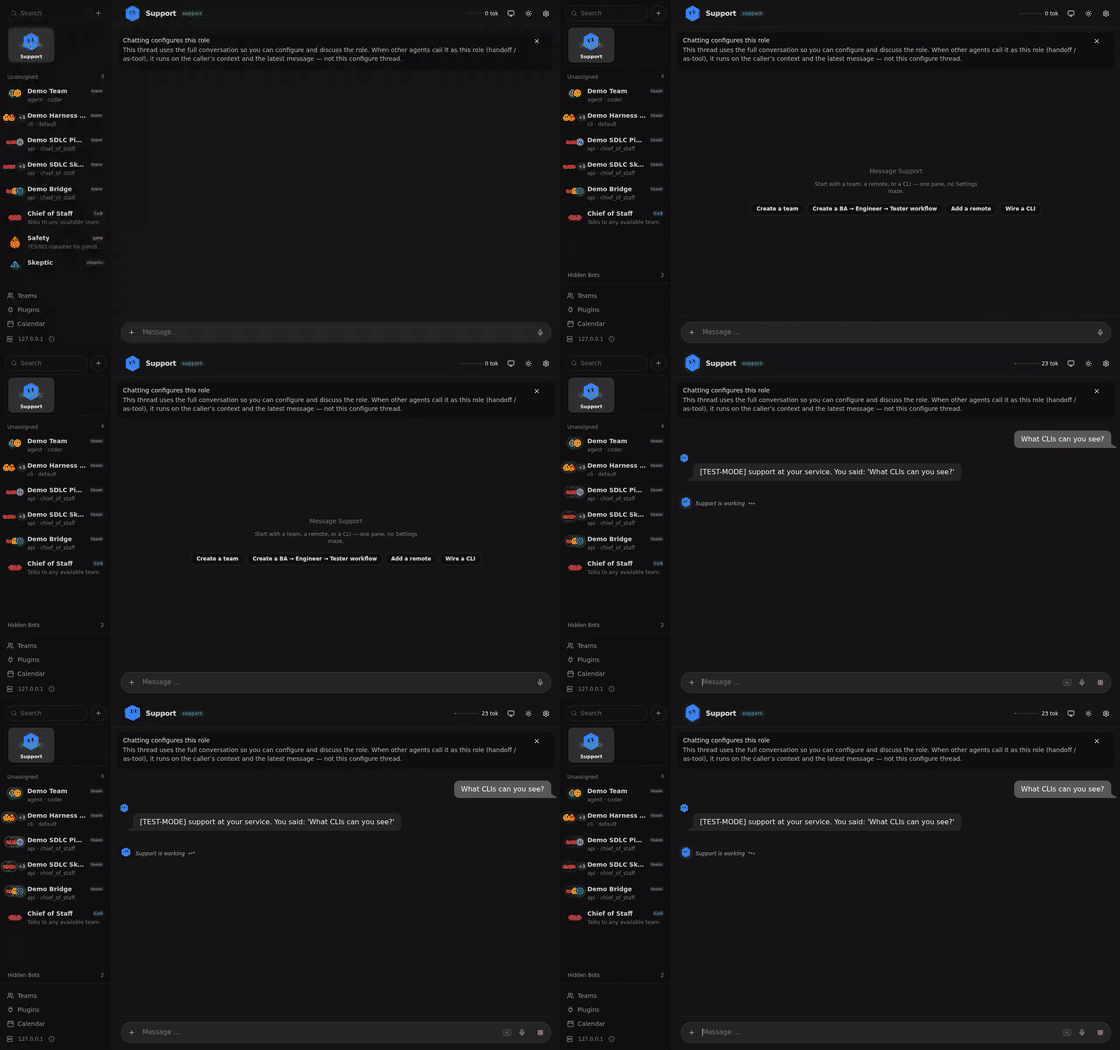
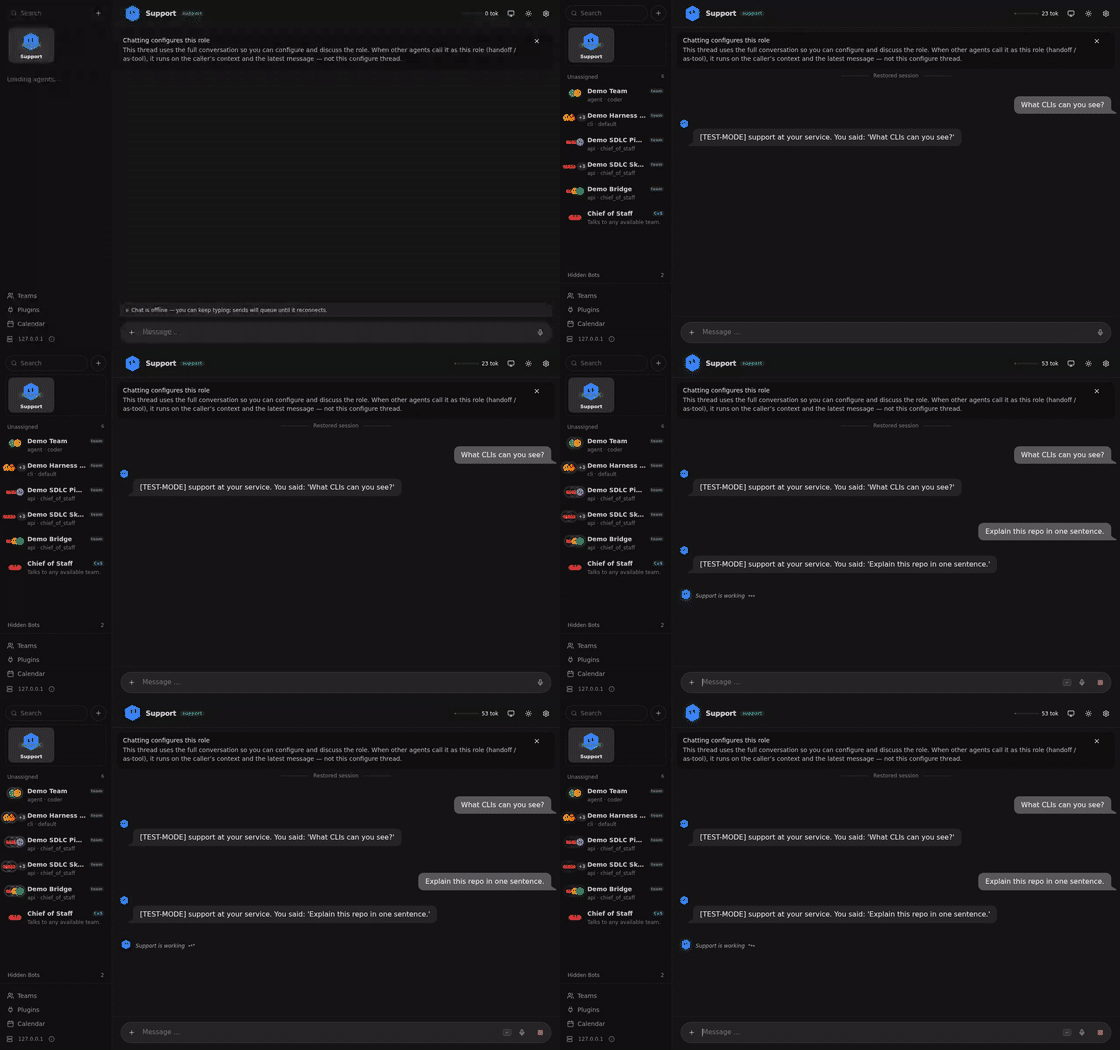
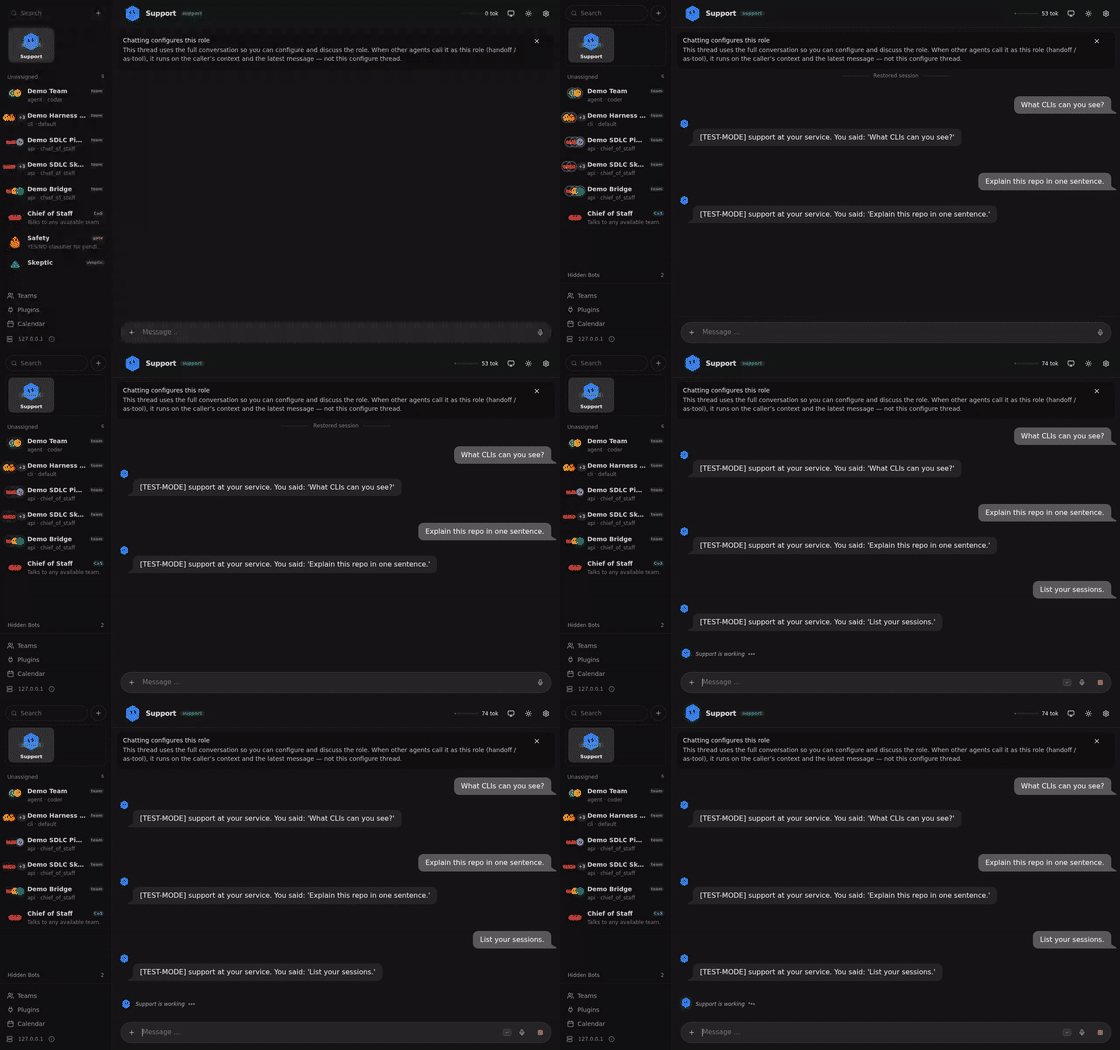
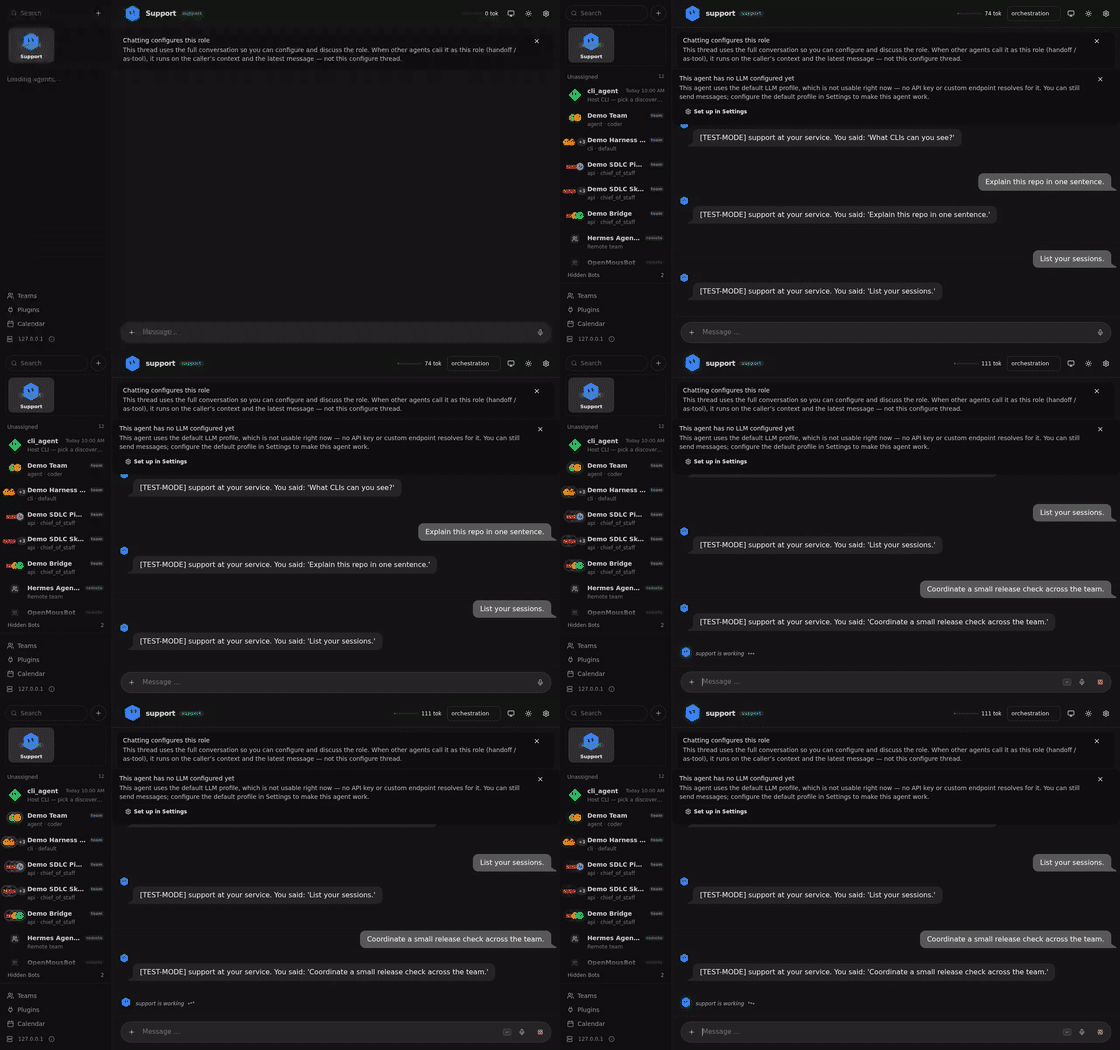
Brand marks live under assets/brand/: minimal for the tab favicon and PWA icons, geometric for in-app WebUI chrome, and cyber-swarm for marketing / website fanfare (#768).
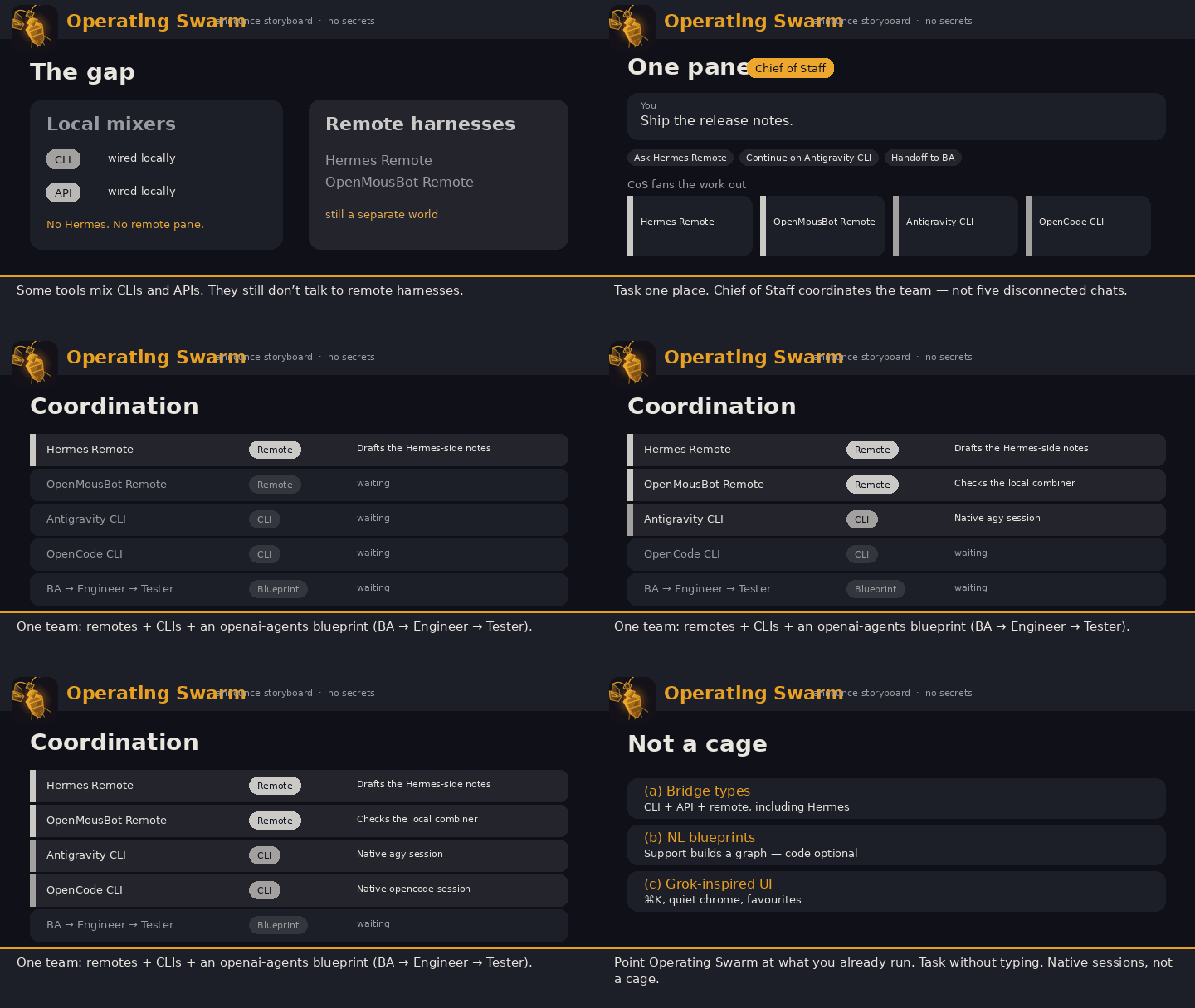
Announce copy, storyboard, and recapture checklist: docs/ANNOUNCE.md (REQ-136 / #529) — Grok-agnostic chrome plus a CLI/API/remote harness bridge. Asset path for this hero and the later CLI / API / remotes / combined kit: docs/assets/readme/ (#456).
Direction: docs/VISION.md. Vocabulary: docs/GLOSSARY.md.
Demos
Compact walkthroughs of Operating Swarm's core agent capabilities — from individual CLI, API, and Remote seats to a unified team combining all three in one flow.
| Kind / Story | What it demonstrates | Preview |
|---|---|---|
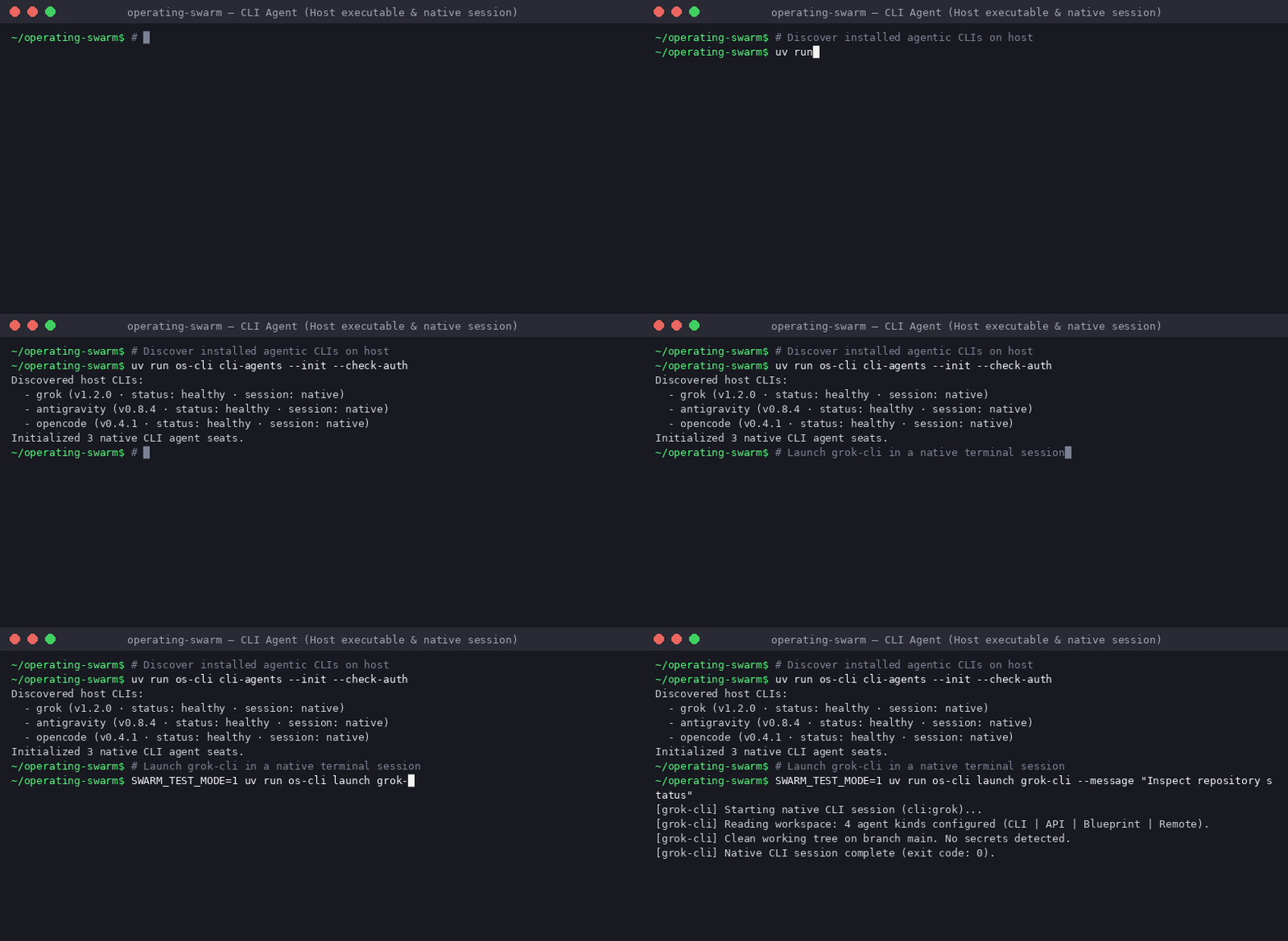
| CLI Agent | Host executable running in a native terminal session (grok, agy, opencode) |
 |
| API Agent | True inference seat queried directly via the OpenAI-compatible HTTP completions API | 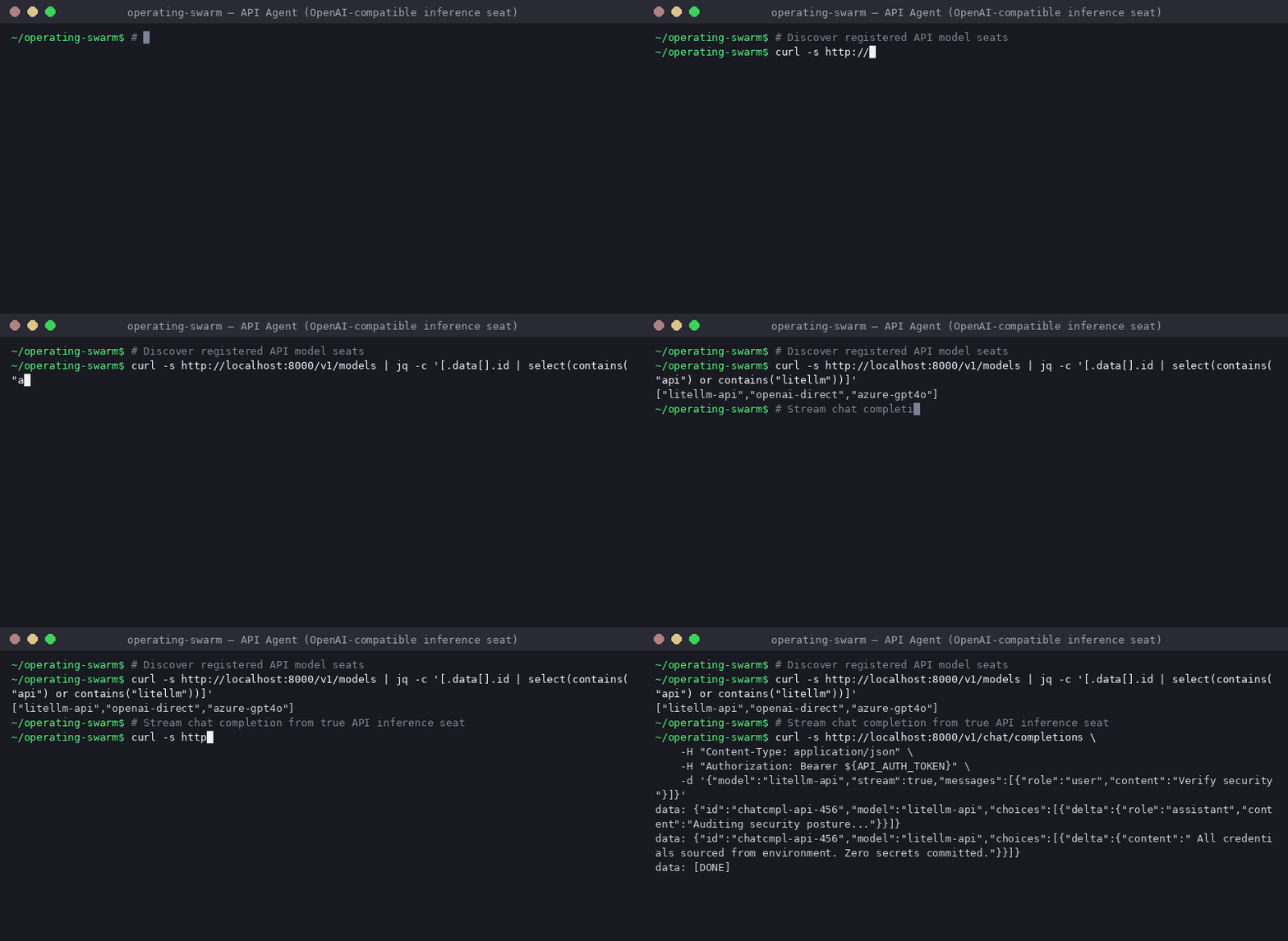 |
| Remote Agent | External agentic harnesses (OpenMousBot, Hermes, Rakazo, Herdr) | 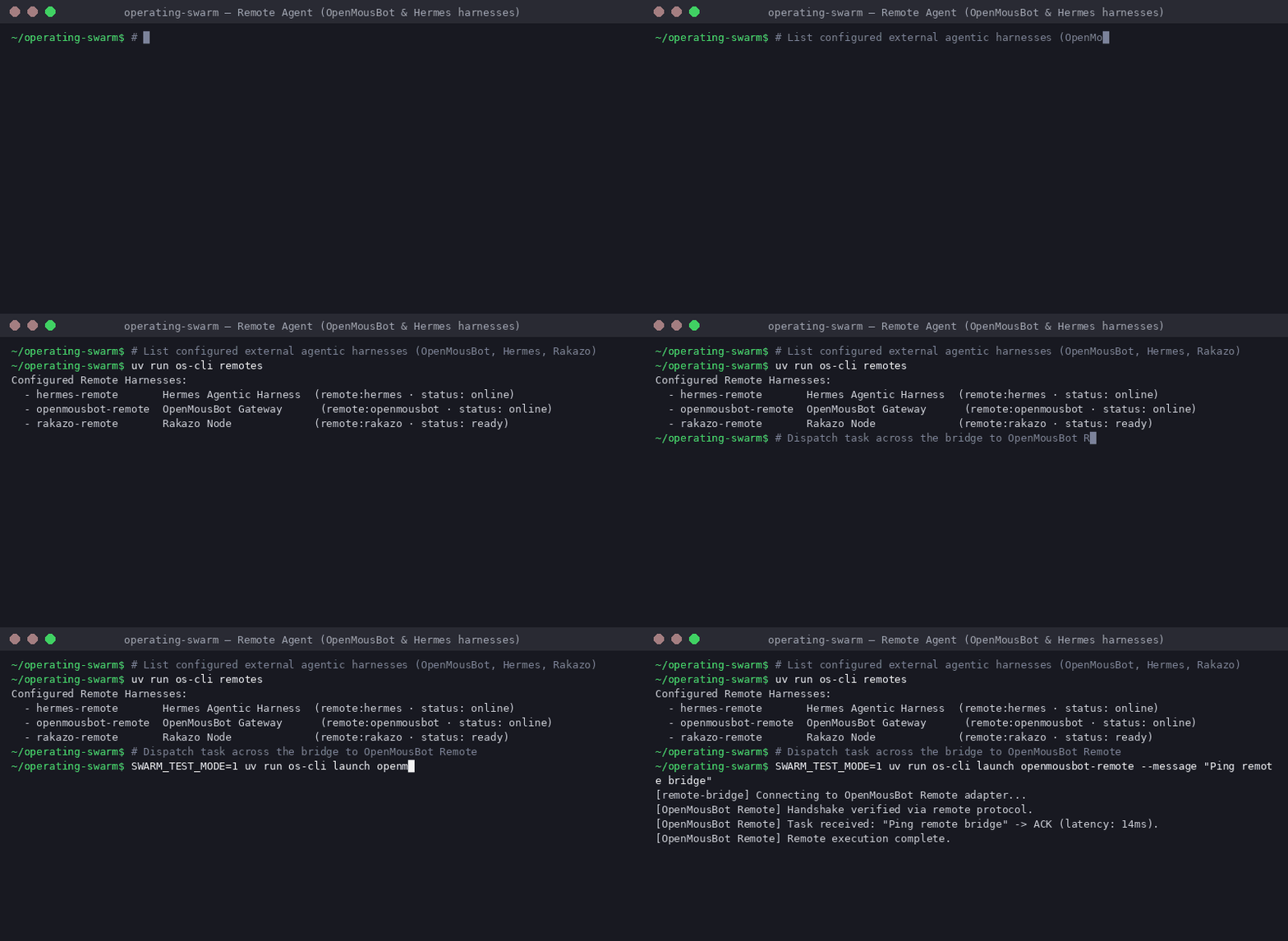 |
| Combined Team | The Operating Swarm differentiator: one flow coordinating CLI + API + Remote via openai-agents handoff | 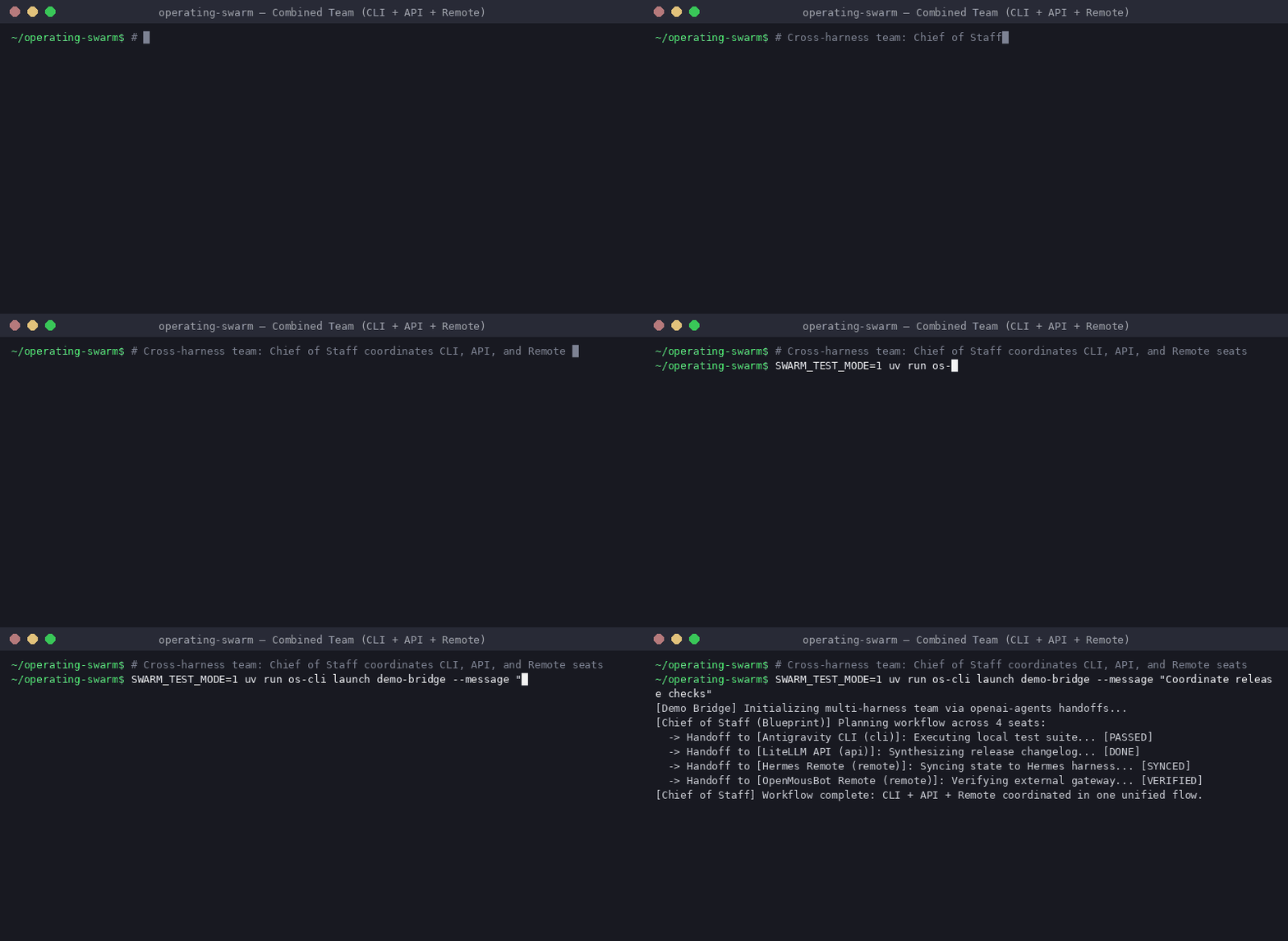 |
A historical terminal loop (one blueprint as CLI + API) is preserved at
docs/demo/cli-and-api.gif.
WebUI (start here)
Product chrome is the Grok-like SPA: rail, remotes, sessions, Settings sheet. / and /chat are that chrome. Django trailing-slash pages (/blueprint-library/, /settings/, /sessions/, …) stay the operator dump — not the pitch.
git clone https://github.com/matthewhand/operating-swarm.git
cd operating-swarm
uv sync --all-extras
cp .env.example .env          # set OPENAI_API_KEY, API_AUTH_TOKEN, DJANGO_SECRET_KEY
cp swarm_config.example.json swarm_config.json   # optional local SoT; secrets stay ${VAR} in .env
make frontend                 # builds webui/frontend/dist/
docker compose up --build     # API + local Postgres (not Neon / not SQLite)
# open http://localhost:8000   # greenfield compose/os-api default
Ports: On a standard
docker compose/os-apisetup, the Operating Swarm ASGI + WebUI listen on:8000. If an upstream LLM gateway or proxy already binds:8000, OS can be run on an alternate port (such as:8002). Ensure client API and session calls target the OS server port. For configuration details, see docs/DEPLOYMENT.md.
Compose’s durable DB is the postgres service. Set DATABASE_URL for any
cloud Postgres. Neon is test/CI only — docs/DATABASE.md.
Without dist/, / falls back to Django templates. Rebuild after SPA pulls. Auth: docs/AUTH.md (websocket needs a session cookie; bearer does not auth WS).
Short history
- 2024-12 — Started as a derivative of OpenAI’s experimental Swarm; Django REST API the same week.
- 2026-02 — First git tag
0.0.1(no GitHub Release, no PyPI0.0.1). - 2026-04 — React Web UI.
- 2026-06 — MoA, CLI fusion,
/v1/responses. Last published cut: v0.5.4 (2026-06-19). PyPI summary still says “Orchestrating AI Agent Swarms with Django.” - 2026-07+ — Remotes, Team handoff rosters, Herdr, Grok-like WebUI chrome — on
main, not in 0.5.4. - 2026-09 — Kinds lock: CLI | API | Blueprint | Remote. Team = Blueprint subtype. WebUI first-class. Built on the openai-agents SDK.
Kinds (locked)
Four user-facing kinds. Team is not a fifth kind.
| Kind | Meaning |
|---|---|
| CLI | Host executable (grok, agy, claude, gemini, opencode, …). Native session. |
| API | True inference seat — OpenAI-compatible chat completions (base URL / model / key-env). Not a graph. |
| Blueprint | Programmatic recipe — openai-agents handoffs, MoA, custom Python. May use inference underneath; the seat is the recipe. Same id via CLI and API only — blueprints do not ship a webpage. The Grok-like WebUI is the product chrome. |
| Remote | Another agentic harness. Implementations: Hermes, OpenMousBot, Rakazo, Herdr (and nested Operating Swarm / OS instance). Variants are adapters, not extra kinds. Herdr is SSH-shaped, not another HTTP remote. |
Team = a Blueprint subtype: a roster plus openai-agents handoff / agent-as-tool so CLI, API, Blueprint, and Remote members can see and talk. Do not call /v1/teams aliases a Team — those are Profiles (LLM-profile aliases).
Honest mid-flight (#652 / ADR-006): on main today, stored api is still the leftover “not CLI, not remote” bucket (mostly recipes). There is not yet a first-class “wire this endpoint” seat. Target: rename those seats to blueprint, then introduce a true api inference seat. Prefer the four names above in new copy.
Why openai-agents
The differentiator is a programmatic graph — not “let chat figure it out,” and not “many concurrent seats” (Grok Bot / Rakazo / OpenMousBot). openai-agents handoff / agent-as-tool can enforce a forced BA → Engineer → Tester sequence, or a circular Skeptic punt-back.
Limit (up front): that graph runs inside Blueprint seats (today’s leftover api bucket). We cannot inject openai-agents into CLI or Remote harnesses — those stay native sessions. Cross-kind teams still work: a Blueprint coordinator can sit with a Grok CLI and a Hermes Remote.
Two ways to build a team
Under the hood a team/workflow is a Python blueprint class (ADR-005). That is the power-user path.
Happy path: ask Support in natural language. Underspecified “create a team” is Socratic; “Create a BA → Engineer → Tester workflow” drafts immediately. You do not write Python. Add as agent or Save as blueprint persists the draft. Code stays hidden unless you choose View / edit code. The product bootstraps more of itself this way (REQ-158 / #567 / #440). Guided path + checklist (GitHub-only): docs/SUPPORT_NL_BLUEPRINTS.md.
Mermaid, kind bases, and the :8001 seed live on docs/DEVELOPER.md. Worked configs: docs/examples/openai-agents-handoff-graphs/ (REQ-156 / #564). Demo roster names (Mode A kind-clear vs Mode B personas): docs/SHOWOFF_DEMO_AGENTS.md (REQ-135 / #526). Kind-base ADR: ADR-005 (REQ-159 / #570).
Install (version honesty)
| Source | Fact |
|---|---|
main (this repo) |
Current product: WebUI chrome, remotes, Team rosters, four-kind lock. Prefer clone. |
PyPI open-swarm |
Latest 0.5.4 (2026-06-19). Same as GitHub Release v0.5.4. In-tree stub at packaging/open-swarm-alias/ (#296) will be the next PyPI open-swarm (deprecation alias → os-core); that upload waits until os-core is on PyPI. |
PyPI / pyproject.toml summary |
Still “Orchestrating AI Agent Swarms with Django.” Classifier is Alpha. That published wheel does not include Grok chrome, remotes catalog, or combined-team work landed after June. |
| GitHub Release title | v0.5.4 — django_chat resolves its LLM profile — historical; not the 2026-09 pitch. |
# What main actually runs
git clone https://github.com/matthewhand/operating-swarm.git
cd operating-swarm
uv sync --all-extras
pip install open-swarm is the June 2026 cut. Do not expect this README’s kinds or WebUI from that wheel.
Python >= 3.10. Node >= 22 only if you build the WebUI.
Run from the operator CLI / API
export OPENAI_API_KEY="sk-..."

# CLI kind — discover installed agentic CLIs
uv run os-cli cli-agents --init --write --check-auth
uv run os-cli launch cli_agent --message "What CLIs can you see?"

# Blueprint kind — same recipe as an OpenAI `model` id
uv run os-cli launch codey --message "Explain this repo's structure"

# Remote kind — fresh install catalog is empty until Settings +Add (OpenMousBot / Hermes / Rakazo / Herdr).
# A populated live host may already list remotes; tip defaults stay empty-until-Add.
uv run os-cli remotes
# uv run os-cli remotes place <id>

# OpenAI-compatible door (after the WebUI / compose steps above).
# Standard compose/os-api listens on :8000.
curl -sf http://localhost:8000/v1/models | jq .
curl -sf http://localhost:8000/v1/chat/completions \
  -H "Content-Type: application/json" \
  -H "Authorization: Bearer ${API_AUTH_TOKEN}" \
  -d '{"model": "cli_agent", "messages": [{"role":"user","content":"ping"}]}' | jq .
model selects which seat / recipe handles the request. Streaming is supported. Full CLI reference: USERGUIDE.md. Remotes: docs/REMOTE_HARNESSES.md. Herdr: docs/HERDR.md. CLI wrap / fusion (not the first team story): docs/CLI_FUSION.md. MoA consensus (not the first team story): docs/MOA.md.
Pinokio (local sideload)
Operating Swarm is not in the Pinokio public catalog. In Pinokio, add the git URL only (Download from URL / sideload) — do not search Discover:
https://github.com/matthewhand/operating-swarm.git
Then Install → Start → Open App. Compose sets SWARM_RUNTIME=sandbox-home (REQ-45). Pinokio requires root pinokio.js; install/start/update scripts live under pinokio/.
Links
- docs/ANNOUNCE.md — launch spiel + hero GIF (REQ-136 / #529)
- docs/VISION.md — where we are going (kinds, WebUI, remotes)
- docs/GLOSSARY.md — kinds, Team vs Profiles vs roster
- USERGUIDE.md —
os-clitasks - docs/REMOTE_HARNESSES.md · docs/HERDR.md
- docs/AUTH.md · CONFIGURATION.md (
swarm_config.example.json) - FEATURE_STATUS.md · ROADMAP.md
- docs/DEVELOPER.md — gateway,
/v1/responses, dated history, contribution pointers - docs/diagrams/ — visual architecture stack, taxonomy tree, lifecycle state machine, and delegation sequence diagrams
- CONTRIBUTING.md
Recipes and pattern diagrams stay in docs/EXAMPLES.md and docs/ORCHESTRATION_PATTERNS.md — they are not the front door.
Status
Alpha (pyproject.toml / PyPI classifier). main is ahead of published 0.5.4. Core CLI, OpenAI-compatible API, websocket chat, and the Grok-like WebUI are working and covered by keyless pytest plus frontend unit tests. Honest gaps (true API inference seat, live mem0, MCP server mode, desktop installer): FEATURE_STATUS.md.
Acknowledgements
Operating Swarm began as Open Swarm, an extension of OpenAI’s experimental Swarm, and migrated to the openai-agents SDK for agents, tools, and handoffs.
License
MIT — see LICENSE. Attribution and vendored-asset notices live in NOTICE.
Contributing
Issues and PRs welcome. See CONTRIBUTING.md and docs/DEVELOPER.md.
Yorumlar (0)
Yorum birakmak icin giris yap.
Yorum birakSonuc bulunamadi