heading-os
Health Warn
- License — License: Apache-2.0
- Description — Repository has a description
- Active repo — Last push 0 days ago
- Low visibility — Only 6 GitHub stars
Code Pass
- Code scan — Scanned 12 files during light audit, no dangerous patterns found
Permissions Pass
- Permissions — No dangerous permissions requested
No AI report is available for this listing yet.
The operating system an executive runs their company from — research, communications, CRM, content, and operations. Claude Code is the foundation; HEADING OS is the value built on top: sovereign, security-first, your data kept private.
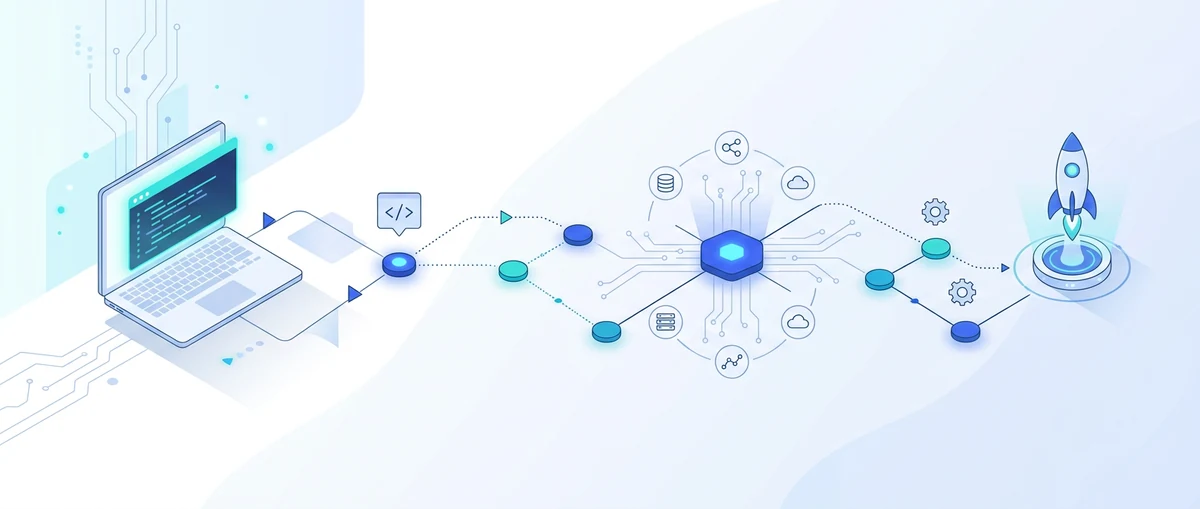
HEADING OS
The operating system an executive runs their company from — research, communications, CRM, content, and operations.
Claude Code is the foundation; HEADING OS is the value built on top: sovereign, security-first, your data kept private.





HEADING OS is the workspace an executive actually runs their work from — research, communications, CRM, content, operations — with Claude Code as the agent and a strict line drawn between the code and the data. The code is a shareable engine. The data is a private repository the engine never contains and never leaks. That separation is the whole design, and it is enforced, not just intended.
It is named after its operating philosophy: the Navigation Principle — you set a heading and hold it, correcting course as conditions change, rather than steering toward a fixed point and hoping. The same idea runs through the system: durable state over one-shot prompts, verified completion over hopeful timeouts, operational states over rigid targets.
The two-repository design
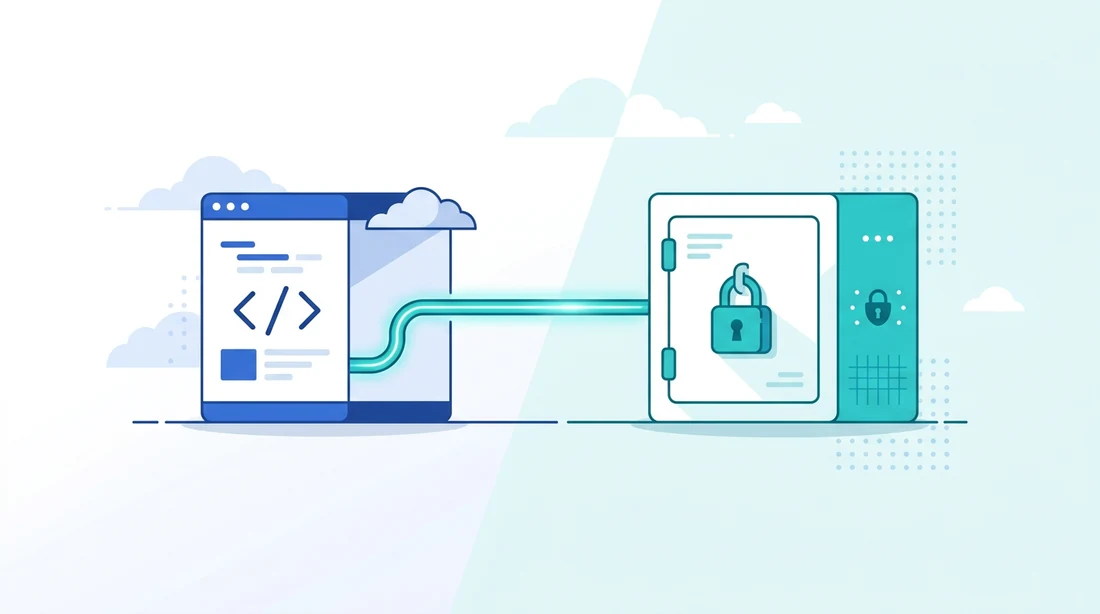
Most agent setups keep code and data in one place. HEADING OS splits them on purpose.
flowchart LR
  subgraph ENGINE["ENGINE — .heading-os (this repo)"]
    direction TB
    E1["skills · scripts · rules · hooks · tests"]
    E2["shareable · public"]
  end
  subgraph DATA["DATA — .heading-os-data (private, yours)"]
    direction TB
    D1["crm · knowledge · outputs · threads · context"]
    D2["private forever"]
  end
  ENGINE -->|"get_data_root()"| DATA
- ENGINE (this repo) — skills, scripts, rules, hooks, and tests. No real data, no secrets, no personal information. Shareable, and intended to be public.
- DATA (a separate private repo, yours) — CRM, knowledge, generated outputs, operational threads, and context. The engine resolves it at runtime through a single seam (
get_data_root()), as a sibling directory or via theHEADING_OS_DATAenvironment variable.
You clone the engine; you create your own private data repository (one command); you wire them together. The engine carries the logic, your data stays with you.
What's inside
- Skills — slash-command workflows for research, communications, content, CRM, strategy, and operations, routed from natural language by a single router rule.
- Hooks —
PreToolUse/PostToolUse/SessionStartguards that enforce the rules below before a write ever lands. - Daemons — optional always-on background services (a loopback dashboard, mail/calendar sync) that are driven from the CLI, never required through a browser.
- A security model with teeth — not policy prose alone:
- Engine ⟂ data separation is proven by six enforcement layers (a bypass guard, a leak guard, a data-path redirect, a build partition, a runtime tree-clean check, and an unbypassable push-time wall in pure code), so the engine clone cannot carry private data regardless of how a file was written — and the data cannot leave on the push, on any path.
- Outbound send is always human-gated — the lethal-trifecta control. An agent can draft and queue a message; a human clicks before anything leaves.
- Secrets never reach a remote — a content scan on the sanctioned push path is pure code with no skip flag, behind a bypassable commit-time hook.
- No "hope-based" waiting — every must-complete step (every push) runs under a progress watchdog that declares a hang only on real inactivity and verifies the postcondition, never trusting a wall-clock timeout or a bare exit code.
- Console-first — every capability is operable from the terminal and from Claude Code chat. The dashboard is a convenience layer, never a dependency.
Quickstart
The full documentation — prerequisites & install, the architecture overview, the security model, daemons & scheduled tasks, the skill/MCP/plugin catalog, the AI model integrations (local Ollama embeddings, the Council models), the service integrations (Exchange email, Telegram, Google, OSINT), workspace personalization, a guide to extending the engine, the memory systems & ODIN, and the data-overlay structure — is published as a browsable site at mishahanin.github.io/heading-os.
The zero-to-running walk-through — WSL2, toolchain, prerequisites, Claude Code, your private data repo, and the engine wired to it — is in docs/DEPLOYMENT.md (with docs/QUICKSTART.md for the short version).
Three focused setup guides cover everything beyond the core install:
- docs/MODELS-SETUP.md — the AI models: installing Ollama for the local
bge-m3embedder behind/recall, and wiring Gemini, Grok, and Kimi as the/councilvoices. - docs/INTEGRATIONS-SETUP.md — the services: Exchange email, Telegram, Google contacts, and the OSINT / web-research APIs, with where to get each key and how to verify.
- docs/MAKE-IT-YOURS.md — personalizing a clone:
/setup-wizardto generate your voice, business, and personal docs, set your identity, and adapt the house terminology to your own.
The short version, once the prerequisites are in place:
# 1. Clone the engine
git clone https://github.com/mishahanin/heading-os.git .heading-os
cd .heading-os

# 2. Install dependencies (Python 3.11, managed by uv)
uv sync

# 3. Create your own private data repository (one command)
uv run python scripts/create-data-repo.py

# 4. Wire secrets and arm the commit gate
cp .env.example .env        # fill in what you use
pre-commit install

# 5. Verify, then start
uv run python scripts/workspace-health.py
claude       # then /prime
Repository layout
| Path | What it holds |
|---|---|
.claude/ |
Skills, rules, and hooks — the agent's behaviour |
scripts/ |
CLI tools and scripts/utils/ shared modules |
config/ |
routing-map.yaml (the data/engine classifier) and engine config |
docs/ |
The deployment guide, the segregation contract, and this engine's docs |
tests/ |
The regression suite (security tests under tests/security/) |
reference/ |
Engine reference material |
examples/ |
A read-only demo data tree for a data-less clone |
Security
Security is treated as a first-class concern, not an afterthought. The model is walked through end to end in docs/SECURITY-MODEL.md (the lethal-trifecta control, the engine/data layers, the send-gate, the secret gates); the reporting policy and posture summary are in SECURITY.md; the engine ⟂ data guarantee is specified in docs/engine-data-segregation-contract.md.
If you find a vulnerability, please report it privately (see SECURITY.md) rather than opening a public issue.
Status
v0.1.0. The architecture, the security model, and the data seam are stable and load-bearing. Skills and daemons evolve. Interfaces may change between minor versions while the project is pre-1.0.
Contributing
Issues — bug reports, questions, and ideas — are welcome. Pull requests are accepted by invitation: please open an issue to discuss a change before sending code, so the work fits the direction. See CONTRIBUTING.md and the Code of Conduct.
License
Apache License 2.0 — see LICENSE and NOTICE. You may use, modify, and distribute the engine with attribution; the patent grant and trademark terms are in the license. HEADING OS, ODUN.ONE, and the 31 Concept marks are trademarks of 31 Concept.
Author
Built by Misha Hanin, Founder & CEO of 31 Concept (31C) — [email protected].
Reviews (0)
Sign in to leave a review.
Leave a reviewNo results found