codex-statusline
Health Warn
- License — License: MIT
- Description — Repository has a description
- Active repo — Last push 0 days ago
- Low visibility — Only 9 GitHub stars
Code Pass
- Code scan — Scanned 12 files during light audit, no dangerous patterns found
Permissions Pass
- Permissions — No dangerous permissions requested
No AI report is available for this listing yet.
Status bar for Codex CLI and Claude Code: context, 5h/weekly quota with reset times, tokens.
codex-statusline
See your Codex and Claude Code context and quota at a glance.


English | 简体中文
A status bar for OpenAI Codex CLI and Claude Code. It shows context used, 5-hour and weekly quota left with reset times, and session tokens. You keep running codex and claude exactly as before.
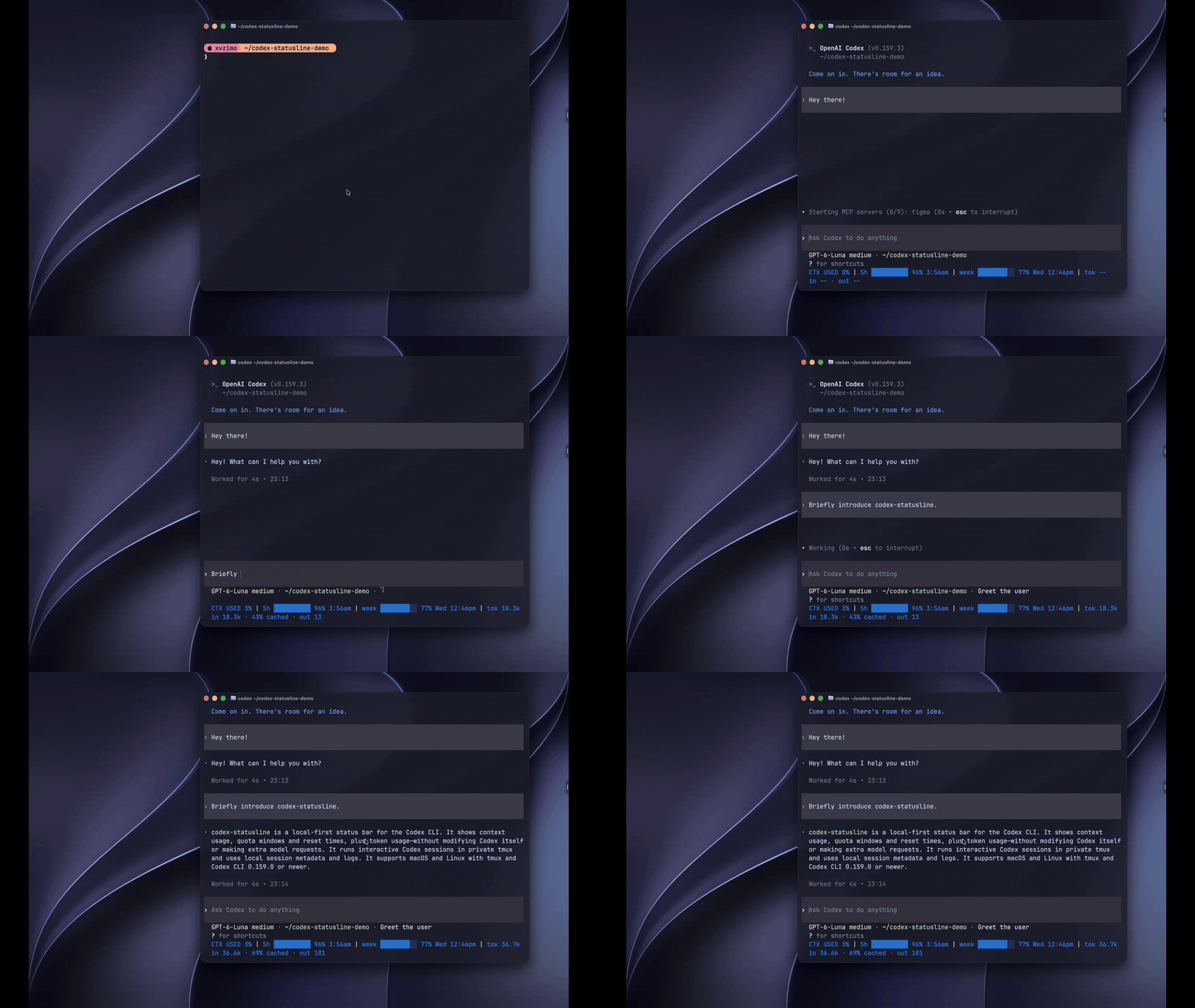
Why
- No more
/statusinterruptions. Quota and context sit in view while you work. - Local data only. Never reads
auth.json, never calls a quota API, never makes extra model calls. The one network request is a version check against PyPI whencodexstarts (turn off withupdate_check = false). - Zero new habits. Keep typing
codex.codex exec, pipes, and scripts pass straight through to the official binary. - Always current. Quota is account-wide, so the freshest reading from any of your local Codex sessions is shown, and the bar flips to 100% the moment a window resets. Unknown shows as
--, never a made-up number. - Fits any width. Segments collapse, then drop, as the terminal narrows.
Install
Requires macOS or Linux, tmux, and Codex CLI ≥ 0.159.0. Bash, Zsh, and Fish are all detected automatically.
curl -fsSL https://raw.githubusercontent.com/Moviw/codex-statusline/main/install.sh | sh
The script installs uv if needed (uv also fetches Python 3.11+ for you), installs the tool, then shows you the exact shell/hook diff and asks before writing anything.
Prefer to do it yourself:
uv tool install codex-statusline    # or: pipx install codex-statusline
cxbar install                       # add --dry-run to see the plan first
Then open a new terminal and run codex. The first time, Codex asks you to review a hook: confirm it is codex-statusline binding.
Missing tmux? brew install tmux or sudo apt install tmux.
Claude Code
The same bar works in Claude Code: cxbar install sets it as Claude Code's statusLine when it finds ~/.claude, so claude shows the current model and the same two lines, plus the session cost:
Opus 5.5 | CTX USED ███░░░░░ 35% | 5h ██░░░░░░░░ 18% 3:46pm | week ██████░░░░ 62% Sat 1:46pm | tok 1.2M
in 1.2M · 94% cached · out 44.0k · ≈$1.84
- Keeps what you have. Already using another statusLine? Install leaves it alone;
cxbar install --claudeswitches, andcxbar uninstallputs yours back. - No tmux needed on the Claude side: Claude Code passes the numbers to the bar directly.
- Every account. Pro and Max see 5h and weekly quota with reset times; API-key users see context, tokens, and cost.
- One config.
cxbar configchanges the bar in both tools.
Usage
codex                     # same as always, now with a status bar
codex resume --last
codex exec 'task'         # non-interactive: passed straight through, no bar

cxbar config              # pick segments, theme and colors interactively
cxbar update              # upgrade, whichever way you installed it
cxbar update --check      # only check whether a new release is out
cxbar doctor              # check your setup; prints the fix for anything wrong
cxbar uninstall
cxbar is the short name for codex-statusline; both work.
Uninstall removes only what this tool added and still matches exactly. If you edited its block, it stops instead of overwriting. Backups live in ~/.local/share/codex-statusline/.
Configuration
Run cxbar config to set everything up in an interactive screen with a live, colored preview. Codex and Claude Code each get their own tab (press Tab to switch), so the two bars can look different: toggle and reorder segments, choose what the second line shows, switch theme, set the warning thresholds, then press s to save.
  codex-statusline config

  [ Codex ]   Claude Code      Tab: switch

  Preview
    CTX USED ███░░░░░ 35% | 5h ██░░░░░░░░ 18% 3:46pm | week ██████░░░░ 62% Sat 1:46pm | tok 1.2M
    in 1.2M · 94% cached · out 44.0k | ⎇ main +42 -10

  Line 1
▶ [x] ctx     context used
  [x] 5h      5-hour quota
  [x] week    weekly quota
  [x] tokens  session tokens
  Line 2
  [x] usage   tokens in / cached / out
  [x] git     branch and uncommitted +/- lines
  [ ] pace    when quota runs out at this pace
  Style
  Theme            < auto >
  ASCII only       [ ]
  Quota yellow at  < 40% >
  Quota red at     < 20% >
  Update notice    [x]
The second line has four parts:
usage(on by default): tokens sent, how much of that hit the cache, and tokens generated.cost(on by default): the session's estimated cost at list price. Claude Code only.git(on by default): the branch and how many lines are added and removed since the last commit, counting new files the agent created too, e.g.⎇ main +42 -10. Hidden outside a git repo.pace(off by default): when your 5h and weekly quota run out at the rate you have used them so far, e.g.week pace: runs out ~Tue 1:27am, orlasts to reset.
Turn them all off to keep a single line.
The first-line model segment shows the current model, including its version when available. It is on by default in Claude Code and off in Codex, whose own footer already shows the model. Toggle or reorder it in cxbar config, or set segments per tool below. Codex does not supply session cost, so enabling cost cannot produce a dollar amount there. The git segment appears only when the session's working directory is inside a Git repository.
It writes ~/.config/codex-statusline/config.toml, which you can also edit by hand:
# Top-level keys apply to both tools; [codex] and [claude] override them per tool.
segments = ["ctx", "5h", "week", "tokens"]  # pick and reorder
theme = "auto"     # auto (follow terminal) | dark | light
ascii = false      # true for terminals without block glyphs
warn_at = 40       # quota remaining % that turns yellow
crit_at = 20       # quota remaining % that turns red
update_check = true  # show "↑ update available" in the bar when one is out
line2 = ["usage", "cost", "git"]  # second line: any of "usage", "cost", "git", "pace"; [] for none

[claude]
segments = ["model", "ctx", "5h", "week", "tokens"]
line2 = ["usage", "cost", "git", "pace"]  # e.g. pace only in Claude Code
Context turns yellow from 60% used and red from 80%.
Invalid values are reported and fall back to defaults.
How it works
codex becomes a small shell function that starts the official CLI inside a private tmux session and draws the bar at the bottom. Data comes from two places only: the terminal title Codex already emits (model, context, thread id), and local Codex session logs: this session's log (pinned by exact path through a SessionStart hook) for context and tokens, plus the most recent local logs for account-wide quota. Only quota and token counters are read, never chat text. The git segment runs read-only git commands in the project directory. The official binary is not replaced or patched, and your tmux config is not touched. Details: docs/architecture.md.
FAQ
Is this official? No. It is a third-party tool built on a version-sensitive integration.
Windows? Not supported.
Reviews (0)
Sign in to leave a review.
Leave a reviewNo results found