convoy
Health Uyari
- License — License: NOASSERTION
- Description — Repository has a description
- Active repo — Last push 0 days ago
- Low visibility — Only 6 GitHub stars
Code Basarisiz
- rm -rf — Recursive force deletion command in .devcontainer/devcontainer.json
- fs.rmSync — Destructive file system operation in apps/cli/package.json
- fs module — File system access in apps/cli/package.json
- process.env — Environment variable access in apps/cli/scripts/deploy.test.ts
Permissions Gecti
- Permissions — No dangerous permissions requested
Bu listing icin henuz AI raporu yok.
A software factory for teams. Tasks, AI coding agents (Claude Code, Codex, OpenCode, Cursor) and code review in one self-hosted app.
Convoy
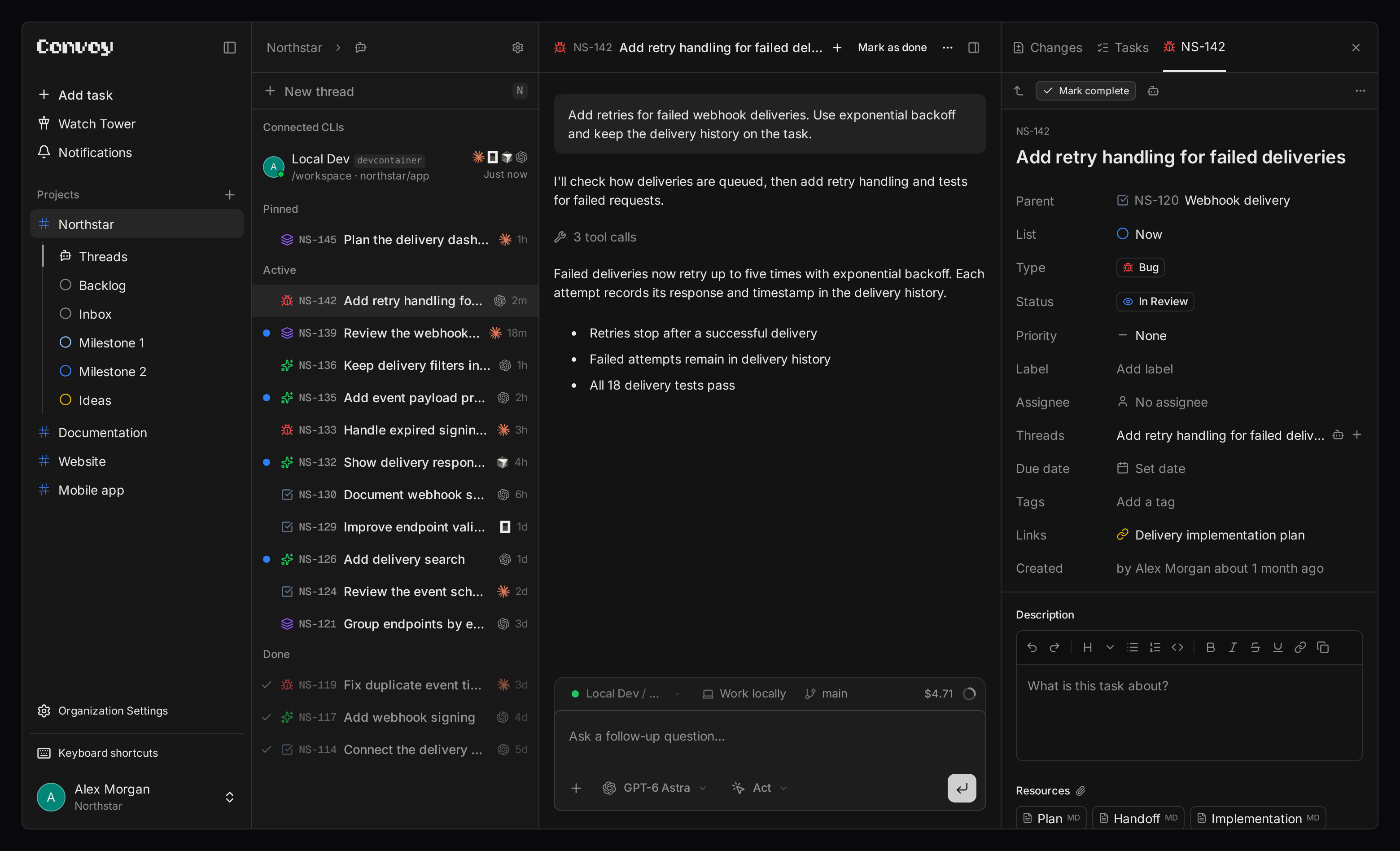
Convoy is a project management app for teams working with AI coding agents.
Manage tasks, run Claude Code, Codex, OpenCode or Cursor against your repos,
and review their output in the browser. Agents run on your machines; the web
app shows their conversations, tool calls and code changes.
Open project → Actions → Runtime access to check accounts or change access
after setup. The same screen during project setup shows native login status from the project's
private environment. Each runtime has separate authentication and account-status rows. Sign-in actions
are grouped below the status;
Refresh checks the account again. Account checks require CLI 0.123.0 and the
updated project launcher in the execution environment. Shared project notices
group runtime warnings; press w to read complete diagnostics and recovery steps.
Run it
Install Docker with Compose, then:
git clone https://github.com/packtrain/convoy.git
cd convoy
./self-hosted/start.sh
Open localhost:3000 when setup finishes.
The script starts the web app and Convex backend. Choose local demo to try
it without an account, or Clerk for multi-user authentication. Demo mode
has no authentication. Keep it on localhost and don't use it for sensitive data.
See the self-hosting guide for configuration and upgrades.
Connect an agent
On the machine with your repos, install and authenticate a supported coding
agent, then install the Convoy CLI with npm:
npm install -g @useconvoy/cli
convoy
Follow the setup wizard to connect your deployment, project and local repo.
Keep the CLI running, open a thread in the web app, select your connected
profile and agent, and send a message. Run convoy connect to reconnect later.
See CLI setup for details.
Convoy is developed and tested on macOS. Linux and Windows should work but get
less testing. If something breaks on your platform, issues and pull requests are
welcome.
Features and roadmap
| Feature | What it does | Status |
|---|---|---|
| GitHub integration for PRs | Connect GitHub repositories and read their pull requests in Convoy: commits, checks, merge status, stacks, referenced tasks, and diffs with Reviewed marks. PR links in tasks and threads open the reader. Comments, reviews with inline comments, reviewer requests, state changes, and merging run as each member's GitHub account. | In progress |
| PR guided reviews | Review pull requests with a guided review flow. | In progress |
| Remove environments | Remove configured environments. | Next |
| Recurring tasks | Create tasks on a repeating schedule. | Next |
| Task templates | Create tasks from reusable templates. | Next |
| Skills, prompts and workflows packs | Bundle reusable skills, prompts and workflows. | Next |
| Mobile app | Access Convoy from a dedicated mobile app. | Next |
| Kanban and task lists | Track tasks with custom statuses, labels, priorities and sections. | Available |
| Claude Code, Codex, OpenCode and Cursor | Run agents against your repos and follow output in browser threads. | Available |
| Diff review | Inspect code changes and leave inline comments. | Available |
| Usage and cost tracking | See reported usage and estimated costs per thread. | Available |
| Task assignment to agents | Start work automatically when a task is assigned to a project agent. | Available |
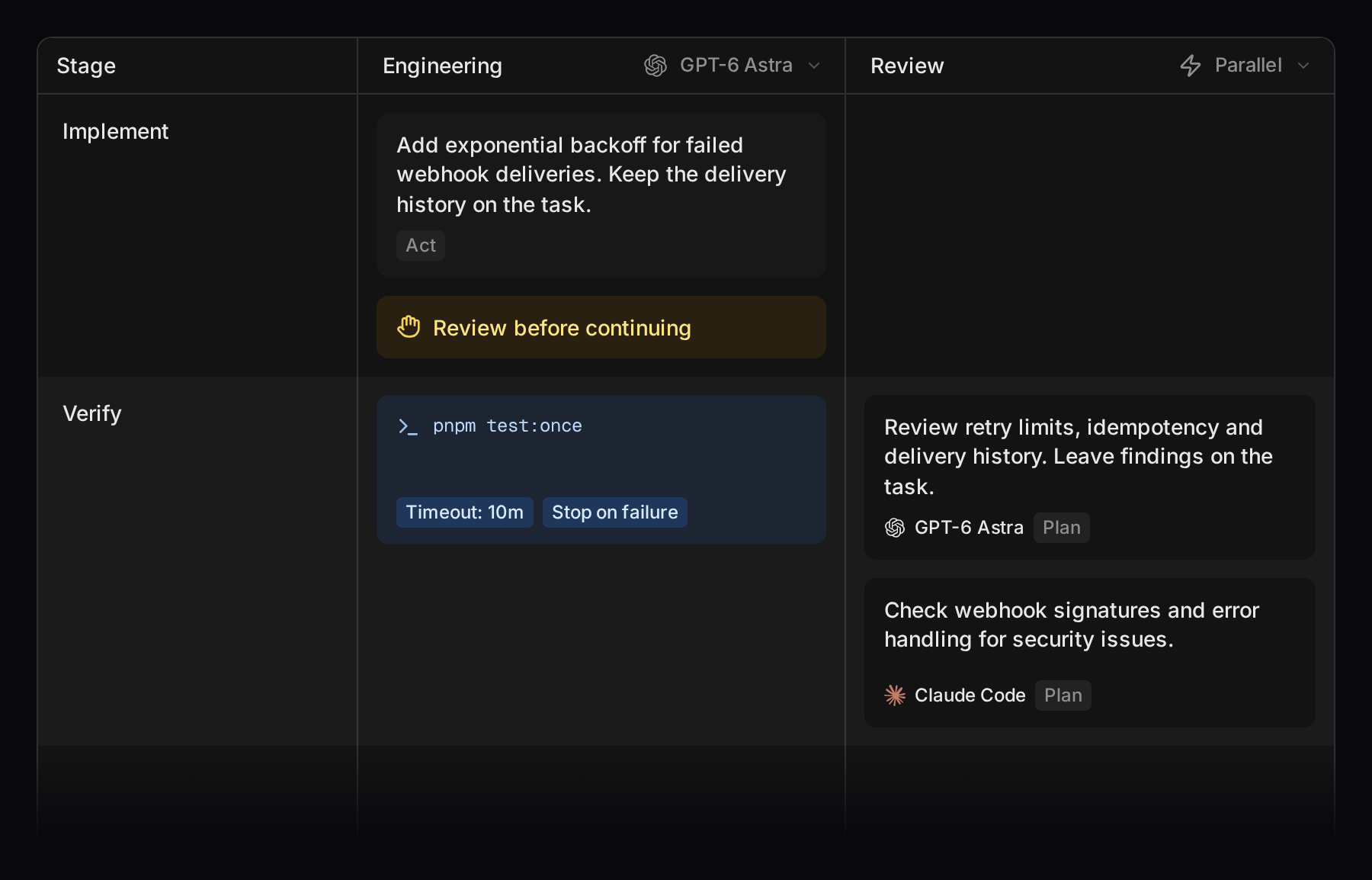
| Workflow editor | Define agent stages, checks and human approval gates. | Available |
| Shared and isolated environments | Run every project under your own account and logins, or opt in to a Linux account and sandbox per project. | Available |
| Git worktree isolation | Give agent threads separate working copies and branches. | Available |
| Thread concurrency limits | Cap simultaneous agent threads per profile. | Available |
| Quick thread | Press Shift+N on any page to start a thread in the background; Cmd/Ctrl+Enter starts it and opens it. | Available |
| Watch Tower | Track your threads across projects, or view team activity inside a project. | Available |
| Thread sharing | Give project teammates a read-only link to a conversation. | Available |
| Checks and evidence | Give tasks checklists, inspect agent-reported results and evidence, and request another check run. Try the interactive preview on the landing page. | Available |
| Attachments and task documents | Share files and keep plans, reviews and notes with tasks. | Available |
| Project permissions | Manage organizations, roles and invitations. | Available |
| CLI and MCP server | Manage tasks and connect external AI tools to Convoy. | Available |
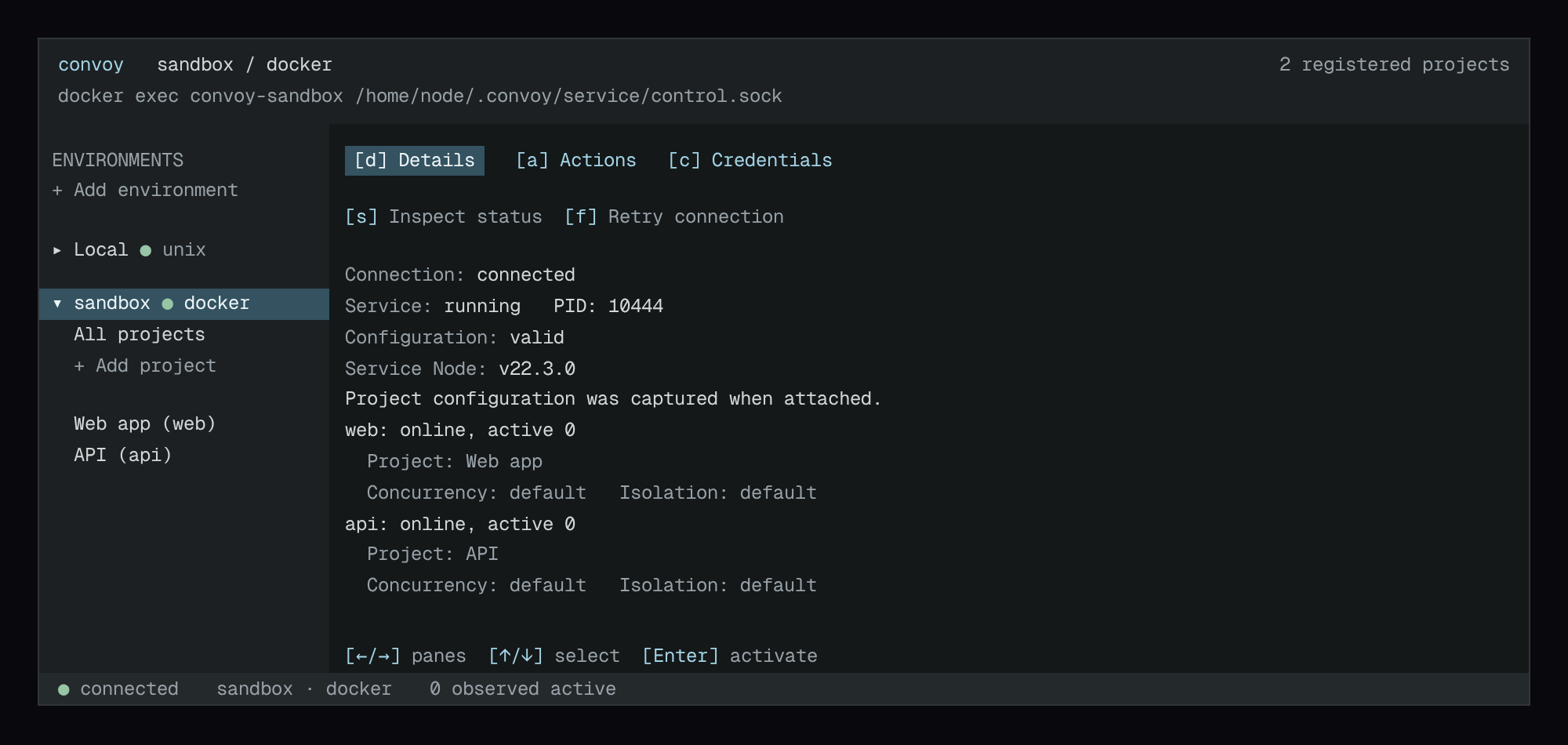
| Terminal UI | Browse environments, projects and execution history with convoy tui. |
Available |
| Docker self-hosting | Run the web app and backend with Docker Compose. | Available |
| Desktop app | Manage local agent connections from a menubar app. | Postponed |
Runtime capabilities differ. See runtime support and deployment status.
Develop from source
Convoy uses Next.js, React, TypeScript and Convex. You'll need Node.js 22+, pnpm 10,
a Convex development deployment and Clerk credentials.
pnpm install
cp apps/web/.env.example apps/web/.env.local
Fill in your Convex and Clerk values, then run these in separate terminals:
pnpm web:convex:dev
pnpm web:dev
pnpm install includes Portless; no separate installation is needed.pnpm web:dev starts its HTTPS proxy automatically. On first run, follow any
certificate trust and administrator permission prompts. Docker setup above
doesn't use Portless.
Open app.convoy.localhost.
The source setup guide
covers credentials and connecting a local agent.
Documentation
User guides ·
CLI reference ·
Contributing
License
Screenshots
Workflows
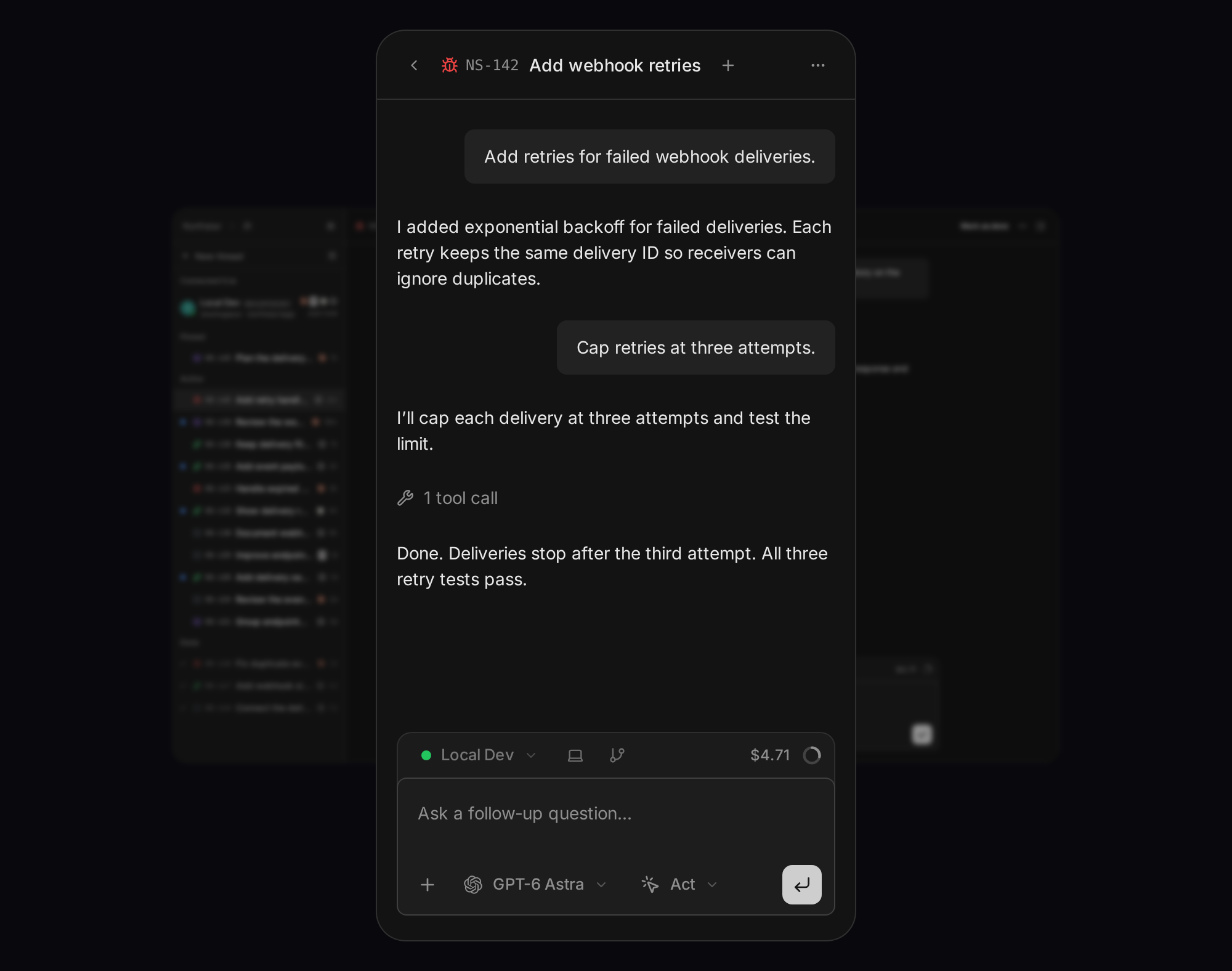
Mobile threads
Terminal UI
Add project offers runtime access after registration. Choose an existing managed
credential, log in in the project’s private shell, or skip and configure it later.
Kanban board
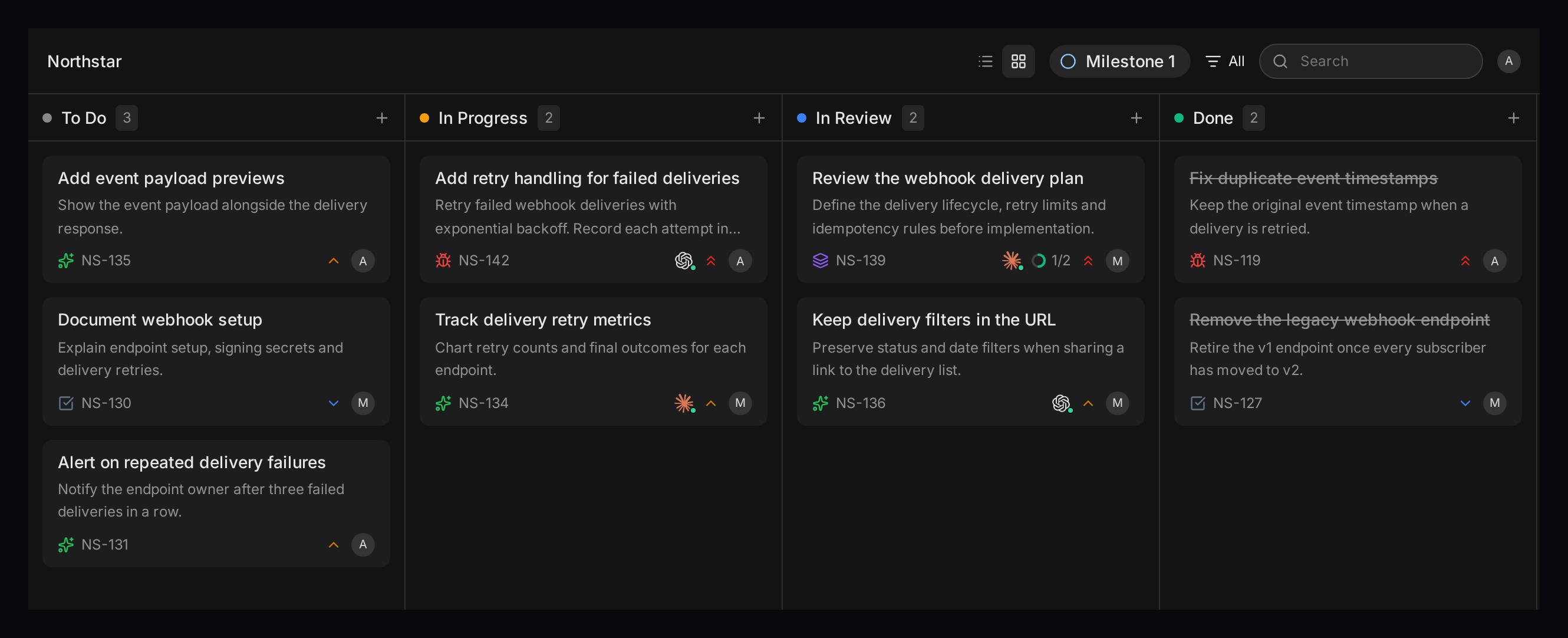
Self-hosted architecture
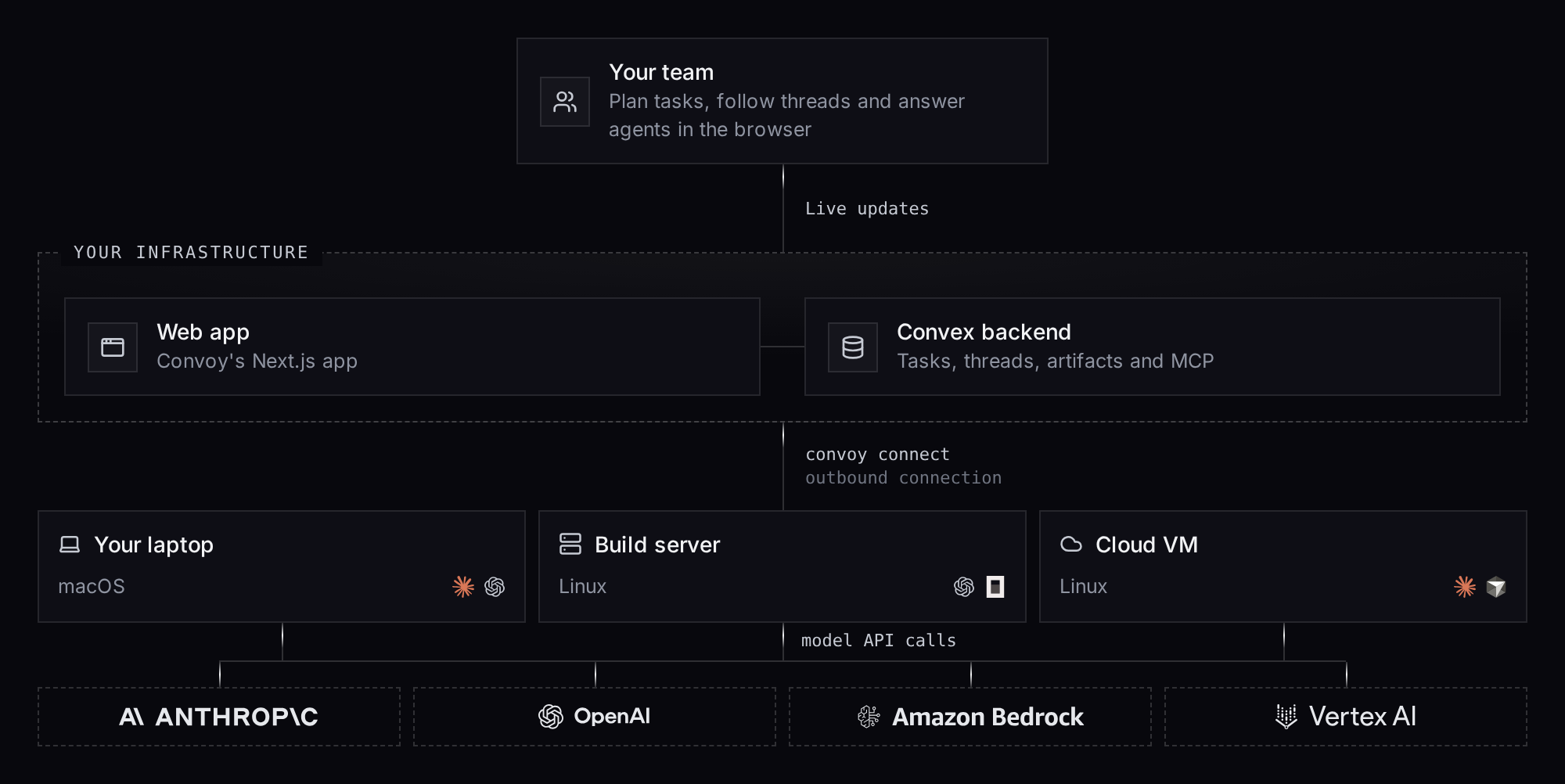
Devcontainer setup installs the Convoy CLI, resolves the host workspace's profile,
and configures container-local Codex MCP and backend firewall hosts. Profile names
can differ between machines; CONVOY_PROFILE is an optional explicit selector.
See devcontainer setup.
Browser screenshots from agents
Our container templates preinstall standalone playwright-cli. Browser setup
belongs to the environment, independently of the Convoy CLI. See
Browser automation for usage and migration.
Yorumlar (0)
Yorum birakmak icin giris yap.
Yorum birakSonuc bulunamadi