lavra
Health Gecti
- License — License: MIT
- Description — Repository has a description
- Active repo — Last push 0 days ago
- Community trust — 34 GitHub stars
Code Gecti
- Code scan — Scanned 12 files during light audit, no dangerous patterns found
Permissions Gecti
- Permissions — No dangerous permissions requested
This is an agent plugin designed to give AI coding assistants persistent memory and structured engineering workflows. It orchestrates the full development lifecycle—from brainstorming to shipping—while automatically capturing and recalling context so the AI learns from previous tasks.
Security Assessment
Overall Risk: Low. The automated code scan checked 12 files and found no dangerous patterns, hardcoded secrets, or requests for excessive permissions. As a Shell-based orchestration tool, it inherently relies on executing shell commands to run development workflows and interface with your git repository. Because it manages an AI agent's memory and project context, it will access your source code and local development environment. However, no malicious data exfiltration or unsafe network behaviors were detected.
Quality Assessment
This is a highly active and well-documented project. It was updated very recently (pushed to 0 days ago) and has earned 34 GitHub stars, indicating a solid baseline of community trust. The code is distributed under the standard MIT license, which makes it fully open-source and safe for both personal and commercial use. Furthermore, the repository features excellent documentation and a dedicated security page, showing that the maintainer takes code quality and user safety seriously.
Verdict
Safe to use.
A plugin with compound engineering workflows and memory for AI coding agents
Lavra (/ˈla.vɾɐ/ — Portuguese for "harvest")



Lavra turns your AI coding agent into a development team that gets smarter with every task.
A plugin for coding agents that orchestrates the full development lifecycle -- from brainstorming to shipping -- while automatically capturing and recalling knowledge so each unit of work makes the next one easier.


Quick Start | Full Catalog | Architecture | Security | Command Map | v0.7.1 Release Notes
Without Lavra
|
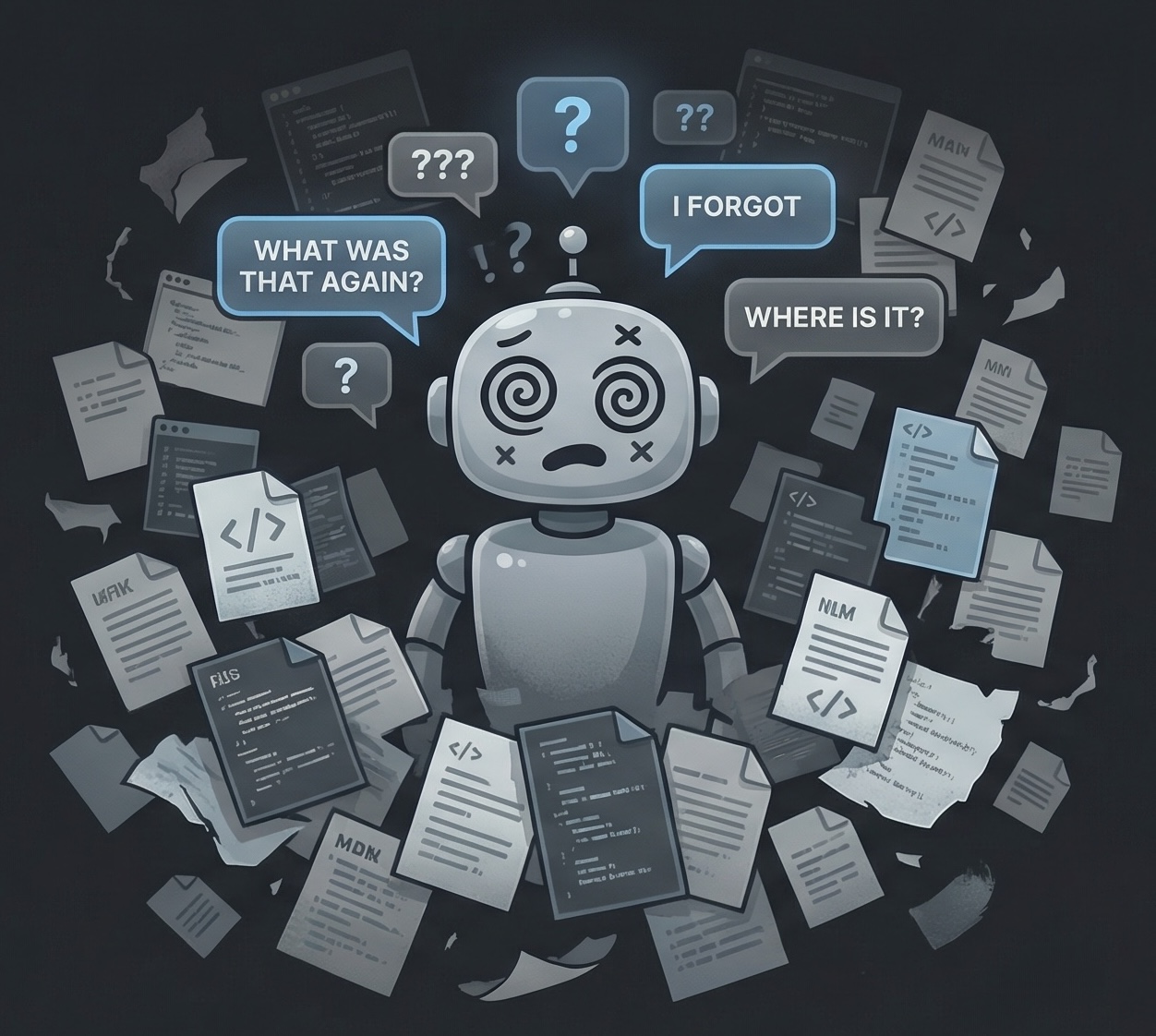
|
With Lavra
|

|
The workflow
Most of the time, you type three commands:
/lavra-design "I want users to upload photos for listings"
This runs the full planning pipeline as a single command: interactive brainstorm with scope sharpening, structured plan with phased beads, domain-matched research agents, plan revision, and adversarial review. The output is detailed enough that implementation is mechanical.
/lavra-work
Picks up the approved plan and implements it. Auto-routes between single and multi-bead parallel execution. Includes mandatory review, fix loop, and knowledge curation -- all automatic.
/lavra-ship
Rebases on main, runs tests, scans for secrets and debug leftovers, creates the PR, closes beads, and pushes the backup. One command to land the plane.
Add /lavra-qa between work and ship when building web apps -- it maps changed files to routes and runs browser-based verification with screenshots.
Who this is for
Anyone using coding agents who wants consistent, high-quality output instead of hoping the agent gets it right this time.
- Non-technical users:
/lavra-design "build me X"handles the brainstorming, planning, and research./lavra-workhandles the implementation with built-in quality gates. You get working software without needing to know how to code. - Solo developers: The memory system acts as a second brain. Past decisions, patterns, and gotchas surface automatically when they're relevant.
- Teams: Knowledge compounds across contributors. One person's hard-won insight becomes everyone's starting context.
Install
Requires: beads CLI, jq, sqlite3
npx @lavralabs/lavra@latest
Or manual:
git clone https://github.com/roberto-mello/lavra.git
cd lavra
./install.sh               # Claude Code (default)
./install.sh --opencode    # OpenCode
./install.sh --gemini      # Gemini CLI
./install.sh --cortex      # Cortex Code
Pipeline (4): /lavra-design, /lavra-work, /lavra-qa, /lavra-ship
Supporting (9): /lavra-quick (fast path with escalation), /lavra-learn (knowledge curation), /lavra-recall (mid-session search), /lavra-checkpoint (save progress), /lavra-retro (weekly analytics), /lavra-import, /lavra-triage, /changelog, /test-browser
Power-user (6): /lavra-plan, /lavra-research, /lavra-eng-review, /lavra-review (15 specialized review agents), /lavra-work-ralph (autonomous retry), /lavra-work-teams (persistent workers)
30 specialized agents across review, research, design, workflow, and docs. Each runs at the right model tier to keep costs 60-70% lower than running everything on Opus.
See docs/CATALOG.md for the full listing.
How knowledge compounds
brainstorm  --DECISION-->  design
design      <--LEARNED/PATTERN--  auto-recall from prior work
research    --FACT/INVESTIGATION-->  plan revision
work        --LEARNED (inline)-->  mandatory knowledge gate
review      --LEARNED-->  issues become future recall
retro       synthesizes patterns, surfaces gaps
Six knowledge types (LEARNED, DECISION, FACT, PATTERN, INVESTIGATION, DEVIATION) are captured inline during work and stored in .lavra/memory/knowledge.jsonl. At session start, relevant entries are recalled automatically based on your current beads and git branch. The system gets smarter over time -- not just for you, but for your whole team.
Configuration
.lavra/config/lavra.json can be created manually or by the /lavra-setup command.
It allows users to toggle workflow phases, planning and execution behavior:
{
  "workflow": {
    "research": true,             // run research agents in /lavra-design
    "plan_review": true,          // run plan review phase in /lavra-design
    "goal_verification": true,    // verify completion criteria in /lavra-work and /lavra-ship
    "testing_scope": "targeted"   // "targeted" (hooks, API routes, complex logic only) or "full" (all tests)
  },
  "execution": {
    "max_parallel_agents": 3,     // max subagents running at once
    "commit_granularity": "task"  // "task" (atomic, default) or "wave" (legacy)
  },
  "model_profile": "balanced"     // "balanced" (default) or "quality" (opus for review/verification agents)
}
/lavra-setup: run this to generate a codebase profile (stack, architecture, conventions) that informs planning.
Acknowledgments
Built by Roberto Mello, extending compound-engineering by Every. Task tracking by Beads.
Inspired by Every's writing on compound engineering, with ideas from Mario Zechner, Simon Willison, Get Shit Done, gstach by Garry Tan and many others. Thanks to my friend Dan for rubber-ducking Lavra.
Lavra (/ˈla.vɾɐ/) is the Portuguese word for "harvest" — the idea that every session plants knowledge that the next one reaps. Named by Roberto Mello, who is Brazilian.
Yorumlar (0)
Yorum birakmak icin giris yap.
Yorum birakSonuc bulunamadi