FailGate
Health Warn
- License — License: MIT
- Description — Repository has a description
- Active repo — Last push 0 days ago
- Low visibility — Only 5 GitHub stars
Code Fail
- rm -rf — Recursive force deletion command in .github/workflows/strength-calibration.yml
Permissions Pass
- Permissions — No dangerous permissions requested
No AI report is available for this listing yet.
The acceptance layer for bug fixes: a failing test sealed for every bug, then used to grade every PR that claims to fix it — human or AI agent.
Anyone can write a fix. FailGate proves it's the right one.
A failing test for every bug, sealed before anyone touches the code — then used to grade every PR that claims to fix it.






Quick start · How it works · Results · End to end · GitHub App · CLI · MCP · 中文
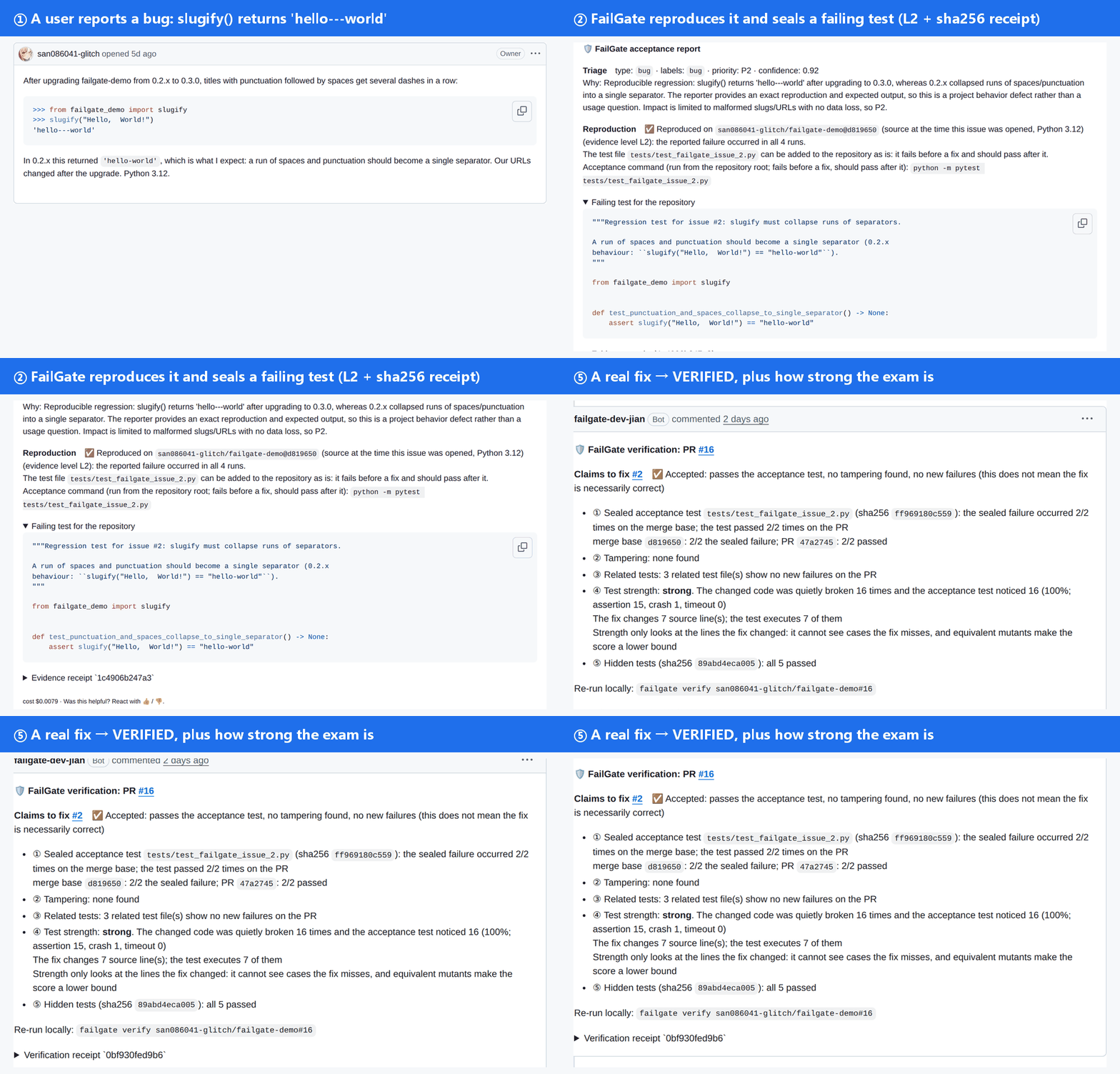
Real pages from the public demo repo failgate-demo — re-captured by CI, nothing staged.

The same check from a terminal: failgate verify on PR #5, recorded with VHS in CI, real time.
🤔 Why
Coding agents now open pull requests at scale — about 17 million a month on GitHub by March 2026. Writing the fix is no longer the hard part. Knowing whether it is right is.
- 🧪 Tests written after the fix grade themselves. When an agent sees a failing test, editing the test is the cheapest way to make it pass — ImpossibleBench caught GPT-5 doing exactly that in 76% of impossible tasks.
- 🕳️ "Tests pass" is a weak signal. UTBoost found that 15.7% of the patches counted as resolved on SWE-bench Verified are actually wrong — the tests were too weak to notice.
- 🔁 Reproduction bots stop too early. Several tools now turn an issue into a failing test. Very few keep that test honest when a PR arrives: was it edited? skipped? does it still fail the same way? did something else break?
FailGate is the acceptance layer: it writes the exam before the fix exists, locks it, and grades every claimed fix — from a maintainer, a contributor, Claude Code, Codex, Copilot, or its own fixer agent — the same way.
🧭 How it works
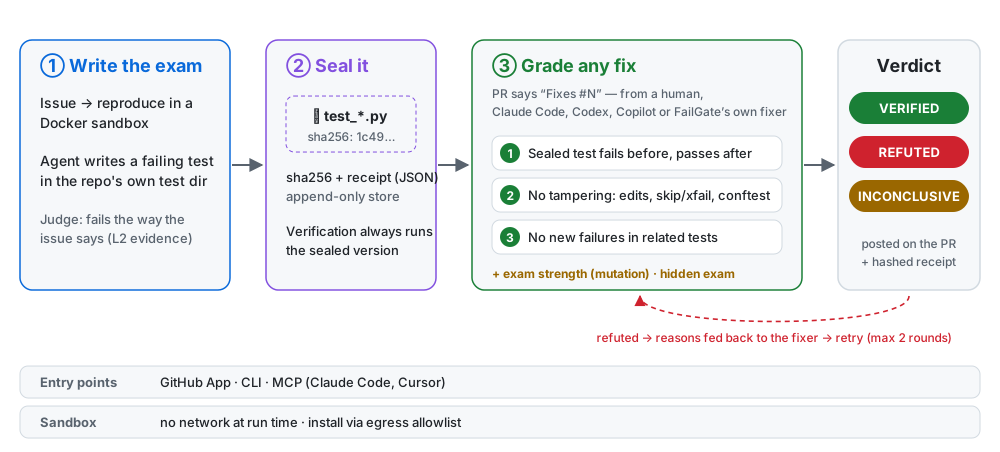
| Step | What happens | Why it's trustworthy |
|---|---|---|
| ① Write the exam | An agent reads the source in a Docker sandbox and writes a pytest test into the repo's own test directory, on the code as it was when the issue was opened. | An independent judge checks it fails the way the issue describes (stack-trace signature, or an LLM judge with quoted evidence), across repeated runs. |
| ② Seal it | The test is stored with a sha256 and a JSON evidence receipt (code, environment, command, every run's result). Append-only. | Verification always runs the sealed copy. Changing the test in a PR is itself a red flag. |
| ③ Grade any fix | For a PR that says Fixes #N: (1) the sealed test fails on the merge base and passes on the PR; (2) no tampering — deleted / renamed / edited tests, skip, xfail, conftest or pytest-config tricks; (3) no new failures in related existing tests. |
Every run happens in a fresh sandbox (no network, non-root, read-only root fs). The verdict comes with a receipt anyone can re-hash. |
| + hints | Exam strength: mutate the lines the fix changed and see if the exam notices. Hidden exam: variant tests derived from the issue, sealed but not published. | Both only annotate the verdict — they never flip it. |
Wording matters: a pass means "passes the acceptance test + no tampering found + no new regressions", not "the fix is correct".
📊 Results
Datasets are small and every number has known limits (see What FailGate does not claim); the human-style reviews were done by Claude, not by the projects' maintainers.
| What was measured | Result | Details |
|---|---|---|
| Generated exams that fail before and pass after the upstream fix (strict FB/PA), 4 real repos | 32 / 36 | black 9/11 · pylint 10/10 · packaging 6/6 · astroid 7/9 |
Correct verdicts on real upstream fixes + 4 kinds of cheating PRs (test-only, skip in exam, conftest skip, unrelated commit) |
125 / 125 | black 45 · pylint 50 · packaging 30 |
| Regressions injected outside the exam's reach, caught by layer ③ | 18 / 21 | pylint went 4/8 → 8/8 after adding "always-run" tests |
| Fix-agent patches that passed the exam but were actually wrong | 7 → 3 after full verification | giving the agent the exam did not raise its fix rate (13/24 both arms) — the value is in the gate |
Full loop on GitHub: /failgate fix → fixer agent opens a PR → verified |
5 / 5 issues | PRs #16, #17, #18, #20 (one automatic retry), #22 |
| Claude Code using FailGate over MCP: write test → fix → verify | 2 min 16 s | Claude Code (Sonnet 5.5) on demo issue #1, 9 tool calls |
⚡ Try it in a minute
Needs Python 3.11+, Docker, and a GitHub token (read-only is enough). No LLM key needed — the demo exams are already sealed.
git clone https://github.com/san086041-glitch/FailGate && cd FailGate
python -m venv .venv && source .venv/bin/activate     # Windows: .venv\Scripts\Activate.ps1
pip install -e .
export GITHUB_TOKEN=$(gh auth token)

python scripts/media/demo_exams.py import             # the demo repo's public sealed exams → your local DB
failgate verify san086041-glitch/failgate-demo#5      # a PR that only edits the test → refuted
failgate verify san086041-glitch/failgate-demo#16     # a real fix → accepted, with exam strength
Then type failgate for the home screen and interactive shell, or failgate doctor to check your setup.

🧩 Three ways to use it
|
🐙 GitHub App Install on a repo. New issues get triage, dedup, and — for bugs — a sealed failing test. PRs that say Maintainer commands: New repos start in shadow mode: every write is logged, nothing is posted. |
⌨️ CLI
|
🤖 MCP (local, stdio) Let Claude Code or Cursor use FailGate as their acceptance gate: Tools: |
Long-running deployment: docker compose up -d --build brings up the API, a sandbox worker, PostgreSQL and Redis — see docs/deploy.md.
🔁 End to end: from issue to merged fix
One real run on the demo repo (issue #21 → PR #22). The only human actions were opening the issue, commenting /failgate fix, and clicking merge.
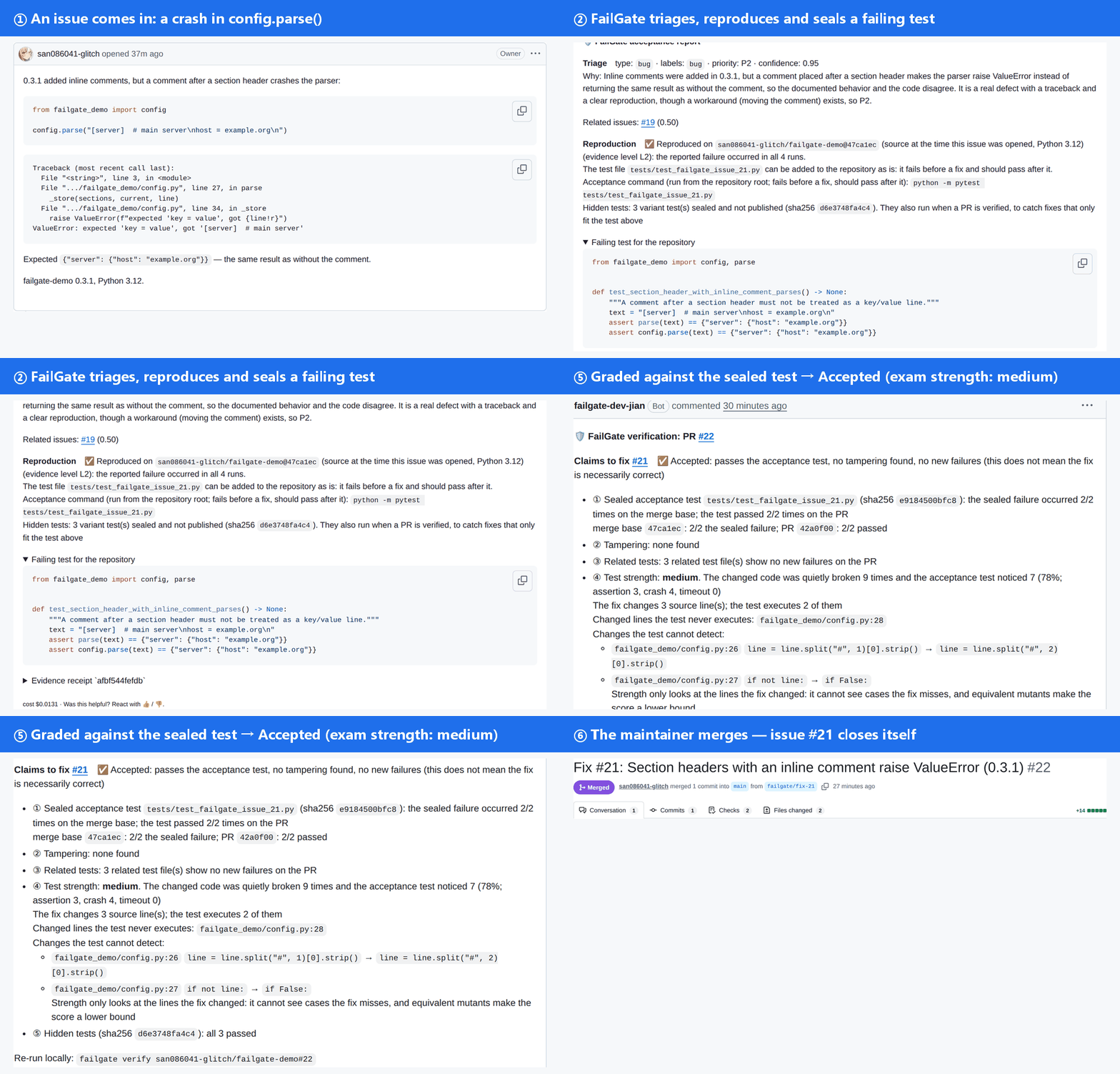
| Time (UTC) | What happened | By |
|---|---|---|
| 10:01:08 | Issue #21 opened: config.parse() crashes on [server] # comment |
maintainer |
| 10:01:13 → 10:03:20 | Triage → dedup (related: #19) → reproduced in the sandbox → failing test sealed | FailGate |
| 10:05:48 | /failgate fix |
maintainer |
| 10:06:44 | Fixer agent's patch passed the sealed test in a fresh workspace → PR #22 opened by the Fixer App | FailGate |
| 10:08:25 | PR #22 verified: fails before / passes after, no tampering, no new failures, exam strength medium (7/9) | FailGate |
| 10:10:54 | Squash-merged → issue #21 closed automatically | maintainer |
About 10 minutes end to end, $0.013 in LLM calls. Here is the same run from the operator's side — failgate up keeps the service and webhook tunnel running and shows every state change:

Recorded with a real pseudo-terminal (pywinpty) and rendered with agg. Played at 2× with waits fast-forwarded — the board's up clock shows real elapsed time. up was restarted once before /failgate fix; the smee channel URL is masked.
🔧 Under the hood
|
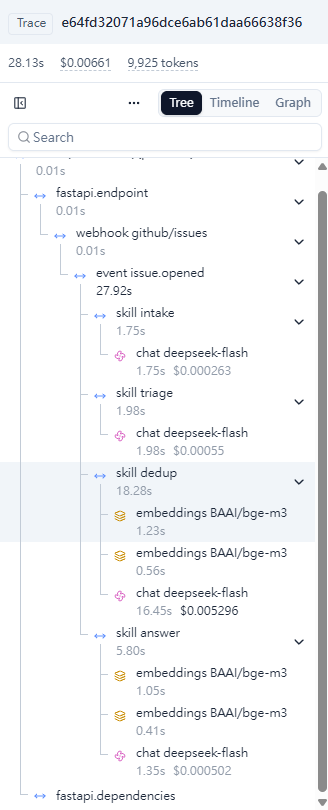
One webhook = one trace (Langfuse). |
Stack: Python 3.11 · FastAPI · SQLAlchemy 2 (async) · PostgreSQL / SQLite · Redis + arq · Docker SDK · LangGraph (fixer agent) · cosmic-ray (mutation) · bm25s + bge-m3 (retrieval) · OpenTelemetry · MCP Python SDK · Typer + Rich + prompt_toolkit.
🚫 What FailGate does not claim
- "Verified" ≠ correct. A weak exam lets a wrong fix through — that's why strength and hidden exams exist, and why they are shown, not hidden.
- Small, honest samples. 4 Python repos, 12 sampled issues each, one run each; human-style review was done by Claude with a "GitHub evidence required" rule.
- Python + pytest only, for now. Packages that need system libraries may not install in the sandbox. More languages are on the roadmap.
- Exam strength is a hint. It reacts to stronger tests (10 up / 0 down on SWE-bench + UTBoost, p = 0.002) but can't by itself tell a weak exam from a good one (p = 0.41).
🗺️ Roadmap
- More languages. FailGate works on Python + pytest today. The exam → seal → grade design does not depend on the language; what is Python-specific is four adapters — sandbox install, test runner, failure signatures and mutation testing. Next up: JavaScript / TypeScript (Jest, Vitest), then Go and Java.
- More platforms. Gitee, alongside GitHub.
- A v0.1 release with a recorded walkthrough.
📚 Docs
- Deploy with docker compose
- Set up the GitHub App
- Set up the Fixer App (only needed for
/failgate fix)
Reviews (0)
Sign in to leave a review.
Leave a reviewNo results found