vibebud
Health Gecti
- License — License: MIT
- Description — Repository has a description
- Active repo — Last push 0 days ago
- Community trust — 10 GitHub stars
Code Uyari
- process.env — Environment variable access in core/app/components/auth-client.ts
- network request — Outbound network request in core/app/components/auth-client.ts
Permissions Gecti
- Permissions — No dangerous permissions requested
This tool provides a floating, visual companion on your desktop or web browser that monitors your AI coding agents. It allows developers to track agent statuses, receive alerts when input is needed, and chat with different AI personas without switching away from their coding environment.
Security Assessment
Overall risk: Low. The tool does not request dangerous system permissions, execute arbitrary shell commands, or contain hardcoded secrets. It does make outbound network requests and accesses environment variables, but these actions are safely isolated within an authentication client file (`auth-client.ts`). This indicates the tool is securely connecting to external APIs to fetch agent data or verify user logins, which is standard and expected behavior for its intended purpose.
Quality Assessment
This project is in its early stages but shows positive health metrics. It is actively maintained, with repository updates pushed as recently as today. It uses the permissive and standard MIT license, making it safe for both personal and commercial use. Community trust is currently low given its small footprint of 10 GitHub stars, which is typical for a new, experimental utility. The documentation is clear and transparent about its current development state, explicitly noting which platforms are fully functional and which are still planned.
Verdict
Safe to use.
Floating AI virtual character for Codex, Claude Code.
Vibebud
English | 中文
A little AI buddy that stays with you while you vibe code.
Vibebud gives your coding agents a visible presence: a floating companion on your desktop, web app, or phone that can chat, show status, and tap you when something needs attention.
       your code editor                 Vibebud
  +------------------------+        +-------------+
  | issue, branch, tests   |  <-->  |  floating   |
  | AI agents doing work   |        |  buddy      |
  | commits, PRs, reviews  |        |  status     |
  +------------------------+        |  chat       |
                                    +-------------+
Instead of letting AI agent work disappear into terminals, logs, and background processes, Vibebud makes it feel present and easy to follow.
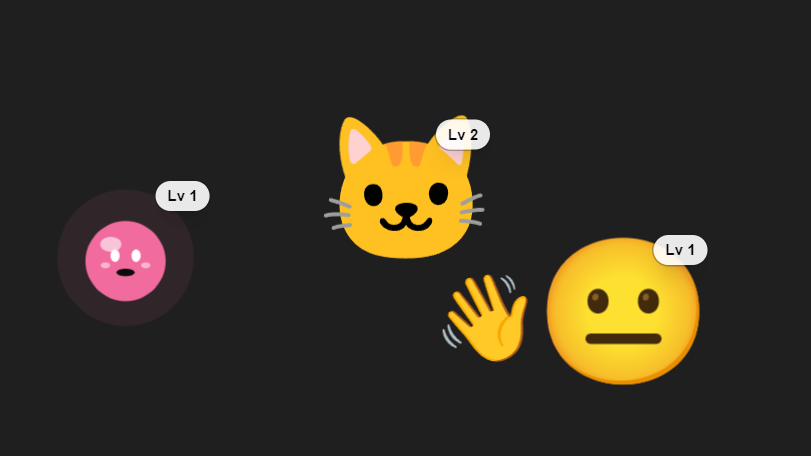
The Idea
Vibe coding is more fun when your tools feel alive.
Vibebud is a small companion layer for AI-assisted development. It is not trying to replace your editor, terminal, GitHub, or agent framework. It gives those workflows a friendlier face:
- See what your agents are doing at a glance
- Chat with a buddy without changing context
- Get quiet pings when a task finishes or needs input
- Assign lightweight todos to different buddy avatars
- Keep multiple agent personalities visible while you work
How It Feels
Agent starts a task      -> buddy appears active
Agent needs a decision   -> buddy sends a quiet ping
Agent finishes work      -> buddy shows a short status
You want to respond      -> open a small chat bubble
You need focus           -> dock or move the buddy away
The goal is simple: make AI collaborators easier to supervise without making your workspace heavier.
What You Can Build With It
Vibebud is meant for developers experimenting with AI coding agents, desktop companions, and more playful development workflows.
| Surface | Status |
|---|---|
Web preview (core/) |
Working |
| Electron desktop - Windows | Working, NSIS installer builds end-to-end |
| Electron desktop - macOS / Linux | Planned, not yet wired up |
| Android (Capacitor 8) | Scaffolded overlay shell via OverlayService |
| iOS | Out of scope |
Personalities and Groups
Each buddy has a name, a role, and its own system prompt. The six built-ins:
- Helper - general assistant
- Tactician - planner and prioritizer
- Researcher - digger for prior art and references
- Skeptic - critical reviewer who probes assumptions
- Cheerleader - upbeat encourager
- Empath - listens first, validates, then suggests
Drag two buddies near each other and they form a small team. A pastel hull appears behind them, and each member is told who its teammates are so it can defer to a better-suited specialist when appropriate.
Quick Start
# Install deps for both core and desktop
npm run install-all

# Web preview at http://localhost:3060
npm run web-dev
For the desktop app:
# Run Electron pointed at the web dev server
# Use this alongside npm run web-dev in another terminal
npm run desktop-dev
Build commands:
# Build core, copy into desktop, launch Electron against the static export
npm run desktop-run

# Windows installer -> desktop/dist/vibebud-desktop-setup.exe
npm run desktop-build

# Android debug APK on a connected device/emulator
npm run android-dev

# Android release APK
npm run android-build
The dev server runs on port 3060, not 3000. The desktop window loads the /buddy route, which has a transparent background so only the avatar shows through.
Repo Layout
vibebud/
├── core/        # shared Next.js UI: web app and bundled desktop UI
├── desktop/     # Electron wrapper around core/
└── mobile/      # Capacitor wrapper around core/
Anything that can live in core/ should. The platform shells stay thin.
Stack
core/- Next.js 16 App Router, React 19, Tailwind v4, TypeScript 5, lottie-react. Configured for static export so the desktop shell can serve it from disk.desktop/- Electron 33 and electron-builder. Transparent always-on-top window covering the full work area, with click-through enabled by default and toggled off per element while the cursor is over a buddy or chat bubble.mobile/- Capacitor 8 plus a native overlay module that can run the buddy as aWindowManageroverlay from a foreground service on Android.
Bring Your Own LLM
Chat features can call OpenAI, Anthropic, or OpenRouter directly from the renderer. You enter your API key in the buddy settings panel; it is stored in localStorage and never leaves the device except when talking to the provider you chose.
Why Open Source?
AI coding agents are becoming part of everyday development, but the interface around them is still early. Vibebud is an experiment in making agent work:
- more visible
- more approachable
- easier to supervise
- a little more personal
Contributions are welcome around UI polish, agent integrations, buddy behaviors, desktop/mobile shells, accessibility, docs, and product ideas.
Star History
Name
The app is called Vibebud: your buddy during vibe coding.
Yorumlar (0)
Yorum birakmak icin giris yap.
Yorum birakSonuc bulunamadi