solarch
Health Pass
- License — License: NOASSERTION
- Description — Repository has a description
- Active repo — Last push 0 days ago
- Community trust — 35 GitHub stars
Code Fail
- rm -rf — Recursive force deletion command in apps/server/scripts/neo4j-backup.sh
Permissions Pass
- Permissions — No dangerous permissions requested
No AI report is available for this listing yet.
Diagram→code through a deterministic rules gate: the AI proposes, 50 rules verify, only valid architecture lands. Try it: app.solarch.dev
 Solarch
Bridging diagrams and code via a strict rules engine to stop AI errors.
Your entire workspace, on one canvas. | AI that proposes. Rules that verify.





▶ Try it live: app.solarch.dev · Learn more at solarch.dev · Or self-host this repo
No install, no Docker: open the app and start drawing. Self-host below if you want your own box.
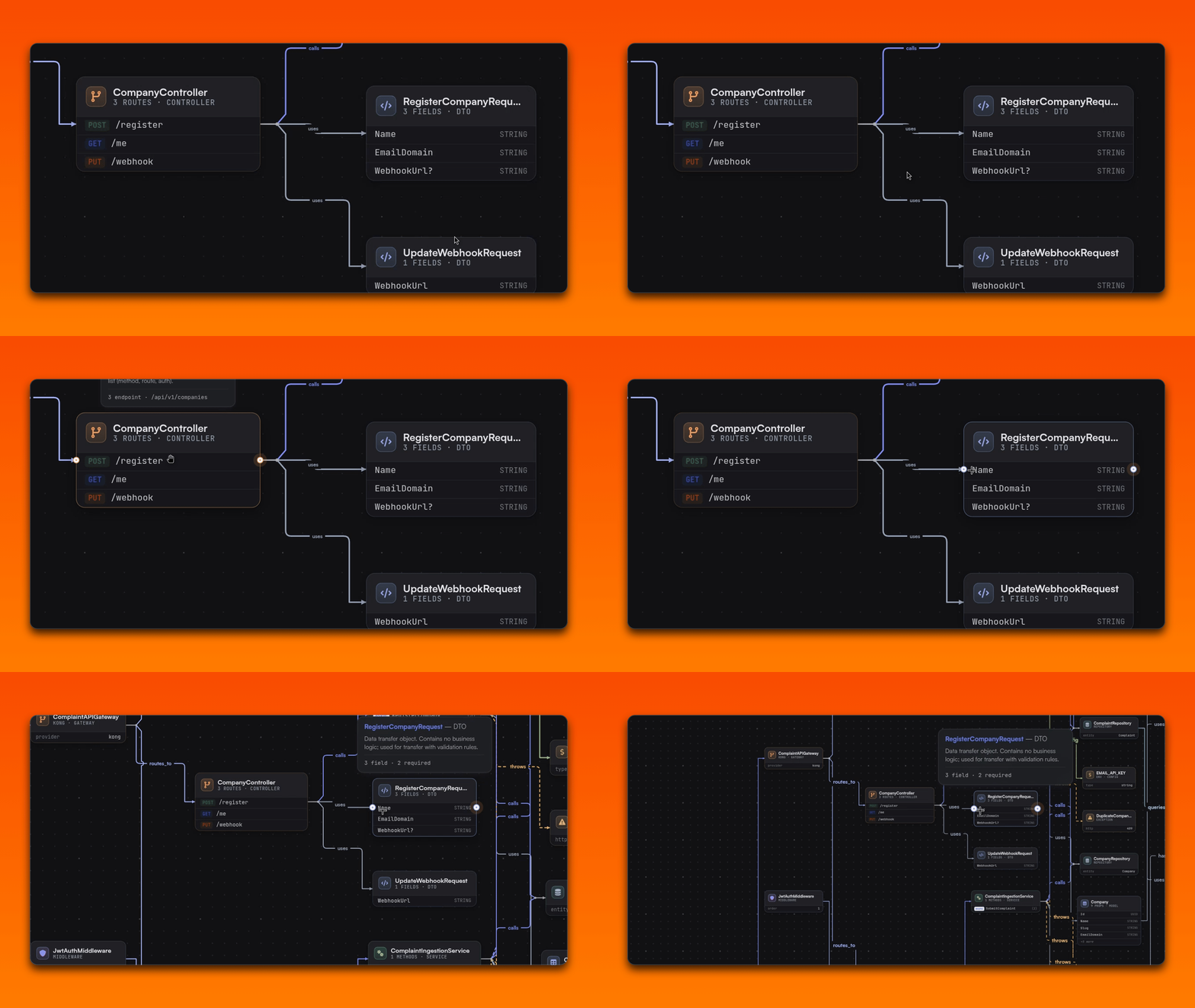
Why Solarch? • Gallery • Features • Philosophy • Try it • Self-Hosting • Docs • Get Involved
✦ Why Solarch?
Most AI tools generate code and hope the architecture catches up. Solarch flips that.
It generates architecture first, grounded in a library of canonical patterns, validated by a strict Rules Engine, and refined through a self-correcting loop. The AI proposes, the rules verify, and only valid graphs land on the canvas.
- One canvas for the whole system: 21 node families (controllers, services, repositories, tables, DTOs, queues) and the 16 semantic edges between them.
- AI Architect grounded in GraphRAG: an agentic LLM pipeline pulls from a vector-indexed pattern library, so it never plans from a blank context. Everything it proposes must pass the rules gate before it lands.
- Rules Engine as a hard gate: 40 whitelist rules, 7 anti-patterns, 3 conditional checks. Frontends can't talk to tables, and controllers can't reach repositories.
- Self-correcting loop: rules rejections feed back into the agent; the AI revises until the graph is clean, or the request ends without a commit.
- Diagram → NestJS code: deterministic codegen scaffold from the graph, plus optional Surgical AI for method bodies.
- Four surfaces, one project: Canvas, Code, API, and Docs, switched from the top bar without losing context.
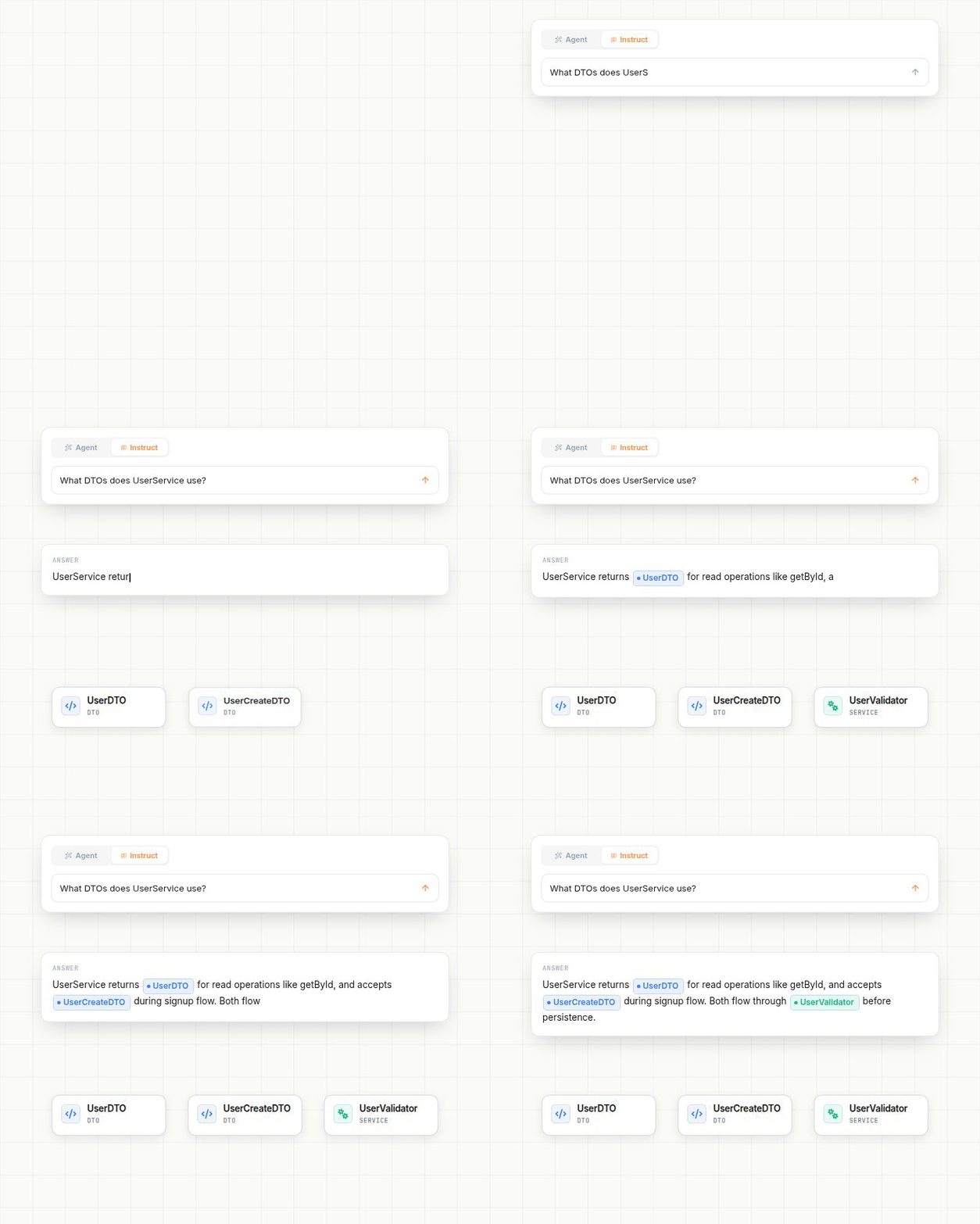
- Live Instruct Mode: Switch modes and chat with your design. Every answer cites the exact nodes; chips focus the canvas in real time.
- Single-home + reference tabs: Each node lives in one tab. Other tabs import it as a reference, not a copy. One source of truth, multiple views.
- Type-safe from DB to button: Zod schemas at the backend, OpenAPI in the middle,
openapi-fetchon the frontend. The API contract is a compile-time check.
✦ Gallery
|
1. Start with a prompt Type what you want to build. The AI Architect kicks in: pulls canonical patterns, plans the graph, and applies it through the Rules Engine. 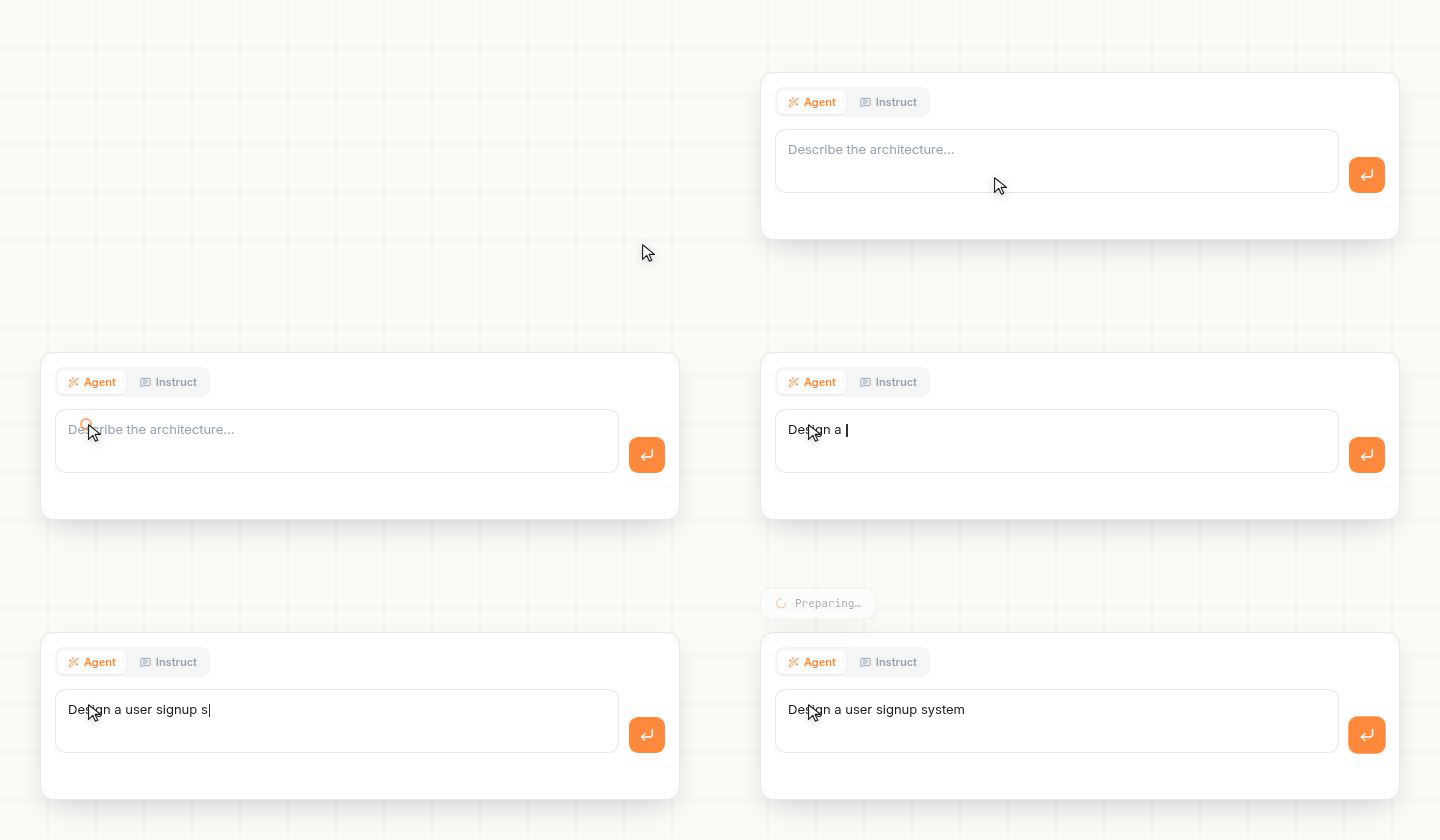
|
2. Sketch → architecture (preview) Freeform sketch becomes a structured graph on Refine. Native sketch surface on the roadmap; the AI-driven refine path runs today. 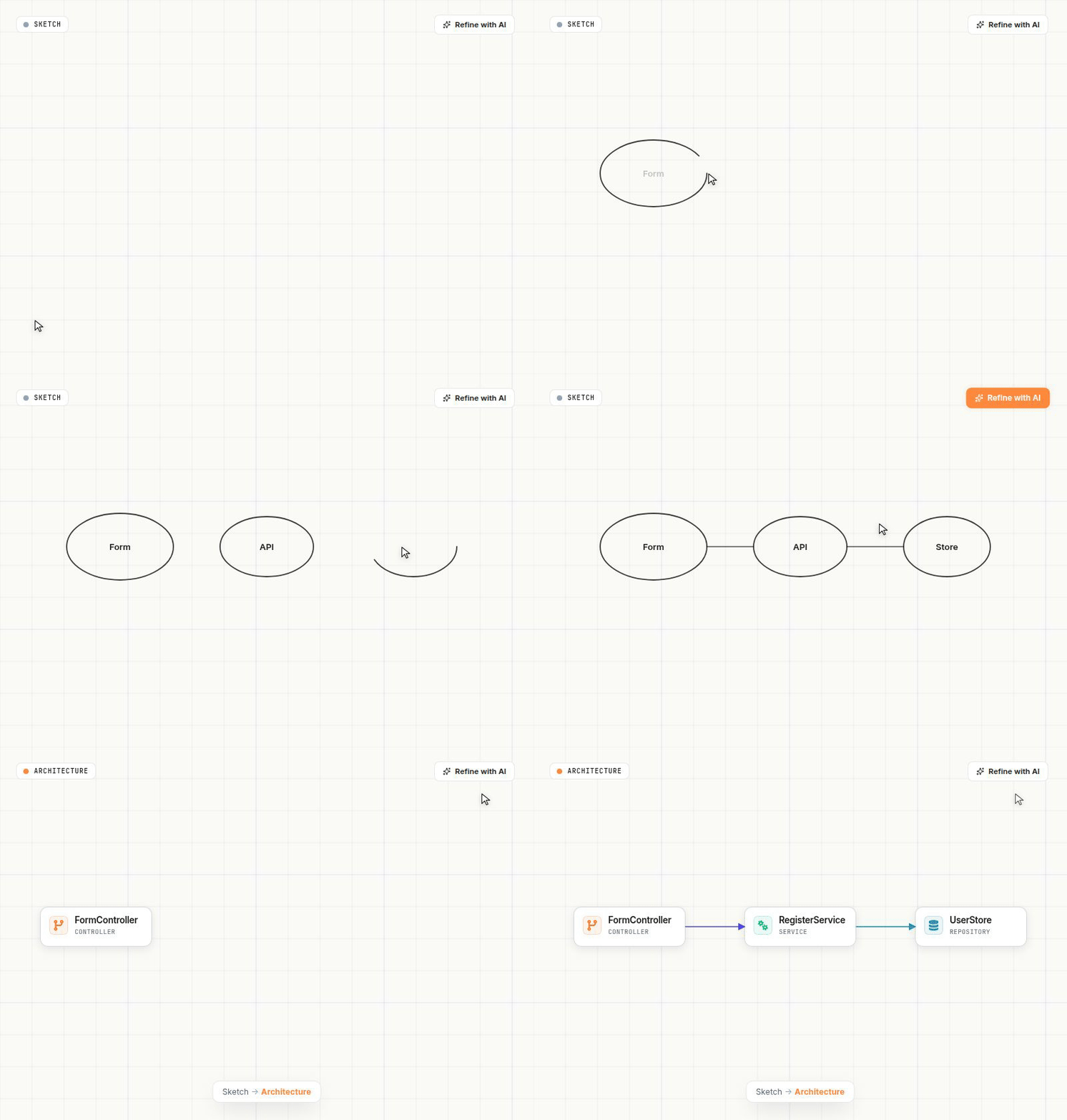
|
|
3. Watch it build itself Nodes pop in with zen animations, edges flow with the right semantics. Every relationship is rule-validated before it commits. 
|
4. Pattern library (preview) A standalone constructor library is on the roadmap. The same canonical patterns already power GraphRAG behind the scenes today. 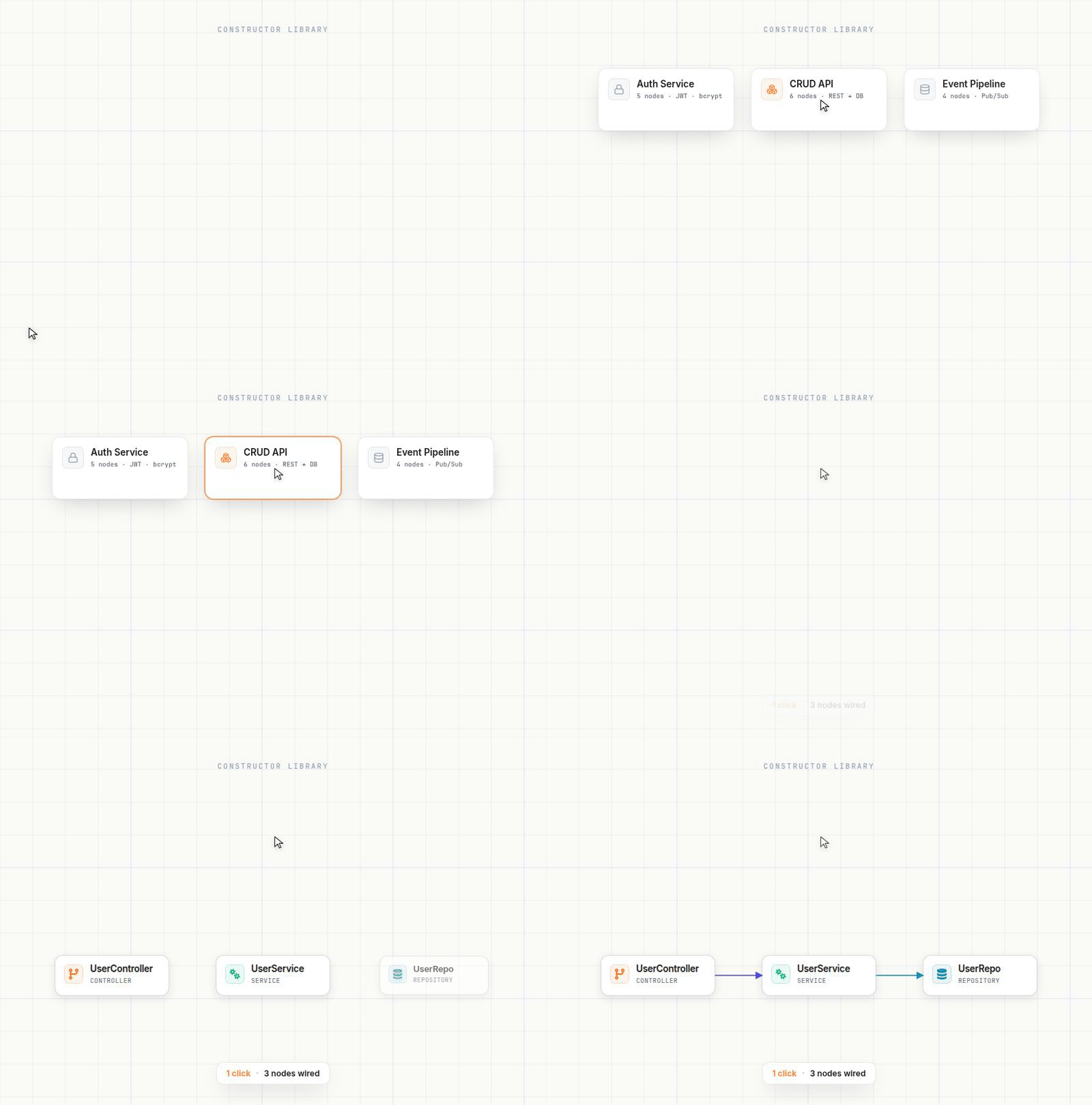
|
|
5. Connect anything, legally Hover a port, drag, snap. The Rules Engine rejects illegal connections instantly. Semantic edges carry meaning, not generic arrows. 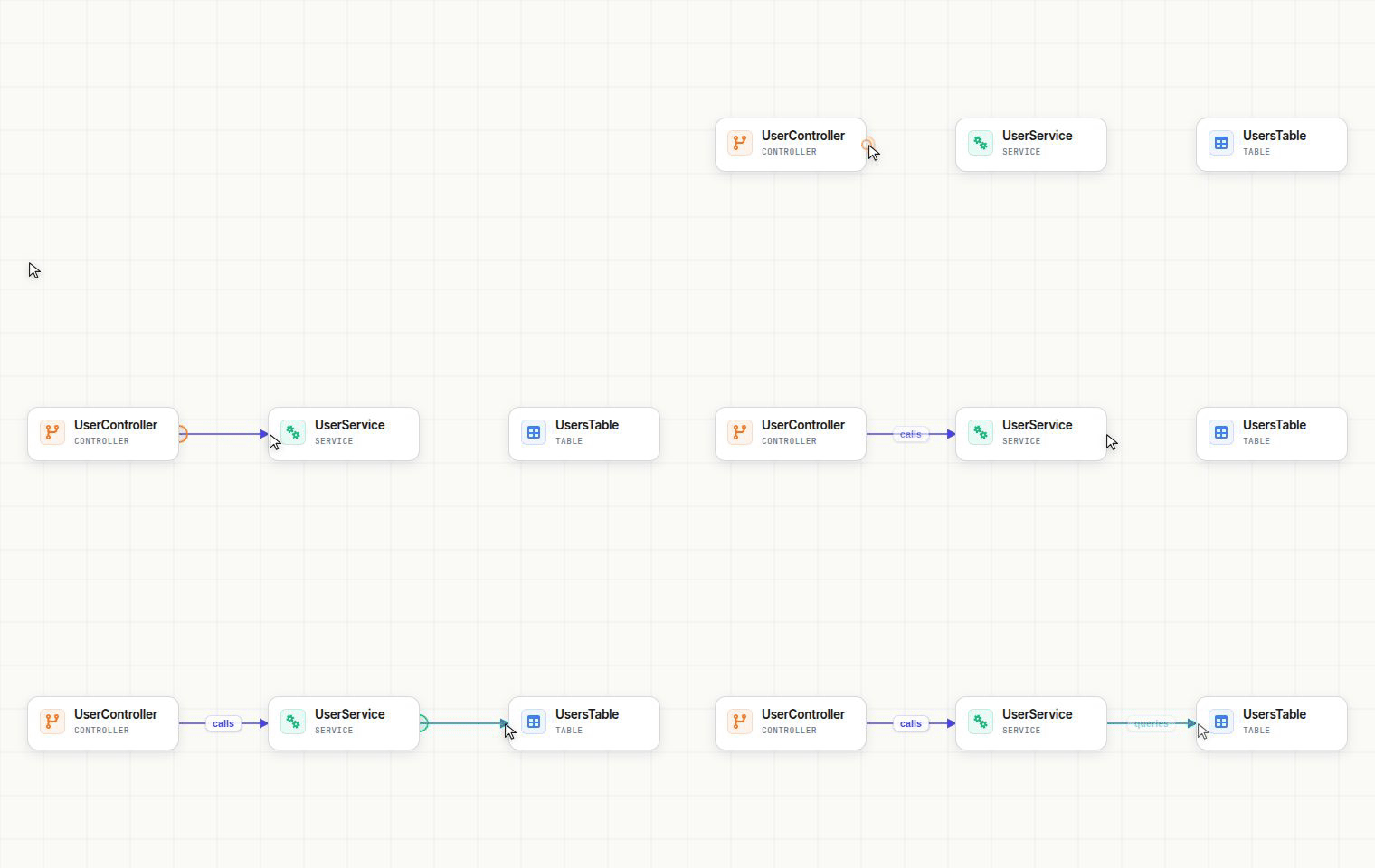
|
6. Every node, purpose-built editor Double-click any node. Column grids for tables, method tables for services, endpoint rows for controllers. No generic JSON forms. 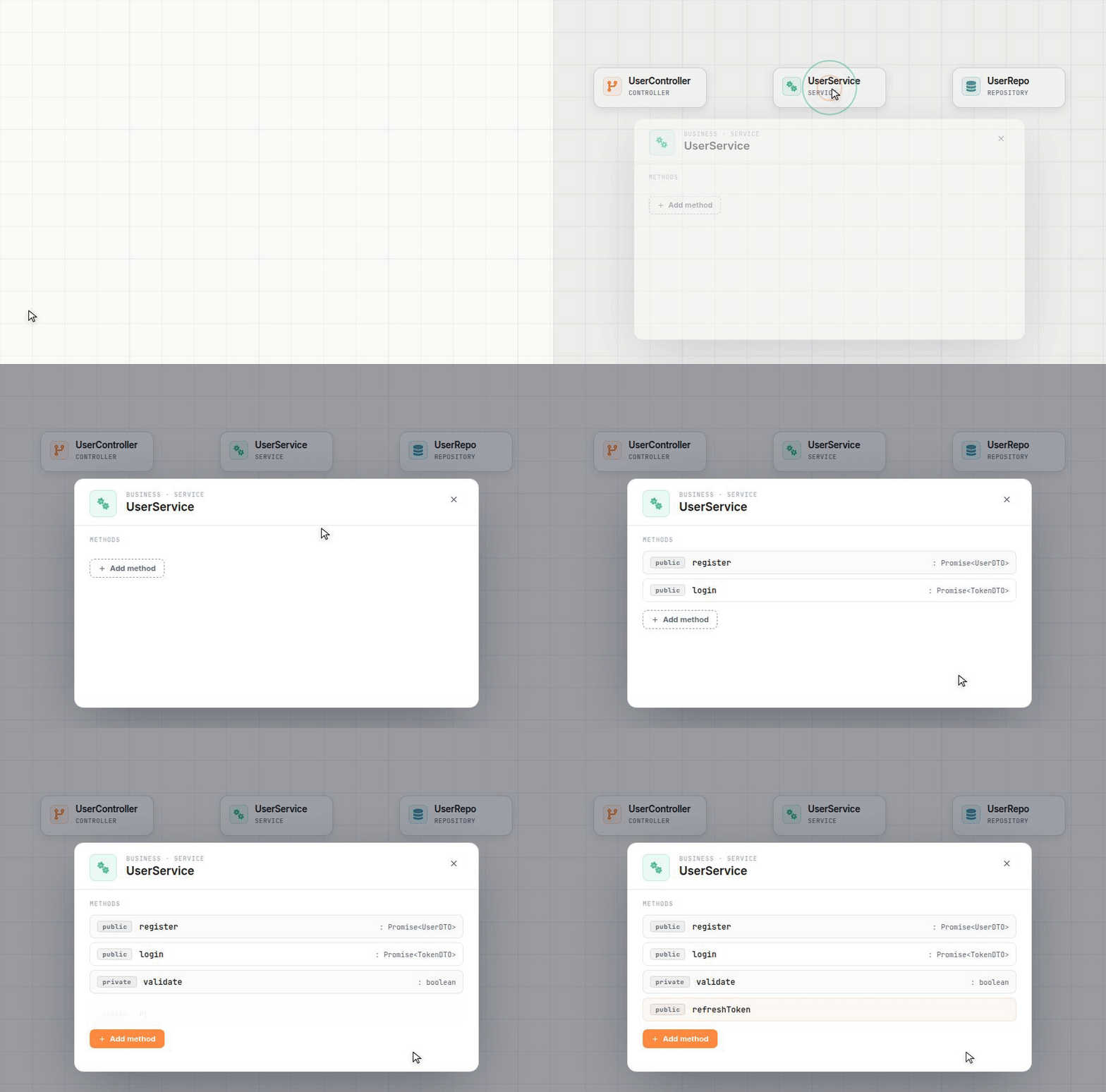
|
Switch to Instruct mode and chat with your design. Every citation is a live chip that focuses the canvas with a soft halo.
✦ Features
AI & Rules
|
Workspace & UI
|
✦ The Philosophy
Solarch doesn't ask the AI to be honest. It puts a deterministic gate between the AI and your architecture.
The industry has spent two years asking LLMs to write code, and the result is confident hallucinations: ghost APIs, phantom tables, codebases that compile but lie. Solarch attacks the structural half of that problem. Architectural relationships (a controller calls a service, a service queries a repository) are either present in the graph or they are not, so they can be checked deterministically instead of trusted.
Three layers work together:
- GraphRAG. The agent starts every request by retrieving canonical patterns from a vector-indexed library, so it never plans from a blank context.
- Rules Engine. Every mutation passes a deterministic gate of 40 whitelist rules, 7 anti-patterns, and 3 conditional checks. Illegal edges never land, and the schema can't be coerced.
- Self-correction loop. When the Rules Engine rejects a draft, the violation message feeds back into the agent state. The AI revises until the graph is clean, or the request terminates without a commit.
The result: no API in the generated code that isn't in the diagram, and no edge in the diagram that breaks the rules.
What the Rules Engine does NOT guarantee
The gate is structural, not semantic. Method bodies are LLM-written (the optional Surgical AI fill), gated by compiling the output with tsc and running tests in a verify loop, and marked unverified when that gate is skipped. The Rules Engine guarantees the shape of your architecture; it does not prove your business logic is correct.
Every number in this README is countable in the source: the 40 whitelist rules and 7 blacklist codes live in apps/server/src/rules/registry. Count them yourself.
✦ Try it
Don't want to clone, configure, or run Docker? Use the hosted product:
| Link | What you get | |
|---|---|---|
| App | app.solarch.dev | Full canvas: sign up and build in the browser. Always up to date. |
| Website | solarch.dev | Product overview, demos, updates. |
Zero local setup.
✦ Self-Hosting
Want the stack on your machine, with your LLM key and your data? This repository is the complete source-available self-host edition: NestJS backend, canvas UI, vector-native Neo4j, local embeddings.
git clone https://github.com/solarch-dev/solarch.git
cd solarch
./install.sh          # Linux/macOS: Neo4j password + AI provider wizard
docker compose up --build
# → http://localhost:3000
No login screen. Bring your own LLM API key. By default Docker binds to 127.0.0.1 only.
Windows: ./install.ps1, then the same docker compose command.
| Need | Details |
|---|---|
| Docker + Compose v2 | Required |
| LLM provider | Tool-calling model, see AI providers |
| LAN / VPS | Enable HTTP Basic Auth (Self-hosting guide) |
Hosted alternative: app.solarch.dev · solarch.dev
✦ Documentation
Full guides live in docs/:
| Guide | Topics |
|---|---|
| Getting started | First run, four surfaces, API keys |
| Canvas & Rules Engine | Nodes, edges, error codes |
| AI Architect | Agent, Instruct, GraphRAG |
| Codegen | NestJS scaffold, Surgical AI |
| CLI & API keys | solarch login, MCP |
| Self-hosting | Env, security, rate limits |
| Development | pnpm dev, tests |
| Deployment | Caddy, systemd, production |
CLI / MCP / VS Code extension: solarch-tools.
✦ FAQ
Is this open source? Strictly, no. PolyForm Noncommercial is a source-available license, not OSI-approved. It is free for personal use, research, education, and nonprofits. Commercial use needs a license: [email protected].
Isn't this just MDA / Rational Rose again? MDA generated the scaffold and left you the hard 20%, and the diagram and code drifted by sprint 3. Here the LLM handles that 20% behind tsc/test gates, drift detection is built in, and the graph is a live Neo4j source of truth, not a dead UML file. Structurizr stops at visualization; v0 stops at the frontend.
Do you build Solarch with AI tools? Yes. That's exactly why it exists: we needed a rules gate between the AI and the architecture ourselves first.
How is it tested? The rules engine and codegen pipeline carry 800+ server tests, including a gate that compiles generated output with tsc. Frontend test coverage is early; contributions welcome.
✦ Get Involved
We welcome feedback, discussions, and contributions.
- 💬 GitHub Discussions — Feature requests, design feedback, questions.
- 🐛 Issues — Bug reports, regressions.
- 🛠️ Contributing Guide — Local setup, conventions, commit style.
✦ License
PolyForm Noncommercial License 1.0.0 — © 2025–2026 Ugur Akdogan.
Free for personal use, research, education, and non-profit organizations. The source is available: fork, learn, modify, and share for any noncommercial use.
Commercial use requires a separate license. Reach out at [email protected].
Reviews (0)
Sign in to leave a review.
Leave a reviewNo results found