stackql
Health Gecti
- License — License: MIT
- Description — Repository has a description
- Active repo — Last push 2 days ago
- Community trust — 841 GitHub stars
Code Basarisiz
- rm -rf — Recursive force deletion command in .github/workflows/build.yml
- rm -rf — Recursive force deletion command in .github/workflows/scenario.yaml
Permissions Gecti
- Permissions — No dangerous permissions requested
Bu listing icin henuz AI raporu yok.
Query, provision and operate Cloud and SaaS resources and APIs using an extensible SQL based framework














Deploy, manage and query cloud resources and interact with APIs using SQL
Read the docs »
Raise an Issue ·
Request a Feature ·
Developer Guide ·
BYO Providers
About The Project
StackQL is an open-source project built with Golang that allows you to create, modify and query the state of services and resources across different local and remote interfaces, using SQL semantics. Such interfaces canonically include, but are not limited to, cloud and SaaS providers (Google, AWS, Azure, Okta, GitHub, etc.).
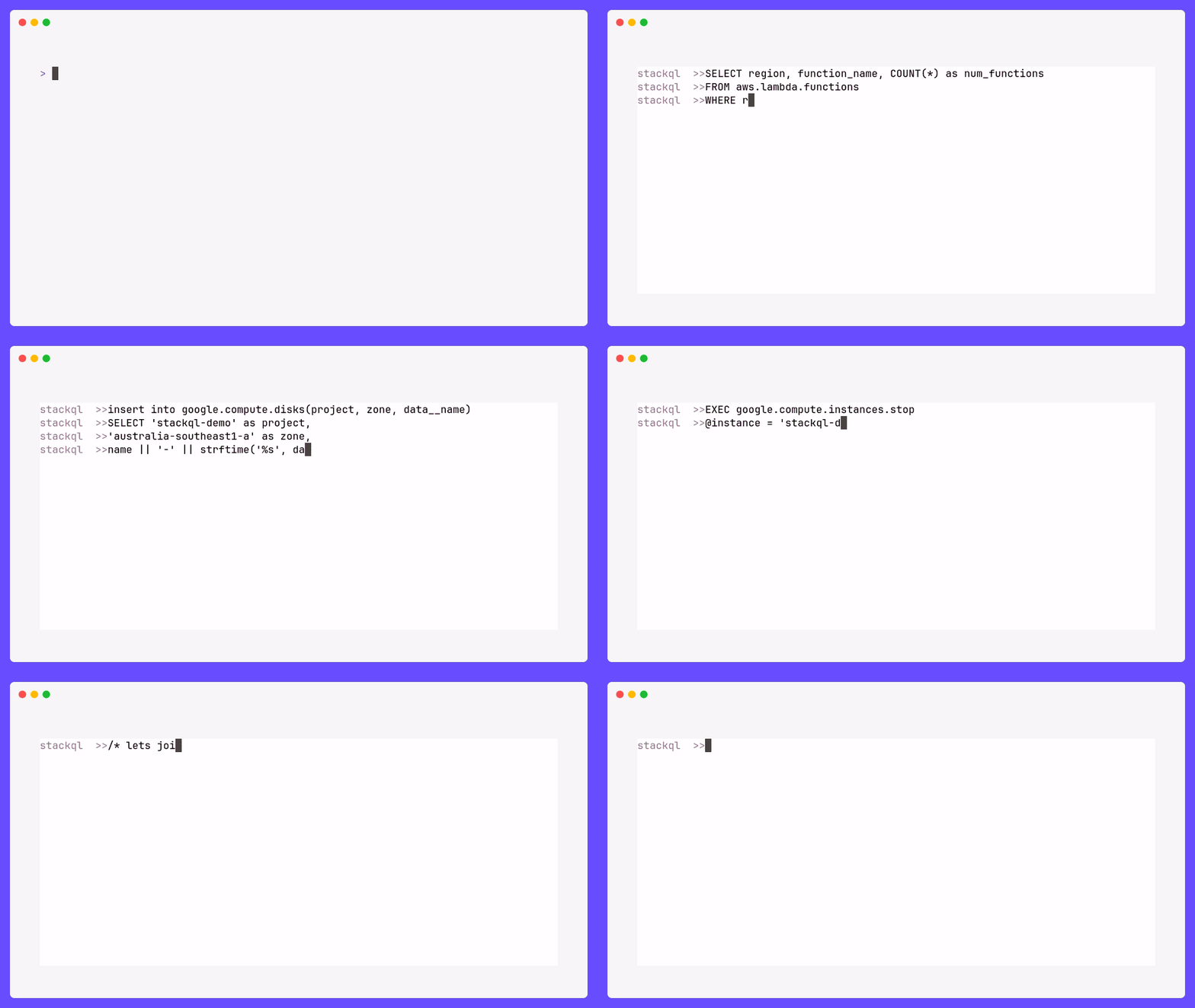
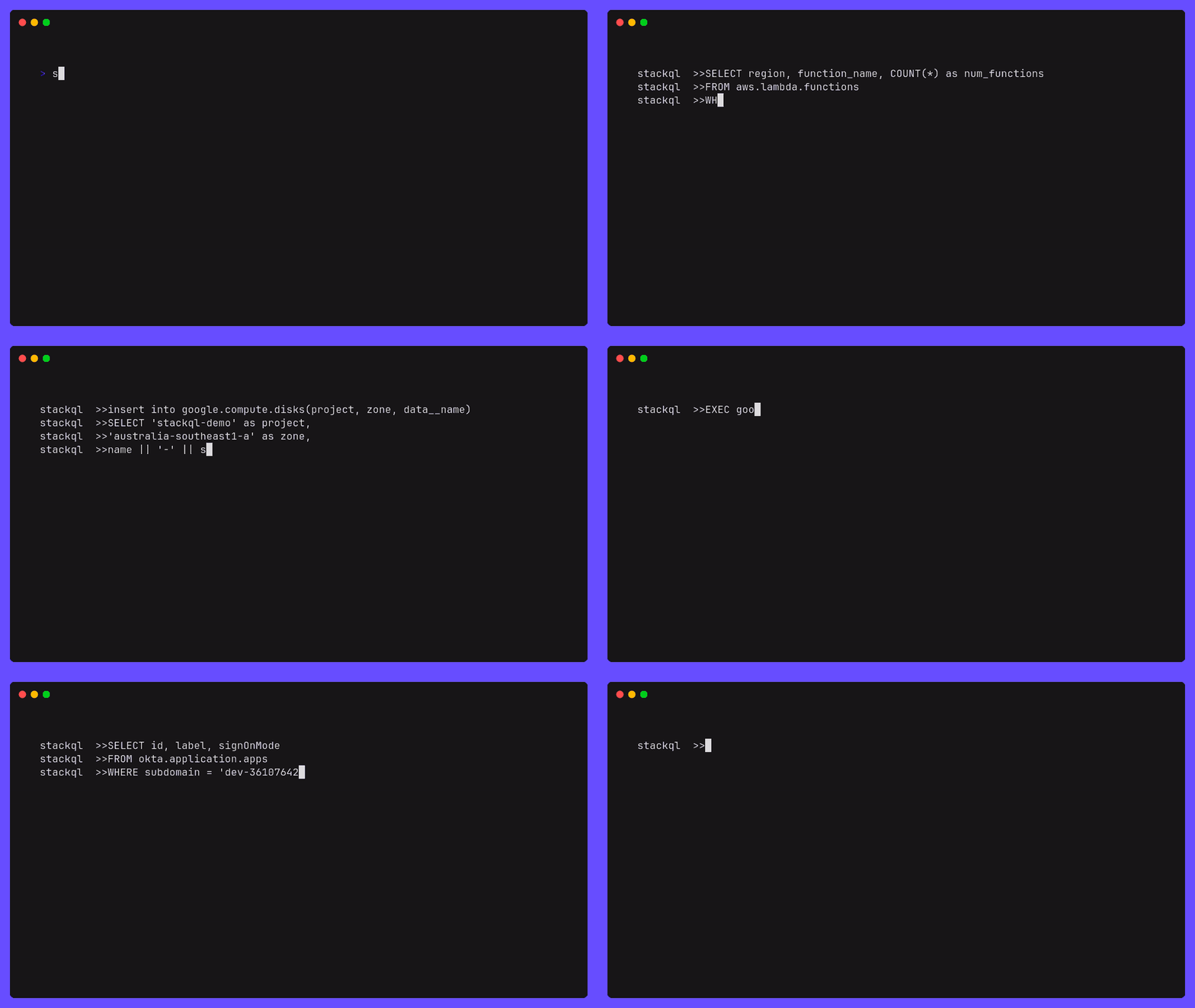
How it works
StackQL is a standalone application that can be used in client mode (via exec or shell) or accessed via a Postgres wire protocol client (psycopg2, etc.) using server mode (srv).
StackQL parses SQL statements and transpiles them into API requests to the (cloud) resource provider. The API calls are then executed and the results are returned to the user.
StackQL provider interfaces are canonically defined in OpenAPI extensions to the providers' specification. These definitions are then used to generate the SQL schema and the API client. The source for the provider definitions are stored in the StackQL Registry. The semantics of provider interactions are defined in our any-sdk library. For more detail on nuts and bolts, please see the local AGENTS.md file and that of any-sdk.
The following context diagram describes the StackQL architecture at a high level:
flowchart LR
  subgraph StackQL
    direction BT
    subgraph ProviderDefs
        Registry[Provider Registry Docs]
    end
    subgraph App
        Proc[$ stackql exec\n$ stackql shell\n$ stackql srv]
        style Proc fill:#000,stroke:#000,color:#fff,text-align:left;

        %% ,font-family:'Courier New', Courier, monospace
    end
  end
  User((User)) <--> StackQL <--> Provider[Cloud Provider API]
  ProviderDefs --> App
More detailed design documentation can be found in the here.
Installation
StackQL is available for Windows, MacOS, Linux, Docker, GitHub Actions and more. See the installation instructions below for your platform.
Installing on MacOS- Homebrew (
amd64andarm64)brew install stackqlorbrew tap stackql/tap && brew install stackql/tap/stackql
- MacOS PKG Installer (
amd64andarm64)- download the latest MacOS PKG installer for StackQL
- run the installer and follow the prompts
- MSI Installer
- download the latest MSI installer for StackQL
- run the installer and follow the prompts
- Chocolatey
- install Chocolatey
- run
choco install stackql
- ZIP Archive
- download the latest Windows ZIP archive for StackQL
- extract the archive (code signed
stackql.exefile) to a directory of your choice - add the directory to your
PATHenvironment variable (optional)
- ZIP Archive
- download the latest Linux ZIP archive for StackQL
- or via
curl -L https://bit.ly/stackql-zip -O && unzip stackql-zip
- or via
- extract the archive (
stackqlfile) to a directory of your choice - add the directory to your
PATHenvironment variable (optional)
- download the latest Linux ZIP archive for StackQL
View all available StackQL images on DockerHub. Images available include
stackql,stackql-jupyter-demoand more. Pull the latest StackQL base image using:
docker pull stackql/stackql
Use StackQL in your GitHub Actions workflows to automate cloud infrastructure provisioning, IaC assurance, or compliance/security. Available GitHub Actions include:
setup-stackql,stackql-execand more
Usage
StackQL can be used via the interactive REPL shell, or via the exec command or ran as a server using the Postgres wire protocol.
ℹ️ StackQL does not require or install a database.
Interactive Shell
# run interactive stackql queries
stackql shell --auth="${AUTH}"
Execute a statement or file
stackql exec --auth="${AUTH}" -i myscript.iql --iqldata vars.jsonnet --output json

# or

stackql exec --auth="${AUTH}" "SELECT id, status FROM aws.ec2.instances WHERE region = 'us-east-1'"
ℹ️ output options of
json,csv,tableandtextare available for theexeccommand using the--outputflagℹ️ StackQL supports passing parameters using
jsonnetorjson, see Using VariablesServer
# serve client requests over the Postgres wire protocol (psycopg2, etc.)
stackql srv --auth="${AUTH}"
For more examples, please check our Blog
Contributing
Contributions are welcome and encouraged. For more information on how to contribute, please see our contributing guide.
License
Distributed under the MIT License. See LICENSE for more information. Licenses for third party software we are using are included in the /docs/licenses directory.
Contact
Get in touch with us via Twitter at @stackql, email us at [email protected] or start a conversation using discussions.
Acknowledgements
Forks of the following support our work:
- vitess
- kin-openapi
- gorilla/mux
- readline
- psql-wire
- mcp-postgres
- the
golangMCP SDK - ...and more. Please excuse us for any omissions.
We gratefully acknowledge these pieces of work.
Yorumlar (0)
Yorum birakmak icin giris yap.
Yorum birakSonuc bulunamadi